Something truly seismic happened on February 22, 2026. A military raid in the hills of Jalisco state, Mexico, ended the life of one of the world’s most wanted drug lords – and within hours, the ripple effects were felt from resort beaches to international airports. The U.S. Embassy scrambled to issue alert after alert. Tourists found themselves stranded, flights were grounded, and streets that are normally packed with visitors fell eerily quiet.
This is not your typical travel disruption story. It sits at the intersection of military strategy, transnational crime, and the safety of millions of Americans who travel to Mexico every year. What unfolded over that 24-hour window is something that security analysts will be discussing for years. Let’s dive in.
The Spark: El Mencho Is Dead
Mexican security forces killed Nemesio Rubén Oseguera Cervantes, also known as “El Mencho,” during an operation in the western state of Jalisco, Mexico’s Ministry of Defense confirmed. On February 22, 2026, Oseguera was taken into custody by the Mexican Army in a security operation in Tapalpa, Jalisco, but died of injuries suffered in the firefight during his transfer to Mexico City. Honestly, the scale of this moment is hard to overstate. This man had eluded capture for over a decade.
Oseguera, a former police officer and avocado farmer, co-founded the CJNG around 2007, and built it into what the FBI considers Mexico’s most powerful trafficking organization, responsible for the bulk of cocaine, heroin, methamphetamine and fentanyl entering the U.S. The U.S. State Department had offered a reward of up to $15 million for information leading to the arrest of El Mencho. The operation was led by the Mexican Army with support from the National Guard, the Mexican Air Force, and intelligence personnel from the Attorney General’s Office, and Mexican authorities confirmed coordination with United States agencies, which provided complementary intelligence in the planning of the mission.
The Immediate Reaction: Streets on Fire Across Mexico
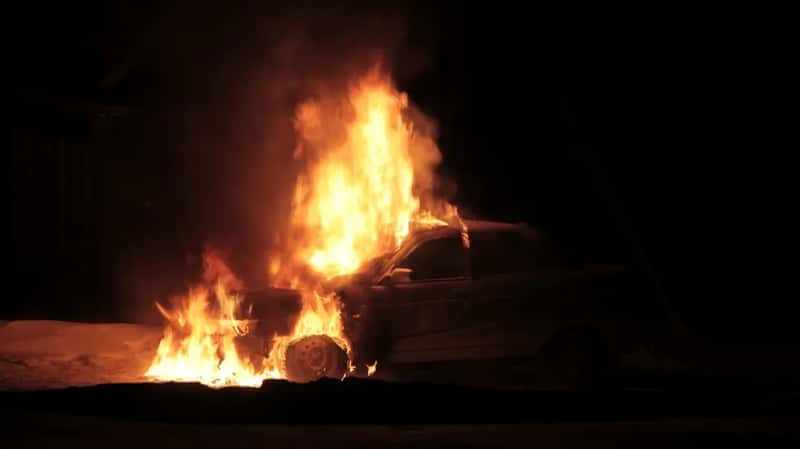
The Mexican operation set off a wave of violence, with gunmen torching cars and blocking highways in more than half a dozen states, including Jalisco, Colima, Michoacan, Nayarit, Guanajuato, and Tamaulipas. Mexico’s security agency said Sunday night there were 252 blockades reported throughout the country, and by 8 p.m., 23 still hadn’t been cleared. That is an extraordinary number for a single evening.
Jalisco’s capital, Guadalajara, which will host several matches in the upcoming FIFA World Cup, was turned into a ghost town on Sunday night as civilians hunkered down. Jalisco Governor Pablo Lemus Navarro activated a “code red,” a protocol for a state of emergency, and said public transportation was suspended across Jalisco, urging people in the area to remain in their homes until the situation was under control. Authorities in Jalisco, Michoacan and Guanajuato reported at least 14 other people killed Sunday, including seven National Guard troops.
Four Alerts in 24 Hours: The U.S. Embassy Response
The U.S. Embassy in Mexico issued four consecutive security alerts on February 22 and 23, 2026, escalating with each update. The U.S. Embassy and Consulates in Mexico issued an expanded security alert advising Americans in multiple Mexican states to shelter in place due to ongoing security operations and related criminal activity. The pace of those updates, one after another throughout the night, reflected just how rapidly the situation was deteriorating on the ground.
Locations included widespread areas such as Jalisco State, Baja California State including Tijuana, Tecate, and Ensenada, Quintana Roo State including Cancun, Cozumel, Playa del Carmen, and Tulum, and areas of Guanajuato, Guerrero, Michoacan, Oaxaca, Nuevo Leon, and Tamaulipas States. All U.S. government staff at Consulate General Tijuana and all U.S. government staff in Guerrero, Michoacan, and Quintana Roo states were directed to shelter in place, while all U.S. government staff at Consulate General Monterrey were directed to remain in the Monterrey metropolitan area.
Airports Paralyzed, Airlines Issue Waivers
While no airports were closed, roadblocks impacted airline operations, with most domestic and international flights cancelled in both Guadalajara and Puerto Vallarta. Regarding air travel, roadblocks impacted airline operations with most domestic and international flights cancelled in both Guadalajara and Puerto Vallarta, and all ride shares were suspended in Puerto Vallarta. Picture tens of thousands of tourists, families, and business travelers just frozen in place with nowhere to go.
Airlines including United, American, and Delta issued change waivers for travel to Puerto Vallarta and Guadalajara. On February 23, 2026, travelers at Cancun International Airport faced significant disruptions, with dozens of flights delayed or canceled, leaving hundreds stranded amid heightened security measures. Mexican authorities also announced late February 22 that operations would be temporarily curtailed on toll roads in Puebla, Guerrero, Tamaulipas, Nayarit, San Luis Potosi, Tijuana, Queretaro, Veracruz, and Mazatlan due to blockades affecting motorists.
U.S. Role in the Operation and Political Fallout
White House press secretary Karoline Leavitt confirmed in a statement that the U.S. “provided intelligence support to the Mexican government in order to assist with an operation in Tapalpa, Jalisco, Mexico, in which” Oseguera Cervantes was killed. U.S. Deputy Secretary of State Christopher Landau described El Mencho as “one of the bloodiest and most ruthless drug kingpins.” That kind of direct American involvement is significant, signaling a deeper level of bilateral security cooperation than many observers expected.
The capture was the Mexican government’s biggest prize yet to show the Trump administration in its efforts to crack down on the cartels, and was met with a forceful reaction from the cartel. In February 2025, the Trump administration had already designated the cartel as a foreign terrorist organization. Texas Governor Greg Abbott also urged Texans currently in Mexico, as well as those with family members or friends traveling there, to closely follow warnings from the U.S. Department of State.