
In the early seventies, Varosha shimmered like a jewel on Cyprus’s eastern coast, where the Mediterranean’s turquoise waters met golden beaches. The district attracted the world’s elite with its towering hotels and cosmopolitan allure. Yet today, this once-glamorous paradise stands as one of the world’s most haunting ghost towns, frozen in time for nearly five decades after a single day changed everything forever.
The story of Varosha reads like a tragic fairy tale, where prosperity turned to silence overnight. Today, curious travelers can walk through its partially reopened streets, witnessing both decay and hope intertwined in this extraordinary place where nature slowly reclaims what humanity abandoned.
Hollywood’s Mediterranean Playground

During its heyday, between 1970 and 1974, Varosha was one of the most popular tourist destinations in the world and was a favorite destination of such celebrities as Elizabeth Taylor, Richard Burton, Raquel Welch, and Brigitte Bardot. The luxurious Argo Hotel became Elizabeth Taylor’s preferred retreat, while the King George Hotel and Asterias Hotel competed to host the world’s most recognizable faces. The town attracted up to 700,000 visitors a year and had the same hotel bed capacity as the whole of Turkey.
The resort earned its nickname as the “French Riviera of Cyprus” through pure glamour and exclusivity. Varosha was the crown jewel of Cyprus’s tourism industry: with over 10,000 beds in ritzy, high-rise hotels reminiscent of Spain’s Costa Brava. These weren’t ordinary tourists, but international icons who could vacation anywhere yet chose this particular stretch of Mediterranean coastline for its exceptional beauty and sophisticated atmosphere.
The Day Paradise Ended
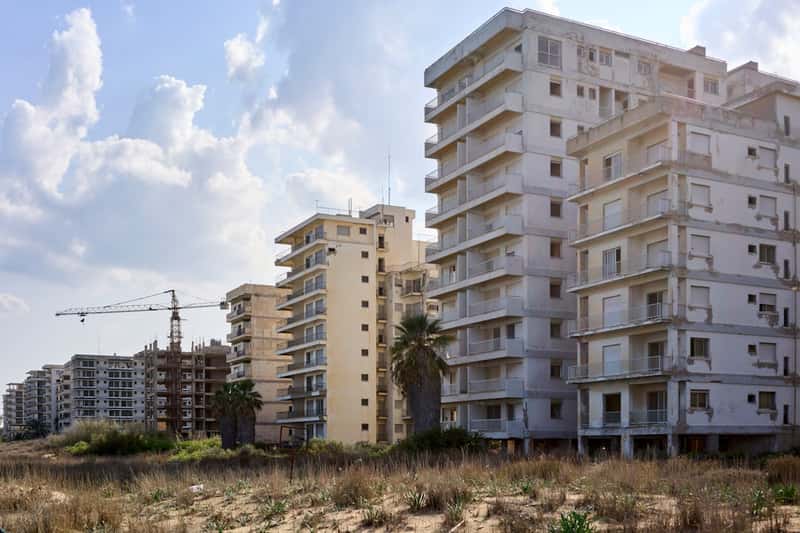
Eleni Ellinas can still hear the sound of the air raid sirens that woke her after 5 a.m. on Aug. 14, 1974. The Turkish military launched the second phase of their invasion of Cyprus, targeting Famagusta on the eastern coast. What residents believed would be a temporary evacuation lasting mere days became a permanent exile. Its Greek Cypriot inhabitants fled during the Turkish invasion of Cyprus in 1974, when the city of Famagusta came under Turkish control, and it has remained abandoned ever since.
Within the city lay Varosha, a 2.3-square-mile, wealthy seaside community that was home to 39,000 people, mostly Greek Cypriots. Families packed hastily, leaving behind wedding presents, family heirlooms, and even meals cooking on stoves. Many carried only essential documents, certain they would return within hours to resume their lives in this Mediterranean paradise.
Behind the Barbed Wire
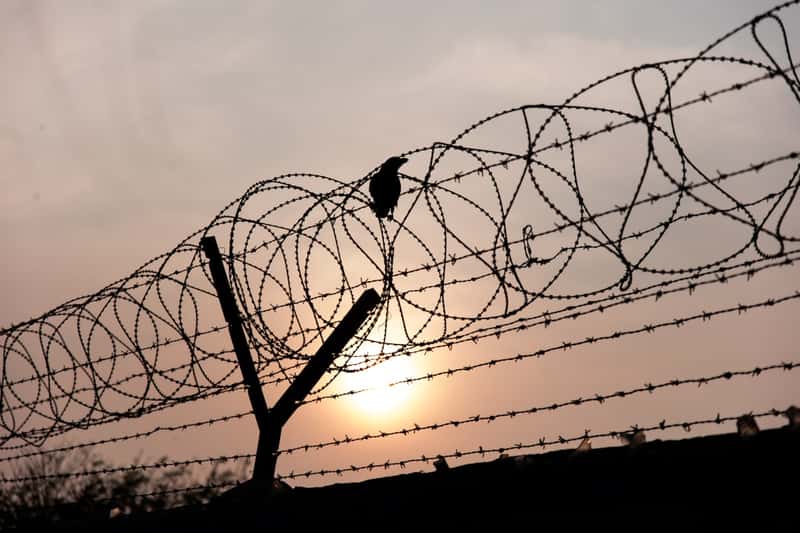
For more than four decades, Varosha sat behind barbed wire and “Keep Out” signs. The Turkish military maintained strict control, allowing no access except for patrols and maintenance. According to a 2023 report by the Peace Research Institute Oslo, Varosha’s perimeter was guarded 24/7 by Turkish troops, and satellite images revealed minimal human movement. The once-bustling Kennedy Avenue, lined with glamorous hotels, became a silent corridor patrolled only by soldiers.
The Turkish military soon surrounded the empty, and by now looted town with a barbed wire fence that extends into the sea to keep people out. This maritime barrier created an eerie spectacle where the fence literally cuts through beach sand and into the Mediterranean waters. During the years the city has gone under extensive looting. In the buildings now visible on the visitor’s area it’s evident the absence of furniture and even of power sockets, switches and ceiling lamps and all doors appear to have been broken in.
Nature’s Silent Takeover
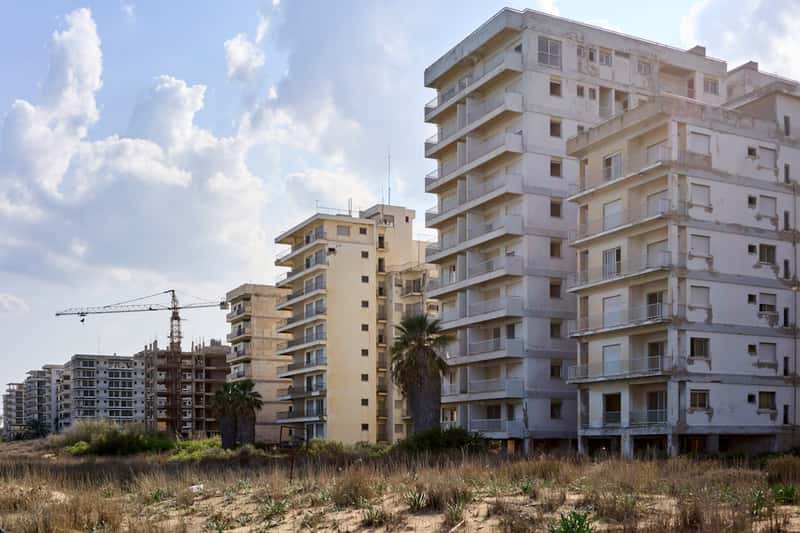
Without human presence, Varosha became an unintended experiment in urban decay and natural reclamation. The silent streets and vacant buildings of Varosha have been slowly reclaimed by nature, adding an ethereal charm to the district. Bursting through cracked concrete and overtaking deserted balconies, wildflowers have found a home in the midst of decay, painting a hauntingly beautiful picture of life persisting amid abandonment.
Aerial photographs from 1975–2024 show entire streets overrun by vegetation and decaying buildings. Trees now grow through hotel lobbies, vines cascade from broken windows, and rare sea turtles have made their nests in the undisturbed sand dunes along the abandoned beaches. Neon signs hang from facades, the furniture of the inhabitants forced to flee is still visible in beachfront condos, a 10-story tower crane rusts away, and the walls of bars and restaurants are marred with bullet holes. The district became an accidental wildlife sanctuary where nature operated without human interference for nearly five decades.
Myths and Mysteries of the Forbidden City
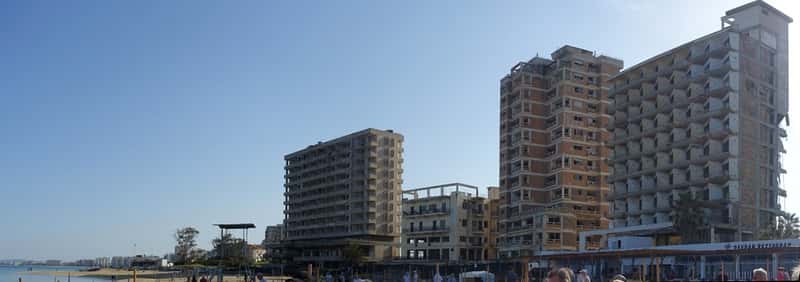
In 2024, the Cyprus Folklore Research Center catalogued 53 distinct Varosha myths circulating on social media and local forums, including tales of secret underground passages and hidden treasures left behind by fleeing residents. Some claim to have seen the “Lady in White,” said to be the spirit of a hotel manager who refused to leave. A 2023 survey by the University of Nicosia found that 61% of Cypriots believe Varosha is haunted or cursed, adding another layer of mystery to the city’s ruins. These stories have become part of the city’s enduring identity, fueling both fascination and fear.
Local legends persist about vintage cars still parked in hotel garages and dining rooms with tables set exactly as they were left in 1974. However, Varosha was plundered in the very first months after the invasion; everything of value was taken to Turkey, and what was left was stolen by marauders who occupied neighboring areas. There were no window frames left in the houses. Despite this reality, the mythology surrounding Varosha continues to capture imaginations worldwide, transforming the ghost town into something between historical site and urban legend.
The Controversial 2020 Reopening
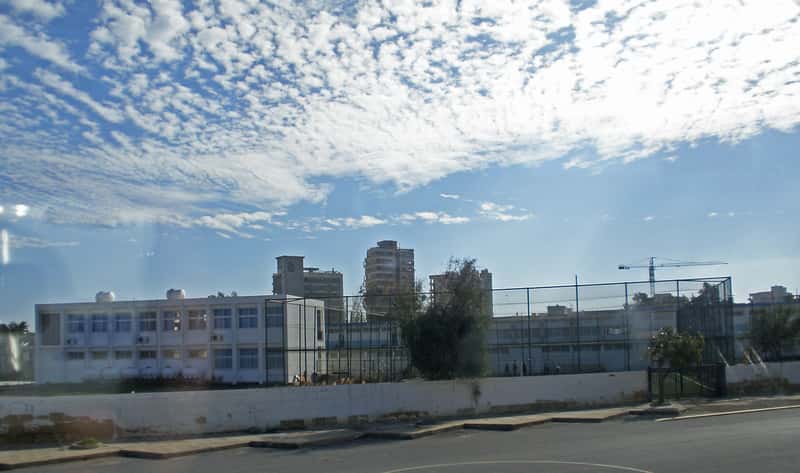
In October 2020, the Turkish Cypriot administration – supported by Turkey – partially reopened Varosha’s beachfront to visitors for the first time in 46 years. The Cyprus government immediately took up the issue with the EU and the UN Security Council. The EU’s foreign policy chief, Josep Borrell, said that the reopening of the area, was “a serious violation”. The timing coincided strategically with Turkish Cypriot elections, raising questions about political motivations behind the decision.
We visited Varosha in 2022 amidst several dozen Russian-speaking tourists on bicycles, cruising through the dilapidated buildings, mindful of the roped walkways and signs warning visitors to stay on the roads. There are no organized tours, and visitors enter through a single subway-style turnstile. The quarter is surrounded by a fence, there are turnstiles at the entrance and exit, and the police in the booths count every incoming and outgoing visitor. In all likelihood, this is done so that no one stays in Varosha after closing (you can visit it from 8:00 to 20:00).
Future Plans and Ongoing Controversy
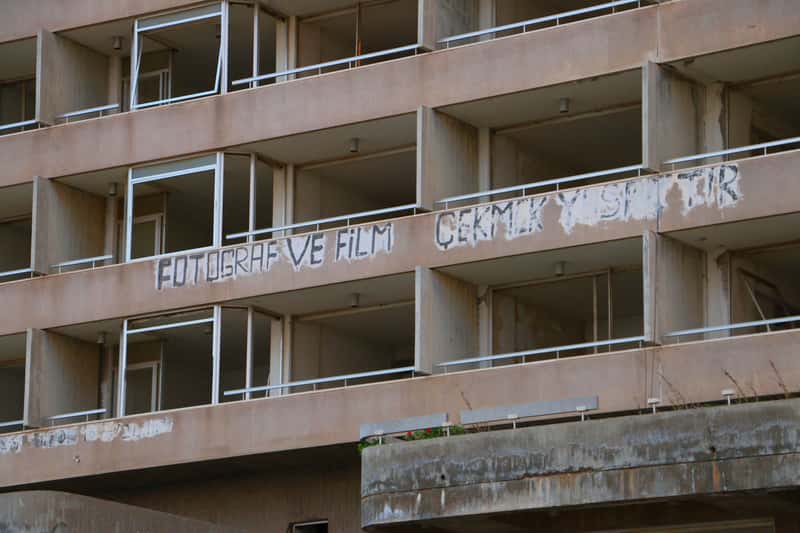
The Republic of Cyprus continues to demand the return of the city to its lawful inhabitants, as outlined in UN Security Council resolutions. The United Nations Peacekeeping Force in Cyprus (UNFICYP) estimates that, as of 2025, over 17,000 original property claims remain unresolved. The European Court of Human Rights has repeatedly cited Varosha as a symbol of unresolved conflict, with no return permitted for its pre-1974 residents despite international resolutions. The legal and emotional complexities surrounding property rights remain as frozen as the town itself, with former residents still holding deeds to homes they cannot access.
A Living Monument to Memory
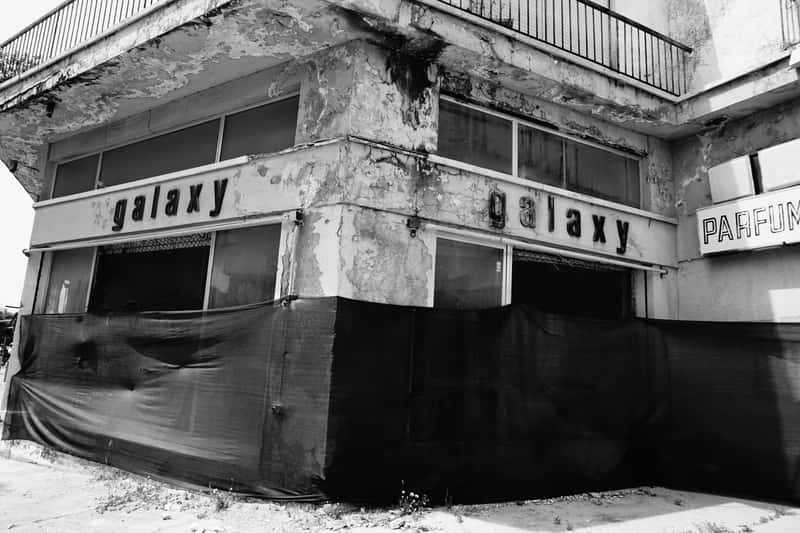
Today, Varosha serves as more than a tourist curiosity. “Varosha currently stands at a crossroads between decay and renewal. Will it remain a relic – an open-air museum of abandonment – or will it be reborn through cooperation and reconciliation?” The ghost town has become a powerful symbol where the past refuses to disappear, where abandoned buildings stand as witnesses to dreams interrupted by conflict.
But as travelers continue to explore its haunting streets, one truth becomes clear: Varosha has become a living museum of memory, loss, and the enduring complexity of Cyprus’s troubled past. Walking through Varosha is like stepping into a time capsule. It tells a story not only of war and displacement but of dreams halted in midair. For visitors, it’s an unforgettable experience – a place where tourism meets memory, and silence speaks volumes.
The story of Varosha reminds us that even the most glamorous places can become frozen monuments to human conflict. Whether it transforms into a symbol of reconciliation or remains forever caught between past and future, this Mediterranean ghost town continues to captivate all who encounter its haunting beauty. What do you think should happen to this frozen paradise? Tell us in the comments.