Something has shifted in the world of international travel, and it goes well beyond jet lag or lost luggage. American tourists, long regarded as enthusiastic and free-spending globetrotters, are increasingly finding that their passport does not always open a warm welcome. From water pistols aimed at visitors on Spanish beaches to an unprecedented Canadian boycott that is shaking border economies, the friction is real, measurable, and growing.
A Global Rescue Snap Survey of more than 1,400 experienced travelers conducted in March 2025 found that the majority expect U.S. tourists will be less welcome and perceived more negatively while traveling internationally, due to recent international policy proposals introduced by the U.S. The numbers do not lie. So before you hit that “Book Now” button, you might want to know which destinations are sending Americans a very different kind of message. Let’s dive in.
1. France: The Chill Is Very Much Intentional

France has carried a reputation for frostiness toward American visitors for decades. Honestly, I’ve always thought there was something almost theatrical about it. Yet the data now confirms the attitude has gone far deeper than cultural quirk. France leads the pack when Europeans call their own country unwelcoming to American visitors, with a 2025 Upgraded Points survey finding 15% of French respondents admitting Americans aren’t always wanted, fueled by perceptions of loudness and entitlement. U.S. favorability in France plunged 33 points by early 2025, linked to trade tensions and politics, and nearly half of Americans even picked France as the least friendly spot.
France’s disapproval rating for the United States currently sits at 67%, and this level of animosity can make it hard for Americans to feel welcomed in the country, regardless of how hard they try. Think of it like being a houseguest the host tolerates but never truly invited. The croissants are still there. The warmth, considerably less so.
To see what Europeans think of American tourists in 2025, the Upgraded Points survey polled 2,200 people in 22 European countries about their views, including whether politics plays a role. More than 1,000 frequent American travelers were also asked how they thought they were perceived, and both groups were asked what experiences brought them to their conclusions. France topped every category of unwelcome.
2. Canada: The Neighbor That Slammed the Door
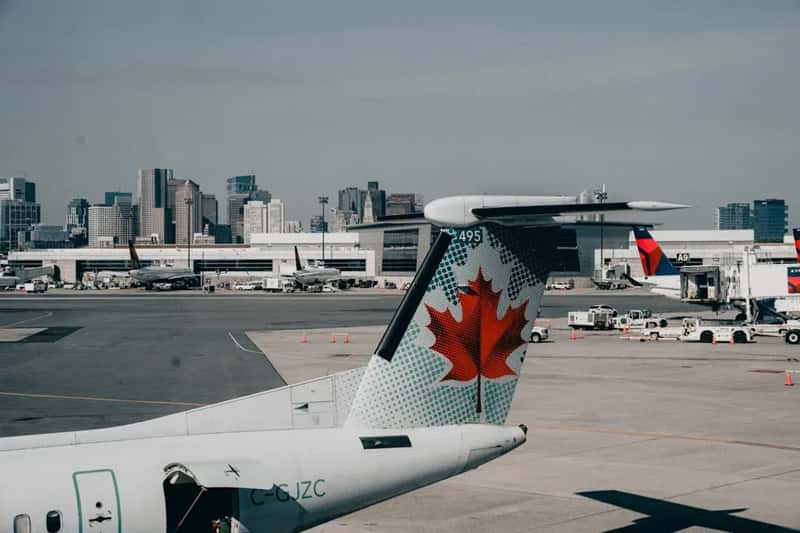
Here is the one that truly catches people off guard. Canada. Your friendly, hockey-loving, maple-syrup-making next-door neighbor. More Canadians visit the U.S. than visitors from any other country, according to the National Travel and Tourism Office, and Canadians made up roughly 28% of total international visitor arrivals in 2024. Travel bookings from Canada to the United States for the April through September 2025 period decreased by more than 70% compared to the previous year.
In the context of the 2025 United States trade war with Canada and Mexico, a boycott of the United States began in Canada, including both American consumer products and travel to the U.S. This boycott occurs in the context of polling finding that 91% of Canadians want Canada to rely less on the U.S., an option preferred over repairing the relationship. That is not a fringe opinion. That is nearly the whole country.
3. Germany: A Tourism Freefall Like No Other

Germany and the United States have shared a long, complicated, historically heavy relationship. For decades, that translated into genuine warmth and strong tourist ties. Berlin always felt like one of those rare cities where being American carried a certain postwar cultural weight. That era appears to be fading fast. German tourist visits to the United States declined around 20 to 30% in 2025 amid economic pressures, and roughly 45 to 55% of Germans hold an unfavorable view of the U.S.
NATO disputes and trade tensions have fueled anti-American feeling among locals, and German travel agencies now warn U.S. visitors about potential public hostility, especially in eastern regions. It sounds drastic. Yet the evidence backs it up across multiple data points.
Germany saw a 61% interest plunge in U.S. trips, over 20% tourism drop. Isolationist U.S. tones spark reciprocal frost, per 2025 data. The relationship damage cuts both ways. Americans visiting Germany are finding the social temperature noticeably cooler than it used to be, and the reasons extend well beyond bad weather.
4. Norway: Quiet Resentment, Loud Statistics
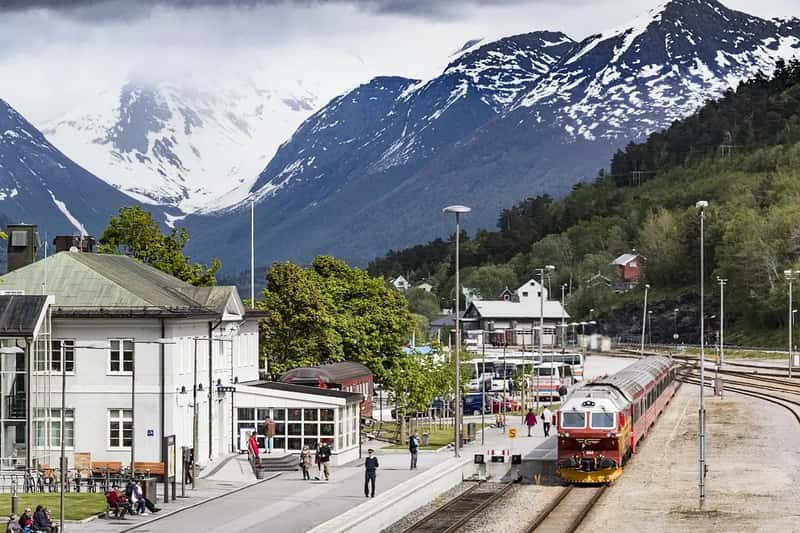
Norway is the kind of country that does not do dramatic outbursts. It is reserved, civil, and measured to a fault. Which is exactly why the data here carries so much weight. Scandinavian countries stood out most in surveys about the political impact on tourism. Norway topped the list at 44% saying the 2024 U.S. presidential election impacted how they view American travelers, followed by Estonia at 35%, Sweden at 31%, Denmark at 30%, and Finland at 29%.
Norwegians quietly resent American visitors, with 8% calling their fjords unwelcoming in recent polls. The 2024 U.S. election swayed 44% to view travelers harsher, amid drops in European tourism to America. That is nearly half the country shifting its view of one tourist group based entirely on politics. It is a seismic shift in perception.
Scandinavian countries value quiet, orderly public behavior and personal space, and American tourists who bring typical U.S. social norms can feel jarringly out of place. Imagine hiking through one of the most stunning silent landscapes on earth and having someone beside you delivering a play-by-play into their phone for their Instagram followers. Norwegians notice this. They just rarely say anything to your face.
5. Denmark: Greenland, Hygge, and Hard Feelings
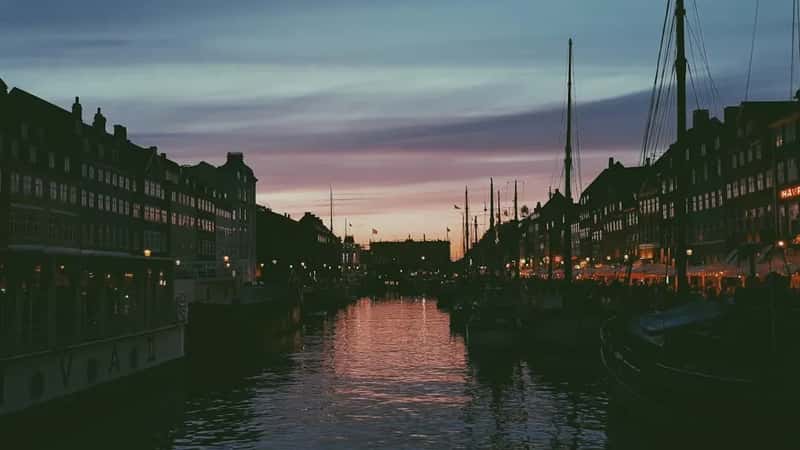
Denmark shows up on virtually every recent survey of unfriendly destinations for Americans. The tension here is fascinating because it is both cultural and profoundly political. Denmark shows up repeatedly, with 14.8% annoyance and 7.5% deeming it unwelcoming. Trump’s Greenland talk hit hard, as it’s Danish territory, sparking 30% to rethink American guests.
In Denmark, approximately half of consumers reported deliberately refraining from buying United States products since Trump’s inauguration. Let’s be real: that is not just a political statement. That is a cultural stance, a deliberate push away from everything American. It spills over into how Danish locals treat tourists from the U.S.
Danes prize hygge, or coziness, which rowdy tours disrupt. Surveys back this; it’s cultural, not personal, yet it stings. Copenhagen’s bike paths and quiet cafes were never designed for loudness. The cultural mismatch is real, and the Greenland controversy has made it sharply political on top of everything else.
6. Hungary: Political Friction Behind a Polished Facade
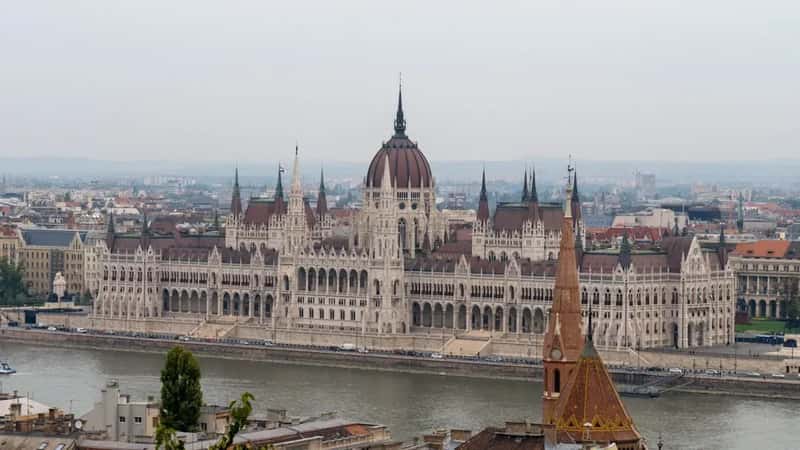
Hungary does not typically appear on the obvious lists of unwelcoming destinations. Its capital, Budapest, remains breathtakingly beautiful and packed with tourists year-round. Still, the tension is there, subtle but detectable. France isn’t putting out the welcome mat for American tourists, but runners-up Hungary (8.7%), Norway (8%), Denmark (7.5%) and Spain (6.9%) were also unwelcoming, according to European survey participants.
Hungary has also navigated its own complex relationship with Western political values, which adds another layer of friction when American tourists arrive carrying strong assumptions about how the world should work. It is a subtle ideological clash. Americans often arrive with a certain worldview baked in, and Hungarians navigating a very different political reality sometimes find that irritating.
The eye rolls are subtle. The service might feel fine on the surface. Yet if you are paying attention, you will sense the undercurrent of tension that data at 8.7% unwelcoming sentiment confirms is genuinely there. It is not hostility. It is something quieter and harder to define, which almost makes it stranger.
7. Spain: Water Pistols and “Tourists Go Home” Banners

Spain is beautiful, and American visitors absolutely know it. That popularity is precisely part of the problem. Spain welcomed close to 94 million international visitors in recent years, and the backlash from its own residents has been fierce, loud, and increasingly hard to ignore. Across 2024 and 2025, protests against overtourism drew international attention, especially in Barcelona and parts of the Balearics.
Locals in Barcelona took to the streets, spraying water pistols at innocent visitors, and protests gripped parts of Mallorca. That is not a metaphor. That literally happened. Barcelona banners screamed “Tourists go home,” while locals blamed rising rents on outsiders, with data showing tourism doubles the population strain in some neighborhoods. Americans, often perceived as the loudest and most entitled subset of the tourist crowd, found themselves grouped into that frustration by default.
A Spanish mobility consulting firm reported that the availability of long-term rental property in the nation decreased by three percent in 2024, with rental prices reaching a new all-time high. The numbers humanize the anger. When locals cannot afford to live in their own neighborhoods because tourists have driven rents through the roof, welcoming more of those tourists becomes emotionally impossible.
8. Portugal: The Annoyance Capital of Europe
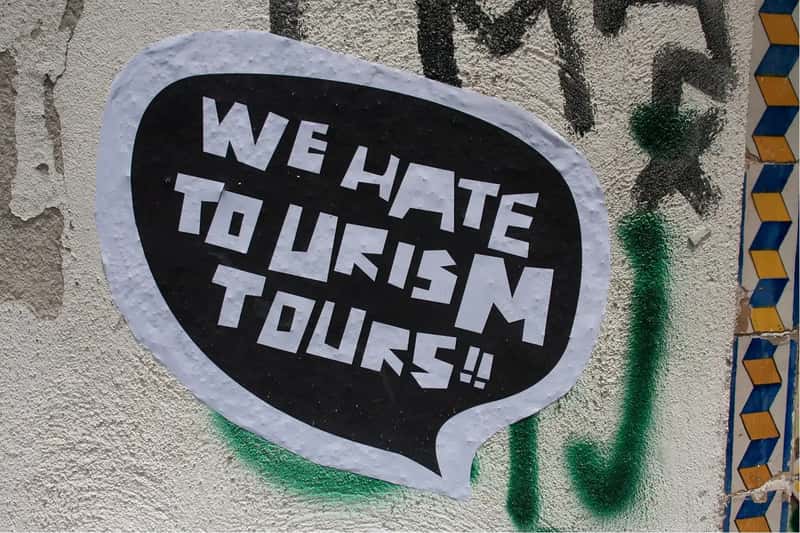
Portugal seems like the kind of place that would love American tourists. Warm climate, stunning coastline, and famously hospitable people. Here is the catch: the annoyance numbers tell a very different story than you might expect. Portugal at 18.8% and Belgium at 18.3% topped the list of countries where locals said they feel annoyed by American tourists. Nearly one in five Portuguese residents expressing active annoyance is a striking figure.
Portugal tops annoyance charts at 18.8%, with Europeans citing noise from U.S. groups. Locals in Lisbon and Algarve vent about ignored customs and English demands. Overtourism fuels graffiti against visitors. The country that was once a quiet, affordable gem became a darling of the digital nomad crowd, which brought both economic boom and genuine housing crisis.
Portugal attracted American expats and digital nomads, but its “Golden Visa” fueled a housing shortage. Lisbon rents soared, displacing locals from historic areas like Alfama. The government is stepping in to reverse course. With the “Mais Habitação” (More Housing) law of 2023, Portugal significantly reduced its Golden Visa scheme and suspended the issuance of new short-term rental licenses in many cities. The policy shift signals a clear message: residents first, tourism second.
9. The Netherlands: Bluntness With No Apology
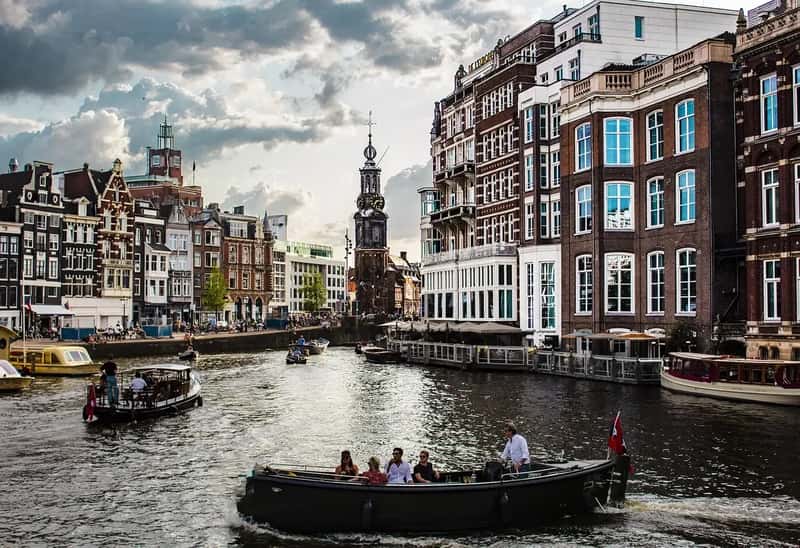
The Dutch speak excellent English. Nearly everyone does. Which means there is no language barrier softening the edges of their frustration. The Netherlands stands out particularly because Dutch people generally speak excellent English, language barriers can’t explain the negative sentiment, and Dutch respondents cite American loudness, entitlement, and lack of awareness about local customs.
Countries that viewed Americans negatively overall were the Netherlands, at nearly 40% of respondents, followed closely by Portugal (37.7%), Belgium (37.5%), Denmark (37%) and Sweden (36.9%). That puts the Netherlands at the very top of the general negativity rankings. Nearly four in ten Dutch residents hold a negative overall view of American tourists. That is not a fringe sentiment. That is the mainstream.
Amsterdam has taken concrete action beyond just cold stares. Barcelona ended apartment rentals by foreign tourists, Italy banned Airbnb self-check-ins and Amsterdam banned construction of new hotels. The Dutch city is physically trying to limit the number of tourists it absorbs. It is hard to interpret that as a welcome sign.
10. Japan: Record Visitors, Record Friction
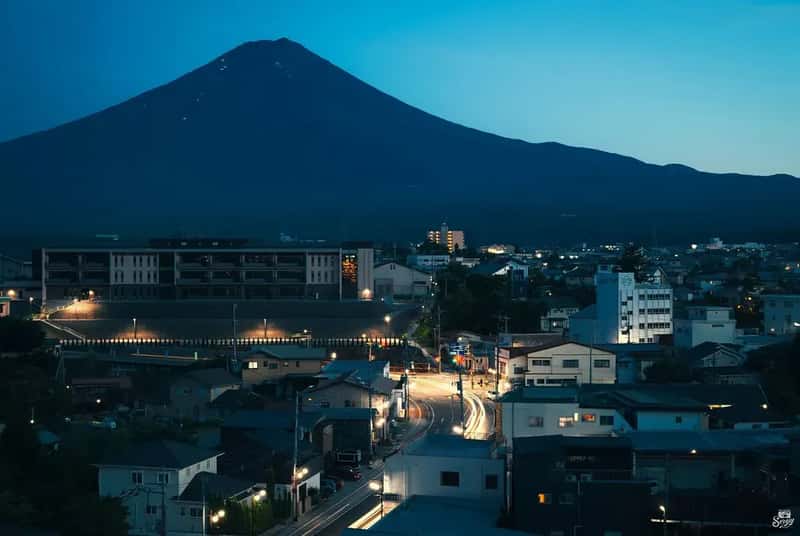
Japan might surprise some readers on this list. It is one of the most polite cultures in the world. The welcome is genuine. The food is transcendent. Yet overtourism has pushed even Japan to its breaking point. Japan had a record number of visitors in 2024, more than 33 million of them, attracted in part by a relatively weak yen and an increase in direct flights. This wasn’t without its problems. A Japanese town put up a barrier to block a popular view of Mount Fuji after being overrun by tourists leaving litter and causing traffic problems.
Kyoto, the former Japanese capital, cracked down on “geisha paparazzi” harassing the traditional female entertainers. Tourists were also arrested for such crimes as defacing the gate of a shrine and having sex inside a shrine. Japan’s deeply rooted culture of respect and social decorum clashes directly with the anything-goes attitude some tourists carry abroad. Americans, stereotyped as the loudest and most entitled group, bear a disproportionate share of the criticism.
Tourism is the main driver of many economies around the world, but 2024 is when the negative effects of mass tourism came to a head in protests across Europe and an increase in tourist taxes and visitor caps around the world. Japan is now actively managing its tourist numbers, setting caps, blocking photo spots, and rolling out strict conduct codes. The country still wants visitors. It just wants respectful ones.
What’s Really Driving the Friction?

It would be too simple to blame individual travelers for all of this. The data paints a bigger picture, one shaped by politics, economics, and the global hangover from the mass-tourism boom. Overall, the survey found that more than one in four Europeans dislike American tourists. Americans get a bad reputation abroad for being loud, arrogant and rude, according to the Europeans queried in the survey.
When it comes to the behaviors hurting U.S. travelers’ reputations overseas, noise is number one, with 64% of European respondents saying Americans are far too loud. More than six out of 10 believe Americans expect everyone to speak English and one-third say Americans are overly friendly. “Overly friendly” sounds benign, but in cultures that prize personal boundaries and reserve, it can feel like an invasion.
Among travelers factoring political climate in their destination choices, alongside Russia, Ukraine and Israel, the United States now ranks among the top five countries that travelers could avoid: in 2025, 17 out of the 23 countries cite the USA in the top five destinations they could avoid due to the political climate, while they were only 8 in 2024. The world’s perception of America is changing fast. And that perception follows American travelers wherever they go.
The uncomfortable truth is that the reputation of a country travels with its citizens, whether they like it or not. 54% of Americans worry at least a little about their reputation when traveling internationally. 73% believe Americans overall have a bad reputation overseas. If Americans already know this, the next step is doing something about it. Traveling with curiosity, humility, and respect for local culture costs nothing. It might, however, change everything about how you are received. What do you think about it? Drop your thoughts in the comments below.