
Deep within the shrinking rainforests of West Africa lives a crocodile that behaves nothing like the sluggish, log-like reptile most people picture. It climbs trees, hides beneath overhanging branches, and slips through forest streams so quietly that scientists still struggle to count how many remain. This is the West African slender-snouted crocodile, and its story is as much about survival against long odds as it is about an animal that keeps surprising the researchers trying to study it.
Meet the Crocodile That Defies Expectations
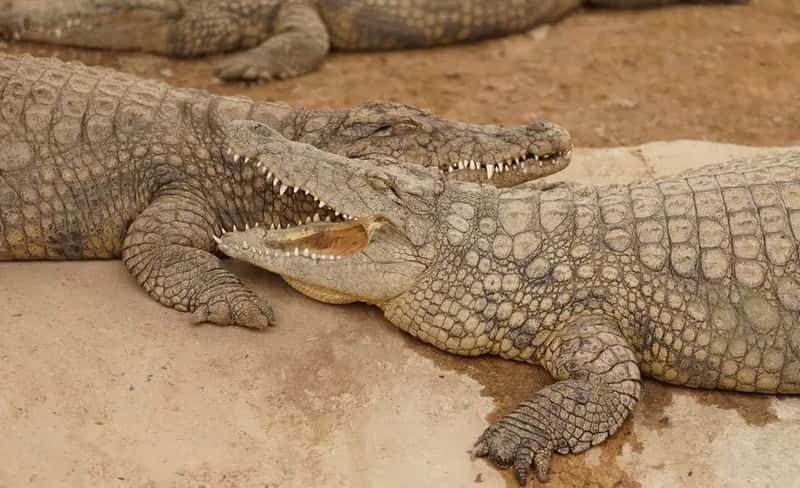
The West African slender-snouted crocodile, known scientifically as Mecistops cataphractus, is one of Africa’s five crocodile species and arguably its least understood. The animal at the center of it all is the West African slender-snouted crocodile, Mecistops cataphractus, and almost nobody has heard of it. It doesn’t show up in wildlife documentaries. It barely registers in conservation campaigns. For years, researchers didn’t even have enough data on it to properly classify how threatened it was.
Its narrow, elongated snout sets it apart from bulkier relatives and is perfectly built for snatching fish out of tight forest waterways. The West African slender-snouted crocodile has a very long, slender snout that it uses to catch fish and small aquatic invertebrates. Adult males can grow surprisingly large for what many assume is a modest-sized species, with adult males typically reaching 3 to 4 meters in length.
The Discovery That Rewrote the Textbook
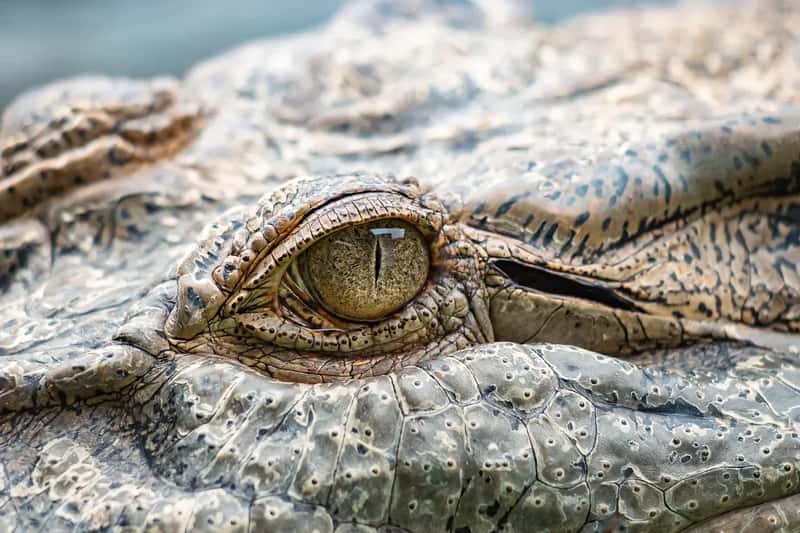
For decades, people who lived near crocodile habitats quietly knew something scientists hadn’t documented. The team traced early documentation of the reptiles’ tree-climbing back to 1972 when it was briefly noted that baby crocodiles could climb into bushes, up trees and even hang on reeds like chameleons. It took a formal study led by University of Tennessee researcher Vladimir Dinets to turn scattered anecdotes into recognized science.
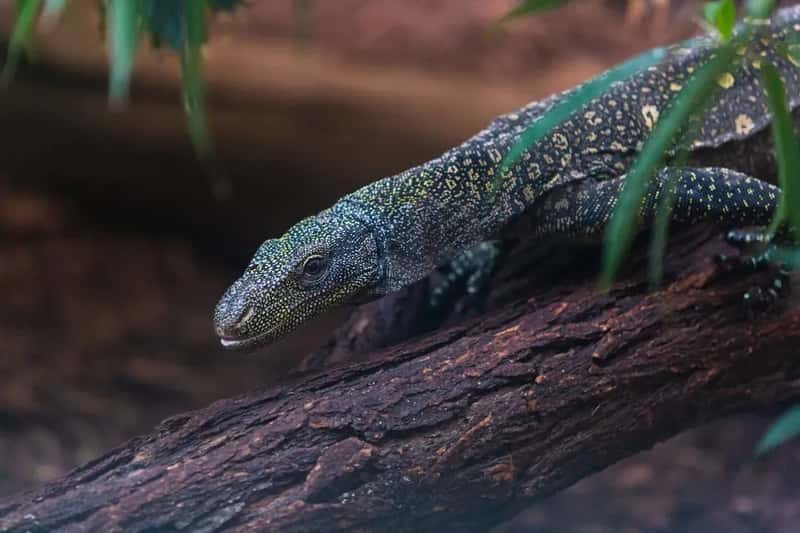
University of Tennessee researcher Vladimir Dinets led a team to discover if these were isolated incidences or regular behavior, studying crocodilians on three continents, Africa, Australia and North America, and the team identified four species able to climb trees, one croc having been seen 13 feet above ground. That list included the American crocodile, Australian freshwater crocodile, Central African slender-snouted crocodile, and the mighty Nile crocodile. West Africa’s own slender-snouted crocodile fits squarely into this same climbing tradition, using branches the way other species use riverbanks.
Why Climb at All?
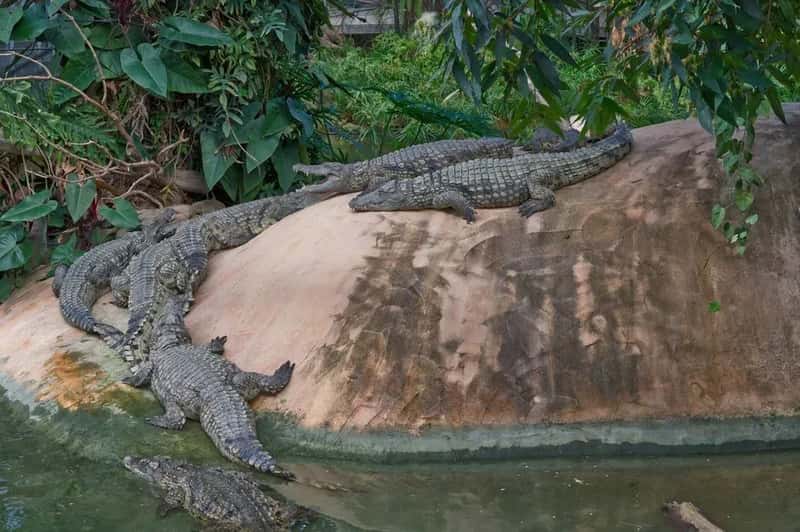
The behavior isn’t accidental or clumsy. Researchers noted that climbing a steep hill or steep branch is mechanically similar, assuming the branch is wide enough to walk on. In forested stretches of river where flat, sunny banks are scarce, a fallen branch or leaning trunk becomes the only real estate available for basking.
Scientists believe the payoff is twofold. The researchers believe the crocodiles climb to keep a lookout on their territory and to warm themselves in the sun. The habit also comes with a defensive edge, since the crocodiles were skittish, fleeing from their heights if observers approached too closely. In other words, height offers both a sunbed and an early-warning system, letting the animal drop into the water and vanish the instant danger appears.
A Life Built Around Hidden Forest Rivers
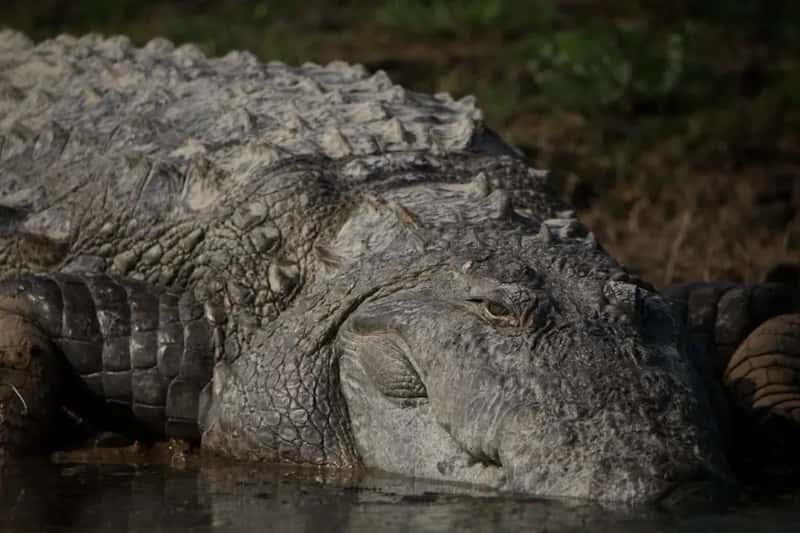
Unlike the sun-baked, open-river image most people associate with crocodiles, this species thrives in shade and clutter. It prefers dense vegetation and overhanging branches along riverbanks, where it can remain camouflaged, which makes it extraordinarily difficult to count, track, or study. That secrecy is a survival strategy, but it has also made basic population data agonizingly hard to gather.
Its choice of cover even ties into feeding strategy. There are no open areas where they can bask, so they use rocks because they stick out of the water, as do the branches of fallen trees, and they also like to stay hidden beneath the vegetation that overhangs the river, because when fruit produced in overhanging trees falls into the water, it attracts fish, which the crocodiles then hunt. Researchers now see this as a layered use of the forest, drawing warmth from the canopy, cover from the branches, and food from the fruit-fish connection below.
A Population Teetering on the Edge
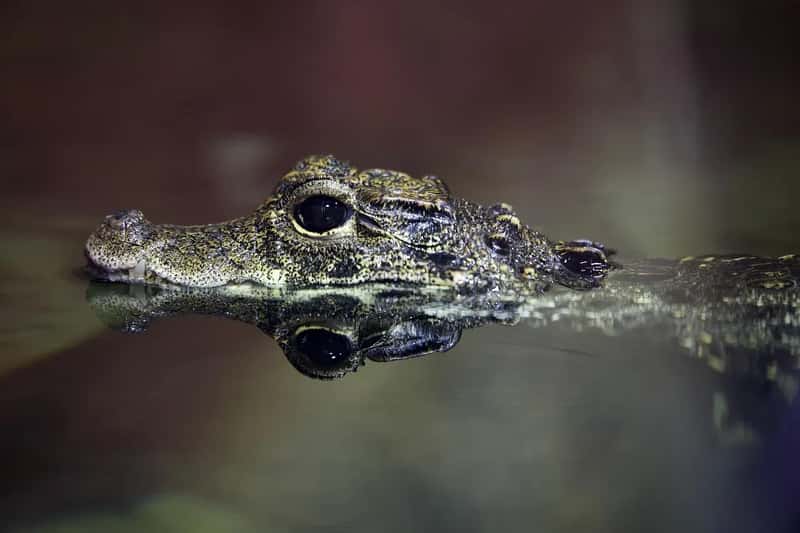
The numbers behind this species are stark. Estimates suggest that fewer than 500 adult West African slender-snouted crocodiles are left in the wild. That scarcity has earned it a grim distinction, since it is not only one of the six priority crocodilian species for conservation worldwide and the most endangered crocodile species on the African continent, but also one of the most Critically Endangered species on the planet.
The decline has already erased the species from parts of its historic range. It was already recorded as severely depleted in Liberia and Nigeria, and likely extinct in The Gambia, Senegal, Guinea-Bissau, and Togo before the year 2000. Field surveys in the years since have only reinforced how precarious the remaining strongholds are, with a study of both protected and non-protected areas finding that in places where the slender-snouted crocodile existed in the past, there are no more in non-protected areas.
Forests Falling Faster Than Protections Can Keep Up
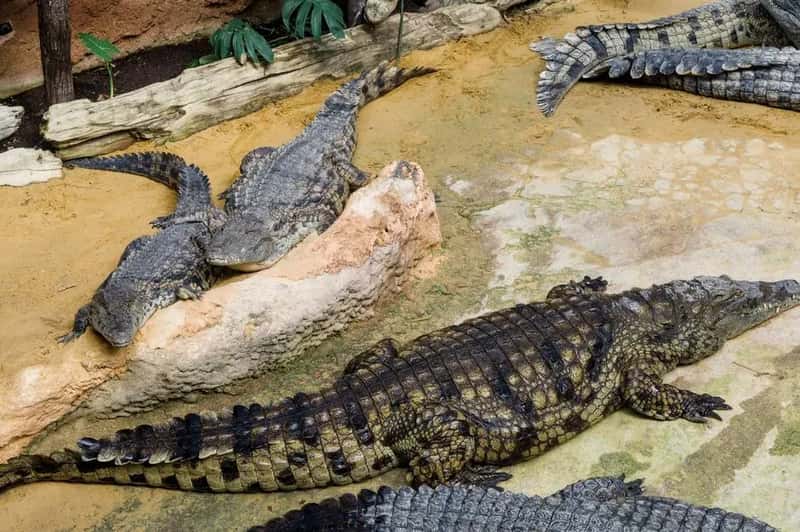
Habitat loss sits at the heart of the crisis. The West African slender-snouted crocodile is under threat from fishing practices, human disturbance, hunting, habitat degradation, and fragmentation across its entire range, and the forests where it lives and climbs are being cleared at a rate that outpaces conservation action in many countries. Every hectare lost removes basking branches, hunting cover, and the shaded microclimate the species depends on.
Fishing pressure compounds the damage in ways that are easy to overlook. Nets set for fish routinely snare crocodiles as bycatch, while unregulated small-scale mining adds another layer of disturbance to river systems. Both species are faced with extreme habitat loss, overfishing, and the increasing threat of artisanal mining activities. Mining in particular tends to muddy water clarity and disrupt the fish populations the crocodiles rely on, a knock-on effect that field researchers have tracked firsthand in places like Taï National Park in Côte d’Ivoire.
An Even Stranger Cousin Underground
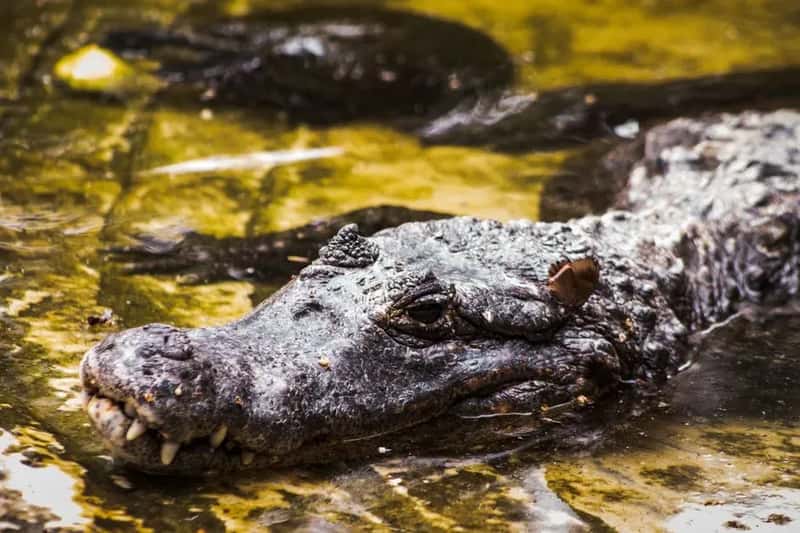
The slender-snouted crocodile isn’t the only West African species pushing the limits of what a crocodile is assumed to do. Its smaller relative, the dwarf crocodile, has revealed an even more startling adaptation. One population of dwarf crocodiles has taken an even more radical turn, with some having gone underground, turned orange, swapped their diet for bats and cave crickets, and possibly drifting toward becoming an entirely new species.
The physical evidence of this shift is visible on the animals themselves. Researchers studying cave systems in West Africa have found crocodiles living in near-total darkness, their skin stained by the guano-rich environment, a visible sign that these animals have been down there long enough for their biology to shift. Genetic work backs this up, since the current population size of cave-dwelling crocodiles is not more than 100 to 200 individuals according to researcher Matthew Shirley, and recent sampling has identified three genetically distinct populations within the dwarf crocodile group more broadly. It’s a reminder that West Africa’s crocodilians as a group are still full of surprises, even as their habitats shrink around them.
The Race to Save What’s Left
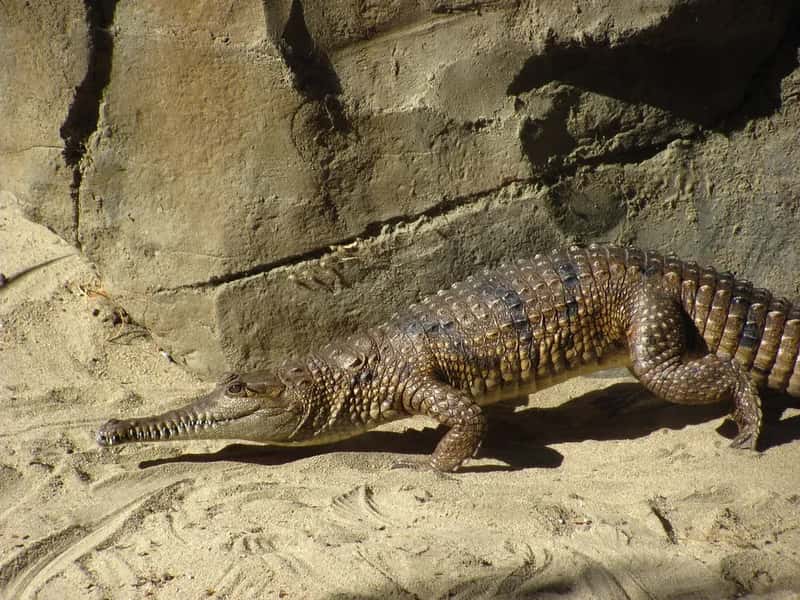
Conservation groups aren’t standing still. Conservation efforts for the species have intensified since the early 2010s, focusing on captive breeding, reintroduction, and community engagement to address its critically endangered status, with a primary initiative being Project Mecistops, established to coordinate conservation actions across West Africa, including collaboration with the Abidjan National Zoo in Côte d’Ivoire for breeding and reintroduction programs. Juveniles raised in captivity are given a head start before release, a technique meant to boost survival odds during the most vulnerable early years of life.
On the ground, that work depends on dedicated field scientists tracking individual animals through some of the last intact habitat the species has left. In Taï National Park, researcher Christine Kouman has tagged dozens of crocodiles to understand how they use the river system, concluding simply that Taï is a paradise for slender-snouted crocodiles, and if you want them to thrive, you need to keep the forest as it is, well protected. Yet even in a protected park, change is visible. Kouman has observed that water quality has shifted noticeably since her research began over a decade ago, a small but telling sign of pressures building even in the species’ best remaining refuge.
What Comes Next
The slender-snouted crocodile’s story is a strange mix of resilience and vulnerability. Here is an animal ancient enough to predate most mammals, adaptable enough to climb trees and thrive in total darkness, yet fragile enough that a few hundred individuals may be all that stand between it and extinction. Its rarity isn’t a curiosity for nature documentaries; it’s a warning sign about the state of West Africa’s remaining rainforest rivers.
Whether this crocodile survives the coming decades will likely come down to how quickly habitat protection, anti-poaching efforts, and captive breeding programs can outpace the deforestation and river degradation closing in on its last strongholds. The species has already vanished from several countries where it once lived. What remains is a narrow window, and a quietly remarkable animal that deserves far more attention than it has ever received.