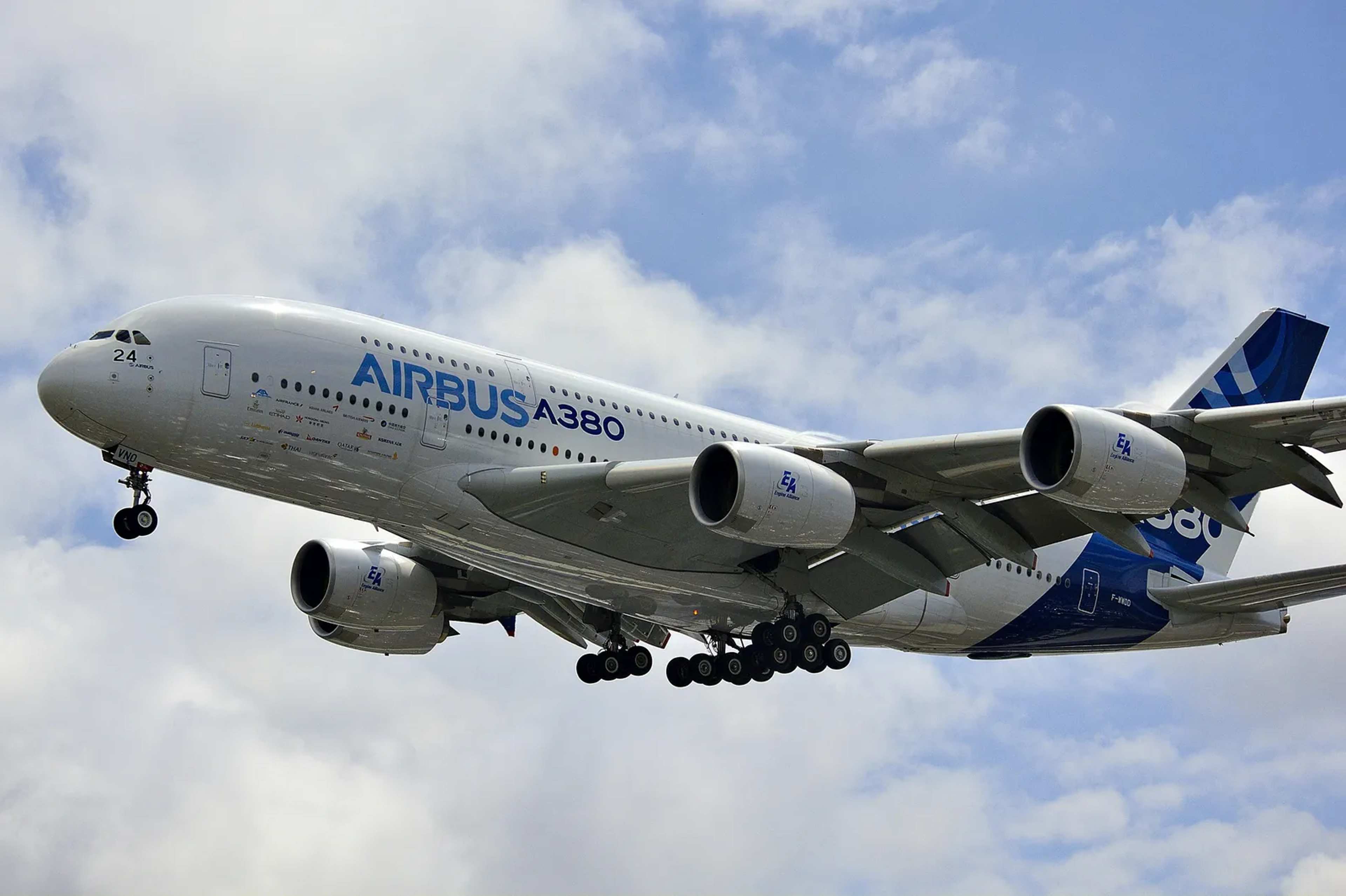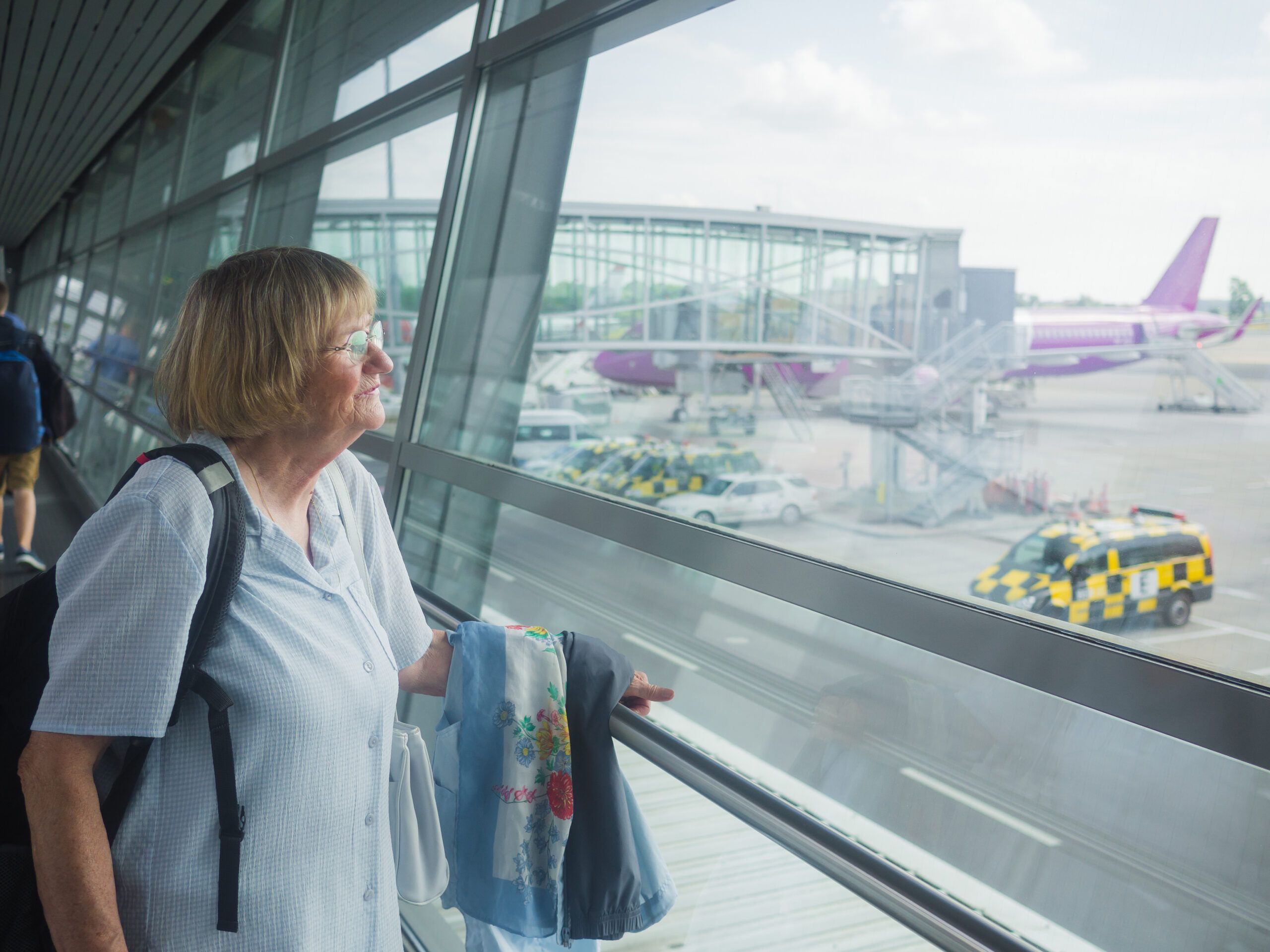
Turning 50 doesn’t ground anyone. Millions of people cross oceans in their fifties, sixties and beyond, and most of them land in good shape. Still, a 12-hour economy flight asks more of the body than it did at 30, and the differences are worth knowing before you book.
Some changes are well documented, like how blood clot risk and recovery from time zone shifts relate to age. Others depend on your health, and the research on them is mixed. Here’s what the evidence says, and what it doesn’t say.
Your Body Clock Gets Less Forgiving
Older travelers often report that jet lag lasts longer, and some research supports that. In a classic sleep lab study, middle-aged volunteers had more waking time during the night after a six-hour schedule shift. They also reported bigger drops in alertness and well-being than younger volunteers.[1] That experiment simulated jet lag rather than using real flights, and it was small. Even so, it remains a frequently cited piece of the puzzle.
The science isn’t settled, though. One review notes that the effect of age on jet lag susceptibility is complex and debated, with conflicting evidence across studies.[2] A fair reading is that many people over 50 feel jet lag more, but it varies from person to person. Don’t assume you’ll be wrecked, and don’t assume you’ll bounce back like a twenty-something.
Sleep Is the Part That Suffers Most

In that same study, the core body temperature rhythm adjusted at about the same pace in both age groups. The researchers suggested the extra symptoms in middle-aged subjects came mainly from trouble staying asleep at early times in the body’s day.[1] In plain terms, your internal clock may reset fine, yet your sleep falls apart while it does.
A separate experiment with people aged 77 and older found something similar. Their temperature rhythms adjusted fairly quickly, but sleep disruption and daytime sleepiness lingered longer than in younger people.[3] So if you feel oddly tired for days after landing, that’s a recognized pattern rather than a personal failing. Planning for lighter first days at your destination is a sensible response.
Cabin Air Is Thinner Than It Feels
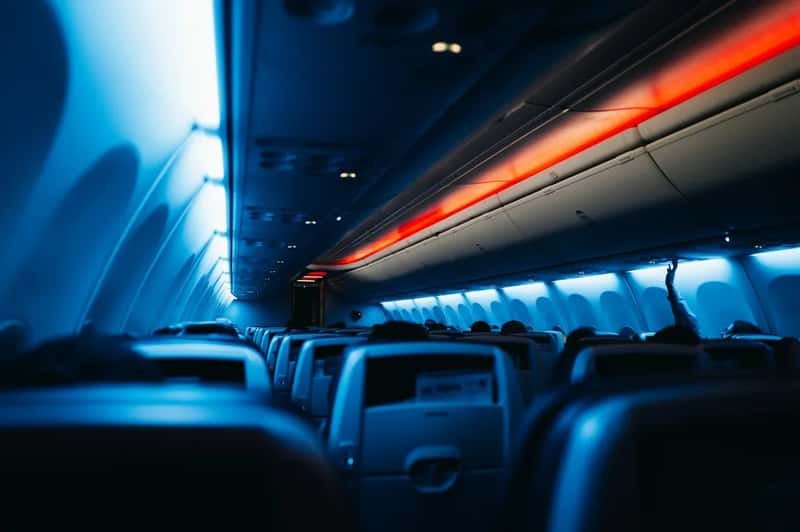
Planes aren’t pressurized to sea level. Commercial airlines must keep the cabin pressure altitude at no more than 8,000 feet.[6] At that level, the oxygen available is equivalent to breathing about 15.1% oxygen at sea level.[7] Healthy people usually cope without noticing.
Age changes the picture slightly. According to one traveler health resource, blood oxygen falls with cabin altitude, and more so in elderly passengers.[8] A British Thoracic Society summary adds that arterial oxygen tension falls in all passengers, and in people with respiratory disease the altitude may worsen existing low oxygen levels.[7] For most healthy fifty-somethings it’s a background factor, not a reason to stay home.
Heart and Lung Conditions Deserve a Pre-Flight Chat
Cardiovascular disease becomes more common with age. A Harvard public health researcher has noted that close to 70% of people over age 60 have some form of cardiovascular disease[9], and that more people are traveling in retirement. The reassuring part is that older adults with stable cardiovascular disease should generally be able to fly without added risk[10], according to a University of Arizona geriatrics resource. The same researcher also points out that heart attacks in flight are still rare, even though numbers have been rising.[9]
Lung conditions call for more planning. The British Thoracic Society guidance highlights referral for further assessment when a patient not on long-term oxygen has resting oxygen saturation below 95% on room air.[7] If you’d need oxygen on board, you must bring a portable oxygen concentrator and tell the airline ahead of time.[6] Another guide suggests contacting the airline at least 48 hours before the flight to arrange in-flight oxygen.[8]
Sleeping on the Plane Comes With Fine Print
Everyone wants to sleep through a long flight, and the drink cart is tempting. Harvard Health reports that people sleeping at airplane cabin pressure had lower blood oxygen and higher heart rates than those sleeping at normal pressure, and adding alcohol pushed both further in the wrong direction.[11] Those shifts could matter for older adults at risk of heart problems.
Alcohol also works against the jet lag goal. A chapter on jet lag in sleep medicine lists alcohol use during flights as a risk factor because it fragments sleep.[2] Harvard’s researcher adds that alcohol sedates and increases dehydration[9], and that the dry cabin makes water the better choice. One glass of wine won’t ruin your trip, but skipping it is easy, and the evidence favors doing so.
Move, Hydrate, and Look After Your Legs

The anti-clot advice is refreshingly simple. Harvard Health recommends that on a long flight, walking a little every hour or so helps leg circulation, and so does flexing your feet and circling your ankles.[11] It also notes that drinking plenty of water has a bonus, because it makes you get up for the restroom.[11] An aisle seat makes that routine far less awkward.
Compression stockings are an option for some. The CDC says that some people may benefit from graduated compression stockings[5] and advises talking to your doctor if you’re at risk. If you take blood thinners, follow your doctor’s recommendations on your medication.[5] Also remember that symptoms can show up after landing. Studies most commonly observe travelers for four weeks after a flight[4], so swelling or pain in one leg, or sudden breathlessness, deserves prompt medical attention.
Sort Out Paperwork, Medication, and Airport Help
A University of Arizona geriatrics resource lists the practical issues clinicians weigh when assessing older travelers. They include having a sufficient supply of medications, immunizations for foreign travel, travel insurance for medical care and evacuation, and airport accommodations such as wheelchairs.[10] That list reads like boring admin, yet it’s where most avoidable trouble starts. Carry medications in your hand luggage with a little extra in case of delays.
Airport distances can be long after a cramped flight. Travel health guidance says that people who become short of breath when walking should arrange help at airports and hotels, including a wheelchair if needed.[8] Asking for assistance isn’t giving in. It just saves your energy for the trip itself.
Resetting After You Land
Some of the most interesting recent work is about meal timing. Researchers from Northwestern University and the Santa Fe Institute reported that a hearty breakfast in the destination time zone may help older adults recover from jet lag faster.[12] Their mathematical model suggested that an early meal in the new time zone, and no late meal the night before, could mean two fewer days of jet lag.[12] Note that this was a model, so treat it as a promising idea rather than proof.
Light exposure and gentle scheduling matter too. In the older simulated jet lag research, bright light treatment showed the most promise[2], while the so-called jet lag diet did not help. Practically, that means getting outside in daylight at your destination and keeping your first day modest. Eastbound trips are usually the harder direction, so build in extra rest if that’s your route.