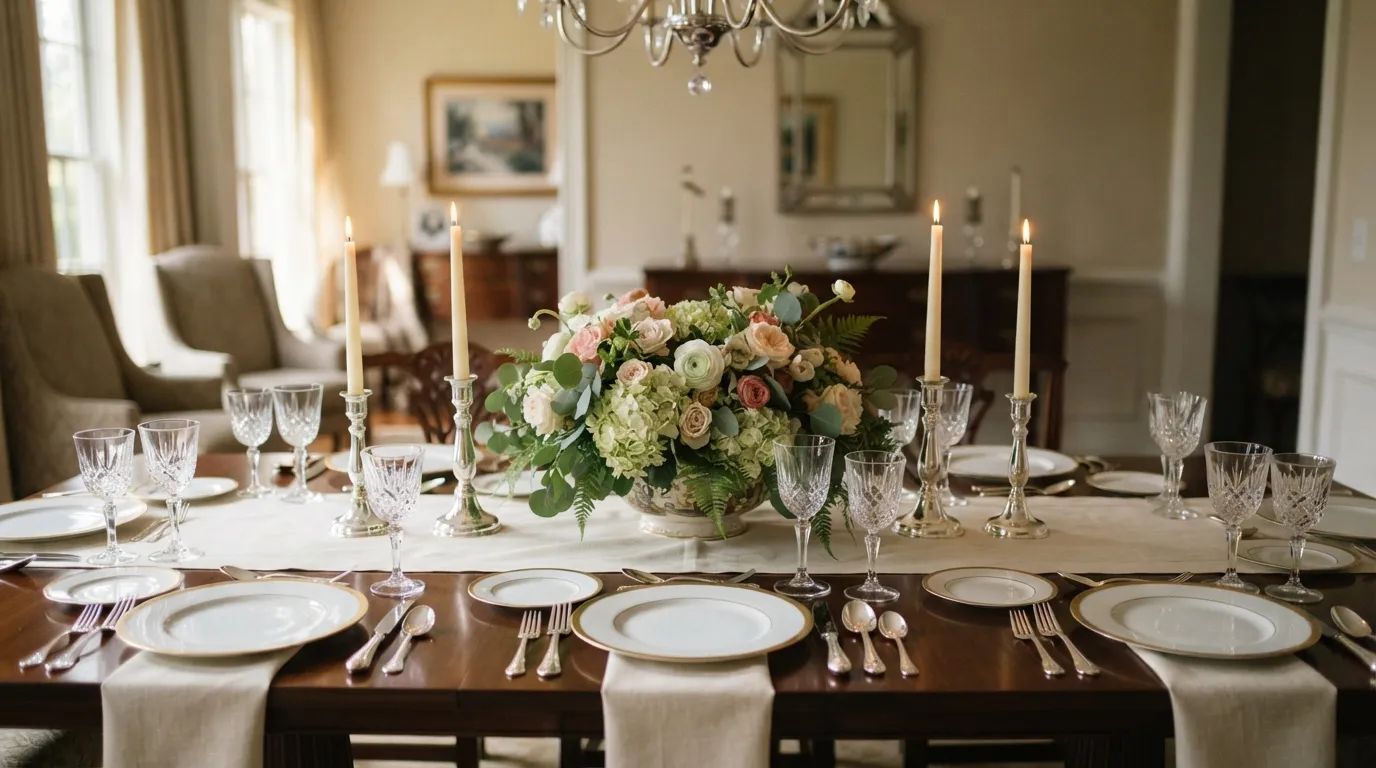
Most people assume a great dinner party is won in the kitchen. It isn’t – professionals who run five-star dining rooms and hosts who never seem to have a bad night all agree that the meal is decided before a single guest walks in.
What actually happens in that empty room in the hour before the doorbell rings is stranger, more deliberate, and more revealing than almost anyone expects. Here’s the countdown of what’s really going on behind the scenes, starting with the detail most hosts get wrong first.
#10 – The Table Is Inspected Like a Crime Scene
Most hosts glance at the table and call it done. That’s a mistake.
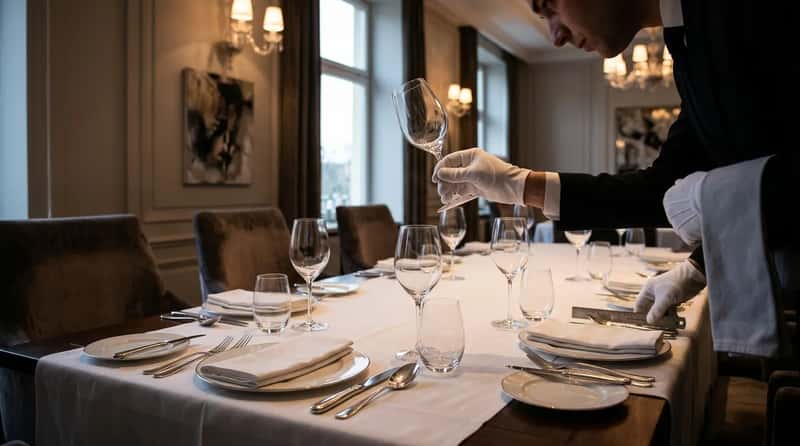
Every piece of tableware is inspected for chips, breakage, and cleanliness. Every dining table is wiped down and checked to be in good working order.
A wobbly leg or a smudged wine glass isn’t a minor detail. Guests don’t always notice when it’s done perfectly, but they notice instantly when it’s inconsistent – a missing fork, a lopsided placement.
At the highest level of service, staff wear white gloves during setup, and napkins and tablecloths are checked to be clean, starched, and ironed. That’s not excessive – it’s the baseline.
The single most-noticed flaw before dinner? Linens with wrinkles. It signals to guests that the attention to detail stopped at the door.
But the table itself is just the surface. What’s underneath it matters more than most people realize…
#9 – A Hidden Cloth Goes Under the Tablecloth
Almost nobody talks about this, and almost nobody does it at home.
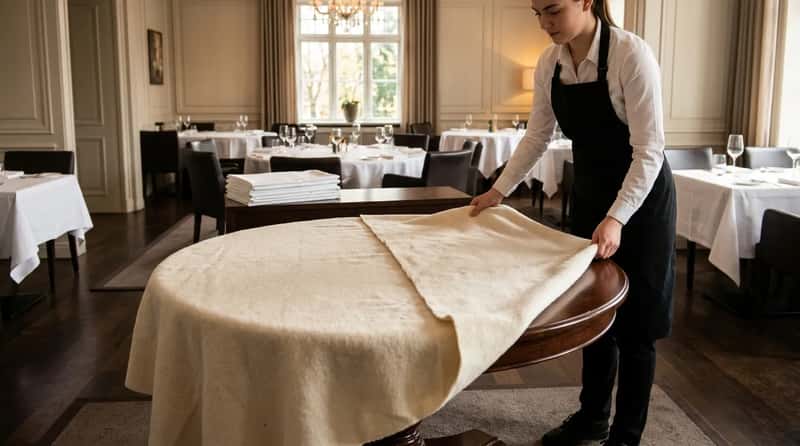
A special cloth called a molleton cloth is placed on the table prior to laying the tablecloth, specifically to muffle the sound of dishes and glassware. In professional dining rooms, this is standard practice.
It softens every clink, every set-down plate, every moved glass – quietly eliminating a layer of noise that breaks the spell of a good dinner conversation.
Worth Knowing
- A hidden molleton layer muffles clinks, scrapes, and set-down sounds before they ever reach guests.
- Professional rooms leave at least 24 inches between diners for elbow room and comfort.
- A felt pad or quilted table protector recreates the same hushed effect at home for almost nothing.
Most home hosts skip this entirely, then wonder why their table sounds like a construction site mid-meal. Cramped, noisy tables make for uncomfortable guests – and uncomfortable guests leave early.
What’s next changes the entire emotional temperature of the room, and most people get it wrong every time…
#8 – The Lighting Is Locked In Before Anyone Arrives
Overhead lights blazing when guests walk in? That’s an instant mood-killer.
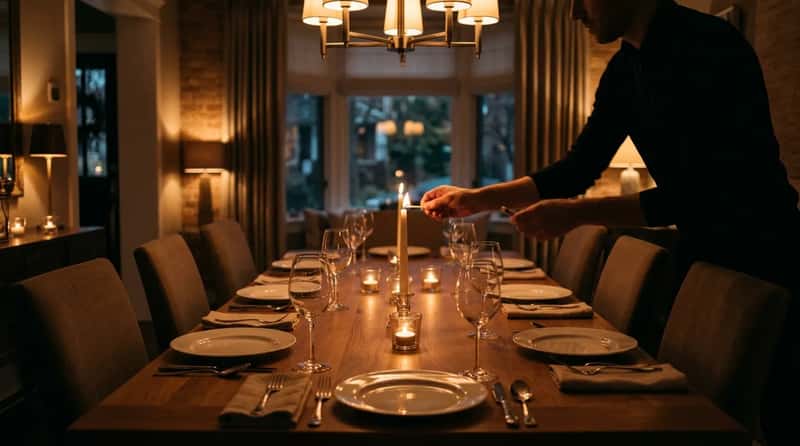
All candles and mood lighting are lit before dinner service begins – not after guests sit down, not while people are milling around with drinks. The room needs to look and feel ready before the first coat comes off.
Lighting sets the visual tone of a dining space and directly influences mood – dim, warm lighting creates intimacy and encourages guests to relax.
Recent findings in hospitality design reveal that diners exposed to warm, ambient lighting are 40 percent more likely to report higher satisfaction with their meal. That’s not a small effect.
The target range professionals use is 2,700 to 3,000 Kelvin – warm white, not cool or daylight-spectrum. Steer clear of overhead fluorescent lights or overly bright bulbs, which can create a sterile atmosphere.
The lighting is set, the table is clean. But the room still smells like the wrong thing – and that’s a problem most hosts never see coming…
#7 – The Scent Is Engineered, Not Accidental
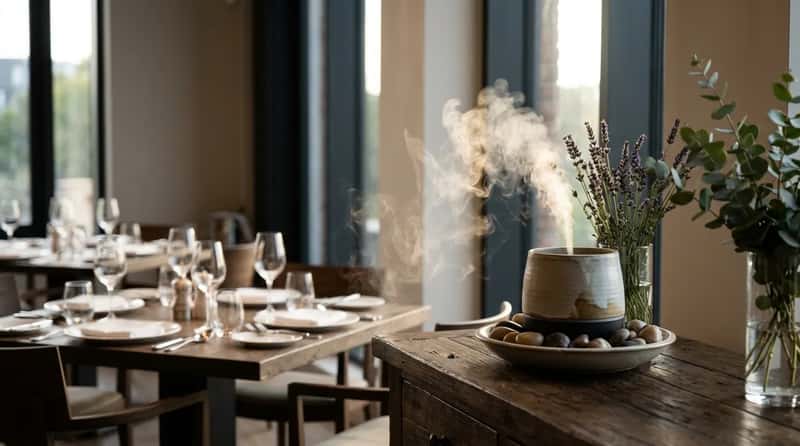
Walk into any world-class dining room and the smell hits you first. That’s not an accident.
Subtle, pleasant fragrances – whether from candles, flowers, or the kitchen itself – are used to evoke comfort and appetite. But the placement matters enormously.
A strongly scented candle sitting six inches from a dinner plate competes with the meal – and it usually wins.
Move fragrance to the entry, a side console, a powder room. Let the dining table smell like the food on it.
According to a University of Paderborn study, ambient scents increase buying intention by 14.8% and the length of a customer’s stay by 15.9%. Scent is not décor – it’s behavioral engineering.
Scent should be introduced at least 30 minutes before guests arrive so it settles naturally into the room instead of hitting people in the face as they walk in.
Once the scent is placed, there’s one more invisible element that almost no one thinks to prepare in advance…
#6 – The Music Is Already Playing When the First Guest Steps In
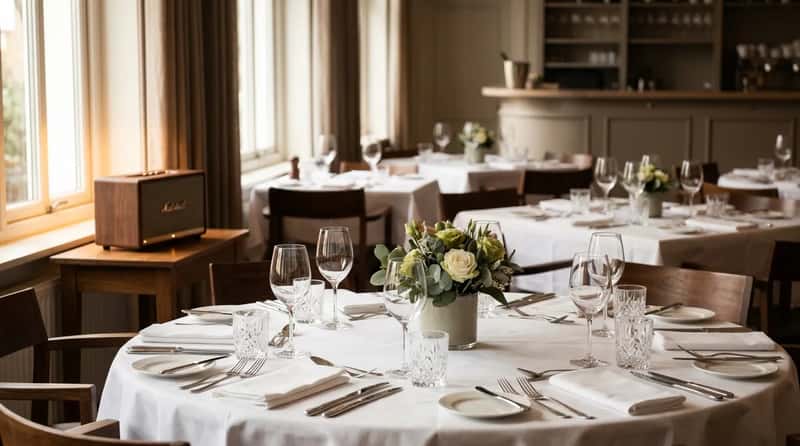
Most people hit play as guests arrive. Experts set the music before the room fills.
Slow-tempo background music encourages guests to linger. According to a study published in Behavioral Sciences, patrons in a slow tempo music group spent the most time in the restaurant, while patrons in the fast tempo group were the quickest to leave.
This is not a soft preference – it’s a documented behavioral pattern.
Quick Compare
- Slow tempo: guests linger longest at the table
- No music / control: dining time falls in the middle
- Fast tempo: guests are quickest to leave
Keep music under 90 BPM during conversation-heavy periods to keep the energy relaxed without flattening the room.
Sound changes across an evening the same way light and scent do, and treating it as one static background track is the easiest way to lose an atmosphere you spent hours building.
The playlist before guests arrive should be slightly quieter and slower than the one during dinner. It primes the room, not the meal.
The room sounds right, and it smells right. Now comes the piece that guests read the second they sit down…
#5 – The Place Cards Are Set and Double-Checked
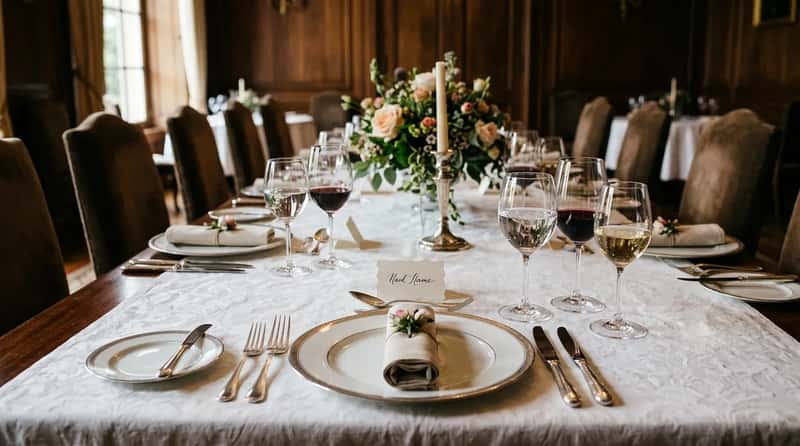
Seating is not casual. It’s a strategy.
All guests at a formal dinner should receive a name card to indicate their seating. Place cards go above the charger or dessert cutlery, centered between the bread plate and glasses.
In professional rooms, place cards are checked to ensure they have the correct names and correct spelling on them – because a misspelled name at a dinner party is an insult dressed up as a mistake.
Seating arrangement is where smart hosts do their real social engineering. Put the talker next to the introvert, not next to another talker.
Seat the guest of honor where eye contact with the host is natural, not blocked by a centerpiece.
Before food arrives, before a server introduces themselves, the table itself communicates and helps shape the dining experience.
And the way the silverware is arranged communicates more than most guests consciously realize…
#4 – The Silverware Tells Guests Exactly What’s Coming
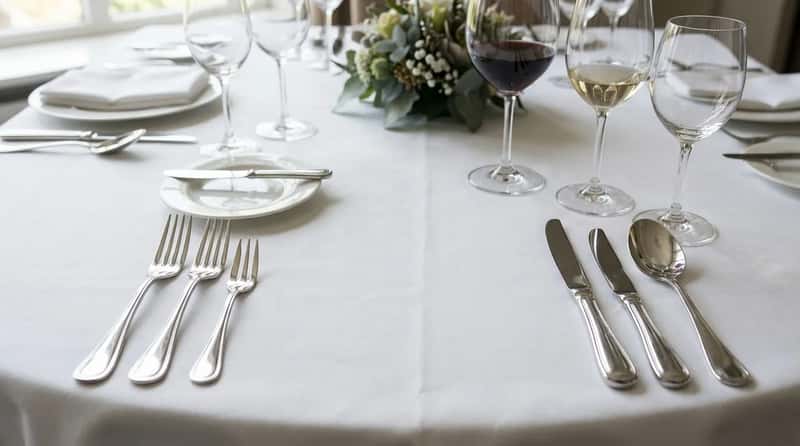
The cutlery layout is not just etiquette – it’s a menu revealed in advance.
Utensils are worked from the outside in – guests always start with the outermost fork or spoon and move inward with each course. A formal setting can easily include 15 or more pieces, though it still follows the rule about setting out only what might actually be used.
Every extra fork is a promise to the guest about what’s coming.
Fast Facts
- Formal place settings can include 15+ pieces, but only what the menu actually requires.
- Utensils sit exactly one inch from the table’s edge for consistent, professional alignment.
- The bread plate belongs upper left – the most commonly swapped item in home table settings.
Symmetry is critical: all plates, utensils, and glasses are aligned evenly, so the whole table reads as one continuous, deliberate line.
Swapping the bread plate’s side means guests spend the first ten minutes accidentally eating each other’s bread.
The cutlery is set, the plates are aligned. But there’s one thing sitting on the table right now that most people forget to open before dinner…
#3 – The Wine Is Already Open and Breathing
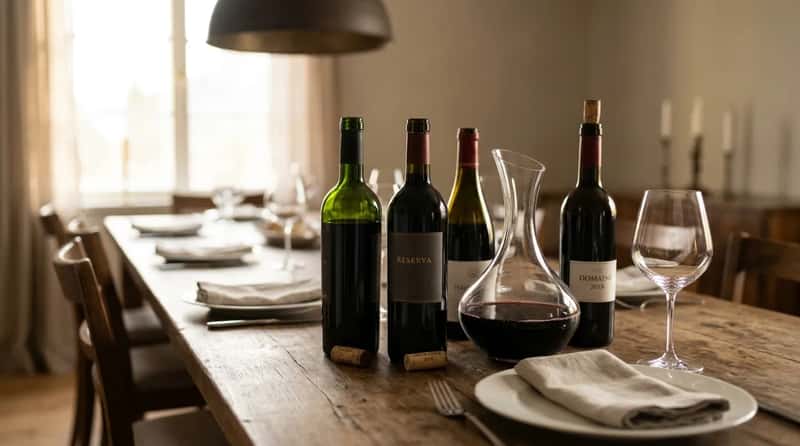
This one catches most amateur hosts off guard every single time.
Red wine should be uncorked and standing in the dining room one hour before dinner is served. Not uncorked at the table when the food arrives – one full hour before the first guest sits down.
Decanting is even better. Serving a tight, just-opened red is one of the most common quiet failures of a home dinner party.
Wine glasses should be held by the stem, never the bowl – cradling the bowl warms the wine and leaves fingerprints. Drinks are always placed to the right of the plate.
In professional rooms, glassware is polished with a steam cloth before service – fingerprints on crystal catch candlelight in the worst possible way. It’s a detail guests notice without knowing why the table looks slightly off.
There’s one more step taken before guests arrive – and it’s the one that separates a good host from an exceptional one…
#2 – The Centerpiece Is Deliberately Low
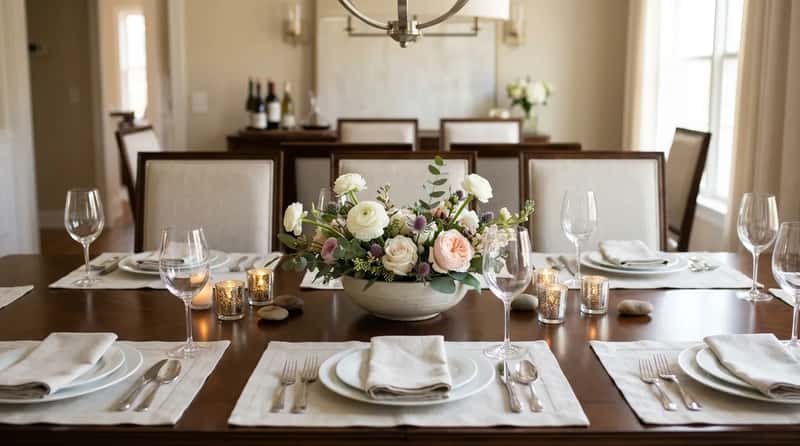
Most people build their centerpiece too tall. It’s one of the most consistent, easily fixed mistakes in home entertaining.
A centerpiece should be easy to lift when the main course arrives. A low bowl, compact floral arrangement, or collection of small objects can create a focal point without blocking sightlines.
Blocking eye contact between guests across the table kills conversation – and conversation is the whole point.
At a Glance
- Keep centerpieces low enough that guests can see each other clearly across the table.
- Use fresh, in-season flowers picked the day of or the day before.
- Prioritize sightlines over height – conversation always wins over décor.
Tall centerpieces are for Instagram; low centerpieces are for actual dinner parties. The room should frame the people in it, not the décor.
Coordinated chairs, flooring, lighting, and nearby storage make the dining area feel settled, while a crowded tabletop makes the whole space feel smaller.
The one thing that ties it all together happens in the final minutes before the first knock at the door…
#1 – The Whole Room Gets One Final Walk-Through
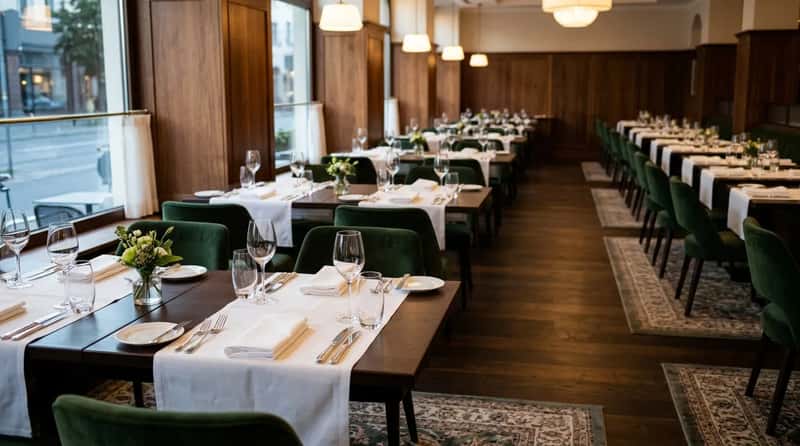
The last thing that happens before guests arrive is a slow, deliberate lap around the entire room.
The table is laid as early as possible, and everything is double-checked personally before guests arrive. This isn’t paranoia.
The dining room must be in order before the service begins – a room in disarray will negatively affect the entire service.
One chair pulled too far. One glass facing the wrong way. One napkin that slipped during the setup.
The type of table setting you use helps set the tone for service. As soon as guests are seated, they know the service will be excellent if they see an impeccable table setting.
The final walk-through is the moment a host stops being a preparer and becomes a host. Everything that can be controlled has been controlled.
What’s left is the people – and that’s where the real evening begins.
When an environment feels intentional, guests attribute that care to the occasion itself, elevating a simple dinner into a meaningful event.
The Bottom Line
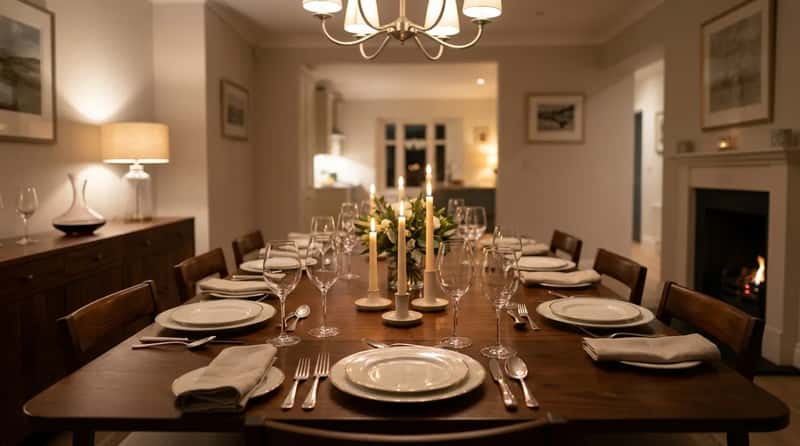
The dining room before guests arrive looks nothing like what most people imagine. It’s a room that has been inspected, layered, engineered, and rehearsed.
The table is wiped and padded. The silverware is symmetrical to the inch.
The candles are lit, the music is already playing, the red wine has been breathing for an hour, and the scent was set thirty minutes ago.
Every detail communicates care – and guests feel that care without ever knowing where it came from.
The best dinner parties feel effortless because the work was finished before anyone rang the doorbell.
What’s your one non-negotiable table detail before guests arrive? Tell us in the comments – the rest of us clearly need the reminder.
Bonus: The Five-Minute Reset Nobody Tells You About
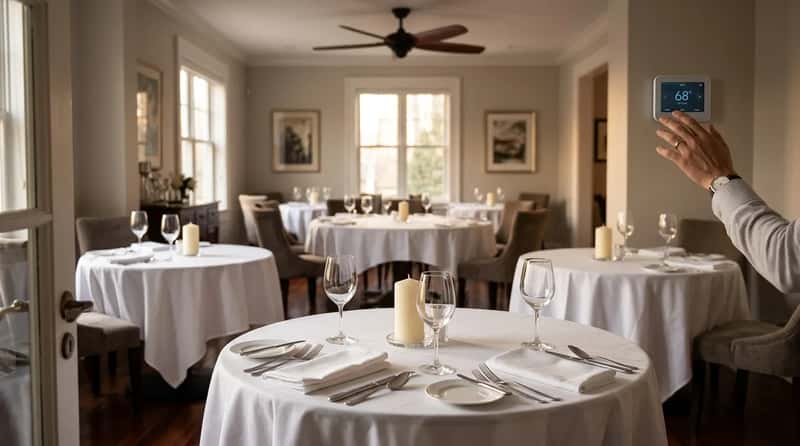
Professional dining room managers run one last pass that almost never gets mentioned – a temperature and airflow check, done right before the door opens.
Candles, a warm kitchen, and body heat from a full table can push a closed dining room several degrees warmer within the first hour of a meal, turning a comfortable room stuffy by dessert.
- Set the thermostat a few degrees cooler than feels normal about 30 minutes before guests arrive, so the room settles at a comfortable temperature once everyone is seated.
- Turn off ceiling fans and strong air vents right as candles are lit – moving air disturbs the flame and scatters the scent layer you just placed.
- Stand in the doorway guests will actually enter through and look at the room from that exact angle – it’s the only way to catch a crooked chair or a glare off a glass before someone else does.
- Do this walk-through last, after lighting, scent, and music are already set, so it becomes the true final check rather than another step to redo later.
This single habit is what separates a room that merely looks ready from one that actually feels comfortable the moment guests sit down.