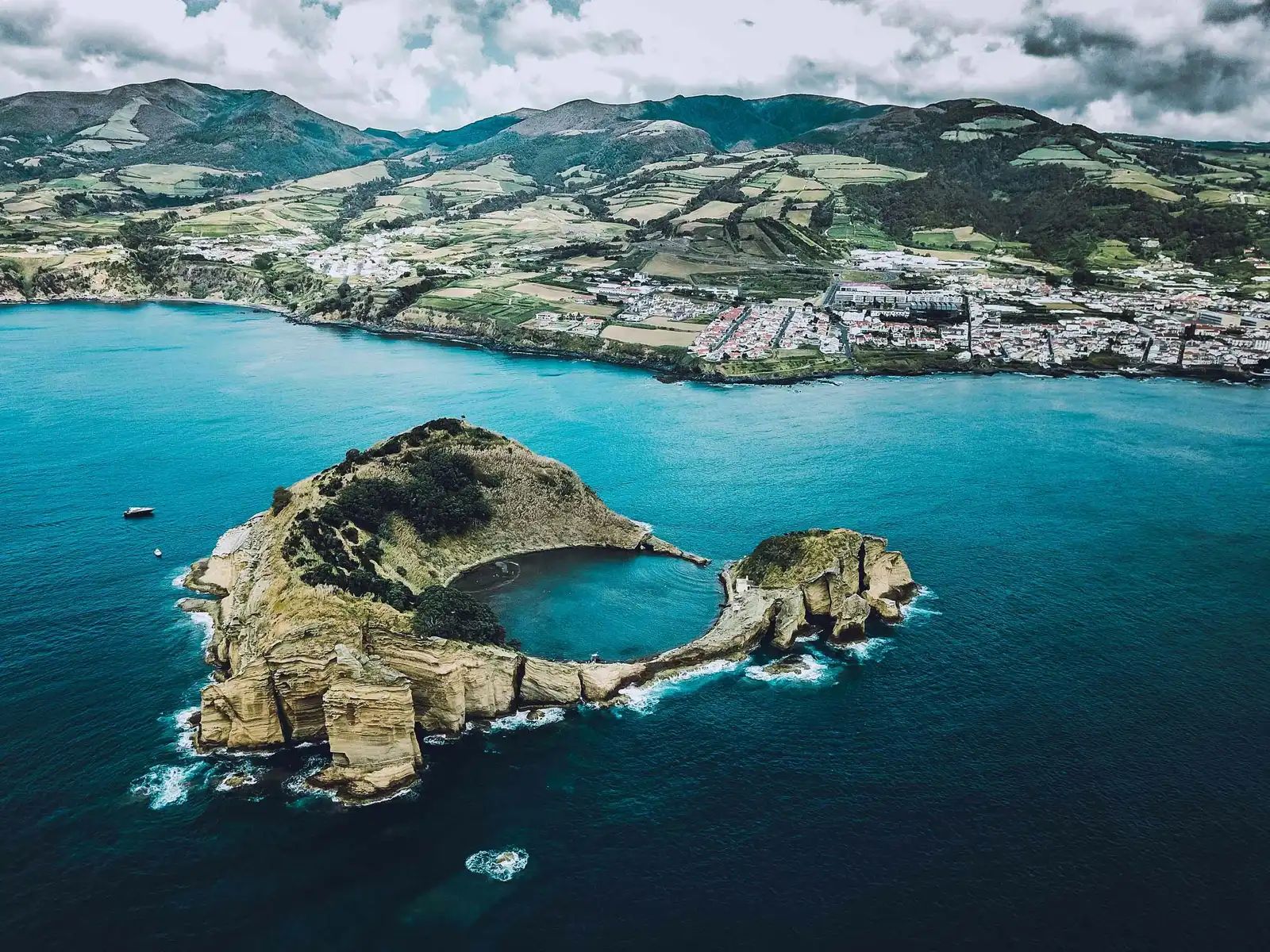
Portugal’s Azores archipelago rises from the middle of the Atlantic as a striking blend of Ireland’s rolling green hills and Hawaii’s volcanic drama, all wrapped in a distinct Portuguese character. São Miguel, the largest of the nine islands, captures this mix with particular intensity. Travelers who reach its shores encounter dramatic coastlines, steaming craters, and villages that seem to cling to the edges of the world. ([1])
Volcanoes Rise Straight From the Sea
The islands formed through ancient volcanic activity that continues to shape every view. On São Miguel, black lava cliffs drop sharply into the ocean while fertile slopes climb toward central peaks. These formations create a landscape that feels both raw and alive. The result is a terrain unlike anything found on the European mainland.
Visitors often begin their exploration at coastal lookouts where the scale of the eruptions becomes clear. Steam vents and hot springs still dot the interior, reminders that the forces that built the islands remain active. This geological foundation supports the lush vegetation that covers much of the island today.
Fishing Villages Perched on Sheer Cliffs
Traditional communities along São Miguel’s coast have adapted to the steep terrain over centuries. Small harbors sit tucked beneath towering rock faces, where fishing boats return daily with fresh catches. The villages retain a quiet rhythm shaped by the sea and the surrounding cliffs.
Stone houses with whitewashed walls and red-tiled roofs line narrow lanes that wind upward from the water. These settlements offer a glimpse into island life that has changed little in generations. The dramatic setting adds a sense of isolation that many travelers find deeply appealing.
Calderas Shelter Exotic Forests
At the heart of São Miguel lie several calderas, vast volcanic craters that now cradle dense woodlands. These sheltered basins protect unique plant species and create microclimates distinct from the exposed coast. Trails lead through layers of ferns, mosses, and flowering trees that thrive in the humid environment.
The contrast between the open ocean views and the enclosed forest interiors defines much of the island’s appeal. Walkers can move from breezy cliff tops to cool, shaded valleys within a short distance. The calderas serve as natural sanctuaries that highlight the island’s ecological diversity.
Centuries-Old Architecture Adds Quiet Charm
Beyond the natural features, São Miguel preserves layers of human history in its buildings and towns. Churches, manor houses, and public squares reflect Portuguese colonial influences blended with local adaptations. Many structures date back hundreds of years yet remain integrated into daily life.
The architecture provides a cultural counterpoint to the wild landscapes. Narrow streets in towns like Ponta Delgada reveal ornate facades and tiled courtyards that speak to the island’s long connection to the wider Portuguese world. This built heritage deepens the sense of place for anyone exploring on foot.
A Distinct Atlantic Destination
São Miguel stands apart because it combines elements rarely found together in one location. The island delivers volcanic drama, verdant interiors, and historic villages without the crowds associated with more famous destinations. Its position in the Atlantic keeps it removed from mainland Europe while remaining accessible to those willing to venture farther.
Each of the nine Azores islands offers its own character, yet São Miguel serves as an ideal introduction to the archipelago’s overall personality. The blend of influences creates an experience that feels both familiar and entirely new. For travelers drawn to dramatic scenery and unhurried exploration, the island continues to reward those who make the journey.