
Worldwide, the average person consumes about 45 kilograms of meat per year, according to UN Food and Agriculture Organization food balance data for 2023.[1] That number sounds tidy. It hides a huge gap between the countries at each end.
People in the heaviest meat eating nations get through more than 120 kilograms a year, while at the other extreme the average is under 10 kilograms.[1] Rankings shift depending on the dataset, the year and whether seafood is counted. Small island states and territories such as Tonga and Hong Kong top some lists, so the picks below focus on larger countries that appear consistently near the top and bottom.
United States

The U.S. remains the heavyweight among big economies. Among major economies, it leads at about 122 kilograms per person, according to 2023 FAO based figures.[1] Older World Population Review rankings put it even higher, at 128.63 kilograms per capita annually[2], which shows how much the method matters.
Chicken, not steak, now drives the habit. Poultry makes up the largest share of what Americans eat, followed by beef and veal, and then pork.[2] Its steady rise is largely down to being cheaper to produce and lower in fat than red meat.[2]
Australia

Australia sits just behind the U.S. in the 2023 FAO data. The figure for that year was 116.8 kilograms per person.[1] An earlier ranking from World Population Review had it slightly higher, at 121.53 kilograms per capita[2].
The country’s reputation is built on the barbecue. When seafood was removed from one comparison, Australia, Mongolia and Argentina climbed into the top five.[3] That tells you the appetite is for land animals, not fish.
Argentina

Argentina is the country most closely tied to beef. Its 2023 meat supply came to 114.9 kilograms per person.[1] Beef and buffalo meat account for more than half of what Argentines eat.[4]
On beef alone, nobody beats it. Residents had an average supply of about 47 kilograms of beef per person per year as of 2020.[5] Money has started to bite, though. Triple digit inflation, a recession and rising poverty pushed 2024 beef consumption toward its lowest level since records began in 1914.[6]
Mongolia
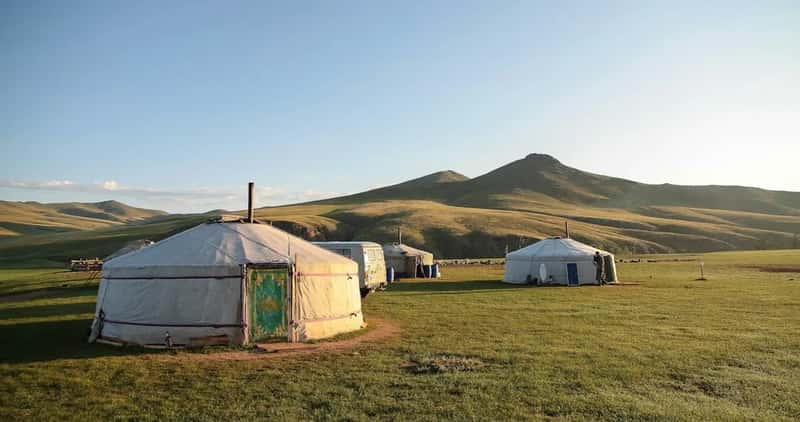
Mongolia regularly lands at or near the very top of per person rankings. A 2026 statistical roundup based on recent FAO data lists it second, at 136.1 kilograms.[7] A separate chart using 2022 data had it at 132 kilograms[8].
The diet leans on animals that thrive on open grassland. Mongolians eat more mutton and goat than anyone else, about 66 kilograms per person annually.[3] That appetite is rooted in the country’s heritage as a nation of skilled shepherds.[3]
Israel

Israel’s total sits right around the 100 kilogram mark. The 2023 figure was 108.7 kilograms per person.[1] What makes it distinctive is the mix, since chicken does most of the work.
Israel eats the most poultry in the world, at 64.9 kilograms per capita annually.[9] Chicken is affordable, widely available, and fits comfortably within kosher dietary practices.[2] Beef and especially pork play much smaller roles.
Spain

Spain is the European entry on this list, and pork explains most of it. Its 2023 meat supply was about 101 kilograms per person.[1] Pork is woven into nearly every regional cuisine, from Andalusia to Catalonia.[2]
World Population Review’s pork table lists Spain at 56.5 kilograms per person[10], one of the highest anywhere. It is also the largest pork producer in the EU, so the habit carries economic weight as well as culinary meaning.[10]
India

India is the most talked about case at the low end, mostly because of its size. Estimates vary a lot. Some sources put the average at less than 4 kilograms of meat per year[2], while 2023 FAO based figures show roughly 8.1 kilograms[1].
Whichever number you pick, India sits far below the global average. Hindu dietary customs that avoid beef, combined with a large vegetarian population across multiple faiths and regions, keep the national average low.[6] Lentils, dairy and other plant proteins fill much of the space meat occupies elsewhere.[6]
Bangladesh
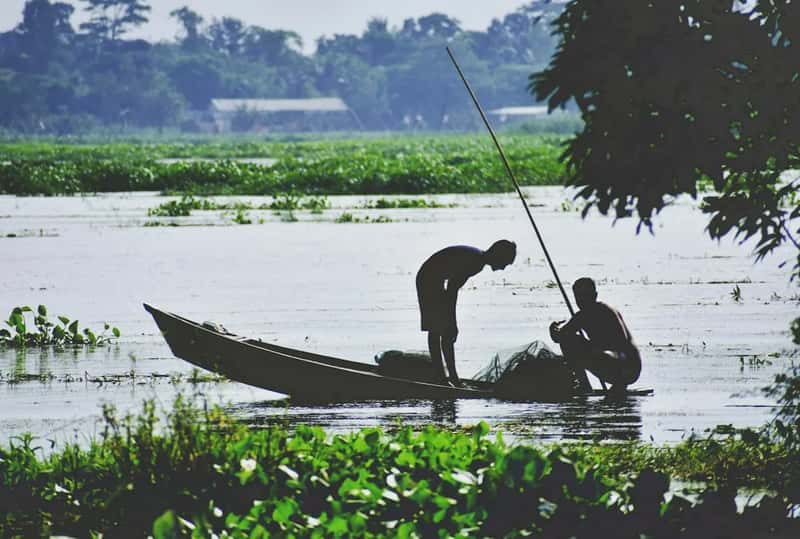
Bangladesh has long been cited as one of the lowest meat eaters on earth. A 2026 ranking of 189 countries places it near the bottom, at 4.5 kilograms per person per year.[7] It often trades places with India for the lowest spot, depending on the dataset and year.[2]
Cost is a big part of the story. Economic constraints make meat a luxury most families can’t afford regularly.[11] Fish is the major source of protein for most households, because it’s more affordable and a staple of the diet.[12]
Ethiopia
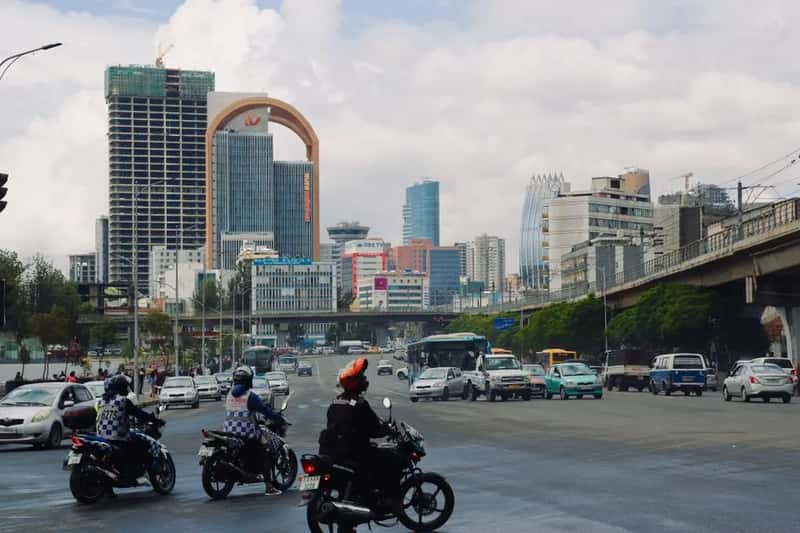
Ethiopia looks like a contradiction at first. It has one of the largest livestock populations on the African continent, yet its citizens eat very little meat.[6] The 2023 figure was 6.9 kilograms per person.[1]
Affordability explains much of the gap. Meat is expensive in the country, so it’s often reserved for special occasions.[11] Animals are plentiful, but that doesn’t mean they end up on everyday plates.
Nigeria
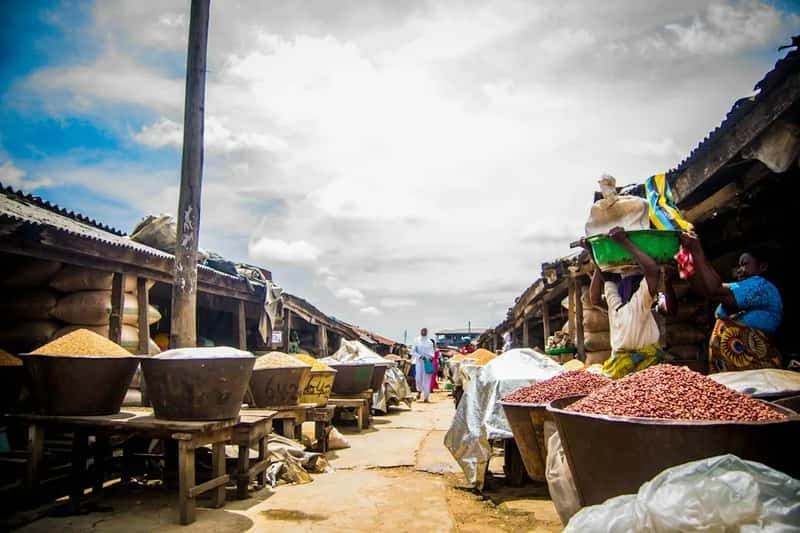
Nigeria shows that a large, growing economy doesn’t automatically mean a meat heavy diet. The same 2026 ranking lists it at 7.1 kilograms per person per year.[7] Another source puts it at 6.96 kilograms[13], so the two agree closely.
It’s a large country by population. Africa’s most populous nation has a growing economy, yet its meat consumption remains among the lowest in the world.[13] Income per person, more than appetite, seems to set the ceiling.
Burundi
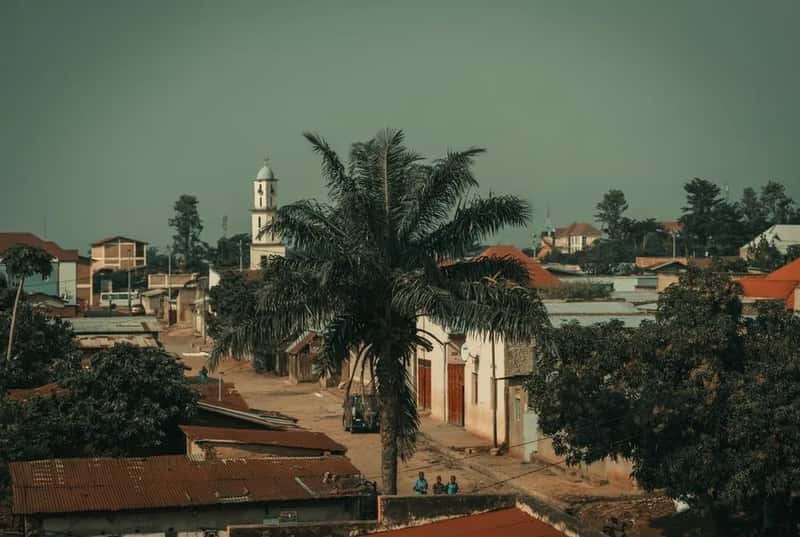
Burundi sits close to the very bottom of global tables. One 2026 ranking has it at 3.6 kilograms per person per year.[7] Other sources give a slightly higher figure, roughly 5.2 kilograms[2].
The reasons differ from India’s. Burundi’s low consumption is driven far more by economic hardship than by religious choice.[2] For most households, meat is simply out of reach on a regular basis.
Democratic Republic of the Congo

The DR Congo ranks last in the 2026 statistical roundup covering 189 countries. It has the lowest figure, at 3.5 kilograms per person per year.[7] That’s roughly a thirty fifth of what a typical resident of the top ranked countries eats.
Statista notes the broader pattern. The least meat in the world is eaten in Africa and South Asia, because meat is unaffordable for many people, because of cultural factors, or both.[14] It lists Burundi, the Democratic Republic of the Congo and Bangladesh among the lowest consumers.[14]