

The question of where to build a life abroad has never been more complicated to answer. On one hand, dozens of countries have spent the past few years designing visa pathways, tax incentives, and integration programs specifically to attract foreign residents. On the other, a growing number of governments are introducing salary thresholds, language requirements, student caps, and outright entry bans – moves that are gradually narrowing the door without always announcing it loudly.
What’s changed in 2025 and 2026 isn’t just individual policy shifts. It’s the underlying logic. For many people relocating abroad, the question is shifting from “where can I live?” to “where will I actually be accepted once I arrive?” Integration is now shaped by how locals respond to newcomers, how easy it is to find work, and whether expats feel like participants in society rather than visitors passing through. That distinction matters more than it once did.
Iceland: The World’s Top Expat Destination Right Now

With an overall score of 8.94 out of 10 in the 2026 William Russell global rankings, Iceland was named the most welcoming country around the globe, thanks to its high foreign-born employment rate of 84.2%, strong employment opportunities, straightforward administrative processes, and high levels of social trust. Those aren’t just feel-good metrics. They translate directly into how quickly someone can find stable work, access healthcare, and stop feeling like an outsider.
Iceland is emerging as Europe’s strongest expat integration hub, with one of the highest foreign-born employment rates in the world. The country’s small population structure, high social trust, and efficient bureaucracy make settlement unusually smooth for newcomers. Expats benefit from fast access to healthcare registration, strong labour absorption, and a society where foreign professionals are quickly incorporated into local workplaces. For a small island nation, that’s a remarkable achievement.
Luxembourg: Where Foreigners Are the Majority

Luxembourg came in second in the 2026 rankings with a score of 8.69. The reason it ranks so highly is structural rather than merely policy-driven. Large migrant populations support easier integration, particularly in countries like Luxembourg, where international residents form 51.2% of society. When the majority of your neighbors, coworkers, and service providers are also from somewhere else, the experience of being “foreign” simply dissolves faster.
Luxembourg’s high migrant population means that services like banking and housing are designed to accommodate international residents, and you’re likely to work in a multilingual workplace with coworkers who share similar relocation backgrounds. That kind of structural normalization of expat life is genuinely rare and hard to replicate elsewhere. It’s one of the most underrated advantages of smaller, internationally integrated nations.
Switzerland: Top Marks for Earning and Quality of Life
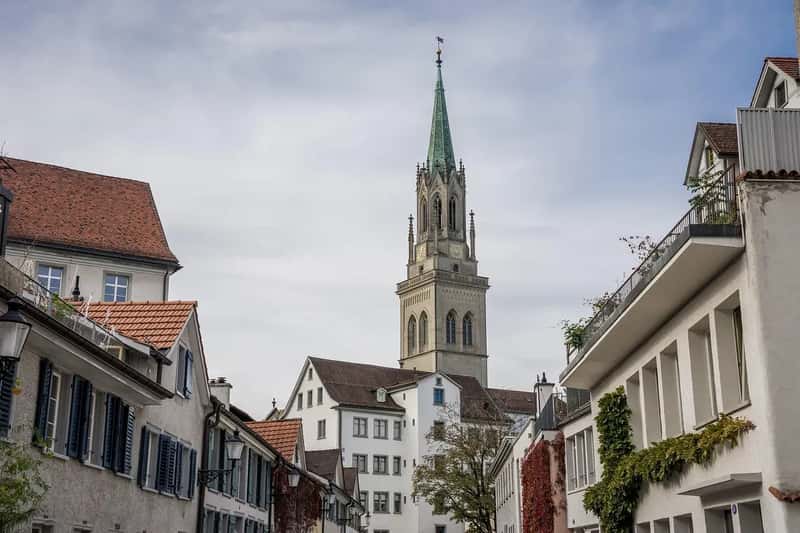
Rising from second place in 2025 to take the top spot in Remitly’s 2026 Immigration Index, Switzerland stands out for its exceptional earning potential, strong healthcare access, high safety standards, and a well-established immigrant community and public utility infrastructure. It consistently appears near the top of multiple independent rankings, which suggests its appeal isn’t driven by a single factor.
Switzerland scored a high visa openness score of 93 and a foreign-born employment rate of 77.1% in the 2026 assessment. The cost of living is undeniably high, and German, French, or Italian language skills make daily life significantly easier depending on which region you settle in. Still, for high earners and internationally mobile professionals, Switzerland remains one of the most structurally sound places to put down roots.
Portugal: The Accessible Option for Long-Term Expats

Portugal remains the top destination for English-speaking expats in 2026, with Lisbon and Porto offering world-class infrastructure at roughly 40% lower cost than London or New York. It has built out an unusually complete visa architecture for different types of movers. Portugal’s D8 Digital Nomad Visa allows residents to live and work for foreign clients or employers, is renewable, and requires proof of income. For those with lower passive or pension income, the D7 visa offers an even lower threshold, and a Job Seeker Visa covers those seeking traditional employment.
Lisbon and Porto are buzzing with expats, coworking spaces, and world-class food. Outside the cities, the Algarve and Silver Coast offer coastal living at a fraction of what you’d pay in France or Italy. Portugal sits in a comfortable middle ground: genuinely welcoming in both policy and social culture, affordable relative to its Western European neighbors, and English-friendly enough that the language barrier rarely becomes a wall.
The UAE and Mexico: Welcoming for Very Different Reasons
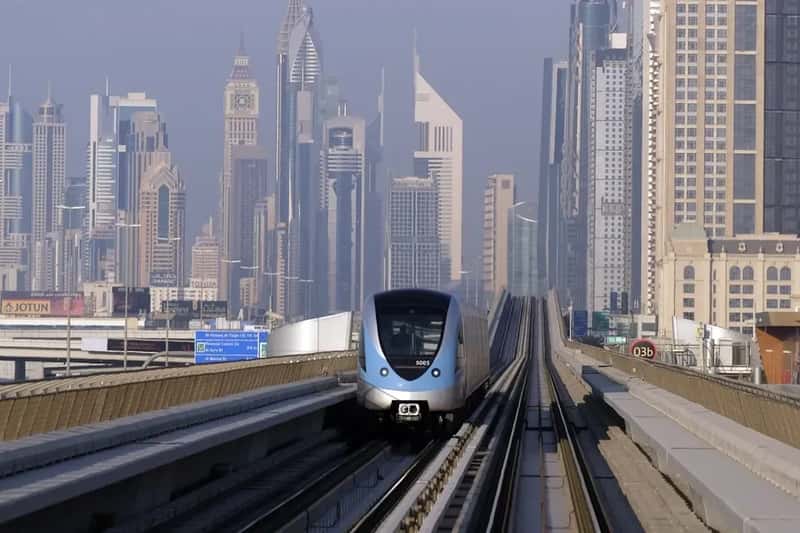
Dubai and Abu Dhabi are unlike almost anywhere else on the expat map. The UAE has zero income tax and a workforce that’s over 88% expats, with opportunities spanning hospitality, ESL teaching, construction, finance, tech, and beyond. The 10-year Golden Visa has drawn high-income earners and investors who want long-term stability in a tax-free environment. The trade-off is that daily life remains expensive and certain personal freedoms are structured quite differently from Western norms.
Mexico City, Oaxaca, and Mérida continue to dominate expat relocation lists in 2026. The Temporary Resident Visa requires proof of income, and with a short flight to the US and a booming tech scene, Mexico offers a compelling blend of affordability and connectivity. Mexico also leads the global rankings specifically for ease of settling in and for expat happiness levels, according to InterNations data. Those are categories that matter once the novelty of arrival has worn off.
Japan and South Korea: Beautiful to Visit, Hard to Stay

Several popular travel destinations, including Japan and South Korea, rank low – 37th and 34th respectively in the 2026 global expat integration rankings – reinforcing that lifestyle appeal does not always translate into ease of settling. Both countries are genuinely beloved by visitors and short-term residents. The food, safety, infrastructure, and cultural richness are hard to match. Long-term integration, however, is a different story.
Visa openness alone does not guarantee a welcoming environment, with some countries scoring highly on entry access but lower on social or employment integration. Japan and South Korea both illustrate this gap clearly. Language barriers are steep, permanent residency pathways are structured narrowly around specific skill sets, and social integration into local communities tends to move slowly by most expats’ accounts. They’re exceptional places to experience, harder places to belong.
The United States: A Door That’s Narrowing Fast

The United States currently bans or restricts travel from 39 countries under Presidential Proclamation 10998, which took effect on January 1, 2026.
In addition to the 39-country travel ban, the US Department of State announced a separate visa processing freeze on January 14, 2026, pausing all immigrant visa issuance for nationals of 75 countries. This freeze took effect on January 21, 2026, and remains in place with no announced end date. For expats from affected nations, that’s not a minor procedural update. It represents a fundamental shift in who the United States is willing to receive – at least for now.
Canada and the UK: Quietly Pulling Back

Canada released its 2026 to 2028 Immigration Levels Plan, setting permanent resident admissions at 380,000 annually through 2028, while international student permits are expected to fall from roughly 305,000 in 2025 to 155,000 in 2026 – a reduction of nearly half. That’s a significant contraction in one of the world’s historically most open immigration systems. Canada is making an effort to reduce its share of temporary residents to 5% of the total population by the end of 2026.
The United Kingdom has significantly tightened its international student framework in 2026 as migration pressures, housing concerns, and compliance scrutiny reshape higher education policy. The UK government confirmed that Graduate Route post-study work rights will reduce from two years to 18 months for most students applying after January 2027, while universities face stricter sponsorship monitoring and attendance tracking. The 2025 immigration white paper and the earned settlement consultation show a clear appetite for a more conditional route to settlement, while student dependant rules are now much tighter than they were before 2024.
The Netherlands and the Broader European Tightening

The Netherlands revised salary requirements for knowledge migrants – highly skilled foreign workers – with the new thresholds taking effect on January 1, 2026. This follows a broader European trend. Finland tightened asylum application conditions in July 2024, allowing the government to limit applications at certain borders, and asylum applicants may no longer switch to other permit grounds within Finland. Sweden also closed its track for rejected asylum seekers to transition to work permits in 2025.
The EU Entry/Exit System, which launched in October 2025, is being introduced step by step at external borders, replacing traditional passport stamps with digital tracking of entries and exits for non-EU nationals on short stays. The European Travel Information and Authorization System will launch in late 2026, requiring visa-exempt travelers from 59 countries to obtain pre-authorization before entering participating European states. Europe is still largely open, but it’s becoming more legible about who it lets stay – and for how long.
What the Broader Shift Tells Us

Different countries are choosing different tools, but the direction of travel is similar: fewer broad entitlements, more filtering by salary, language, occupation, and long-term contribution. The days of showing up somewhere with modest savings and figuring it out are becoming harder to sustain legally in most Western nations. Skilled professionals with in-demand qualifications continue to have real choices. Everyone else faces a narrowing field.
The most welcoming destinations in 2026 are determined by how easy it is to build a life after arrival – not just by entry requirements – with Iceland leading at a score of 8.94, and Zurich topping the city-level list at 9.06. The countries genuinely competing for expat residents right now are the ones investing in integration infrastructure, not just issuing new visa categories. That distinction – between a country that lets you in and one that actually helps you stay – is where the real global competition is playing out.