The notification comes at 11:47 PM.
You are already in bed.
You answer it anyway.
This is not a productivity problem. This is an identity problem. Because somewhere between the first smartphone and this exact moment, you agreed – without reading the fine print – to be perpetually on call. To be findable. To be a node in someone else’s network, available, responsive, always lit up like an airport runway at 3 AM.
The line between personal and professional life has blurred in the era of remote work. Many employees are experiencing tech fatigue, feeling pressure to respond to work messages outside of office hours. Implementing technology-free habits through a digital detox can help restore boundaries and promote healthier work-life balance.
The movement is not anti-work. It is pro-human.
1. The Unreachability Premium
We have been selling luxury wrong for decades.
Thread count. Marble lobbies. The weight of a room key in your palm.
These were never the point.
In 2026, luxury no longer revolves solely around material access – it increasingly centers on time, clarity, and control. This is a seismic rewrite of what it means to spend well. The affluent traveler of this year does not want more things. They want less noise. They are not shopping for experiences. They are shopping for the psychological permission to disappear.
Hushpitality is the new luxury: the most exclusive travel experiences in 2026 are defined by architectural dead-zoning and enforced disconnection, not just spotty Wi-Fi.
Enforced. Disconnection.
The word “enforced” is doing heavy lifting there. Because apparently, we cannot trust ourselves to stop. We need the walls to decide for us. We need the absence of signal to be a structural feature of the building – not a personal choice, but a physical fact.
That’s not a travel trend. That’s a confession.
2. The Always-on Tax
Nobody talks about what constant connectivity actually costs.
Not in dollars. In something harder to count.
While technologies have made life convenient and information more accessible, they also come with hidden costs: stress, anxiety, sleep disruption, and a constant sense of being “always on.” That last phrase – “always on” – is the most honest description of modern professional identity ever written. We don’t work. We radiate availability.
The constant pings, scrolls and notifications have rewired our brains for distraction. This is not metaphor. This is neuroscience. The architecture of attention has been quietly demolished and rebuilt around a dopamine loop that serves someone else’s business model.
The tax is cognitive. The tax is emotional. The way technology “splits up our brain, our ability to focus, causes cognitive fatigue and decreases performance in general.” The brain cannot distinguish between reality and imagination, so looking at anything disturbing can push us into fight-or-flight responses.
You are paying this tax every single hour.
And nobody is giving you a receipt.
3. The Status Inversion
Once, the status symbol was the phone on the table at dinner.
The more devices, the more important you were.
The more calls you took, the more indispensable.
Watch what’s happened to that signal now.
In a culture that equates busyness with success, choosing to step away signals confidence, autonomy, and control. The inversion is complete. The most powerful people in any room are now the ones who are genuinely, demonstrably unreachable. Not performing busyness. Not curating a feed. Just gone.
In 2026, serenity is the new status symbol.
Serenity. Not speed. Not scale. Not the corner office with the floor-to-ceiling glass.
The quiet room. The unanswered message. The morning that belongs only to you.
That is what power looks like now. That is the new flex.
4. The Slow Travel Reckoning
For a decade, we romanticized the hustle of movement. Five cities in seven days. A boarding pass as a personality type. The Instagram grid as a proof of life.
The reckoning has arrived quietly, with very good luggage.
Travel advisors and concierge firms say slow travel is replacing rapid-fire city hopping for their wealthiest clients. Instead of five cities in seven days, itineraries increasingly revolve around a small number of “anchor” destinations, with curated local experiences and flexibility built in.
Luxury is increasingly about time and privacy. Travelers are trading frequent, fast-paced breaks for slower, more intentional escapes – often in remote or overlooked destinations. Trains, boats and off-grid retreats invite stillness, reconnection, and a chance to soak it all in.
The itinerary has been redesigned. The goal is no longer coverage. The goal is depth. The goal is to stay long enough in one place to stop performing the trip and actually have it.
To arrive at a destination, rather than just pass through it like a ghost with a carry-on.
5. The Confession in the White Space
I want to stop here for a moment. Not to analyze. Just to tell you something true.
I once booked a digital detox retreat in the mountains of northern Portugal. Six days. No Wi-Fi. No cellular signal. I spent the first two days in a low-grade panic, reaching for my phone the way you reach for a glass of water you’ve already finished. My hand kept moving before my brain remembered there was nothing there.
By day three, something shifted. The silence stopped feeling like deprivation and started feeling like a room I’d never known I had inside myself. Quiet. Spacious. Mine.
I didn’t post about it until I got home. That was the whole point. The experience didn’t exist for anyone else. It was the most genuinely private thing I’d done in years. And that privacy – that unreachability – felt more luxurious than any hotel I’d stayed in before or since.
The white space in your calendar is not emptiness. It is the most expensive real estate you own.
6. The Neuroscience of Nowhere
The brain has a mode that activates specifically when you are not doing anything in particular.
It is called the Default Mode Network. It is where creativity lives. Where self-reflection happens. Where the pieces of a problem finally click together while you’re staring at a wall.
Disconnecting isn’t just a trend; it’s a scientific necessity to lower cortisol, restore attention spans, and trigger the brain’s default mode network for creativity.
The combination of silence and nature triggers the brain’s default mode network, leading to breakthrough ideas.
The notification grid actively suppresses this network. Every ping is a tiny interruption of your most sophisticated cognitive function. Every scroll is a small act of self-sabotage dressed as leisure.
By reducing the influx of external stimuli, we create space for internal reflection and processing. This allows our brains to consolidate memories, engage in creative problem-solving, and simply “be” without constant distraction.
Nowhere, it turns out, is somewhere very important.
The brain knows this. We just stopped trusting it.
7. The Identity Without an Audience
Here is a question worth sitting with.
Who are you when no one can see you?
Not your followers. Not your colleagues. Not the algorithm that has memorized your browsing history like a detective building a case. Who are you in the dark? In the gap between the posts? In the hour before you open anything?
The ceaseless barrage of notifications, the pressure of maintaining an online persona, and the blurring lines between work and personal life can contribute to elevated stress levels, anxiety, and a diminished capacity for focused thought.
“Maintaining an online persona.” That phrase. We have made performance a full-time job alongside our actual full-time job. The self has been doubled. One version lives and breathes. The other version is posted, curated, and optimized for engagement.
BBC health commentary highlights “JOMO” – the Joy of Missing Out – as a wellness trend where people choose presence and real-world experience over endless digital updates and notifications.
JOMO is the identity that exists without an audience. It is the version of you that has no content strategy.
It is, arguably, the only one that’s real.
8. The Geography of Escape
Not all places are created equal when it comes to the right to disappear.
Some geographies seem designed to hold silence. Others seem allergic to it.
Space and seclusion have become core luxury markers. Travelers are increasingly drawn to private villas, small lodges, and exclusive-use experiences that offer intimacy and tranquillity. In a world shaped by overtourism, uncrowded environments feel rare and valuable.
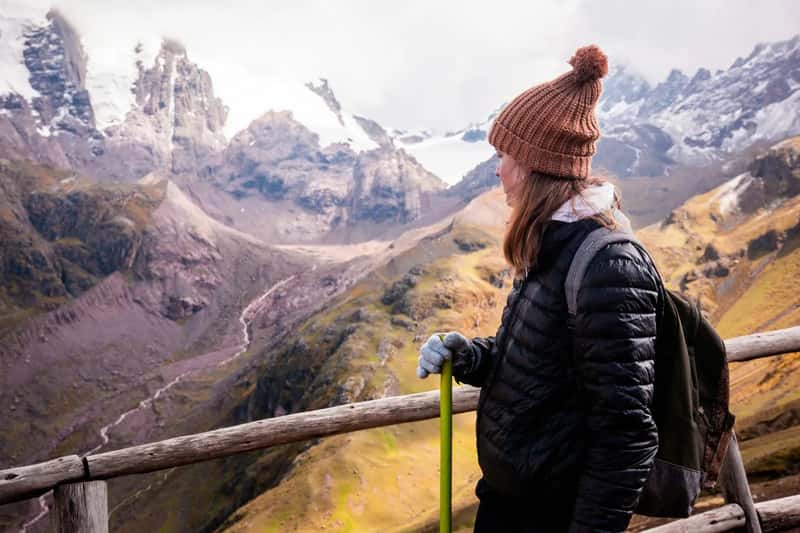
Remote, pristine places – from African bush and Pacific islands to Arctic wilderness – are in high demand for privacy, beauty, and awe-inspiring landscapes. This reflects a growing global travel trend where travelers seek connection with nature and untouched environments. They want immersive experiences that inspire wonder while escaping crowds and enjoying exclusivity in luxurious, secluded settings.
The remoteness is the amenity. The inaccessibility is the selling point.
We are paying a premium not to arrive, but to be genuinely far from everything that can reach us.
The destination is, in the end, a different version of ourselves. One we can only access when the signal drops.
9. The Corporate Silence Movement
The offices are beginning to notice.
When your most valuable employees return from vacation more depleted than when they left, something has broken. When people check messages from their hospital beds, the system has consumed something it was never entitled to eat.
Forward-thinking organizations in 2026 are integrating digital wellness into corporate culture. These initiatives improve employee well-being, reduce burnout, and increase engagement and retention.
It is the quiet insistence that a person is not a server. That they should not be expected to run continuously without a reboot.
The most forward-thinking organizations are learning that the employee who comes back from a genuinely disconnected vacation is not less committed. They are more themselves. And more themselves is always more valuable.
10. The Permission You’ve Been Waiting to Give Yourself
Nobody is going to tell you it’s okay.
The inbox will not shrink in solidarity. The group chat will not pause in your honor. The world will continue to move at the speed it has agreed to move at, and it will not slow down simply because you’ve decided to step out of the current for a while.
And yet.
As individuals continue to value presence over constant engagement, the future of luxury will center not on access, but on the freedom to step away.
The combination of public concern, regulatory attention, and cultural wellness trends makes 2026 a unique year for the digital detox movement. Rather than being a fringe idea, intentional disconnection is becoming a recognised strategy for preserving mental health, improving focus, and nurturing real-world connections in an era dominated by screens.
Across the global luxury landscape, a shared perspective is emerging: luxury travel in 2026 will be defined not by extravagance, but by intention, access, wellbeing, and emotional resonance.
The permission is not coming from outside. It never was. The Egyptian cotton, the turndown service, the minibar stocked with things you don’t need – none of it was ever the real offer. The real offer was always the same quiet question, whispered beneath the thread count and the marble and the view: What if, for just a little while, no one could find you?
And what if you let that feel good?
Somewhere right now, a person is standing on a balcony above a sea they’ve never seen before. Their phone is inside. Possibly face-down. Possibly in a drawer. Their shoulders have dropped half an inch from where they usually live, somewhere near their ears. The light is doing something extraordinary to the water and they are actually watching it – not framing it, not hashtagging it, not constructing the caption in the back half of their mind. Watching it. Just that.
This is what we have confused with retreat. With avoidance. With the irresponsibility of the uncontactable. But there is nothing irresponsible happening on that balcony. What is happening is the oldest, most necessary human act: the act of being fully present in one place at one time, belonging entirely to the moment rather than to the feed. The luxury isn’t the balcony. It isn’t the sea. It’s the quality of attention that is finally – finally – available to be paid.
The most radical thing you can do in 2026 is to become, for a measured and deliberate period of time, somebody that nobody can reach. Not because you’re hiding. Not because you’re running. But because some parts of who you are can only be heard in the silence that exists on the other side of the signal – and you haven’t heard them clearly in a very long time.