Most travelers spend hours researching their destination, comparing hotel reviews, and packing the perfect suitcase. Yet one of the simplest and most effective personal safety tools rarely makes it into anyone’s bag. A door jammer, a compact device that physically reinforces a door against forced entry, has been gaining serious attention from security professionals, solo travelers, and even law enforcement in recent years. With global hotel bookings at an all-time high and crime incidents inside accommodations remaining a persistent reality, the case for carrying one has never been stronger.
The Real State of Hotel Security in 2025

The global hotel booking market was valued at a staggering $523 billion in 2024, with experts projecting that figure to soar to $1.3 trillion by 2030. That means more people than ever are sleeping in unfamiliar rooms with locks they have never personally tested. Globally, hotel occupancy rates hit 72% in 2025, eight percentage points higher than in 2019. More occupied rooms also means more opportunity for incidents to occur, and the security infrastructure of hotels has not always kept pace with that growth.
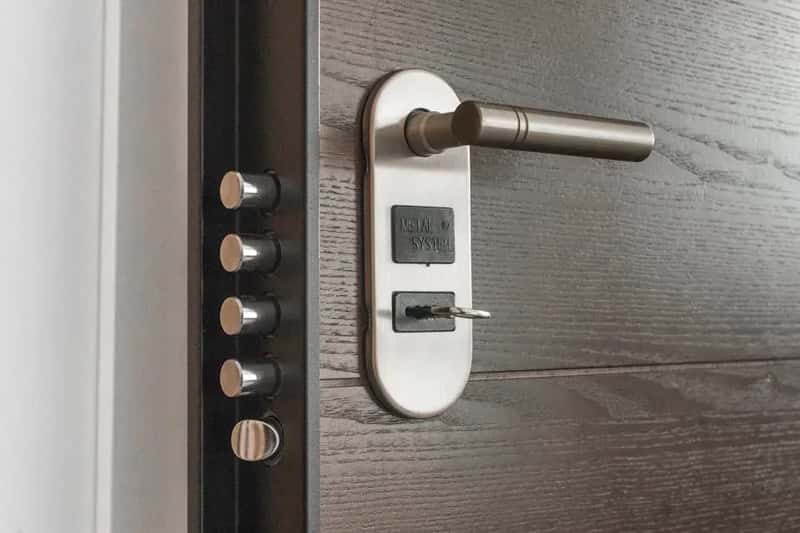
According to compiled hotel crime data, roughly 60% of hotel room thefts involve the use of a master key or unauthorized key card. That statistic alone raises a critical question about whether the standard hotel lock is enough. Burglary at a hotel can happen in a variety of ways, usually by hacking or picking the lock, which is disturbingly easy to do, and it may also happen because of poorly secured windows. A door jammer works entirely independently of the locking mechanism, adding a physical layer of protection that no key card can bypass.
What a Door Jammer Actually Does
Portable door jammers, also known as door stoppers, are devices designed to reinforce the security of a door via pressure, typically consisting of a metal or heavy-duty plastic bar that can be adjusted to fit between the door handle and the floor. The more pressure applied to the door from the outside, the more the jammer is forced into the ground to resist. It is a beautifully simple concept that works with physics rather than against it. Designed to fit a wide range of inward-opening doors, a portable door jammer uses the principle of counterforce to help prevent the door from opening as force is applied from the other side, meaning that even someone with a valid key cannot get in once it is engaged.
Ideal for travel, the DoorJammer device measures just 4.25 inches tall by 1.57 inches wide by 2.76 inches deep, fitting easily inside a laptop bag, suitcase, or backpack, and provides security in hotel rooms, dorms, or even the office. Some models take the protection a step further. If you want a door jammer that stops invaders and sends them running by sounding the alarm, certain options like the Securityman 2-in-1 Security Bar feature a 120 dB siren that goes off when it senses vibration. That dual deterrent of physical resistance and an audible alarm is a powerful combination in any unfamiliar environment.
Who Is Most at Risk and Why It Matters
Notably, around 22% of budget motel guests report missing personal belongings, and hotel cleaning staff are implicated in roughly 20% of reported internal thefts. The threat does not always come from strangers breaking down doors. Sometimes it comes from people who already have authorized access to the building. A sense of security at home or while traveling is important, but if you live in a rental property, the landlord has access to your place and former tenants might too if they still have a key. Roommates and shared accommodation guests also face the same challenge of not being able to fully secure a bedroom door.
Solo travelers face particular risks, with the interest in traveling alone having increased sixfold prior to the pandemic. Regardless of gender, solo travelers are advised to keep their room number or address private from locals or anyone they meet. The Crimes Against Women Research Alliance reports that roughly 12% of women traveling alone have experienced verbal or physical assault in a hotel. For these individuals, a door jammer is not just a convenience but a meaningful line of personal defense that costs less than most travel accessories.
The Science Behind the Strength
Made of 16-gauge steel without plastic pieces that can easily snap, the Buddybar door jammer is one of the sturdiest options available, capable of holding up to 2,560 pounds of force, miles ahead of its 350-pound competitors. To put that in real-world perspective, a forceful kick to a standard hotel door generates far less than that. Praised by locksmiths, security professionals, and even law enforcement, certain patented door barricades have been laboratory tested to easily withstand up to 3,100 pounds of violent force, making them the strongest door braces available on the market.
The award-winning and police-accredited portable DoorJammer is built with a patented steel design that creates a strong physical barrier against forced entry in seconds. The engineering principle is straightforward: the more pressure applied to the door, the more the jammer is forced into the ground to resist, and when installed correctly, portable door locks are very secure. The device works on multiple floor types too. The door jammer is designed to work on various types of flooring, including carpet, tile, wood, laminate, or concrete.
TSA Approval, Portability, and Ease of Use
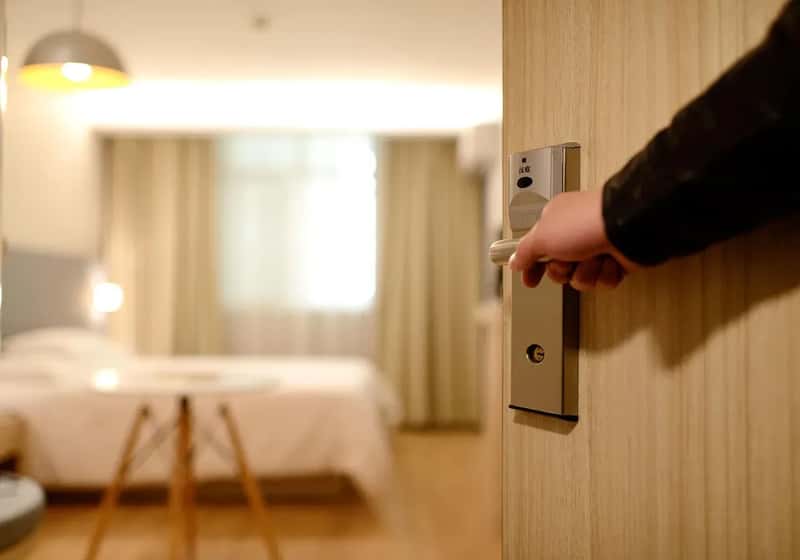
Most reliable portable door locks are already TSA-approved, so travelers should not have to worry about their locks being confiscated at airport security. This is a key detail that many first-time buyers overlook before their trip. The DoorJammer Portable Door Security Device is made of lightweight aluminum and is compact, making it ideal for travelers. It is easy to use, requiring just a simple slide of the lip under the door and a turn of the screw until it makes snug contact with the floor. It weighs only 8 ounces.
Some models are designed for ease of use with a simple clockwise screw to lock and include a quick-release feature in emergencies, allowing the device to be removed instantly by pulling upward to ensure both security and convenience. That emergency release feature is not an afterthought. It is a critical design element that ensures travelers are never trapped inside a room in a fire or other emergency. Even the visible presence of an extra lock can deter potential unauthorized individuals from attempting to enter a room or property, making it never a bad idea to add another layer of protection, especially when traveling.
When Hotel Locks Simply Are Not Enough
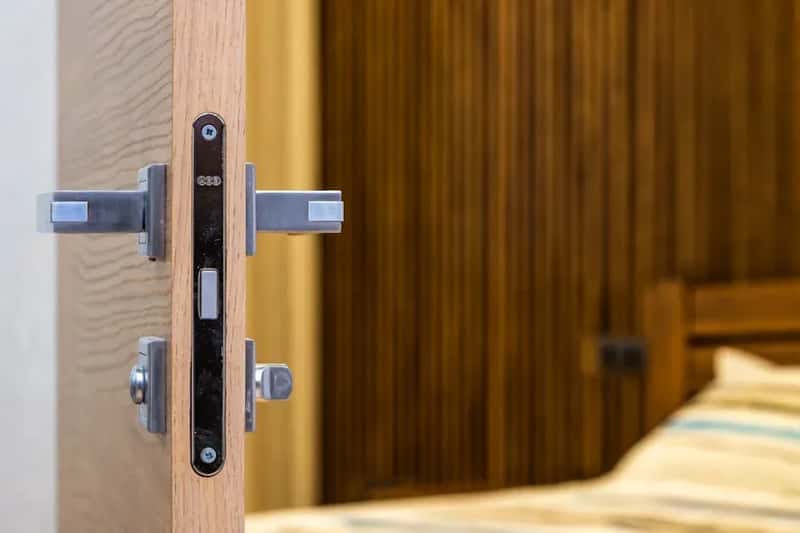
In 2024, Omni Hotels and Resorts experienced a cyberattack that led to a prolonged IT outage, disrupting core systems including reservations, payment processing, and electronic room access. This incident highlighted that the digital infrastructure behind modern hotel security is not immune to failure. In another incident from the same year, a threat actor breached the Otelier hotel management platform, compromising customer data from hotel brands such as Marriott, Hilton, and Hyatt, exposing 437,000 customer email addresses along with names, physical addresses, phone numbers, and travel booking details. When hotel systems go down, electronic key card access can become unreliable, but a mechanical door jammer requires nothing more than a solid floor to do its job.
Criminals most often attempt to enter through doors first, which is why keeping points of entry secured should be the top priority for security-minded people. Standard hotel deadbolts and chain locks are a reasonable starting point, but they have documented vulnerabilities to lock picking and card cloning that a physical door jammer simply does not share. Wedges, jammers, and foldable door bars are good short-term options, especially for renters or travel, and while they may not be as strong as a permanently installed brace, they can still meaningfully delay an intruder. In a security context, even a few extra seconds of delay can be the difference that matters most.