Let’s be real. Retirement dreams rarely match reality. You imagine lounging by turquoise waters, sipping wine as the sun sets over ancient ruins. Then you check your bank account and realize Florida’s too expensive, and Portugal’s starting to feel overrun. Something has shifted, though. Greece just claimed the top spot in 2026 as the world’s best retirement destination, knocking longtime favorites off their pedestals.
This isn’t just another ranking. Something genuine is happening across the Greek islands and mainland towns.
Record-Breaking Recognition Shakes Up European Retirement Scene
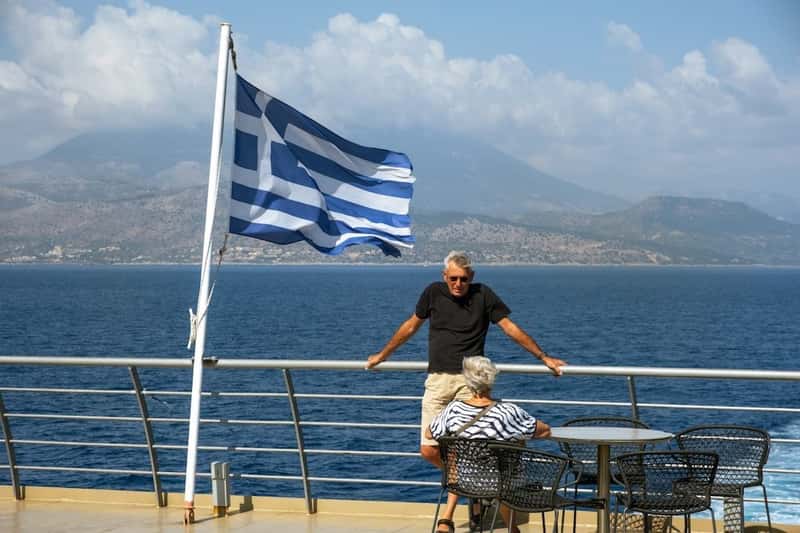
Greece has been named the world’s best retirement destination in 2026 by International Living, marking the first time the Mediterranean country has taken the number one spot in the company’s Annual Global Retirement Index’s 35-year history, beating Portugal and Spain in Europe and Costa Rica and Panama in Latin America. Jennifer Stevens, executive editor of International Living, noted that Greece’s rise marks a shift in Europe’s retirement landscape, as Portugal and Spain led the way for years, but recent visa changes and rising costs have retirees looking elsewhere, with Greece now offering a beautiful, welcoming, and affordable European base with accessible residency options.
The ranking evaluated destinations across multiple categories, including cost of living, healthcare quality, housing affordability, visa accessibility, climate conditions, and ease of cultural integration. According to Social Security Administration data from 2023, 13,251 Americans received U.S. retirement benefits in Greece – more than the 10,723 in Portugal and the 8,698 in Spain – ranking the country among the world’s top destinations for American retirees.
Tax Benefits That Actually Make Sense for Your Retirement Income

Greece rolled out something clever in 2020 that many retirees overlook. Retirees coming from other countries pay an annual instalment of just 7% on their foreign income for 15 years, applying to those who have not been tax residents in the country for at least five to six of the previous years. Compare that to standard European tax rates hovering around 30 to 44 percent, and suddenly your pension stretches considerably further.
Greece offers a 7% flat tax regime for foreigners who comply with legal requirements, and also has double taxation treaties with many countries, meaning you may not have to pay income tax on your foreign income, depending on your home country. Greece’s Digital Nomad Visa, launched in 2021, offers a 7 percent flat tax on foreign pensions, remaining among the most appealing in Europe compared to Portugal’s 10 percent. The system isn’t perfect, with some bureaucratic hurdles, yet the financial advantages remain undeniable.
Affordable Living Without Sacrificing Quality

The average cost of living in Greece is roughly 26% lower than in the US, with rent being a particular point of saving. Seaside rentals start at €600–€1,000 per month (approximately $690–$1,150 USD), and an American couple, Patricia Mahan and Dan Matarazzo, bought a two-bedroom village house in Crete for just $150,000 in 2023.
That’s not a typo. According to Numbeo, an average family of four can live in Greece with €2,786.5 monthly, excluding rent. Renting a spacious one-bedroom apartment in Greece typically costs between €500-€800 per month, while two or three-bedroom flats range from €1,000-€2,000. Dining out is relatively affordable, with a meal at an inexpensive restaurant costing about €10-€15 per person, while a three-course meal at a mid-range restaurant ranges from €30-€50 per person.
Healthcare Access That Won’t Bankrupt You

Healthcare fears dominate retirement planning conversations. Greece addresses this concern with a mixed public-private system. In a 2000 report by the World Health Organization, the Greek healthcare system ranked 14th worldwide in overall assessment, above Germany (25) and the United Kingdom (18), while ranking 11th at the level of service.
The Greek National Health System (ESY) provides universal healthcare coverage to all residents, including foreign retirees legally residing in the country, and expat residents can access free or low-cost public healthcare if they apply for health insurance through EFKA, the National Social Security Fund, which covers all citizens and residents in Greece. Annual payment to the Fund ranges between €250 and €650.
Private healthcare remains another option. Greece attracts foreign tourists due to high-quality healthcare services and affordable costs, with Greek medical professionals being highly trained and many speaking English. The system isn’t flawless – rural areas have fewer specialists than cities – yet accessibility surpasses expectations for most retirees.
Climate and Lifestyle That Promote Longevity

Greece wasn’t just selling sunshine. Life expectancy in Greece was 82.9 years in 2024, compared to 79.2 years in other European countries and the U.S. For those seeking warm and sunny days frequently, choosing Greece as a retirement destination could be ideal, as winters are mild, allowing outdoor enthusiasts to enjoy activities nearly year-round without shoveling snow or bundling up against bitter cold.
Leena Horner, International Living’s Greece correspondent who left Boulder, Colorado, for Corfu four years ago, stated that Greece quietly transforms the way you live through the climate, the ‘siga siga’ attitude of taking life slowly, the vibrant community, and daily connection with nature, with ‘siga siga’ being a well-known Greek expression meaning ‘slowly, slowly’. Horner and her husband live comfortably on about €2,900–€3,000 a month – the equivalent of $3,355-$3,470.
Accessible Residency Pathways for Foreign Retirees

Getting residency shouldn’t require a law degree. Greece offers multiple practical routes. Greece’s Golden Visa program, granting a residence permit to foreigners making a minimum real estate investment of 250,000 euros (about $290,000), is one of Europe’s most accessible, and Greece also scored highly on climate, healthcare, and housing. There’s also an option for retirees called the ‘financially independent person’ visa, which grants applicants a three-year residence permit in the country, requiring passive income of at least €3,500 ($4,048) per month from outside Greece, increased by 20 percent for a spouse and 15 percent per child.
According to the International Trade Administration, Greece’s infrastructure sector is projected to grow 4.2 percent in 2025, with more than $13 billion in projects underway. These include expansions across airports, highways, and metro systems: fourteen regional airports have already been upgraded, Athens International Airport is expanding, Kastelli Airport on Crete is over 40 percent complete, and Athens is rolling out 950 new electric buses.
The Reality Check You Need Before Packing

Greece isn’t perfect. Let’s acknowledge the challenges. The administrative aspects of Greece’s emigration programs and public services are known to be complicated and time-consuming, and Greece has faced economic struggle in recent years, which can negatively impact retiree finances and access to funds. Outside city centers, your likelihood of coming across an English-speaking person decreases, and some islands can have infrastructure issues related to electricity supply due to storms.
According to Ekathimerini, the average selling price of a home shot up by 57%, from 175,000 euros in 2018 to 274,831 euros in 2023. Certain popular areas have become pricier. Although Santorini’s population is 15,000, it attracts around two million visitors each year, which means overcrowding can be an issue for the Southern Aegean island.
Honestly, though, these drawbacks pale compared to alternatives. Every retirement destination carries compromises. Greece’s combination of affordability, healthcare access, favorable taxation, pleasant climate, and genuine community connection tips the balance decisively in its favor. The question isn’t whether Greece deserves its top ranking – the data speaks clearly. The real question is whether you’re ready to explore what this Mediterranean gem offers for your golden years. What would it take for you to consider making the leap?