For decades, France held a near mythical place on the retirement wish list, all lavender fields, slow lunches, and a healthcare system people bragged about at dinner parties. Yet a quieter shift has been building over the past few years, and it shows up less in postcards than in bank statements. More retirees are looking at the numbers, then looking at Portugal, and quietly changing their plans.
The price gap that keeps showing up in the numbers

The cost difference between France and Portugal isn’t a rumor passed around expat forums. As of June 2026, Portugal’s living expenses for retirees are 29.8 percent lower than in the USA, 28 percent more affordable than the UK, and 27.2 percent cheaper than in France, excluding rent. That’s roughly a quarter of a household budget freed up simply by relocating a couple hundred miles south.
For someone living on a fixed pension, that gap compounds month after month. A dinner out, a doctor’s visit, a bag of groceries, all of it costs noticeably less in Porto or Faro than it does in Lyon or Bordeaux. It’s the kind of difference that doesn’t feel dramatic in any single purchase, but adds up into thousands of euros a year.
A visa built with modest budgets in mind
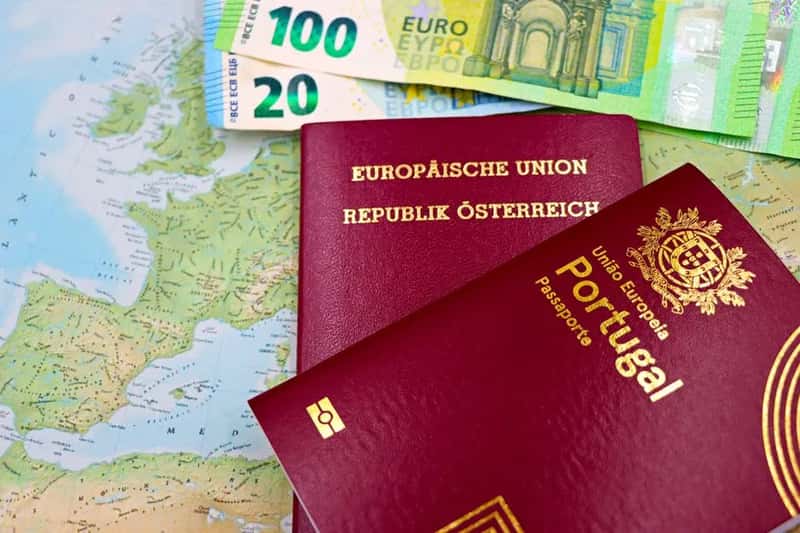
Portugal’s main retirement pathway, the D7 visa, was designed with retirees in mind from the start. The D7 Visa is designed for retirees with stable passive income or sufficient savings, making it the most common choice for those without significant investments, requiring proof of stable passive income at or above Portugal’s minimum wage, at least 920 euros per month for the main applicant in 2026. That threshold is well within reach for anyone drawing a modest pension or Social Security check.
France’s comparable option asks for more. To move to France from the US, retirees can apply for the Long-Stay Visitor Visa, which enables those with a foreign income of around $1,700 to live in the country for a year. It’s not an impossible bar, but it sits noticeably higher than what Portugal expects, and the French process has a reputation for being slower and more paperwork heavy.
What rent actually costs from Lisbon to the interior

Housing tends to be the single biggest line item in any retirement budget, and Portugal offers a wide range depending on where you land. In hotspots like Lisbon or Porto, a nice one bedroom apartment will likely run somewhere between 900 and 1,500 euros a month, while heading to a smaller city like Coimbra or Braga could get a similar place for just 600 to 900 euros. That’s a meaningful spread, and it means retirees can dial their location to match their savings.
Move further from the coast and prices drop again. Little villages in the heart of Portugal have furnished rentals available for expats starting at only $450 a month. France has its own affordable pockets, but few regions offer that kind of spread between a lively capital and a quiet inland town within the same country.
Everyday budgets that stretch further

Ask any relocation guide what a couple actually needs to live comfortably in Portugal, and the numbers cluster in a fairly consistent range. A retired couple can live a very comfortable life on a monthly budget of around $1,500 to $2,000 in a smaller town, and if they have their heart set on a bigger city like Lisbon or Porto, that figure realistically goes up to about $2,500 to $3,000. Those figures usually cover rent, groceries, utilities, and regular meals out, not a bare bones existence.
The most affordable pockets sit away from the coastline entirely. The cheapest places to retire in Portugal are often rural, inland areas and northern regions, mainly Castelo Branco, Portalegre, and Viseu, where a retired couple can live comfortably on 1,400 to 2,000 euros per month, with rent, utilities, and regular dining out. France simply doesn’t have as many regions where that kind of budget goes as far.
Healthcare that doesn’t require a fortune

This is one area where France still holds real advantages, and it’s worth being honest about that. Retirees in France enjoy access to a system where doctor visits are 25 euros, mostly reimbursed, and serious illnesses are treated for free, which is part of why France topped International Living’s 2026 list for expat healthcare. It’s a genuinely strong system, and no serious comparison should pretend otherwise.
Portugal’s healthcare doesn’t match that on paper, but it’s still solid and considerably cheaper to access as a resident. Legal residents can enroll in the local public health system, available in Portugal, France, Spain, and Greece after meeting residency requirements, as an alternative to private international coverage. For retirees willing to trade a bit of medical polish for lower overall costs, that tradeoff tends to feel worth it.
A country that keeps ranking among the safest on earth

Safety rarely shows up on spreadsheets, but it shapes daily life more than almost anything else. Portugal has once again been recognised as one of the safest countries in the world, securing seventh place in the Global Peace Index 2026, an annual measure compiled by the Institute for Economics and Peace that tracks safety and security, conflict levels, and societal stability across more than 160 countries. That’s not a one-off result either.
Portugal has built a long track record on this front. Portugal has ranked in the top 10 safest countries in the world over the past 5 years. International Living has taken notice too, naming Portugal has officially claimed the top spot as the world’s safest country for retirement in its 2026 rankings, a detail that carries real weight for anyone moving somewhere unfamiliar later in life.
The tax perk that used to seal the deal, and what changed

For years, Portugal’s Non Habitual Resident scheme was the loudest argument in its favor, offering pensioners a flat ten percent tax rate on foreign income. That program closed to new applicants at the end of 2024, and its replacement tells a very different story for retirees specifically. New retirees arriving today do not qualify for IFICI, since it excludes pension income, and are taxed under standard progressive IRS rates.
Those standard rates aren’t cheap. Without NHR, foreign pension income is taxed at progressive IRS rates ranging from 13.25% to 48%, depending on total worldwide income. It’s an important caveat for anyone doing the math today. The move to Portugal now has to be justified by lifestyle and cost of living rather than a tax shortcut, since the financial case for relocation shifted from compelling to marginal once that old regime disappeared.
Weather, pace of life, and why the Algarve keeps coming up

Climate is one of those quality of life factors that’s hard to quantify but easy to feel. Portugal’s south, and the Algarve in particular, offers the kind of mild winters and long dry summers that make outdoor living the default rather than the exception. Retirees who’ve spent a French winter waiting out grey skies in the Loire or Normandy often mention the sun as much as the savings when explaining why they chose Portugal instead.
That climate advantage feeds directly into daily habits. Golf courses, beach walks, and outdoor markets stay usable for most of the year rather than a short summer window, and that kind of consistency tends to matter more to retirees than any single amenity. It’s a softer factor than a spreadsheet, but it shows up again and again in why people actually stay once they’ve moved.
Where the new arrivals are actually settling

Retirees aren’t clustering in just one corner of the country. The largest English speaking retirement communities are in the Algarve, Lisbon Metropolitan Area, Porto, and the Silver Coast, with some parts of central Portugal, mainly around Coimbra, developing their own smaller communities. That spread gives newcomers real choice between coastal energy and quieter inland living.
Even within France’s own borders, some regions are cheaper than others, which complicates a simple France versus Portugal framing. Gascony, in southwest France, is one of Europe’s most underrated affordable retirement destinations, where property prices run significantly lower than Paris or the Côte d’Azur, and the rural lifestyle appeals to retirees seeking quiet villages, local markets, and world class cuisine. Still, even France’s more affordable pockets rarely undercut Portugal’s cheapest regions by much.
What France still does better

It would be misleading to paint France as simply the more expensive option with nothing to show for it. France requires a higher budget but offers more in terms of services and infrastructure, and while it’s less often marketed as a retirement destination, it consistently delivers on long term quality of life through strong healthcare, reliable infrastructure, and a more structured system. For retirees with more complex medical needs or a preference for established systems over newer ones, that structure has real value.
Global rankings reflect this balance rather than a clean winner. European countries rank highly, with Greece, Portugal, Italy, France, and Spain all in the top ten, proving that while other countries may be more affordable, Europe still ranks highly for retirees seeking the best package overall, particularly when healthcare is taken into consideration. France isn’t losing this comparison so much as trading lower costs for deeper institutional polish.
Final thoughts

Neither country is objectively better for every retiree, and anyone framing this as a simple upgrade is oversimplifying it. What’s changed is that Portugal has closed enough of the quality gap, on safety, healthcare access, and daily livability, that the cost savings no longer feel like a compromise to most people making the move. France still wins on healthcare polish and institutional depth, but for retirees stretching a fixed income as far as it can go, that math increasingly points south of the Pyrenees rather than into it.