

Somewhere beneath the rainforests of Gabon, in a cave system reeking of bat waste and sealed off from sunlight, crocodiles are turning orange. They hunt in total darkness. They eat bats instead of fish. And according to DNA evidence, they may be quietly becoming a species that has never existed before. Scientists have rappelled down seven-meter shafts, waded through pools of liquid bat guano, and emerged physically wiped – and still can’t fully explain what’s happening down there. These aren’t animals hiding from science. They’re animals that keep breaking the rules every time science thinks it has them figured out.
What makes this story genuinely strange is not just the orange skin or the underground lifestyle. It’s the gap between how intensely these crocodiles have been studied and how little researchers actually understand about them. Every expedition answers one question and creates three more. The closer scientists get, the more the picture changes – and right now, the picture is changing fast.
The Cave That Shouldn’t Have Crocodiles in It
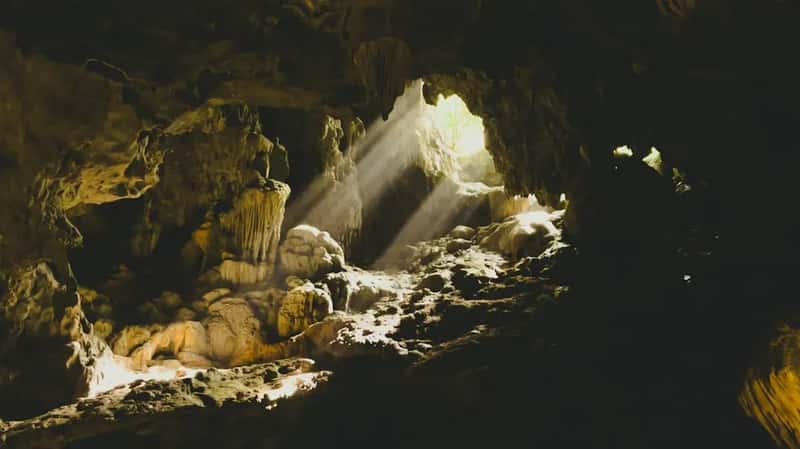
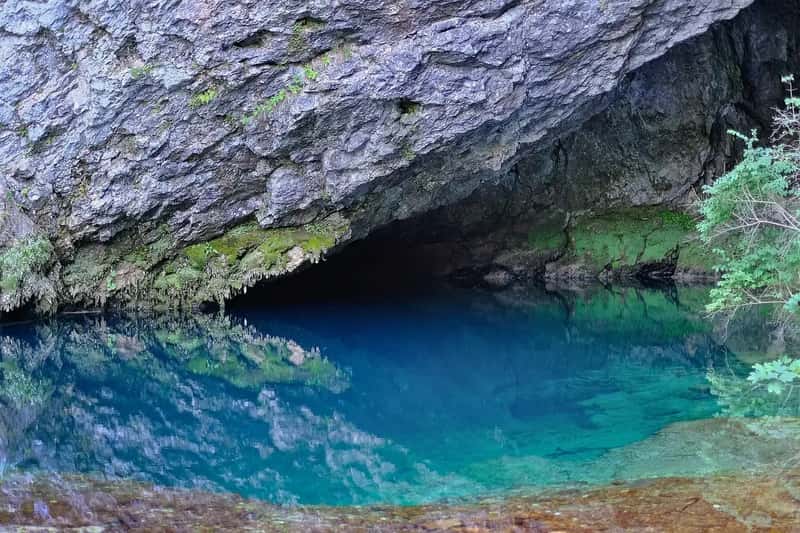
The Abanda Caves are a cave complex in Gabon, located upstream of the Fernan Vaz Lagoon – first mentioned by researchers in the early 2000s and fully explored during several caving expeditions by Oslisly, Testa, Sebag, and Shirley. There are two independent cave networks: the Dinguembou cave at 350 meters and the Mugumbi cave at 400 meters, with access possible only through vertical shafts roughly seven meters deep. The shafts are tight, dark, and disorienting – not exactly where anyone expected to find a reptile population.
While crocodiles sometimes retreat to underground dugouts during droughts, this is the first known population of crocs actually living in caves. The Abanda Caves are now confirmed to host an endemic population of orange-colored, cave-dwelling dwarf crocodiles – first described by herpetologist Matthew Shirley after the first scientific expedition in 2010. Nobody predicted this. Nobody had a framework for it. The scientific community essentially had to start from scratch.
They’re Turning Orange – and the Reason Is Disgusting
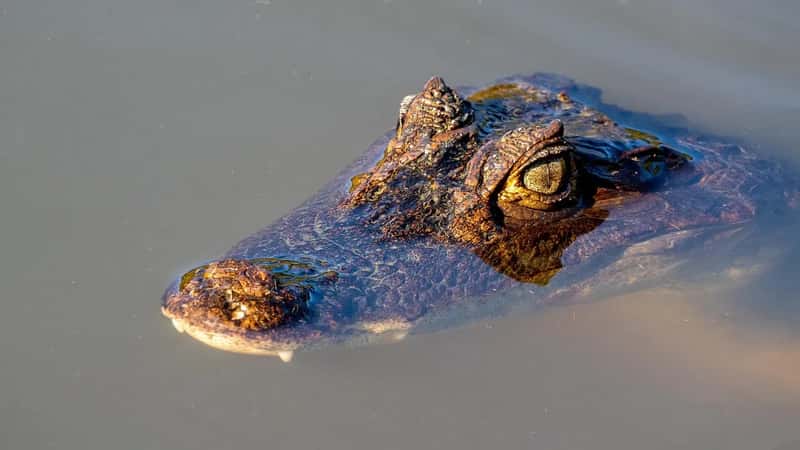
The cave-dwelling crocodiles have several physical differences from their forest- and swamp-dwelling cousins – broader heads, poor eyesight, and a strange orange hue that researchers believe results from years of soaking in bat guano, which discolors their skin chemically. The caves host a massive bat population that produces enormous amounts of guano falling directly into the water where the crocodiles swim – water one researcher described as little more than “an alkaline slurry formed from bat droppings.”
Scientists Testa and Shirley believe the color change comes from acidic bleaching: the crocodiles live in liquid guano, and the harsh chemicals attack and bleach their skin – though they acknowledge they don’t yet have the means to prove that definitively. The older the animal, the more saturated the orange tone. Younger crocodiles in the cave system are still dark. It’s a living timeline written in color – and it raises a deeper question about what else the guano water is doing to these animals over decades of submersion.
Their Entire Diet Has Been Rebuilt From Scratch
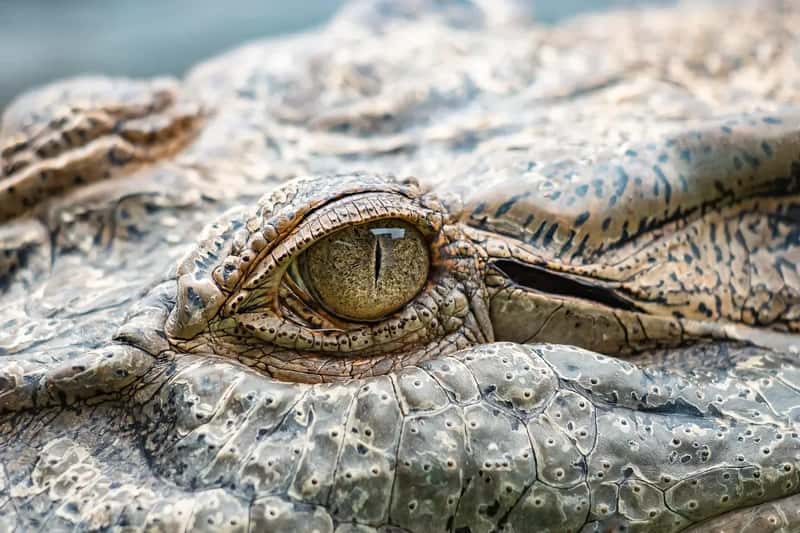
While above-ground forest crocodiles feed on freshwater crabs, shrimp, crayfish, and insects, the cave crocodiles eat cave crickets and bats – and little else – suggesting that cave crocodiles don’t hunt or feed aboveground and likely have very little contact with their above-ground neighbors. The caves host large bat colonies estimated at more than 100,000 individuals – so there’s no shortage of prey, but the dietary shift is still radical by any reptile standard.
Crocodiles captured in the caves appeared to forage exclusively underground and ate mostly cave crickets and bats – essentially rebuilding their entire diet from scratch around whatever lives in the dark. For an ambush predator built over millions of years to hunt aquatic prey, this is an extraordinary behavioral pivot. Researchers still debate whether this is a learned adaptation that has been passed down through generations or something deeper – a hardwired shift that’s now locked into the population’s biology.
The Genetics Are Even Stranger – They May Be a New Species in Progress
Testa and Shirley are part of a scientific research team that believes these animals may be evolving to permanently live in the harsh caves. African dwarf crocodiles are found above ground throughout Gabon, but the cave-dwelling population has developed a unique genetic signature unmatched by its above-ground counterparts – which the team tested by collecting blood samples from individuals within the cave system. The first DNA analysis in 2010 showed a genetic difference of a few percent between the cave crocodiles and those found elsewhere in Gabon, suggesting the population has been isolated for several thousand years.
Sequencing the DNA of each population, the research team found that the cave crocodiles were passing along a unique haplotype – a group of genes inherited from a single parent – not found in the outside population. As Shirley put it: “As a result of that isolation and the fact that few individuals come in or go out, they’re in the process of becoming a new species – whether that happens soon or not is anyone’s guess.” That level of scientific candor is rare. It signals just how far outside established models this population actually sits.
Nobody Knows How They Reproduce Down There
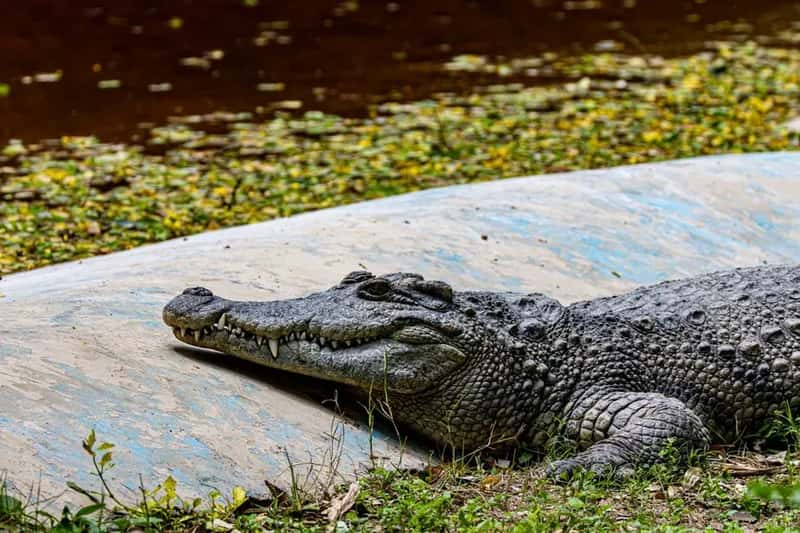
Scientists are still trying to figure out exactly how these animals survive underground, since – while food is plentiful – the cave ecosystem does not provide a good place for crocodiles to lay their eggs and reproduce. The working theory is that crocodiles leave their underground shelter to lay eggs, then return with their young. The animals have to exit the caves to breed because there are no suitable nesting sites inside, but they apparently don’t spend much time on the surface – and they’re not entirely trapped, though they are highly isolated.
Crocodiles are ectotherms that rely on decaying plant material to regulate nest incubation temperatures – and inside these caves, there’s virtually no plant material available for nesting. Researchers are left with competing theories: perhaps they leave to breed, perhaps larger individuals become incapable of breeding, or – most intriguingly – perhaps some nesting occurs inside the caves in a way that has simply never been observed. Some of the crocodiles live completely isolated from the exterior, with the only access being through a seven-meter vertical shaft – and researchers think past entrances may have been sealed by sediment, preventing any exit at all.
The Species Above Ground Is Already Disappearing
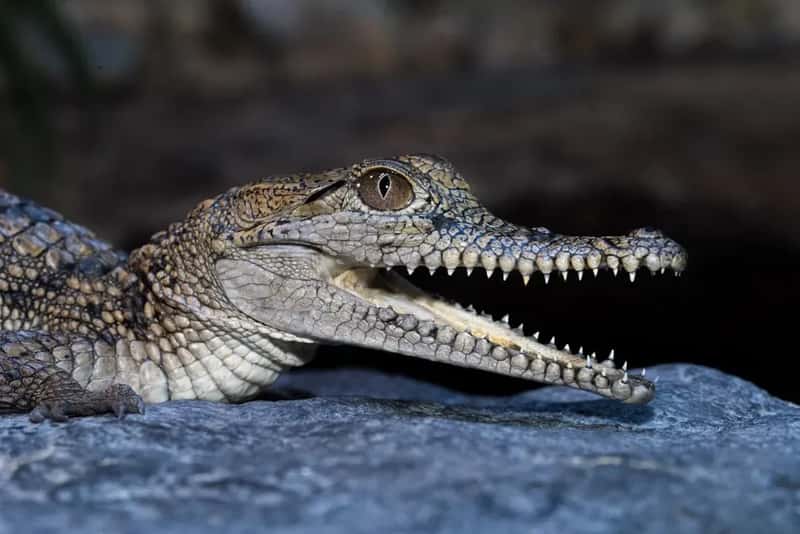
The crocodilians of West Africa are among the most threatened and least researched species in the world. The West African slender-snouted crocodile – Mecistops cataphractus – is listed as Critically Endangered on the IUCN Red List, and the highest priority action for this species is simply to assess its population status across its range as a baseline for any conservation program. That’s how far behind science is: the first step hasn’t been completed yet. Experts estimate fewer than 500 adults may remain in the wild.
Although Mecistops cataphractus historically ranged from The Gambia to the Cameroon volcanic line, the species may now be restricted to the Republic of Guinea, Ivory Coast, and Ghana, with only a small population persisting in the Gambia River. Data from Nigeria, Benin, Liberia, Ghana, and Côte d’Ivoire suggest that Mecistops cataphractus is all but extinct in the Upper Guinea ecoregion, and it has not been definitively sighted in Senegal since the 1960s. The cave populations – bizarre and poorly understood as they are – may outlast the surface populations entirely.
They Were the Wrong Species for 200 Years
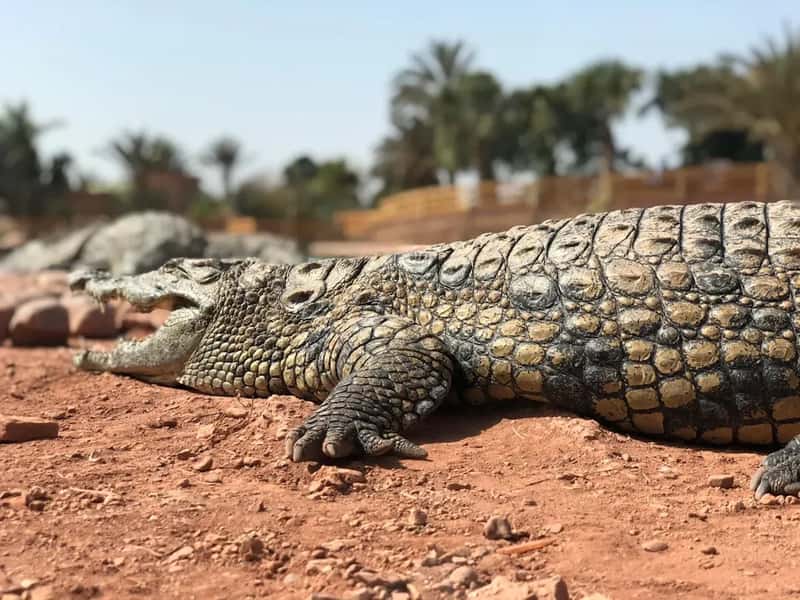
The West African slender-snouted crocodile was traditionally placed in the genus Crocodylus as a single species – but recent research using DNA and morphology shows it not only belongs in its own separate genus, Mecistops, but that there are actually two distinct slender-snouted crocodile species. The two species diverged approximately 6.5 to 7.5 million years ago, living in different river drainage zones geographically separated by the Cameroon Line. Scientists had been studying what they thought was one animal for two centuries. They were wrong the entire time.
Molecular and morphological evidence confirmed that Mecistops cataphractus is comprised of two superficially cryptic species – one endemic to West Africa and one to Central Africa – but our ability to fully characterize the two species is compromised by a complicated taxonomic history and overlapping ranges of variation in distinguishing features. Meanwhile, the large East African Nile crocodile is actually more closely related to four species of Caribbean crocodile than to its small West African neighbor, which has been named Crocodylus suchus. The crocodile family tree has been misread for generations, and West Africa is where the biggest corrections are being made.
The Trade Threat Nobody Is Talking About Enough
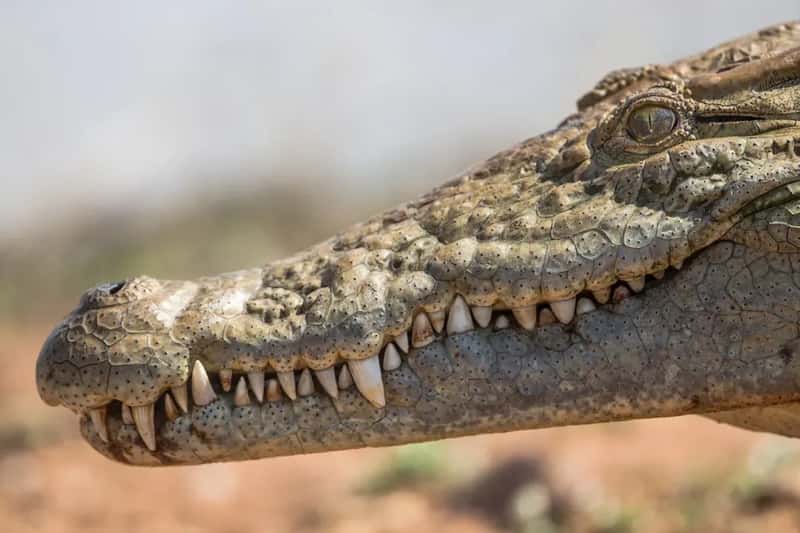
The West African dwarf crocodile – classified as Vulnerable by the IUCN and listed under CITES Appendix I – is increasingly threatened by unregulated trade and habitat degradation. A recent study investigated trade dynamics across Delta and Edo States in Nigeria, identifying nine key markets and recording 1,818 individual crocodiles sold over just 105 market days at a single hub. That pace of removal from wild populations is unsustainable by any scientific measure.
Trade is dominated by mid-sized, sexually mature crocodiles – suggesting that older breeding-age animals are being systematically removed from the wild – while a gendered trade structure has middlewomen controlling over 80% of market flow, sourcing animals from remote riverine communities. The West African slender-snouted crocodile faces simultaneous threats from fishing practices, human disturbance, hunting, habitat degradation, and fragmentation across its entire range, with forest habitat being cleared at a rate that outpaces conservation action in many countries. The cave populations are protected by geography for now – but that’s the only thing protecting them.
Science Keeps Arriving Late to This Story
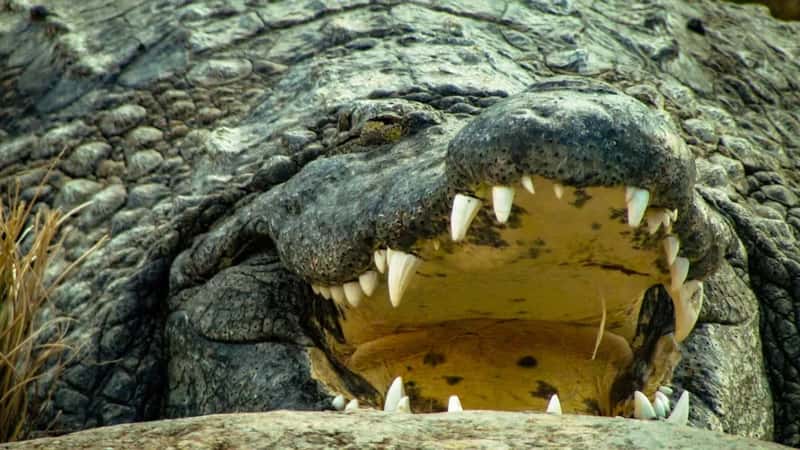
Challenges in freshwater organism conservation in West Africa are worsened by significant knowledge gaps, even for charismatic species like crocodiles. A 2025 scientific study addressing these gaps in Guinea-Bissau – using visual surveys, molecular barcoding, and camera trapping – found evidence suggesting the Nile crocodile, previously thought extinct in West Africa for about 200 years, may actually still persist in the Cacheu region. Two hundred years of assumed extinction. Turned out to be wrong.
Conservation efforts for West African crocodile species have intensified since the early 2010s, focusing on captive breeding, reintroduction, and community engagement – with Project Mecistops established as a primary coordinating initiative, including collaboration with the Abidjan National Zoo in Côte d’Ivoire for breeding and reintroduction programs. Two new research groups are preparing to fill significant knowledge gaps on dwarf crocodile species, and a documentary was recently filmed specifically about the cave-dwelling population in the Abanda cave system for an upcoming BBC series. The world is finally paying attention – the question is whether it’s in time.
The Bottom Line
West Africa’s cave-dwelling crocodiles have been studied enough to generate major headlines, multiple DNA studies, and a BBC documentary – and yet the most basic questions about them remain unanswered. Nobody knows exactly how they reproduce underground. Nobody knows how long they’ve been down there. Nobody knows with certainty whether they’re becoming a new species or simply an isolated variant. They turned out to be the wrong taxonomic classification for two centuries. The Nile crocodile was thought gone from the region for 200 years before a 2025 study suggested it might not be. Every assumption scientists make about these animals eventually gets corrected. That’s not a failure of science – it’s proof that West Africa’s crocodiles are genuinely, stubbornly, fascinatingly strange. Have you ever heard of any of this before today? Drop your reaction in the comments.