Most travelers never think twice about it. You drag your bag to the check-in desk, hand it over, and walk away hoping you’ll see it again at baggage claim. Simple enough, right? Well, not always. What happens when your suitcase rolls off that carousel looking like it survived a demolition derby – or worse, doesn’t show up at all?
There’s one small habit that can save you a serious amount of stress, money, and time. It takes about ten seconds. You just need your phone. Let’s get into it.
The Scale of the Problem Is Bigger Than You Think
Here’s a number that might stop you mid-coffee-sip: 33.4 million bags were mishandled in 2024 across the global air travel industry. That’s not a typo. Tens of millions of suitcases, duffel bags, and backpacks – delayed, damaged, lost, or stolen – every single year.
The mishandling rate dropped to 6.3 bags per 1,000 passengers in 2024, down from 6.9 the previous year, a 67% improvement since 2007. Progress, for sure. But improvement doesn’t mean the problem is solved. Baggage mishandling still cost the industry an estimated $5 billion in 2024.
Over one in four flyers have experienced lost luggage, and over one in three have had damaged bags. Think about the last group flight or vacation you went on. Statistically, at least one person in your travel party has been there. If it hasn’t happened to you yet, don’t feel too lucky – it might just be a matter of time.
What Actually Happens to Your Bag After Check-In

Let’s be real for a second. The moment your bag disappears behind that check-in counter, it goes on its own little adventure. When your luggage leaves your sight at the airport check-in desk, it might pass along various conveyor belts, catch a ride on some type of vehicle or trolley, and go through a myriad of baggage handlers on its way to getting slid, tossed, and pushed into the airplane’s cargo hold.
Luggage handlers will cut corners and might wrongly tag your luggage, load it onto the wrong plane, or even damage it. It sounds alarming when you put it like that, and honestly, it is. Transfer mishandling was the biggest contributor at 41% of all incidents. So connecting flights carry the highest risk – keep that in mind next time you’re booking a tight layover.
According to SITA, international routes are five times more likely to lose luggage than domestic flights. Flying internationally? Take that extra photo. Seriously.
A Photo Is Your First Line of Defense for Damage Claims
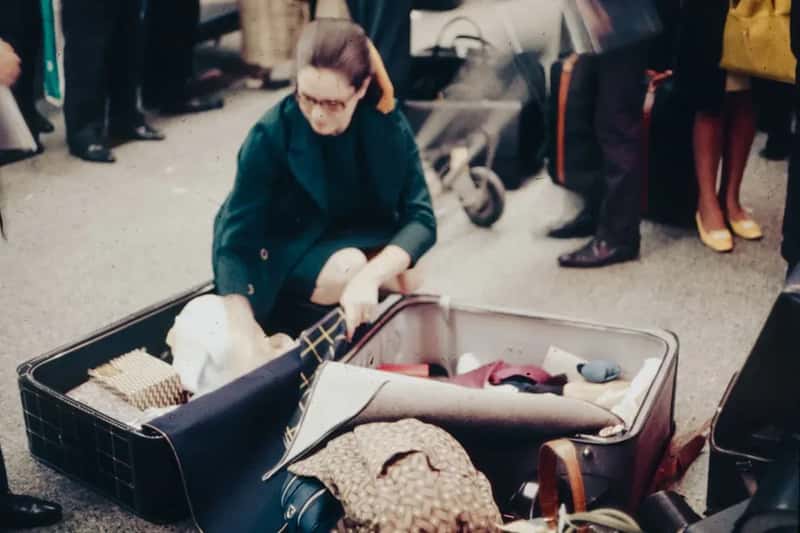
This is the core of it all, and it’s embarrassingly simple. Take photos of the bag’s exterior and of the contents inside. It’ll be easier to file a claim if you can prove your bag was in good condition when you dropped it off. Without that evidence, you’re essentially asking an airline to take your word for it – which, let’s just say, doesn’t always go smoothly.
If the luggage was already damaged or something broke because you didn’t pack it well enough, the airline is not at fault and doesn’t owe you anything. It’s a good idea to photograph your bags and the contents before you fly so you can prove any damage wasn’t your fault. This is the legal reality of the situation. Photos close that loophole immediately.
Airlines are not responsible for pre-existing damage to the bag or if the damage was caused by improper packing. That’s their get-out clause. A timestamped photo from right before check-in shuts that argument down cold.
Know What Compensation You’re Actually Entitled To
Most people have no idea how much – or how little – airlines are legally required to pay them. For U.S. domestic flights, a regulation from the U.S. Department of Transportation allows airlines to limit their liability for a lost, damaged, or delayed bag to $3,800 per passenger. That’s the ceiling, not a guarantee. You have to prove your loss.
For international travel, the rules come from the Montreal Convention. Beginning December 28, 2024, air passengers could get more compensation for flight delays, lost luggage, and injuries on international flights. The compensation limit is now roughly US$2,080 regardless of the value of your luggage.
Here’s the catch though. You may need to back up your claim with receipts or proof of what was in your luggage. No proof, no full compensation. It’s as straightforward as that. A photo of the bag’s contents before you zip it shut? That’s your proof.
Timing Is Everything – And Airlines Know It

One thing airlines count on? That you won’t know about the strict reporting deadlines. You only have four hours to report damaged luggage to Southwest Airlines if you want any form of compensation, whereas the American Airlines damaged luggage deadline is 24 hours. Four hours. That’s barely enough time to get to your hotel and unpack.
If you leave the airport without reporting the damage or loss of your baggage, it is presumed to be intact or to have been delivered on time. You will then have to prove yourself that the damage was caused by the carrier, which is difficult. Having a photo with a timestamp changes everything here. You walk up to the baggage desk with evidence already in your pocket.
You can claim damages up to two years, but you must make claims for damaged baggage within seven days and claims for delayed bags within 21 days. Mark those dates. Don’t miss them. The airlines will absolutely use your inaction against you.
The Photo Helps Identify Your Bag Faster When It Goes Missing
Think about how many black Samsonite suitcases circle around a baggage carousel on any given morning. Hundreds. Maybe thousands on a busy travel day. When your bag goes missing and you walk up to the airline desk, they’re going to ask you to describe it. And if your answer is “uh, it’s black and kind of big,” you’re in trouble.
If you have photos of your bag, show them to the airline staff. This helps them identify it more quickly and reduces the risk of confusion with similar luggage. Detailed descriptions speed up the search process and make it easier for the airline to match found items with your claim.
The largest reason, by far, that suitcases go unclaimed is that they do not contain any identifying information on or inside them. A photo on your phone doesn’t replace a luggage tag, but it absolutely complements one. Together, they’re your best shot at a quick reunion with your stuff.
Financial Reality: Most People Don’t Get Fully Compensated

Here’s a figure that should genuinely alarm you. On average, flyers lost $457 in value, and 44% were not compensated by the airline. Meanwhile, 46% of flyers avoid checking their bags altogether to prevent possible loss or damage. Nearly half of all travelers have simply changed the way they pack because they don’t trust the system.
That’s a reasonable response, but it’s not always practical. Sometimes you need to check bags – long trips, ski equipment, formal wear, gifts. On average, it took seven days for passengers to recover their lost luggage. Seven days. That’s a whole vacation’s worth of wearing the same outfit.
Those who do have clear photographic evidence of their bag’s condition and contents at check-in are in a far stronger position to negotiate. Without it, you’re at the mercy of whatever the airline feels like offering. It’s not a great place to be.
Don’t Forget to Photograph the Baggage Tag Too
This one surprises people. It’s not just the bag itself you should photograph – the tag matters enormously. Airlines often require that baggage tags remain attached to your luggage. A backup photo of them can come in handy if you’ve already torn them off.
Document the damage by taking photos of the outside of the luggage and of any damaged items inside the luggage. You should also take pictures of the luggage barcode tags and leave the tags in place. That barcode tag is essentially your bag’s travel passport. If it’s gone, things get complicated fast.
Bags checked at the gate are more prone to routing issues because they bypass normal tagging processes. If you’re ever forced to gate-check, snap a quick photo of whatever tag they put on your bag right there at the gate. It takes five seconds and could save you hours of headaches later.
Pair Your Photo With a Tracking Device for Extra Peace of Mind
A photo is your evidence after the fact. A tracker is your eyes on the bag in real time. Apple’s AirTags have become a travel essential for peace of mind. These tiny Bluetooth tracking devices help travelers monitor the whereabouts of their checked bags in real time. Used together, a photo and a tracker cover just about every scenario you might face.
New in 2025, Apple has teamed up with airlines to incorporate AirTags into their luggage recovery systems via a new phone feature called Share Item Location. As of 2025, over 36 airlines support this feature. That’s a real and growing tool that can dramatically speed up bag recovery.
I think it’s worth noting that trackers are not foolproof – they tell you where a bag was, not always where it is in the moment. But combined with a clear photo for identification, you’re giving yourself a serious advantage. Average recovery time with AirTag is 24 to 48 hours, versus five or more days without one. That’s the difference between a minor inconvenience and a ruined trip.
Which Airlines Have the Worst Track Record – And Why It Matters
It’s worth knowing who you’re flying with before you hand over your suitcase. American Airlines mishandles more luggage than any other airline, with 8.1 pieces per 1,000 checked bags, and makes up nearly one quarter of all mishandled bags. That’s a significant concentration of risk in a single carrier.
Nearly a quarter of all mishandled luggage last year was due to American Airlines. Southwest Airlines has the second-highest percentage of all mishandled bags at 23%, followed by United Airlines at 14% and Delta Air Lines at 13%. Knowing these numbers doesn’t mean you can always avoid these airlines – but it does mean you should be extra prepared when flying with them.
Regionally, Europe remains the outlier, with a much higher mishandling rate of 12.3 per 1,000 passengers. Traveling through a European hub? Double-check your bag, photograph everything, and know your rights under the Montreal Convention before you even reach the airport. Preparation is everything.
Conclusion: Ten Seconds That Could Save You Hundreds
It costs you nothing. No extra app, no subscription, no gear. Just open your camera before you walk up to the check-in desk, take a few shots of your bag – outside, inside if you’ve packed valuables, and the tag once it’s applied. Done.
That tiny habit creates a paper trail that airlines simply cannot argue with. It backs your damage claim, speeds up identification if your bag goes missing, and puts you in a far stronger legal and financial position under international aviation law. It genuinely is one of those rare travel tips where the effort is almost zero and the potential payoff is enormous.
In a world where tens of millions of bags are mishandled every year and nearly half of all affected travelers walk away without proper compensation, a photo is your quiet form of protection. So next time you’re at the airport, just before you hand over that bag – take the picture. What have you got to lose?