Think about this for a second. What if you could witness something almost no one else gets to see? Antarctica in winter is one of the most extreme, most otherworldly experiences on the planet. I’m not talking about the typical tourist season when cruise ships arrive, and thousands of visitors clamber onto the peninsula. This is about something else entirely. When darkness blankets the continent and temperatures plummet, a different Antarctica emerges.
Let’s be honest here. Tourism is not allowed from April through October due to extreme winter conditions, so accessing Antarctica during these months is nearly impossible for ordinary travelers. Yet this inaccessibility is precisely what makes winter exploration so captivating for those rare few who do venture there. Scientists and research station personnel are among the select group who witness this polar transformation firsthand.
The Polar Night Creates an Otherworldly Atmosphere

During the period of the polar night, the sun does not rise above the horizon for more than 24 continuous hours, and the closer you are to the pole, the longer the polar night lasts. Imagine that. Winter in Antarctica runs from March until October, and when daylight hours disappear, temperatures plunge to minus thirty to sixty degrees Celsius.
Most people would run from that kind of darkness. Yet there’s something profoundly beautiful about it. Despite its name, polar night is not one continuous block of pure nighttime, as sunlight is refracted over the horizon even when the sun has set, and at many latitudes most days may be dominated by different phases of polar twilight. Stars become visible for longer stretches, and the aurora australis dances across the sky with breathtaking intensity. This is nature at its most raw and unfiltered.
Emperor Penguins Breed Only in Winter

The only penguin species that breeds during the Antarctic winter, the emperor penguins trek fifty to one hundred twenty kilometers over the ice to breeding colonies, making them the only animals that breed during the Antarctic winter. They do this when conditions are at their absolute worst.
Emperors breed during the coldest, darkest time of the year, with temperatures as low at minus fifty degrees Celsius and winds up to two hundred kilometers per hour. Why would they choose such brutal timing? It is thought that emperors evolved this unusual winter breeding to allow the chick to be independent at a time when food is most plentiful. The males endure months of fasting while balancing eggs on their feet, losing nearly half their body weight. If you could witness this extraordinary spectacle, you’d understand why winter is when Antarctica truly comes alive in ways the summer tourists never see.
Scientific Research Reaches Its Peak During Winter

While the summer season attracts tourists by the tens of thousands, winter belongs to the scientists. Approximately one thousand scientists remain in Antarctica during winter, compared to the roughly five thousand who work there in summer. These researchers aren’t there by accident.
Winter provides unique opportunities for polar research that simply can’t be replicated during warmer months. Existing evidence suggests that the circadian system is disturbed during the polar winter due largely to insufficient bright light, making it an ideal time to study human adaptation to extreme environments. Studies on sleep patterns, mental health, and biological rhythms conducted during the polar night have yielded fascinating insights into human resilience. The absence of summer distractions allows scientists to focus on long-term observations of ice formation, atmospheric conditions, and climate patterns that are critical to understanding our planet’s future.
You’ll Avoid the Tourist Crowds Entirely
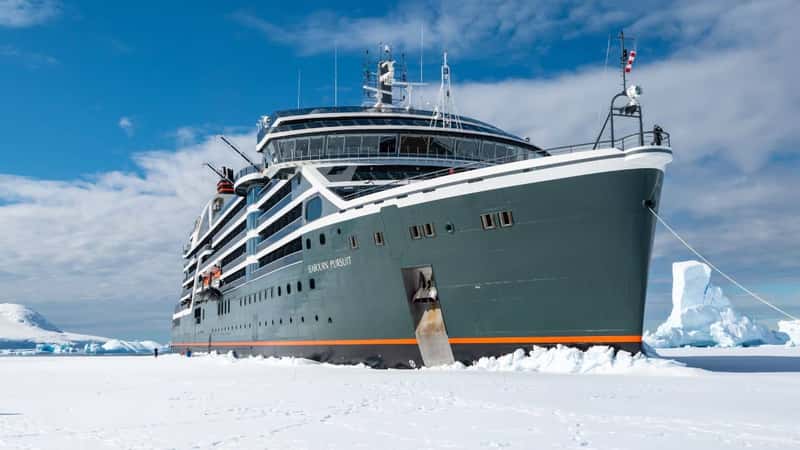
During the 2023-24 season, 122,072 visitors traveled to Antarctica, with 107,270 estimated for 2024-25. That’s over one hundred thousand people trampling through the same accessible areas. An estimated seventy-seven percent of all landings occur on only approximately two square kilometers of the fourteen million square kilometer Antarctic continent.
Winter changes everything. The continent returns to its natural state of isolation and silence. No cruise ships. No zodiac landings. No queues to photograph penguin colonies. For research personnel stationed there, it’s a privilege to experience Antarctica as it was meant to be: untouched, pristine, and profoundly alone. Honestly, there’s something deeply appealing about that kind of solitude in our hyperconnected world.
Winter Offers Authentic Adventure and Challenge

For roughly six months of the austral winter, Antarctica is utterly frigid, storm-wracked, and dark, and some hardy scientists tough out this most unforgiving global manifestation of wintertime. This isn’t some packaged adventure where everything is carefully controlled and safe. It’s real. It’s dangerous. It’s transformative.
The absence of familiar cues and day-night cycles can affect circadian rhythms and disrupt sleep, and the perpetual lack of daylight often saps energy. Yet this extreme environment pushes humans to their limits and reveals what we’re truly capable of enduring. The few people who overwinter at research stations often describe it as life-changing. They form bonds with their small teams that last a lifetime. They confront isolation, darkness, and cold in ways that reshape their understanding of resilience.
Winter Reveals Antarctica’s True Character

Summer Antarctica is spectacular, don’t get me wrong. Yet it’s also deceptive. During summertime in the Antarctic Peninsula, you can expect an average temperature of zero degrees Celsius. That’s practically balmy compared to winter’s ferocity. Summer gives you a sanitized version of the continent, buffered by milder weather and endless daylight.
Winter strips away those comforts and shows you what Antarctica really is: the most hostile environment on Earth. In the polar night during the Antarctic winter, the sun does not shine at all, whereas during the Antarctic summer the sun shines twenty-four hours a day. The continent becomes a study in contrasts between light and dark, life and survival. Sea ice expands dramatically. Storms rage with unmatched intensity. The landscape transforms into something almost alien.
Standing in that darkness, feeling the wind cut through multiple layers of thermal clothing, you grasp something fundamental about our planet’s power. It’s humbling in a way that summer tourism simply cannot replicate.
Though winter access remains restricted to scientific personnel and support staff, the very existence of this hidden season reminds us that Antarctica holds mysteries beyond the reach of typical travel. The researchers who brave the polar night return with stories of unimaginable beauty: aurora displays that last for hours, stars so bright they cast shadows on the ice, and a silence so complete it feels almost sacred. Perhaps that’s the real reason you should go to Antarctica in winter – not for comfort or convenience, but to witness Earth at its most extreme and extraordinary. What do you think? Would you dare to experience the continent when almost no one else is watching?