
Two people with similar résumés can start the same week with very different luck. One lands a work permit in a few weeks, while the other spends a year on paperwork that goes nowhere. The gap usually has little to do with talent. It comes from nationality, age, salary, and whether a country wants someone with your profile right now.
Immigration rules shifted a lot between 2024 and 2026, and some well-known routes have become much harder. Others have quietly opened up. Here are fifteen visa routes, seven that are comparatively approachable and eight that can feel out of reach for most applicants.
Germany’s Opportunity Card

The Opportunity Card lets non-EU nationals enter Germany for up to a year to look for qualified work, without a job offer.[1] Applicants who go through the points system need at least six points.[2] People whose degree or vocational qualification was obtained or recognised in Germany can skip the points test and apply as skilled workers.[2]
Language can tip the balance. German at A2 earns one point, B1 earns two, and B2 or higher earns three.[2] You also need to show at least 1,091 euros a month, or 13,092 euros for the year.[1] You can work up to 20 hours a week while you search.[3] The card excludes self-employment and freelance work.[4]
Australia and New Zealand Working Holiday Visas

Both countries offer working holiday visas to Americans aged 18 to 30, lasting up to 12 months.[5] Australia’s version for US citizens is the Subclass 462 Work and Holiday visa. It requires a fee, no dependent children, and proof that you can support yourself.[5] The paperwork is light compared with most skilled visas.
The catch is eligibility. These visas are among the easiest work permits to get, but only if you meet the age and nationality rules.[6] Age limits and partner countries differ by passport, so check the official immigration site for your own situation. The visa suits a gap year or career break better than a long-term career move.
The Netherlands and the Dutch American Friendship Treaty

US citizens can use the Dutch American Friendship Treaty route, which involves an investment of €4,500.[7] It gives a residence permit to run your own business, with no points system.[5] That makes it unusually simple for freelancers and small business founders.
You’ll still need a real business plan and the paperwork to match. The language barrier is mild, though. The vast majority of the Dutch population speaks English, which helps English speaking professionals settle in.[8] It’s a route built for self-starters rather than people hoping to be hired from abroad.
UAE Employer Sponsored Work Visas

For most people with a job offer, the Gulf states, including the UAE, Saudi Arabia, Qatar, and Oman, are the easiest places to get a work visa.[6] One ranking puts UAE work visa processing at five to ten days.[9] Employers handle most of the process, which keeps things fast.
The key word is sponsorship. The same ranking lists a job offer as required.[9] Without an employer in your corner, the route doesn’t really exist. Contract terms, notice periods, and what happens if you leave a job deserve a careful read before you sign.
Portugal’s D8 Digital Nomad Visa

Portugal is one of Western Europe’s easiest entry points because its immigration system is built for independent workers.[7] The D8 visa requires monthly income of at least €3,280.[7] Another guide puts that at roughly $3,500 a month and calls the D8 one of the best visas in the world for remote workers.[8]
It works for people who already earn remotely, such as employees of foreign companies and freelancers with steady clients. You don’t need a local employer. Rental contracts, tax registration, and proof of income still take time, so budget for the admin.
Spain’s Digital Nomad Visa

Spain requires monthly income of at least €2,800, which is below Portugal’s €3,280 and Estonia’s figure of over €4,500.[7] That lower bar makes it attractive to remote workers whose pay sits in the middle range. The visa is aimed at people working for companies outside Spain.
Income is only one piece of the application. Expect to document your remote work arrangement, hold health insurance, and show a clean record. Rules and thresholds do get updated, so confirm the current numbers with a Spanish consulate before you apply.
The US TN Visa for Canadians and Mexicans

For Canadians and Mexicans, the TN visa is generally the easiest US work visa, with no cap and a straightforward process.[10] It also costs less than other US work visas.[10] It’s one of the few American routes that sidesteps the lottery drama.
Eligibility is narrow. The TN covers specific professions under the USMCA trade agreement, so your job and credentials must match a listed category. If they do, the process can move quickly. If they don’t, the TN won’t help.
The H-1B Lottery for US Specialty Workers

The H-1B has always been competitive, and 2026 made it tougher. In February 2026, DHS replaced random selection with a weighted process favoring higher paid and higher skilled workers.[11] Registrations now receive one to four entries depending on the offered wage level.[12] Entry level candidates face noticeably worse odds.
A $100,000 fee adds uncertainty. A September 2025 proclamation imposed it on new petitions for beneficiaries abroad who need consular processing.[13] Its legal status has been contested. One tracker says a federal court vacated it in June 2026 and that it was extended anyway in September.[12] Another report says a federal judge upheld it.[14] Check current guidance from USCIS before relying on either version.
The US O-1 for Extraordinary Ability

The O-1 has no lottery and no annual cap.[15] That sounds easy until you read the standard. It’s meant for people at the top of their field in science, business, the arts, athletics, or education.[16]
Immigration attorneys describe it as competitive because of its stringent requirements.[10] Awards, press coverage, published work, and expert letters all carry weight. For someone early in their career without that paper trail, it’s effectively closed.
The UK Skilled Worker Visa
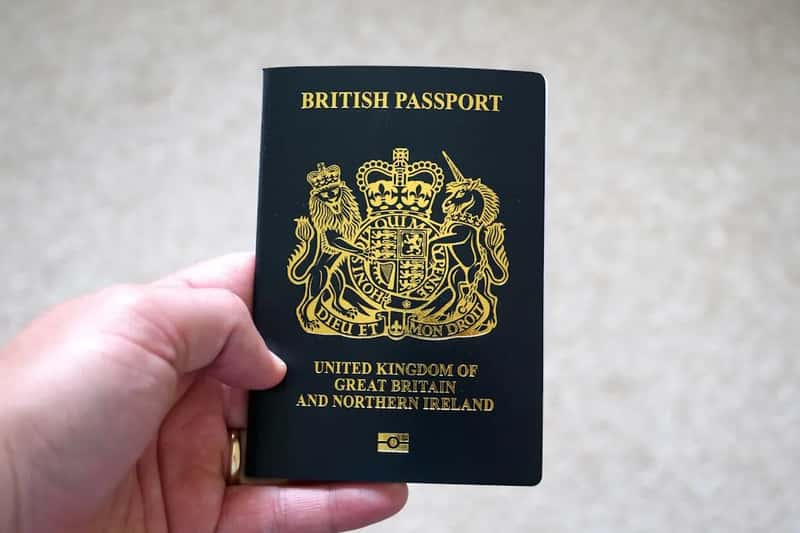
The UK route has no cap or lottery, but the bar keeps rising. Changes from 22 July 2025 raised the normal skill threshold to RQF level 6 and restricted sponsorship in medium skilled occupations.[17] Most applicants now need a salary of at least £41,700 and the full going rate for their occupation code.[17] The English language requirement also increased from 8 January 2026.[17]
Some discounts remain. A job on the Immigration Salary List can use a threshold of £33,400.[17] That list is due to expire on 31 December 2026.[18] Without a sponsor offering a graduate level job at that pay, the door stays shut.
The UK Care Worker Route

This one is closed rather than merely difficult. The government shut the Health and Care Worker visa to new overseas care workers and senior care workers.[19] Overseas recruitment for care worker roles ended on 22 July 2025.[20]
There’s a small carve out for people already in the country. In country switching continues until 22 July 2028 for those eligible for the Health and Care salary concession.[20] For anyone abroad hoping to move to the UK as a care worker, the main option is gone.
Switzerland for Non-EU Nationals

Switzerland pays well, and its immigration system is designed to limit who gets in from outside the EU and EFTA. Permits for third country nationals are capped by annual quotas. Employers generally have to show that no suitable candidate could be found in Switzerland or the EU and EFTA.
In practice, permits go mainly to highly qualified specialists and managers. A mid-level role is hard to justify under those rules. If you have rare skills and a Swiss employer willing to handle the process, it can happen, but few applicants fit that description.
Italy’s Decreto Flussi Quotas

Italy controls most non-EU labor migration through the Decreto Flussi, a government decree that sets entry quotas. Employers apply during fixed windows, often called click days. Workers can’t simply arrive and look for jobs.
Timing and paperwork matter a great deal. An employer has to file during the right window, and the quota can fill quickly in popular categories. For individuals without an Italian employer already committed, the route is close to unreachable.
Canada’s Employer and Express Entry Routes

Canada appears on many easiest lists, yet it has tightened. One 2026 guide ranks it first for foreigners, with Express Entry the main pathway.[21] Express Entry is a competitive draw system where candidates are ranked by score, and the cutoff moves from round to round.
Employer sponsored routes face their own limits. The federal government has been trimming temporary resident targets since 2024, and employers hiring through the labour market assessment process have faced stricter scrutiny. Strong French, a degree, and in-demand experience help. Without them, the route can feel like a long shot.
Singapore’s Employment Pass

Rankings split on Singapore. One 2026 guide lists the Employment Pass among the easiest routes for international talent.[22] For high earners with a Singapore employer, that fits. For mid-career or junior workers, it’s much harder.
Salary is the first filter. One ranking lists the minimum at S$5,600 a month.[9] Other guides cite different figures, so verify with the Ministry of Manpower. Applicants are also assessed under a points based framework called COMPASS, which weighs salary, qualifications, and employer diversity.