Mexico keeps pulling in travelers year after year, and 2026 is shaping up to be one of its busiest stretches yet. Between shifting immigration procedures, a patchwork of regional safety conditions, and the small matter of hosting part of the FIFA World Cup this summer, there’s more to keep track of than in a typical year. This guide walks through what actually matters before you book that flight south.
The FMM Tourist Permit: What Changed This Year
Most international visitors heading to Mexico, including citizens from the United States, Canada and countries in the European Union, do not need a traditional visa for tourist travel, and instead receive a Forma Migratoria Múltiple tourist permit upon arrival that authorises them to stay in Mexico for tourism purposes. That little slip of paper, or its digital equivalent, is really the document immigration cares about, not a stamped visa.
Here’s the twist for 2026. In 2026 Mexico modified how visitor permits are issued at ports of entry, and instead of automatically granting the maximum 180-day stay, immigration officials now generally determine the length of the permit based on each traveller’s stated plans and supporting documentation, meaning you may be granted fewer days than the traditional maximum depending on your itinerary and evidence provided. For a standard one or two week vacation this rarely causes a problem, but if you intend to stay for extended periods or use back-to-back tourist permits, you should be prepared with proof of your itinerary, accommodation bookings, and a return or onward ticket at immigration. It’s also worth noting that as of 2026, Mexico has no health entry requirements related to COVID-19, so that particular worry is off the table.
Passport Rules and Who Actually Needs a Visa
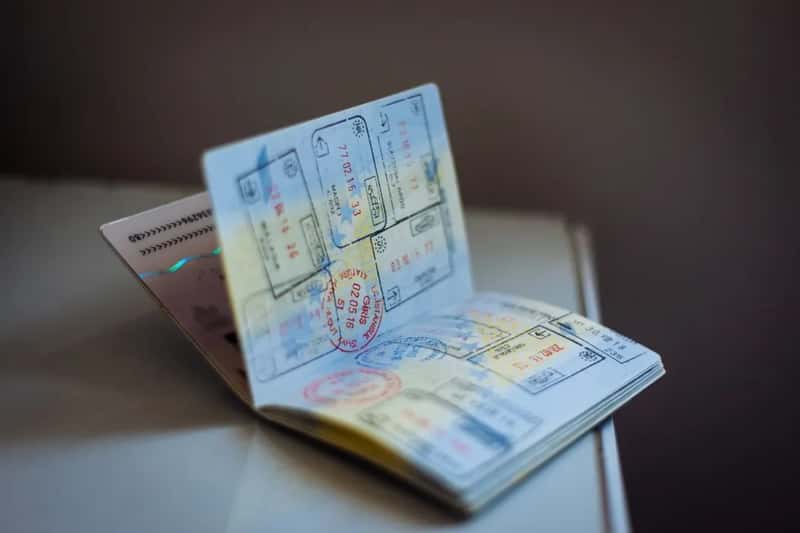
Passport logistics trip up more travelers than people expect. For all visitors, the passport must be valid for at least 6 months after the intended date of entry. Land border crossings offer a bit more flexibility than flying does, though. If you’re flying rather than driving across a land border, the rules tighten further, since passport cards can generally be used for land or sea crossings into Mexico, but they cannot be used for international flights, so anyone flying into Mexico must have a valid passport book.
Whether you need a visa at all depends entirely on your passport. Whether you need an actual visa depends entirely on your nationality, and currently, only 69 countries enjoy visa-exempt status for Mexico. Americans have it easy in this respect, since travelers holding American passports are welcomed to Mexico without the need for a tourist visa in 2026 and can enjoy up to 180 days of visa-free stay. Overstaying isn’t something to shrug off either. Fines run approximately 44 USD per day of overstay, paid at the airport or border when you exit, and short overstays of one to three days are common for travelers who simply miscounted. Longer overstays can escalate into more serious consequences, including deportation or a re-entry ban, though that outcome is rare for short-term tourists.
Safety: Read the State-Level Advisory, Not Just the Headline
The blanket “is Mexico safe” question misses the point, because conditions vary enormously by region. The U.S. State Department updated its Mexico travel advisory ahead of the 2026 FIFA World Cup, maintaining a Level 2 warning citing crime, terrorism and kidnapping concerns. Nationally that puts Mexico on the same tier as many popular destinations worldwide, but the country-level label hides a lot of variation. Six states remain under a Level 4 “Do Not Travel” advisory: Colima, Guerrero, Michoacán, Sinaloa, Tamaulipas and Zacatecas, while several additional states, including Baja California, Chihuahua, Guanajuato and Jalisco, are classified as Level 3, meaning Americans should reconsider travel.
The good news for most vacationers is that popular tourist zones sit at a lower risk tier. Cancun, Los Cabos, Merida, and Oaxaca are not destinations that warrant cancellation based on current advisories. Practically speaking, the risks tourists face are primarily urban crime such as petty theft, express kidnapping via unlicensed taxis, drink spiking, and scams, and following standard safety practices, secure transport, watching your drink, staying in busy areas at night, addresses the vast majority of tourist-facing risk. The single best habit any visitor can adopt is checking the specific state-level advisory for every destination on your route, rather than relying on a single national headline.
World Cup Season Adds a Layer of Complexity

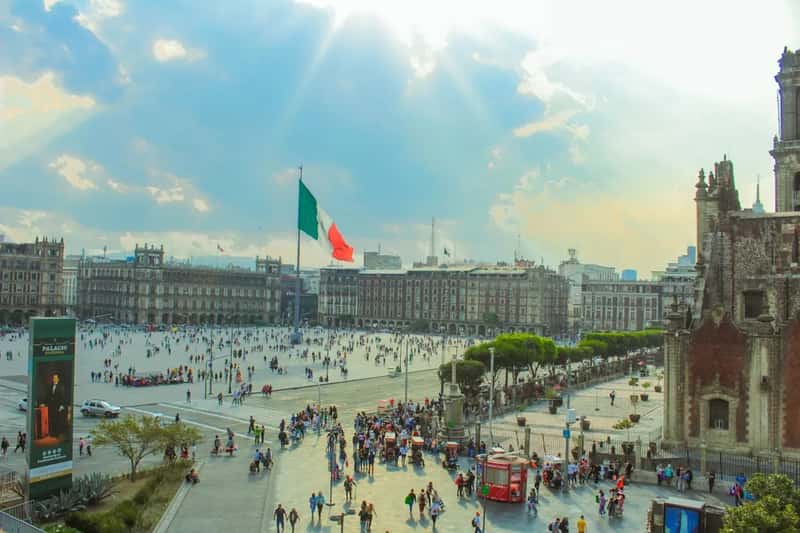
This year isn’t a normal travel year for Mexico because of soccer. The 2026 FIFA World Cup runs from 11 June to 19 July 2026 across 16 cities in the United States, Mexico, and Canada, the first tournament ever co-hosted by three nations, and the largest in history with 48 teams and 104 matches. Mexico hosts 3 venues, including the opening match at Mexico City’s Estadio Azteca, and the tournament kicked off on 11 June 2026 with Mexico vs. South Africa at Mexico City Stadium. Matches were also played in Guadalajara and Monterrey throughout the group stage and into the knockout rounds.
If your trip overlaps with these host cities, plan for crowds and higher prices around match days. The State Department’s guidance leans practical here too: travelers should avoid traveling between cities after dark, use dispatched taxis or app-based ride services and avoid traveling alone in remote areas. On the upside, Mexico’s three host cities are significantly cheaper for food and lodging compared to US cities, so a Mexico-based World Cup itinerary can stretch a budget further than the American legs of the tournament.
Money Matters: Pesos, ATMs, and Avoiding Bad Exchange Rates
The Mexican peso has stayed reasonably stable, with most sources placing the exchange rate somewhere around 17 to 18 pesos to the US dollar heading into 2026. Where you get your cash matters more than most travelers assume. Airport exchange kiosks offer the worst rates, with margins of 8 to 15 percent below the mid-market rate common at Cancún and Mexico City airports, so it’s best to only use them if you need pesos immediately. A smarter move is heading straight for a bank machine, since bank ATMs are the smarter play, since withdrawing pesos directly from Mexican bank ATMs typically only costs 1 to 3 percent from the mid-market rate.
Watch out for one particular trap at both ATMs and card terminals. Dynamic Currency Conversion is the single biggest money trap for tourists in Mexico: at an ATM or restaurant, a prompt appears offering to convert the transaction to US dollars at a “guaranteed” rate, but the exchange rate they offer is typically 5–8% worse than the interbank rate. The fix is simple: always choose to be charged in pesos, never in your home currency, whenever a terminal gives you the option. As for day-to-day spending, street food remains astonishingly cheap, with a street taco in Mexico City costing 15 to 25 pesos, less than a dollar fifty, so cash still goes a long way outside resort zones.
Tipping Culture: What’s Actually Expected
Tipping in Mexico is very much a part of daily life, and skipping it in restaurants isn’t really an option the way it might be elsewhere. Tipping at restaurants in Mexico is always expected, and because beach destinations tend to see more foreign tourists from the United States and Canada, it is customary to tip between 15 and 20 percent, while for less touristy destinations in the interior of the country, locals will tell you that between 10 and 15 percent is standard.
Housekeeping, drivers, and porters all fall into this custom too. A good rule of thumb is to leave between 25 and 50 pesos per day for hotel housekeepers, who may change daily, so leaving the tip each time your room is cleaned ensures every person who cleans it gets something. Cash is king here rather than card. Cash is strongly preferred because Mexican service workers often don’t receive credit card tips or wait days for digital transfers to process. Keep a stash of small bills, twenties, fifties, and hundreds, on hand throughout your trip so you’re never stuck without the right denomination.
Weather and Timing Your Trip
Mexico’s climate varies wildly by region and altitude, so “best time to visit” really depends on where you’re going. If your trip lines up with the World Cup, keep in mind that July falls within the rainy season in much of central and western Mexico, with cities such as Mexico City and Guadalajara typically experiencing frequent afternoon or evening showers during this period, often intense but short-lived, followed by warm and humid conditions. Mexico City’s elevation adds another wrinkle worth knowing about, since Mexico City is located approximately 2,240 metres above sea level, which can affect match tempo, physical performance and recovery, particularly for teams arriving from lower elevations, a detail that applies to hiking travelers and casual joggers too, not just professional athletes.
Outside the rainy season and the tournament crush, prices and crowds ease up considerably. Outside of the winter holiday rush and the World Cup host city disruptions, prices in most of the country dip noticeably during the late spring and early autumn months. If flexibility is on your side, targeting those shoulder windows tends to deliver better weather, thinner crowds, and friendlier hotel rates all at once.
Getting Around and Staying Connected
Ground transportation in Mexico is generally reliable if you stick to known operators. For anyone road-tripping between host cities or regions during the tournament, budget-friendly options exist beyond flying, since FlixBus is running service connecting all US, Canadian, and Mexican host cities for budget-conscious fans. Within cities, app-based ride services remain the safer default over hailing a cab off the street, particularly at night.
Staying connected matters more than people think, both for navigation and for safety. Connectivity is one of the most underrated traveller-safety tools in Mexico, since having reliable mobile data on arrival means working ride-hail apps, live navigation away from misleading street signage, and the ability to reach embassies or family quickly if something changes. It’s also worth registering with your home country’s travel alert program before departure. Enrolling in the Smart Traveler Enrollment Program (STEP) allows the U.S. Embassy to provide security updates and contact travelers during emergencies, and it costs nothing to sign up.
Final Thoughts

Mexico in 2026 rewards a bit of homework before you land. The entry process has gotten more document-heavy, the safety picture depends entirely on which state you’re standing in, and a World Cup summer means bigger crowds in three specific cities. None of that should scare anyone away from the beaches, ruins, markets, and mountain towns that keep drawing people back.
Do the basic prep, check the current state advisory for wherever you’re headed, carry pesos for tipping, and keep your passport valid well past your return date, and the rest tends to fall into place. Mexico remains one of the most rewarding places to travel precisely because it gives back generously to anyone who shows up a little prepared.