Every year, a handful of destinations dominate travel feeds, showing up again and again in the same golden-hour shot, the same empty beach, the same perfectly angled cliff. The problem is that the photo rarely tells the whole story. What actually greets travelers is often a queue, a fee, a rope line, or a crowd of a few hundred strangers trying to get the exact same picture.
None of this means these places aren’t worth seeing. It just means the gap between the marketing image and the on-the-ground reality has grown wide enough that plenty of visitors leave feeling a little let down. Here’s a closer look at ten spots where the online version and the in-person version don’t quite match.
Maya Bay, Thailand
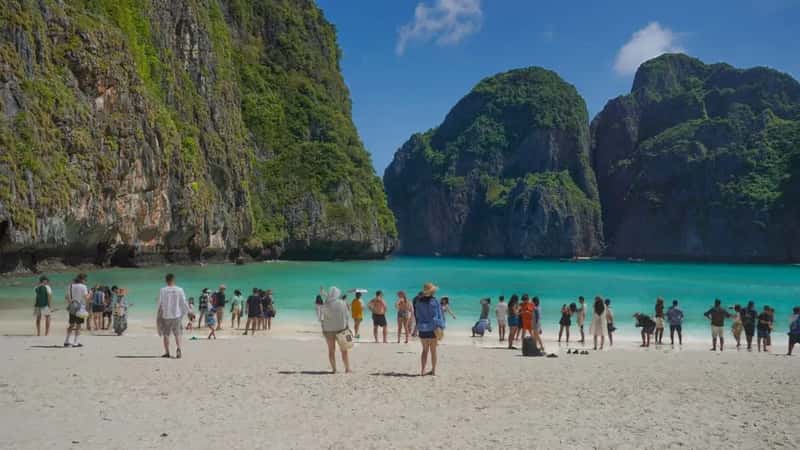
Maya Bay became famous almost overnight after starring as the hidden paradise in the 2000 film “The Beach,” and the tourism wave that followed nearly destroyed it. Years of boats anchoring directly on the sand and thousands of daily visitors caused so much coral damage that authorities closed Maya Bay to tourists in June 2018 to let the ecosystem recover.
The bay reopened with a very different set of rules. When it reopened in January this year, visitors were limited to 380 – not per day, but per hour, and approaches by boat were banned, as was swimming. On top of that, the site now closes for two months annually, with the 2025 closure running from September 1 to October 30, so anyone showing up expecting the untouched cove from the movie poster will instead find timed entry slots, knee-deep wading only, and a jetty system designed to keep boats away from the beach entirely.
Trolltunga, Norway
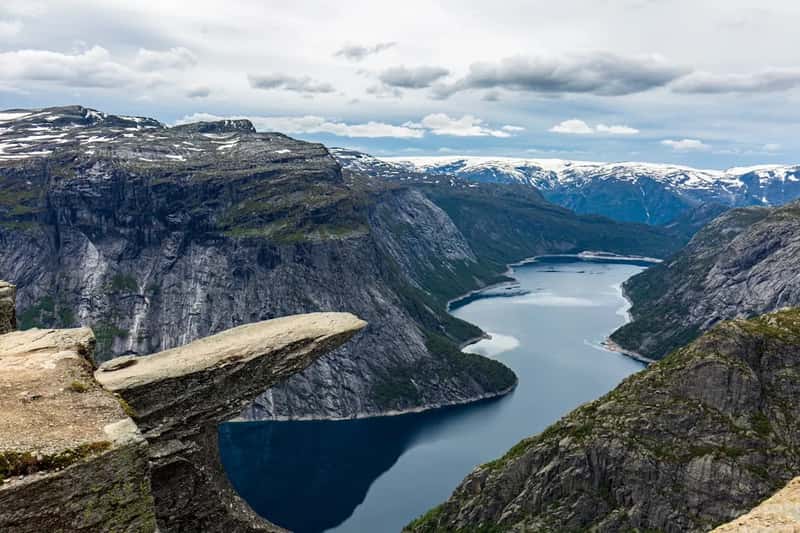
The Instagram version of Trolltunga shows a lone hiker perched on a rock tongue jutting out over a fjord, apparently alone with the view. The reality is a demanding trek that has exploded in popularity, with visitor numbers climbing from just 800 in 2010 to around 80,000 annually today, according to the official Trolltunga website.
Getting that solitary-looking photo now typically means waiting in line first. The trail is busiest in July and August, especially between noon and 3pm, when in peak season hikers should expect 30 to 45 minute waits on weekdays and 60 to 90 minutes on Saturdays. Some visitors report even longer delays during peak weekends, and that’s on top of a round trip that from the P2 parking area runs 27 kilometers and takes 8 to 12 hours, which turns a five-second photo into the reward for a full day of physically demanding effort.
Venice, Italy
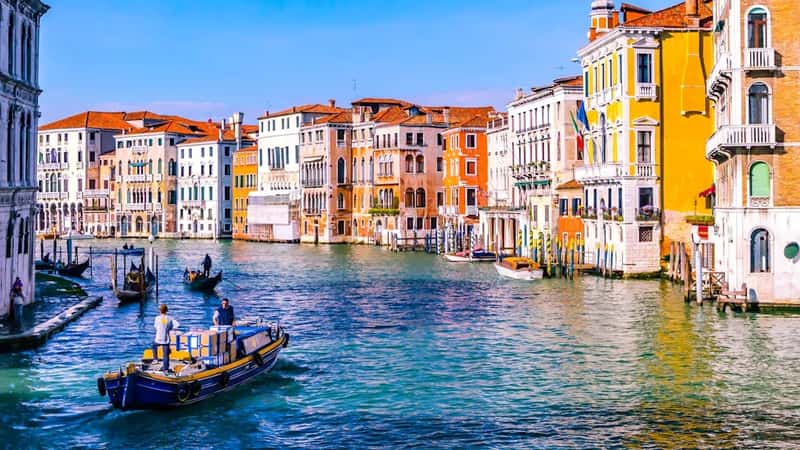
Canal shots of Venice make it look serene, timeless, and quiet. In practice, the historic center absorbs an enormous volume of foot traffic, and the city typically attracts around 30 million tourists per year, although seven in ten only stay for the day, cramming the same narrow streets and bridges within a few peak hours.
To manage this, Venice introduced a day-tripper access fee, and in 2026 it’s expanding rather than shrinking. The number of days that the levy will be in place has been extended to 60, compared to 54 in 2025, and the tax aims to curb ‘hit and run’ daytripper tourism. Even with the fee in place, officials admit it hasn’t solved the underlying problem, since this year’s figures show day visitor numbers dropped only slightly compared to last year, and peak dates attracted nearly 25,000 tourists, the equivalent of half the resident population of Venice.
Kelingking Beach, Nusa Penida, Bali
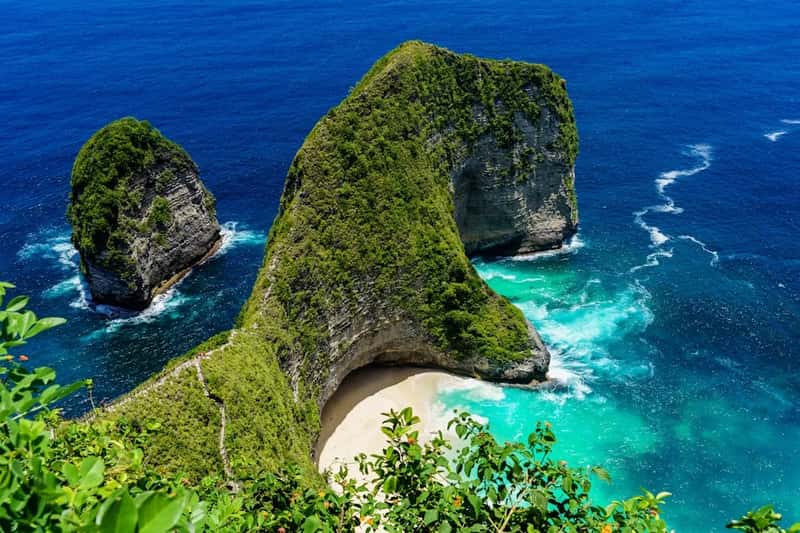
The T-Rex-shaped cliff at Kelingking Beach has become one of the most photographed spots in Indonesia, with more than 600,000 photos shared on Instagram under the hashtags kelingking and kelingkingbeach. But the viewpoint that looks so uncluttered online is usually packed with visitors angling for the same shot.
Most of Nusa Penida’s visitors are day-trippers, and that concentrates crowds badly. Even though only a small fraction of visitors to Bali go to Nusa Penida, most travellers come here on a day trip, which means that everyone goes to the exact same places, at the exact same time. A controversial glass elevator and concrete walkway meant to ease access was even ordered demolished in late 2025 after backlash, leaving the steep dirt path as the main way down, and steady crowds as the main obstacle to that quiet, private-looking photo.
Santorini, Greece
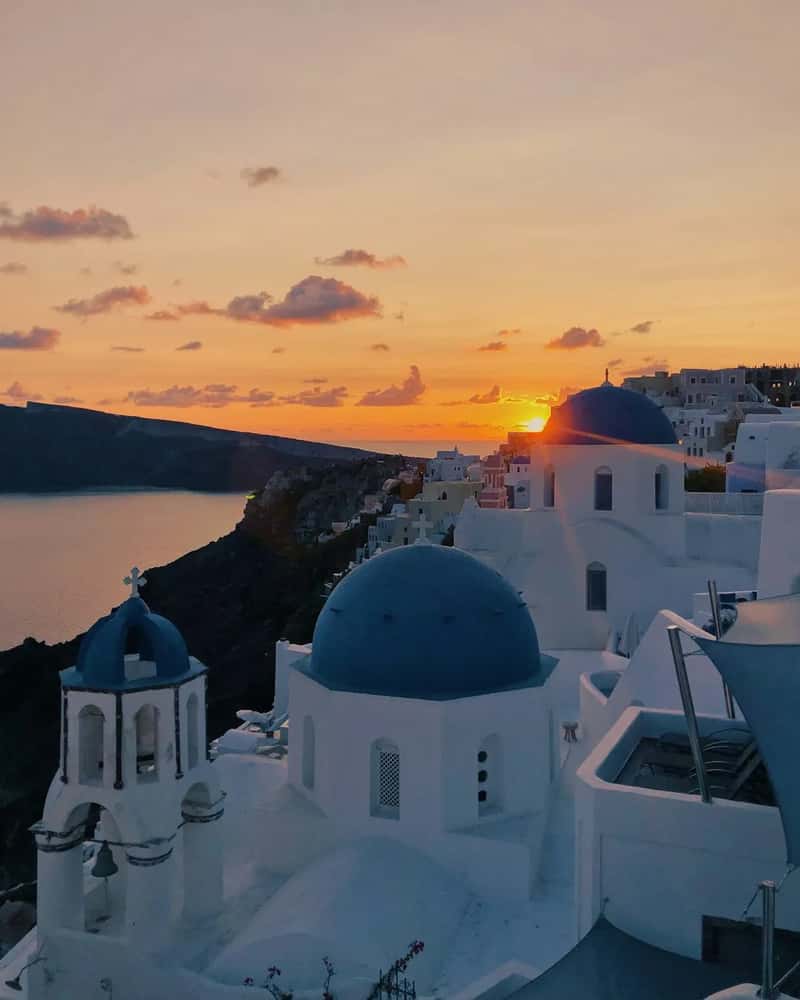
The white-and-blue villages clinging to Santorini’s caldera cliffs are genuinely stunning, but the sunset views packed with strangers rarely make it into the curated shots travelers see beforehand. Cruise ships bring in enormous single-day crowds that overwhelm the narrow streets of Fira and Oia within a matter of hours.
The scale of the problem pushed local authorities to act. Santorini introduced a limit of 8,000 cruise ship passengers per day, a move Forbes grouped alongside similar overtourism measures in Venice and Machu Picchu. Even with that cap, 8,000 extra visitors funneling through hillside alleyways built centuries before mass tourism existed is still a lot of shoulder-to-shoulder walking for anyone expecting the empty, romantic postcard scene.
Machu Picchu, Peru
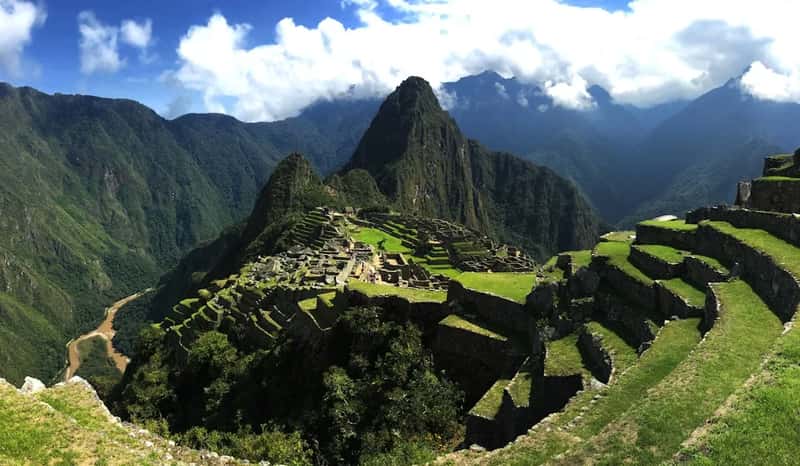
The lost Inca city photographs beautifully in isolation, wrapped in mist with no other visible person in sight. Getting that alone-with-history feeling in person is a different matter, since the site draws over 1.5 million visitors a year, all funneled through the same narrow stone pathways.
Peru has responded with an increasingly tight system of controls. As of 2026, daily entry is capped at up to 5,600 visitors on peak-season and holiday dates, including January 1, April 2 to 5, June 19 to November 2, and December 30 to 31, while the daily limit remains 4,500 visitors for the rest of the year. Visitors are also now required to move through fixed circuits with specific entry times, guided by an official tour guide with groups capped at 16 per guide, which turns what looks like a solitary pilgrimage into a scheduled, time-limited walk alongside thousands of other people that day.
Antelope c, Arizona

The swirling orange rock and dramatic light beams of Antelope Canyon look almost otherworldly in photos, often shot with no other tourists in frame. In reality, the canyon is only accessible through guided tours, and groups move through the narrow slot in a fairly tight, single-file procession.
Photographers chasing that iconic beam of light are often shoulder to shoulder with dozens of other visitors doing the same thing, especially during the midday hours when the light is at its best. The Navajo-operated tours that manage access have added structure and safety, but they’ve also turned what looks like a private discovery into a scheduled, shared experience with a fixed window of time inside the canyon walls.
Taj Mahal, India
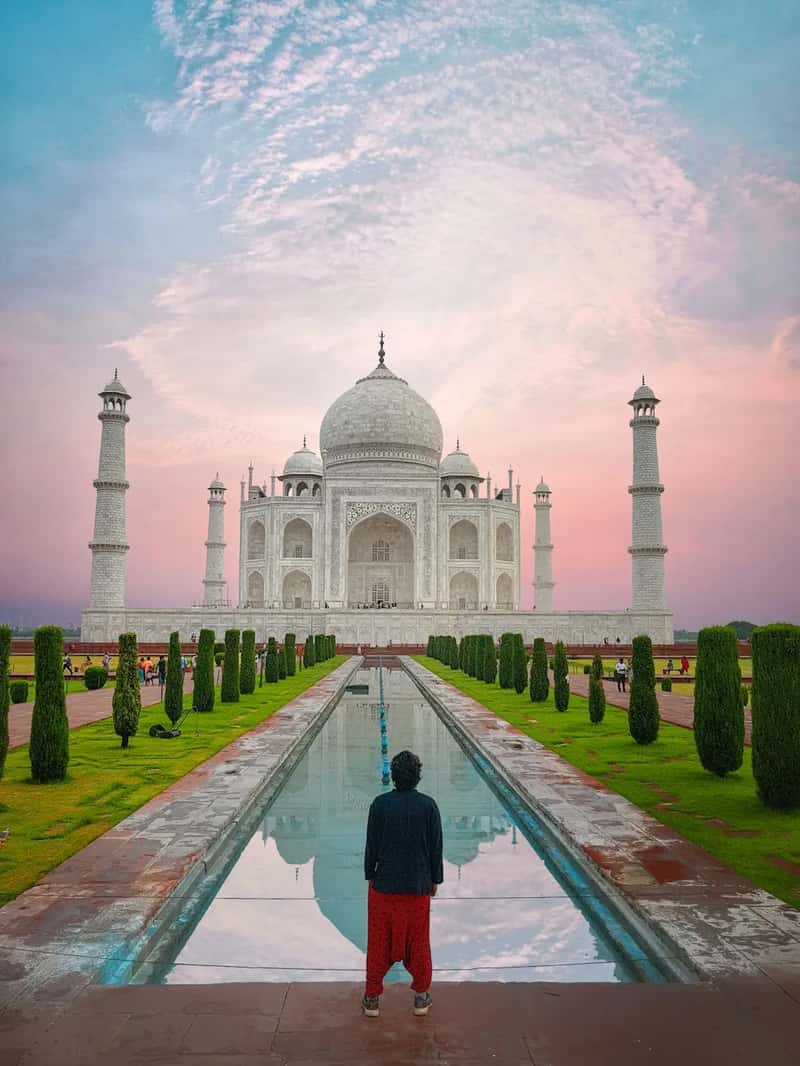
Sunrise photos of the Taj Mahal typically show the white marble mausoleum reflected in a still pool, framed with almost nobody around. The actual sunrise slot draws large crowds of visitors trying to recreate that same composition, particularly near the reflecting pools where the best angles are found.
Security lines, ticket checks, and the sheer volume of daily visitors mean that getting anywhere close to an empty frame usually requires arriving well before the gates open and still competing for space once inside. The building itself remains genuinely remarkable up close, but the hushed, solitary mood suggested by most online images rarely survives contact with the actual crowd.
Blue Lagoon, Iceland
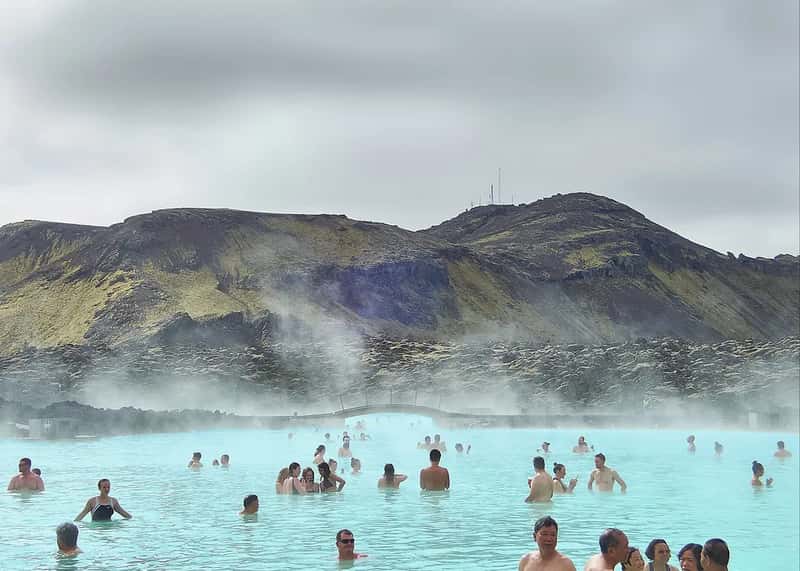
Photos of the Blue Lagoon usually show a handful of bathers drifting in milky blue water against a backdrop of black volcanic rock, looking almost meditative. The lagoon itself is real and the water color is accurate, but it’s also a large commercial spa that regularly hosts hundreds of visitors at once, especially during peak tourist season.
The experience today involves timed entry slots, wristbands, bars serving drinks in the water, and a steady flow of people moving between the changing rooms and the pool. It can still be relaxing, but it’s closer to a busy resort pool than the quiet geothermal retreat suggested by the carefully cropped photos that circulate online.
Angkor Wat, Cambodia
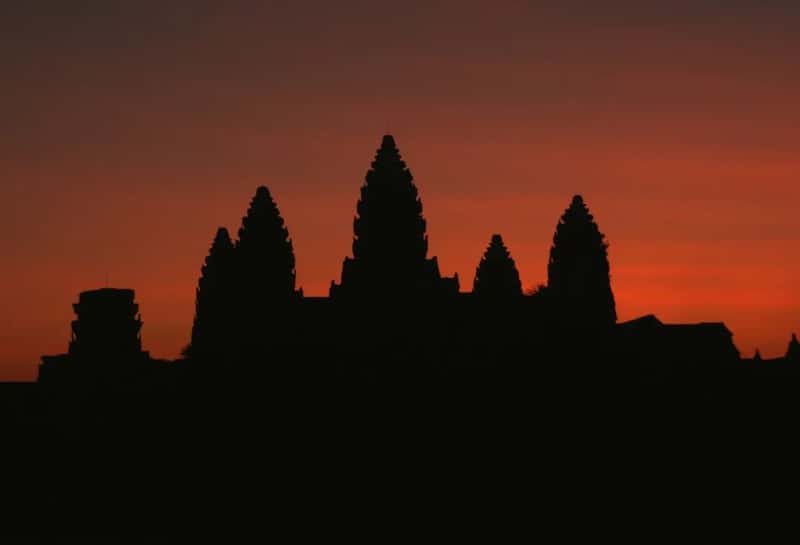
Sunrise at Angkor Wat is one of the most reproduced images in Southeast Asian travel content, with the temple’s silhouette rising against a colorful sky over a still reflecting pool. What those photos leave out is the crowd of visitors, tripods, and phone screens lined up along the same pool edge well before dawn to catch that exact view.
Once the sun comes up, the crowd doesn’t disperse so much as redistribute itself across the temple’s corridors and staircases, many of which are narrow enough that foot traffic backs up during peak hours. The complex is vast enough that quieter corners exist away from the main sunrise viewpoint, but the specific shot most people are chasing usually comes with plenty of company.
None of these places are frauds, and none of them deserve to be crossed off a bucket list entirely. What’s changed is the visibility of a handful of angles, repeated so often across social media that they’ve come to stand in for the whole destination, even when the actual experience involves lines, timed entry, fees, or crowd management systems that didn’t exist a decade ago. Travelers who go in with realistic expectations, and maybe a willingness to wander a few steps away from the famous viewpoint, tend to come away with a much better impression than the photo alone would suggest.