Vice City looks like pure Rockstar fantasy: pastel hotels, neon sunsets, and walls screaming with color. The twist is that most of that mood already exists in real Miami, and these 12 museums, murals, and street-art districts are the proof.
Rockstar hasn’t published an official map of real-world references for GTA 6, so think of this list as the real places Vice City seems to be channeling. Some are famous, some are weirdly overlooked, and one is so perfectly Vice City that it waits at the very end for a reason.
12. Little Haiti Cultural Complex: The Color Burst Most Miami Maps Skip
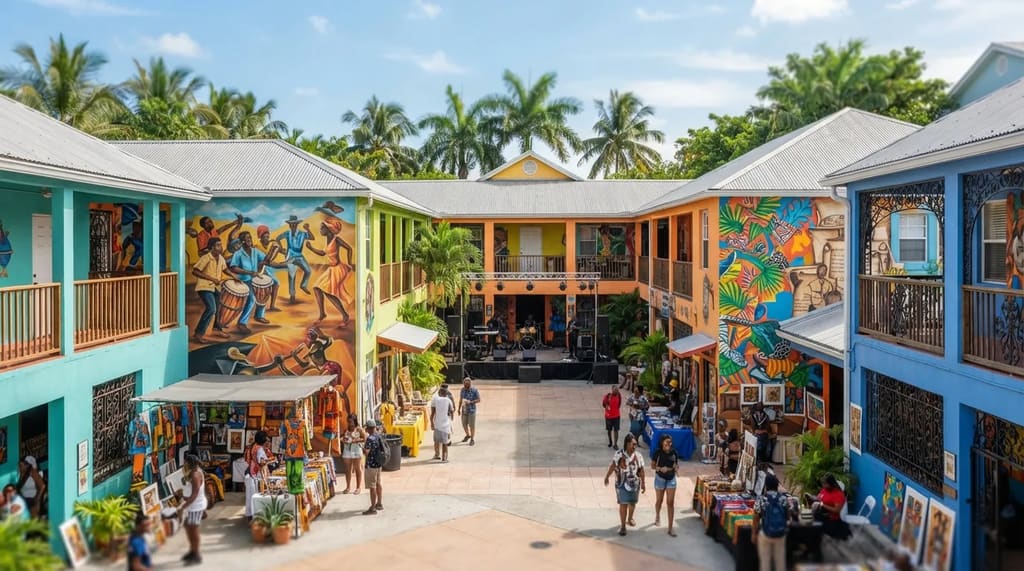
Start away from the beach, in a neighborhood where the color hits you before the history does. The Little Haiti Cultural Complex anchors its corner of Little Haiti with a bright courtyard, gallery space, performance areas, and a Caribbean Marketplace that feels like a different island slipped inside Miami.
That matters for Vice City, because a believable Miami is never just skyline and sand. It is also Haitian art, Creole music, and street corners where murals work like neighborhood signage and family memory at the same time.
The complex is known for exhibitions, classes, and performances, and its Big Night in Little Haiti music nights have helped turn the area into a block party after dark. If a game wants to capture Miami at night, this is the kind of lived-in energy that neon alone can’t fake.
The surprise is how rarely this side of the city shows up when people picture Miami. And the next stop is even easier to miss, because it started life as a place where wealthy visitors parked their belongings.
11. The Wolfsonian–FIU: A Design Museum Hiding in a Former Storage Building
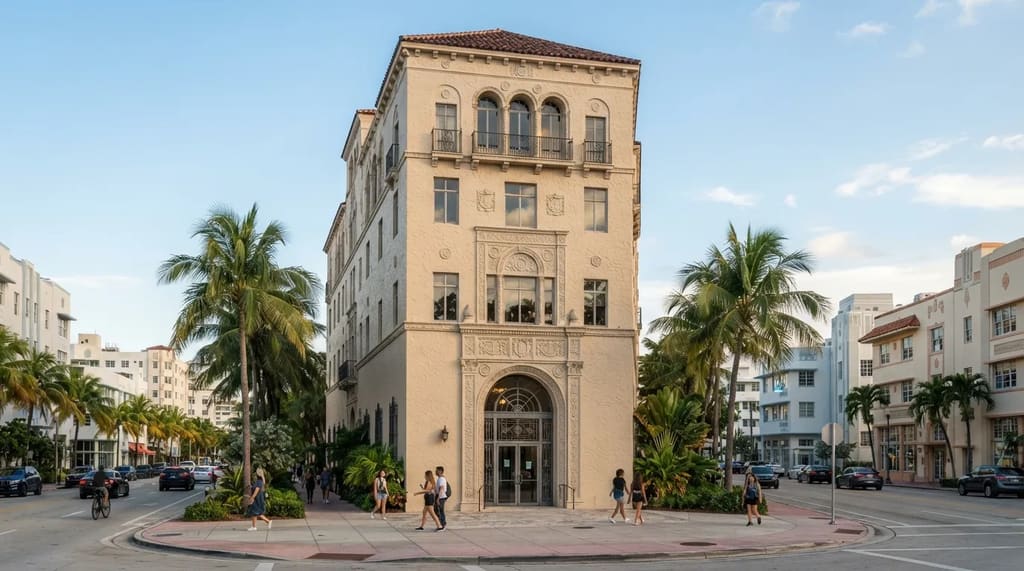
Miami Beach’s Washington Avenue hides a museum that began as a warehouse. The Wolfsonian–FIU fills a 1920s Mediterranean Revival building that once stored people’s belongings, and today it holds posters, furniture, and design objects from roughly 1850 to 1950.1
The collection grew from the passions of Mitchell "Micky" Wolfson Jr., and the museum is now part of Florida International University. It leans toward the bold graphics, industrial ideas, and political messaging that shaped the early twentieth century.
Why does that belong in Vice City’s world? Because the game’s beachfront glamour borrows from the dream of Deco-era style, and this is where that dream’s loudest posters and objects are kept under glass.
It also proves that South Beach was never just a pretty backdrop. Behind the pastel surface sits a century of design battles, travel fantasies, and big ideas about what a modern city should look like, and the next stop brings those fantasies outdoors in a very strange way.
10. The Bass and Miami Mountain: Rainbow Boulders Rising Over Miami Beach
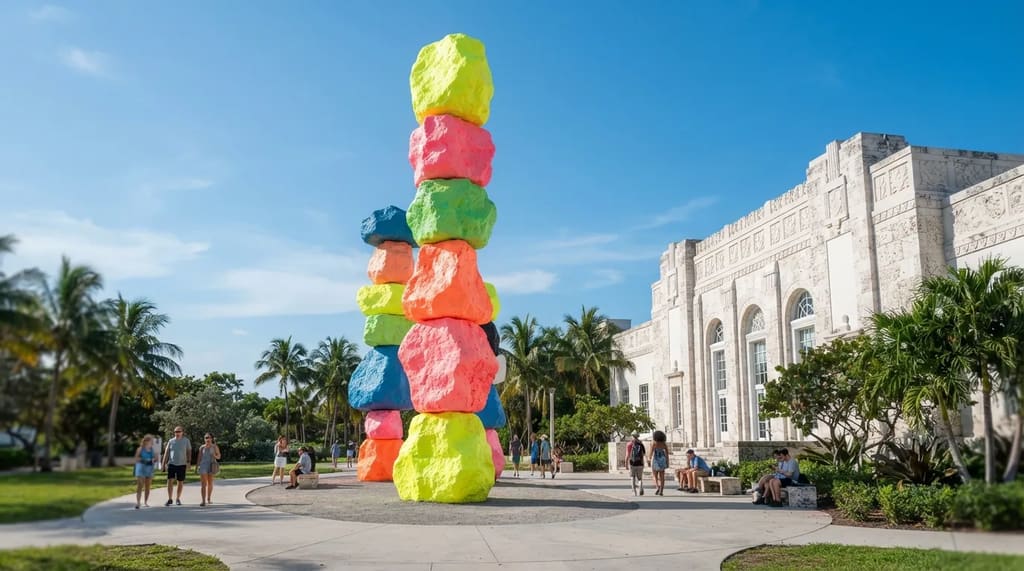
Few Miami Beach sights are as unexpected as Miami Mountain, a stack of brightly painted boulders in Collins Park. Swiss artist Ugo Rondinone created the sculpture in 2016, and it climbs more than 40 feet like a pile of candy-colored stones dropped from the sky.
It stands beside The Bass, a contemporary art museum in a 1930s Art Deco building that originally served as the city’s library and art museum. One side is historic elegance, and the other looks like a giant toy box exploded in the park.
Fast Facts
- Location: Collins Park, Miami Beach
- Artist: Ugo Rondinone, created in 2016
- Height: more than 40 feet of painted boulders
- Neighbor: The Bass, housed in a 1930s Art Deco building
That clash is pure Vice City logic: serious culture on one side and gleeful absurdity on the other. A character could cruise past, and the whole scene would read as Miami in a single frame.
What makes the spot special is how democratic it feels, since anyone walking through the park gets a free dose of art. Next, we head to a former bakery where artists fought for something Miami rarely hands out: affordable space.
9. Bakehouse Art Complex: The Bakery Where Artists Dug In
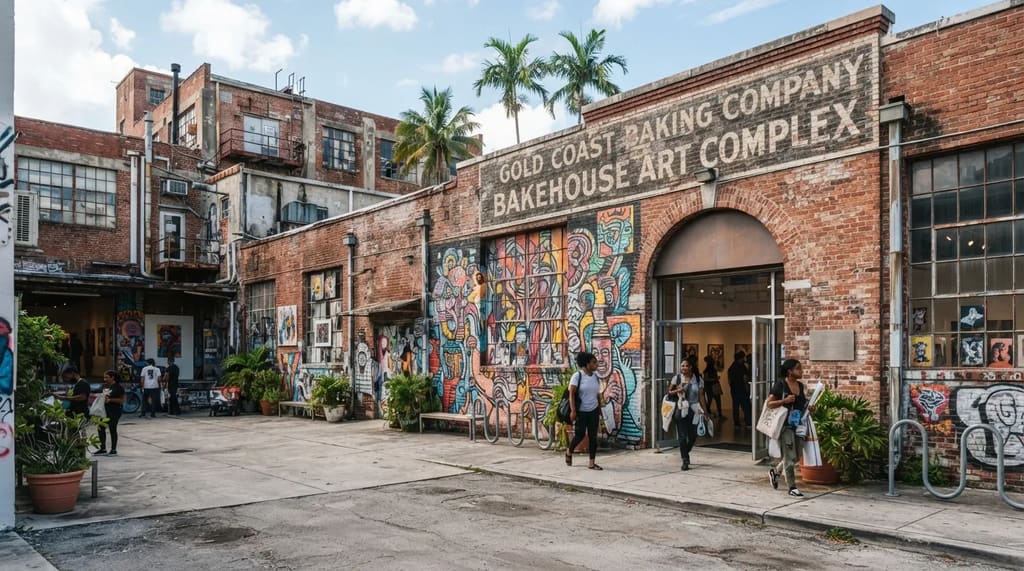
Some of Miami’s best art doesn’t come from glossy galleries. It comes from places like the Bakehouse Art Complex, a former Gold Coast Baking Company building that artists turned into studios in the mid-1980s.
The idea was simple and a little rebellious: give working artists affordable room to create before rising rents push them out. Decades later, that mission feels sharper than ever in a city famous for luxury towers and waterfront price tags.
Visitors can see artist studios and exhibitions, and the brick-and-warehouse feel gives the place a grit that postcards leave out. It is the kind of hidden creative engine Vice City would need if it wanted to feel like more than a tourist strip.
That’s the secret behind every famous mural wall. Before a neighborhood gets its Instagram moment, somebody has to be paying rent, hauling paint, and making work in a building that used to smell like bread.
8. Miami Design District: The Parking Garage That Became an Art Show
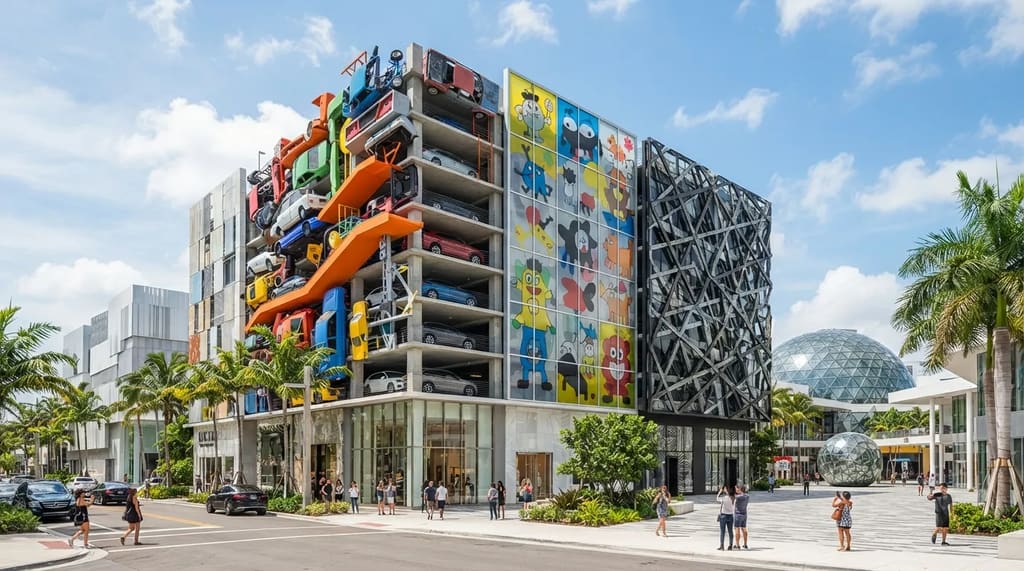
Here is a place where even the parking garage dresses like a fashion statement. The Museum Garage in the Miami Design District features facades designed by a lineup of different architects and artists, turning a spot to leave your car into something people stop to photograph.
Nearby, Buckminster Fuller’s Fly’s Eye Dome sits like a spaceship that landed on a shopping street. The Institute of Contemporary Art Miami adds free-admission exhibitions to a district better known for luxury storefronts.
This is the high-gloss side of Miami, where designer brands and public art share the same blocks. For Vice City, it makes the perfect contrast to graffiti-stained alleys: money wearing a creative costume.
That contrast is what makes Miami feel dangerous and dazzling at once. You can go from raw concrete to polished glass in minutes, and the next stop shows how a waterfront museum handles the same tension.
7. Pérez Art Museum Miami: A Bayfront Museum With Hanging Gardens
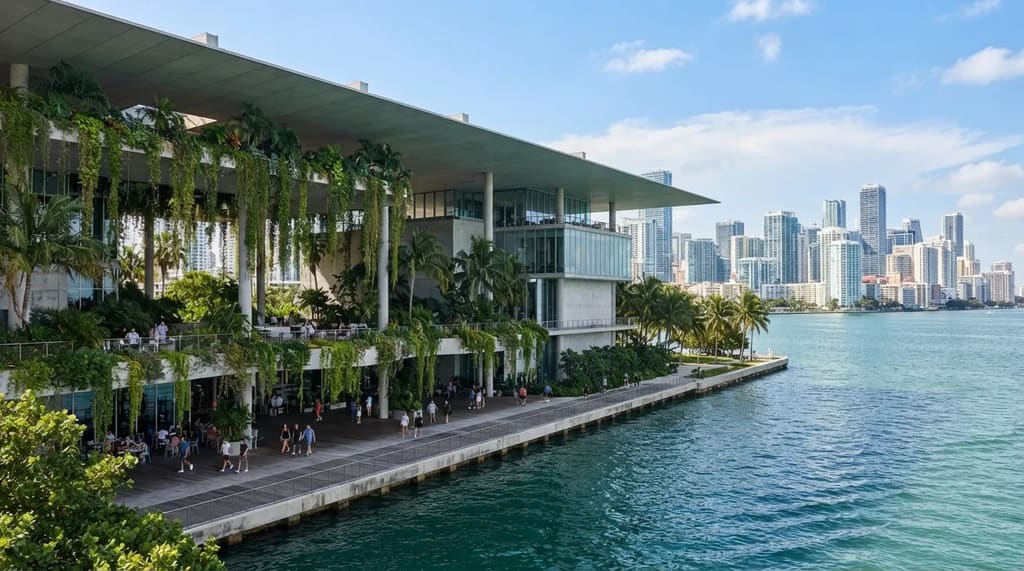
On the edge of Biscayne Bay, Pérez Art Museum Miami looks like a building designed for a sunnier future. Herzog & de Meuron created its waterfront home, which opened in December 2013, with deep terraces, open-air spaces, and hanging gardens that make the structure feel half museum and half tropical canopy.
Inside, PAMM focuses on international modern and contemporary art, with special attention to the Americas and the Caribbean. That focus fits Miami far better than a generic art-world checklist.
Step outside and the view becomes part of the exhibit: bay water, palms, and the city skyline stacked behind the building. If Vice City needs a skyline moment, this is the kind of angle where culture and glitter meet.
PAMM shows Miami at its most confident, with art parked directly beside the shimmer of the bay. But the next museum has a backstory that sounds borrowed from a crime movie.
6. Rubell Museum: From a DEA Warehouse to an Art-World Giant
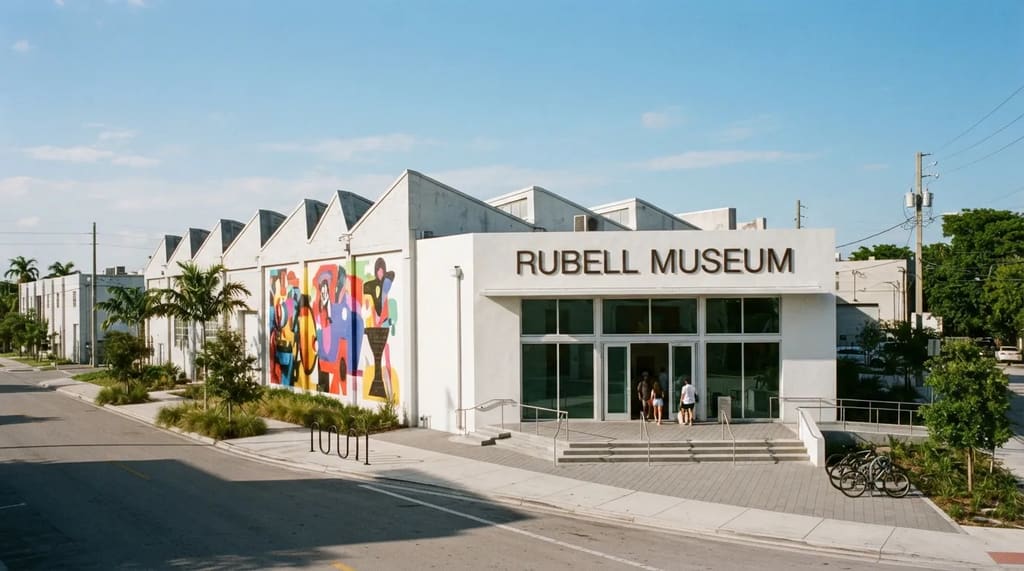
The Rubell story begins with a detail that sounds like a crime movie. The family’s earlier Miami space occupied a former Drug Enforcement Administration confiscated-goods warehouse, and the Rubell Museum later opened a much larger home in Allapattah in 2019.2
That origin fits Miami’s reputation perfectly, because few cities can turn a seized-goods warehouse into a respected cultural address. It also gives Vice City’s crime-and-culture mix a real-world wink.
Worth Knowing
- The earlier Rubell space was a former DEA confiscated-goods warehouse.
- The current Allapattah home opened in 2019.
- The collection includes Keith Haring and Jean-Michel Basquiat.
- The galleries feel more like an art warehouse than a velvet-rope temple.
The Allapattah campus is huge, and its industrial bones are part of the appeal. Art here feels less like a hushed temple and more like a discovery.
It proves that Miami’s art boom wasn’t only beach glamour. Some of it grew out of industrial buildings and outsider energy, and the next stop reveals the style that made the whole city famous.
5. Miami Beach Art Deco Museum: The Pastel Dream That Almost Disappeared
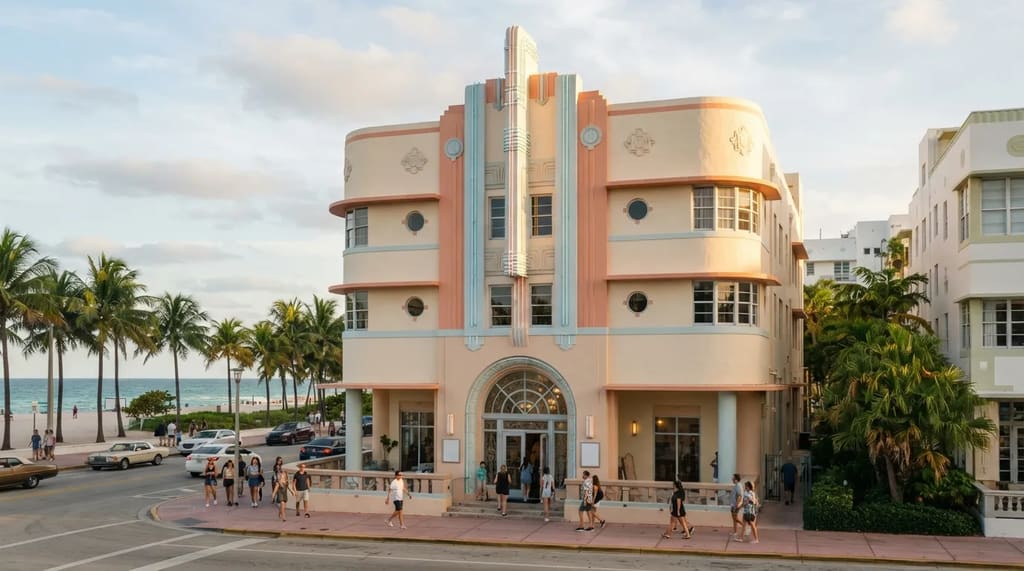
Ocean Drive’s pastel hotels look timeless, but many of them were nearly lost. In 1976, preservation activist Barbara Capitman helped found the Miami Design Preservation League to fight for South Beach’s Art Deco buildings.3 4
That fight worked, and the Miami Beach Architectural District was listed on the National Register of Historic Places in 1979.3 Today the Art Deco Museum and Welcome Center at 1001 Ocean Drive helps visitors understand what they are looking at.4
The curved corners, neon signs, and tropical details are exactly what people picture when they imagine a game-world beachfront. It is the closest thing the real world has to a built-in Vice City art style.
The twist is that this iconic look was once treated as disposable. Miami’s most famous visual identity survived because a few stubborn people refused to let the neighborhood be bulldozed, and the next stop is where culture spills straight into the street.
4. Little Havana’s Calle Ocho: Murals, Dominoes, and Roosters
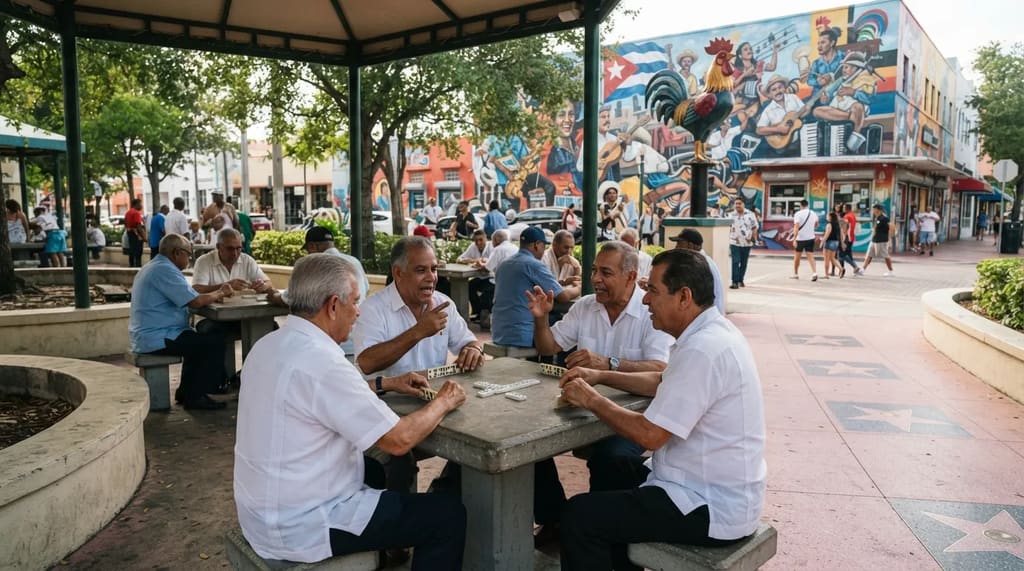
Calle Ocho, also known as Southwest 8th Street, is where Miami’s Cuban story spills onto the sidewalk. Murals, rooster sculptures, and Walk of Fame stars turn a few blocks of Little Havana into an open-air gallery that never closes.
At Máximo Gómez Park, better known as Domino Park, neighborhood players hunch over tables in a ritual that has become a Miami postcard moment. It is loud, social, and almost impossible to stage convincingly.
For a Miami-inspired world, this flavor isn’t optional. Cuban coffee windows, hand-painted signs, and walls that carry stories of migration, music, and memory are what keep a fictional city from feeling like a movie set.
This is where the list turns from pretty to powerful. The art here doesn’t hang politely in frames, because it is part of how a community says who it is, and the next place says it with spray paint on a ruin.
3. Miami Marine Stadium: The Abandoned Concrete Giant Covered in Graffiti
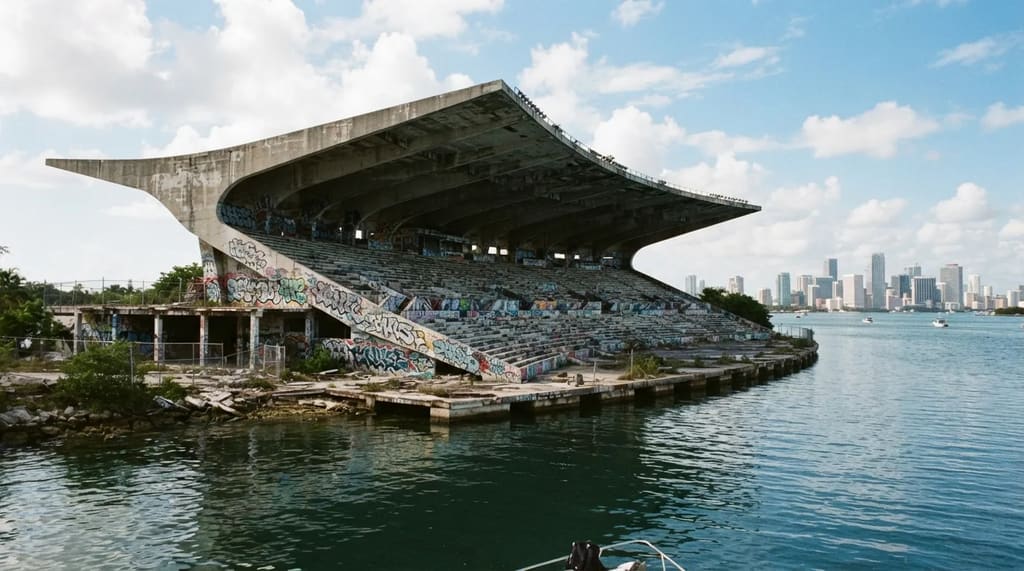
Now the list gets stranger. On Virginia Key sits Miami Marine Stadium, a 1963 waterfront venue designed by Cuban-born architect Hilario Candela and famous for its dramatic cantilevered concrete roof.5
The stadium closed after Hurricane Andrew in 1992 and sat unused for years.5 6 Over time, graffiti covered its seating and walls, turning a damaged sports venue into one of the most dramatic urban canvases in Florida.6
At a Glance
- Opened: 1963 on Virginia Key
- Architect: Hilario Candela
- Signature feature: a sweeping cantilevered concrete roof
- Closed: after Hurricane Andrew in 1992
- Visiting: public access has been limited, so check current rules first
Even from a distance, the sight of a sweeping concrete roof over still water feels like a lost chapter of Miami history.
It is a perfect Vice City picture: faded glamour, ocean air, and spray paint over a monument to another era. If any real place captures the game’s mix of nostalgia and decay, this one does, and the final two stops explain how spray paint earned its place in the spotlight.
Related Stories From Travelbinger
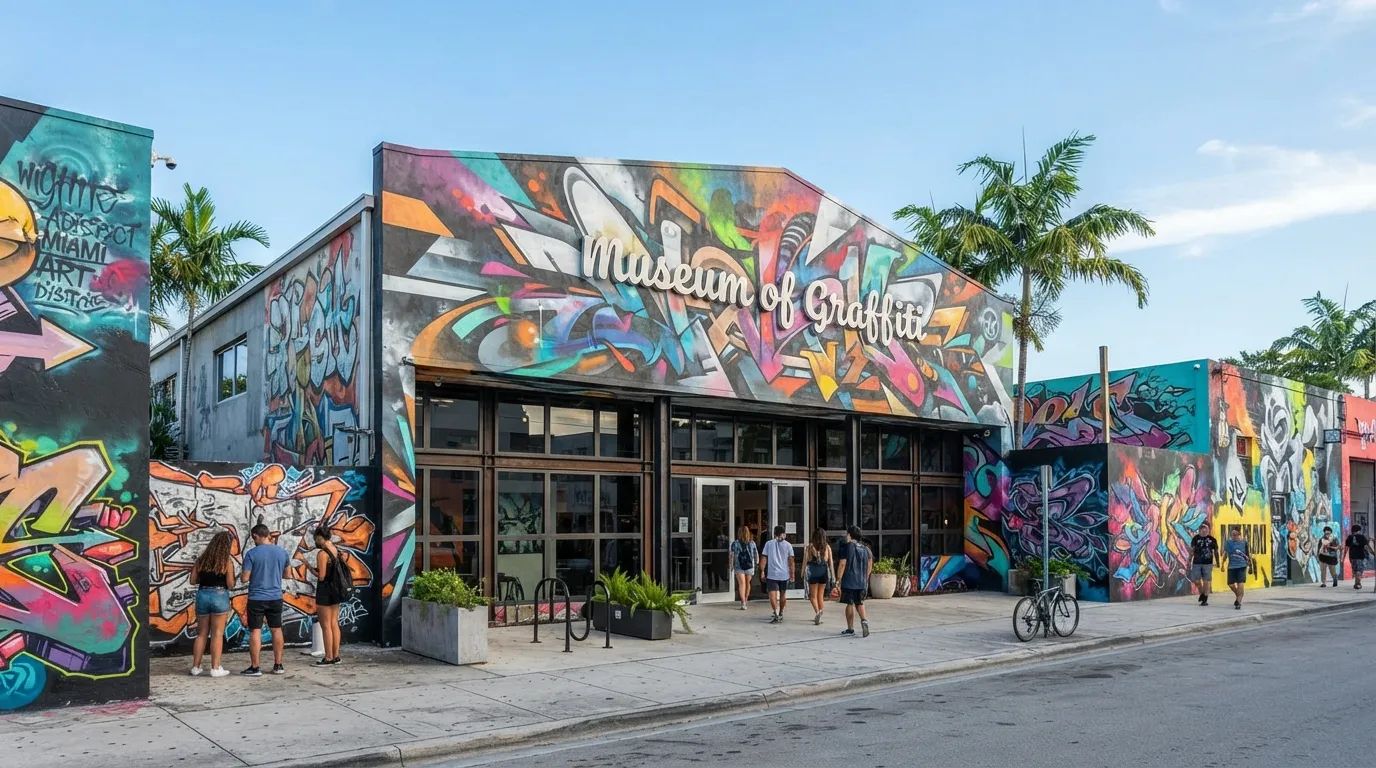
2. Museum of Graffiti: The Museum That Made Spray Paint Respectable
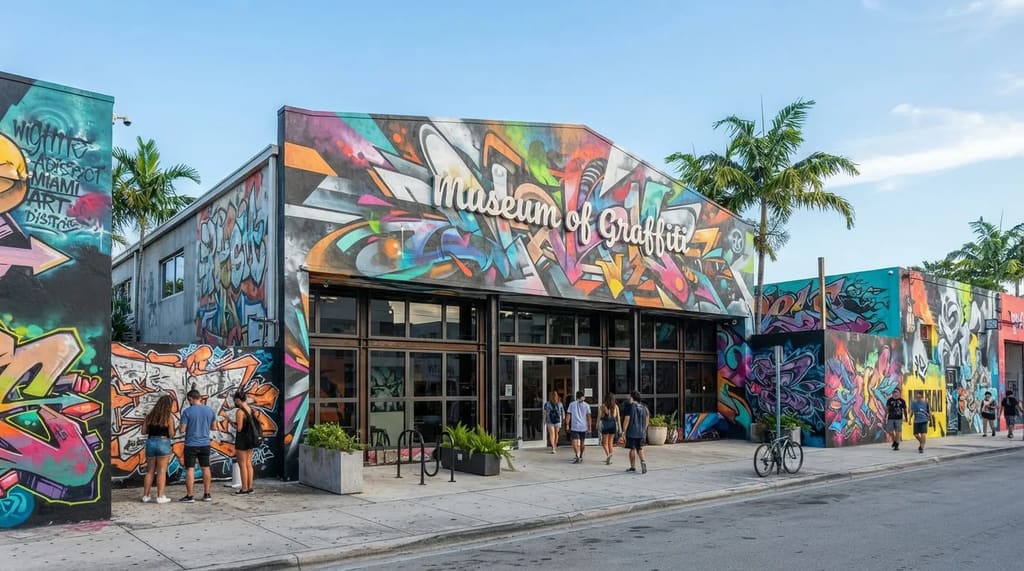
In Wynwood, one museum treats graffiti as history instead of vandalism. The Museum of Graffiti opened in 2019, was founded by Allison Freidin, and presents itself as the first museum dedicated to graffiti and street art.7
Its exhibits trace how writers developed styles, built reputations, and turned city walls into a language of their own. It is a crash course in why a tag can mean something even when nobody signs the wall.
That is the missing piece for any Vice City street scene. Street art is more than decoration; it is a map of who gets seen, who claims space, and who refuses to disappear.
The museum also makes a sly point about perspective. The same wall can be a crime scene, a masterpiece, or a billboard for identity, depending on who is looking, and the number one stop is where all those views collide.
1. Wynwood Walls: The Outdoor Museum That Turned a Warehouse District Into Miami’s Canvas
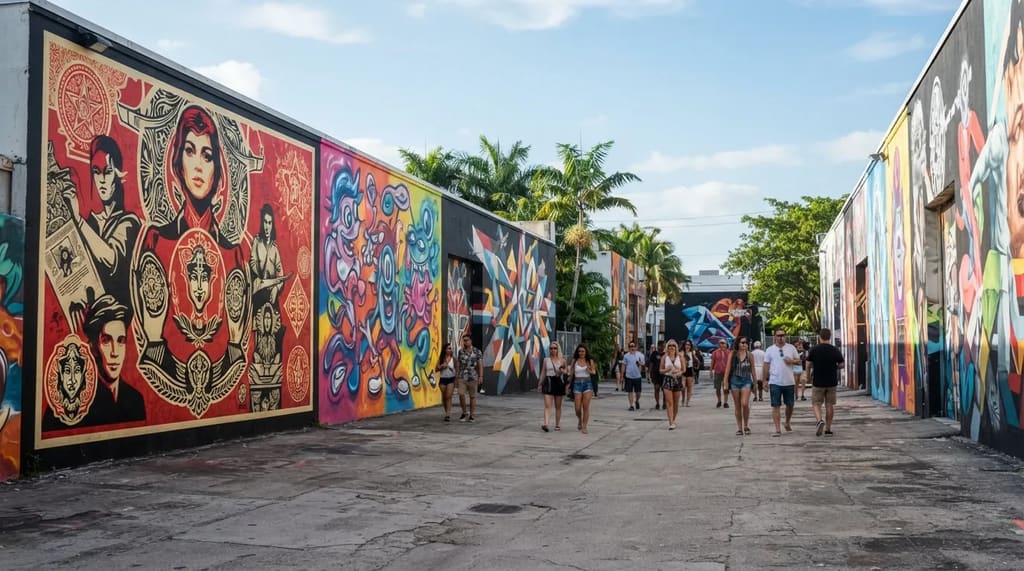
And here is the place that does it best. Wynwood Walls opened in 2009 under developer Tony Goldman, who invited major street artists to paint warehouse walls in what was then a gritty industrial neighborhood.8
Names such as Shepard Fairey, Kenny Scharf, and Futura have been part of its story. The result became an open-air museum that helped make Wynwood a worldwide street-art destination.
Why It Stands Out
- It turned ignored warehouse walls into a global street-art destination.
- It was launched in 2009 by the same developer who helped revive South Beach.
- It pairs big-name artists with a neighborhood still full of surrounding murals.
- It captures Vice City’s mix of neon fantasy and real, gritty history.
The twist is that Goldman had already helped revive South Beach decades earlier, so the man behind Miami’s pastel glow also helped shape its graffiti glow.8 One city, two completely different visual identities, both pulled out of neglected buildings.
Today the main walls are a ticketed attraction, while the surrounding blocks offer even more murals to wander. For Vice City, this is the strongest match of all: a neon-lit city that looks like fantasy, built on real walls that were once ignored.
The Real Vice City Was Already on the Map
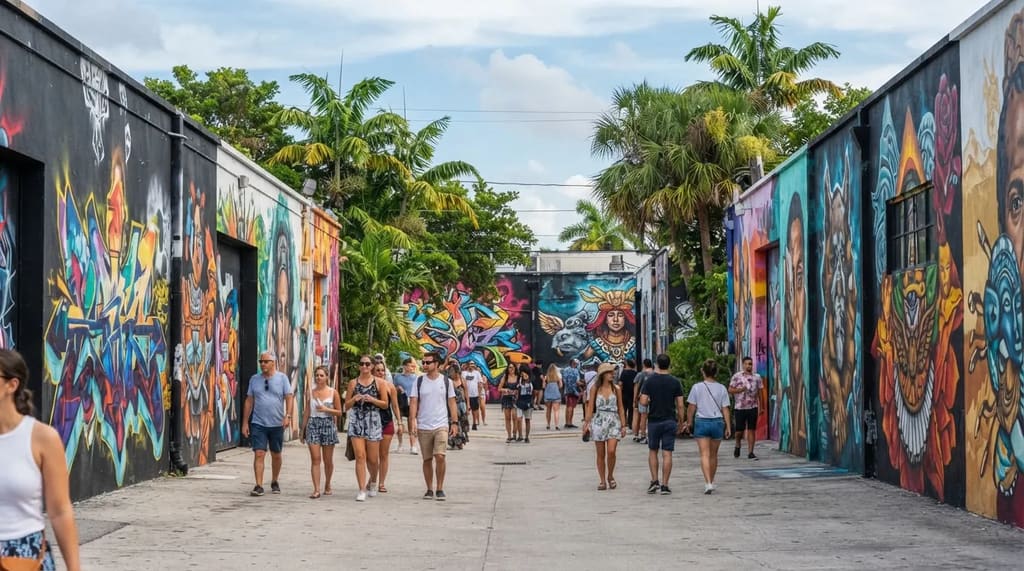
Whether or not Rockstar used any of these places directly, real Miami has already done the world-building. Deco hotels, Cuban sidewalks, Haitian color, graffiti walls, bayfront museums, and a crumbling stadium all feel like pieces of one wild city.
That makes this list useful beyond the game. You can read it before launch, then go see the real places that explain why Vice City looks the way it does.
Some of GTA 6 will feel invented, but Miami’s real art scene is the better plot twist. Sometimes the fiction is just the real city with the volume turned up.
- Wolfsonian–FIU About Page: https://wolfsonian.org/about/
- Rubell DEA Warehouse History: https://therealdeal.com/miami/2016/11/28/rubell-family-collection-to-move-from-wynwood-to-allapattah/
- Capitman and Art Deco District: https://www.hmdb.org/m.asp?m=134707
- Miami Art Deco Guide: https://www.miamitourism.org/art-deco-district/
- Docomomo Miami Marine Stadium: https://www.docomomo-us.org/register/miami-marine-stadium
- Friends of Marine Stadium: https://www.marinestadium.org/
- Museum of Graffiti Founders: https://www.miamiandbeaches.com/l/arts-and-culture/museum-of-graffiti/18681
- Wynwood Walls History: https://thewynwoodwalls.com/about