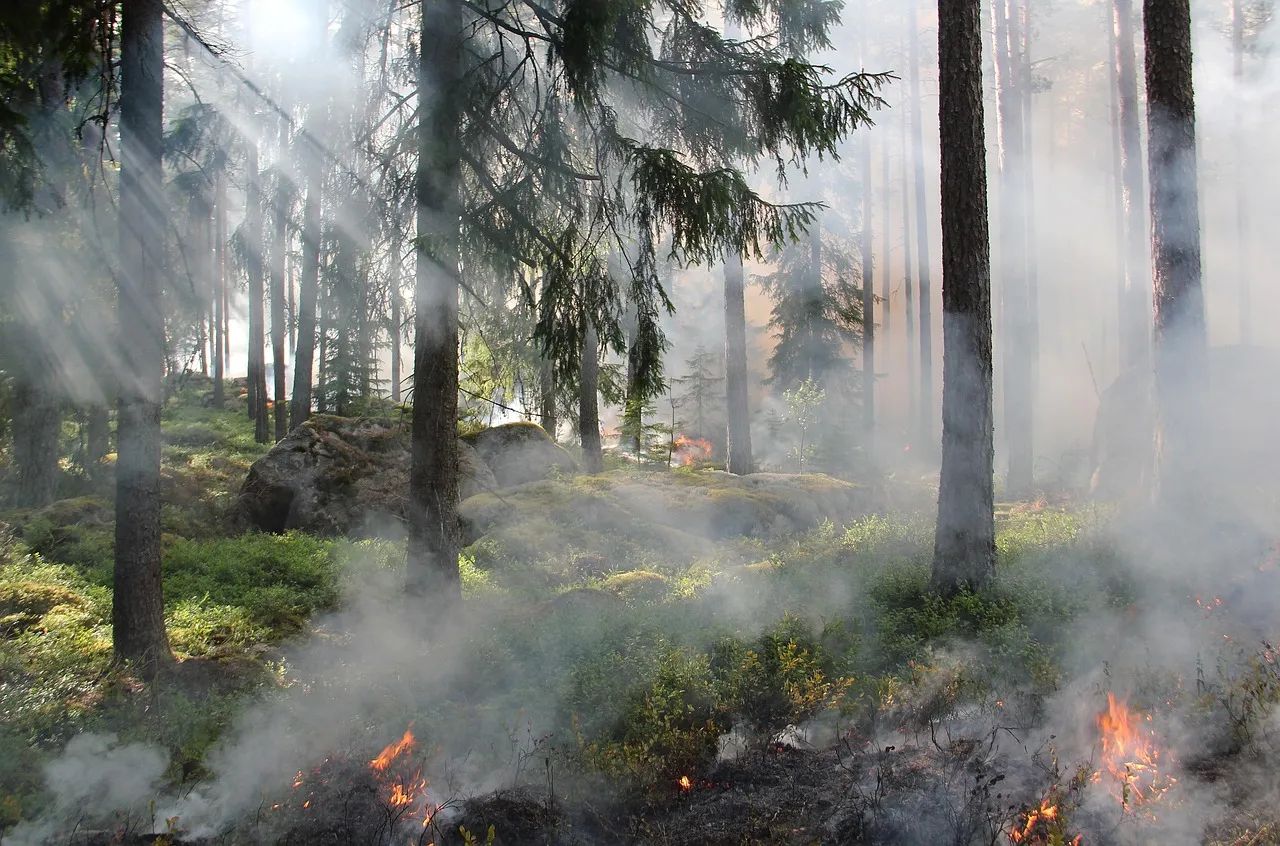
Predators and prey in Brazil’s Pantanal, the world’s largest freshwater wetland, moved their daily routines earlier after wildfires swept through the region. ([1])Researchers reported the change in new work published in The Journal of Wildlife Management, and camera traps recorded the shift. The findings show how a single disturbance can reshape when animals are active, not just where they live.
Fire season that did not follow the rules
Fire has long been part of the Pantanal’s natural cycle, and the ecosystem is adapted to it in measured doses. Historically, fires began when the rainy season arrived, often ignited by lightning. That pattern has changed. “But now, the fires occur in the dry season, so there’s no rain to put them out,” said Nayara Yoshie Sano, a postdoctoral researcher at Dom Bosco Catholic University and one of the study’s coauthors.
The scale of the 2019 to 2020 megafires was severe. Those fires affected 43% of the biome and killed an estimated 17 million vertebrates. Researchers wanted to understand how that loss and disruption played out among the region’s mammals, so they turned to a site where they could track animals before and after the flames arrived.
A study that started with a fortunate timing problem
The Instituto Homem Pantaneiro placed game cameras in Serra do Amolar, a remote and rocky formation in the western Pantanal. The megafires reached the area about a month later, burning nearly 95% of the study zone. One month of data was not enough to show how animals behaved before the fire, so the team turned to another group that had documented wildlife in a similar nearby area.
The researchers analyzed pre-fire images from 2011 to 2013 and post-fire images from 2020 to 2022. They focused on eight mammal species, including two top predators and six prey species. The team expected that animals would become more nocturnal after the fire, since burned landscapes offer less shade and cover. The data told a different story.
Clocks moved earlier, not later
Five of the six prey species and both predator species changed the timing of their activity after the fire. Prey shifted about 1.82 hours earlier on average, and predators shifted about 1.65 hours earlier. One species, Azara’s agouti, moved so much that it was reclassified from diurnal to crepuscular, meaning active mainly at dawn and dusk. Most prey still moved during daylight, but they also became more active before sunrise.
| Group | What changed after the fire | Caveat |
|---|---|---|
| Prey species (five of six) | About 1.82 hours earlier on average | Most prey remained active in daylight |
| Jaguars | Shifted toward early morning and evening | Only group with a significant change among predators |
| Collared peccary | About 4.18 hours earlier on average | Most affected species in the study |
| Lowland tapir | No strong change | Most resilient species in the study |
Jaguars, tapirs and the heat factor
Jaguars were the only predator whose change was statistically significant. Before the fires, they were active around sunrise, midday and sunset. Afterward, they mostly kept to morning and evening hours, which Sano said likely helps them avoid midday heat. Their activity also moved earlier, so they were more active in pre-dawn darkness and from about an hour before sunset until three hours after. Pumas, by contrast, did not show a significant change.
The lowland tapir showed the least change. Sano suggested that the species’ semi-aquatic habits may explain its resilience, since tapirs can cool off in water when temperatures climb. The collared peccary, a large-bodied animal that can overheat easily, was the most affected. Sano linked that vulnerability to heat, though the study does not prove the cause.
Why the timing matters beyond one wetland
Shifts in timing can ripple outward. When predators and prey are active at different hours, encounters become less likely. In this study, the overlap in activity between predators and prey dropped by an average of about 5%. Sano said that change could affect how predators and prey interact, although the downstream effects remain unmeasured.
Related Stories From Travelbinger

Fire frequency is another concern. Sano said the Pantanal is experiencing fires more often than the landscape can handle. Some farmers use fire to clear land, and those fires can spread beyond their intended limits. Climate-driven drought has also pushed fires into the dry season, and in some areas blazes now return year after year instead of every four to five years. Sano described this study as only the first stage in understanding how different fire patterns will affect the region’s biodiversity and the local economies that depend on wildlife watching.
The region has not recovered from the 2020 megafires, according to Sano. “It’s definitely not fully recovered,” Sano said. For visitors and conservationists alike, the Pantanal’s wildlife remains a rare draw, and its daily rhythms may now be harder to predict.