
You picture a golden-hour photo, a friendly guide, and zero stress. Then the bus pulls into a “local workshop” for 45 minutes, and the tip envelope starts going around. Experienced travelers have lived that scene often enough to build a habit: they ask a handful of blunt questions before they hand over a deposit.
First-timers rarely ask them, because the brochure never brings them up. Below is what seasoned travelers actually ask and what the answers can reveal. The last question is the one that changes how some people book an entire trip.
#11 – “How Many People Will Actually Be on the Bus?”
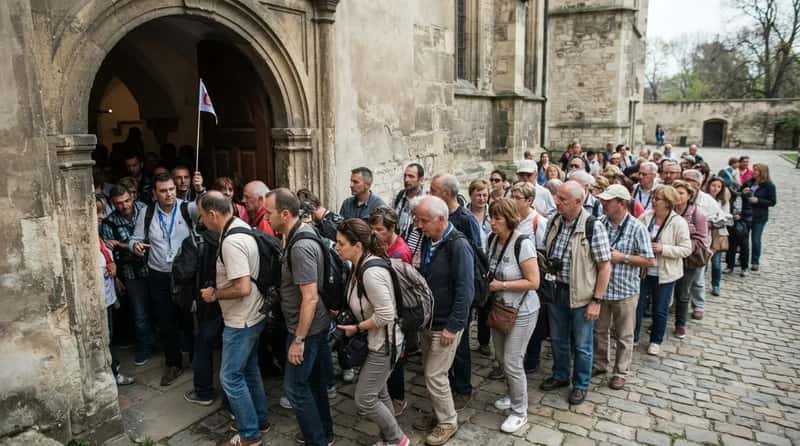
Group size is the first number veterans check, and it’s the one brochures like to blur. A tour that sounds intimate can still mean dozens of strangers squeezing through one museum doorway. Rick Steves’ company, for example, says its fully guided itineraries have a maximum group size of 24-28, and it openly contrasts that with mainstream 50-person tours. That’s a sales pitch, but it shows how wide the word “small” can stretch.
Even small-group brands can stretch. Travelers on one company forum have described a tour of 29 people when they expected 28. It sounds trivial until you picture it.
Every extra person adds minutes at bus doors, restrooms, and ticket lines. Those minutes come straight out of your sightseeing. And group size is only the start, because the next question is about money the brochure never mentions.
#10 – The “Included” Price That Quietly Leaves Things Out

The headline price almost never covers the whole trip. Meals, drinks, optional excursions, and free-time sightseeing are the usual gaps. Even Rick Steves’ own comparison page admits that on a fully guided tour you’re responsible for the cost of your drinks and free-time sightseeing. Experienced travelers ask for a line-by-line list of what’s in and what’s out.
Meals are the sneakiest category. One review site notes that a typical fully guided Rick Steves trip includes breakfasts and about half of the dinners, so lunches and the other dinners come out of your pocket. Two tours with similar price tags can end up hundreds of dollars apart once everything is added up.
Worth Knowing
- Drinks and free-time sightseeing are often your own cost, even on fully guided trips.
- Breakfasts and about half of dinners may be covered, while lunches and the remaining dinners are not.
- Extra-cost “sightseeing options” and tips can widen the gap between two similar sticker prices.
- Ask for the in-and-out list in writing before you pay.
The same page urges shoppers to look hard at extra-cost “sightseeing options” and tips. And tips are where things get awkward.
#9 – Is the Tip Built In? The Answer Can Add Real Money

Tipping is the line item nobody prints in big letters. Published guidelines vary a lot. One U.S. tour company suggests $5-$10 per guest on its bus tours to cover both guide and driver. Another source suggests $5 to $10 per person per day for a guide, and $10 to $20 for a tour director.
Now do the math on a long trip. Tipped at the low end, a 5-day tour could add $50 to $100 per person.
Some travelers love all-inclusive gratuities because there are no surprises. Others argue they remove the incentive for guides to go the extra mile. Either way, know which camp your tour is in before you’re standing at the bus door with a handful of bills.
#8 – How Much of Your Day Actually Belongs to You?

The brochure lists sights. It rarely lists hours. Experienced travelers ask for a sample day: wake-up times, time on the bus, and what’s left after the group activities. A tour that looks packed with wonders can turn out to be mostly windshield.
Itineraries differ a lot here. Some tours stay at least two nights in each stop, which one review credits with cutting down the hassle of constant packing.
At a Glance
- Wake-up time on a typical travel day
- Hours on the bus versus hours on foot at sights
- How much free time there is, and whether it’s truly free
- How many nights you spend in each stop
- Whether you can skip an activity or stay longer somewhere
That structure helps, but it doesn’t erase the trade-off. One review of a popular tour company points out that travelers generally have less freedom to change the schedule, spend extra time at an attraction, or skip activities. That’s true of almost any pre-planned tour. If you’re the type who lingers in a church for an hour, find out now. Next comes a stop most brochures leave out of the written plan.
#7 – The Shopping Stop Nobody Puts in the Itinerary

Ask about scheduled stops at shops, factories, and “cooperatives.” Travelers worry about this enough that it shows up in praise as well as complaints. One forum user singled out a tour company for having no shopping stops, in a market where guides often work for commissions. That’s one traveler’s account, but it shows the concern is real.
Some craft demonstrations are genuinely interesting. Still, plenty of experienced travelers argue that a 45-minute “factory visit” is the biggest time sink on any tour.
Ask how many shopping or demonstration stops there are and how long each one runs. A clear answer is a good sign. A vague one tells you something too. But the next question matters more than any lost hour: what happens to your money if the company folds?
#6 – What Happens to Your Deposit If the Company Collapses?

This is the question almost nobody asks and everyone wishes they had. In the U.S., one common safety net is the USTOA program. Each active member must post a $1 million security in the form of a bond, letter of credit, or U.S. Treasury bill. It reimburses consumers for lost tour payments if the member goes bankrupt, becomes insolvent, or stops doing business.
Membership also changes. Holland America Group, for instance, stopped being a USTOA Active Member effective April 4, 2024. Deposits and payments to its brands after that date are not covered by the USTOA program.
So check current membership before you pay, not just the logo on a website. Then look at the fine print on changing your plans, which is next.
#5 – The Cancellation Rule That Only Matters When Life Happens

Nobody reads cancellation terms until they need them. Experienced travelers read them first. The range is wide. One company advertises that you can switch to a different date or destination with no charge or penalty up to 60 days before departure. Many others work very differently.
Ask four things. When is the deposit due, and is it refundable? When is final payment due? What happens if you cancel at 90, 60, and 30 days? And what happens if the operator cancels?
Fast Facts
- One company allows a no-penalty date or destination change up to 60 days before departure.
- Under the USTOA program, a claim can be filed if refunds aren’t paid within 120 days after a tour is cancelled.
- Your cancellation and the operator’s cancellation can follow very different rules.
- Insurance details live in the policy itself, not the summary.
Under the USTOA program, for example, a claim can be filed if a member fails to refund consumer deposits or payments within 120 days after cancelling a tour. Then ask what travel insurance would cover, and read the policy itself rather than the summary. Once the money questions are sorted, there’s the person who runs the show.
#4 – Who Is Actually Leading the Tour?
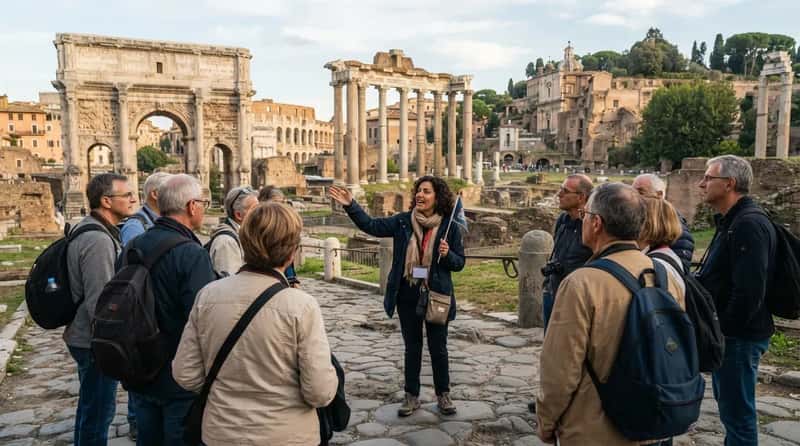
“Expert guide” is a phrase, not a promise. Experienced travelers ask whether one escort stays with the group the whole way or whether local guides take over at each site. They also ask how guides are chosen.
One review of a major operator says its guides are carefully selected for their knowledge and storytelling abilities. A good company should be able to describe its process without a pause.
Ask about language skills, local roots, and how many trips the lead guide has run. Reviewers often name guides, so search for the specific person if you can. A great guide can rescue a mediocre itinerary, and a weak one can sink a great itinerary. The next question is about a word brochures use in cheerful, misleading ways.
#3 – What Does “Easy Pace” Actually Mean?

Activity ratings aren’t standardized, which is the truth most travelers learn too late. One company’s “moderate” is another company’s “easy.” Experienced travelers skip the label and ask for specifics. How many hours of walking per day? How many stairs? Are there cobblestones, hills, or long stretches of standing at sites?
Also ask about luggage handling and bus seating, because those quietly shape your energy. Ask whether anyone can sit out an activity without holding up the group.
If you have a bad knee, a sore hip, or a stroller, say so before you pay and get the answer in writing. A tour’s honesty here tells you a lot. Now for the research step that separates veterans from everyone else.
#2 – What Are Last Month’s Reviewers Actually Saying?

Glossy brochures are marketing. A review from last month is evidence. Veterans filter for recent reviews of the specific itinerary and look for complaints that repeat. Even well-loved operators get them. One review site noted that a few reviews mentioned concerns about group sizes and pace, with some travelers finding tours sluggish or overcrowded.
Loyal customers notice change too. One repeat traveler on a company forum wrote that numbers had grown since 2018, and that 28 now feels a bit too large.
Read the three-star reviews first, because they tend to be the most specific. Then you’re ready for the last question, the one that changes everything.
#1 – “Do I Even Need a Guide for the Whole Trip?”

This is the question that separates strategic travelers from everyone else. A full guided tour isn’t the only option. Some companies offer unguided versions that include hotels and transport but leave out the rest. Rick Steves’ “My Way” tours, for example, include hotels and bus transport between destinations but not lunch, dinner, or sightseeing, and they’re described as the less expensive option.
The trade-off is real. Independent travelers cite control, independence, and substantial savings as their reasons. Guided tours offer something different: operators note that a tour escort, local host, or representative is available to help if an unforeseen problem arises.
That’s why experienced travelers often mix the two. They book guides for the hard parts and keep the rest of the days free.
The best tours survive all eleven questions without flinching. The ones that don’t usually tell you something important before you’ve paid a cent.