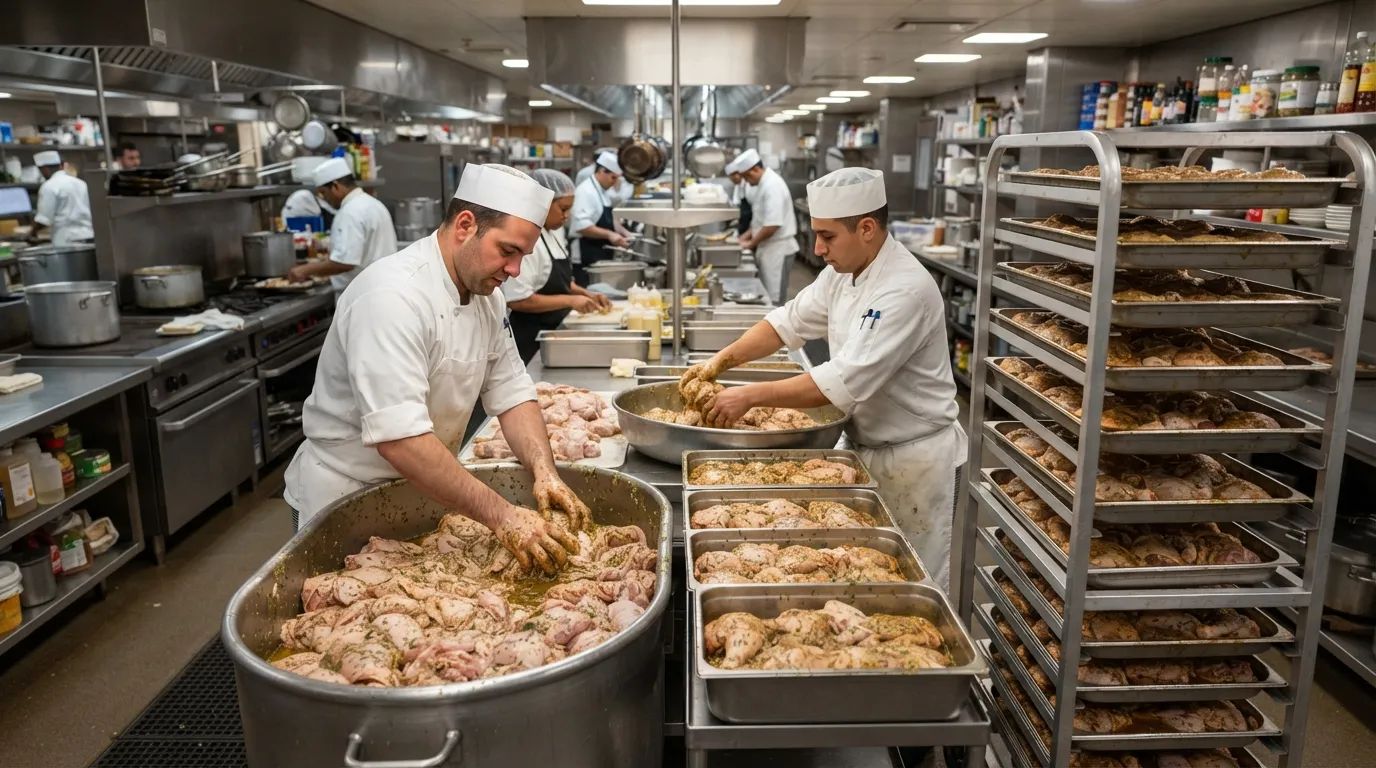
Most passengers think the galley goes to work when the dinner bell rings. It doesn’t. The real work is finished long before the ship leaves the pier, and by the time you’re holding a welcome drink, orders have been placed, pallets counted, and a hidden clock is already ticking.
The invisible prep includes some strange and surprisingly tense details. One involves bananas, one involves a supply barge that showed up eight hours late, and one involves a single chef in charge of a ship’s worth of steaks. Here’s what insiders and eyewitnesses actually say, starting with the one that shocked us most.
#17 – The Food Order Was Placed Two Weeks Before You Even Packed
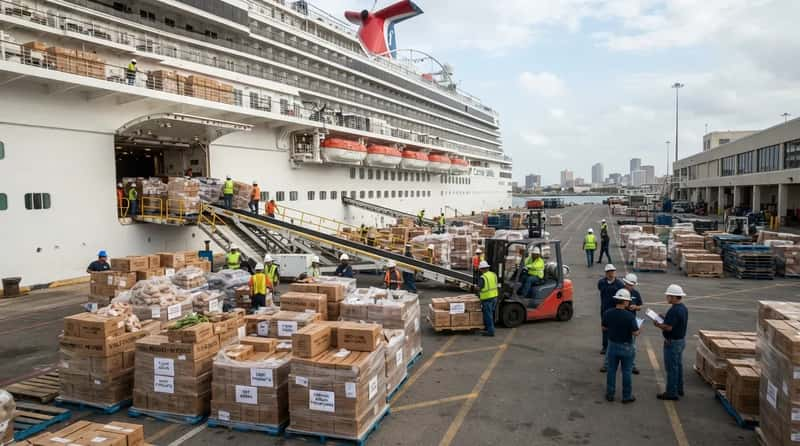
Your dinner was ordered before most passengers had printed a boarding pass. On Carnival Jubilee, the food and beverage director told USA TODAY that food orders are placed around two weeks in advance and loaded on turnaround days. That’s the lead time for a floating city’s worth of ingredients.
The order isn’t a copy-paste job, either. Cruise Critic notes that galley tours explain how chefs predict which dishes will be most popular and how ships adjust provisioning based on the passenger list or ports of call. Once the ship is at sea, nobody can pop out to a grocery store to fix a miscalculation.
The order is the calm part. What happens on the dock is far more frantic.
#16 – A Week of Food Gets Loaded in a Few Hours
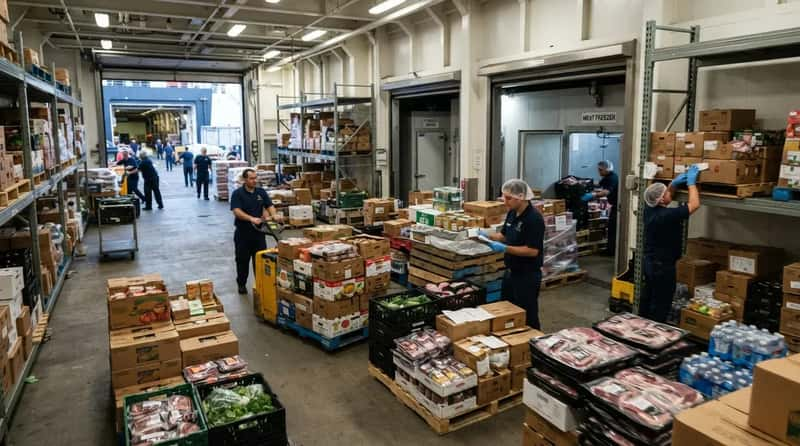
The busiest moment in the galley happens while passengers are still on their way to the terminal. Provisioning typically begins early on turnaround day, and every delivery must be checked, loaded, and stored before departure, often within a few hours. The crew doing it has also just said goodbye to the previous week’s guests.
The scale is hard to picture. One cruiser describes pallet after pallet disappearing into large drive-in coolers and freezers, where the food waits until it’s needed. The bulk of it comes aboard on turnaround day, when tons of food from all over the world are loaded within just a few hours.
And somewhere on that pier, a crew member with a clipboard is checking every single delivery.
#15 – The Food They’re Secretly Hoping Never to Cook
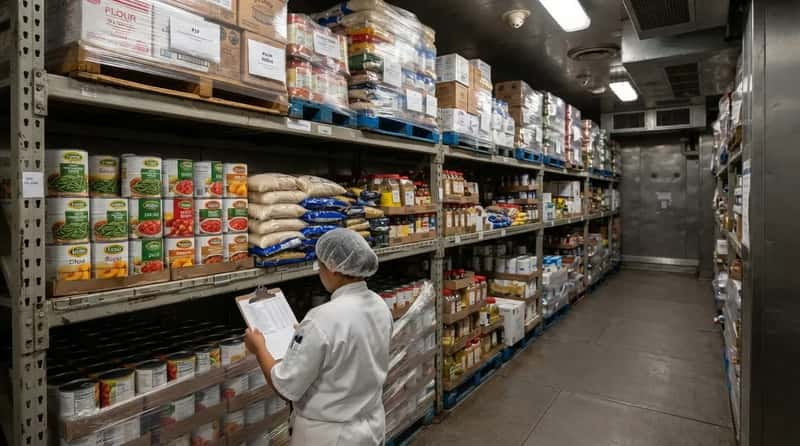
Every ship carries food it hopes to unload unused. Not all of it will be eaten during the voyage, because the ship must keep a percentage in reserve to allow for delays. It’s insurance, and passengers never see it.
The reasoning is simple. A storm, a closed port, or a mechanical issue can stretch a voyage. One cruise-industry account says most modern ships are designed to go at least nine days without reloading food on a seven-day sailing, which adds a two-day buffer. That figure comes from a community answer, so treat it as a rule of thumb rather than a regulation.
But a reserve only helps if the supplies actually show up, and that doesn’t always happen.
#14 – The Supply Barge That Held a Whole Ship at the Dock
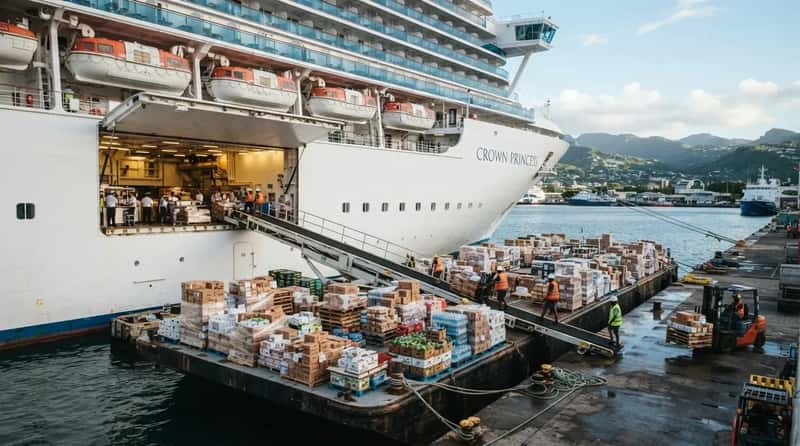
Sometimes the last item on the galley’s checklist is also the one the ship can’t leave without. One passenger watched Crown Princess load pallet after pallet in Papeete, all from a supply barge that arrived eight hours late, so the ship left late. It’s a 2015 forum anecdote, but it shows how tightly food timing is tied to departure.
The passenger also noticed the side port was set up for it. From the start of loading until about two hours before sailing, that side port was used exclusively for food and beverage storing. Passengers see a late departure and blame the schedule. Few realize that dinner was sometimes the reason.
And once the ship finally does leave, its first meal brings a rush the galley can see coming from miles away.
#13 – The Boarding-Day Lunch Rush They Can See Coming and Can’t Fix
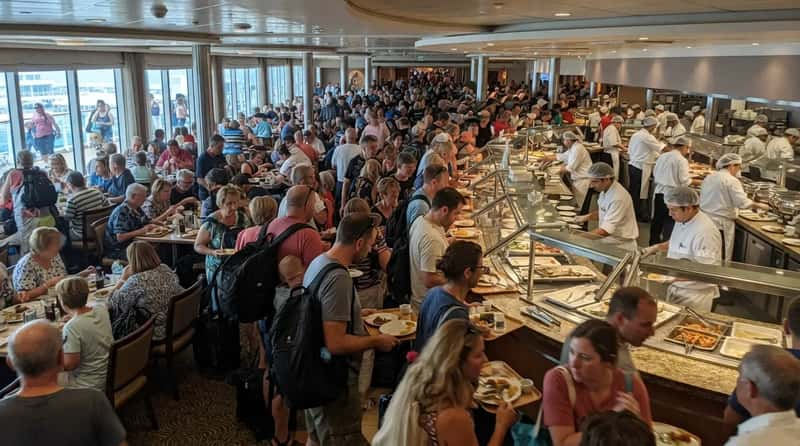
The first lunch of the week is the galley’s toughest test. AOL reports that on embarkation day, most people board and head straight to either the pool deck or the buffet while their cabins are being readied. Thousands of hungry guests show up at the same hour.
Galley crews know it’s coming, but they can’t spread it out. Everything about that first lunch, from the lines to the seats, gets tested at once. Plenty of frequent cruisers argue the boarding-day buffet is the worst meal of the week, and the crew would probably agree it’s the hardest one to run.
At a Glance
- Who: Thousands of guests heading for the pool deck or the buffet.
- When: Embarkation day, while cabins are still being readied.
- The problem: Demand arrives in one wave and can’t be spread out.
- The reputation: Many frequent cruisers rank it as the week’s weakest meal.
Next up is a detail about fruit that sounds almost too specific to be true.
#12 – Bananas Ordered in Three Stages of Ripeness
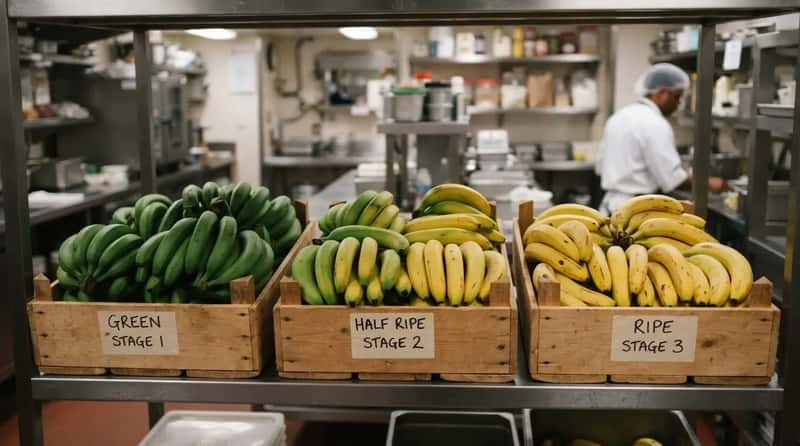
Nobody thinks about bananas until they’re brown. On the Queen Mary 2, items like bananas arrive in three stages: green, half ripe, and ripe. That detail comes from a 2014 dining account, but the logic holds up on any long sailing.
A single big delivery of ripe fruit would turn into a pile of mush by midweek. Ordering in stages means the ship is ripening its breakfast on purpose, days ahead. By the time you grab a banana at the buffet, someone has been planning its ripeness for a long time.
But the real trick is how they keep the rest of the produce alive for so long.
#11 – Fresh Produce That Has to Breathe
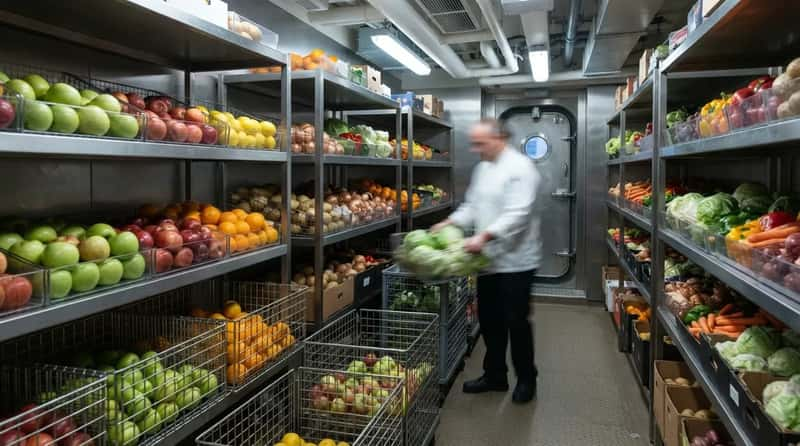
The fruit and vegetables on your plate at day seven were stored with serious care. In that same Queen Mary 2 account, fresh produce can last up to 16 days with correct storage, including air circulating around each item to avoid mold growth. That’s a long shelf life for something so perishable.
Ships also don’t try to stretch one delivery forever. Dry goods and frozen items are loaded in bulk on embarkation day, while many fresh items like fruit, vegetables, and seafood are replenished at ports of call. On a Queen Mary 2 voyage, a Provisions Team of 13 headed by the Inventory Manager stocks provisions in major ports of call.
Quick Compare
- Bulk on day one: Dry goods and frozen items.
- Topped up in port: Fruit, vegetables, and seafood.
- Best-case produce life: Up to 16 days with airflow around each item.
Next comes something passengers eat every afternoon without asking where the flour comes from.
#10 – A Flour Stockpile for the Scones You Took for Granted
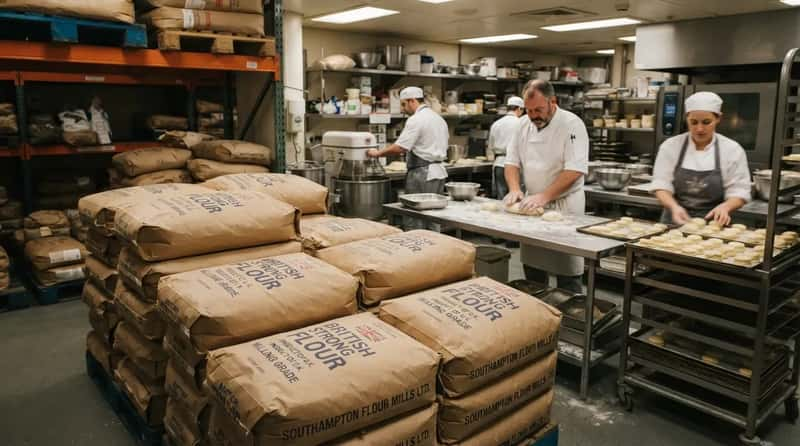
Even the scones have a supply chain. A chef-writer who toured the Queen Mary 2 reported that the ship’s breads, rolls, and pastries are made from scratch, with scones using British flour stockpiled in Southampton. The account is from 2011, but it shows how far ahead bakers plan.
The volume is the surprising part. The kitchen turned out eight hundred croissants per day and over a thousand scones. And while passengers are asleep, bakers are already preparing fresh pastries and breads for the morning.
Another overnight habit is even less glamorous, and it starts with the bones.
#9 – Last Night’s Bones Become This Morning’s Stock
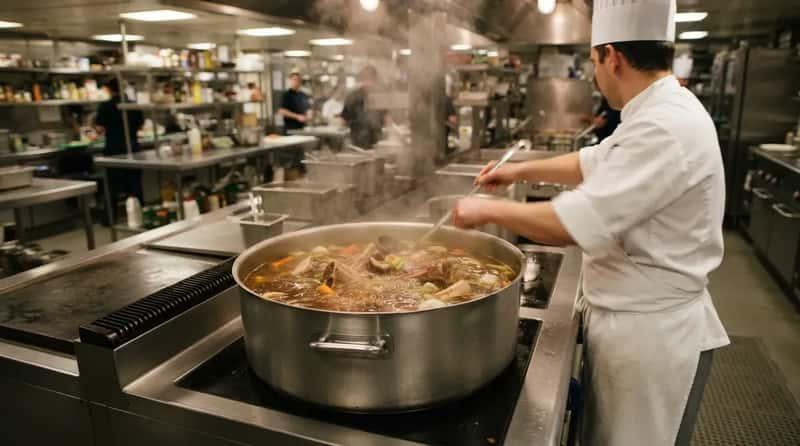
The galley doesn’t waste what it can turn into a base. On that same Queen Mary 2 tour, each morning the bones from the previous evening are made into stock. It’s a small ritual that takes place well before breakfast.
The sauce you tasted at dinner may have started as the previous night’s leftovers. It’s classic kitchen thrift, scaled up for a ship with thousands to feed. Passengers see the finished plate and have no idea there’s a pot working on the other side of the wall.
But the real planning starts even earlier, days before a single pot is lit.
#8 – Marinating Starts a Full Day Before Anyone Is Hungry
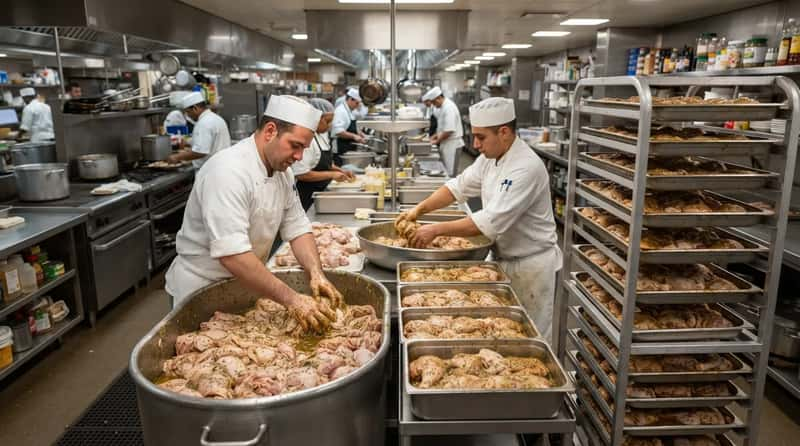
Dinner has been in motion for at least two days. According to Carnival Jubilee’s food and beverage director, chefs order from the ship’s storeroom team two days before they need ingredients, and pre-prep like trimming and marinating happens a day beforehand. So the chicken you ate tonight was likely seasoned yesterday.
The scale makes that planning a necessity. The ship’s main galley averages 15,000 dishes per night. There’s no way to start from scratch at 5 p.m. and serve that many people on time.
Fast Facts
- Two days out: Chefs order ingredients from the storeroom team.
- One day out: Trimming and marinating get done.
- Dinner night: The main galley averages 15,000 dishes.
- The takeaway: Tonight’s plate was planned before yesterday’s dessert.
Next, a look at how chefs guess what you’ll order before you do.
#7 – Chefs Quietly Predict Your Favorites
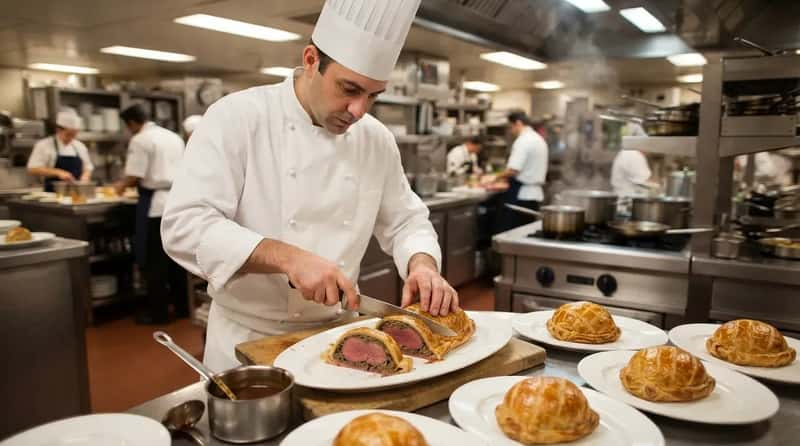
The menu isn’t random, and neither is the ordering. On the Queen Mary 2, the food and beverage manager said passengers have menu favorites like Beef Wellington, Chateaubriand, salmon, and Dover sole, and these stay in the menu cycles. If a dish is popular, it keeps coming back.
Variety is managed just as carefully. A 2014 account of the same ship says compound salads rotate on a 12-day cycle so guests don’t see many repeats. The ship has to keep regulars from getting bored while keeping the kitchen predictable.
And then there’s the job almost nobody knows exists: the person who cooks every steak.
#6 – One Chef, and Up to 900 Steaks a Day
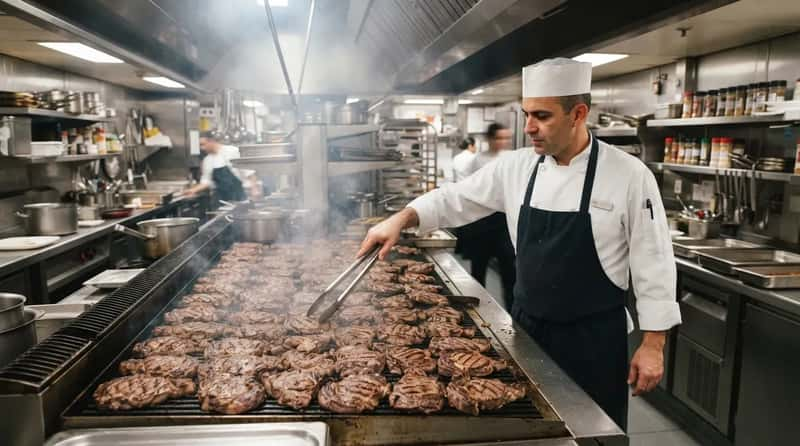
Steak night might be the most precisely run operation on the ship. A 2014 account of Queen Mary 2’s galley says one chef is responsible for cooking the steaks for the entire ship, which may mean up to 900 steaks a day. That figure is from a past visit, so it may differ today.
The setup is deliberate. Each chef is assigned to a station for most of their tenure, which ensures consistency and produces efficiencies. The steak you cut into was cooked by someone who has done little else for months.
But the next item involves stakes much higher than a steak.
#5 – A 3:30 Meeting About Who Can’t Eat What
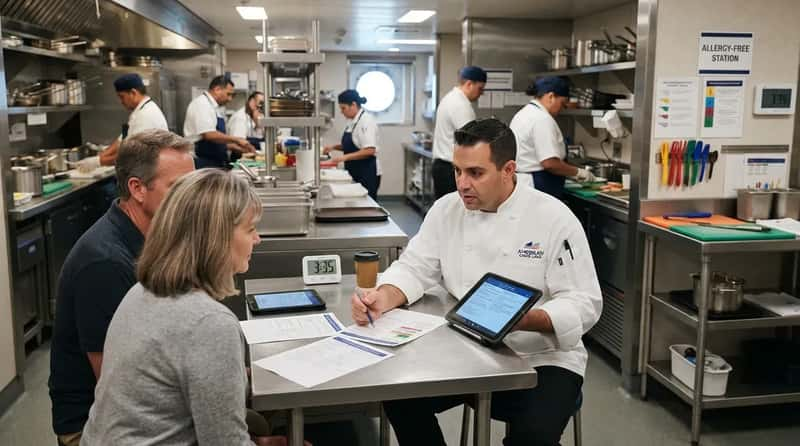
One of the most important meetings of the day happens before most passengers have unpacked. On American Cruise Lines, the chef described an embarkation-day dietary meeting at 3:30 with guests who have allergies, plus three separate stations to prevent cross-contamination. That’s a lot of structure for one dinner service.
It’s a reminder that galley prep isn’t just about quantity. Some of the biggest decisions are about what must never touch what. Other lines handle this differently, and this is one chef’s description rather than an industry-wide rule.
Next up is a scoring system that quietly hangs over every galley.
#4 – The Quiet Rule About Sick Crew and a 100-Point Score
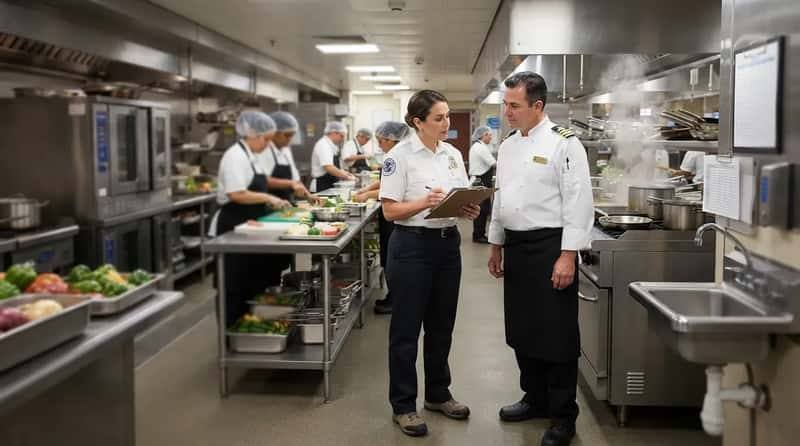
Behind the buffet is a scoring system that most passengers never look up. Ships start with a perfect score of 100, inspectors deduct points for violations, and 86 or higher is a passing grade. Inspectors from the CDC’s Vessel Sanitation Program do this on eligible ships.
The galley is a main focus. Inspectors interview food service staff on safe handling practices and check whether sick crew members have been kept away from food prep. Passengers can check the results themselves. Scores and violations are published on the CDC’s Vessel Sanitation Program website.
But the nightly routine that keeps those scores high is something passengers truly never see.
#3 – The Overnight Scrub While You Sleep
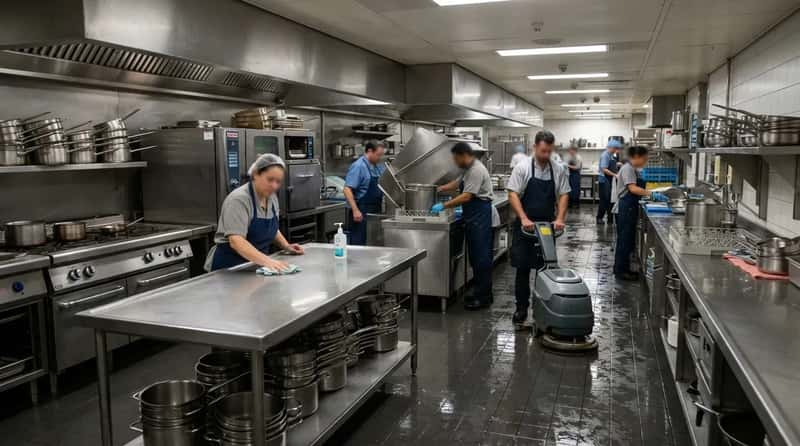
The galley doesn’t close when the dining room does. The work continues while passengers sleep, with bakers preparing pastries and butchers portioning meats for the next day. The kitchen never gets a full break.
Then comes the cleaning. The galley is cleaned and restocked throughout the night, with surfaces sanitized and equipment polished to meet health and safety standards. On the Queen Mary 2, the galley and dining operation is supported by a team of 85 utility hands, including dishwashers, pot washers, and galley cleaners, working around the clock. Some of the most important crew on board never wear a chef’s coat.
Worth Knowing
- Bakers start the next morning’s pastries and breads while guests sleep.
- Butchers portion meats for the following day.
- Surfaces get sanitized and equipment polished overnight.
- On Queen Mary 2, 85 utility hands keep the operation running around the clock.
Here’s the part that surprises people most: the galley isn’t only feeding the people who paid.
#2 – The 1,500 Crew Members Hidden Inside the Meal Count
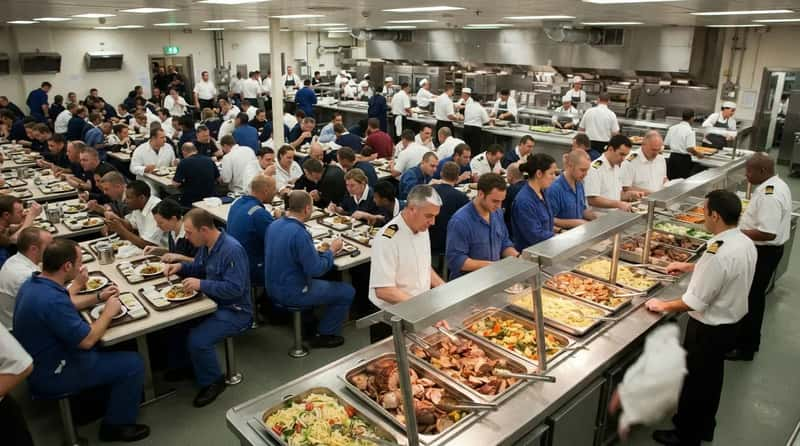
Passengers are only part of the headcount. On a Queen Mary 2 crossing, one traveler noted the hotel manager and head chef described serving 2,600 passengers and 1,500 crew, with over 15,000 meals served each day. Those totals cover the people running the ship, not just the people enjoying it.
The numbers also vary by source. A food and beverage manager on the same ship cited some 19,000 meals daily. Nobody agrees on the exact number, but everyone agrees it’s enormous. The crew that keeps the ship moving has to eat too.
And the last item pulls it all together, including something the industry doesn’t love talking about.
#1 – A Week of Food, and the Waste Nobody Counts
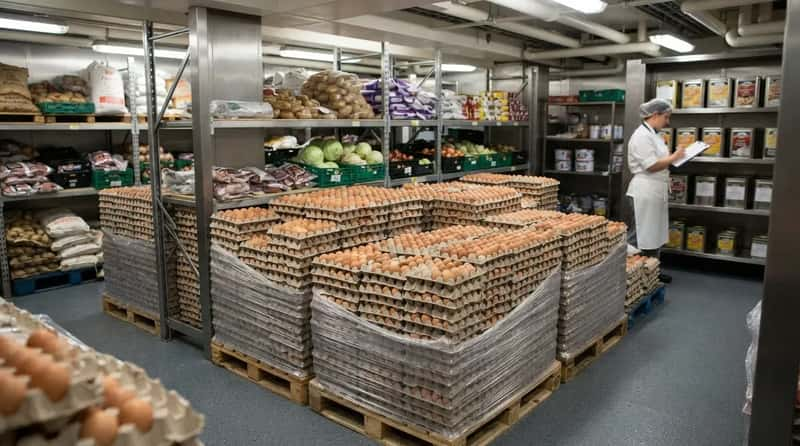
Behind every crossing is a staggering amount of food that has to be on board before departure. On transatlantic crossings, Queen Mary 2 is supplied with about 65,000 fresh eggs and about 150 tons of food. All of it has to be carried on the ship to cover the meals for seven days.
Then comes the uncomfortable part. A Boston University student project notes that data is scarce, but estimates as much as 30% of the food loaded each day goes to waste. That’s an estimate, not an audited figure, but it shows the scale of the problem. Ships are experienced at working out how much food is needed, so the galley plans for normal appetite, not half-finished plates.
The meal on your plate was ordered weeks ago, loaded in a rush, stored with care, prepped a day early, and cooked by someone who may have done little else for months. Behind it are inspectors, overnight cleaners, a late barge, and a ripening plan for bananas.
Next time a plate lands in front of you mid-ocean, remember the wall between you and the galley. Which of these would you never have guessed was happening on the other side while you slept?