Here’s what nobody tells you when you hang that little wooden birdhouse and wait: bluebirds almost never eat birdseed, a box on a fence post is practically a raccoon buffet, and the reason your yard stays empty has nothing to do with bad luck. Almost everything the average person tries is quietly, completely wrong – and the birds can tell.
The eastern bluebird once vanished from huge stretches of North America – populations crashed nearly 90% before conservationists figured out exactly what these birds actually needed. That recovery came down to a handful of very specific things most backyard birders still skip. Every tip below played a real role in bringing bluebirds back. Most people never try even half of them.
#1 – Add Low Hunting Perches Across Your Open Lawn
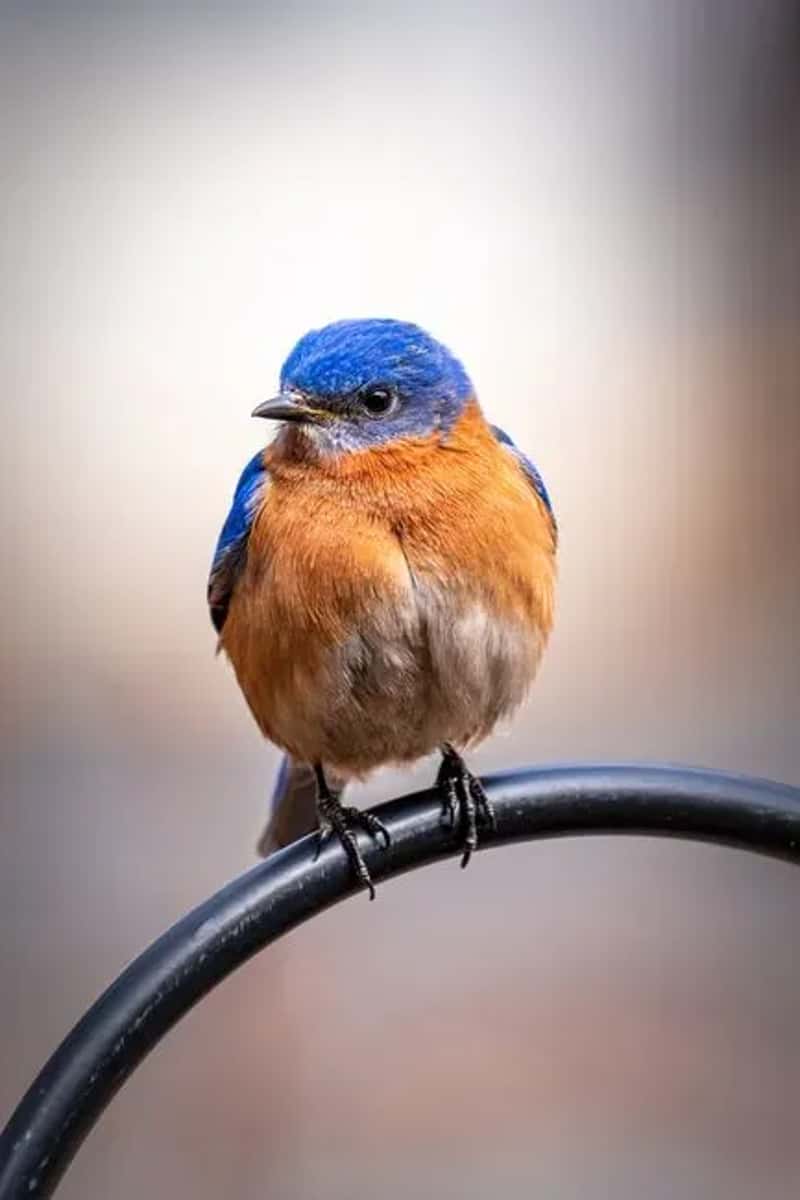
Bluebird experts call this the single most overlooked piece of the puzzle – and once you understand how bluebirds actually hunt, it’s obvious why. They don’t scratch through leaves or chase insects across the ground. They sit on a low perch, scan the grass below with extraordinary precision, drop to grab their prey, and return. No perch means no hunting. No hunting means no reason to stay, no matter how perfect everything else looks.
Bluebirds hunt from perches roughly 3 to 6 feet off the ground – fence posts, nest box lids, dead snags, or even a simple wooden stake pounded into the lawn. Their eyesight is remarkable: a bluebird can spot a beetle or grasshopper from well over 50 yards away and be on it in a second. Pound a few 4-foot stakes into open lawn every 20 feet or so, and watch what happens. A yard with scattered low perches stops looking like a random suburban lot and starts looking like prime bluebird territory.
Fast Facts
- Bluebirds use a technique called “drop-hunting” – perching, spotting prey, then diving to the ground
- Optimal perch height is roughly 3–6 feet above the lawn surface
- Simple options include wooden stakes, T-posts, nest box lids, or dead snag branches
- Space perches roughly every 20 feet across open lawn for best coverage
- No perches = no reason to stay, even if food and a nest box are present
#2 – Stop Putting Out Birdseed and Switch to Live Mealworms
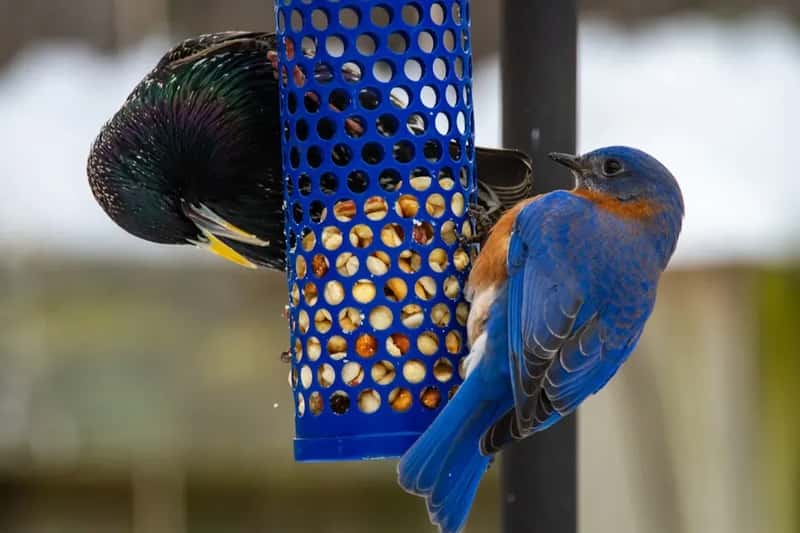
This is the mistake that trips up almost every first-time bluebird host. You fill a tube feeder with sunflower seeds, wait through March, wait through April, and nothing. The reason is simple but almost never mentioned at the garden center: bluebirds are insectivores. According to the Cornell Lab of Ornithology, roughly 90% of their diet is insects and invertebrates. They don’t want grain. They want protein that moves.
The fix is a shallow dish of live mealworms placed in the open. Live mealworms are more expensive than seed, but the wriggling motion is what triggers a bluebird’s hunting instinct – dried mealworms are far less effective. The North American Bluebird Society considers live mealworms the single best food you can offer. One small dish of wiggling worms will do more to pull bluebirds into your yard than any seed feeder you’ve ever owned.
#3 – Use a Bluebird-Specific Feeder, Not Just a Dish
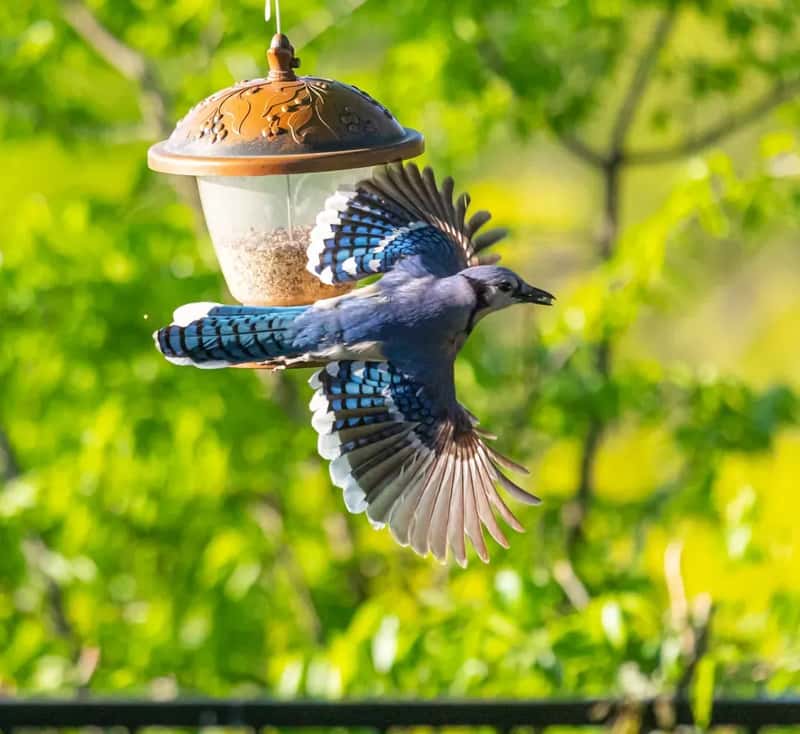
An open dish works fast – maybe too fast. Within days, every robin, starling, and mockingbird in the neighborhood will discover it, and your bluebirds will be elbowed out at their own feeder. The solution is a hopper-style feeder with a 1½-inch entrance hole at each end. Bluebirds slip right in. Starlings and grackles can’t. It’s a simple design that solves a genuinely frustrating problem.
There’s also a training trick most people miss entirely. When you first set up the feeder, leave the top open and remove any entry bars so the birds can easily see the mealworms inside. Once bluebirds are visiting reliably, add the bars back and close the top – they’ll already know the food is in there and won’t stop coming. Place the feeder at least 20 feet from the nest box so the activity doesn’t stress nesting birds. Distance matters more than most people expect.
Quick Compare
- Open dish: Fast to attract bluebirds, but starlings and robins take over quickly
- Hopper feeder (1½” hole): Excludes larger birds; bluebirds enter freely, starlings cannot
- Standard tube/seed feeder: Ignored entirely – bluebirds don’t eat birdseed
- Cage-style mealworm feeder: Also effective; blocks large birds while allowing small songbirds
#4 – Never Skip the Calcium Boost on Your Mealworms
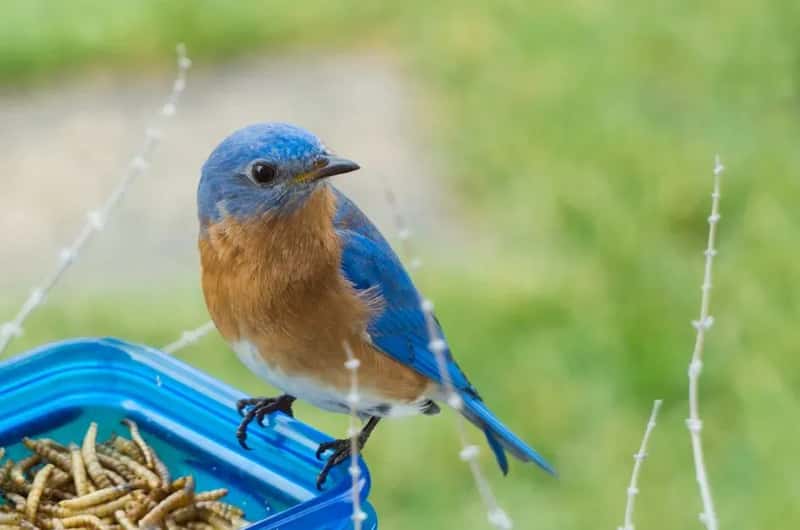
Here’s the detail that shocks even experienced bluebird hosts: mealworms are essentially junk food. They’re irresistible to bluebirds but critically low in calcium. The North American Bluebird Society warns that a diet heavy in mealworms can lead to brittle eggshells, weak-boned nestlings, and even egg binding in laying females – a condition that can be fatal. Well-meaning feeders cause this problem every spring without ever realizing it.
The fix takes about ten seconds. Put the mealworms in a bag with calcium carbonate or calcium citrate powder and shake gently to coat them before offering. Limit quantities to around a hundred worms offered morning and evening – more than that during normal conditions and you’re doing more harm than good. Mealworms should supplement a bluebird’s natural diet, not replace it. That one small step protects the very birds you’re trying to help.
#5 – Mount the Nest Box at the Right Height and Face It East
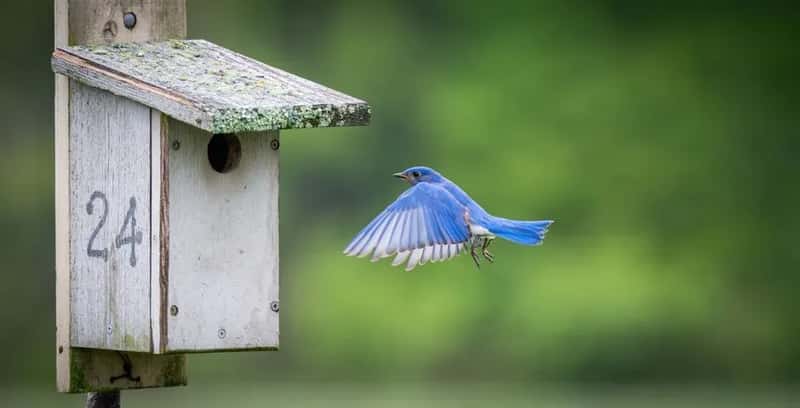
Most nest boxes fail before a single bluebird investigates them – because of how they’re mounted. Nailing a box to a tree trunk feels natural and looks charming. It’s also one of the worst things you can do. Trees give raccoons, snakes, and squirrels a highway straight to the nest. Bluebirds evolved as open-country cavity nesters, and a box tucked against tree bark signals the wrong habitat entirely.
Mount the box on a freestanding pole at least 5 feet off the ground, positioned in or near an open clearing, and face the entrance east. Facing east gives the nest morning warmth from the sun while shielding it from the brutal heat of summer afternoons – overheating kills eggs and nestlings faster than most people realize. Even a modest suburban backyard can work if there’s a reasonably open patch of lawn. The pole placement and the compass direction together make a bigger difference than the box itself.
At a Glance: Nest Box Placement Checklist
- Pole height: at least 5 feet off the ground (5.5 feet or higher is better)
- Entrance faces east – morning sun warms the nest, afternoon shade protects it
- Freestanding metal pole only – never a tree, fence, or structure predators can climb
- At least 5 feet away from fences, low branches, or structures predators can jump from
- Positioned in open lawn with a clear sightline – bluebirds avoid dense shrubby areas
#6 – Add a Real Predator Guard to the Pole, Not Just the Box
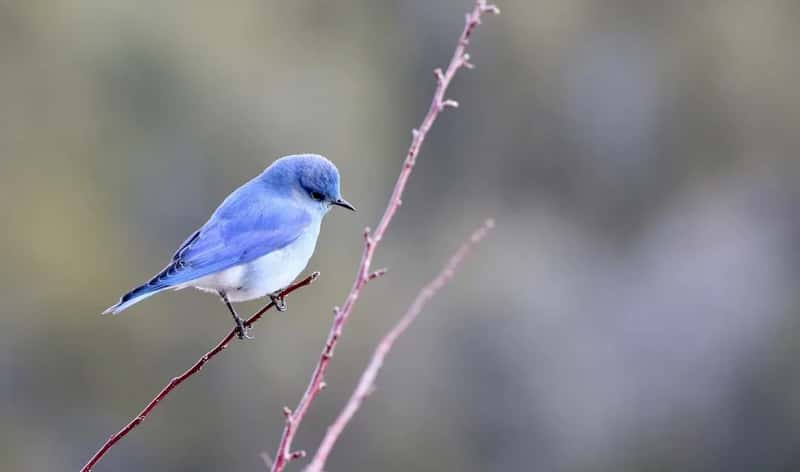
Scroll any bluebird forum long enough and you’ll find heartbreaking posts: whole clutches gone overnight, adults killed inside the box. The culprit is almost always a snake or raccoon, and almost always because the pole had no real protection. The decorative wooden block around the entrance hole that gets sold as a predator guard? It barely slows a determined raccoon. Real predator guards go on the pole, not the box.
The most field-tested solution is a section of 8-inch diameter aluminum stovepipe – at least 24 inches long – mounted on the pole below the box. A raccoon or snake can’t grip it, can’t climb past it. Research by NestWatch found that boxes with stovepipe or cone-type baffles consistently produced the most successful nests compared to unguarded boxes. Never place a box on a tree, fence post, or structure where a pole guard can’t be installed – no guard means the nest is essentially undefended after dark.
#7 – Get the Entrance Hole Size Exactly Right
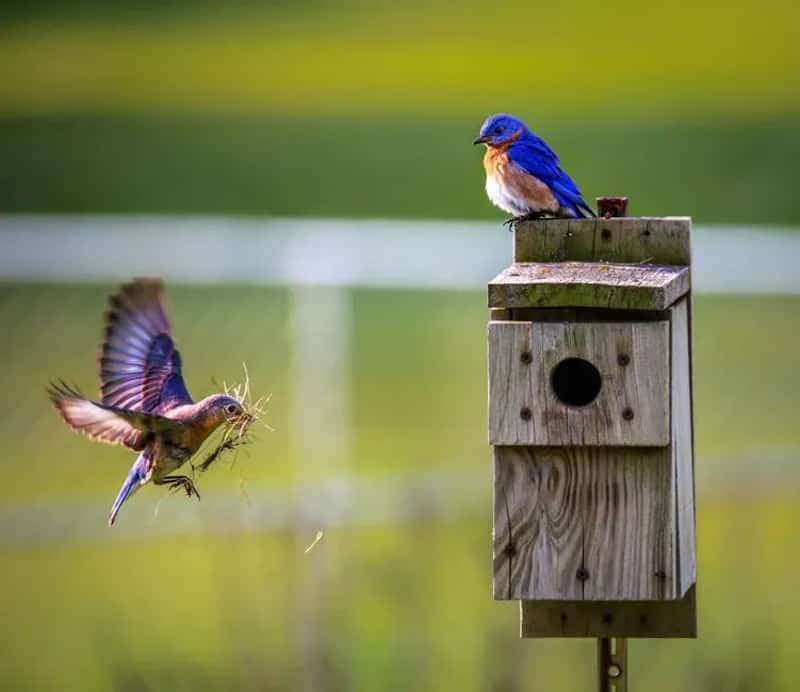
One and a half inches. That specific diameter is what separates a bluebird box from a house sparrow or starling condo. An oversized hole – even by a quarter inch – allows European Starlings access, and a starling will destroy eggs, kill nestlings, and evict adult bluebirds without hesitation. Even a well-built box degrades over time. Woodpeckers chip at openings, pine weathers and softens, and suddenly the hole that was right in April is wrong by June.
Check your boxes every spring before the season opens. If the hole has expanded, install a wooden or metal restrictor plate with a fresh 1.5-inch opening – it takes five minutes and costs almost nothing. Skip the perch below the entrance hole if house sparrows are common in your area; the perch gives them a staging platform they use aggressively. A correctly sized hole, checked annually, is one of the simplest things you can do and one of the most consistently skipped.
Worth Knowing
- 1.5 inches is the exact hole diameter that excludes European Starlings but admits bluebirds
- House sparrows can fit through a 1.5″ hole – managing them requires additional steps like removing entrance perches
- Wooden holes expand over time from weathering and woodpecker damage – check every spring
- Metal hole guards are cheap, durable, and prevent enlargement season after season
- Bluebird trail builders check every box annually before March – that’s when scouts start looking
#8 – Clean Out the Nest Box After Every Single Brood
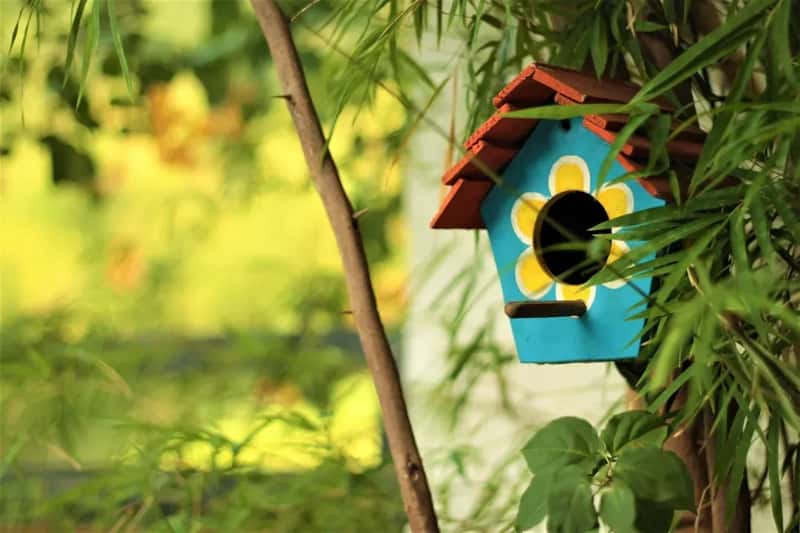
Bluebirds can raise two or even three broods in one season – but only if the box is ready between rounds. Most people watch the first clutch fledge, feel good about it, and consider their job done for the year. That’s a costly mistake. Old nesting material harbors blowfly larvae, mites, and parasites that can devastate a new clutch before it even has a chance. Bluebirds won’t reuse old nesting material, and a fouled box is a box they’ll skip.
Once fledglings have left, remove all the old nest material, wipe down the interior, and the box is ready for the next attempt. Inspect nest boxes weekly during the breeding season – activity inside tells you where things stand, and a quick check catches problems like parasites or predator damage early. Bluebirds are remarkably loyal to successful nest sites and will return to the same box year after year. That loyalty is yours to earn or lose with a two-minute cleaning.
#9 – Go Completely Chemical-Free in Your Yard
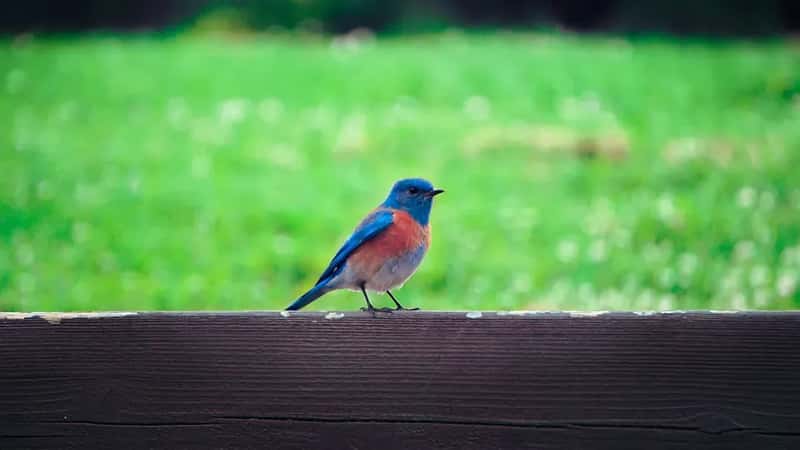
You can do everything else on this list right and still quietly poison your bluebirds if you’re treating the lawn. Bluebirds hunt by dropping from low perches directly onto grass, eating whatever insects are living there. A treated lawn doesn’t look dangerous – but everything moving through it is contaminated. Pesticide exposure is linked directly to the population crash that cost this species most of the 20th century to recover from.
The better framing: bluebirds are extraordinary free pest control. They consume grasshoppers, beetles, grubs, crickets, mosquitoes, and termites in remarkable quantities – and they specifically target larval insects, cutting off future pest populations before they emerge. A yard that supports bluebirds needs far less chemical treatment anyway. Let the birds work the lawn and the lawn will take care of itself. Chemicals don’t just push bluebirds away – they break the entire food chain that makes your yard worth visiting.
#10 – Plant Native Berry-Producing Shrubs for Winter Survival
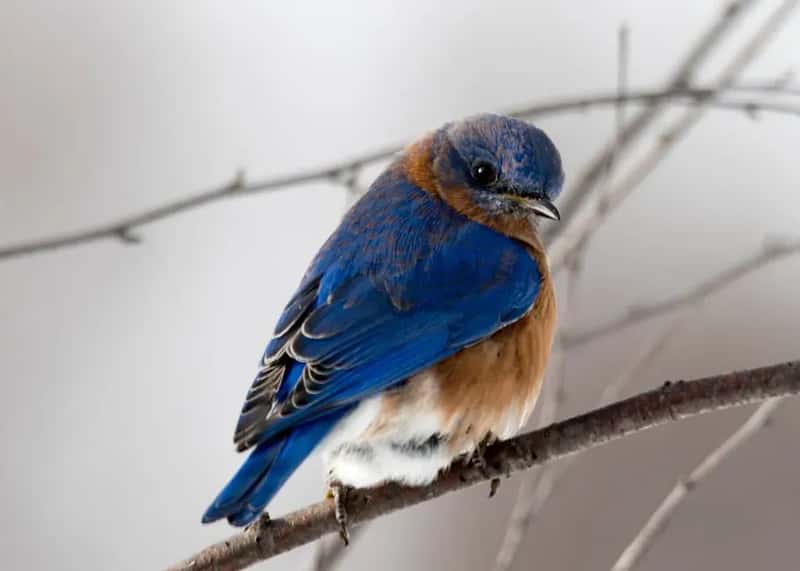
Most people assume bluebirds are purely warm-weather visitors. In reality, many populations winter across the South, and migrants return to northern states as early as February – when the ground is still frozen and insects are nowhere. What bridges that gap is fruit. Junipers, dogwoods, hollies, serviceberries, elderberries, and native sumacs produce berries that bluebirds rely on when their insect prey disappears.
Flowering dogwood alone supports bluebirds and dozens of other bird species. These plants do double duty: they feed passing migrants and signal to birds overhead that your yard is a reliable, food-rich stop worth remembering. A yard with berry-producing native shrubs becomes part of a bluebird’s seasonal mental map. Plant them once and they keep working for decades – quietly advertising your yard to every bluebird that flies over each February.
Why It Stands Out: Best Native Plants for Bluebirds
- Flowering dogwood – top-rated by experts; berries persist into winter, zones 5–9
- American elderberry – fast-growing; berries attract bluebirds and the insects they eat
- Eastern red cedar / juniper – evergreen, adaptable nationwide, loaded with winter berries
- Native hollies – red berries last all winter; plant male and female for berry production
- Serviceberry – fruits in early summer just as bluebirds are feeding nestlings
- Smooth or staghorn sumac – dense berry clusters persist into winter; thrives in poor soil
#11 – Install Moving Water, Not Just a Static Bird Bath
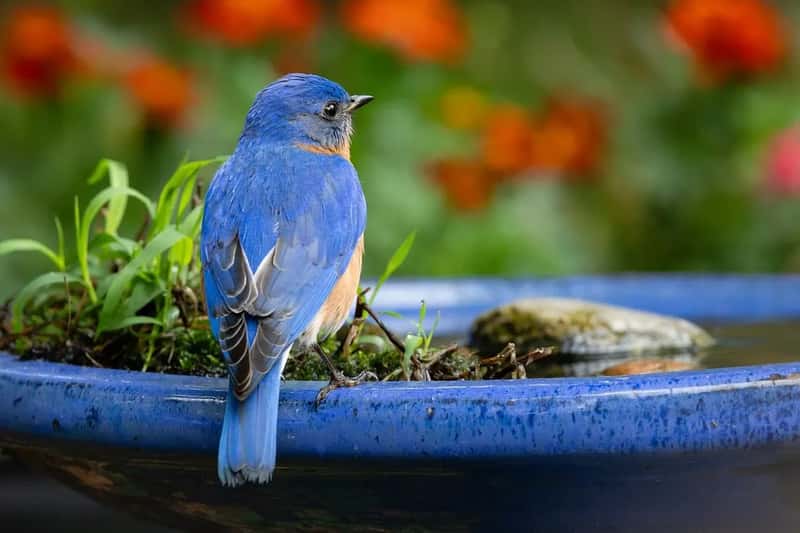
A still birdbath is better than nothing, but bluebird experts are nearly unanimous: moving water is dramatically more effective. The sound and visual shimmer of a dripper, fountain, or Water Wiggler carries surprisingly far – birds flying overhead that would never notice a static bath will turn toward the sound of moving water. It’s one of the cheapest upgrades with one of the highest returns in the entire bluebird setup.
Keep the water shallow – no more than 2 inches at the deepest point, with shallower edges where birds can wade in safely. Bluebirds bathe frequently and enthusiastically, and a clean, moving water source becomes a daily destination. In winter, a heated bird bath may be the single most powerful draw your yard has, particularly in northern states where open water is scarce. Get the water moving, keep it clean, and the birds will find it.
The truth about bluebirds is that they don’t ask for much – they ask for the right things. Live mealworms instead of seed. Moving water instead of still. A pole-mounted box with a real predator guard instead of a fence-post birdhouse. Native shrubs for the lean months. Low hunting perches scattered across open lawn. And a yard free of the chemicals that poison the insects they depend on. Get those specifics right and bluebirds won’t just visit – they’ll treat your yard as home, season after season. Which one of these surprised you most? Drop it in the comments.