Picture Route 66 and you probably see crumbling neon, boarded-up windows, and a highway the world forgot. Now picture sleeping in a 1930s motor court, parking beside your own door, or ordering breakfast at a café that has been serving since 1924. Every stop below is real, and every one still has a light on out front.
The road turned 100 in 2026, and these places are a big reason it still feels alive. A few never closed. One sat dark for more than 45 years before it welcomed guests again. And the stop waiting at #1 has outlasted just about everything else on the highway.
#12 – Motel Safari: The 1959 Tucumcari Stop Where Every “Flaw” Was a Design Choice
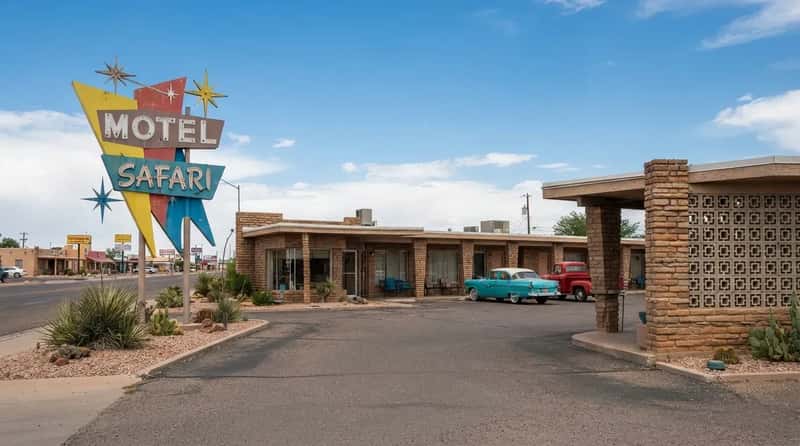
Look closely at the Motel Safari in Tucumcari, New Mexico, and it seems to be showing its age. The brick mortar looks like it’s oozing, bricks are stacked along the façade, and square holes pepper the cinder block. Here’s the twist: those quirks were the whole point. When the motel opened in 1959, that look was cutting-edge, and it’s still on display today.
The quirky geometric sign adds to the show. Tucumcari is the right town for it, because a large number of businesses built in the 1930s, 1940s, and 1950s are still operating there. The town also has more than twenty motels, so the Safari is a survivor in a crowded field. It’s often named alongside the Blue Swallow among the stops still drawing travelers with vintage charm and neon.
#11 – Bagdad Café: The Desert Diner That Changed Its Name After a Movie
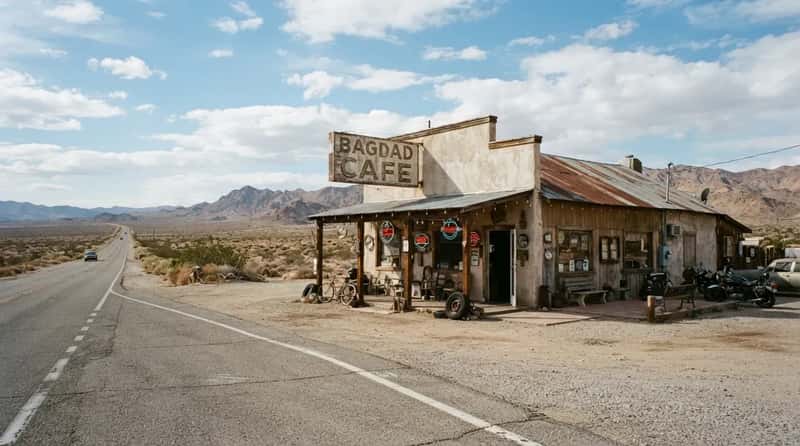
This Mojave Desert outpost has lived two lives. Built around 1950 in Newberry Springs, California, it first opened as the Sidewinder Café. It was later renamed Bagdad Café after the 1987 film of the same name, which was set at a desert café. That rename turned a roadside stop into a pilgrimage site.
Know what you’re signing up for. Today the café offers coffee, snacks, and some of the best photo ops in the Mojave. It’s a stop for the story and the sign, not a long sit-down meal. The place sits far from anything, which is exactly why its survival feels like a small miracle.
#10 – Rockwood Motor Court: The 1929 Tourist Camp Where the Cabins Are the Originals
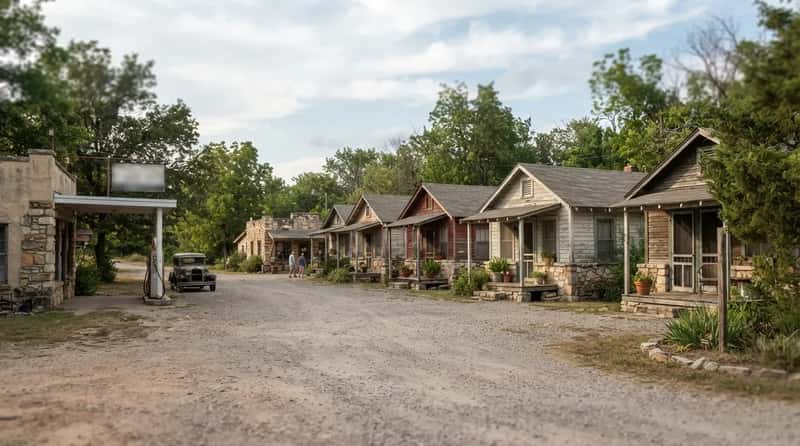
Almost nothing here has been swapped for a replica, and that’s rare. Rockwood Court was built in 1929 on Route 66 in Springfield, Missouri, and Deverne Ruckman began operating it as a tourist camp. That’s years before the motel boom, back when “motor court” meant exactly what it said.
Here’s the jaw-dropper. All six cabins, along with the filling station, café, and remaining single-car garage, are original to the property. The site remains in operation and in ongoing restoration. It’s a full roadside ecosystem from the highway’s earliest days, with the fuel, the meal, and the bed all in one spot.
Fast Facts
- Built in 1929 in Springfield, Missouri
- Started by Deverne Ruckman as a tourist camp
- Six original cabins still on the property
- Original filling station, café, and single-car garage also remain
- Still operating while restoration continues
#9 – Wigwam Village #7: The California Teepees With a Naming Mix-Up
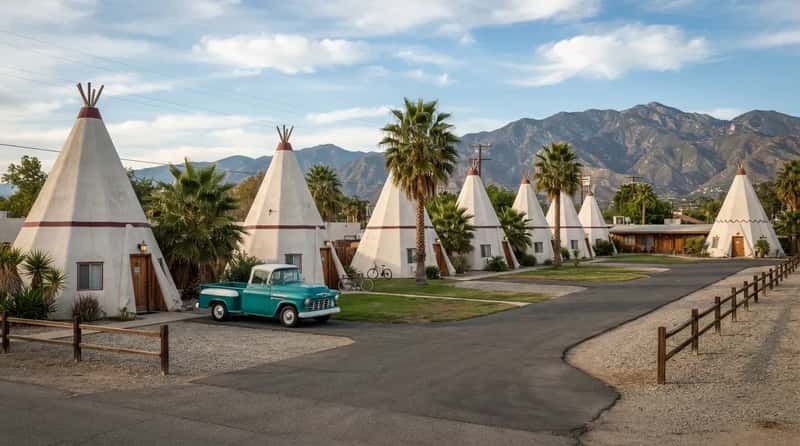
The “wigwam” rooms aren’t wigwams at all. They’re built in the shape of tipis, and the wrong name simply stuck. Architect Frank Redford patented the design in 1936 and disliked the word “teepee,” so he went with “wigwam” instead. That label has lasted for nearly a century.
The chain once had seven locations, including two in Kentucky and one each in Alabama, Florida, Arizona, Louisiana, and California. Only three motels survive. Two of those sit on historic Route 66: one in Holbrook, Arizona, and this one in San Bernardino, California, which was Village #7. Those odds make it a rare find, and the Arizona sibling is waiting at #3.
#8 – Snow Cap Drive-In: Where the Jokes Come Free With the Burger
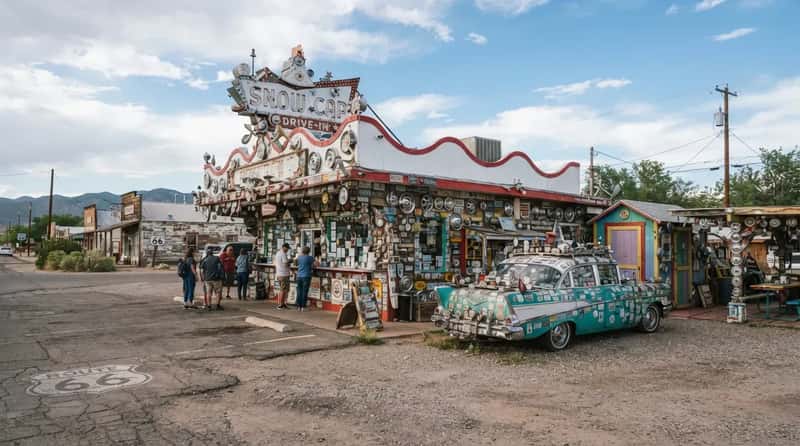
Nobody drives to Seligman, Arizona, just for the food. They come for the gags. Juan Delgadillo started the Snow Cap in 1953, and his family still keeps his spirit alive with jokes, memories, burgers, tacos, chicken sandwiches, and shakes. Expect playful tricks at the counter and a sign that sets the tone.
That’s loyalty you can taste. One family running one drive-in across generations is rare on a road where chains took over. Heads up, though: the Snow Cap closes during winter. Show up in the wrong month and you’ll be reading the door instead of ordering.
#7 – Rail Haven: The Springfield Motel That Claims the Highway’s Birth
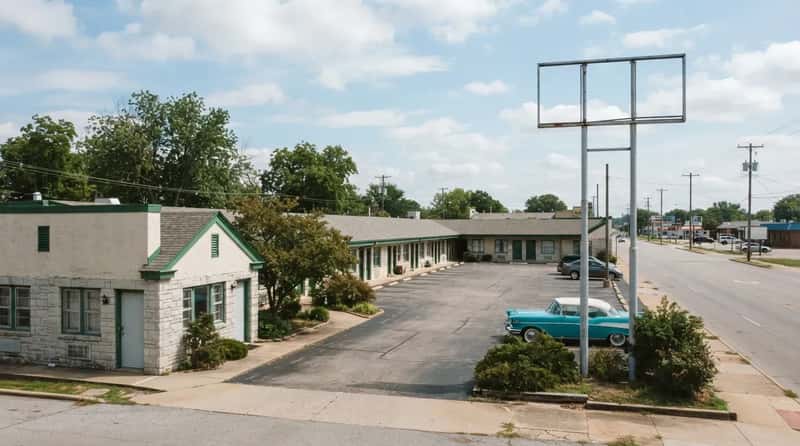
This one comes with a bold boast. The Best Western Route 66 Rail Haven in Springfield, Missouri, calls itself the “birthplace of Route 66,” tying the highway’s naming to the city. The sign out front also announces that Elvis stayed there. Few motels advertise two big claims so loudly.
It’s also a longevity story. Rail Haven opened in 1938 and appears among the motels in the first 1946 Route 66 guidebook that are still operating. Some purists will grumble that a motel wearing a chain’s name can’t be authentic. But a building that has hosted travelers for roughly 88 years has earned its spot.
Quick Compare: Two Springfield Stops
- Rail Haven: opened 1938, known for its big claims and the Elvis sign
- Rockwood Court (#10): built 1929, known for its original cabins and old-school tourist camp feel
- Shared thread: both are in Springfield, Missouri, and both are still open
#6 – MidPoint Café: The Texas Diner at the Exact Halfway Mark
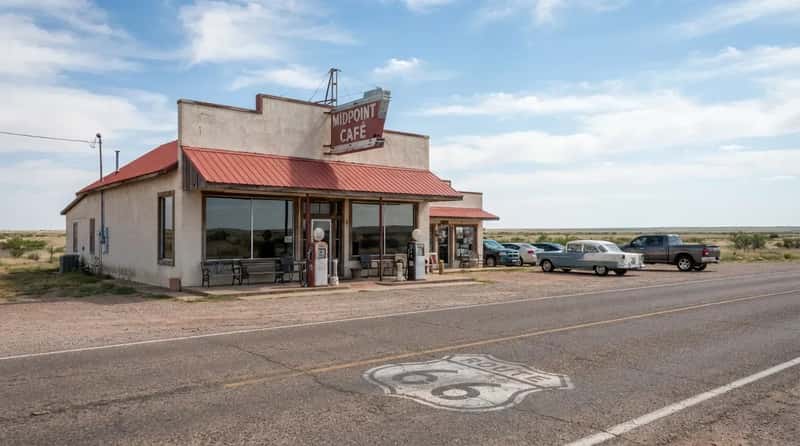
The MidPoint Café opened in 1928 in Adrian, Texas, right along Route 66. It operated continuously through the highway’s busiest decades and served road-weary travelers at all hours. For a diner in the middle of the Texas Panhandle, that’s a remarkable run.
Today it’s open as a diner and souvenir stop marking the halfway point of the highway. Its “ugly crust” pies are a big part of the pitch. Longtime owner Fran Houser is also widely credited as the inspiration for Flo in Pixar’s Cars. The location does the rest.
#5 – Boots Court: The Missouri Motel Saved From the Bulldozer
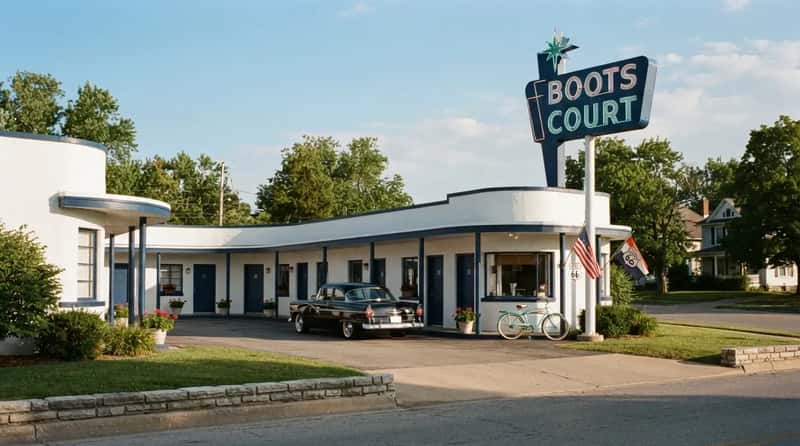
This motel almost didn’t make it to the present. Boots Court opened in 1939 in Carthage, Missouri, on Route 66. Years of changing owners left it vulnerable, and demolition was a real possibility. Then a rescue team stepped in.
The rescue is the story. The nonprofit Boots Court Foundation saved the motel from possible demolition and has overseen a full restoration. It’s listed on the National Register of Historic Places and open to Route 66 travelers, offering vintage charm and modern comfort. That mix is what makes a restoration more than a museum piece.
#4 – Shamrock Court: The Missouri Motel That Just Welcomed Guests Again
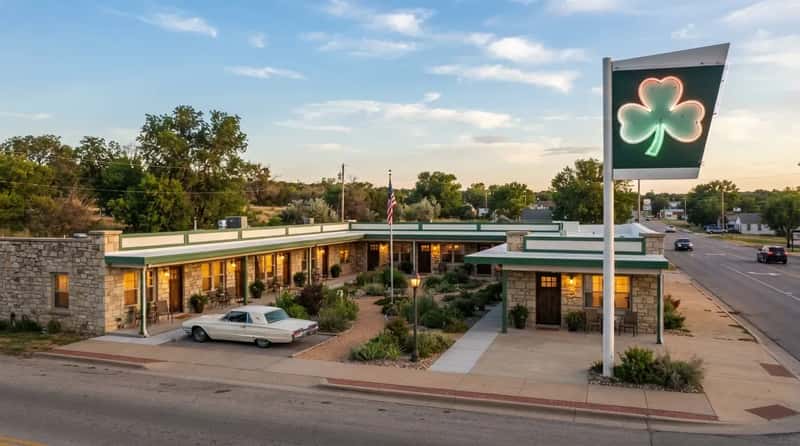
This one sat quiet for decades, and then the doors opened again. For the first time in more than 45 years, the Shamrock Court is welcoming travelers back to historic Route 66. It sits in Sullivan, Missouri, and it’s the freshest comeback on this list.
The timing is the payoff. After years of careful restoration, preservation, and determination, the new owners opened reservations for stays beginning May 29, 2026. That lands right in the highway’s centennial year. A motel closed for more than four decades and then reopened is proof that these buildings aren’t all lost causes.
At a Glance
- Location: Sullivan, Missouri
- Dark for more than 45 years
- Guest stays began May 29, 2026
- Reopened during Route 66’s 100th year
#3 – Wigwam Motel, Holbrook: The Teepee Rooms That Sent Dimes to Their Designer
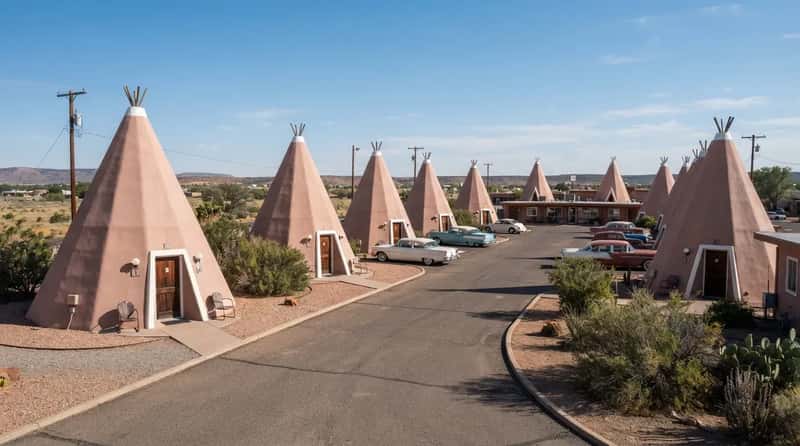
Few motel rooms on the highway get photographed more than these. Wigwam Village #6 in Holbrook, Arizona, has 15 concrete and steel teepees on three sides of a square, with the main office on the fourth. It opened in 1950, and it’s also a family story that nearly ended.
The licensing deal is the hidden detail. Owner Chester Lewis had to install coin-operated radios in each wigwam, and every dime for 30 minutes of play went to the designer, Redford. After Interstate 40 bypassed downtown Holbrook, business dried up and the motel closed. His children renovated and reopened it in 1988, and it was listed on the National Register of Historic Places on May 2, 2002.
#2 – Blue Swallow Motel: The Neon Survivor Everyone Compares Every Other Motel To
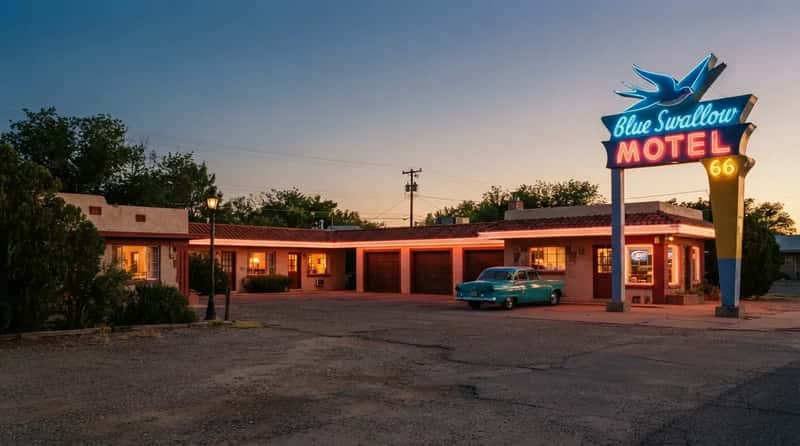
This is the motel other motels get measured against. The Blue Swallow Court in Tucumcari is a 12-unit, L-shaped motel listed on the National Register of Historic Places. Construction began in 1939. Garages sit between the sleeping units so travelers could park their motorcars right next to the door.
Step inside and the time travel continues. Rooms feature authentic period decor, including chenille bedspreads, vintage lighting, and rotary-dial phones, and Lillian Redman ran the place until 1998. Unpopular opinion: the neon gets all the credit, but the attached garages are the real time machine. Check dates and availability before you drive, since the motel is still open for business but busiest in the summer months.
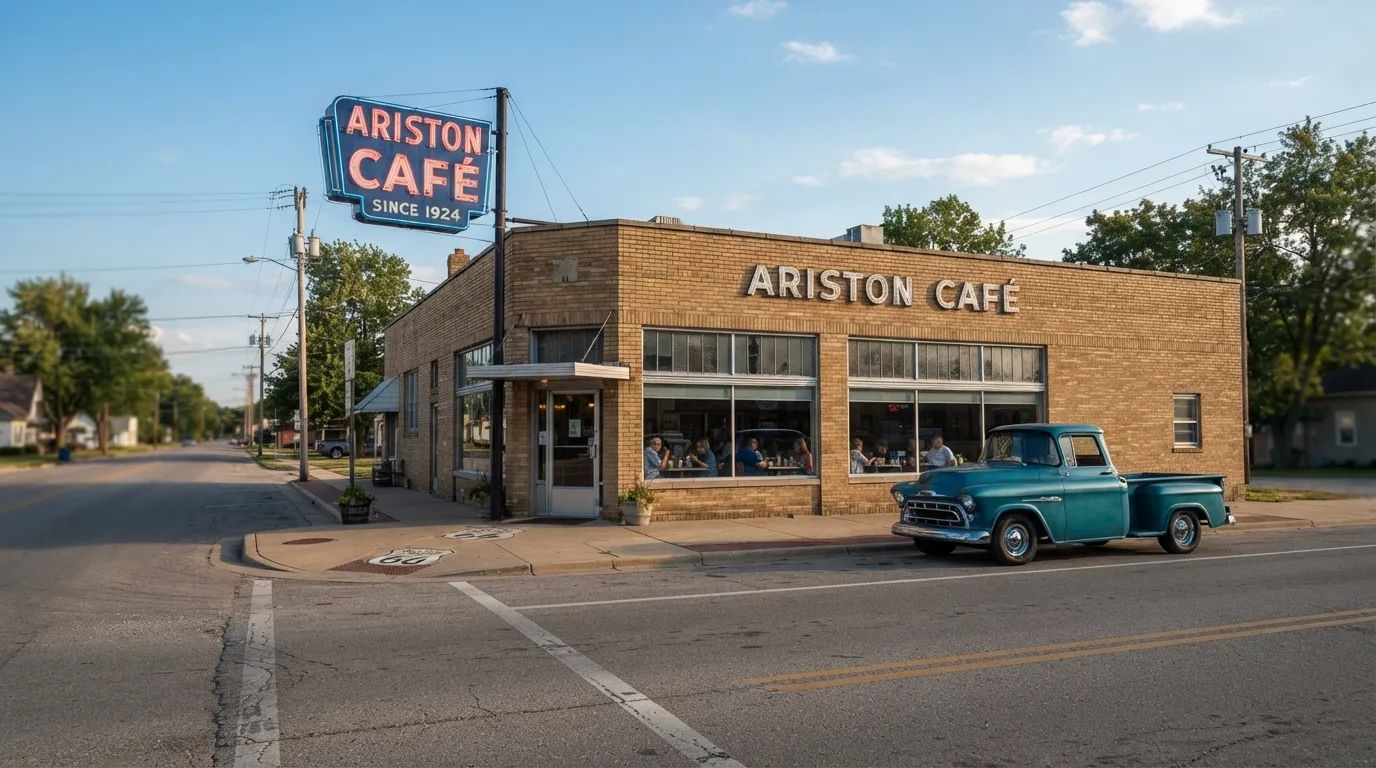
#1 – Ariston Café: The 100-Year-Old Route 66 Diner That Never Stopped Serving
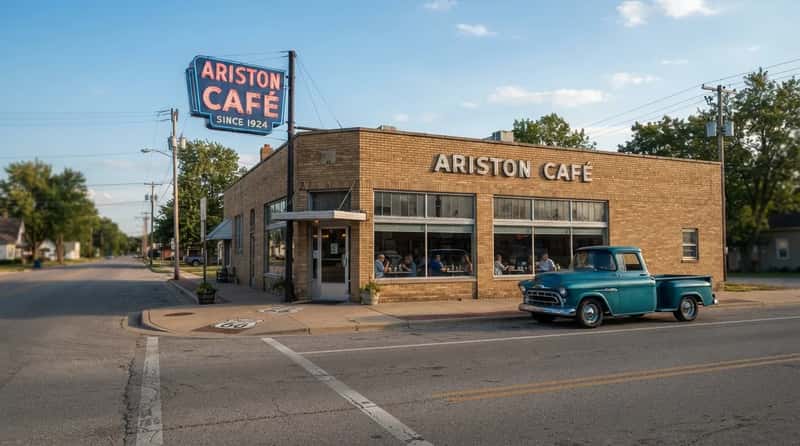
Nothing on this list has been feeding travelers longer. The Ariston Café is the oldest continuously operating restaurant on the historic highway, serving customers since 1924. Greek immigrant Pete Adam started it in nearby Carlinville. When the road moved, so did he.
The move is the best part of the story. When the Mother Road was rerouted in 1929, Pete leased a new building in Litchfield. In 1935 he relocated across the street to his own building, which still stands today. A 1938 menu priced a porterhouse at just 85 cents, while bacon and eggs or a BLT cost a quarter. One regular, Pat Schwab, 84, has been coming since before 1950, and that kind of loyalty can’t be staged.
Worth Knowing
- 1924: the café starts serving in Carlinville
- 1929: the highway reroutes, and Pete Adam moves to a leased building in Litchfield
- 1935: he relocates across the street to a building he owns, still standing today
- 1938: a porterhouse is 85 cents, and a BLT is a quarter
The surprise isn’t how much of Route 66 disappeared. It’s how much held on. A diner from 1924 is still plating meals, a Missouri motel just reopened after more than 45 years, and a Texas café still marks the halfway point.
Some of these places survived because a family refused to quit. Others survived because strangers decided they were worth saving. The road is 100 years old, and its best stops are still the ones with a light on out front.