Most people assume a highway diner is just a pit stop – eggs, coffee, and back on the road in twenty minutes. For a road tripper over 60, that assumption misses almost everything actually happening at the counter.
The best waitresses working these stretches of highway have quietly built a set of unwritten habits nobody ever trained them to do – twelve of them, refined over years of reading exactly who just walked through the door. None of it shows up on a menu, and most guests never even notice it’s happening. Here’s what the good ones are doing while you’re just trying to find the syrup.
#12: They Slow Down Without Making It Obvious
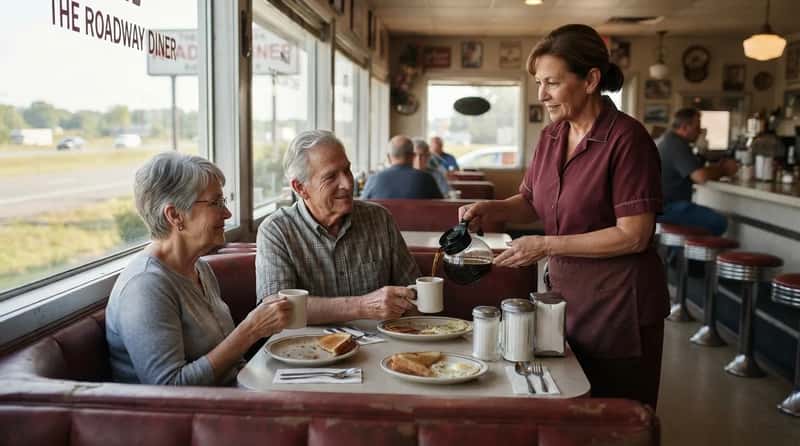
A skilled highway diner waitress never rushes an older road tripper – and she never signals that she’s slowing down for them either.
There’s a real difference between patience and condescension. The best servers read a table’s pace in the first sixty seconds and match it, without commentary or the kind of performative cheerfulness that makes people feel like a burden.
For travelers over 60, this matters more than almost anything else on this list. Regular breaks and a steady, unhurried rhythm are vital for staying alert and comfortable on a long drive, and that calm carries straight through to the table.
A waitress who naturally paces herself to her customers isn’t being slow – she’s being professional. That distinction is what separates a career server from someone just passing through the job.
But the pacing is just the start. What they do the moment you actually sit down is where things get interesting.
#11: They Quietly Swap the Menu for a Larger-Print Version
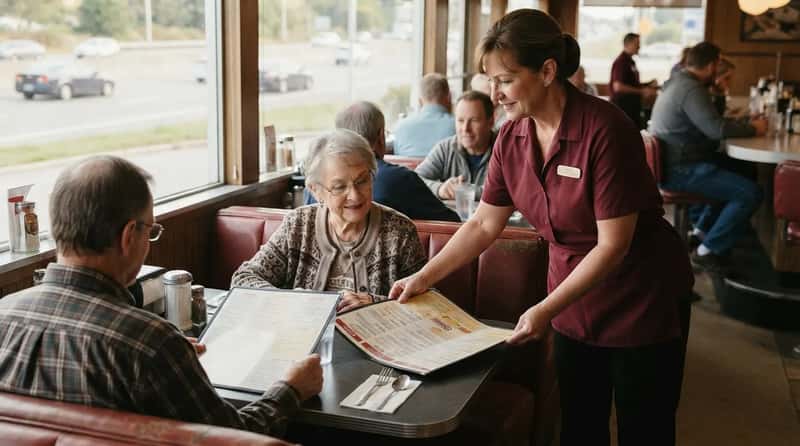
When a server notices an older guest struggling to read the menu, the best move isn’t to offer to read it aloud – that can feel embarrassing. Instead, she quietly brings over a large-print version and frames it as the clearer option for everyone at the table.
Not every diner keeps a large-print menu on hand, but experienced waitresses at busy highway spots learn fast which tables need one.
That approach preserves the customer’s dignity while solving the problem elegantly, which is exactly the point. Nobody over 60 wants their eyesight to become the table’s main topic of conversation.
The servers who pull this off make it feel like a completely unremarkable thing. That takes real social skill, not just good intentions.
Wait until you see what they do at the booth itself – #10 is something most people never even notice happening.
#10: They Steer Older Guests Toward the Best Booth Without Being Asked
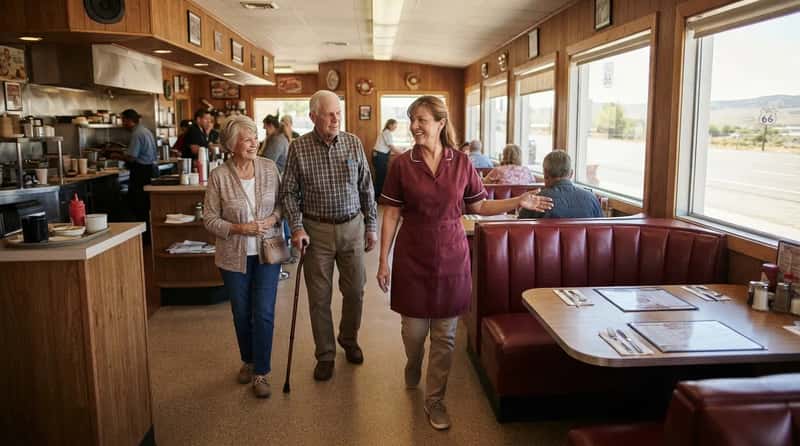
The corner booth by the window. The one away from the kitchen door that swings open every forty-five seconds. The table that isn’t sitting directly under the speaker blasting country music at lunch-rush volume.
Easy access, comfortable seating, good lighting, and a quieter atmosphere all matter enormously for older diners. The best highway waitresses seem to know this before the guest does, and they steer accordingly.
It’s rarely a formal choice. Sometimes it’s just, “Let me get you folks set up over here” – and she’s already walking ahead to the right table.
A noisy table might not register with a 30-year-old. But for someone managing hearing loss, or who just drove three hours and wants a real conversation without shouting, it’s the difference between a good stop and a frustrating one.
Fast Facts
- Roughly one in three adults ages 65 to 74 has some degree of hearing loss, a share that climbs to nearly half after age 75.
- Bright, glare-free lighting makes menus and faces easier to read for aging eyes.
- A table near a swinging kitchen door adds constant background noise that can drown out conversation.
- Shorter walking distance from the entrance matters for guests managing mobility issues.
Keep going – #9 is one of the quietest things they do, and one of the most underrated.
#9: They Keep the Coffee Coming Without Waiting to Be Flagged Down
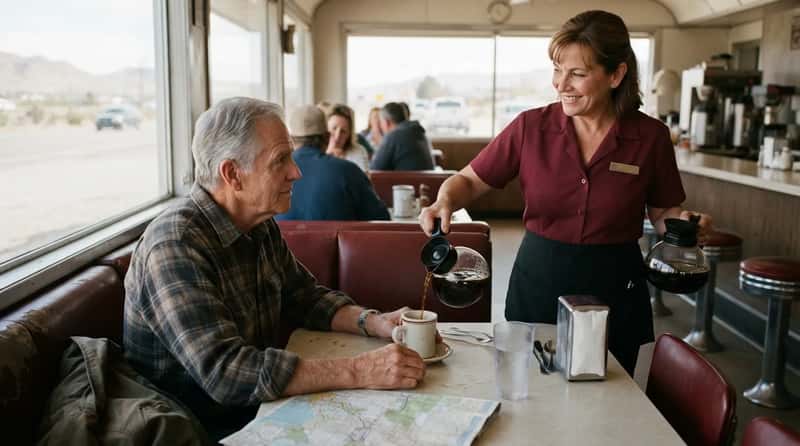
For road trippers, coffee isn’t just a drink – it’s a tool. It marks the rhythm of the break, signals the shift from road-weary to ready, and gives people something to do with their hands while they check a map or talk through the next leg of the drive.
Experienced highway waitresses understand this instinctively. They watch cup levels and refill before the cup ever hits empty, so the guest never has to look around, wave, or hunt for eye contact.
This sounds minor. It isn’t – a short pause and some fresh air genuinely refresh the mind on a long drive, and an unhurried, well-caffeinated diner stop is a real extension of that recovery.
A waitress who understands what that stop actually means doesn’t just deliver food. She manages the whole arc of the break, from the first cup to the last refill before the check.
But good coffee service is just the beginning of what they track. #8 is about something far more personal.
#8: They Remember the Regular Without Making a Production of It
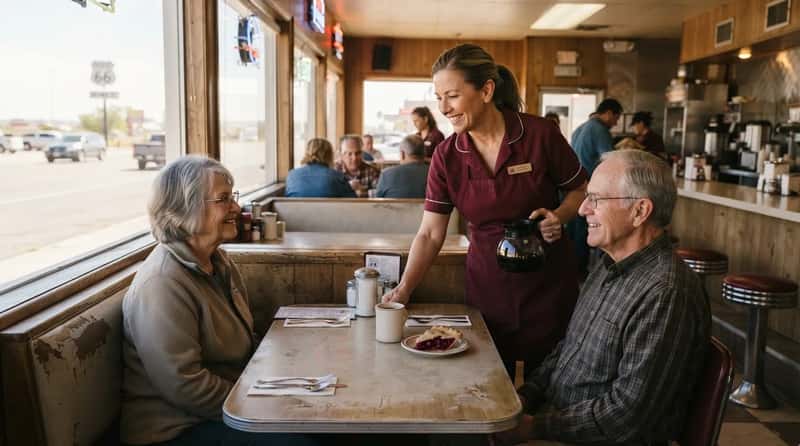
Retired road trippers often drive the same routes year after year, which means the same diners show up on the itinerary every single trip. Staff sometimes recognize them by name, and the order rarely changes from visit to visit.
The best waitresses take that recognition and use it quietly. They don’t announce it to the whole diner – they just already know the coffee order, mention the cherry pie came in fresh this morning, or skip asking how the eggs should be cooked.
Being known by the staff creates a real sense of belonging that no chain restaurant app can replicate. It’s a small thing that somehow makes a stranger’s diner feel like a second kitchen table.
For a traveler over 60 who’s driven this corridor a dozen times, being remembered without having to reintroduce yourself is not a small thing. It’s the whole reason some people drive an extra exit to reach one particular diner instead of the one right off the ramp.
The next one on the list is something most younger travelers would never think to look for. #7 is all about timing.
#7: They Time the Check Without Being Asked
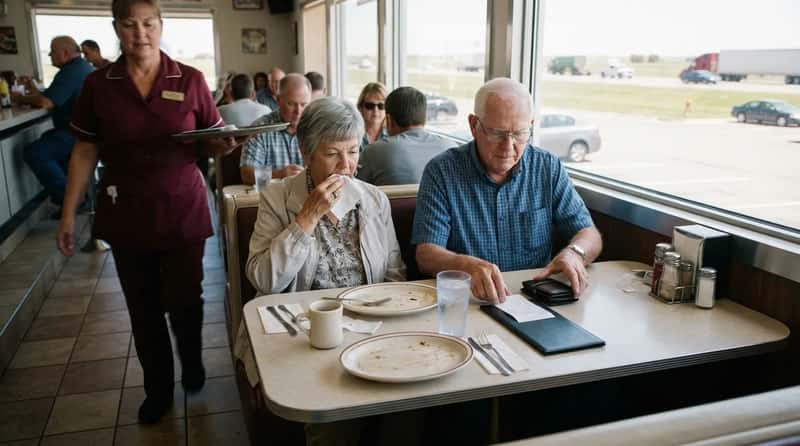
Older road trippers are often racing daylight. Many prefer to travel while the sun is up rather than deal with night glare, which puts a hard edge on the lunch stop – they need to be back in the car by a certain time.
A veteran diner waitress picks up on this fast. She doesn’t linger when the plates go empty, and she brings the check at exactly the right moment – not before people are finished, not after a ten-minute gap spent scanning the room for someone to flag down.
Done well, this timing skill looks invisible. But every traveler over 60 has felt its opposite: sitting at a cleared table for fifteen minutes while the clock ticks and the next 200 miles feel further away by the second.
The best servers understand that for some guests, the schedule simply isn’t flexible. Respecting that without being told is a mark of real professional attention, not just efficiency.
Quick Compare
- Daytime driving: better visibility and quicker hazard reaction time, which is why many older drivers prefer it.
- Nighttime driving: increased glare sensitivity and slower recovery from headlight glare become bigger factors with age.
- The result: many older drivers voluntarily limit trips after dark, which quietly reshapes how long a lunch stop can run.
And it’s not just the check they handle with care – #6 is about something even more delicate.
#6: They Handle the Card Machine with Extra Care
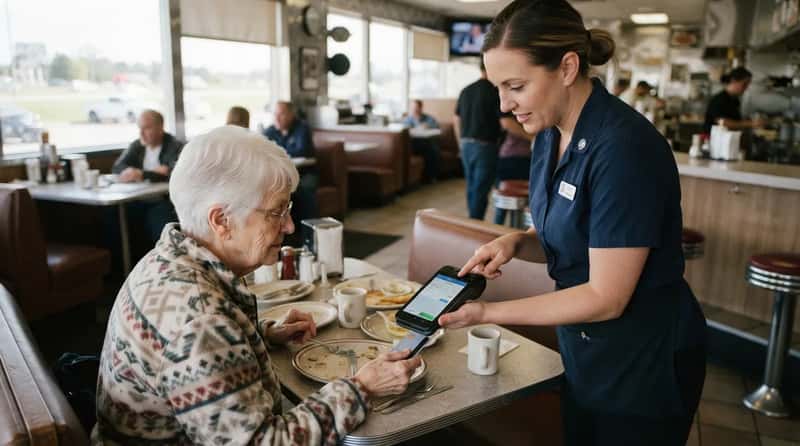
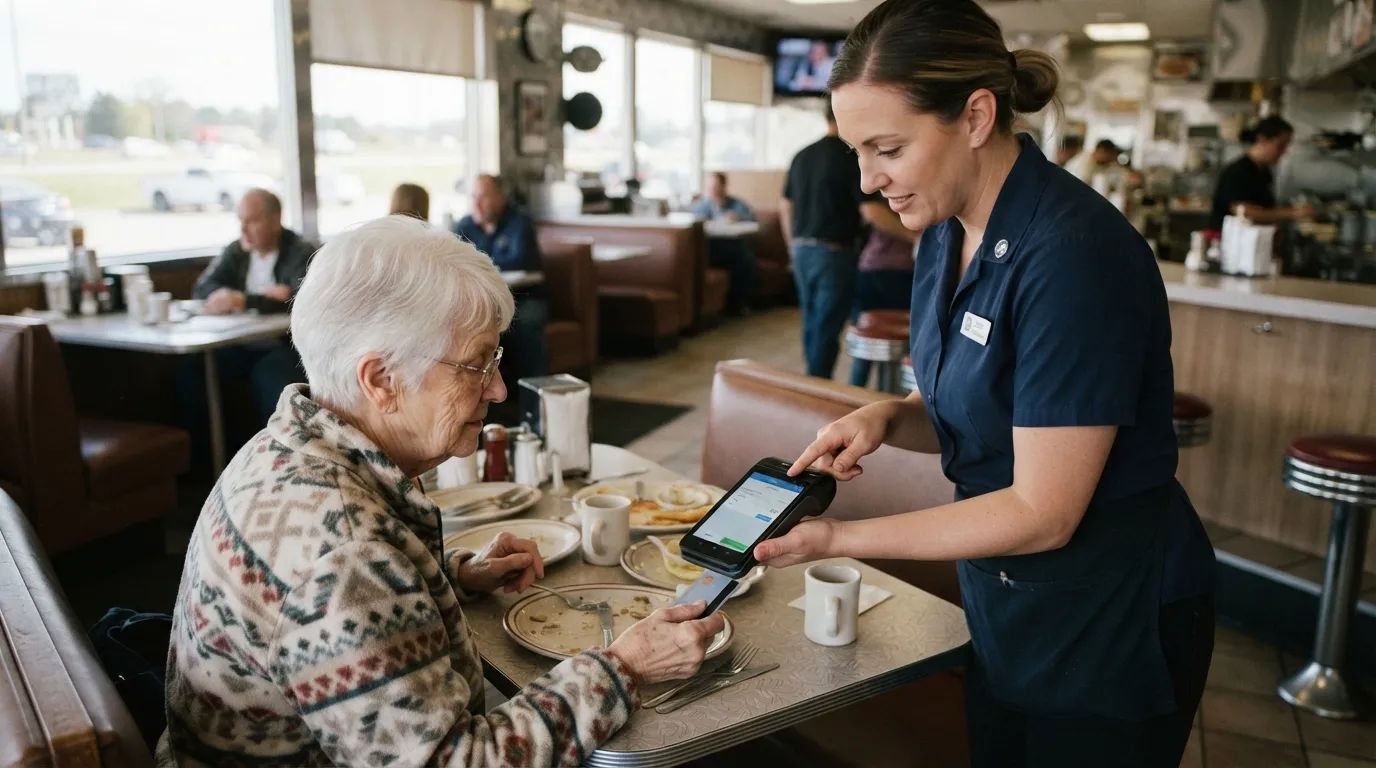
This one matters more than it seems. The shift to tablet-style card machines has created a specific problem for older diners – screens that spin across the table with tip prompts, subtotals, and multiple steps to navigate, all while a server hovers and a line forms behind them.
Rushed, this scenario can go badly. A confused, hurried guest might tap the first tip option shown, then reach into her wallet to leave cash the way she always has – not realizing she’d already tipped through the screen.
The best highway waitresses are alert to exactly this. They slow the transaction down, explain the screen clearly, and step back to give the guest room to process it without pressure – sometimes saying “take your time,” and meaning it.
It’s a genuinely generous instinct in a system that too often prioritizes table turnover over the customer’s comfort.
Now we’re getting into habits that go beyond service and into genuine human attentiveness. Don’t skip #5.
#5: They Quietly Point Out What’s Soft on the Menu
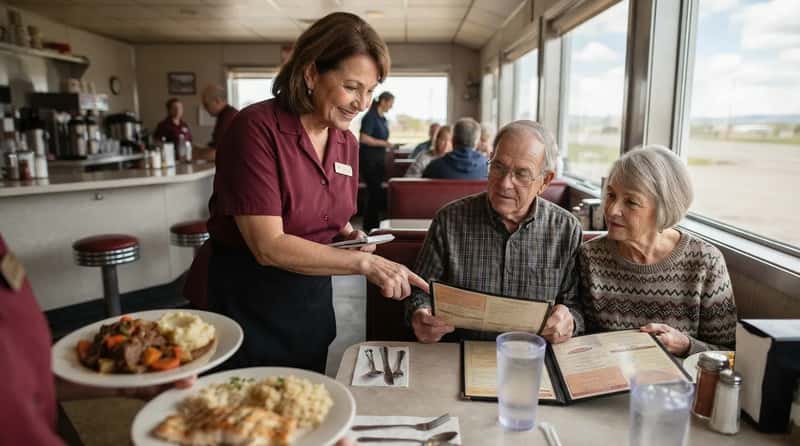
Not every older traveler is managing dental issues, but enough are that experienced highway waitresses have learned to mention it without being asked. When someone scans the menu a little too carefully, or asks a pointed question about a dish’s texture, the good ones notice.
Without any fanfare, they’ll mention that the pot roast is fork-tender today, that the grilled fish comes out flaky rather than chewy, or that the soup is a good call if you want something easy.
Career waitresses do a lot more than serve food. They’re part counselor, part grandmother, part old friend, serving every walk of American life – from the retired and the widowed to the working class and the wealthy – and reading what a table actually needs is part of the job, even when it’s never written down anywhere.
This habit sits right at the intersection of dignity and practicality. Done right, it feels like a thoughtful recommendation; done wrong, it can sound patronizing – and the best diner servers always land on the right side of that line.
But what about the things they notice before the food is even ordered? #4 deals with that directly.
#4: They Watch for Medication Cues Without Prying
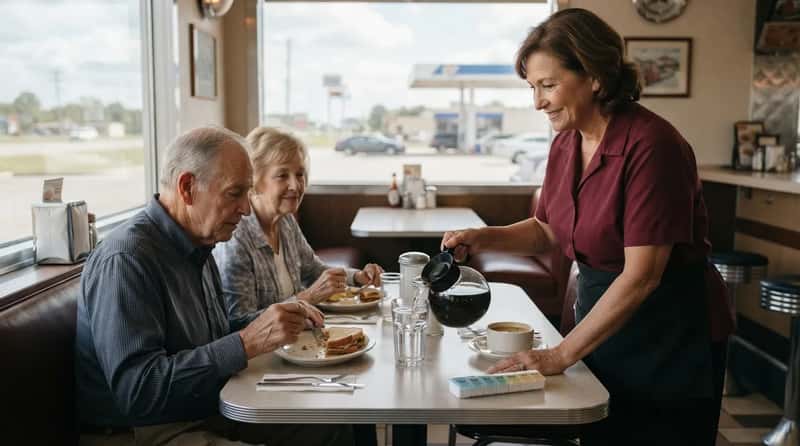
A traveler over 60 who pulls out a small pill organizer at the table, asks specifically whether a dish contains grapefruit, or orders water before anything else and drinks it slowly – a veteran diner waitress files all of that away.
She doesn’t ask about it, and she doesn’t comment on it. But she makes sure the water stays full, checks with the kitchen if a specific question comes up, and doesn’t push the daily special if a guest has already signaled they’re eating carefully.
The best diner servers treat this as simply reading the room well. Health conditions and medication schedules can affect how long a senior can safely manage a stretch of road, and a meal break that quietly accounts for that is worth something real.
Nobody wants to feel managed. But having a server who is quietly alert without making it A Thing is a meaningful, almost invisible form of hospitality.
Worth Knowing
- About 89% of adults 65 and older report taking at least one prescription medication in the past year.
- More than half of adults in that age group take four or more prescriptions daily.
- Staying hydrated and eating on a predictable schedule helps many medications work the way they’re supposed to.
The final three are where things get genuinely impressive. Don’t skip #3 – it’s one most people have experienced but never had a name for.
#3: They Become an Unofficial Local Guide for the Next Leg
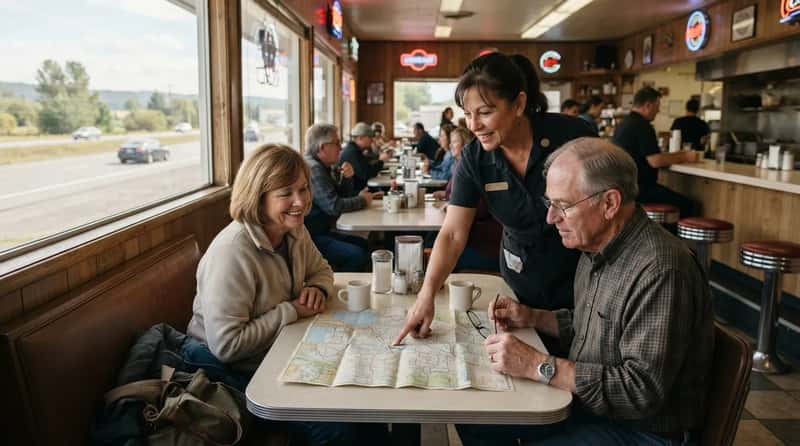
Highway diners are, almost by definition, staffed by people who have lived in that corridor for years. They know which stretch of road ahead has construction right now, which rest stop has the cleanest bathrooms, and which motel down the road books up fast on Fridays.
Experienced waitresses at these spots have fielded thousands of “what’s worth seeing around here?” questions, and they’ve refined the answers into something genuinely useful – not tourist-brochure useful, but local-knowledge useful.
For road trippers over 60 who enjoy following a roadside sign to a small-town restaurant or an unplanned detour, a thirty-second conversation with the right server can reshape the whole afternoon.
This is something a chain restaurant simply cannot offer. No corporate training module teaches a server that the back road through the valley adds only eight minutes but carries you past farmland that’s been there since before the highway existed.
#2 is something that happens after the meal is over, and most guests never realize it’s happening at all.
#2: They Make Sure Nobody Leaves Alone if Something Seems Off
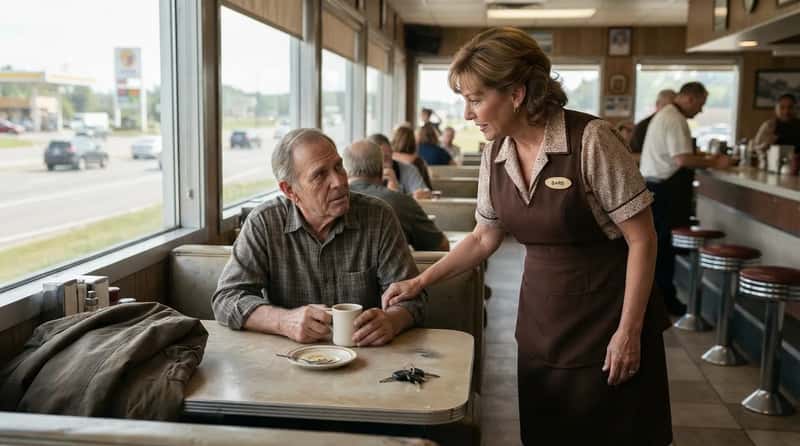
This one is rarely talked about, but it happens more than people realize. A solo traveler over 60 who seems disoriented, mentions a wrong turn in a way that sounds confused rather than adventurous, or lingers at the table far longer than usual – a sharp highway waitress notices.
She might ask a casual follow-up question about the route, or mention the rest stop or gas station coming up as a landmark, just to gauge the response.
If something seems genuinely wrong, she’ll quietly flag it to the manager, or in more serious situations, check in again before the guest reaches the door. This isn’t policy – it’s instinct, trained by years of watching every kind of person come through that door.
Career diner waitresses serve every walk of American life, from the retired and the widowed to the lonely and the wounded, and some of them have recognized real trouble long before anyone else in the room did.
We saved the most important one for last. #1 is the thing that road trippers over 60 remember long after the coffee has gone cold.
#1: They Make the Stop Feel Like the Point of the Trip, Not a Pause in It
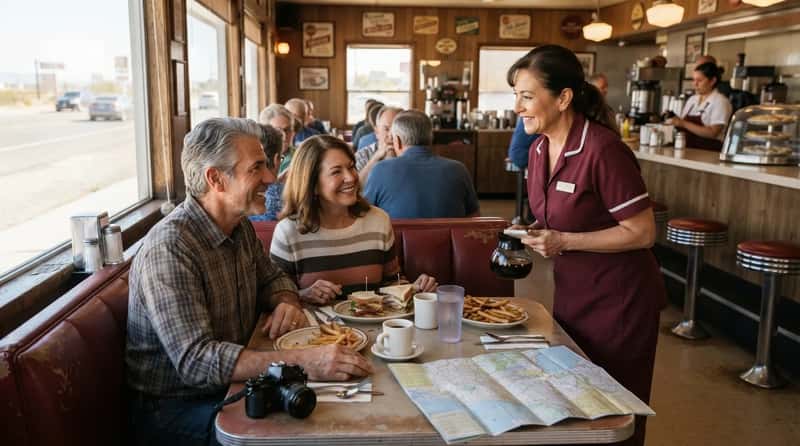
This is the one that separates a forgettable diner experience from a stop that gets brought up every time the trip is retold.
The best highway waitresses understand, instinctively, that for a traveler over 60, the road trip itself is often the point – not just the destination. These journeys carry a weight that younger generations rarely feel; many remember riding shotgun while their parents drove, and coming back now as the one behind the wheel is a genuinely emotional experience.
A waitress who reads that correctly – who gives the table time, who engages with real warmth instead of scripted cheerfulness, who treats the stop as worthy of the guest’s full attention – changes the whole experience. Regulars and their servers fall into real back-and-forth, trading stories and laughter, because it was never just about the food. It’s about the people.
That’s not a skill any afternoon orientation can teach. It comes from years of understanding that for some people, the diner counter is the most human part of the whole day – and treating it accordingly is the greatest form of hospitality there is.
The Bottom Line
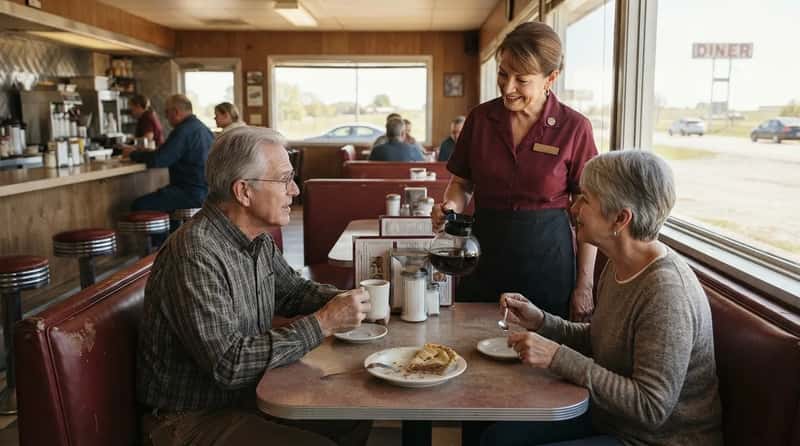
Most of what makes a highway diner great for road trippers over 60 happens below the surface – in the pacing, the quiet redirects, the seat choices, and the moments where a good waitress notices something nobody else does.
None of it shows up on a menu or a review card. It lives in the habits of career servers who have read thousands of tables and know, without being told, what an older traveler actually needs from a forty-five-minute stop on a long drive.
The best highway diners aren’t just fueling stations. They’re places where someone pays attention, and for travelers over 60 logging serious miles, that kind of attentiveness is worth a lot more than the price of the coffee.
At a Glance
- The best highway diner service for older travelers is almost always invisible – it’s felt, not announced.
- Small moves like seating choice, pacing, and menu texture tips add up to a genuinely safer, calmer stop.
- None of it requires a policy or training manual – just years of paying attention.
- The diners that get this right are the ones road trippers return to, trip after trip.
If you’ve got a diner like that on your route – the one you go out of your way for, the one where they already know your order before you sit down – you already understand exactly what this list has been about.