Most people treat the skycap stand like a leftover from a slower era – the kind of curbside relic you walk past while glued to a boarding pass on your phone. But ask a frequent flyer over 60 who’s actually stopped there, and the story flips completely: fewer aching feet, no mad dash through security, and an afternoon that ends with actual energy left in the tank.
What happens behind that curbside counter has almost nothing to do with tossing a suitcase on a scale. It’s closer to a quiet, practiced system frequent travelers rely on without ever announcing it out loud – and once you see all twelve moves laid out, you’ll never walk past that stand the same way again.
#12 – They Know Exactly Which Curbside Door Skips the Longest Line
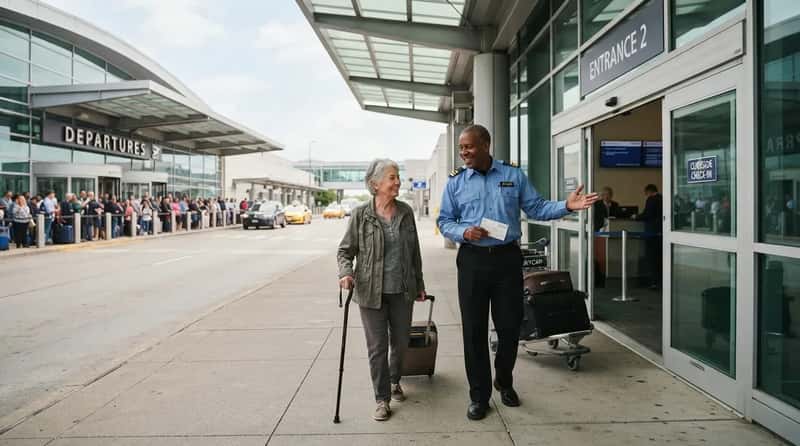
Every terminal has a “secret” curbside entrance that locals and regulars use, and skycaps are the ones standing right in front of it. While tourists funnel toward the main doors where lines wrap around stanchions, a skycap can wave a returning senior traveler toward a quieter entrance that leads straight to their airline’s counter. This single move alone can save 20 to 30 minutes before a flight has even started.
It’s not a secret they advertise, either. Skycaps tend to work the same terminal for years, sometimes decades, so they memorize the traffic patterns airlines never bother to explain to passengers. For someone over 60 managing a rolling bag and a cane, avoiding a crowded main entrance isn’t a luxury – it’s the difference between a calm start and an exhausting one.
#11 – They Catch Overweight Bags Before the Fee Ever Gets Charged
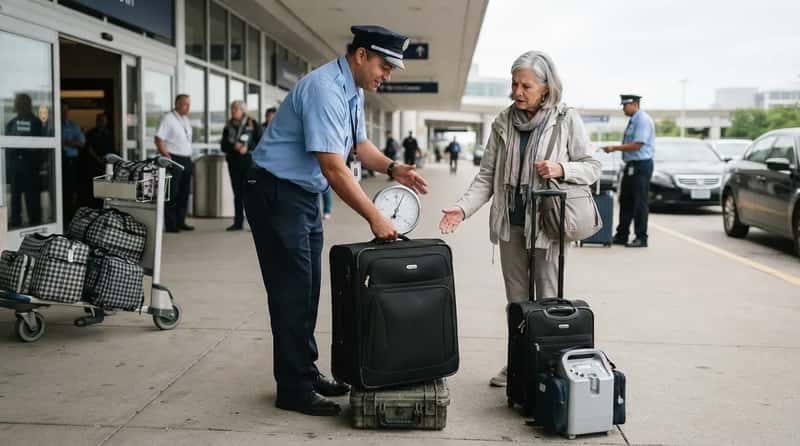
In the United States, tips of $3-5 per item are common, with higher tips being offered for extra services such as checking overweight or excess bags. That detail matters more than people realize: skycaps often have a quiet incentive to help travelers avoid the exact fee that would otherwise cost them $100 or more at the counter.
Frequent flyers over 60 who travel with medical equipment or extra clothing for long stays often overpack without realizing it. A skycap who weighs the bag curbside can suggest shifting a few items into a carry-on before it ever reaches the official scale inside. That’s a fee dodged entirely, sometimes without the traveler even noticing it almost happened. But that’s nothing compared to what we found about #10…
Fast Facts
- Overweight surcharges typically range from $50–$100 for bags 1–20 lbs over the limit, escalating to $150–$200+ for bags 20–50 lbs over.
- Crossing the 50 lb threshold can add $100–$150+ per direction on many carriers.
- Most carriers refuse bags exceeding 100 lbs regardless of willingness to pay.
- Most airlines charge $5–$20 more per bag if paid at check-in instead of online during booking – another reason a curbside heads-up pays off.
#10 – They Coordinate Wheelchair Pickup So No One Waits Alone
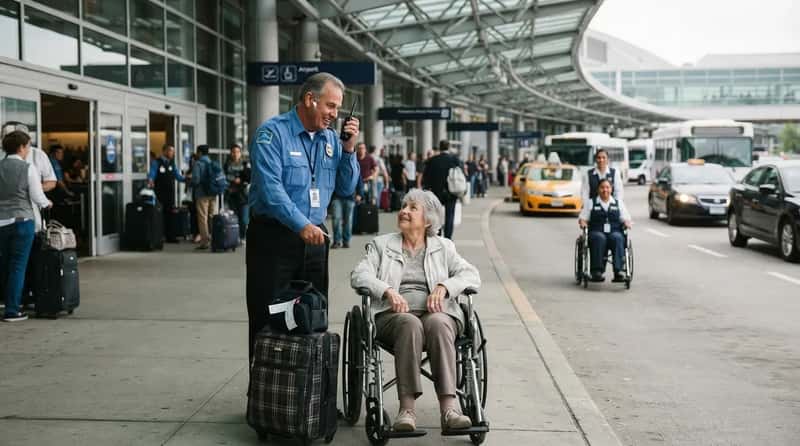
One of the most common fears among older travelers isn’t the flight itself – it’s being left stranded at a curb waiting for a wheelchair that never seems to show up. Skycaps who work the departure curb regularly know the wheelchair dispatch radio channel and can call ahead directly instead of leaving a passenger to wonder.
As part of flight assistance for the elderly, airports offer wheelchair service from drop off to the gate. A skycap who flags an attendant early, before a passenger even finishes checking bags, can shave ten or fifteen minutes off what would otherwise be an anxious wait. Most people don’t realize this coordination happens before they’ve even walked through the terminal doors.
#9 – They Print Boarding Passes Faster Than Any Kiosk
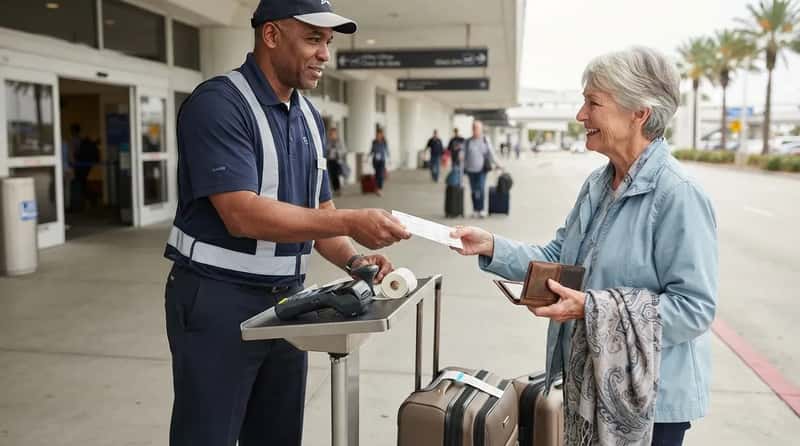
Self-service kiosks are supposed to speed things up, but for travelers who aren’t comfortable navigating touchscreens under pressure, they often do the opposite. A skycap is a uniformed airport porter stationed at the departure curb who weighs and tags luggage, prints boarding passes, and answers questions about check-in procedures, all from the curb.
That means a traveler over 60 who dreads fumbling with a kiosk screen can hand over an ID and get a printed pass in under a minute. It’s a small task that quietly eliminates one of the most stressful parts of the modern airport experience. Skip the tech, skip the stress – and skip straight to the next slide’s bigger discovery.
#8 – They Know the Terminal’s Actual Shortcuts
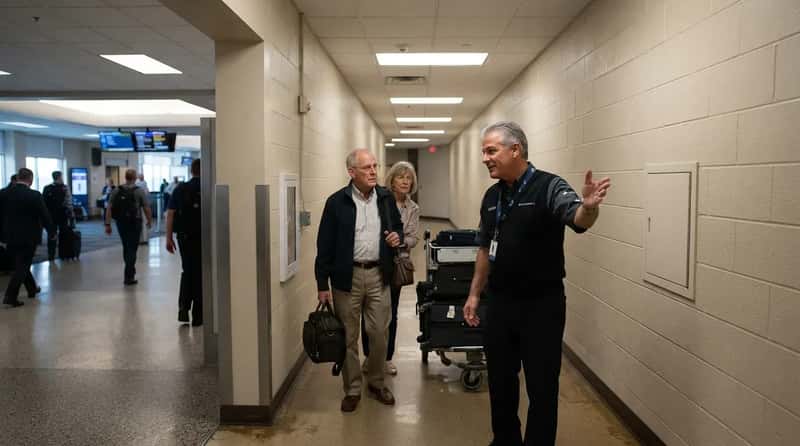
Airport maps posted on walls are rarely the fastest route between two points. Skycaps who’ve spent years at the same terminal know which hallway connects two concourses without a security re-check, or which elevator bank avoids the crowd near baggage claim.
For a frequent flyer with a tight connection or sore knees, this insider geography is worth more than any airline app. A quick verbal tip – “go left past gate 12, not through the main hall” – can turn a fifteen-minute walk into a five-minute one. It’s the kind of knowledge that never makes it onto an airport website.
#7 – They Tip Off Which Security Lane Is Actually Moving
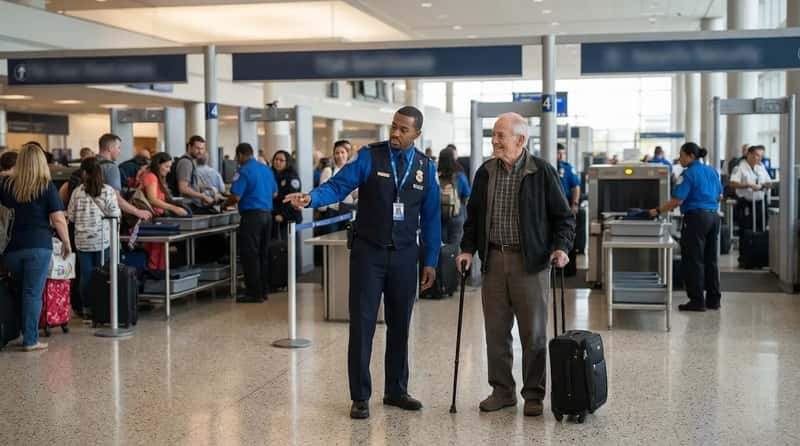
Security lines look identical from the outside, but they rarely move at the same pace. Skycaps stationed near the entrance watch these lines shift by the hour and often know which lane has fewer families, fewer first-time flyers, or a faster officer working the ID checkpoint.
That kind of real-time intel isn’t posted anywhere. A quick nod toward one lane over another can save a senior traveler a genuinely painful twenty-minute stand in place. It’s a small, almost invisible favor that most passengers never think to ask for.
At a Glance
- Airport security wait times can vary based on several factors, including the airport size, season, time of day and TSA staffing levels, typically 15 to 30 minutes but longer during peak travel.
- During normal security operations, the agency estimates that roughly 99% of passengers with PreCheck wait less than 10 minutes.
- New Jersey’s Newark Liberty International Airport has the longest average wait in the country at 23.1 minutes.
- Tuesdays and Wednesdays are usually slower, and mid-day is the slowest time all week at most checkpoints nationwide.
#6 – They Work Alongside TSA Cares Without Anyone Mentioning It
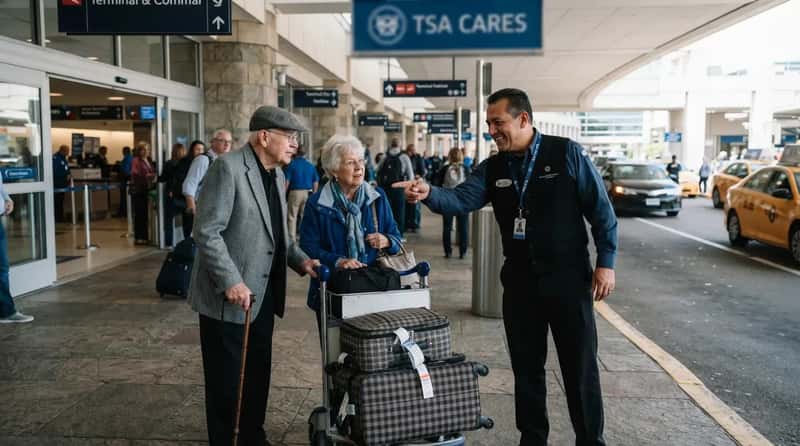
The TSA Cares program provides assistance to travelers with disabilities, medical conditions, and other special circumstances to ensure a smooth security screening experience. What fewer people know is that curbside staff and passenger support specialists often work in the same physical space, and a skycap can point a traveler directly toward that help before a passenger even realizes it exists.
TSA Cares offers free assistance to travelers with disabilities, medical conditions, and other special circumstances, including expedited screening for passengers 75 and older. A skycap’s quiet nod toward this program is often the very first step that leads a nervous traveler there.
They literally go into tears because they are so happy with our team and how much we comfort them.
TSA Cares team lead
#5 – They Handle Gate-Change Chaos Before It Becomes a Crisis
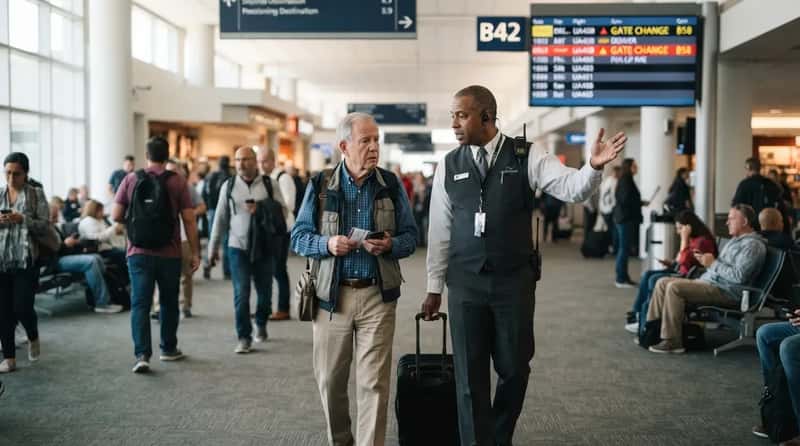
Gate changes announced over a garbled intercom are stressful for anyone, but especially for older travelers who may not catch the announcement or trust the app notification. Skycaps often hear about changes through radio chatter before they hit the departure boards.
A regular curbside worker who recognizes a returning traveler will sometimes flag them down mid-terminal just to say a gate has moved. It sounds small, but for someone already anxious about missing a flight, it can prevent a full-blown panic. That kind of attentiveness is rare – and it’s exactly why the next entry surprises so many people.
#4 – Regulars Get Remembered, and Remembered Travelers Get Faster Help
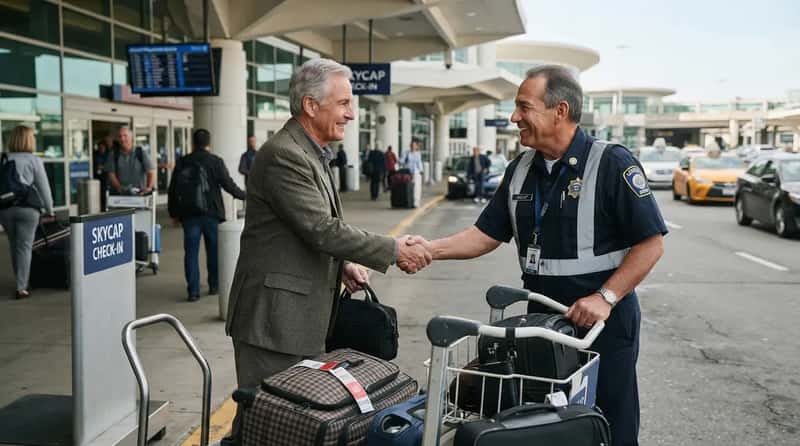
Here’s a slightly controversial truth: skycaps do treat familiar faces differently, and most airlines quietly accept that as part of how curbside service works. At some airports, curbside workers are independent contractors who buy into the position, and the spots are often passed down in families because a motivated worker can build significant income from tips alone.
That structure means loyalty runs both ways. A senior traveler who flies the same route monthly and tips consistently often gets remembered by name, and remembered travelers get pulled ahead, guided faster, and checked on more closely. It’s not officially part of the job description – it’s just how curbside culture actually works.
#3 – They Spot Mobility Struggles Before Anyone Asks for Help
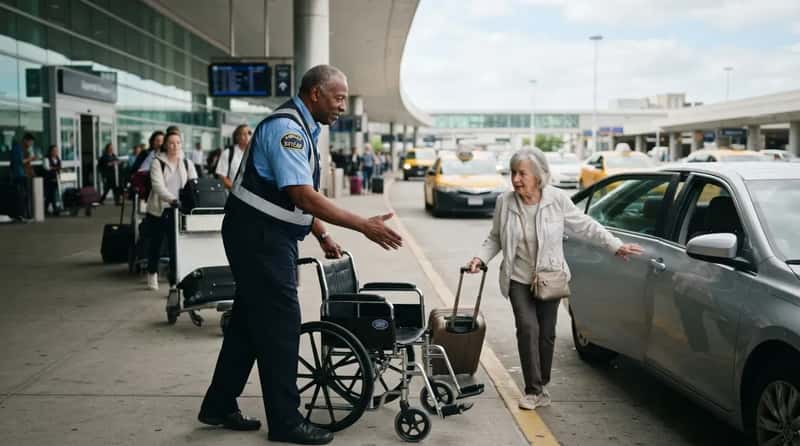
Many older travelers are reluctant to ask for assistance, even when they clearly need it. Experienced skycaps notice hesitation at the curb – a slow step off a car, a hand gripping a cart too tightly – and offer help before it’s requested.
Airport wheelchair assistance is designed to help travelers who have trouble walking long distances or standing for long periods, and it’s commonly used by seniors, people recovering from surgery, and travelers with chronic pain. A skycap who flags this early, rather than waiting for a passenger to ask, often prevents an uncomfortable, tiring walk that could’ve been avoided entirely. Most travelers never realize how much of this happens before they even say a word.
#2 – They Can Get a Traveler Gate-Side Minutes Before Boarding Closes
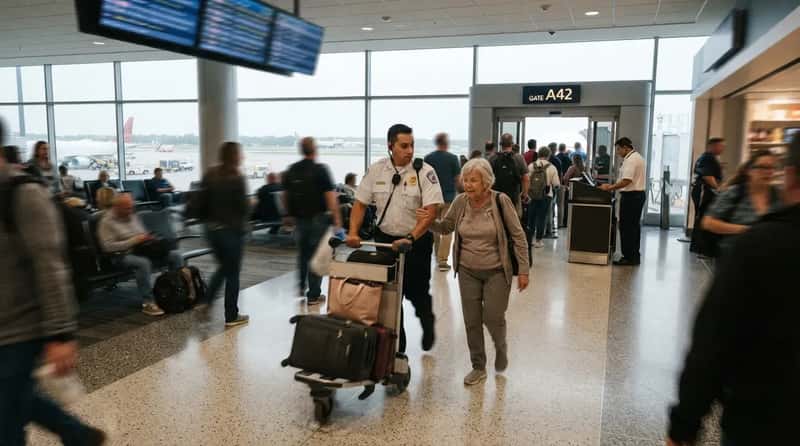
Tight connections are one of the most stressful moments in air travel, and they hit older passengers hardest. A skycap who knows a flight is boarding in twelve minutes can radio ahead, grab a cart, and personally walk a passenger through a shortcut most people don’t know exists.
Airlines can arrange gate-to-gate assistance for older travelers who may feel overwhelmed navigating a large airport alone, which can be especially helpful during layovers, terminal changes, or busy travel periods. That coordination between a curbside worker and gate staff is the quiet difference between missing a flight and making it with minutes to spare. It’s the kind of save that rarely gets mentioned but happens more often than most flyers assume.
Quick Compare
- Without a skycap: navigate the wrong entrance, guess at security lanes, and hope a gate agent notices you’re running late.
- With a skycap: a familiar face flags the right door, the right lane, and radios the gate before you’re even close.
- Net effect: the same afternoon, minus the panic.
#1 – They Turn a Draining Afternoon Into Genuine Free Time
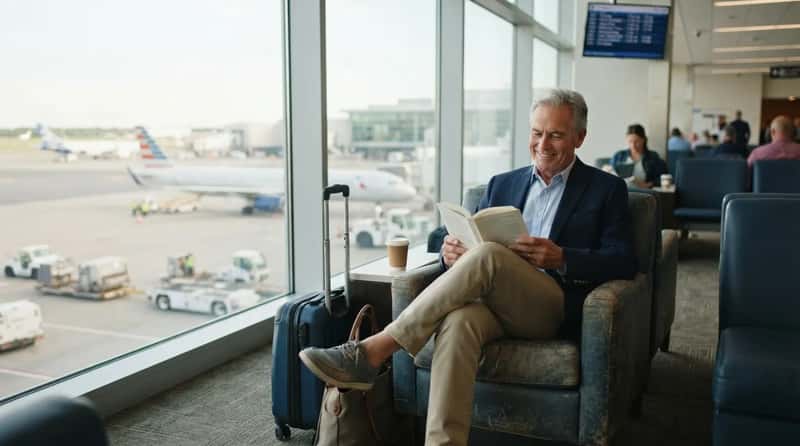
Add every one of these small saves together – the skipped lines, the avoided fees, the shortcuts, the early wheelchair calls – and the math is simple: a traveler who might’ve spent an entire stressful afternoon fighting the airport instead walks into their gate area an hour early with nothing left to do but relax.
Using skycap curbside check-in frees travelers to proceed from security directly to their departure gate without stopping at indoor check-in counters. For a frequent flyer over 60, that extra hour isn’t just convenient – it’s often the difference between arriving at a destination rested or arriving already exhausted. It’s the single biggest, least appreciated gift curbside service offers.
Why It Stands Out
- No single tip on this list feels dramatic on its own – that’s exactly why the combined effect surprises people.
- Every saved minute at the curb, the lane, or the gate compounds into real, usable downtime later.
- The traveler rarely notices the effort – only the calm that shows up instead of exhaustion.
None of this happens by accident, and none of it happens for free. Curbside workers in the US aren’t airline employees – they build their entire living from tips, which is exactly why a few dollars per bag buys far more than a printed boarding pass.
The real payoff is time: quiet, compounding, hour-saving time that most travelers never trace back to the person standing at the curb, wheelchair radio already in hand, three moves ahead of everyone else’s afternoon.