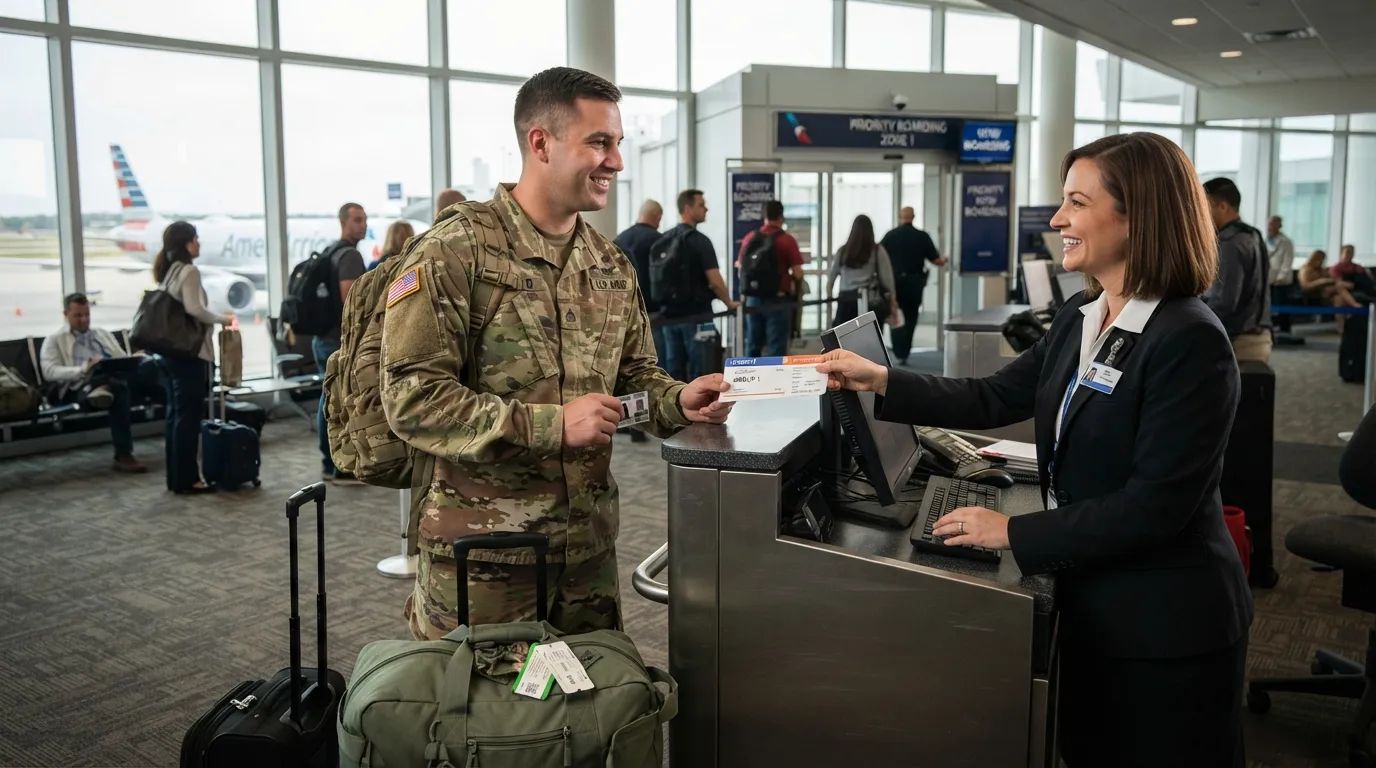
Everyone tells you the internet is the cheap way to book a flight, and the phone is for people who like waiting on hold for forty minutes. That advice is backwards more often than you’d think. A surprising number of airline fees only exist because a passenger clicked “confirm” online instead of talking to an actual human being.
A live agent can see things a checkout page never shows you: your status, your fare rules, your circumstances, sometimes even the weather forecast for your route. Some of the workarounds below are official policy that almost nobody asks about. Others only happen because a real person is looking at your situation instead of running you through an algorithm. Here’s what actually gets waived once you pick up the phone.
#13 – The $25 “Convenience” Charge That’s Really Just a Booking Tax
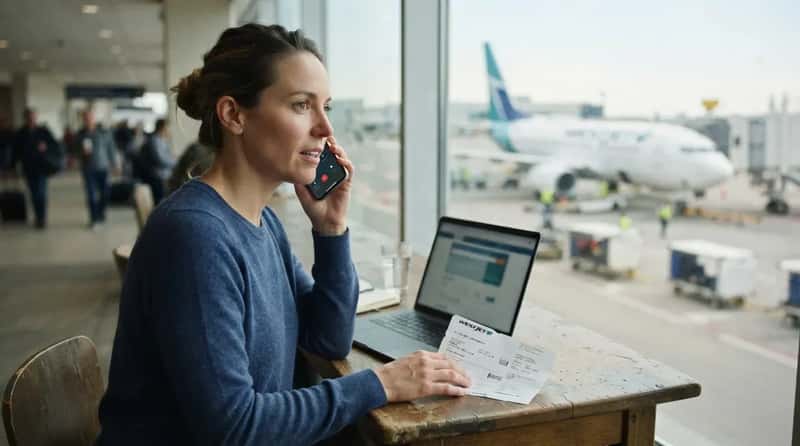
Several major carriers still slap on a flat fee simply for buying a ticket through a phone agent instead of the website, and most flyers assume it’s carved in stone. WestJet, for example, charges $25 to book a flight by phone. It sounds like a punishment for dialing a number, but insiders describe it as flexible under the right circumstances.
Changes made by phone often carry an almost identical charge, and this is where the real workaround lives. Tickets canceled or amended through a call center are typically hit with a nonrefundable $25 service fee, but that fee is routinely waived if the change happens within 24 hours of the original booking. Ask about that window before you hang up, because agents rarely bring it up on their own.
Fast Facts
- WestJet’s phone booking fee runs $25 per ticket, but the matching change fee often disappears inside a 24-hour window.
- United charges the same $25 phone fee, automatically waived for Premier Platinum members and above.
- Frontier and similar ultra-low-cost carriers can waive booking fees entirely for tickets bought in person.
- Breeze applies a separate “technology” charge to online and app bookings that can vanish at the airport counter.
#12 – Breeze Airways’ Sneaky Tech Fee, Erased for a Two-Hour Window on Tuesdays
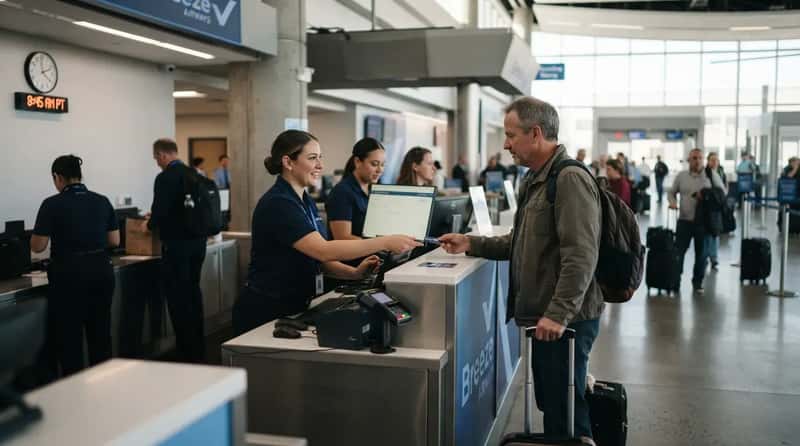
This one sounds almost made up, but it’s real, and it disappears under a very specific set of circumstances. Breeze quietly tacks a “technology” charge onto every booking made through its app or website, yet the airline has openly admitted it doesn’t have to stay on your bill.
Breeze’s own chief commercial officer has said travelers can often save money by booking directly at the airport instead. There’s a catch almost everyone misses: to qualify, you have to buy your ticket at the counter between 8:00 a.m. and 10:00 a.m. Pacific time, on Tuesdays only. Show up outside that narrow window and you’re paying the same fee as everybody who booked online.
#11 – Frontier’s Nearly-$50 Round-Trip Loophole
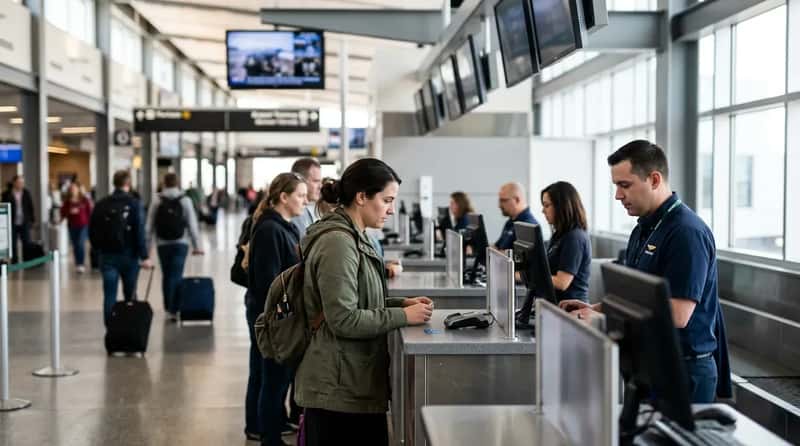
Budget airlines built their entire business model on nickel-and-diming every seat, bag, and boarding group, so it’s easy to assume the booking fee itself is untouchable. It isn’t. Frontier and several other ultra-low-cost carriers will waive that charge for travelers willing to buy their tickets in person instead of online.
Do the math and it adds up fast, sometimes saving close to $50 on a round-trip ticket once the fee disappears on both legs. The catch is that counter hours at some airports are limited, so this trick takes a little planning. Most flyers never bother because it feels outdated, which is exactly why it still works for the people who try it.
#10 – United’s $25 Phone Fee, Erased by One Membership Tier
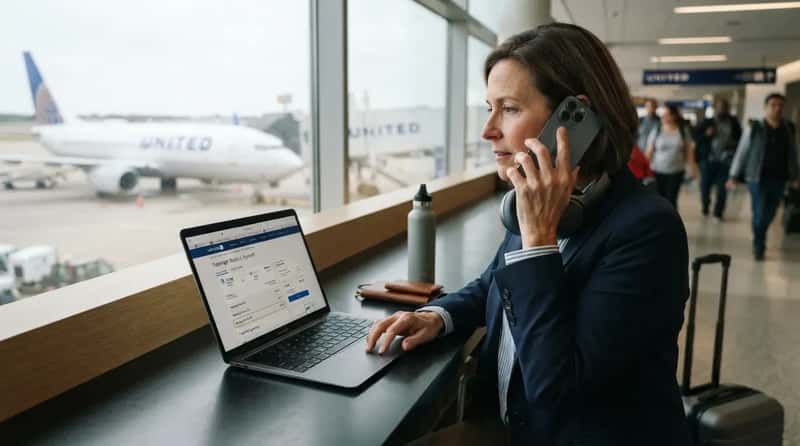
United is upfront about punishing travelers for calling instead of clicking, charging $25 per passenger for any ticket booked over the phone. The airline will not waive it just because your itinerary couldn’t be completed online, which frustrates plenty of flyers who assumed a technical glitch would count as an exception.
Status changes the entire equation. Premier Platinum members and above are never charged this fee at all, no matter how the reservation is completed. If you’re below that tier, there’s still a smart workaround: start the booking process online and only call to finish the actual ticketing step, which frequently sidesteps the charge entirely. Almost nobody thinks to split the process that way, but it works.
#9 – Alaska’s Hidden Fee on Award Bookings
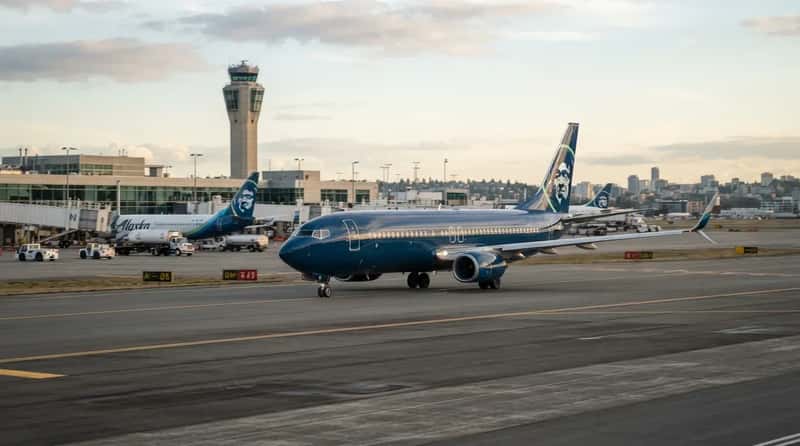
Frequent flyers love Alaska’s mileage program, and plenty of them are getting quietly charged without ever noticing. Alaska bakes a phone booking fee into award ticket reservations, and it usually doesn’t surface until the confirmation email lands in your inbox.
The fix is almost embarrassingly simple once you know it exists. Alaska waives every fee, including this one, for members at the MVP Gold and Gold 75K tiers of its Mileage Plan program. It’s a detail that rarely comes up unless a passenger asks the phone agent point-blank about their elite status before the call ends.
#8 – The International Ticketing Fee Third-Party Sites Never Mention

This charge sneaks onto international itineraries constantly, and almost nobody realizes it has nothing to do with what you booked and everything to do with where you booked it. Small processing and ticketing fees show up on international reservations all the time, ranging anywhere from roughly $15 to $38 depending on the airline and the platform.
The fix isn’t negotiation, it’s dialing the right number. Booking directly through the airline’s own call center instead of a third-party travel site frequently avoids the charge altogether. One travel insider described it as one of the few airline fees where the entire solution is switching who you call, not changing what you say, and agents almost never volunteer that unless you ask directly.
#7 – The Same-Day Change Fee That Status Travelers Never Pay
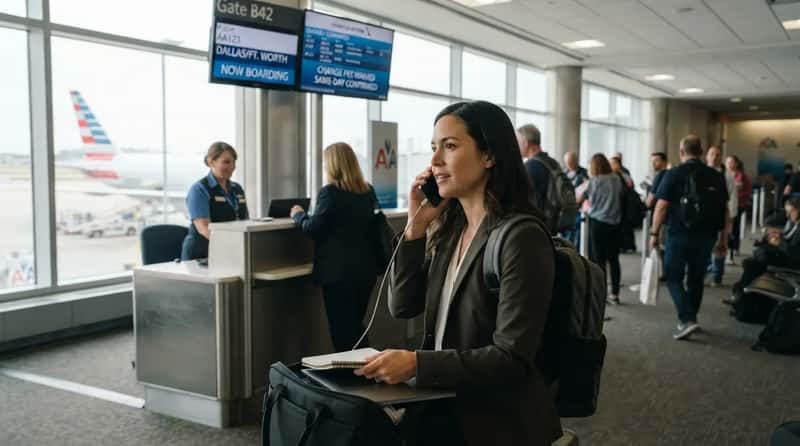
Same-day flight changes can cost real money in standard economy, unless you happen to mention the right two words on the phone. American Airlines offers free same-day confirmed changes to AAdvantage Executive Platinum and Platinum Pro members, along with any companions booked on the same reservation. Everyone else pays the standard fee by default, no questions asked.
Here’s the part most travelers never try: agents can sometimes extend a one-time courtesy waiver to non-elite passengers, especially when the original flight was delayed or oversold. Status matters most, but a calm, specific request beats a vague one nearly every time. That’s nothing compared to what happens next, at #6.
Quick Compare: Which Status Waives What
- United Premier Platinum and above: $25 phone booking fee waived automatically, every time.
- Alaska MVP Gold and Gold 75K: phone fees on award bookings disappear entirely.
- American Executive Platinum and Platinum Pro: free same-day confirmed changes, plus companions on the same reservation.
- No status yet? It’s still worth asking, since agents can occasionally grant a one-time courtesy waiver.
#6 – The Seat Fee That Was Never Actually Required
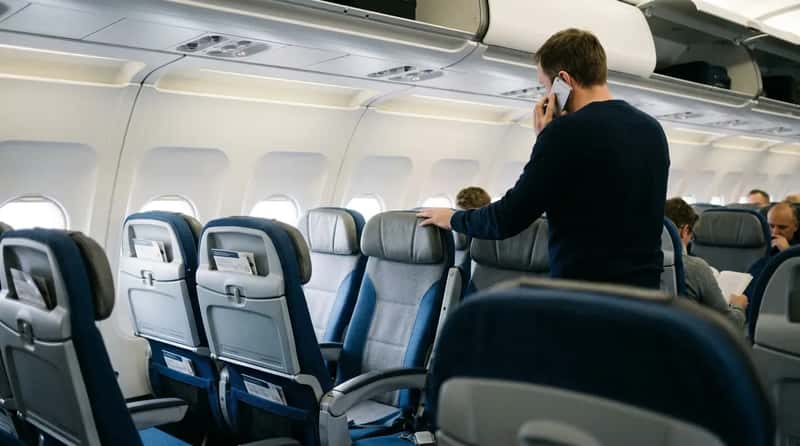
This is the fee that generates the most outrage online, and for good reason: it’s rarely mandatory in the first place. Seat-selection revenue alone topped $3 billion in 2023, up roughly 50 percent from 2018, according to a Senate subcommittee investigation into airline junk fees.
Federal rules now force airlines to say the quiet part out loud. Waiting works too, since every major carrier assigns any remaining open seat for free once check-in opens, usually 24 hours before departure. A quick call asking an agent to assign whatever seat is available often skips the online upsell entirely.
A seat is included in your fare. You are not required to purchase a seat assignment to travel.
Required airline disclosure
#5 – The 24-Hour Cancellation Rule Nobody Explains Properly

Most flyers assume free cancellation is a courtesy the airline is extending out of the goodness of its heart. It’s actually federal law, and phone agents tend to apply it far more consistently than confusing online refund portals do. The Department of Transportation requires airlines to let passengers cancel or change a ticket at no cost within 24 hours of purchase, as long as the ticket was bought at least seven days before departure.
Websites sometimes bury this option behind unrelated menus or simply fail to apply it automatically when you try to cancel. Calling customer service directly lets you confirm the policy applies and walk away without a single fee attached. A two-minute phone call frequently resolves what an online form fumbles for twenty.
#4 – Fares That Only Exist Because You Called

Some of the cheapest legitimate fares in the entire industry are completely invisible to anyone shopping online. Military and government fares almost always require a phone call to book, since these discounted tickets simply aren’t sold through the website at all.
Here’s the twist: that same phone call can accidentally trigger a separate booking fee if you’re not paying attention. Many carriers reserve phone fees for non-military bookings only, so asking directly whether one applies before you confirm the ticket often gets it waived outright. Skipping that one question is the single most common way flyers overpay by $25 for absolutely nothing.
#3 – The Priority Boarding Fee Almost Nobody Mentions They’re Owed
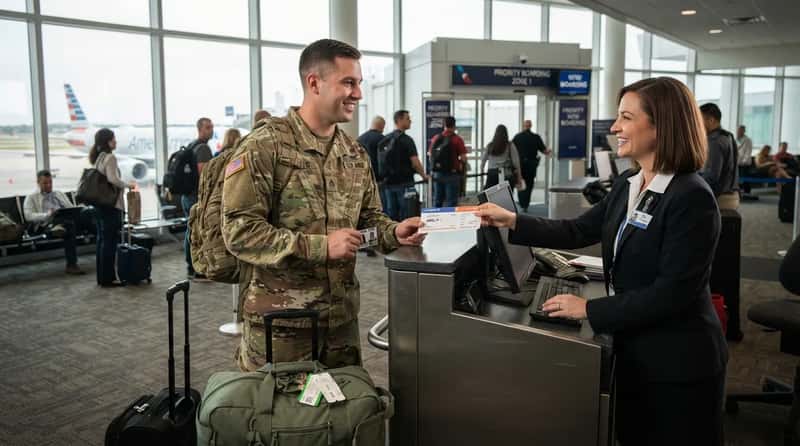
Priority boarding is marketed as a paid perk to nearly every traveler who boards a plane, but one specific group qualifies for it automatically and simply never says so out loud. Active duty military members receive free checked bags and board in the very first group without paying a dime, a benefit most airlines apply the moment it’s mentioned.
The gap between what people are entitled to and what they actually pay for is almost entirely about awareness, not eligibility. Plenty of eligible travelers still pay for priority boarding anyway because they never bring up their status at the counter or on the phone. A ten-second mention before departure day fixes what an online checkout page would happily charge for.
#2 – The Storm Waiver Airlines Never Announce Publicly
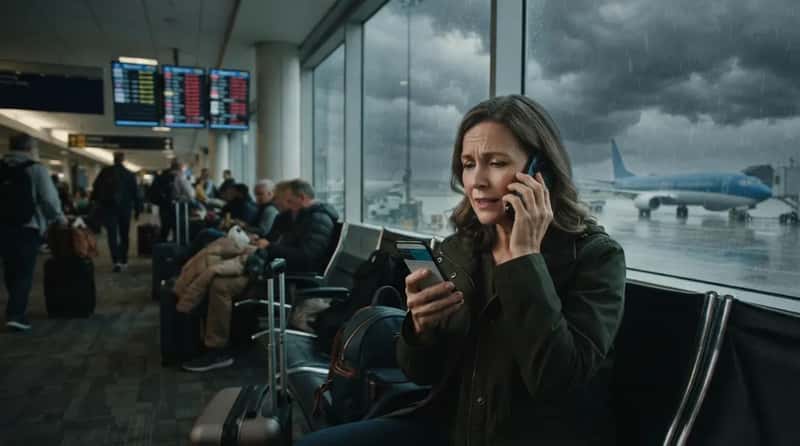
This is one of the most quietly controversial fee waivers in the industry, because airlines genuinely don’t want most passengers to know it exists before a storm hits. When bad weather is forecast, carriers often open a fee-free rebooking window days before any official news alert announces it.
The scale of these waivers can be enormous. JetBlue and other major airlines have waived change fees, cancellation fees, and sometimes fare differences entirely for travelers affected by a specific storm, and the charge tends to vanish the moment you name that storm advisory on the phone. Even bigger waivers have happened recently. During the 2025 shutdown-related flight cuts, United, American, Delta, and Southwest all offered refunds or travel waivers to customers regardless of whether their specific trip was actually affected. Some industry critics argue airlines should be required to advertise these windows publicly instead of letting phone agents apply them quietly, one caller at a time, and that’s a fair complaint that rarely gets any real attention.
#1 – Fees That Should Never Have Existed for Mobility Devices
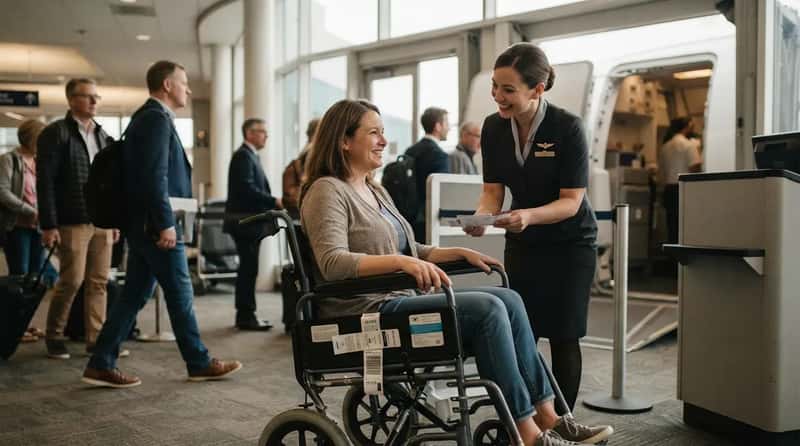
Of every charge on this list, this is the one that sparks the most outrage once people learn it was ever a question in the first place. Passengers traveling with mobility equipment are entitled to specific protections that gate agents and airline websites regularly fail to surface on their own. Anyone who needs an accommodation should notify the airline’s special needs line at least 48 hours before departure, which can unlock aisle seats, movable armrests, extra legroom, and adjoining seats for a companion providing assistance.
The financial side matters just as much as the comfort side. U.S. carriers are required to waive fees that other passengers routinely pay, including free transport for wheelchairs, scooters, and walkers, plus free seat selection when it’s needed for accessibility. None of this applies cleanly during a standard online checkout flow, and it almost always requires a direct call to the special assistance line before it’s attached to a reservation. For a system that claims to be accessible by default, that’s an unreasonable amount of friction to put on the travelers who need it most.
Worth Knowing
- Wheelchairs, scooters, and walkers must be transported free of charge on U.S. flights.
- Calling the special needs desk at least 48 hours ahead locks in aisle seats and companion seating.
- Movable armrests and extra legroom can be arranged at no added cost when requested by phone.
- These accommodations almost never apply automatically during an online checkout, no matter how the site is designed.
Add all thirteen up and a pattern becomes impossible to ignore: airline fee structures reward silence and punish assumption. A website shows you a sticker price and waits for you to accept it without asking a single question. A phone agent can see your status, your circumstances, and your fare rules in real time, and in a surprising number of cases, they’re allowed to make the charge disappear entirely.
None of this guarantees every call ends in a waiver. Agents have discretion, not an obligation, and a calm, specific request will always outperform a vague one. But the next time checkout throws an extra charge at you that feels arbitrary, remember that a five-minute phone call has quietly saved other travelers real money on almost every fee on this list.
Which one of these surprised you the most? Drop it in the comments, and if a phone agent has waived a fee for you that isn’t on this list, we’d genuinely love to hear about it.