You show up at 6:45 p.m., stomach growling, ready for that golden fried chicken or steaming mac and cheese – and the tray is bone dry. Again. It feels personal, like the store somehow planned around your bad timing, but it didn’t.
The real explanation is stranger and far more calculated than bad luck. Some of it really is basic food safety, and some of it has nothing to do with your health at all – it’s about protecting a number on a spreadsheet. Here’s the full countdown, ending with the one reason almost no employee will ever say to your face.
#13 – The Closing-Time Math Nobody Tells You About
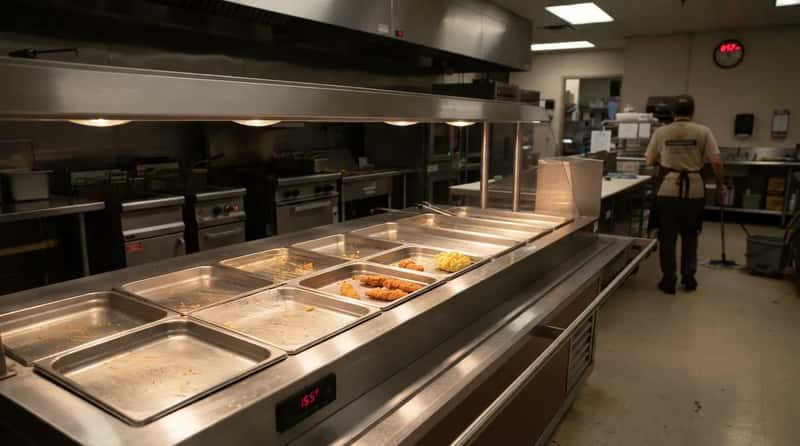
Kitchens quietly stop cooking big batches long before the doors actually close, and it’s not laziness – it’s arithmetic. Frying two dozen egg rolls with 30 minutes left on the clock means betting on customers who probably aren’t coming. Every uncooked batch of food is money the store never has to write off as waste at the end of the night.
That’s why the last hour before closing is the worst possible time to expect a full counter. Staff aren’t thinking about your dinner plans – they’re thinking about tomorrow’s shrink report and how much got tossed today. If the popular trays vanish like clockwork 45 minutes before close, that’s not a coincidence; the kitchen already checked out mentally.
#12 – Fried Food Dies Long Before It’s Pulled
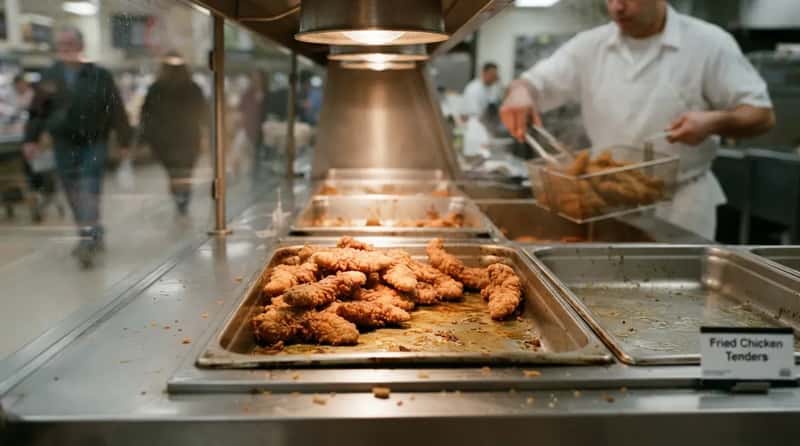
Fried food often gets pulled not because it’s technically unsafe, but because it’s failed in a completely different way: texture. Sitting under a heat lamp, the oil keeps slowly cooking and oxidizing, and within an hour or two it starts producing that stale, faintly bitter aftertaste nobody wants to bite into. Soggy, greasy tenders are a texture failure, not a safety one, but they still get pulled fast.
Kitchen staff know this better than anyone, so a tray that’s technically still hot enough often gets yanked early anyway. It’s one of the most common quality-control calls in food service, and it happens quietly, with zero announcement to the customer standing at the glass wondering where the chicken went.
#11 – The Four-Hour Clock That Beats the Crowd
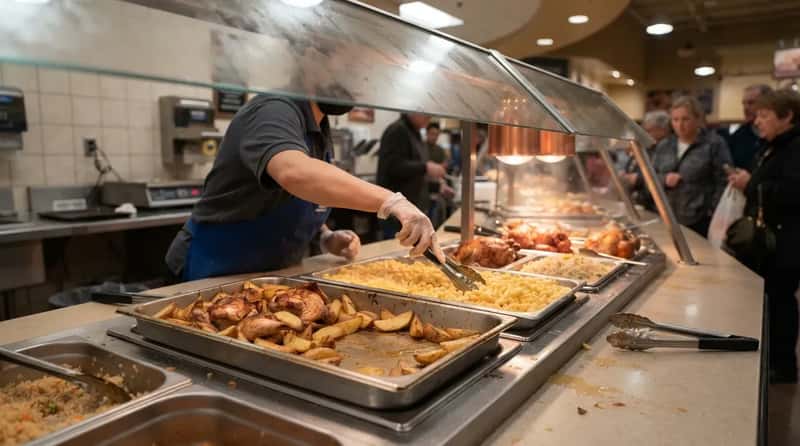
Most customers have no idea a literal countdown starts the second food lands on the counter. Under ServSafe guidelines, hot food can be held without active temperature control for up to four hours total, as long as it started at 135°F or higher and got labeled with a hard discard time the moment it went on display.
That clock doesn’t care how popular the tray is or how few people got a plate. Once four hours pass, the food is gone – sold or not, hungry crowd or empty lobby. It’s a hard rule, not a suggestion, and it’s the single biggest reason a tray that looked perfectly fresh an hour ago can disappear without warning.
Fast Facts
- Hot food must start at 135°F or higher the moment it hits the display.
- Total hold time without active temperature control tops out at four hours.
- A hard discard time gets written down the second the tray goes public.
- Once that four-hour window closes, the food is pulled – no exceptions for demand.
#10 – Why Workers Won’t Just “Top Off” the Tray
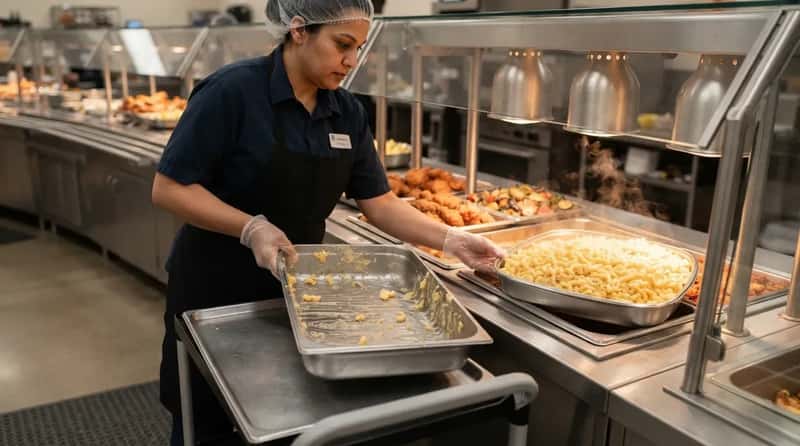
A lot of people assume employees can simply pour new food over the old to keep a tray looking full. They legally shouldn’t. Food-safety guidance is specific here: swap in a whole new platter instead of stacking fresh food on top of food that’s already been sitting under the lamp.
Mixing batches erases the discard clock completely – nobody can tell anymore how long the oldest piece at the bottom has actually been out. So instead of a slow trickle of fresh food, you get that frustrating stop-start pattern: empty tray, long wait, sudden full tray. It looks inefficient, but it’s the rule working exactly as intended.
#9 – The Reheat Rule That Kills a Quick Refill
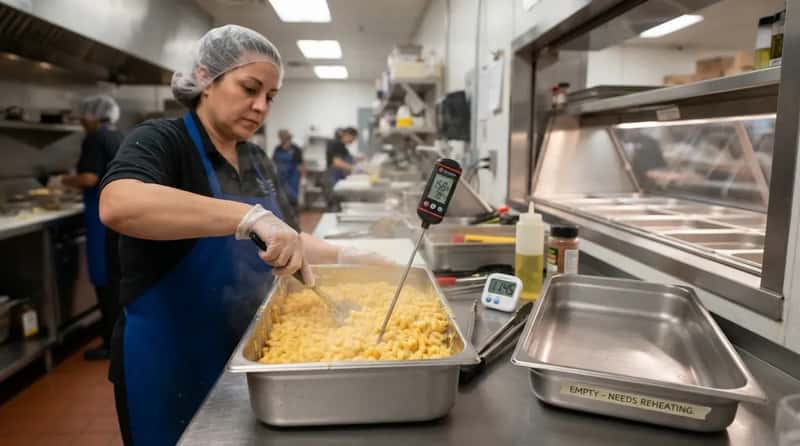
It seems obvious: if the tray’s gone lukewarm, just heat it back up. Legally, that’s not how it works. Once food drops below the safe holding temperature, staff can’t just warm it slightly – the item has to be fully recooked to 165°F before it’s allowed back on public display.
That’s not a quick reheat, it’s basically starting over from scratch, and it can eat up 15 to 20 minutes per pan depending on the item. So a tray that “just needs warming” is often sitting empty simply because the real fix takes actual time, not because nobody behind the counter cares.
#8 – When the Kitchen Is Running on Half a Crew
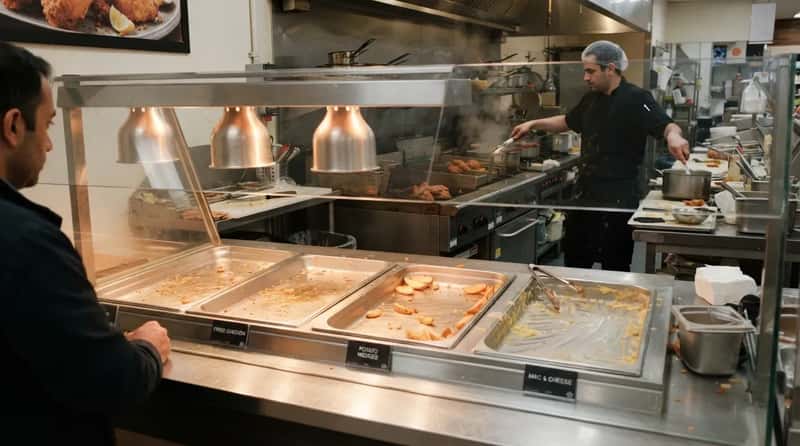
Nobody wants to admit this mid-shift, but a thin crew is one of the biggest reasons a counter stays empty far longer than it should. One cook can only fry, plate, and watch temperatures on so many pans at once before something in that chain has to give.
Food-safety plans typically require temperature checks every couple of hours at minimum, on top of all the actual cooking that still needs to happen. When a store is short-staffed, that monitoring job often loses out to just keeping the fryer line moving, and an empty tray sits untouched because nobody had a free hand to restock it.
#7 – One Truck, One Batch, No Backup
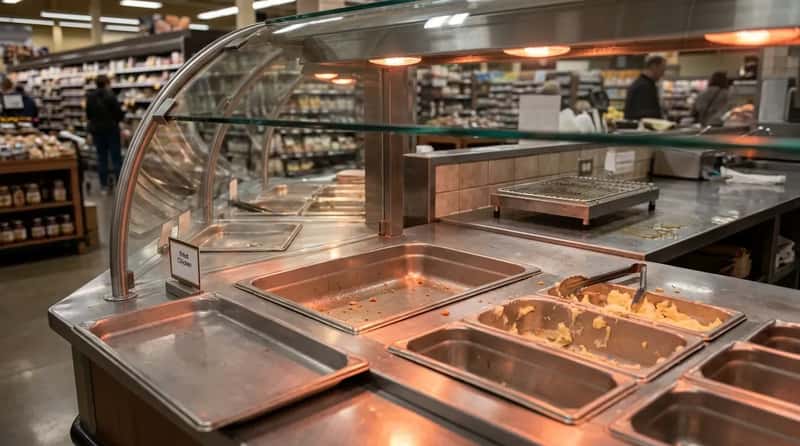
Grocery stores and buffets don’t keep a mountain of raw chicken or shrimp stashed in the back just in case. Most hot counters are built around a single daily delivery and a prep batch calculated from average sales history, not worst-case demand on a random Tuesday.
When demand spikes past that number – a Friday rush, a local event, an unexpected holiday crowd – there’s often no second batch waiting in the wings. It’s not that the kitchen is hoarding extra food somewhere; there simply isn’t more raw product to cook until the next truck arrives, sometimes a full day later.
Worth Knowing
- Most counters run on one daily delivery, not a stockpile in the back.
- Prep batches are sized to average sales, not the busiest possible day.
- A single local event or holiday can wipe out an entire day’s batch fast.
- The next truck may not show up until the following business day.
#6 – The Inspector Walks In, and Perfectly Good Food Gets Pulled
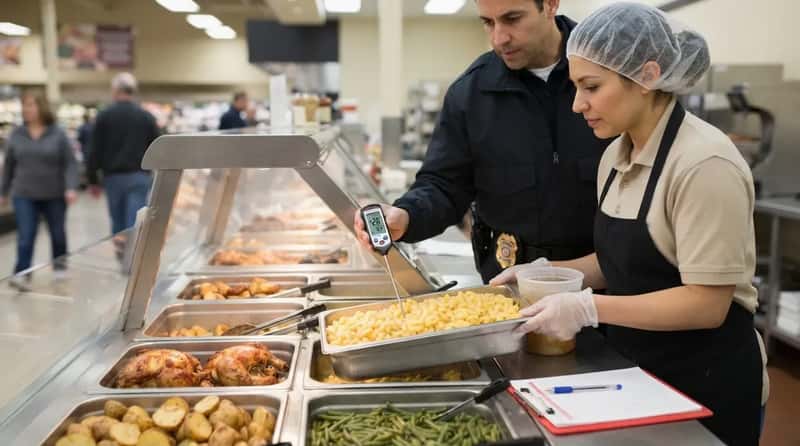
Here’s the part almost no customer ever sees: sometimes food gets tossed even though it looks and smells completely fine. Regulators are strict for a real reason – CDC data released in March 2025 found that over a third of foodborne illness outbreaks between 2020 and 2022 involved food that sat too long in the temperature danger zone.
Because of numbers like that, many managers train staff to pull anything borderline the second a thermometer reads even one degree low, rather than risk it. An entire tray can vanish over a single failed temperature check, not because anything was ever visibly wrong with the food itself.
#5 – Weekends Blow Through the Math Every Time
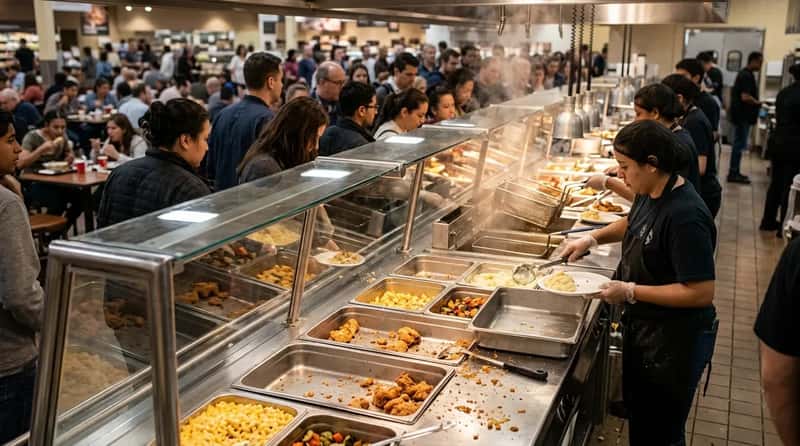
Prep teams build their cooking schedules around historical averages, but averages fall apart fast the moment a weekend hits. A busy Saturday lunch rush can burn through what was supposed to be an entire day’s supply in under two hours flat.
Unlike a sit-down kitchen that cooks to order, a hot counter cooks ahead of demand – it’s essentially a bet on how many people will walk through the door. When that bet is wrong, which happens constantly on weekends and holidays, the counter runs bone dry by mid-afternoon with no fast way to catch back up.
Quick Compare
- Typical weekday lunch: steady, spread-out sell-through across several hours.
- Weekend lunch rush: a full day’s prepped supply can disappear in under two hours.
- Weekday restock: usually keeps pace with slower, predictable demand.
- Weekend restock: often can’t catch up once the early rush hits.
#4 – Break Time Creates a Blind Spot at the Counter
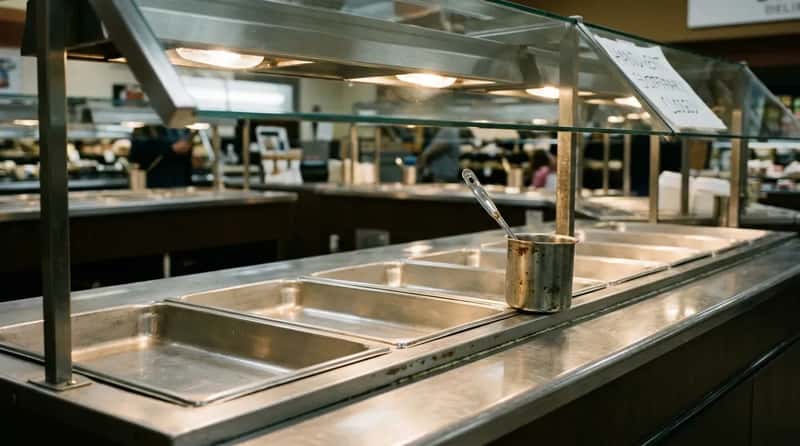
Shift changes are one of the most overlooked reasons a tray can sit empty for twenty extra minutes. Whoever normally restocks and checks temperatures on the hot bar can’t do it while they’re on a mandated break, or while handing things off to someone who hasn’t caught up yet on the day’s chaos.
Health codes require stations to be actively monitored, with utensils checked and swapped regularly throughout a shift. During a handoff, that monitoring quietly lapses for a few crucial minutes – exactly the window when a tray crosses its discard time and nobody’s there yet to replace it.
#3 – Managers Would Rather Toss It Than Risk It
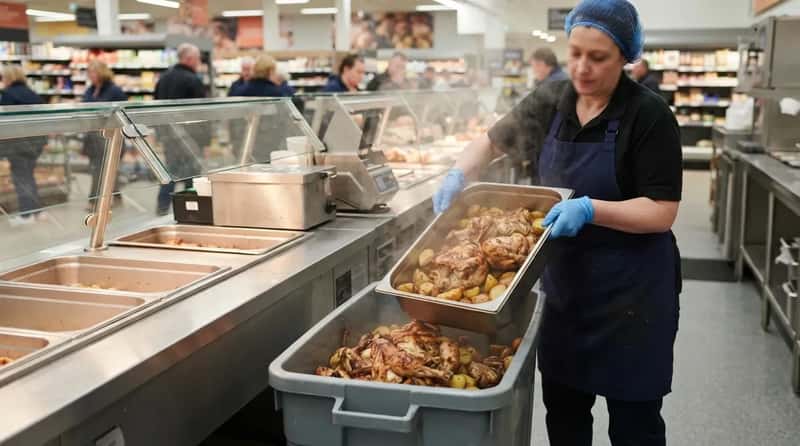
Most people assume food only gets thrown away once it’s obviously gone bad. In reality, the safer move is almost always to toss anything even slightly questionable rather than gamble on it. Food-safety training is blunt about this: harmful bacteria isn’t something you can see, smell, or taste, so “probably fine” simply isn’t good enough for anyone making the call.
That mindset means managers routinely dump entire trays that are likely still perfectly safe, simply because guessing wrong is too expensive, legally and reputationally. It’s genuinely frustrating for a hungry customer standing there watching it happen, but it’s the entire point of the rule existing in the first place.
#2 – The Popular Item Always Vanishes First
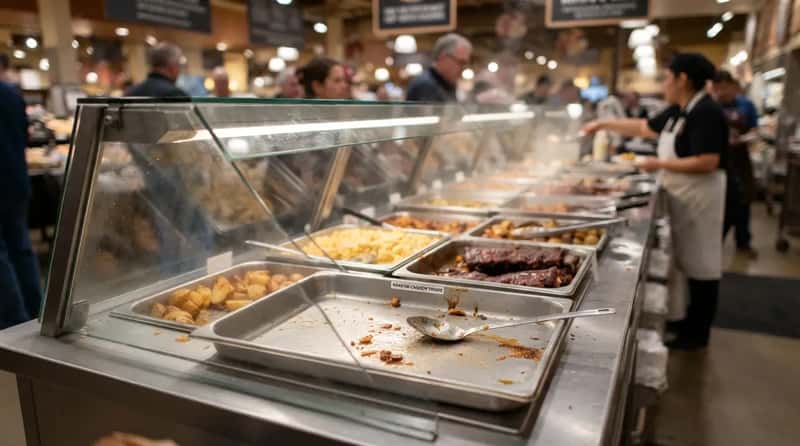
Here’s a pattern almost everyone has noticed but nobody quite says out loud: the single best item on the counter always disappears first. It’s not bad luck, it’s just crowd behavior in action. The tastiest tray gets scooped by the most people, so naturally it empties fastest, especially in that last hour before close.
Food-safety experts actually point to this pattern as a good sign, not a bad one. High turnover at a busy, reputable spot generally means fresher food overall, so the empty tray annoying you right now is, ironically, proof the place is doing brisk, safe business.
Why It Stands Out
- The fastest-emptying tray is usually the one with the best real turnover.
- Heavy customer traffic naturally shortens how long any single batch sits out.
- Food-safety guidance actually treats quick sellouts as a freshness signal.
- A store that consistently runs out early is often the safer bet, not the stingier one.
Look for cleanliness and confirm the source is reputable, but also observe the buffet itself – high traffic usually means fresher food, because items don’t sit around long enough to become a hazard.
USDA Food Safety and Inspection Service consumer guidance
#1 – Running Out Is Sometimes the Plan, Not the Mistake
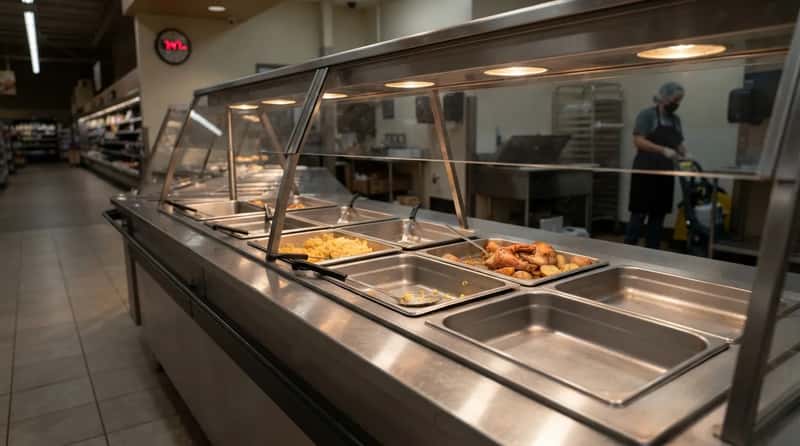
This is the one nobody at the counter will ever admit out loud: some hot bars are intentionally under-stocked toward the end of service, on purpose, every single day. Overproduction guarantees waste, and waste eats straight into the food-cost percentage every manager gets judged on at the end of the month.
So instead of risking leftover trays that have to be tossed anyway under that same strict four-hour hold limit, many stores deliberately cook slightly short rather than slightly long. That empty counter at 7:45 p.m. usually isn’t a supply failure at all – it’s cost control working exactly as planned, quietly dressed up as bad luck.
Put it all together and the empty hot counter stops feeling random. It’s federal holding-time law, staffing gaps, oxidized fry oil, and quiet cost math, all stacked on top of each other, and almost none of it ever gets explained to the person standing there with an empty plate.
Next time the tray’s dry, remember it’s rarely just one reason – it’s usually two or three of these colliding at once. Which one surprised you the most?