Most first-time cruisers assume the excursion desk is the friendliest place on the ship. It isn’t. It’s a sales counter with a nice uniform, and the crew standing behind it knows things they’re never actually paid to volunteer.
Talk to enough veteran crew members off the clock, and a pattern shows up fast: the smartest port days aren’t planned on embarkation morning, they’re locked in weeks or months earlier by guests who simply asked the right question first. Here’s what insiders actually say once someone finally asks.
#13 – The Excursion Desk Exists to Sell You Something, Not to Warn You
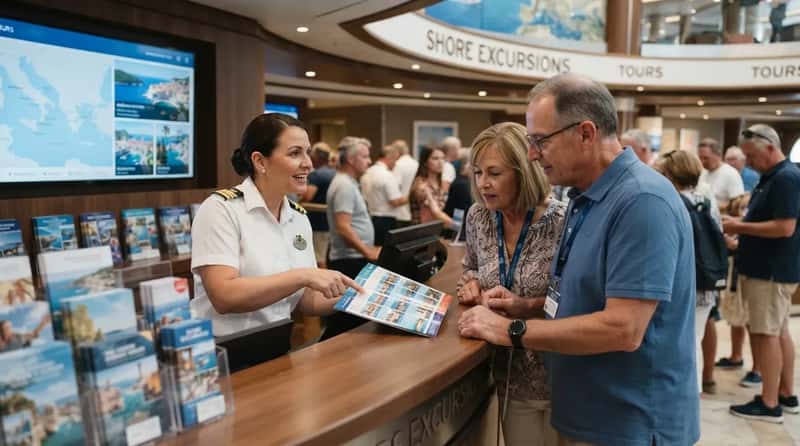
The staff behind the shore excursion counter have a quota, and quotas shape what gets recommended first. That doesn’t make anyone dishonest, but it does mean the “best” tour on the printed list isn’t always the best fit for your knees, your budget, or your pace.
Crew members who’ve worked a route for years tell a different story entirely. The ones who’ve docked in that port twenty times are under no obligation to push the flashy option. Ask a bartender, a cabin steward, or a longtime officer which tour they’d actually book for their own parents, and the answer almost never matches the glossy brochure.
#12 – Waiting Until Boarding Day Is the Single Costliest Mistake

Plenty of guests over 60 plan to “decide once we’re on the ship.” Crew members quietly hope you don’t. Waiting until boarding day to book excursions is the single biggest rookie mistake, and it’s not close. By then, the best time slots and any early-booking pricing have already vanished.
The math only gets worse for the most popular experiences. Alaskan helicopter glacier tours, swim-with-stingrays trips in Grand Cayman, and private cooking classes in Tuscany can sell out four to six months before the sailing date. Guests who book the same week they reserve their cruise consistently get first pick. Everyone else gets whatever is left.
Fast Facts
- Alaskan helicopter glacier tours often sell out 4 to 6 months ahead
- Grand Cayman stingray swims fill up on that same early timeline
- Tuscany private cooking classes are frequently gone by then, too
- Booking excursions the same week as the cruise gets first pick
#11 – Those “Easy, Moderate, Strenuous” Labels Aren’t Standardized

Cruise staff rarely correct guests who assume difficulty ratings mean the same thing across every tour operator. They don’t. Those labels are self-reported by each operator, not regulated across cruise lines, which means one company’s “moderate” hike is another’s uphill scramble with loose gravel and no shade.
The real details are usually buried, not hidden. Excursion descriptions list stair counts, terrain type, and minimum fitness level, but it’s almost always tucked into the last paragraph everyone skips. Staff can pull exact step counts and gradient details if you ask directly, yet almost nobody does before clicking “book.”
#10 – Booking the Last Tour of the Day Gets You a Different Guide Entirely

Guides on the 8 a.m. departure and guides on the 3 p.m. departure are technically the same people, but they behave nothing alike. Most first-timers grab the earliest morning slot, assuming more hours in port means more value. Veteran cruisers have figured out that the last excursion of the day comes with something money usually can’t buy: a genuinely relaxed guide.
Morning tours run on a rigid countdown, with every stop capped and every detour cut short to stay on schedule. By the final tour of the afternoon, that pressure eases, and guides tend to linger longer at sites and actually answer the questions people ask. The tradeoff is a thinner buffer before the ship departs, but longtime cruisers say it’s almost always worth it.
#9 – Shore Excursion Credit Is Basically a “Use It or Lose It” Trap

Guests booking through a travel agent or promotional package often get a per-day excursion credit, and staff know most people misunderstand how it works. Some cruise lines and travel agents offer this credit as a booking perk, often around $50 applied to each day in port.
The catch rarely gets explained clearly at the time of booking. You almost never get anything back for unused shore excursion credit. Guests who skip booking something for a given day simply forfeit the money, which is exactly why crew nudge early planners to schedule at least one excursion per port instead of “deciding later” on the ship.
Worth Knowing
- Per-day credit is often around $50 toward that day’s tour
- Unused credit typically doesn’t roll over or get refunded
- Skipping a booked excursion for a port forfeits that day’s credit
- Crew suggest booking at least one tour per port to use it
#8 – Groups of Four or More Can Beat the Ship’s Own Prices

Cruise staff won’t always volunteer this, but private, independently arranged tours can undercut the ship’s own excursion menu for larger travel parties. A private shore excursion lets your group travel alone rather than in a crowd, and for parties of four or more, it can often be arranged for less than the cost of the equivalent cruise line tour.
The tradeoff is real, though. The ship’s guarantee that it won’t leave without its own tour buses doesn’t extend to independent bookings, even when delays are unforeseeable. For guests over 60 traveling with a spouse and another couple, that savings-versus-safety-net tradeoff is worth weighing carefully before booking outside the ship.
#7 – The Senior Discount Is Real, But It’s Never Automatic
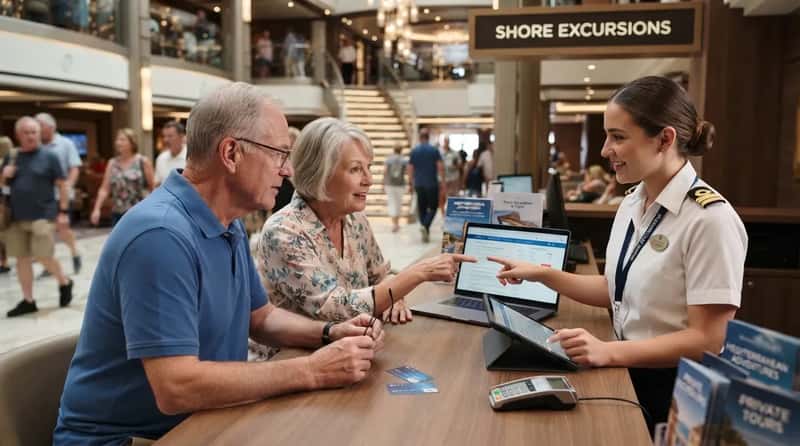
Many guests over 60 assume their age alone triggers a lower fare. It doesn’t, and crew rarely correct that assumption unless someone asks directly. Passengers aged 55 and older can receive special pricing on select sailings and select pre-cruise packages, but “select” is doing a lot of work in that sentence.
The fine print matters more than the headline. Senior savings usually can’t be combined with other promotions or military and first-responder discounts, and whether a specific sailing even qualifies is something you have to ask about at booking. Guests who book during Wave Season and specifically request senior pricing tend to land the better rate. Guests who assume it’s automatically built in usually don’t.
#6 – Accessible Cabins Vanish Almost a Year Before Anyone Notices
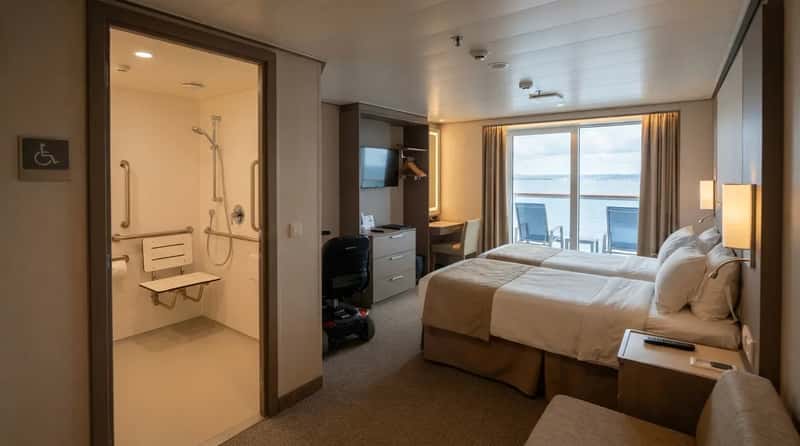
This one surprises even experienced cruisers. Accessible staterooms make up only a tiny sliver of any ship’s inventory, roughly 3 to 5 percent fleet-wide, and demand for them is intense. On popular routes, they can be gone months before the sailing date even shows up on most people’s radar.
Crew members who field these bookings say the biggest regret they hear from older guests is one word: waiting. Most ships have a genuinely limited number of accessible staterooms, so booking early is more than just advice, it’s practically a requirement if you need one. On popular Alaska or Caribbean sailings, “early” can mean nearly a year out, not a few months.
At a Glance
- Accessible staterooms make up roughly 3-5% of fleet-wide inventory
- Popular Alaska and Caribbean sailings can sell out nearly a year out
- Waiting is the single biggest regret crew hear from older guests
#5 – There’s a Quiet “Gentleman Host” Program on Certain Luxury Lines

Few first-time cruisers have ever heard of this, and staff rarely bring it up unsolicited. Several upscale lines maintain a discreet companion program built specifically for solo older women. Carefully screened hosts are made available for dining, dancing, onboard activities, and even accompanying women on shore excursions.
Cruising should feel like an adventure, not an obligation to travel alone when you’d rather not.
Common sentiment among solo senior cruisers, per longtime cruise staff
The program isn’t fleet-wide, which is exactly why it stays under the radar. It’s offered on lines like Crystal Cruises, Cunard Line, and Holland America Line. Solo travelers over 60 who book these specific lines early and ask their travel consultant about it tend to get matched with hosts for both onboard evenings and select shore days, a detail that rarely appears in mainstream marketing.
#4 – Accessible Excursions Exist in Fewer Than Four Dozen Ports Worldwide
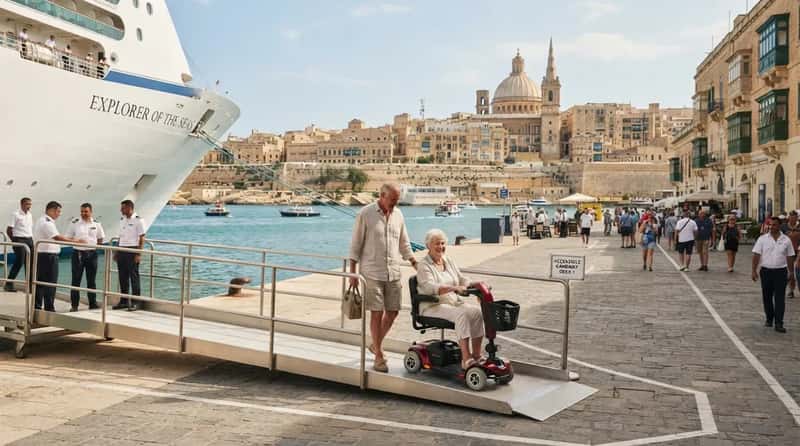
Guests who need mobility-friendly tours often assume every port has an option. It doesn’t work that way, and the window to arrange one is tighter than most people expect. Accessible shore excursions are available on demand in only about four dozen ports across the Caribbean, Mediterranean, and northern Europe, and they require completing a separate accessible excursions form.
Timing matters enormously here, and most guests find out too late. Cruise lines typically ask that the Access Desk be notified at least 90 days ahead for interpreters and 45 days ahead for other needs. Booking that early can feel excessive to first-timers, until they discover the alternative is no accessible option at all in that port.
#3 – Seniors Now Make Up More of the Ship Than You’d Think

This shifts which excursions get scheduled first and which sell out fastest, and crew members notice it long before passengers ever do. AAA projects that 19 million Americans will cruise in 2025, marking the third consecutive year of record-breaking passenger volume, with seniors representing roughly 37 percent of all travelers on board.
That volume is quietly reshaping the entire industry. Cruise companies serving the U.S. market have been improving ship accessibility well ahead of federal requirements, largely because of how important the senior market has become. Guests over 60 who book early aren’t a niche anymore, they’re a big enough share of every sailing that the best slower-paced, mobility-friendly tours get claimed fast.
#2 – Wave Season Is the Real Insider Window Nobody Explains Clearly

Crew and travel consultants both quietly point to the same few months every year. The best cruise deals tend to show up during Wave Season, January through March, when many lines offer their strongest pricing. Booking then doesn’t just save money on the cabin, it also opens up first access to the excursions everyone else will be fighting over by summer.
Off-peak sailing dates carry the same quiet advantage. Repositioning sailings or shoulder-season departures in late April or early November tend to be lighter on crowds and gentler on the wallet. Guests who combine a Wave Season booking with a shoulder-season sailing routinely get first pick of both cabins and shore excursions before the calendar even fills in.
Quick Compare
- Wave Season (Jan-March): strongest fare deals, first pick of excursions
- Shoulder season (late April / early November): lighter crowds, gentler pricing
- Both combined: best odds at cabins and shore tours before summer rush
#1 – Tender Ports Can Cancel Your Entire Shore Day Overnight
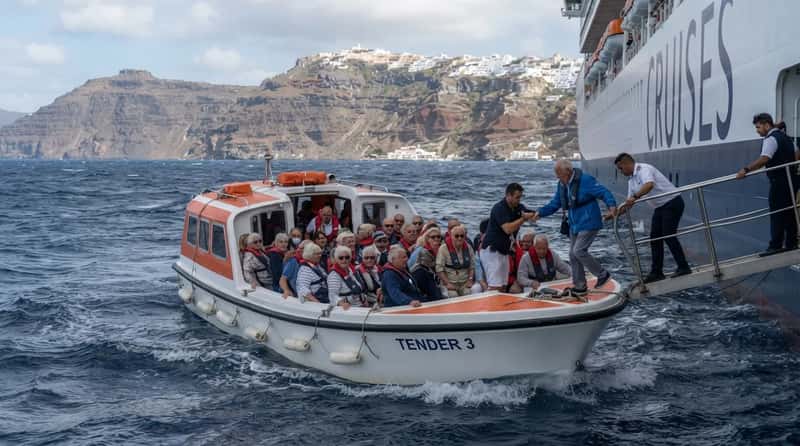
This is the one crew members hate explaining, because there’s no good way to soften it. At ports without a dock, passengers ride small boats called tenders to reach shore, and that system has a hard limit. Wheelchair users, in particular, can sometimes be unable to go ashore at all when seas are rough, winds are high, or the shore dock is inaccessible.
The decision isn’t made weeks in advance. It’s made the night before, in a port meeting most guests never even attend, where the line announces whether the tender transfer is feasible at all. Guests over 60 who book early and specifically choose dock-only itineraries, sometimes skipping bucket-list ports like Santorini or Grand Cayman if mobility is a real concern, sidestep the single most heartbreaking surprise in cruising: waking up at the port they saved years for and being told, hours before arrival, that they’re not getting off the ship.
None of these thirteen secrets require luck or a special connection to crew. They require asking questions before the ship ever leaves the dock, about accessible cabins, tender ports, senior pricing fine print, and which time slot actually gets you the more generous guide. The guests who book early and ask anyway are the ones who come home with the stories everyone else missed.