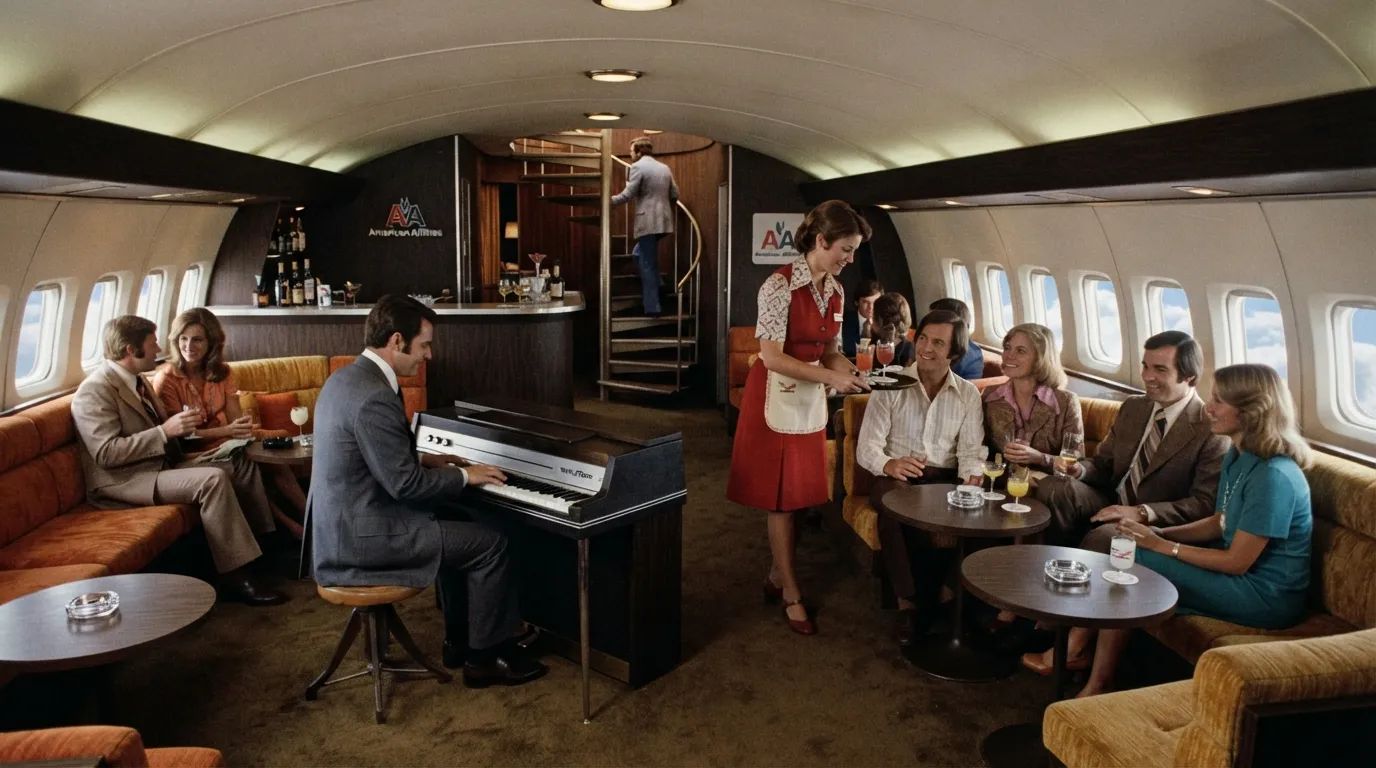
Most people picture the golden age of flying as white gloves, fancy hats, and dressing up for the trip. That’s the postcard version. The real luxury of the 1970s was everything the ticket price quietly covered: bags, seats, meals, drinks, and even cigarettes, all bundled into one fare.
Then the rules changed, and the extras started slipping away one by one, often without a single announcement. A few of them you’ve probably never thought to miss. One of them still sounds too wild to be true.
#13 – Your Suitcase Rode for Free, and Nobody Thought Twice
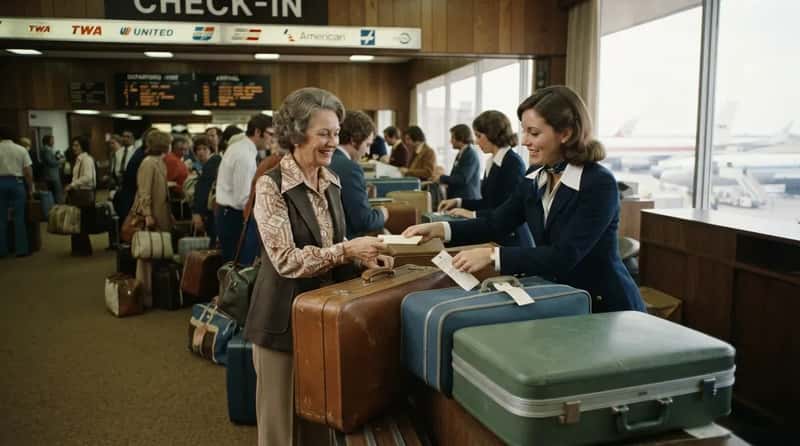
Checking a bag used to be as ordinary as buckling your seatbelt. Before the industry was deregulated in 1978, bags, meals, and drinks were all folded into the ticket price. Nobody was weighing suitcases at the counter. Pack the whole closet? Nobody blinked.
The change came later, after years of cost-cutting, bankruptcies, and mergers that left a handful of giant carriers dominating the U.S. market. Around 2008, with fuel prices soaring, airlines began charging for checked bags, and the fee stuck. Amounts vary by airline and route today, but the bag fee, a line item travelers now budget for, simply didn’t exist in the 1970s.
#12 – Picking Your Own Seat Was Never a Paid Upgrade
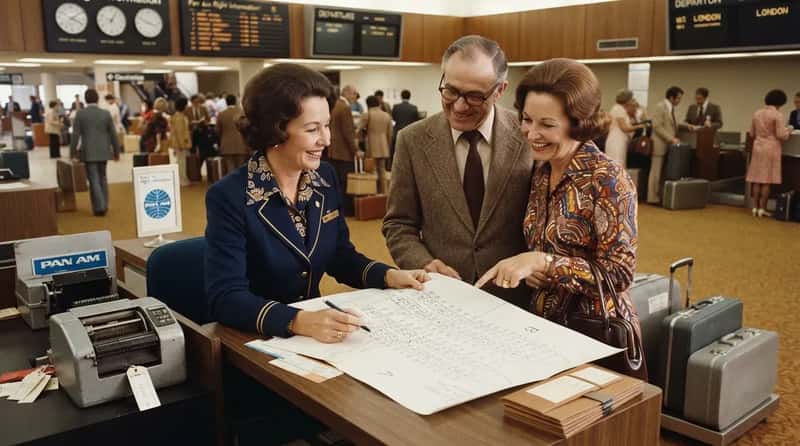
Imagine paying extra just to sit next to your spouse. In the 1970s, that would have sounded like a joke. Seat selection was one of the add-ons airlines simply didn’t charge for. You asked, an agent assigned you a spot, and that was that.
Today the same choice can come with a price tag, depending on the airline and the fare type. Families, couples, and tall passengers feel it most. Something that used to be part of the ticket is now sold back to you as a separate product. It looks small on paper, but it adds up fast when you’re booking for a whole family.
#11 – Family Could Walk You Right to the Plane
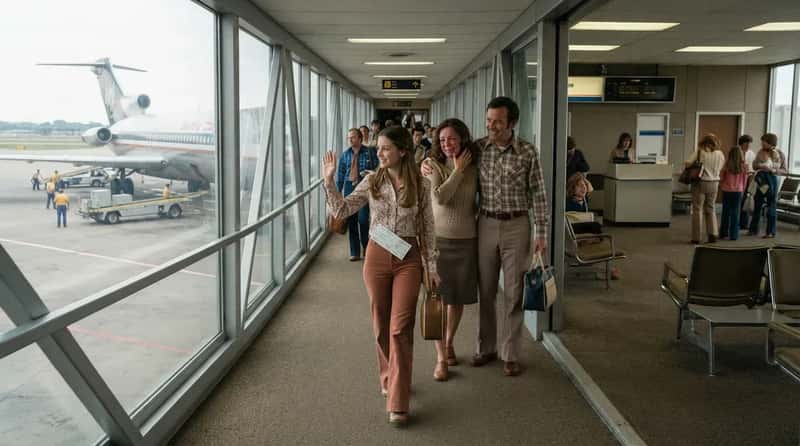
The goodbye used to happen at the jet bridge, not the curb. Passengers strolled to the gate with paper tickets, and loved ones came along. Security was minimal, and families could follow right up to the boarding door.
Think about what that meant. Parents waved from the gate window. Grandparents stood at the end of the jet bridge, waiting for the first glimpse of a grandchild stepping off the plane. After 9/11, the new federal security rules ended that, and checkpoints became the line between “us” and “them.” The airport once had a front-row seat for every reunion. Now most of them happen at a security line or a parking curb.
#10 – Blankets and Pillows Became Souvenirs of a Kinder Era
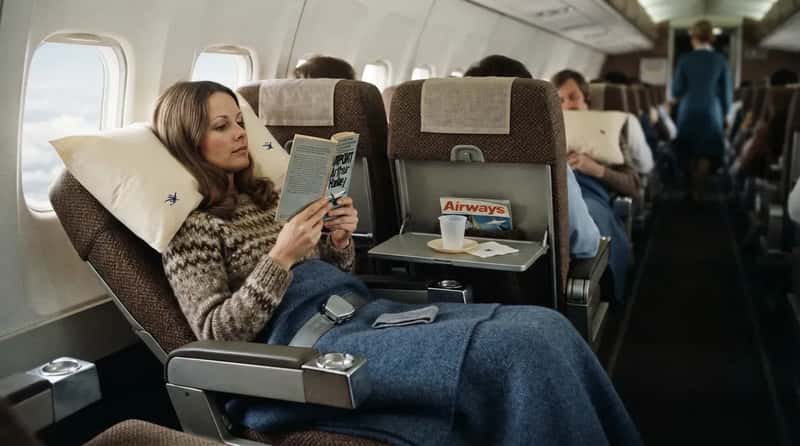
A pillow tucked behind your head was once simply part of the deal. Nobody asked for it, and nobody paid for it. It just showed up, like the seatbelt buckle.
These comforts didn’t vanish overnight. They faded as airlines trimmed costs, and the squeeze got much worse after the September 11 attacks and the recession that followed. In those years, U.S. airlines cut one perk after another on domestic flights, and free pillows, blankets, and hot meals went with them. Some carriers have brought small comforts back, but on many domestic coach flights, a free blanket is now the exception rather than the rule. Bring your own travel pillow, or go without.
Worth Knowing
- The cuts hit hardest after 9/11 and the recession that followed.
- Long international flights and premium cabins are where free blankets are most likely to survive.
- Policies differ by airline, route, and fare type, so check before you fly.
- A small travel pillow now beats counting on one being handed to you.
#9 – One Price Covered It All, But Flying Cost a Fortune
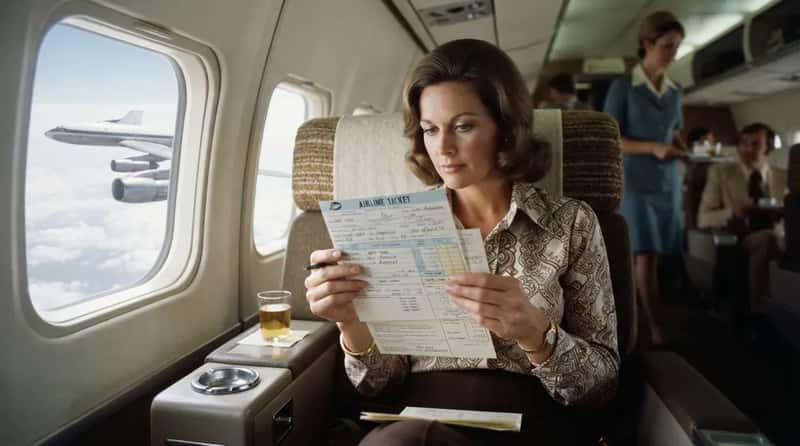
Here’s the part nostalgia skips. Until 1978, the Civil Aeronautics Board controlled which airlines could fly which routes and what they could charge, so airlines couldn’t really compete on price. President Carter signed the Airline Deregulation Act on October 24, 1978. Until then, what you saw was what you paid, with no surprise add-ons at checkout.
The catch was the price itself. A transcontinental flight cost more than $1,000 in inflation-adjusted dollars in the mid-1970s, while tickets around $300 can be found on the same route today. The all-inclusive fare was real, but so was the sticker shock. Many experts argue that today’s fees are the price of making flying affordable. Others say the trade went too far.
#8 – Champagne Before the Plane Even Moved
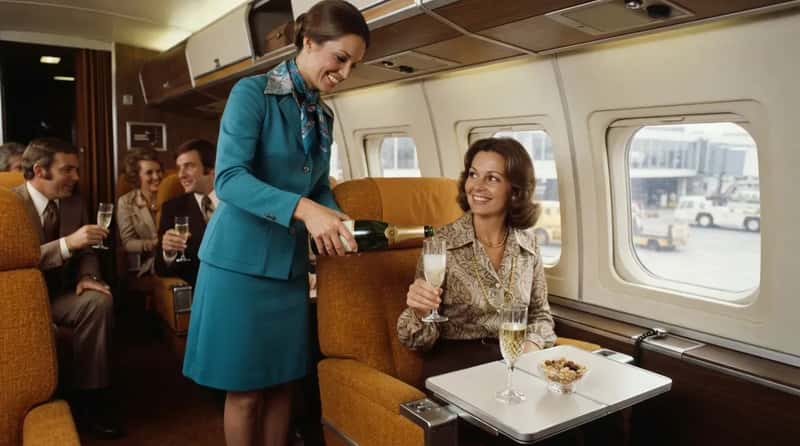
Some flights opened with a toast. On certain premium and long-haul services, pre-departure champagne was part of the welcome. Flight attendants in crisp uniforms poured glasses in the aisle while the plane was still parked at the gate. The party had started before the engines did.
Airlines were selling an experience because, under the old rules, they couldn’t sell a lower fare. The first thing many up-front passengers got in the 1970s was a drink, not a safety card or a sales pitch. Today, a pre-departure pour is mostly a premium-cabin thing. Everyone else waits for the beverage cart at altitude, and often pays.
#7 – Airlines Handed Out Free Branded Cigarettes
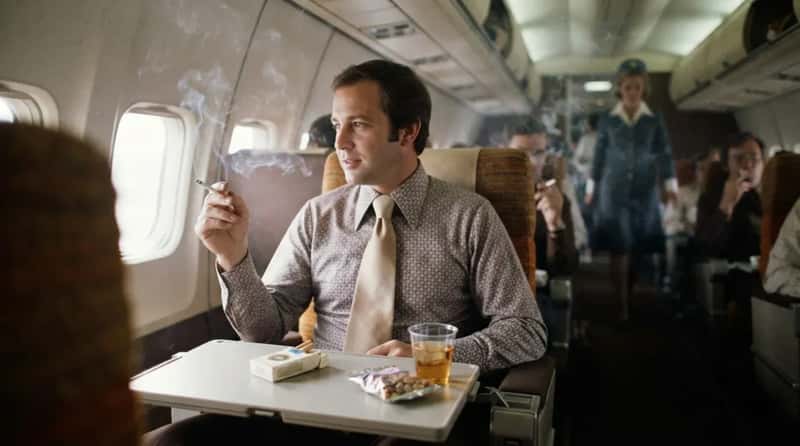
This one sounds made up. It wasn’t. Several carriers passed out complimentary cigarettes, often in little packs printed with the airline’s own name, right around the time the cocktails and nuts came out. Smoking was simply part of the flight.
Airlines marked off certain rows as smoking sections, but with no real wall between them, smoke drifted through the whole cabin. The non-smoking section was mostly a polite fiction. Rules tightened slowly. Smoking on short domestic flights wasn’t banned until 1988, and that rule covered flights of two hours or less. Nobody misses the smell, but the free pack is a strange piece of history.
#6 – Seats Were Wider, and Nobody Even Noticed
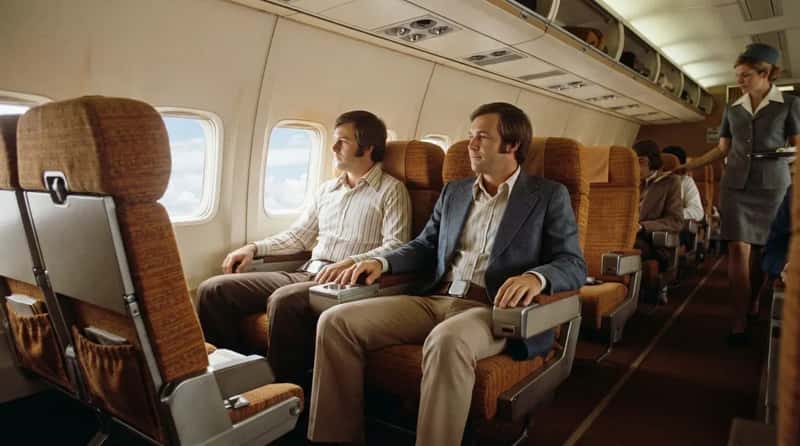
Legroom gets all the attention. Width tells its own story. Rep. Steve Cohen has pointed out that economy seat widths have shrunk from an average of about 18 inches to roughly 16.5 inches. That’s less than two inches, but your shoulders can tell the difference.
Meanwhile, passengers have changed too. CDC figures show the average American adult weighs roughly 25 to 30 pounds more than in the early 1960s. So bodies got bigger while seats got narrower. The squeeze is happening from both sides at once. That’s one reason many travelers say economy feels tighter than the numbers alone suggest.
Quick Compare
- Seat width then: about 18 inches across.
- Seat width now: roughly 16.5 inches.
- Average adult: about 25 to 30 pounds heavier than in the early 1960s, per CDC figures.
- The result: more passenger, less seat.
#5 – The Bar Was Open, and the Tab Was Never Presented
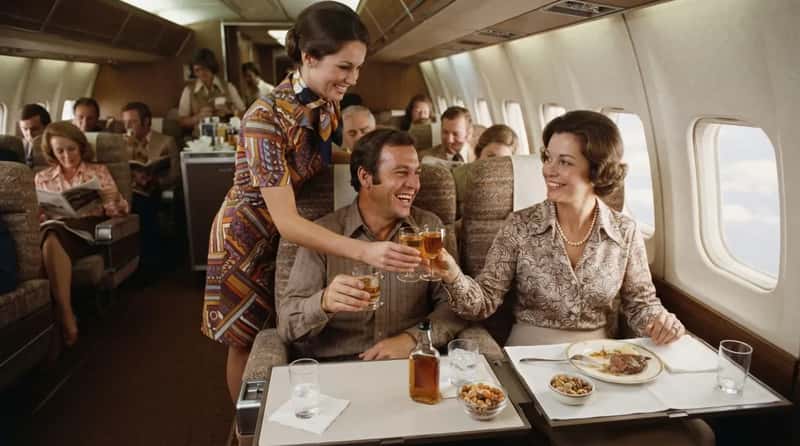
Ordering a drink didn’t always require a credit card. On many flights, especially long-haul ones, beer, wine, and cocktails came with the fare. There was no cart to flag down and no receipt to tuck in your pocket. Today, unless you’re sitting up front, you’re likely paying for every sip.
There was a flip side. Free-flowing alcohol could make for rowdier cabins, and a fare that covered steak dinners and open bars meant flying was mostly something wealthier Americans could afford. The free drinks were never really free. They were baked into a fare most people couldn’t pay. Fans of the old days rarely mention that part.
#4 – Coach Passengers Got Real Meals, Not a Snack Box
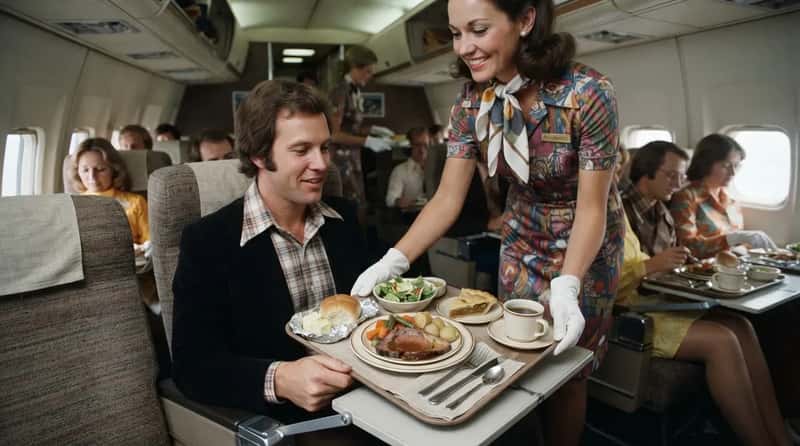
Forget the tiny bag of pretzels. Airlines prided themselves on multi-course meals, and even economy passengers often got a real tray with generous portions and a choice of entrées. Some travelers still remember carved roasts and metal silverware in coach. A meal was something you looked forward to, not something you packed for.
Cost was the reason it ended. Once price became the main battleground, elaborate meals were among the first perks to go. The pretzels came much, much later. Today a hot meal in domestic coach is rare on many routes, and most travelers pack their own food or buy something at the gate.
#3 – Pan Am Turned the 747’s Hump Into a Place to Hang Out
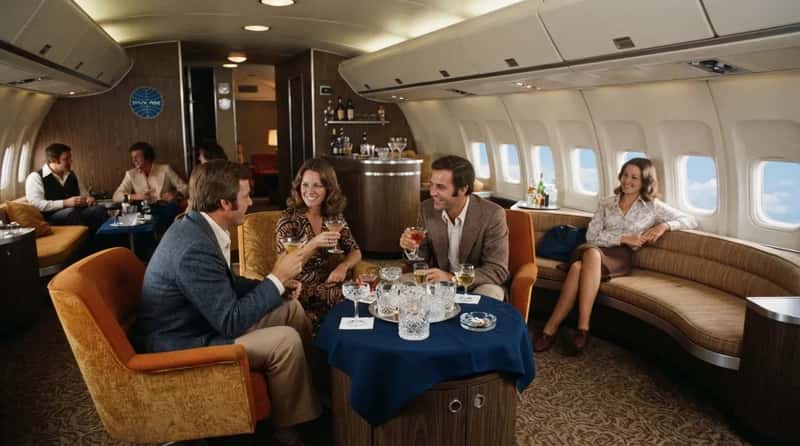
Flying once meant socializing at 35,000 feet. Pan Am flew the first commercial 747 flight on January 22, 1970, and the jumbo jet’s famous upper deck was pitched as a place to gather, not a place to cram in more rows. Passengers could leave their seats, stretch out in lounge-style seating, and talk.
That’s closer to a hotel lobby than an airplane. Other airlines chased the idea, and Qantas turned the same space into its Captain Cook Lounge. The 747’s hump was, at first, a place to socialize rather than a place to sell more seats. That didn’t last. Seats were simply worth more than conversation.
#2 – Legroom Wasn’t a Luxury, It Was the Default
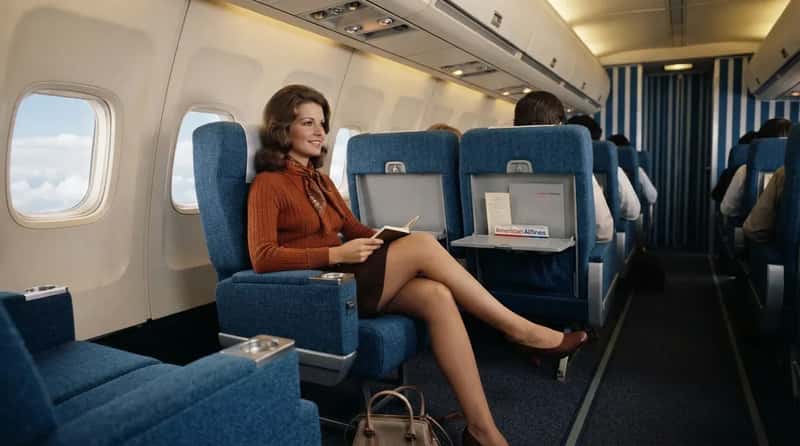
You could cross your legs in coach. Seat pitch, the distance from one seat back to the next, was about 35 inches in the middle of the 20th century, according to the chairman of the aeronautics department at the Smithsonian’s National Air and Space Museum. Today, economy pitch on U.S. carriers ranges from about 28 inches on ultra-low-cost airlines like Spirit and Frontier to 32 inches on JetBlue.
The math is simple. Adding just one extra row to a narrowbody like a Boeing 737 means six more revenue-generating seats on every flight. Multiply that across thousands of flights a day. The roomy 34-inch pitch that was common in earlier decades is now hard to find in standard economy on major U.S. carriers. Space didn’t disappear. It got sold.
#1 – A Piano Bar and Lounge Floated Above the Clouds
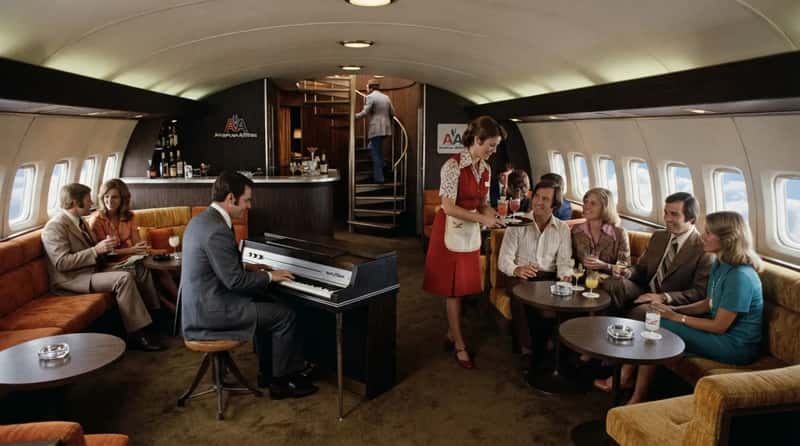
This is the one that still stops people cold. In the 1970s, airlines turned parts of their Boeing 747s into spacious lounges with upholstered seating, dedicated attendants, and in some cases, a piano bar. American Airlines became famous for the idea. A cocktail, a conversation, and live music, all at cruising altitude.
The end came for two reasons. The oil crises of the 1970s squeezed airline budgets and pushed the whole luxe era toward the exit. Then the math finally caught up. Space that served a handful of lounge guests could be filled with rows of paying passengers, and by the 1980s the lounges were fading from the skies. A flying piano bar was beautiful, but it didn’t pay.
Why It Stands Out
- It treated the cabin as a destination, not just a way to get from A to B.
- Strangers shared a room, a drink, and a song at cruising altitude.
- It only worked when airlines were selling an experience instead of the lowest fare.
- Once seats could earn more than lounges, the piano had no future.
That may be the whole story of this list. Almost everything airlines took away made sense on a spreadsheet, and almost everything we lost felt like magic from a window seat.
The 1970s didn’t give us better airlines, just differently priced ones. Cheaper fares opened the skies to millions, and the extras left quietly. But somewhere in the back of a jumbo jet, a piano is still playing in people’s memories.