
You’d think the ship’s medical center is the quietest room on board, a tidy little clinic waiting around for a dramatic emergency. In reality, the people who staff it start reading the crowd almost as soon as the gangway goes up. Before the first dinner seating, they’ve likely spotted the white-knuckle railing grips, the pill bottles stuck in luggage and the shoulders about to regret the sun.
None of it looks like the movies, and that’s the surprise. The real patterns are smaller, stranger and far more relatable, and a few of them end with a bill nobody saw coming. Here’s what day one at sea tends to look like from the medical side, starting with a problem you can spot from across the room.
#1 – The Green-Faced Passengers Who Never Make It to the Buffet

Seasickness is one of the first things nurses see, and it’s the easiest to spot. Pale faces, a death grip on the handrail and a sudden “I’ll skip lunch” tell the whole story. Part of a nurse’s job is teaching passengers about seasickness prevention, hygiene and first aid.
The numbers can be surprisingly modest. Asked how many guests he treats each day, one ship’s doctor said about five a day, mostly for seasickness or minor infections, and roughly one serious patient a month. That’s one doctor’s account, and bigger ships with more passengers will see more. Still, day one is when the queasy ones tend to turn up.
But the next thing nurses spot has nothing to do with the sea.
#2 – The Pill Bottles Locked in a Suitcase Somewhere Below Deck

Plenty of passengers realize on day one that their daily medication is sitting in a bag they can’t reach. Checked luggage often arrives at cabins well after boarding. For anyone with a dose due, that’s a long and nerve-racking wait.
The medical center can often help. Onboard centers handle refills and prescriptions for ongoing conditions, and many run a pharmacy stocked with common medications and antibiotics. One packing slip can turn into a paid clinic visit before the ship has even left sight of land. Blood pressure and heart medications top the “can’t skip it” list, with inhalers and allergy medications close behind.
Worth Knowing
- Checked bags often reach cabins well after boarding, so a missed dose is a real risk.
- Many ship pharmacies stock common medications and antibiotics.
- Refills and prescriptions for ongoing conditions are typically handled onboard.
- Blood pressure, heart, inhaler and allergy medications are the ones people panic about most.
And that’s tame compared with what happens when a medication problem meets motion sickness.
#3 – The Seasick Diabetic Who Can’t Keep Anything Down

Routine health conditions behave differently at sea. A passenger who manages diabetes smoothly on land can hit trouble fast once nausea strikes. Vomiting or skipping meals changes the whole equation.
A cruise doctor described this exact scenario. If a seasick guest couldn’t hold down diabetes medication, the team would work out what that meant for their health and how to support them. Seasickness isn’t just unpleasant for some passengers. It can become a real medical problem. That’s why first-day symptoms get taken seriously when a chronic condition is in the mix.
Meanwhile, a far more visible problem is building up on the sun deck.
#4 – The Sunburn Nobody Saw Coming on a “Cool” Breezy Deck
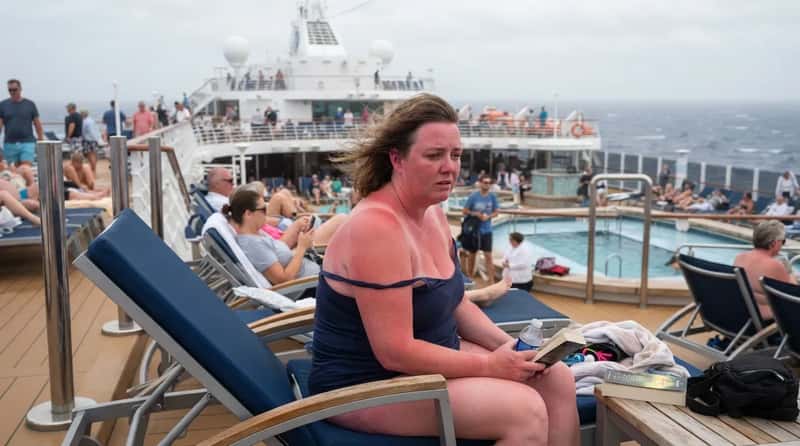
The sea breeze is a liar. It feels cool, so people skip sunscreen and stay on the lounger far too long. By evening, the red shoulders start appearing in the medical center’s waiting area.
Sunburn and heat-related illness are among the common issues cruise medical teams treat, and bad burns sit on the same routine list as food poisoning. A sunburn can share a clipboard with heart emergencies. It’s entirely preventable and still shows up on day one. Some travelers call sunscreen a vacation buzzkill, and the burned ones tend to change their minds by dinner.
But sun isn’t the only hazard on the pool deck.
#5 – The Wet-Deck Slip That Ends a Vacation Early
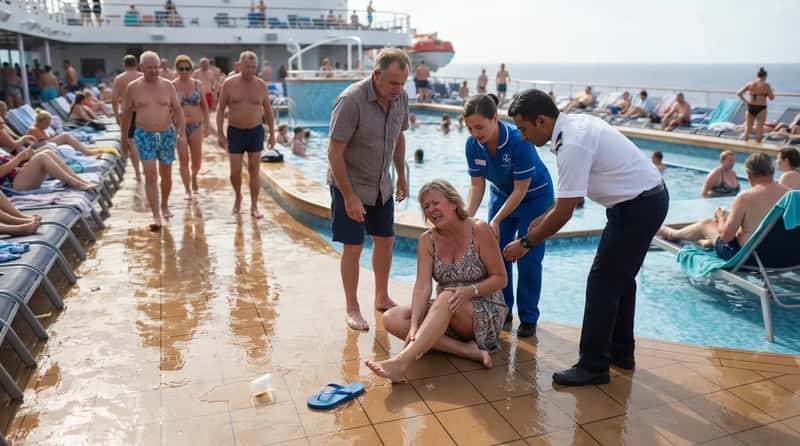
Pool decks combine wet surfaces, flip-flops, drinks in hand and excited kids. It’s a recipe for slips, and the medical team knows it. Slips near pools and sports injuries are among the cases that turn up.
Cruise medical teams regularly list orthopedic injuries from slips, falls and recreational activities. On top of that, the ship itself moves under your feet, which adds one more variable. One bad step can turn a week-long trip into a cast and a clinic bill. Sprains and cuts are common, fractures can happen, and the center can handle many of them. Flip-flops may be the unofficial cruise footwear, but a wet deck is a questionable place for them.
Fast Facts
- The usual setup: wet decks, flip-flops, drinks in hand and kids running.
- The extra twist: the deck itself is moving under your feet.
- Most common results: sprains and cuts.
- Less common but possible: fractures, which the center can often handle.
Still, one problem is easy to miss, and nobody ever admits to it.
#6 – The Quiet Dehydration That Hides Behind a Headache

Sun, salty snacks, cocktails and a lot of walking add up quickly on day one. Many passengers never connect their headache or dizziness to simply not drinking enough water. Onboard medical centers treat dehydration alongside infections, injuries and seasickness.
It gets more serious when a stomach bug joins in. Medical teams can give treatments such as injections or IV fluids, and nurses sometimes visit patients in their cabins. A day of “celebrating” can end with someone hooked to an IV in a cabin bed. It’s an unglamorous problem, and it shows up more often than most people expect.
The next passengers nurses notice aren’t sick at all, at least not in the obvious way.
#7 – The First-Timer Whose Nerves Are Running the Show
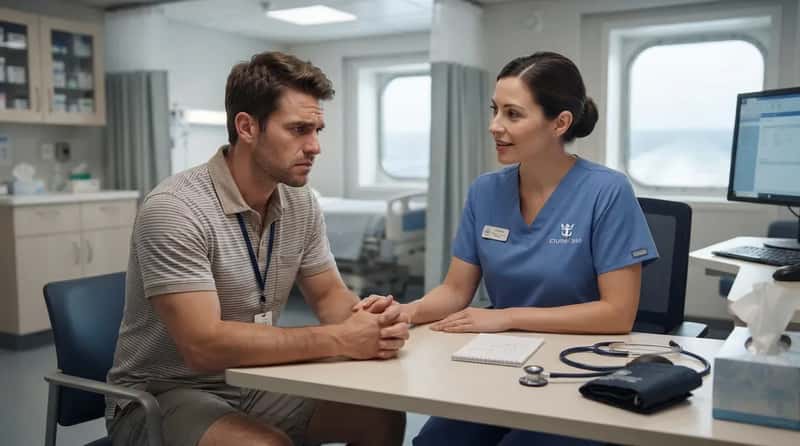
A ship is a big, unfamiliar place, and some passengers feel that right away. Being at sea, far from the usual routines, can crank up anxiety. A nurse’s caseload isn’t limited to physical ailments, and anxiety and mental health crises appear on one typical list of onboard conditions.
There’s no easy exit once the ship sails, and some people only absorb that after departure. For some travelers, the stress of a first cruise arrives as a medical complaint. A racing heart or a sleepless night can bring someone to the clinic door. Nurses are trained to look past the first symptom to what’s behind it.
That’s nothing compared with what a “harmless” cough can set off.
#8 – The “Just a Cold” Cough That Boarded With Them
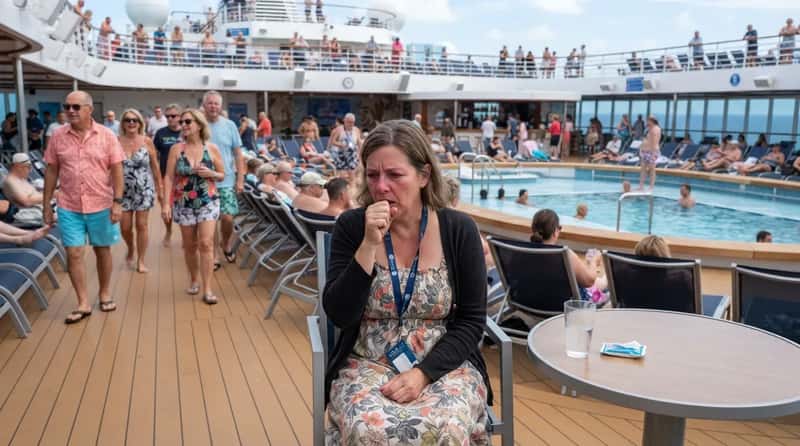
Some passengers board already sick and refuse to let a sniffle cancel a trip they’ve planned for months. Then they spend a week in a space shared with thousands of people. Respiratory infections such as colds and the flu are among the commonly treated problems.
Passengers also report stomach viruses and respiratory infections onboard. The cough that gets waved off on day one can be a crowd problem by day three. Some travelers insist you should never cancel over a cold. Others in the health world would say a sick passenger owes the rest of the ship a bit more caution.
And the number of nurses available might surprise you.
#9 – The Staffing Math Most Passengers Never Think About
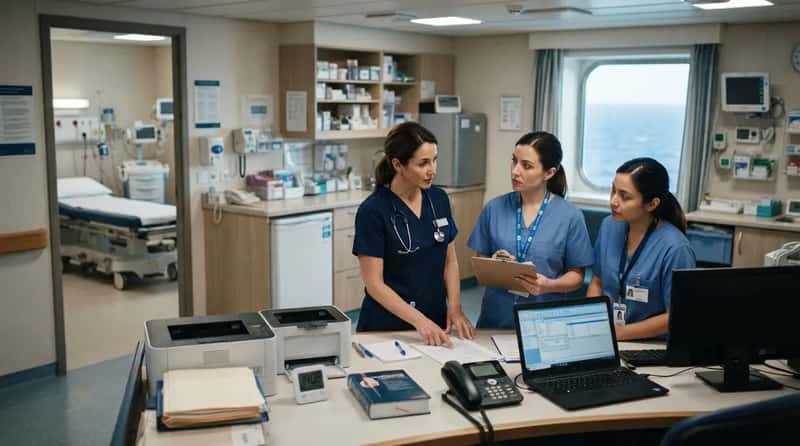
Thousands of people share the ship, and a small team looks after them. One career guide says most ships average three to four nurses, depending on size. Another industry guide puts the typical ratio at one doctor and two to three nurses for every 1,000 to 2,000 passengers.
That sounds thin until you remember that most medical issues at sea are minor and can be treated onboard. Large cruise lines also keep doctors and nurses available around the clock. The team is small next to the crowd, but the whole system is built around mostly minor problems. Staffing varies by ship and line, so treat those ratios as rough guides.
At a Glance
- Career guide estimate: three to four nurses on most ships.
- Industry guide estimate: one doctor and two to three nurses per 1,000 to 2,000 passengers.
- Coverage: large lines keep medical staff available around the clock.
- Caveat: numbers shift by ship size and cruise line.
Which brings up the thing almost nobody does on day one.
#10 – Almost Nobody Checks Where the Medical Center Is

Passengers learn where the pool, the buffet and the bar are within an hour. Hardly anyone finds the infirmary. Most ships place the medical center on a lower deck, with set daily hours for regular visits.
Staff are available 24 hours a day for emergencies, and non-emergency hours are often posted in the daily schedule or the ship app. The people who need it fast are often the ones who’ve never seen it. A thirty-second check on the first afternoon takes that stress off the table.
But what comes after the visit can sting even more.
#11 – The Bill That Turns a Sunburn Into a Budget Problem
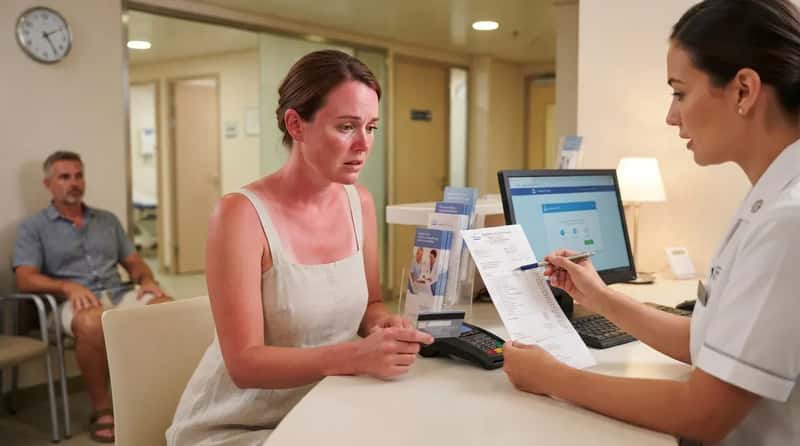
Cruise ship medical treatment often costs far more than many passengers expect. Even a short visit for dehydration, stomach illness, seasickness or a minor injury can produce a large bill. Nurses see passengers hesitate at the door for exactly this reason.
Every visit is billed separately and charged straight to your onboard account. That’s how one cruise guide describes it. Some travelers wave off travel insurance as an unnecessary add-on, while others would say one clinic bill proves them wrong.
And the next one is the issue that dominates the headlines.
#12 – The Handshake, the Buffet Spoon and the Norovirus Question

Cruise ships are famous for stomach bugs, so the way passengers handle hygiene on day one matters. The CDC reported 16 gastrointestinal outbreaks on cruise ships in 2024, the highest count in over a decade, with norovirus behind most of them. One news report counted 23 outbreaks in 2025, with norovirus again the most common cause.
Counts vary by source, and a CDC spokesperson said it’s too early to tell whether this is a new trend. The scary part is the timeline. According to health officials, people can pass norovirus to others for two weeks or longer after symptoms fade. Washing with soap and water is the standard advice, and sick passengers are generally asked to isolate.
But the biggest thing nurses notice is what passengers assume about the whole setup.
#13 – The Floating Hospital That Isn’t One
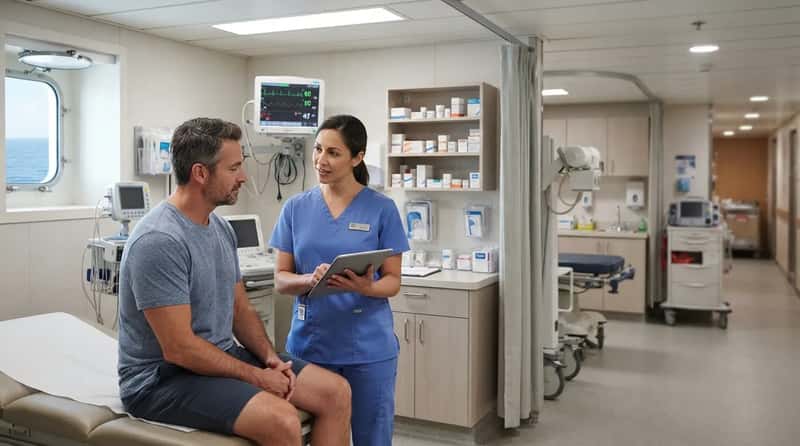
Many passengers assume the ship has a full hospital on board. It doesn’t. A cruise ship medical center is closer to an urgent care clinic, a primary care office and an emergency response hub rolled into one. That’s a big difference when something serious happens.
The setup is still capable, with lab equipment, X-ray machines, pharmacies and treatment rooms. But for serious conditions, the plan is to stabilize you and get you to a real hospital on land. Staff arrange emergency evacuation when a condition needs shore-based care. Nurses watch passengers absorb this on the first day, usually right after they ask what happens if something goes badly wrong.
Quick Compare
- On the ship: urgent care and primary care style treatment, plus labs, X-rays and a pharmacy.
- For minor problems: seasickness, infections, sprains and prescriptions are usually handled onboard.
- For serious conditions: stabilize first, then evacuate to shore-based care.
That, more than anything else, is why the small stuff matters so much on day one. The seasickness, the forgotten pills, the sunburns and the slips look minor, and most of them are. The twist is how preventable they are, and how much a small clinic at sea has to carry when thousands of people forget the basics at once.
The ocean is the glamorous part of the trip, but the first afternoon is where plans quietly succeed or fall apart. Know where your pills are, where the clinic is and what your insurance says. Then go enjoy the view.