Search for lounge perks for older travelers and the promises come fast. Free entry at 62. Secret senior passes. A hidden desk where staff slip you favors. Here’s the reality check: being a senior does not earn free lounge access. Entry depends on your ticket, your card or your status.
But the real list, pulled from airline policies and federal rules, is better than the rumor. Plenty of genuine help exists, and much of it costs nothing. Almost none of it is tied to a birthday, and nearly all of it waits for you to ask. One item near the end changes how you’ll read everything above it.
#13 – The Free Lounge Pass at 62 That Doesn’t Actually Exist
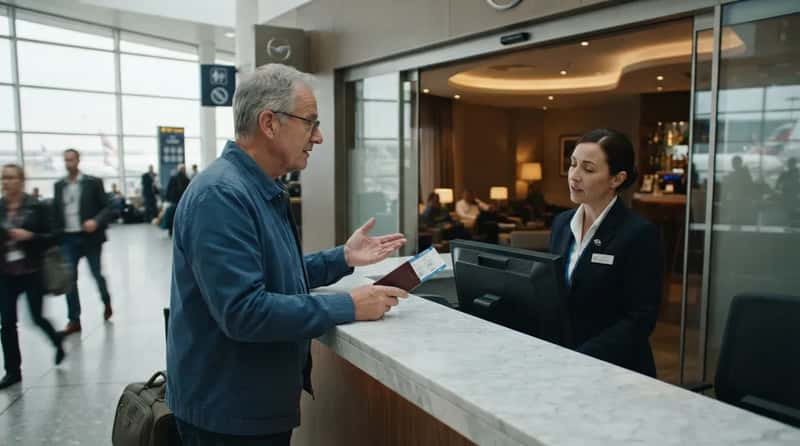
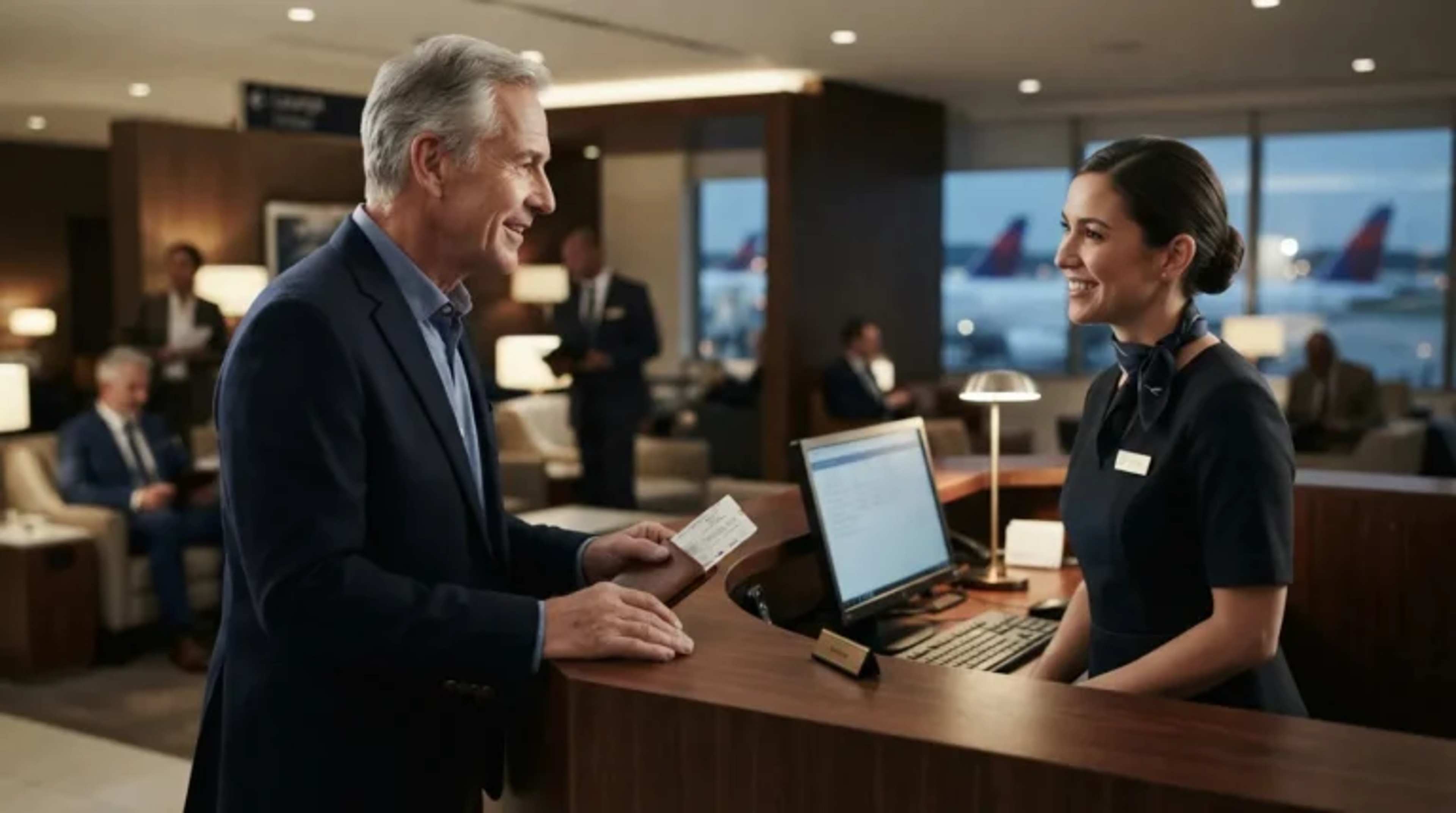
Nobody at a lounge desk waves you in because of your age. At most major airlines, business class passengers get lounge access with their ticket, whatever their age. Age alone does not open the door, even though plenty of “senior perk” lists imply it does.
So what are the “quiet offers” people whisper about? They’re accommodations built on need, delays and a polite request. Lounge entry itself depends on your card or status, and it’s worth keeping those two things separate. The rest of this list sorts real perks from folklore, starting with a rule that kicks in much later than most people think…
#12 – The Age-75 Line Staff Know by Heart (Why 62 Never Hits It)
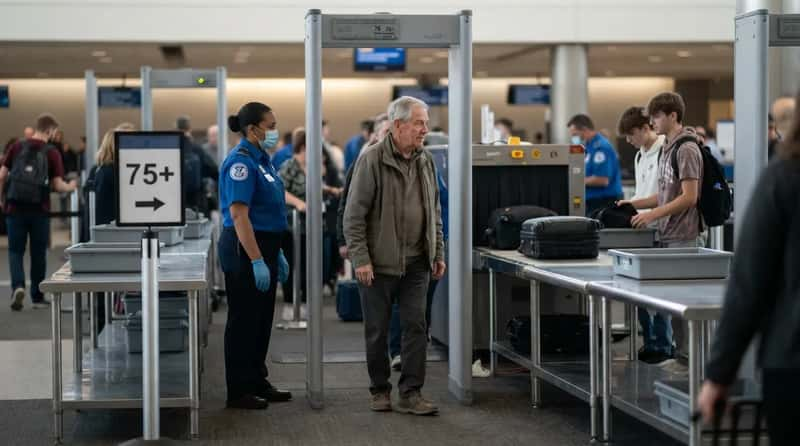
Many travelers assume a senior lane starts at 62 or 65. It doesn’t. TSA says passengers 75 and older can receive some form of expedited screening, but there is no official screening perk for the 60-to-74 crowd. The only age-based screening break TSA documents starts at 75.
That shoe change matters too. Children 12 and under and passengers 75 and older used to be exempt. Now everyone can keep their shoes on. PreCheck has no senior discount either, since the fee is the same at every age. So what can staff really do for travelers in their 60s? The next item is a long shot, but it works for some.
#11 – A Courtesy Pass During a Long Delay (Sometimes, If You Ask the Right Desk)
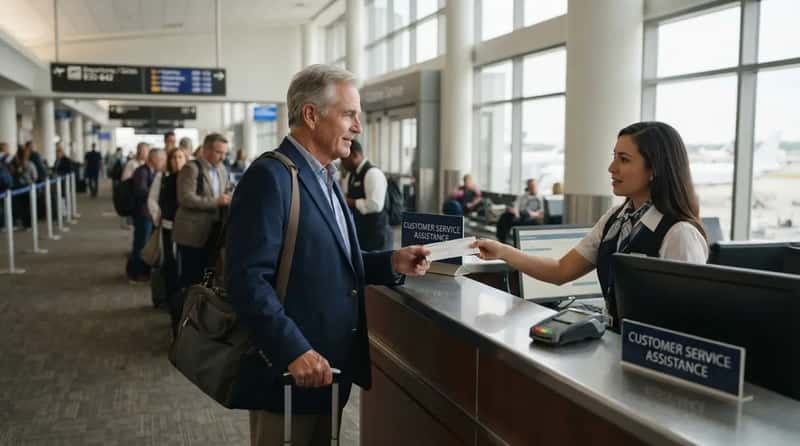
A stranded afternoon is when lounge doors most often open for people with no status. Travel guides say U.S. airlines such as Delta, United and Alaska occasionally grant seniors complimentary lounge entry or meal vouchers, especially when health or comfort concerns come up. Another guide suggests asking the airline’s customer service desk for a courtesy pass during a long delay or layover.
Notice the word “occasionally.” These are goodwill calls, not guaranteed rights, and no airline publishes a senior lounge policy. Plenty of guides oversell this as a sure thing, and it isn’t.
One guide notes that even economy passengers can sometimes request lounge access during a significant delay. Think of it as a polite ask with decent odds, not an entitlement. The next option involves paying, but it may cost less than you expect.
#10 – The Day Pass Staff Can Sell You (No Senior Discount Attached)
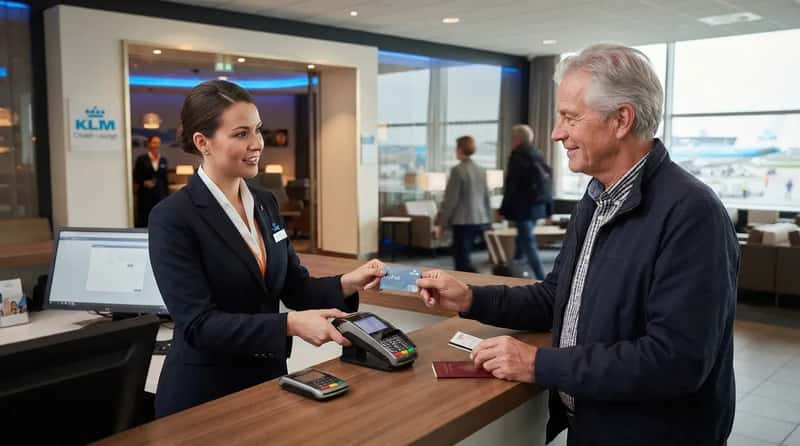
Flying economy with no status? Some lounges will still let you buy your way in. KLM, for example, sells day passes for its Crown Lounge at Amsterdam Schiphol, depending on space. That kind of walk-up entry is the most reliable “offer” on this list. It’s also the one most guides skip, because it costs money.
What about a senior rate? One guide suggests asking lounge staff whether they have a senior day pass or an age-based entry policy. Asking is free, so do it. But in a Q&A about a pensioner’s options, the answer was that there is no senior discount, and you pay per visit. Treat any discount as a pleasant bonus.
Quick Compare
- Business class ticket: lounge access usually comes with the fare at major airlines.
- Card or status: access can come through programs like Priority Pass on cards you may already carry.
- Day pass: a walk-up purchase, space permitting, as with KLM’s Crown Lounge at Schiphol.
- Delay courtesy pass: goodwill only, never guaranteed.
Now for something you may already own without knowing it…
#9 – The Card in Your Wallet May Be Your Real Lounge Key
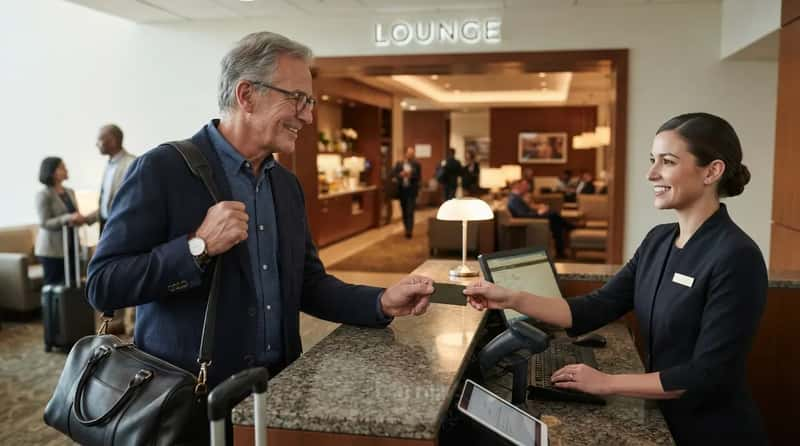
Lounge access has quietly moved beyond first class. One guide notes that airport lounges are no longer reserved exclusively for First and Business Class passengers, and points to Priority Pass access through cards you may already carry. Some travelers hold lounge access for years without ever using it. That’s why desk staff so often ask about cards before anything else.
One guide says some lounges offer discounted or complimentary access to seniors, especially those holding AARP, AAA or certain credit cards. We couldn’t verify that with any lounge operator, so call ahead before you count on it.
The same guide also lists free USO lounge access for retired service members. Check with the specific USO location first. Next is a perk that costs nothing and covers the longest walk of your trip.
#8 – The Curb-to-Gate Ride That’s Free (Tipping Is the Only Gray Area)
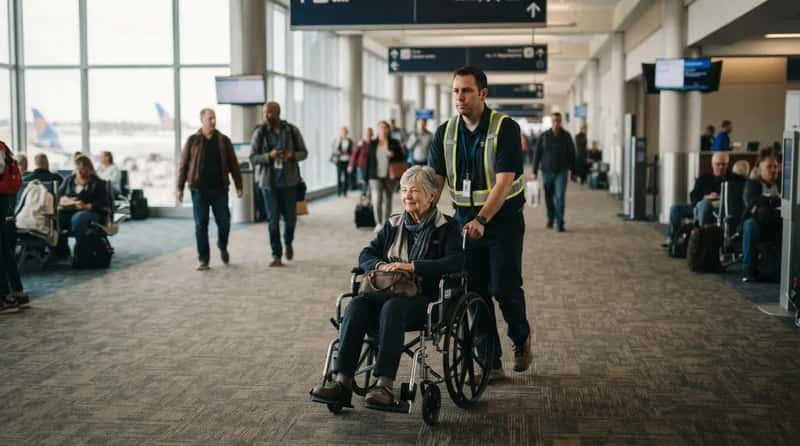
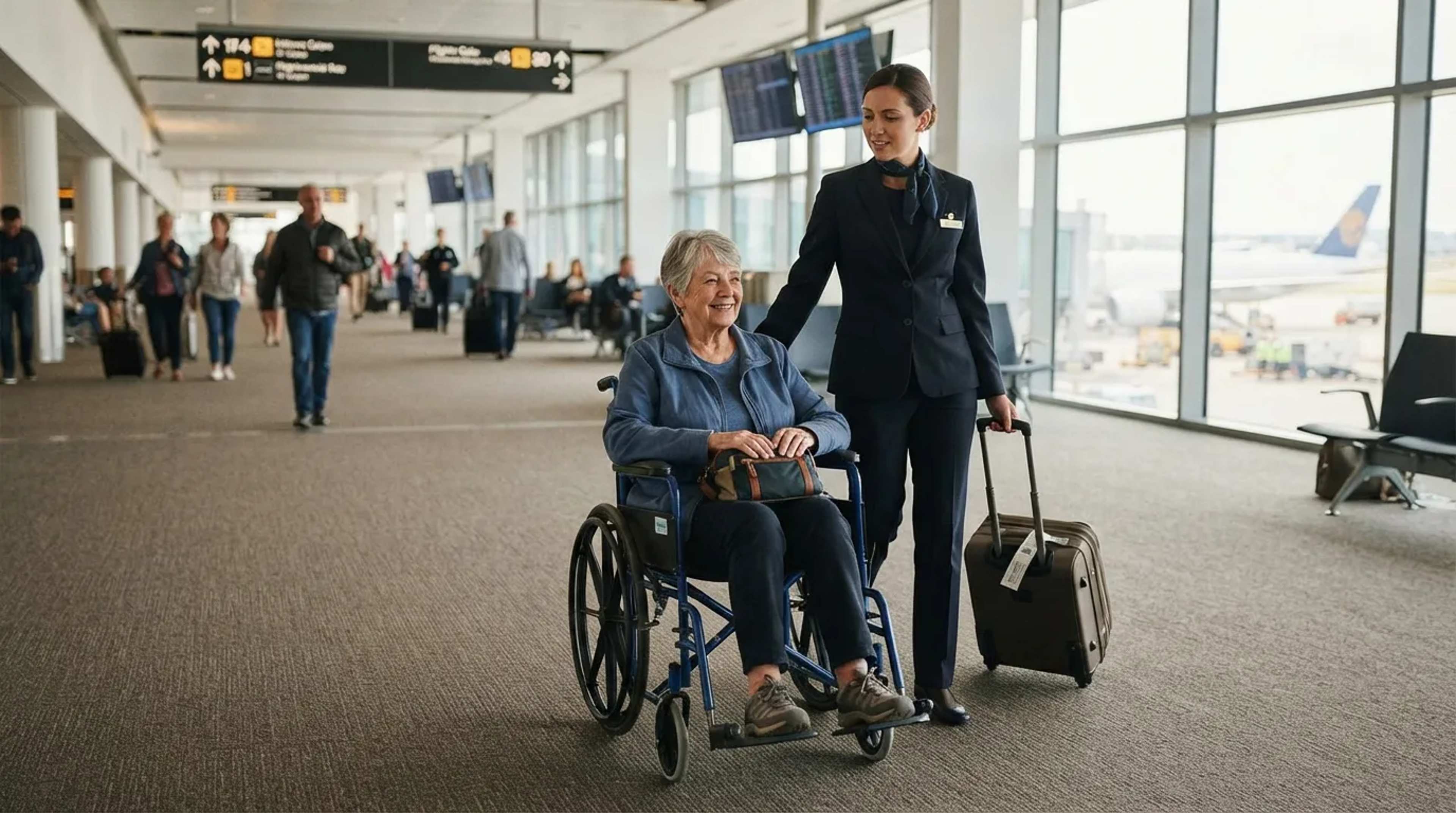
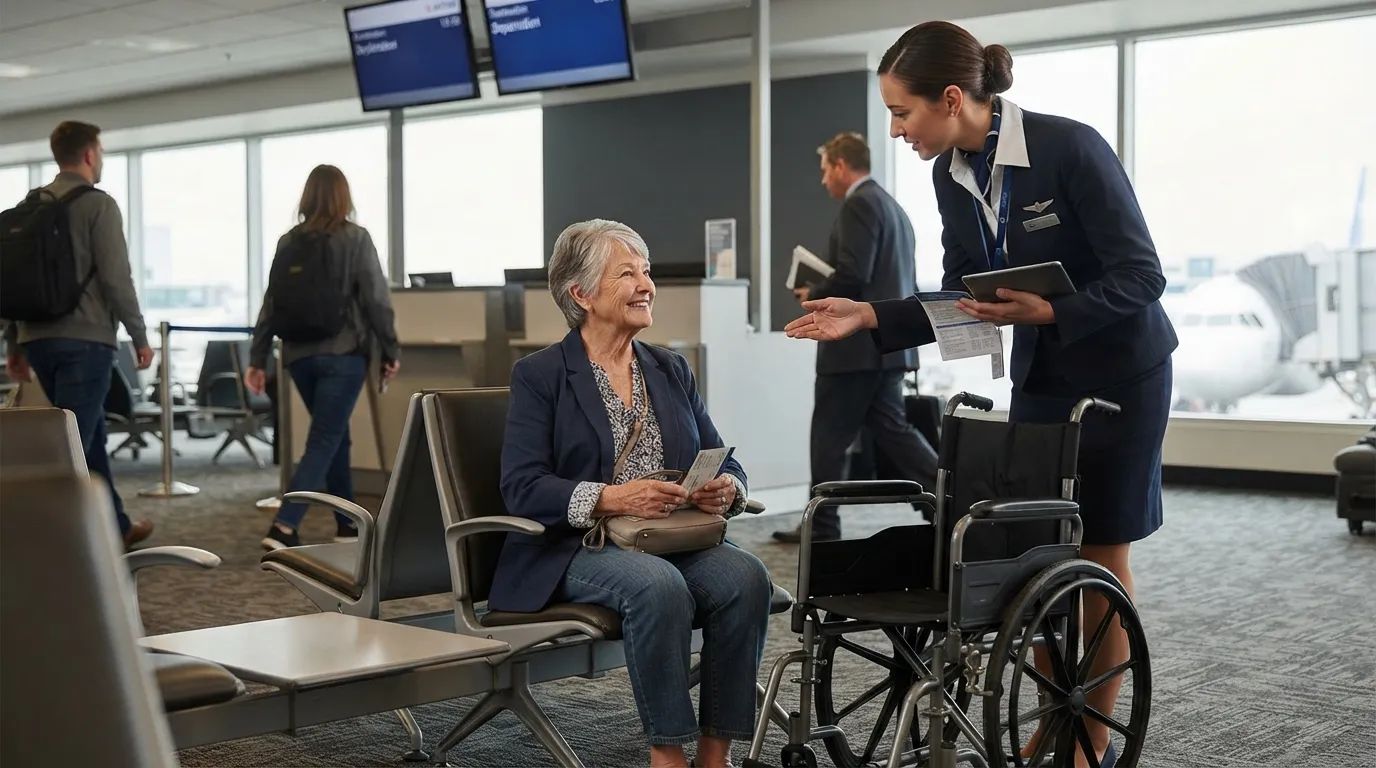
The longest walk of your trip may come with a free shortcut. U.S. airlines are prohibited from charging for wheelchair assistance, terminal escorts or boarding support, and the help must be free regardless of ticket class. That means economy passengers get the same help as business class. You don’t need a lounge for it.
What does the service look like? Delta says an associate will most often push the chair through the airport to your departing gate, and the service can be prearranged to cover connecting flights. The help is free under federal law, though tipping the airport staff who help you is customary. That tipping question catches many first-timers off guard. Now for boarding, where one sentence does most of the work…
#7 – Pre-Boarding, Arranged With One Sentence
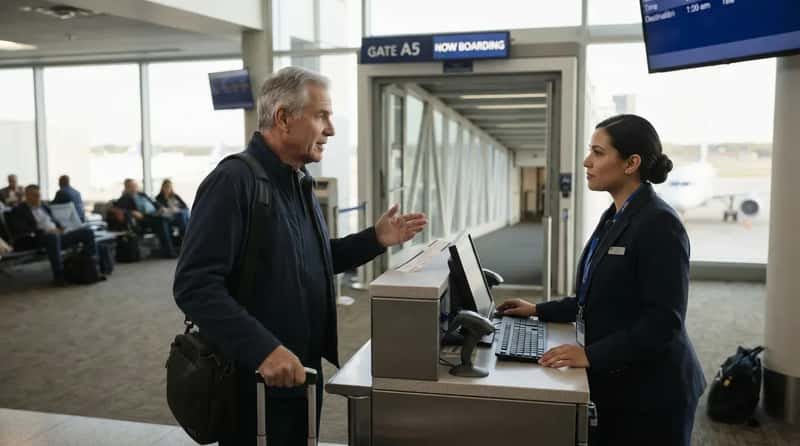
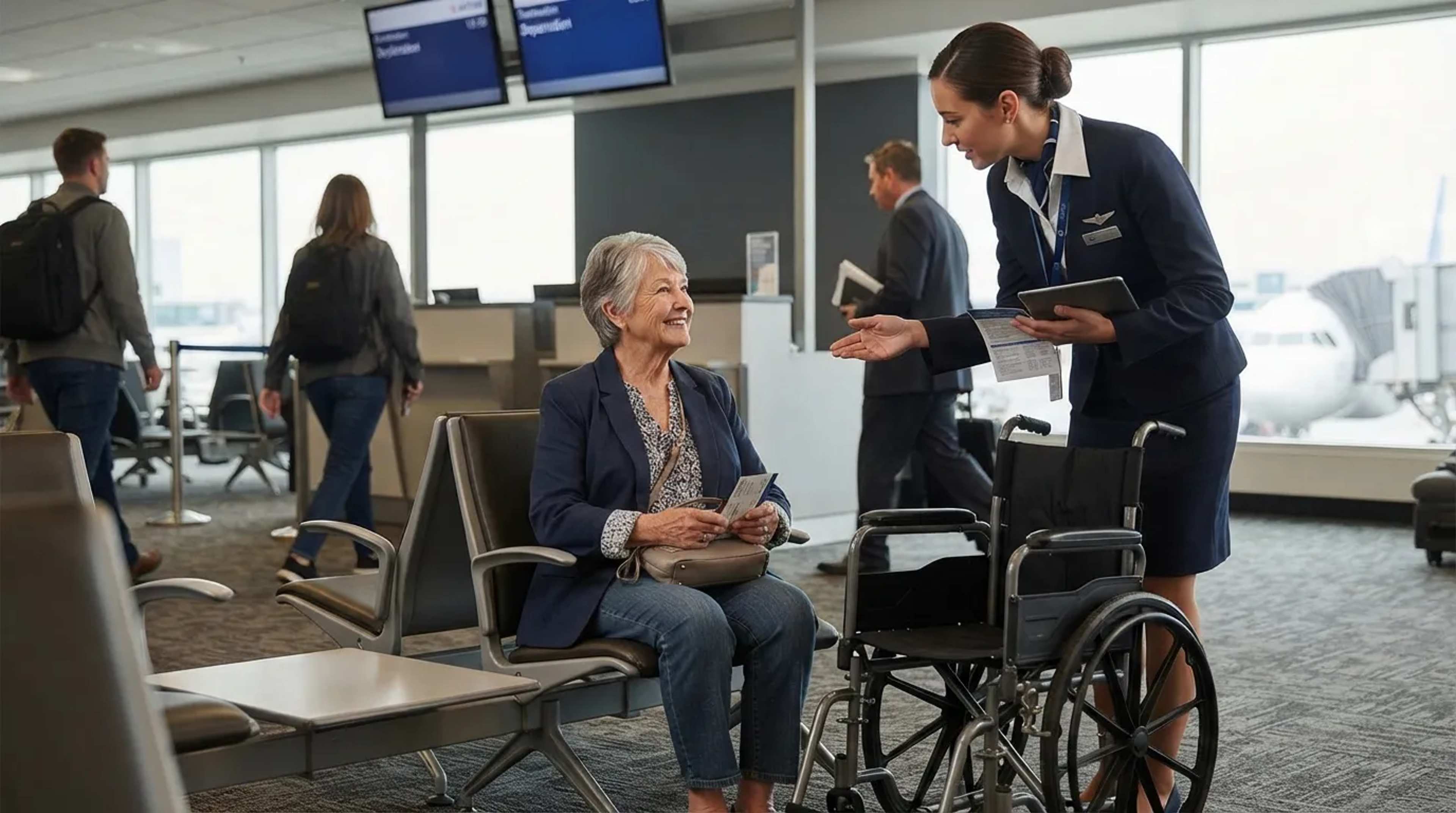
Early boarding exists, but only if somebody says the words. American Airlines tells senior travelers to request early boarding from the gate agent if they need extra time or assistance. Carriers must offer pre-boarding to anyone who self-identifies at the gate as needing extra time. Nobody sorts you into the early line by looking at your age.
One guide says the lounge desk can help coordinate this too. That claim comes from a travel site, not an airline policy, so confirm at the gate. You don’t need a cane or a doctor’s letter. Agents usually just want to know you need extra time on the jet bridge, so say it before general boarding begins.
Worth Knowing
- Make the request to the gate agent, not at the lounge door.
- Say it before general boarding starts.
- Describe what you need: extra time, not a label.
- Confirm any lounge-desk promise at the gate, since it may not be airline policy.
#6 – The Quietest Seat in the Building

Airports are loud, and for some travelers the noise is a genuine obstacle. Many older travelers wear hearing aids, and background noise turns muffled announcements into guesswork. One lounge guide calls a quiet seat the most practical seat in the building for travelers managing hearing aids or reduced mobility. The seat is the perk, not the snacks.
The same guide describes something else. During quiet hours, experienced staff may check in on older travelers, offer refills and flag when boarding is close. That’s one travel writer’s account, not a published lounge policy, and it will vary by lounge and by hour. Still, it shows why a quiet corner can feel nothing like a packed afternoon.
#5 – Help Charging the Scooter or CPAP While You Eat
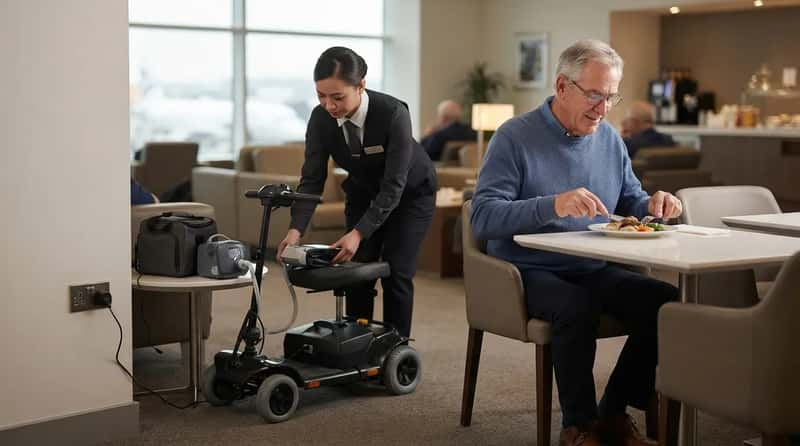
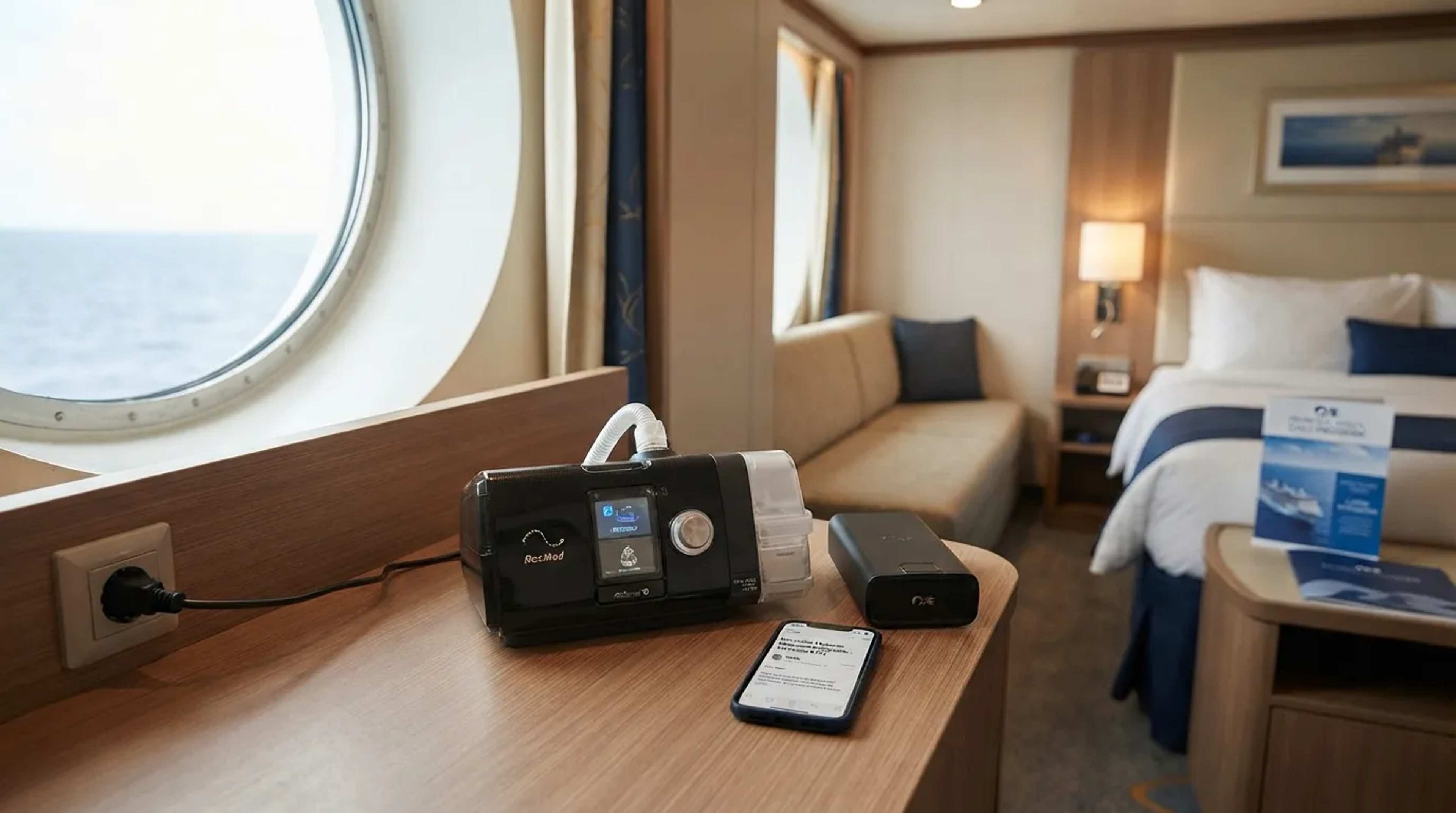
Battery anxiety is real for mobility scooters and medical devices. One guide says that during quiet hours, attendants will often find the nearest accessible outlet, help plug in a scooter or CPAP unit, and keep an eye on it while you eat. Staff may literally watch your medical device so you can finish a meal. That’s a guide’s account, so treat it as a request, not a promise.
The same guide says far fewer people know that staff will manage the charging for them. The ask costs nothing, and if the answer is no, you’re no worse off than before. Next is a rule that puts a hard limit on how long you can be left waiting.
#4 – The 30-Minute Rule: Nobody Is Supposed to Leave You Waiting
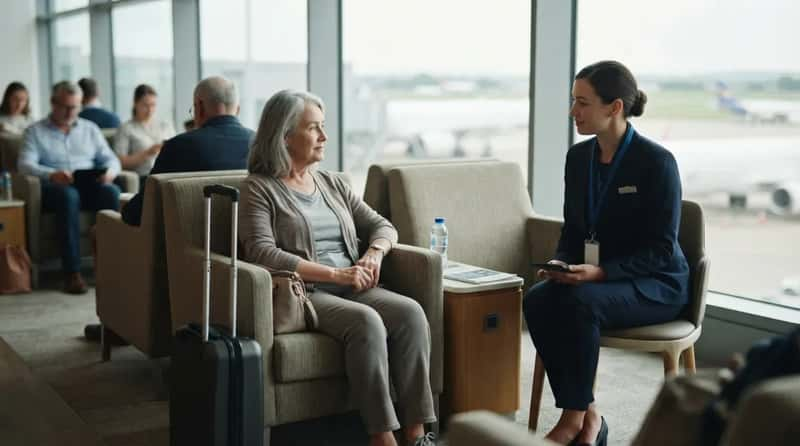
There’s a clock running on airline staff who assist you. When an airline helps a passenger who isn’t independently mobile because of a disability, it must not leave that passenger unattended for more than 30 minutes. That’s a federal limit on how long you can be parked alone. It applies to disability-related assistance, not to age.
The broader duties are just as concrete. Airlines must help passengers with disabilities with boarding, deplaning, making flight connections and getting between gates. One lounge guide also describes a dedicated staff contact for the length of your wait, but that’s a service some lounges offer, not a rule.
At a Glance
- The limit: no more than 30 minutes unattended for a passenger who isn’t independently mobile.
- Who it covers: disability-related assistance, not age.
- What’s included: boarding, deplaning, connections and moves between gates.
- Not a rule: a dedicated lounge contact is a courtesy some lounges offer.
Which brings us to the situation older travelers dread most…
#3 – An Escort to the Connecting Gate, Even on Another Airline
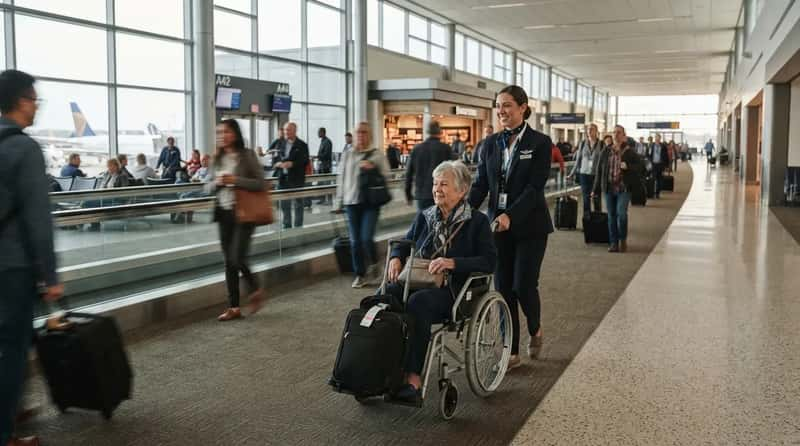
Picture a tight layover and a gate at the far end of the terminal. Connections are where many older travelers feel the most dread. Staff can arrange help between gates so you aren’t sprinting through the crowd. The help can follow you from one gate to the next.
Does it work across carriers? American Airlines, for one, provides wheelchair assistance for interline connections, with staff escorting the customer to the other carrier’s gate. Delta says wheelchair services can be prearranged and will take you to connecting flights and other parts of the airport. Policies differ by airline, so check yours. Next up is a briefing most people don’t know they can request.
#2 – The Personal Safety Briefing That Skips the Video
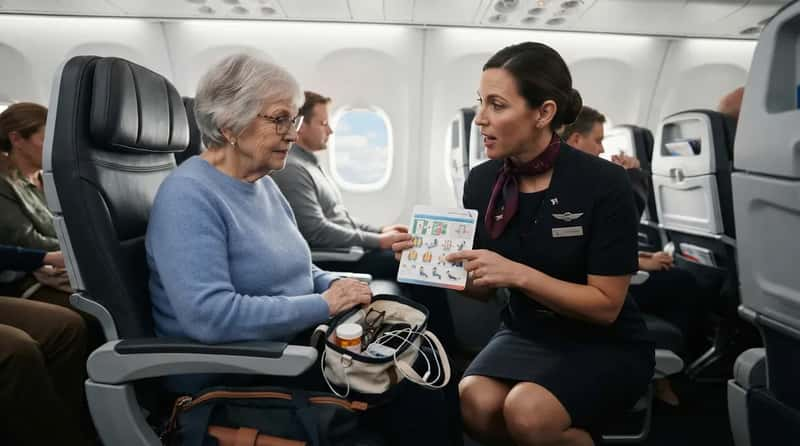
Cabin announcements can be hard to hear. American Airlines asks senior travelers to tell a team member about vision or hearing limitations so they receive a safety briefing and flight updates. That matters when announcements are muffled and the engines are loud. You can ask for a briefing that fits you. You don’t have to rely on the video overhead.
An individual briefing can help with hearing, vision or mobility limits. The request takes about ten seconds. Say it to a gate agent or flight attendant before the doors close. Now for the last item, the one that explains why all the others exist.
#1 – It’s Not a Favor: Most of This Is Written Into Federal Law
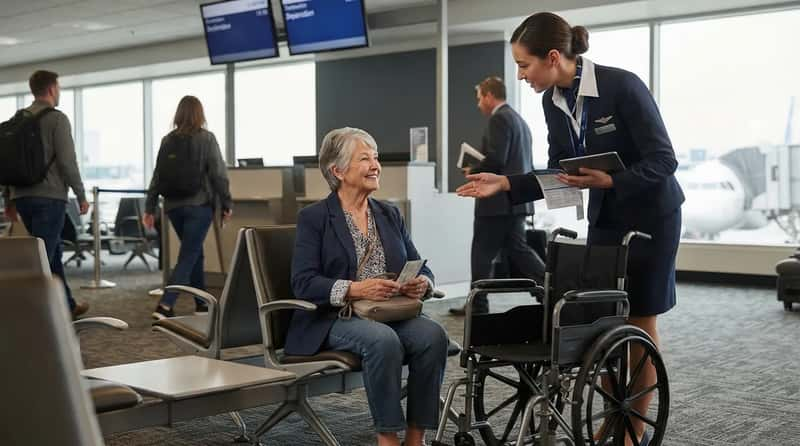
Here’s the twist behind the whole “quiet offer” idea. Under the Air Carrier Access Act, airlines must provide reasonable accommodations for travelers with disabilities and mobility needs. Help from curb to gate, early boarding, seating accommodations and careful handling of mobility aids are all covered by the rules. Most of what staff arrange isn’t a secret perk at all.
That also means the headline’s “qualify already” comes with a catch. No airline hands you a senior perk on your 65th birthday. What exists runs on need and on asking: free wheelchair help, pre-boarding, seat requests, courtesy passes during delays, and a Complaints Resolution Official you can ask for when things go wrong. You may qualify for far more than you’ve ever used.
There is no secret age-62 lounge pass. The real offers are quieter and more useful: free assistance, pre-boarding, escorts, a calm seat, and the occasional goodwill pass during a long delay.
Almost all of it depends on one clear sentence said at the right desk. The only thing standing between you and an easier airport day is asking.