Ask most people which visitor a park ranger worries about, and they’ll describe a reckless twenty-something with a phone and a cliff edge. Rangers who talk about older travelers describe someone far more interesting. This visitor has decades of park memories, a lot of hard-won savvy, and a few blind spots they don’t know they have. Much of it shows up before the engine is even off.
No official statistic tracks “the first thirty minutes,” so don’t treat this list as hard science. These are patterns rangers describe, checked against what the National Park Service itself says about heat, altitude, passes and accessibility. Plenty of visitors over 70 break every pattern here. But the last item flips a stereotype in a way most people never see coming.
#13 – The Pass Comes Out Before the Car Door Shuts
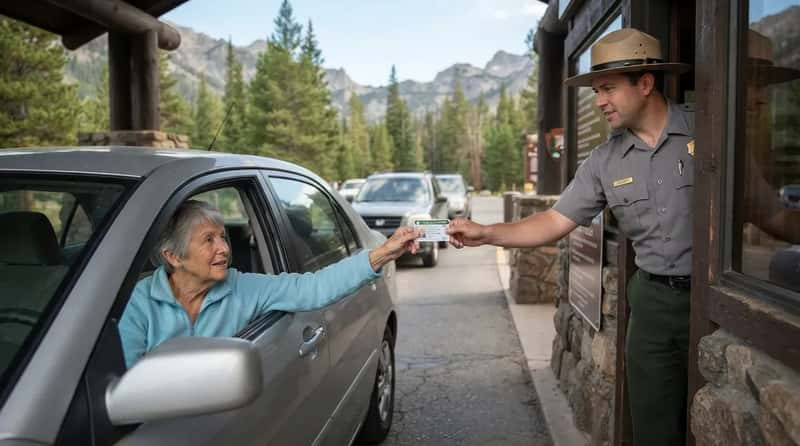
The entrance station is where many older visitors show up best prepared. U.S. citizens and permanent residents 62 and older can buy an annual federal pass for $20 or a lifetime version for $80. Plenty of visitors over 70 have carried a lifetime card for years.
They hold it up before anyone asks, and rangers read that as the sign of a repeat visitor. Someone who has done this a hundred times rarely needs the basics explained.
The card does more than open the gate. It admits the pass holder plus passengers in one vehicle at per-vehicle fee sites, and it can cut some amenity fees, like camping, by 50%.
The old Golden Age Passport still works if you own one. Rangers say the next thing they check says even more about a visitor, and it isn’t in the glove box.
#12 – The Paper Map Beats the Glowing Screen
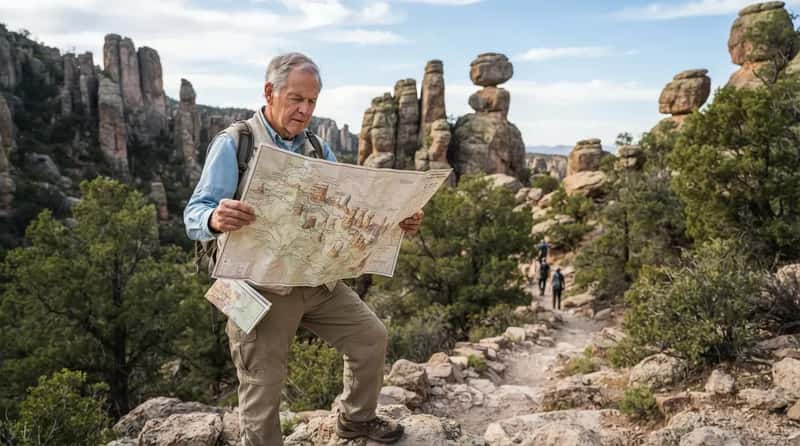
A folded park map sticking out of a pocket is one of the first tells. Rangers say many older visitors grab the free map at the entrance and keep it close all day. That habit matters more than it sounds, because many parks have almost no cell service and a map app can quit at the worst moment.
Remote sites say it plainly. At Chiricahua National Monument, cell service is limited and visitors are told to download driving directions in advance.
Rangers describe the scene: a visitor holding up a frozen screen and heading confidently the wrong way, right past the metal sign. Some of the oldest technology in the park turns out to be the most reliable. The next detail is even lower to the ground.
#11 – The Restroom Question Rangers Ask on Purpose
It sounds like small talk, but it isn’t. Rangers bring up restroom locations deliberately with older visitors, because the reaction shows how far from facilities someone can realistically go. A casual “Do you know where the next bathroom is?” is really a planning question.
Worth Knowing
- The park map and the visitor center desk are the quickest ways to find facilities along your route.
- Many trailheads and scenic pullouts have basic vault toilets or none at all.
- The last real restroom before a long drive or hike is the one worth using, even if you don’t need it yet.
- Asking a ranger is routine. They answer it all day long.
Many older adults manage conditions or medications they’d rather not discuss with a stranger in a uniform. Rangers say they’ve watched trips cut short, or turned miserable, because someone tried to “tough it out” between facilities.
The visitors who laugh and say “Good question, where?” tend to have the best days. The one who waves it off is the one rangers quietly keep an eye on. Their footwear tells rangers something as well.
#10 – Their Shoes Get Looked At Before Their Faces
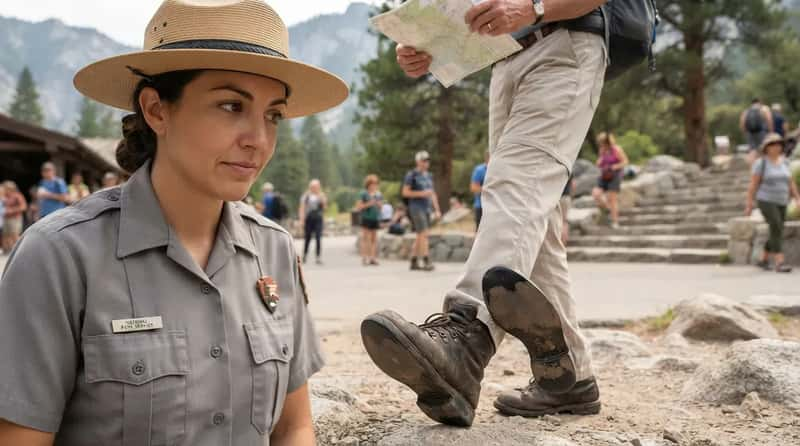
Rangers say footwear gets a glance within seconds. Smooth-soled slip-ons and fashion sandals on rocky ground raise concern. Sturdy, broken-in lace-ups send the opposite signal, and a ranger is far more likely to suggest a longer route.
Here comes the opinion that starts arguments. Many hikers treat decades-old boots as a badge of honor. Some rangers see it the opposite way.
Boots with shiny, flat spots where the lugs used to be can be a fall risk on any incline or wet surface. The boots you’re proudest of may be the ones most likely to put you on your back. The next clue is draped over an arm.
#9 – The Jacket Over One Arm on a Warm Morning
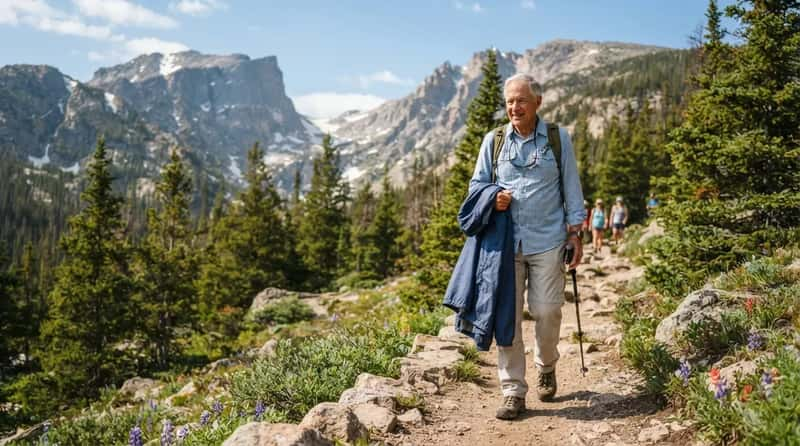
On a sunny morning, a light jacket carried over one arm marks someone who has been burned before. Mountain weather doesn’t follow the parking-lot thermometer. Even in midsummer, temperatures can drop sharply in the high-elevation parts of Rocky Mountain National Park.
The park’s own advice is to dress in layers. It lists a wind or rain jacket and a fleece among the things to pack, and it warns that a bright, sunny day can turn windy and wet in minutes.
Rangers rarely have to rescue the overdressed. Water is the next thing they look for.
#8 – The Water Count, Done at a Glance
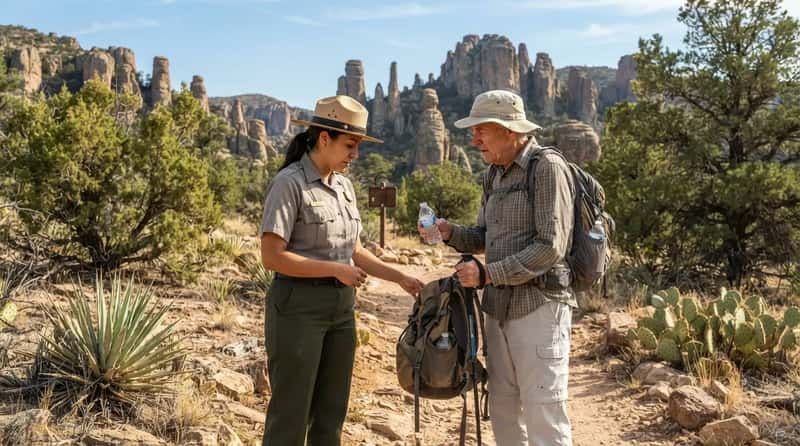
Rangers take a quick inventory of water. One small bottle for a long summer walk raises eyebrows. Older visitors sometimes carry less because they don’t feel thirsty, and that feeling can mislead.
Park guidance is blunt on this point. Chiricahua tells hikers to carry about one liter, or one quart, of water per hour. NPS heat guidance says to start before 10 a.m. or after 4 p.m., the coolest parts of the day.
Thirst is a late alarm, so sipping before you feel it is the better habit. Then comes a question that rarely gets asked out loud.
#7 – The Altitude Question Nobody Asks Out Loud
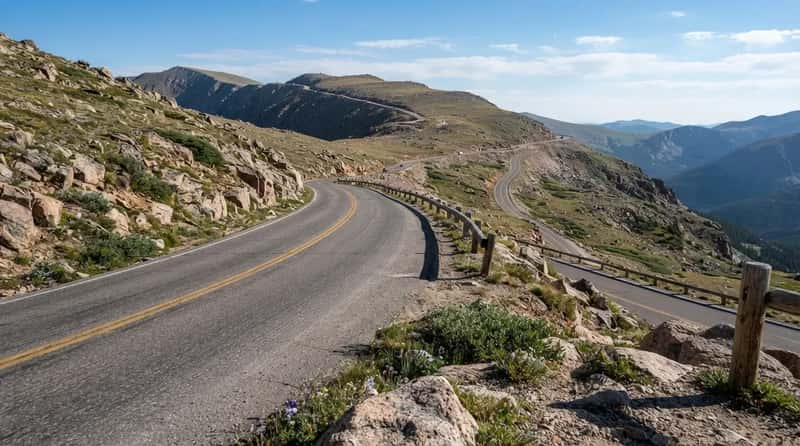
Many visitors over 70 never mention elevation, and rangers notice. The NPS says that at 8,000 feet you are at risk of altitude illness, a potentially life-threatening condition. Rocky Mountain’s high road is a good example, since Trail Ridge Road climbs past 12,000 feet.
Here’s the myth-buster. One travel guide notes that seniors are not more susceptible to altitude sickness than younger people. The real worry is existing health conditions, since altitude can aggravate heart and lung disease.
For serious symptoms, the NPS says the only cure is to go down. The next tell has nothing to do with gear.
#6 – The “Just a Minute” While Standing Perfectly Still
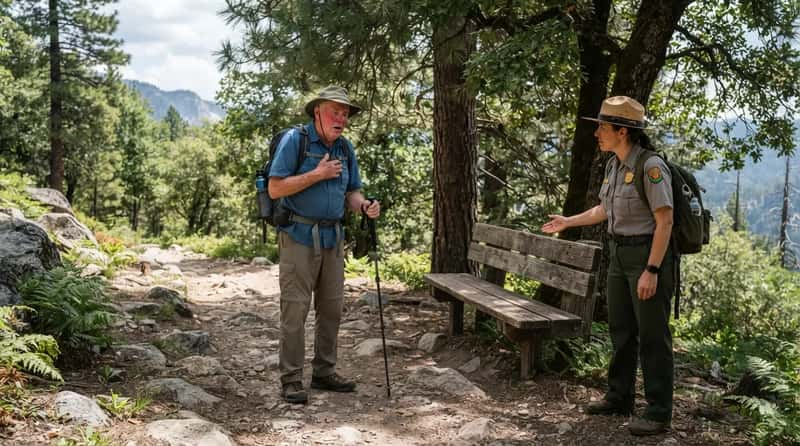
This one is easy to miss unless you’ve seen it many times. Rangers watch for older visitors who insist on “just a minute” while breathing hard, even though they’re standing still. A person who looks fine at the trailhead can run through their reserves quickly.
Rangers describe a gentle approach. They don’t announce a diagnosis. They suggest the shaded bench, point out a good photo spot, or ask about the view, which lets a proud visitor sit down without losing face.
Quick Compare
- Pushing on: You skip the bench, the view gets blurry, and the rest of the trail turns into a struggle.
- Pausing early: You sit for five minutes, take in the scenery, and often finish stronger.
The best ranger intervention is one the visitor never recognizes as an intervention. The hardest conversations happen on a tour with ladders.
#5 – The Ladder Conversation at Mesa Verde
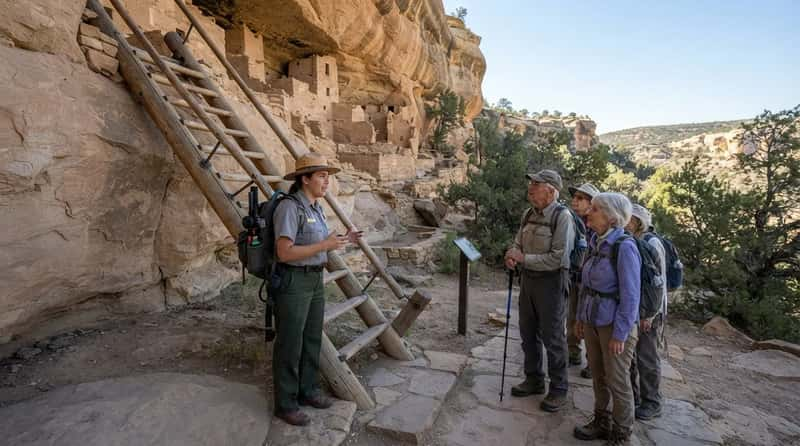
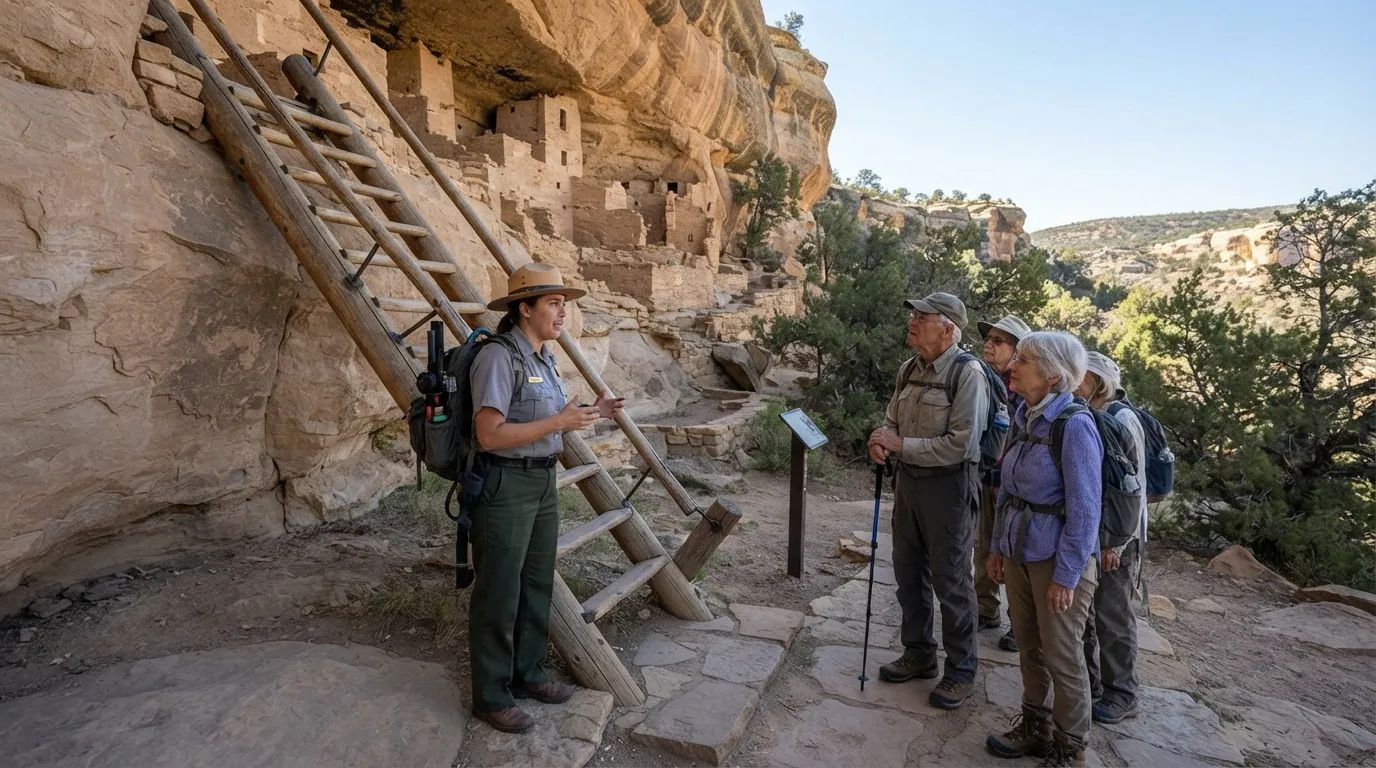
Some of the park’s most famous sights require real climbing. Cliff Palace, Balcony House and Long House can only be visited up close on reserved, ranger-led tours. That gives rangers a natural moment to check in on stamina before the group heads out.
The details are real. The Long House tour involves 2.25 miles of walking and a steep staircase with two 15-foot ladders. The park sits above 7,000 feet, and the NPS warns that the cliff dwellings may not be suitable for people with heart or respiratory issues.
An honest answer at the sign-in table can save you from getting stuck halfway up a ladder. Not every park asks you to climb, though, and some will bring help to you.
#4 – The Free Wheelchair Almost Nobody Thinks to Ask For
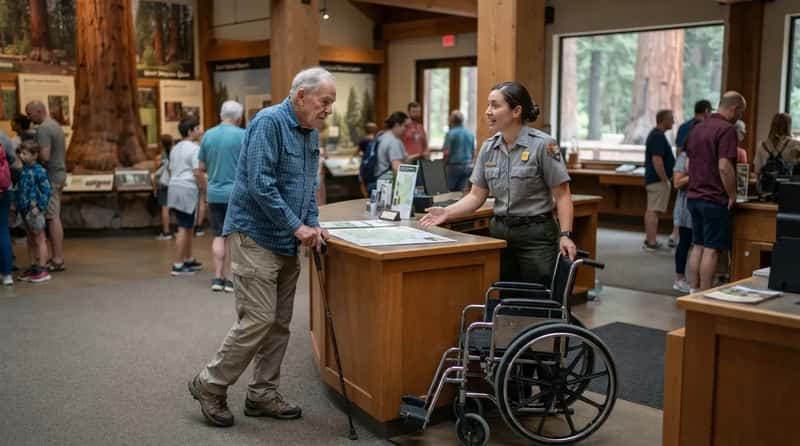
Many visitors have no idea parks lend out mobility help. At Sequoia and Kings Canyon, a manual wheelchair can be borrowed at the Kings Canyon Visitor Center, Giant Forest Museum or Lodgepole Visitor Center. Some parks also lend assistive listening devices for ranger programs.
Rangers notice who walks right past the desk, limping, instead of asking. It’s one of the most avoidable problems they see.
The rules are simple. Wheelchairs may be used anywhere in the parks but must be returned to where they were borrowed by closing time. People with permanent disabilities can also qualify for a free lifetime Access Pass.
Asking for help is a skill the best-prepared visitors practice. Some of the strongest moments on the trail come from the family.
#3 – Grandparents Turn Into Safety Officers
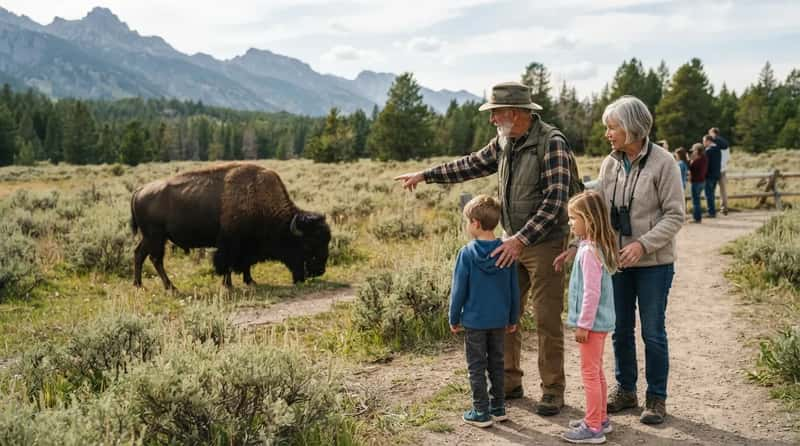
Multigenerational trips are common in parks, and the roles often flip. Older relatives sometimes step in as the voice of caution when the grandkids start edging toward an animal. A grandparent doesn’t need a rulebook to say “That’s too close.”
Rangers acknowledge the nostalgia, too. Some older visitors grew up when roadside bear feeding was part of the park experience in certain places, and those memories can resurface. But plenty of older visitors turn out to be the strictest rule followers around.
Fast Facts
- Stay at least 100 yards from bears and wolves.
- Stay at least 25 yards from other large wildlife, including bison and elk.
- A bison can sprint around 30 mph, which is much faster than any grandparent or grandchild.
- Zoom lenses exist so nobody has to step closer.
Current NPS guidance is to stay at least 25 yards from most large animals and 100 yards from bears and wolves. The person who learned the old way is often the one teaching the new rule. Another habit tends to surprise younger travelers.
#2 – They Look Down, and They Ask About the Park Back Then
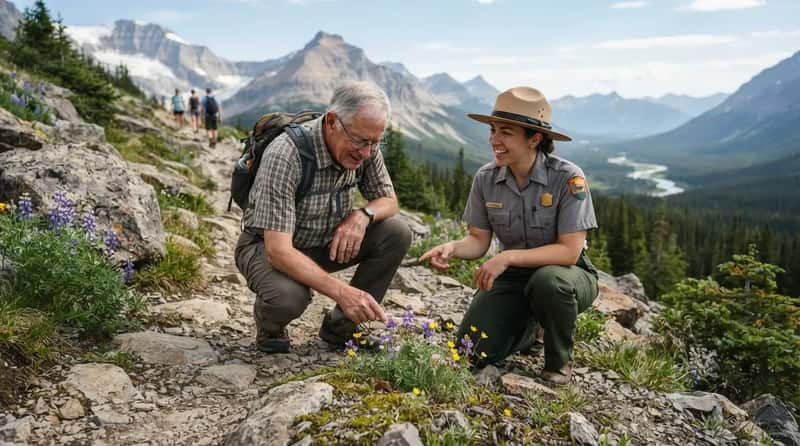
Rangers love this one. Some of the best views in a park are right at your feet, and many older visitors are the ones who find them. They crouch to study a wildflower, follow a bird’s call, or spot a lizard on a rock the crowd walked past. This isn’t slowness. It’s attention.
Many rangers also turn the conversation around. Instead of just handing out information, they ask older visitors about parks they saw decades ago, and how glaciers and other features have changed. A visitor who stood at an overlook in 1975 is carrying a living record.
Sometimes the ranger learns more than the visitor does. One more habit tops them all.
#1 – They Stop at the Desk and Ask What’s Happening Today
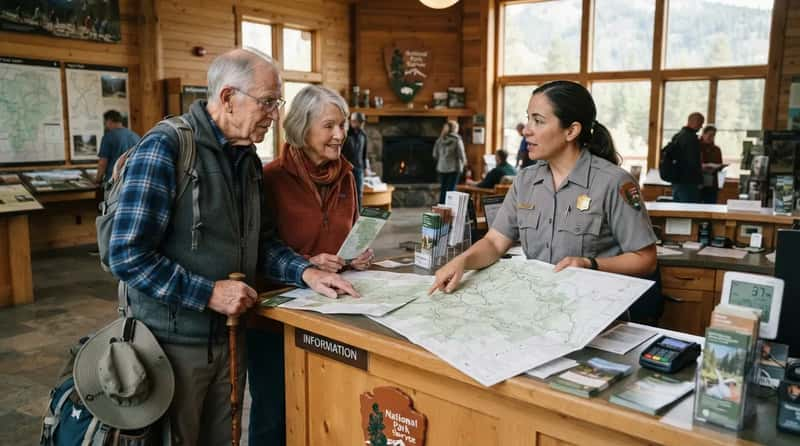
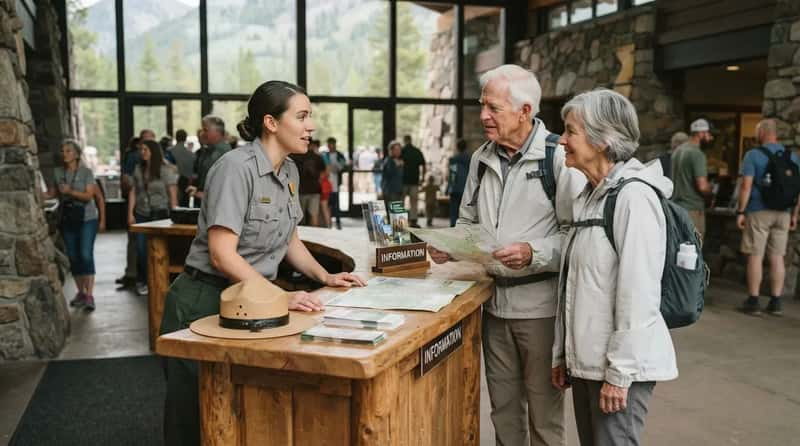
This is the one rangers say matters most. Older visitors are often the ones who stop at the desk and ask what’s happening this week. A five-minute chat about trail conditions, closures and weather can prevent a very long afternoon.
At a Glance
- Trail conditions and any closures on your planned route
- Today’s weather, especially wind, storms and temperature swings
- Where the nearest water and restrooms are
- Ranger programs or tours that fit your pace
Now the twist. In one analysis of NPS search-and-rescue reports from 2003 to 2006, visitors 60 and older made up 8.1% of subjects, the lowest share in the age breakdown. Those figures are old and use a different age cutoff than 70.
Still, they challenge the “reckless older visitor” stereotype. The traveler rangers worry about most often isn’t the one who asks questions. It’s the one who’s too proud to.
Rangers can size up a visitor in half an hour, but the visitors who stay curious are the ones they remember for years.