You’ve probably paid full price for a long train ticket and never once heard there was another way. If you’re over 60, that silence can get expensive. Across Britain, the U.S. and Canada, older riders have a set of quiet options: fare cuts, boarding help and medication storage. Almost none of them get announced over the speakers.
Some of these are worth real money. A few matter far more than money on a ten-hour day. And one popular “senior discount” stops dead at the single most expensive part of the ticket. Start with the cheapest trick on the list, then watch for the rule that trips up even seasoned travellers.
#13 – The £35 Card That Quietly Takes a Third Off Almost Every Fare
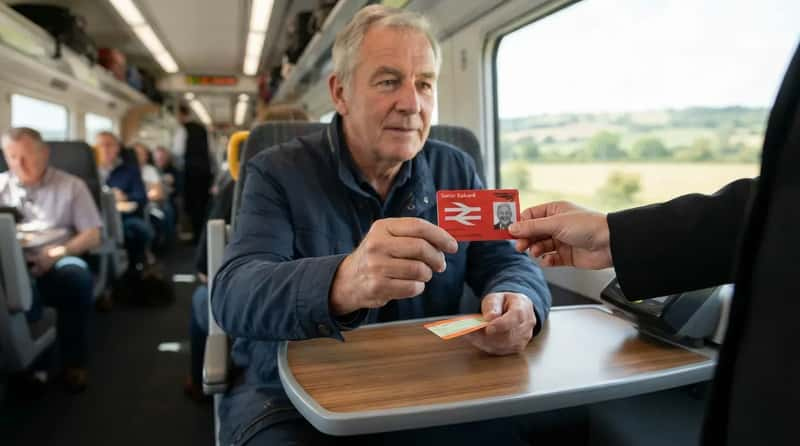
One small card can cut a third off most train tickets in Britain. Anyone aged 60 or over qualifies, with no upper age limit and no income test. A Senior Railcard costs £35 for one year. It applies to Anytime, Off-Peak and most Advance fares across Great Britain.
Avanti West Coast says it typically pays for itself within just three journeys. The price only recently changed: the £35 fare took effect on 2 March 2025, up from £30, the first increase in over a decade. Plenty of travellers still learn about the card from a stranger on a platform, not from the person selling them a ticket.
But the one-year card isn’t the cheapest way to buy it, and #12 explains why.
#12 – The Three-Year Option Most Travellers Walk Right Past
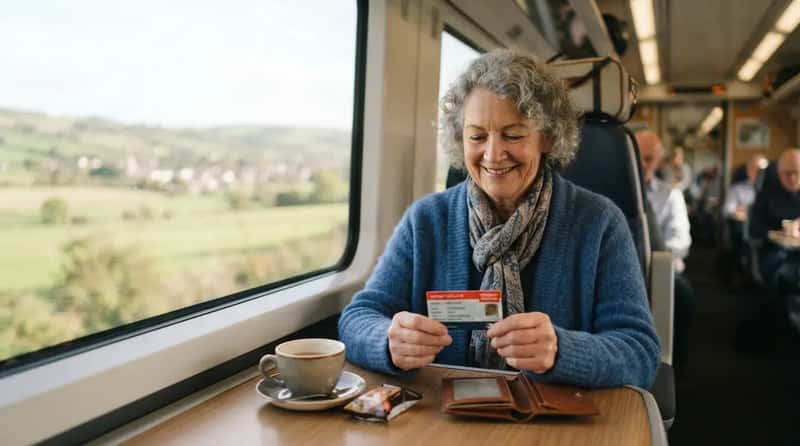
Buying the card year after year is the pricier habit. The three-year Senior Railcard costs £80, which saves £25 compared with buying three one-year cards. That brings the cost to under £27 a year.
It suits anyone who rides regularly, like visiting grandchildren or making a monthly trip to see old friends. It’s less appealing if you’re unsure how often you’ll travel. Some booking apps offer the three-year card with automatic renewal, so check the renewal terms before you tap “buy.” The saving is real, but only if the card actually leaves your wallet.
Even with the card in your pocket, there’s a London catch that trips up plenty of people.
#11 – The Morning-Peak Rule That Catches Out Visitors to London

A railcard isn’t a free pass at every hour. The Senior Railcard is not valid for weekday morning peak travel in the London and South East area. The discount works almost everywhere else, so the restriction only bites on one particular kind of trip.
Picture someone arriving for a family visit who boards a busy commuter service at the wrong time. The discount is simply gone when they reach the barrier or the ticket screen. Most national rail advice says to check the time on your ticket before you pay, not to assume the card works at every hour. A slightly later departure often fixes the problem entirely.
At a Glance
- Who: Anyone aged 60 or over
- Price: £35 for one year, or £80 for three
- Saving: One-third off most fares in Great Britain
- Blind spot: Weekday morning peak in the London and South East area
Once you’re in London, though, there’s another discount hiding in plain sight.
#10 – The Oyster Link That Makes the Tube Cheaper Too
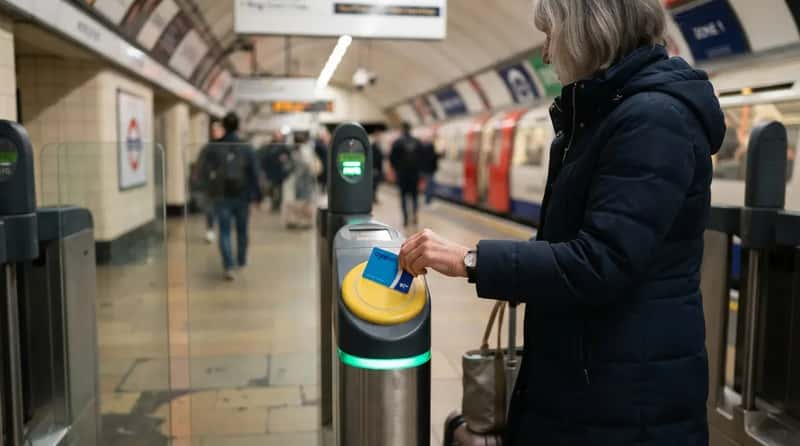
Here’s a trick plenty of rail travellers never hear about. Railcards don’t discount the Underground, DLR or buses by default. The Senior card has to be linked to your Oyster card first.
Once it’s added, you can get one-third off Off-Peak tube and DLR fares. That matters on a long journey ending in the capital, where the final tube ride can cost almost as much as a slice of the main trip. The saving only exists if you set it up.
Across the Atlantic, the senior rules look very different, and they come with their own fine print.
#9 – Amtrak’s Senior Fare Only Appears If You Ask the Screen for It

In the U.S., the discount doesn’t announce itself. Riders 65 and older get 10% off the lowest available rail fare on most Amtrak routes. To get it, you have to select “Senior” as the traveler type when booking on Amtrak.com or the app.
That one small selection is the entire gate. Skip it and you pay the standard fare with no warning. The discount excludes the Auto Train and weekday Acela trains. Plenty of people over 65 discover this mid-booking, and some only find out after they’ve paid.
Fast Facts
- Discount: 10% off the lowest available rail fare
- Age: 65 and older on standard routes
- How to claim: Choose “Senior” as traveler type on Amtrak.com or the app
- Left out: The Auto Train and weekday Acela trains
The bigger catch sits inside the sleeping car, and it’s #8.
#8 – The Sleeper Charge Where the Discount Quietly Stops
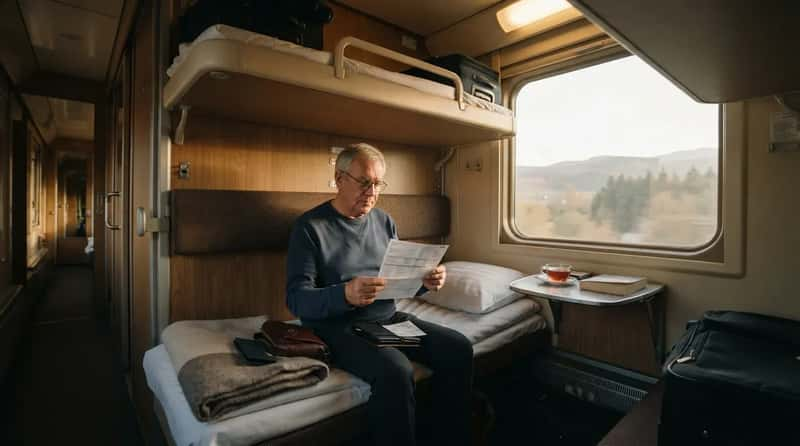
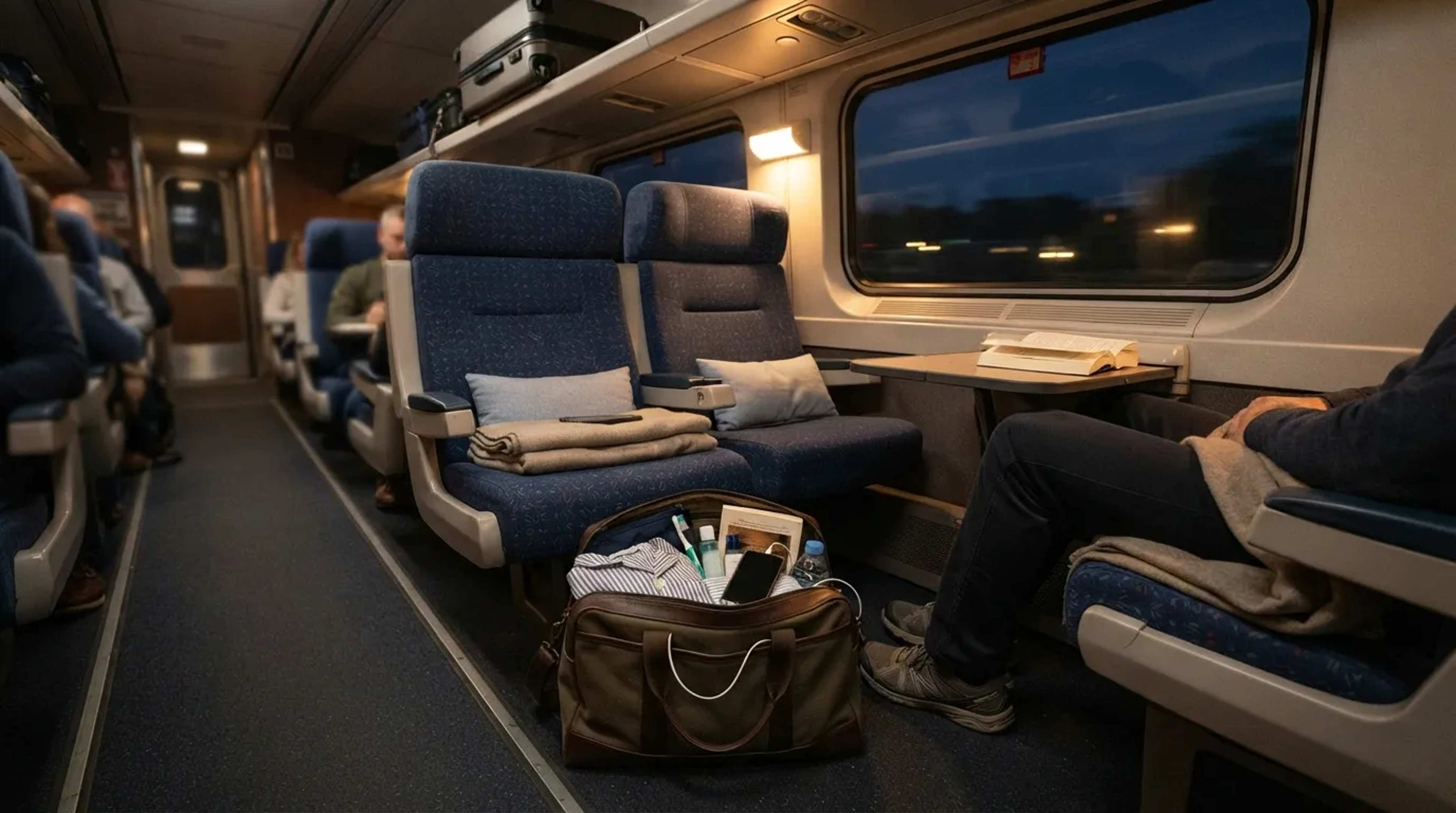
On the longest journeys, the biggest cost is the bed. The 10% discount applies to the underlying rail fare, but not to the sleeping-accommodation charge, which is usually the larger part of a roomette or bedroom price. So the headline saving shrinks fast on an overnight trip.
That’s why some travel writers call the perk modest for scenic overnight routes. Business and First class upgrades are excluded too. The discount still has value on coach seats, but anyone budgeting for a cross-country sleeper should check the final total before counting on a big saving.
There’s one route where the age threshold drops, and it surprises people.
#7 – The Cross-Border Trains Where “Senior” Starts at 60
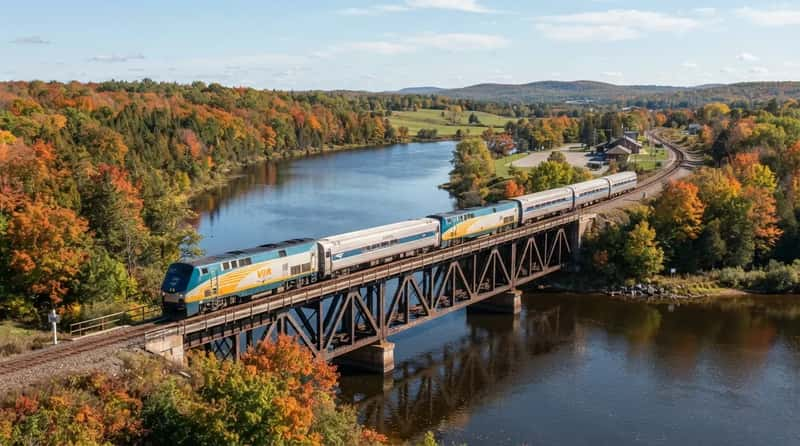
Some Amtrak routes treat you as a senior five years earlier. On cross-border trains run jointly by Amtrak and VIA Rail Canada, the senior discount kicks in at age 60. The standard U.S. threshold is 65.
That matters for travellers in their early sixties heading north. They may assume they’re too young, skip the option and pay more than they need to. The age gap applies only to the joint cross-border services, so it won’t help on a domestic route.
Canada has its own senior deal, and in one way it beats the American one.
#6 – VIA Rail’s 15% Offer Comes With a 30-Day Catch

North of the border, the percentage is bigger. Passengers aged 65 and over can get 15% off Economy Plus, Business and Business Plus fares on all VIA Rail routes. That’s a stronger cut than Amtrak’s 10%, and it reaches the premium cabins too.
The catch is timing. You need to book at least 30 days in advance and select the passenger type “Senior (65+).” VIA’s page also shows a promotion window for travel through April 2027, so the offer is dated and conditions apply. Last-minute trips don’t qualify, which rules out the spur-of-the-moment getaway.
Quick Compare
- Amtrak: 10% off the lowest available rail fare, age 65+, no advance-booking rule mentioned
- VIA Rail: 15% off Economy Plus, Business and Business Plus, age 65+, book 30 days ahead
- Joint cross-border trains: The Amtrak senior age drops to 60
Stacking discounts sounds smart, but there’s a rule that stops it.
#5 – Why a Sale Fare Can Beat the Senior Discount

The senior discount doesn’t combine with everything. It may not stack with Saver Fares or other promotions, so you’re choosing between two deals, not piling them up.
The sensible move is to compare both prices side by side. One travel site puts it bluntly: if a sale fare is cheaper than 10% off the regular fare, take the sale fare. Plenty of people grab the “Senior” label by reflex and never check whether a promotion was already cheaper.
Even once you’ve found the best fare, there’s a document you’ll be asked to show twice.
#4 – The ID Check That Happens Twice, Not Once

Booking the discount is only half the job. Valid photo ID proving your age is required at purchase and again on board. A quick look from the crew mid-journey is nothing unusual.
Leaving your ID in a checked bag is the classic mistake. The fix is simple: keep your driver’s licence or passport in an easy carry-on pocket, not buried under your luggage. A flustered explanation to a conductor is a lot less relaxing than a ten-second flash of a card.
Worth Knowing
- Checkpoint one: When you buy the ticket
- Checkpoint two: Again on board, often without warning
- Examples of photo ID: A driver’s licence or a passport
- Best spot: An easy carry-on pocket, never the checked bag
Now for the quiet help that has nothing to do with money, starting at #3.
#3 – The Medication and Mobility Options Hiding in the Fine Print
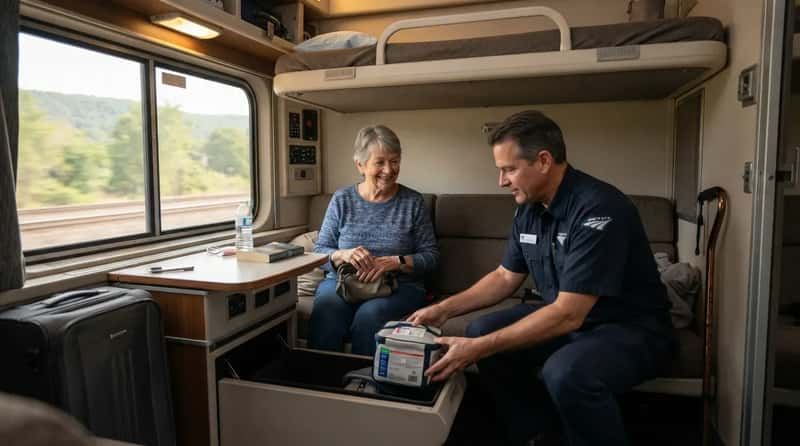
Some of the most useful perks never appear in a fare list. Amtrak says special accommodations for passengers with disabilities and mobility impairments, plus medication storage, are also available. On a long trip, that means more hours and more routines to manage.
Medication that needs storage is the kind of detail people only think about once they’re mid-journey. Amtrak’s page also describes sleeping-car rooms as a way to get a proper night’s rest. The practical lesson is to ask about all of this during booking, not after you’ve boarded and the day is already moving.
The next one is about getting on the train at all.
#2 – The Boarding Help You Can Arrange Before You Reach the Platform
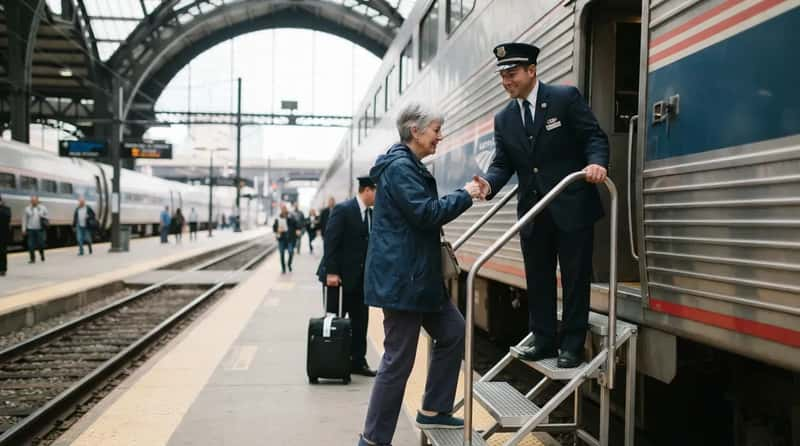
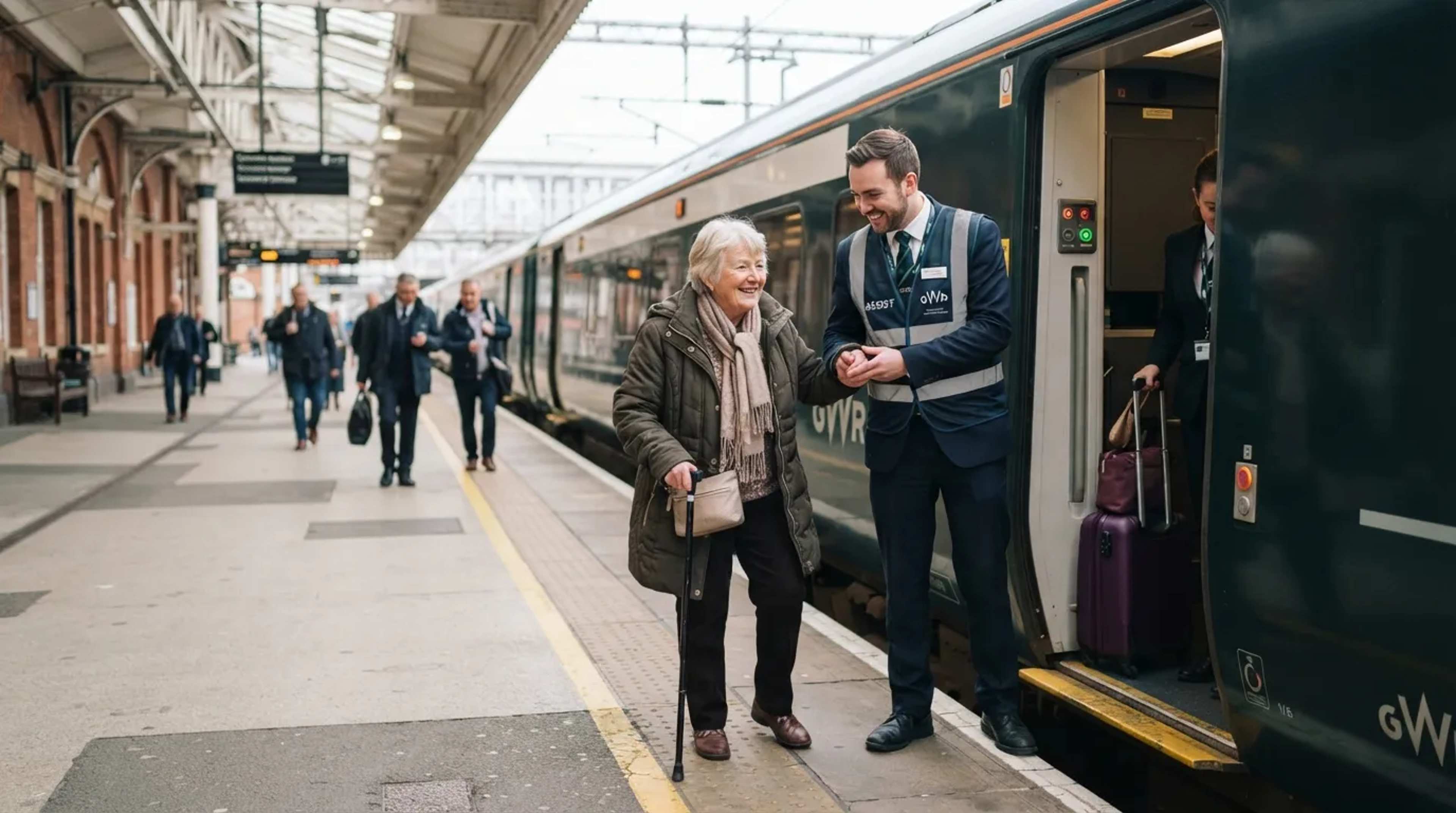
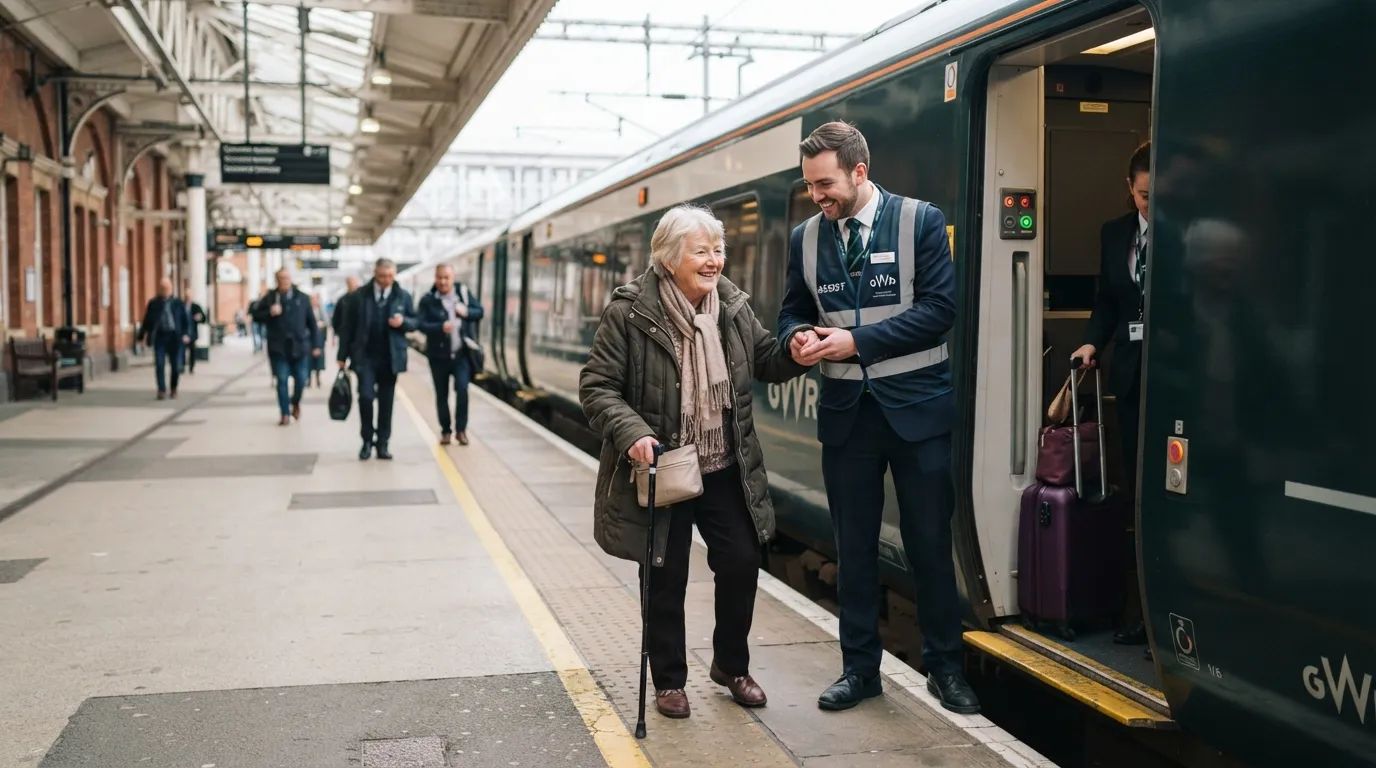
Climbing aboard with luggage is where many long journeys turn stressful. One senior-travel guide reports that Amtrak can arrange for staff to help you board and find your seat if you ask when you reserve. The same guide adds that a wheelchair boarding lift is available at most stations.
That guide is a third-party source, and some of its details differ from Amtrak’s own pages. So treat it as a prompt to ask, not a promise. The reliable move is to request assistance during booking and confirm it with the station. VIA Rail’s booking flow also lets you add special requests such as mobility assistance.
And the last one may be the most useful rule of the lot.
#1 – The Two-Hour Assistance Rule Most Travellers Don’t Know Exists
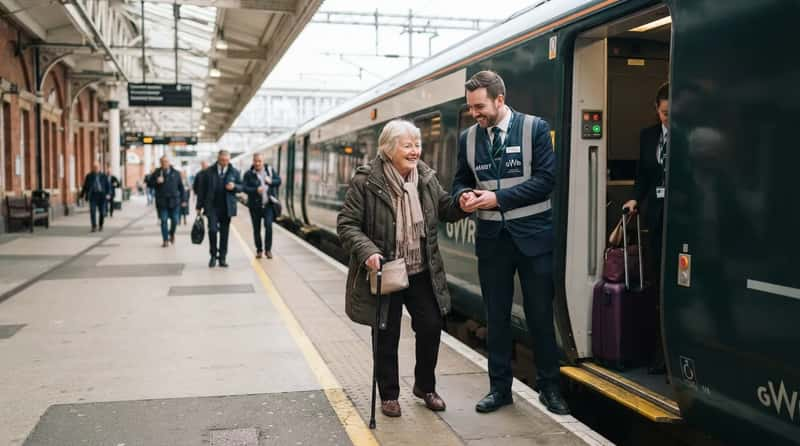
In Britain, there’s a service built for exactly this. Passenger Assist is provided by train companies for passengers who need help with their journey. Recent guides say it now needs just two hours’ notice, not a full day.
That shorter window is a quiet but significant change, because it makes help possible even when plans shift at the last minute. It can cover boarding, finding a seat and getting off at the other end. Many travellers still assume they need to book a day ahead, so they never ask at all. Confirm the current notice period with your operator, because rules can change.
Look back over all thirteen and the pattern is hard to miss. Fares, boarding help and storage options exist, but most only work if you ask for them or tick the right box. A £35 Senior Railcard, a “Senior” checkbox and a two-hour assistance window can change a long journey, while the sleeper exclusion and the no-stacking rule show where the small print bites.
Rules differ by country and change over time, so confirm details with the operator before you travel. The best perks on a train were never printed on the ticket. Which of these did nobody ever mention to you?