Most people assume roadside assistance means a tow truck, a jump-start, and a bill. That assumption is wrong in ways that would surprise almost every driver over 60 currently paying for a plan they’ve never actually read.
Behind the scenes, the industry quietly built an entirely different tier of service for older travelers – one built around solo road trips, unfamiliar highways, and the specific fears that come with breaking down far from home. Here’s what’s actually happening on the other end of that call, starting with the smallest detail and building to the one benefit almost nobody realizes exists.
#13 – They Slow Down and Talk You Through It
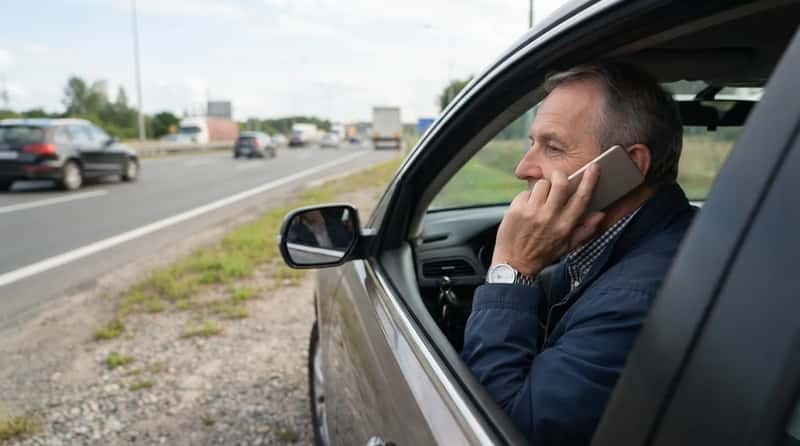
When a driver over 60 calls for help, trained dispatchers at major providers are more likely to slow the call down instead of rushing you off the line. The goal isn’t just logistics – it’s making sure you’re calm and not about to make a panicked decision standing near a busy shoulder.
That matters more than it sounds. A confused or stressed driver standing near moving traffic is a genuine safety risk, and experienced dispatch teams know it better than anyone.
A good dispatcher will walk you through whether to stay in the car, where to position yourself, and what to watch for while you wait. That verbal hand-holding never shows up on a plan brochure, but it’s one of the most quietly valuable parts of the entire call.
But that’s nothing compared to what we found on #12, where your actual location does the talking for you – before you even say a word.
#12 – They Use GPS to Find You Without Making You Describe Where You Are
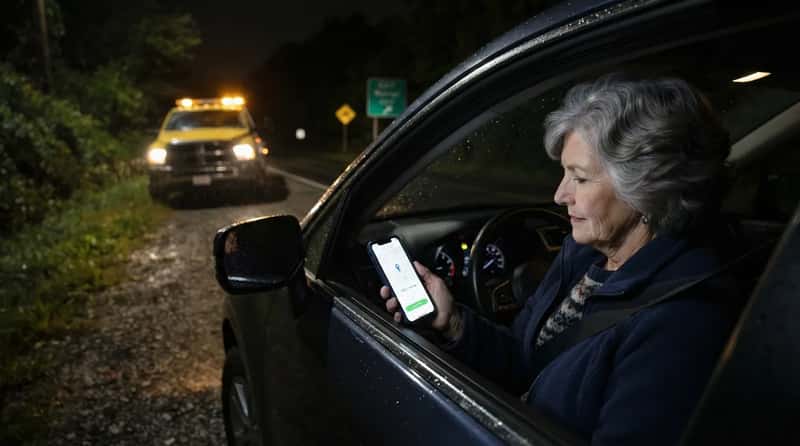
One of the quietest upgrades in roadside assistance is automatic location detection. The AAA mobile app lets you request help with your location detected automatically, so you never have to describe where you are.
For any driver, that’s convenient. For someone over 60 who just pulled off onto an unfamiliar rural exit in the dark, it can be the difference between a 20-minute wait and a two-hour search along the shoulder.
Older drivers who aren’t comfortable with apps can still call in. Dispatch centers increasingly use cell tower data from the callback number to narrow down your location even on a plain voice call, working quietly in the background whether you realize it or not.
But that’s nothing compared to what we found about #11, where you can watch help arrive in real time, minute by minute, instead of just hoping it’s coming.
#11 – They Let You Track the Technician Live So You’re Never Left Guessing
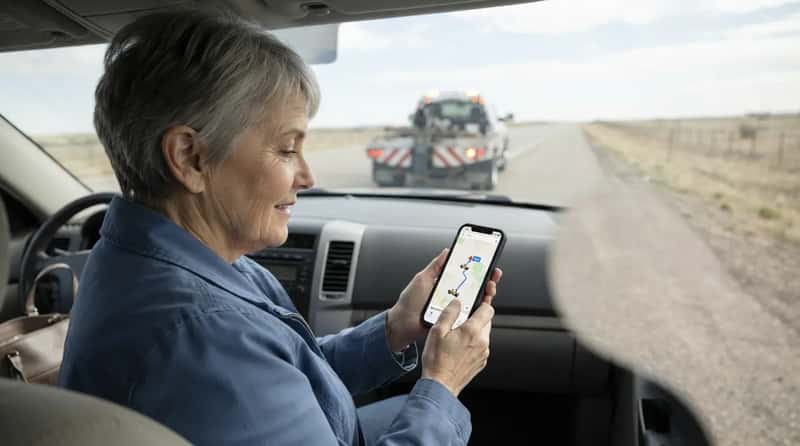
Once you submit a roadside request, you can track the service vehicle directly to your location from your phone. For a driver over 60 traveling solo, that real-time visibility is a specific kind of comfort – you finally know if help is five minutes away or fifty.
Response time varies depending on time of day, breakdown location, and severity of the issue. Providers strive for the fastest response possible, but the tracking itself is what actually changes how the wait feels.
Knowing exactly when the truck will arrive removes the urge to keep calling back, re-explaining the situation, or worse, trying to fix the problem yourself. For someone parked alone on an empty stretch of interstate, that certainty does more for peace of mind than almost anything else on this list.
Fast Facts
- (cite index=”3-1″>It usually takes up to 21 minutes for AAA roadside assistance to arrive, depending on your location, your reason for requiring assistance, and the road conditions.
- In rural or underserved areas, though, (cite index=”4-2″>drivers might see over one-hour wait times.
- (cite index=”5-9″>When you request service online, you can track the progress of your request including the location of your technician.
- (cite index=”5-4″>Each member receives up to four service calls per membership year for roadside assistance in any vehicle you are in.
But that’s nothing compared to what we found about #10, where the crew arriving already knows more about your car than you might expect.
#10 – They Test Your Battery on the Spot and Replace It Right There
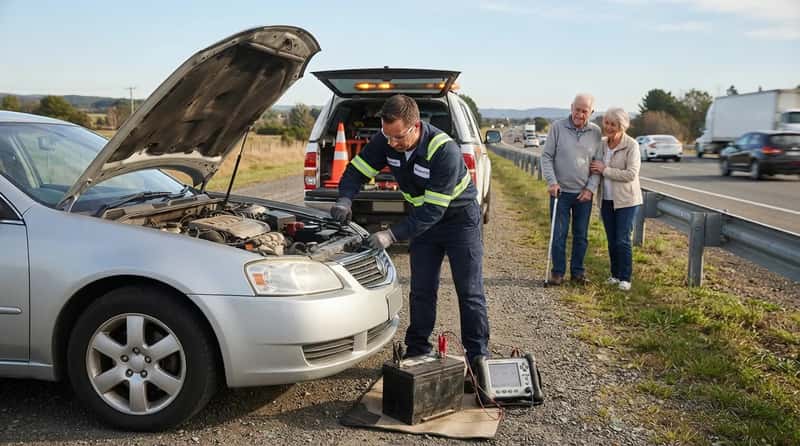
If your vehicle won’t start, a certified technician tests the battery and jump-starts it if needed. If the battery fails the test, many providers will install a replacement on-site – backed by a nationwide three-year warranty – and recycle the old one before they leave.
Most drivers over 60 assume the technician just jump-starts the car and drives off. In reality, they’re running a full diagnostic on the charging system right there on the shoulder of the road.
That distinction matters enormously on a long trip. A jump-start that ignores a dying battery just guarantees you’ll be stranded again in 40 miles, while an on-the-spot replacement closes the problem for good.
But that’s nothing compared to what we found about #9, where fuel delivery gets handled far more thoughtfully than most people expect.
#9 – They Deliver Fuel Without Making You Walk to a Gas Station
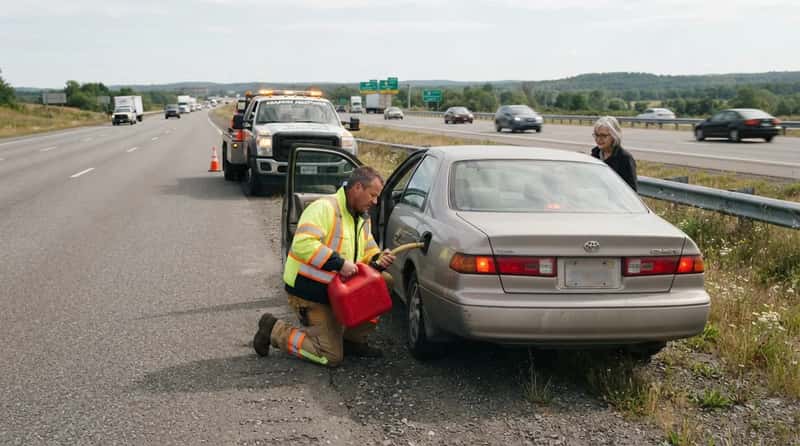
If you run out of fuel, roadside crews bring enough to get you to the nearest station. That sounds simple, but for a driver over 60 alone on a multi-hour interstate stretch, not having to walk or hitchhike to a pump is a genuine safety win.
Some premium plans cover the fuel cost outright, while others cover only the delivery and ask you to pay for the gas itself. Either way, the crew comes to you, and on unfamiliar roads in an unfamiliar state, that distinction matters enormously.
Dispatchers at most major providers will also check hours and confirm the nearest open station before sending a truck. Nobody wants to hand you a half-gallon at 11 p.m. only to learn the closest pump is thirty miles away and closed.
But that’s nothing compared to what we found about #8, where getting locked out has an entirely different resolution than most drivers expect.
#8 – They Handle Lockouts Without Damaging Your Door
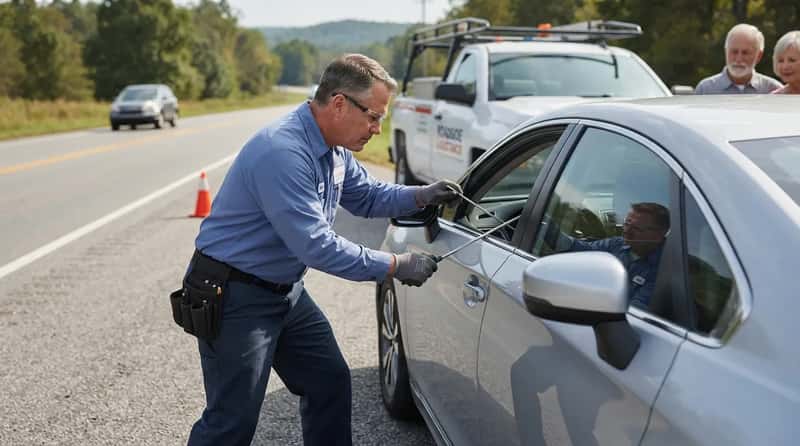
If you get locked out, a technician will assist on the spot, or the provider will help cover a locksmith. What most drivers over 60 don’t realize is that lockout service has come a long way from the old “slim jim” days that bent door panels.
Certified technicians now use non-destructive entry methods that protect the seals and trim on newer vehicles. If a smart key or security system makes on-site entry impossible, the provider covers a licensed locksmith with the right tools for your specific make and model.
For drivers carrying prescription medication in a locked car on a hot day – a scenario more common among older travelers – the speed and skill of that response isn’t just a convenience. It’s a health matter.
But that’s nothing compared to what we found about #7, where a breakdown hundreds of miles from home triggers a financial safety net you may not know you have.
#7 – They Activate Trip Interruption Coverage That Pays for Your Hotel and Meals

Trip interruption benefits reimburse you for food or lodging if you’re stranded far from home waiting on a repair. Depending on your plan, this coverage is either included or available as a paid upgrade.
If you’re more than 100 miles from home and your vehicle becomes inoperable, you can typically be reimbursed for expenses within three days of the incident or until the repair is finished – including a rental car or transportation home.
Some plans push this further. Good Sam, for instance, covers trip interruption up to $1,200 if a serious repair or medical emergency strands you far from home. Most drivers over 60 never file these claims simply because they never learned the benefit existed.
Worth Knowing
- (cite index=”12-15″>Nearly 61.6 million Americans gear up for Independence Day road trips in a typical year, and a large share of them drive hundreds of miles from home.
- During that single travel week, (cite index=”12-16″>AAA responded to more than 700,000 roadside emergencies.
- (cite index=”12-17″>The most common calls were flat tires, dead batteries, and lockouts – not dramatic mechanical failures.
- That volume is exactly why trip interruption coverage exists: long-distance breakdowns are common, not rare.
But that’s nothing compared to what we found about #6, where the tow itself is far more flexible than drivers realize.
#6 – They Tow You to the Repair Shop You Choose, Not Just the Nearest One
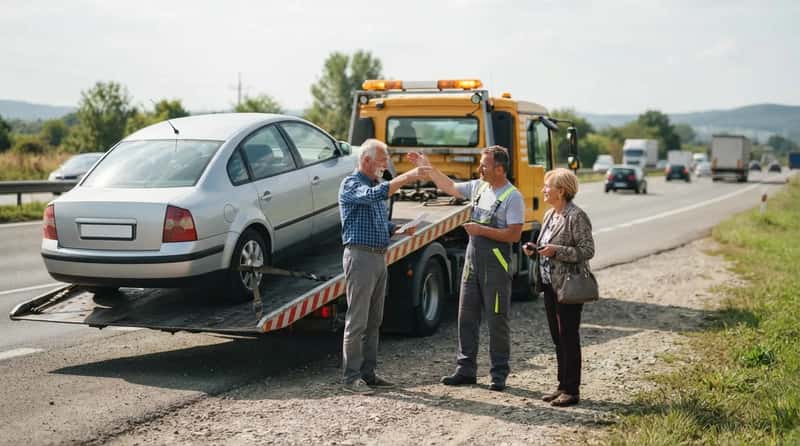
If your car can’t be fixed on the roadside, most providers will tow it to a repair facility of your choice. Choose an approved shop and you may also get a discount on labor plus a free vehicle health inspection.
That “shop of your choice” clause is more powerful than it sounds. A driver with a trusted mechanic back home – or who simply doesn’t want to get taken advantage of at an unfamiliar shop hundreds of miles away – can often request a tow to a dealership or chain they actually recognize.
Towing distance limits vary by provider. Some cap it at the nearest service station, while premium plans extend the range significantly, which is exactly what makes upgrading worthwhile before a long-distance trip.
But that’s nothing compared to what we found about #5, where the dispatch team doesn’t just send help – they stay in contact until it actually arrives.
#5 – They Call and Text to Confirm Help Is En Route

Roadside assistance carries particular value when a senior lives and travels alone. Many providers will text and call the member in distress to confirm the technician or tow truck is actually en route to the right location.
That proactive loop is one of the most underappreciated parts of the entire service. You’re not left sitting in silence wondering if your call dropped or got lost somewhere in the system – dispatch confirms, follows up, and lets you know when help is close.
For a solo traveler over 60, that check-in removes the single most anxious part of a breakdown: not knowing if anyone is actually coming. It’s a small operational habit that makes an outsized emotional difference at 10 p.m. on an empty stretch of highway.
But that’s nothing compared to what we found about #4, where your plan can quietly cover a second household member at no extra cost.
#4 – They Extend Coverage to a Spouse or Household Member for Free

Most memberships work in any car you drive or ride in, including rented or borrowed vehicles. Many also let you add a second household member at no additional charge.
For couples over 60 who take turns driving, or sometimes travel separately, this is a real financial benefit most members never think to use. Plenty of couples are paying for two full memberships when one would have covered them both.
AMAC’s roadside plans, built specifically for older Americans, take it a step further – multi-year memberships save money, and every package includes your spouse for free. Senior-focused providers have made household coverage a baseline feature instead of a premium add-on.
But that’s nothing compared to what we found about #3, where a specific benefit targets drivers who take long highway trips specifically.
#3 – They Quietly Offer Senior-Specific Plans Built Around Long-Distance Travel
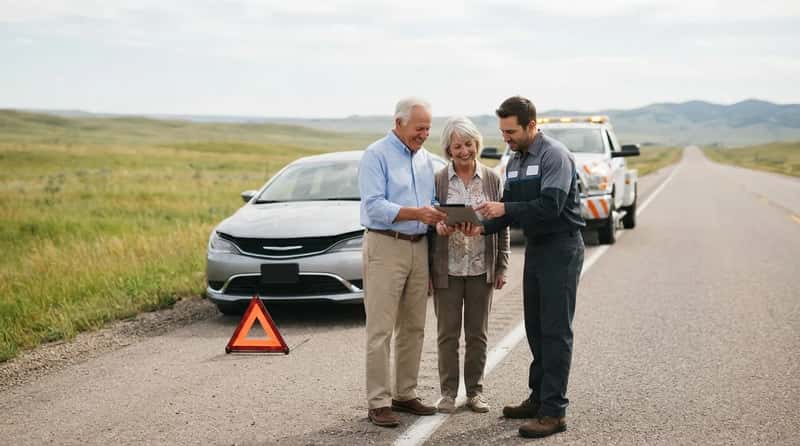
AARP, well known for its benefits aimed at people 50 and over, offers tailored roadside options built around the realities mature drivers actually face. It’s not just about solving car trouble – it’s an extra layer of safety and reassurance on every trip.
These plans are structured to promote independence and confidence, on the idea that age shouldn’t limit adventure. AARP’s affiliation often adds discounts and services tuned specifically to what older drivers encounter on the road.
The real difference between a generic plan and a senior-tuned one usually comes down to towing distance, trip interruption thresholds, and the customer service model – all calibrated for drivers who take longer, less frequent trips rather than short daily commutes. If you drive often over long distances, comprehensive coverage isn’t a luxury, it’s the whole point.
But that’s nothing compared to what we found about #2, which involves a driving course most people over 60 have never heard of – and which can actually lower your insurance bill.
#2 – They Connect You to a Free Driver Refresher Course That Lowers Your Insurance Rate

AAA’s Roadwise Driver online course helps older drivers sharpen their skills and learn about newer vehicle technology. Complete it, and members can often save on their auto insurance.
AAA also runs Roadwise Rx, free CarFit clinics, senior driving expos, and a range of refresher courses – all quiet extensions of the roadside assistance ecosystem that most members never bother to tap into. These aren’t remedial classes; they’re legitimately useful refreshers addressing real changes in vehicle tech and highway design.
Many major insurers offer defensive driving discounts specifically for drivers over 60. The membership that already covers your breakdowns could also be the gateway to cutting your monthly insurance bill – and most drivers over 60 never make that connection.
But that’s nothing compared to what we found about #1 – the one thing roadside crews quietly do that almost no one over 60 realizes is even an option.
#1 – They Serve as an Unofficial Welfare Check When Family Is Worried
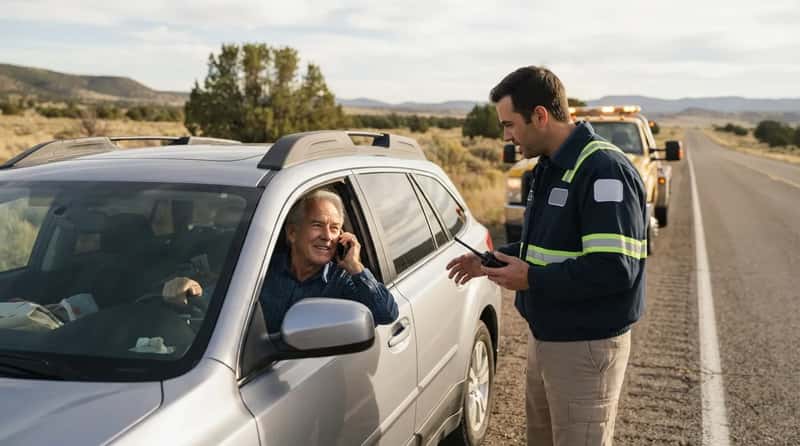
This one is almost never advertised. When a driver over 60 is traveling solo and family back home loses contact – phone dies, missed check-in, unfamiliar area – roadside dispatch quietly becomes the first call the family makes.
Roadside assistance carries extra weight specifically when a senior lives and travels alone. Dispatch teams confirming that a tow truck or technician reached the right location are, in the same breath, confirming the driver is physically safe – which is exactly what a worried family member on the other end of the phone needs to hear.
This informal welfare-check function may be the single most emotionally significant thing roadside crews quietly provide, and it costs nothing extra. It won’t appear in any brochure or under “plan features,” but solo travelers over 60, and the families who love them, lean on it more than any tow truck ever dispatched.
The Bottom Line
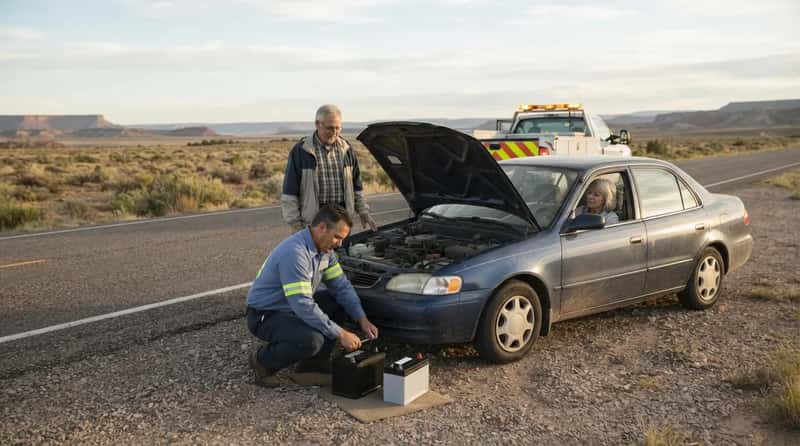
Roadside assistance for drivers over 60 has quietly grown into something far bigger than towing and jump-starts. Trip interruption coverage pays for your hotel, app-based GPS means you never have to describe where you are, technicians replace your battery on the spot with a warranty, and a second household member often rides along for free.
And in the moment that matters most – stranded alone, family starting to panic, phone almost dead – a good dispatch team becomes something closer to a lifeline than a logistics service.
At a Glance
- Automatic GPS detection and live tracking mean you rarely have to describe your location or wonder when help will show up.
- On-site battery replacement, fuel delivery, and non-destructive lockout service handle the three most common roadside calls without extra hassle.
- Trip interruption coverage can reimburse hotel, food, and transportation costs when a breakdown strands you far from home.
- Senior-focused plans often add a spouse for free and tailor towing distance and trip-interruption thresholds to long-distance travel.
The biggest mistake drivers over 60 make is assuming their current plan is “good enough” without ever reading what it actually covers on a long-distance trip. Check your towing mileage limit, confirm your trip interruption threshold, and download the app before you leave the driveway, not after you need it.
Did we miss a benefit your own plan quietly offers? Drop it in the comments – other drivers over 60 will genuinely thank you for it.
Bonus: The Membership Tier Trick That Turns a $200 Tow Into a $0 Tow
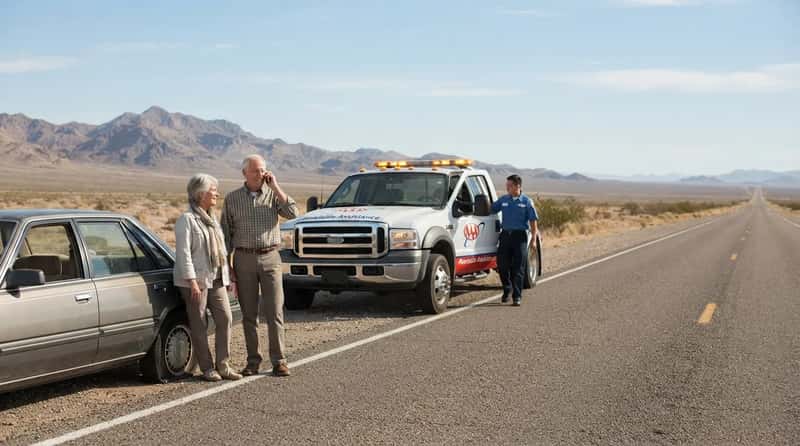
Here’s the part almost nobody checks before a long trip: your base-level membership tier may only cover a very short tow.
AAA tows 5 miles (Classic), 100 miles (Plus), or 200 miles (Premier) per call. That means a Classic member broken down 40 miles from the nearest shop could be billed for every mile past that tiny radius.
The overage math is brutal on a road trip. Overage miles beyond your limit cost $4–$7 per mile, billed at the roadside.
The fix takes ten minutes, but only works if you do it early:
- Log into your account at least 10 days before departure – not the night before you leave.
- Upgrade from Classic to Plus (or Premier if you’re taking a very long trip) online, by phone, or at a branch.
- Know the wait: extended Roadside Assistance services for Plus, Premier, or optional RV and Motorcycle services and certain Premier benefits are effective 7 calendar days after processing, so a same-week upgrade may not protect you on your first breakdown.
- Confirm the higher mileage benefit shows as active in your app or account before you hit the highway, then keep that confirmation screenshot on your phone.
This single check costs nothing and takes less time than packing a suitcase, yet it’s the difference between a tow that’s completely free and one that quietly costs you a few hundred dollars on the loneliest stretch of your trip.