Most road trippers treat a state welcome center as a bathroom stop with a brochure rack attached. That’s a mistake, because Florida’s centers alone have logged over 91.5 million visitors since 1949, and the desk does far more than point toward the restrooms.
Nothing on this list is reserved for drivers over 60, and we won’t pretend otherwise. But these 13 freebies and favors suit long, unhurried drives, and a few come with fine print nobody mentions.
One tip is sold somewhere else entirely. The last one has a strange budget story behind it.
#13 – The Free Paper Map Your Phone Can’t Replace
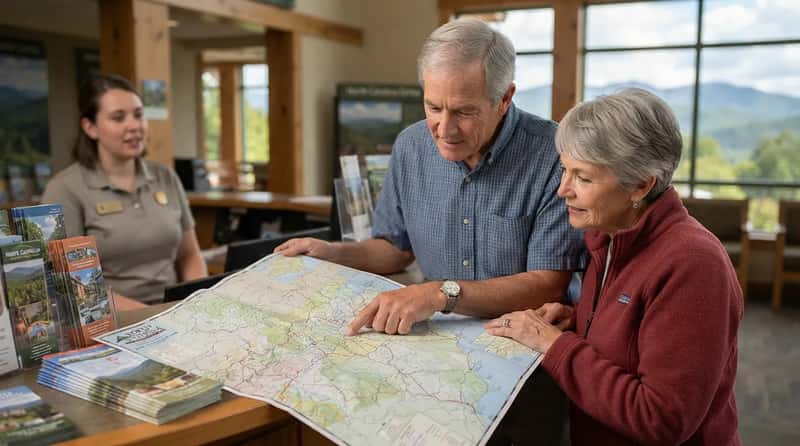
The oldest item on the counter is still the one most likely to save your day.
Welcome centers usually offer a free official state highway map, updated at regular intervals. North Carolina’s centers distribute the state Department of Transportation’s official map, and West Virginia offers free state maps too.
Screens fail at the worst moments. A Visit Savannah post notes that technology sometimes falls through, which is why a map on hand matters in any new place.
A free map is the one item here with no battery, no signal and no subscription. Rural stretches and mountain corridors are where coverage can get patchy.
Picture the signal dropping somewhere between two mountain towns. The paper map on the passenger seat is still exactly where you left it.
- Ask for the current edition, not the one sitting at the back of the rack.
- Ask staff to point out the next two rest areas on your route.
But the map is only the warm-up, because the next item is where the state quietly starts selling to you.
#12 – The Official Travel Guide Nobody Reads Properly
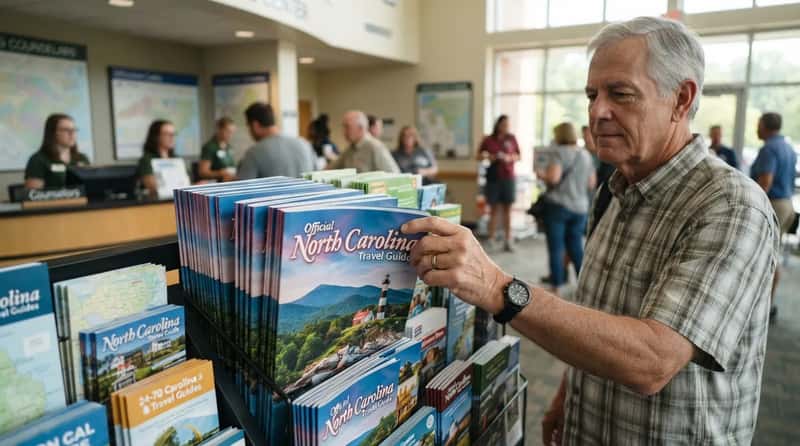
That glossy guide on the rack is the state’s own sales pitch, and that’s exactly how to use it.
North Carolina’s centers distribute the Official North Carolina Travel Guide and other marketing publications exclusively about the state. South Carolina’s counselors point travelers to maps, trail guides and discount coupons.
These are promotional materials, plain and simple. They exist to sell the state, so they highlight what the state most wants you to see.
Some travelers swear by them for planning. Others argue the guides steer everyone to the same crowded stops.
Both camps have a point, which is why the smartest move is to read between the listings.
Now for the stack of paper most people toss, which may be worth some real savings.
#11 – The Coupon Stack Next to the Brochures
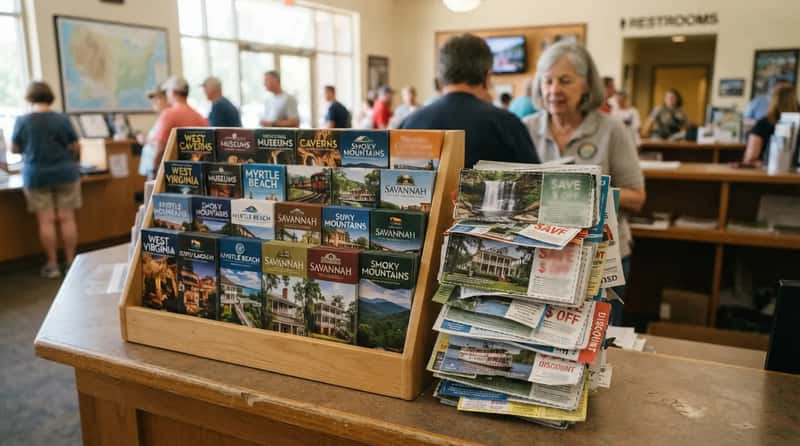
The coupons are real, but the savings only count if you would have gone anyway.
West Virginia’s center stocks discount travel guides with coupons for nearby attractions. South Carolina lists attraction discounts among its complimentary services.
A 2017 Visit Savannah post said many pamphlets at Georgia’s I-95 center carry deals and coupons not found online. That’s a dated claim, so check expiration dates.
One West Virginia center says its craft shop honors both AAA and AARP discounts. That same listing names West Virginia Made quilts, pottery and glassware.
Here’s the friction. A discount doesn’t make a tourist attraction worth your afternoon, and some travelers say coupons just lure people into stops they’d otherwise skip.
- Ask whether the coupon is a real discount or just an advertisement.
- Check the expiration date before you detour for it.
If coupons feel like small change, wait until you see what staff will do with a phone line.
#10 – The Free Room Booking Desk
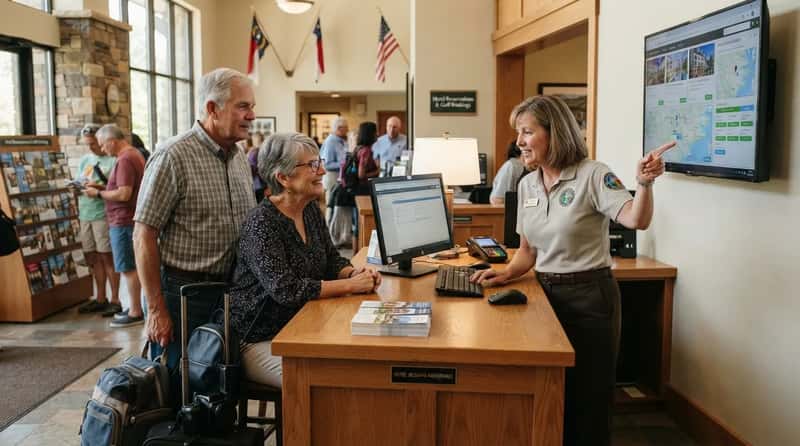
Staff will often book your hotel room for you, and they don’t charge a cent.
North Carolina says its centers book room reservations at no charge for visitors staying overnight in the state. South Carolina’s travel counselors also offer free reservation services.
That beats circling a strange town at dusk hunting for a vacancy sign. It’s worth asking before you open an app.
Some welcome centers will even help reserve your round of golf. South Carolina’s Dillon and Little River centers both advertise golf tee time reservations.
This counts as a standard service rather than a special favor. Still, ask which properties the desk can actually book, since offerings differ by state.
The next freebie needs no desk at all, but it comes with a catch about timing.
#9 – Free Wi-Fi That Keeps Office Hours
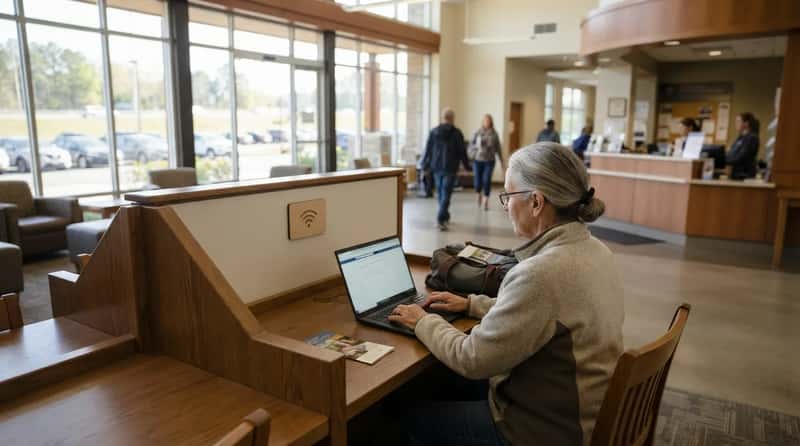
The connection is free, but it may depend on whether the doors are open.
South Carolina lists free Wi-Fi among its centers’ complimentary services. North Carolina offers it at each center during regular business hours.
The building keeps posted hours, even when the rest area outside doesn’t.
Fast Facts
- North Carolina: Wi-Fi at each center during regular business hours, with centers open 8 a.m. to 5 p.m. daily.
- South Carolina: free Wi-Fi is listed as a complimentary service, with centers open 9 a.m. to 5 p.m.
- South Carolina’s centers close on four holidays.
- South Carolina’s rest area facilities stay open 24/7/365, even when the center doesn’t.
That matters if you plan to sort out bookings or download directions before a long stretch. Sitting in the lot after closing isn’t the same as sitting inside with staff nearby.
Think of it as a free office for twenty minutes: confirm a reservation, check the forecast, then get back on the road.
- Download offline maps while you’re connected.
- Confirm your next hotel reservation before you leave.
Speaking of things that change, the next item is about what the road looks like ahead of you.
#8 – Live Road, Weather and Gas Answers
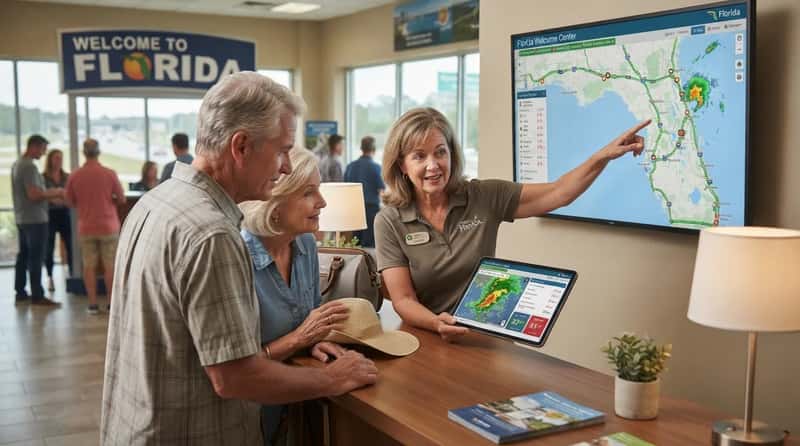
Staff can often tell you what’s happening ahead faster than a search can.
Florida’s certified information specialists help with directions, destinations and up-to-date road conditions. That’s a real-time service, not a brochure.
South Carolina counselors carry tablets with a menu built to pull up directions, gas prices and weather, so they can answer fast-changing questions on the spot. That’s a device designed around live answers.
The Landrum center is also equipped with traffic and weather information and a customizable trip planner. It’s a setup built for questions that change by the hour.
Arguably, a screen shows you a closure while a person helps you pick a sensible alternative.
But what if you’d rather have that route on paper? The next item covers it.
#7 – The Printed Directions Kiosk
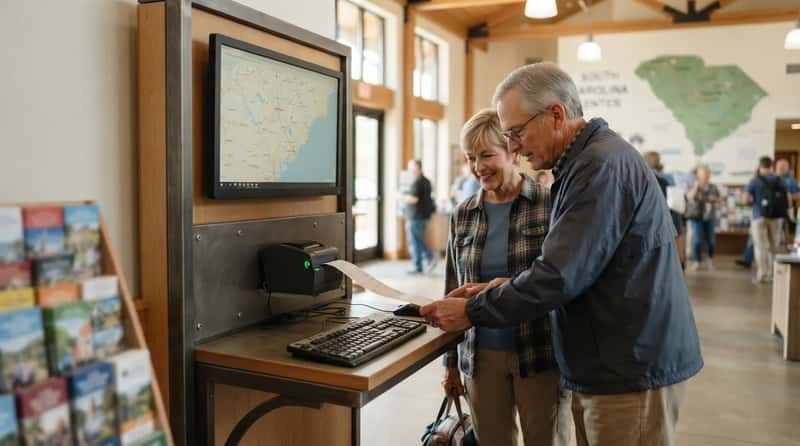
Some centers will print your route, so nobody has to squint at a phone.
South Carolina says some of its centers have kiosks featuring Google Maps so visitors can print directions. Wall-mounted screens also let visitors explore the state’s tourism website on their own.
A printed route is a navigation screen that never runs out of battery. That’s worth noting for anyone who has watched a phone die mid-detour.
For drivers who don’t want to juggle a device on the dash, a sheet on the passenger seat is a real alternative. It also gives a co-pilot something to read aloud.
Worth Knowing
- The kiosks are described as being at “some” centers, not every one.
- Print the whole route, plus a backup, before a long leg.
- The wall screens are a no-pressure way to browse attractions without a staffer hovering.
Ask at the desk before assuming the kiosk is there.
Next up is a service that’s less about directions and more about avoiding a headache with your wallet.
#6 – The Toll Pass Help Desk
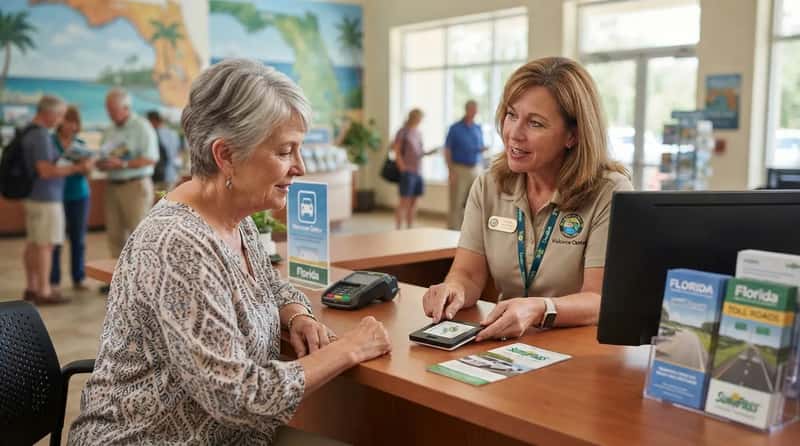
Tolls can be the hidden headache of a Florida trip, and some staff will help you sort them out.
Visitor reviews of the official Florida Welcome Center mention assistance setting up a SunPass for toll roads. One reviewer said the staffer had them set up and loaded quickly.
Those are visitor reviews, not an official service guarantee. Treat it as something worth asking about, not something promised.
It’s a fair debate whether a one-time visitor needs a transponder at all. Frequent travelers tend to favor one, while one-and-done visitors may prefer paying as they go.
Either way, a quick question at the desk costs nothing and could spare you a confusing moment at a toll plaza.
Now for a freebie that depends on one simple thing you say out loud.
#5 – The Personalized Goody Bag
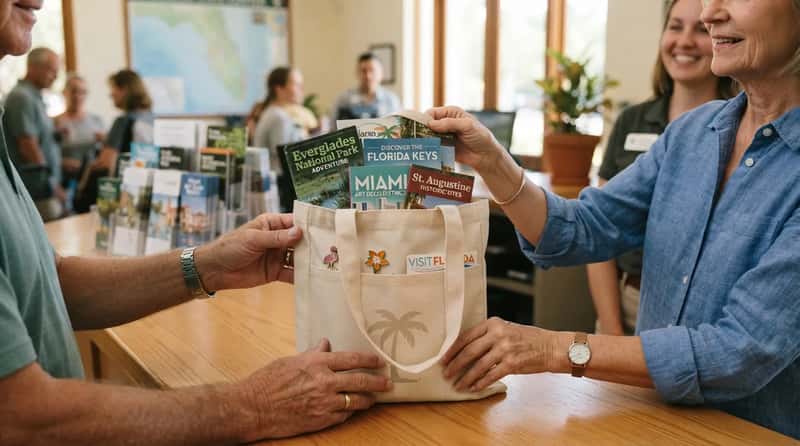
Tell staff where you’re headed, and the welcome gets a lot more specific.
One travel write-up says Florida staff have been known to ask where you’re going, then assemble a bag of pamphlets for that destination, plus stickers and lapel pins. It’s an anecdote, not a policy.
Staff reportedly build a bag around your destination, not a generic pile of paper. A vague question tends to earn a generic answer.
A specific one works better: where you’re staying, for how long, and how far you’ll drive each day. That approach should work at any center, even where nobody is bagging anything.
- Give your destination and your dates.
- Mention any mobility needs, and ask for stops with short walks from the parking lot.
That one depends on staff being generous. The next tip is about a different kind of stop, and it may be the best local advice on the list.
#4 – The Local Center Referral
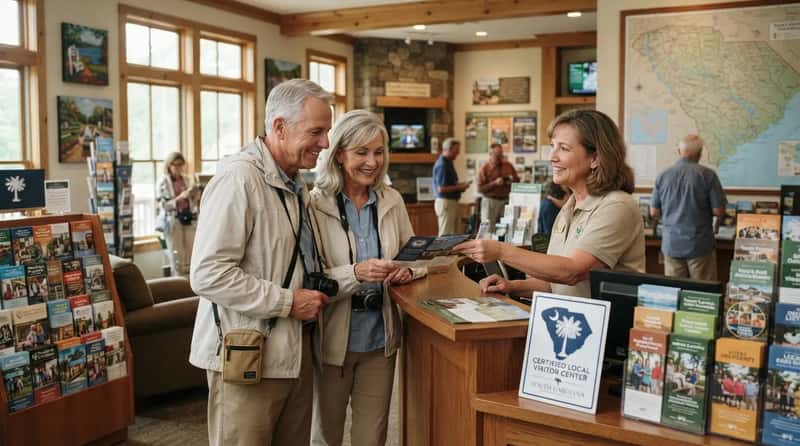
The best tip a welcome center offers is sometimes the address of a different visitor center.
South Carolina’s welcome centers partner with local visitor centers through its Front Porch Program. Participating centers go through a certification process so their service meets state standards.
Those local stops are pitched as the place to learn about undiscovered attractions. South Carolina invites travelers to stop by a certified center for local insight.
Here’s the contrarian take. A border center sees everyone passing through, so its advice has to be broad, while a local center knows the town.
Welcome centers also sit in strategic cities within regions of a state, not only at the borders. Ask the desk if a local partner sits along your route.
But here’s the question road-weary drivers ask most, and the answer changes at every state line.
#3 – The Nap Question Nobody Answers Out Loud
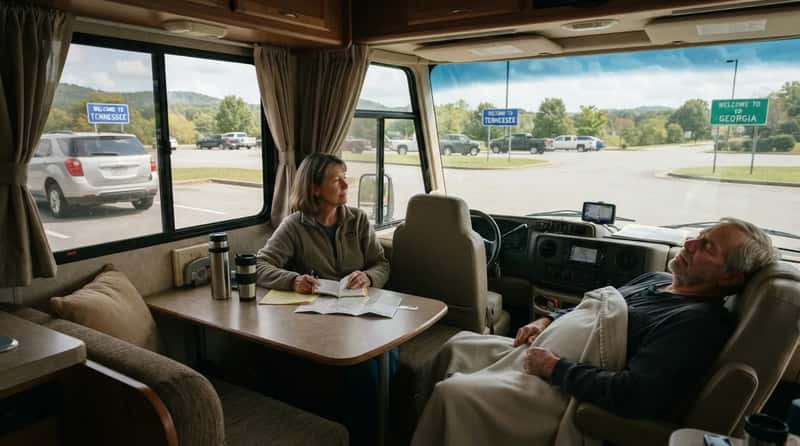
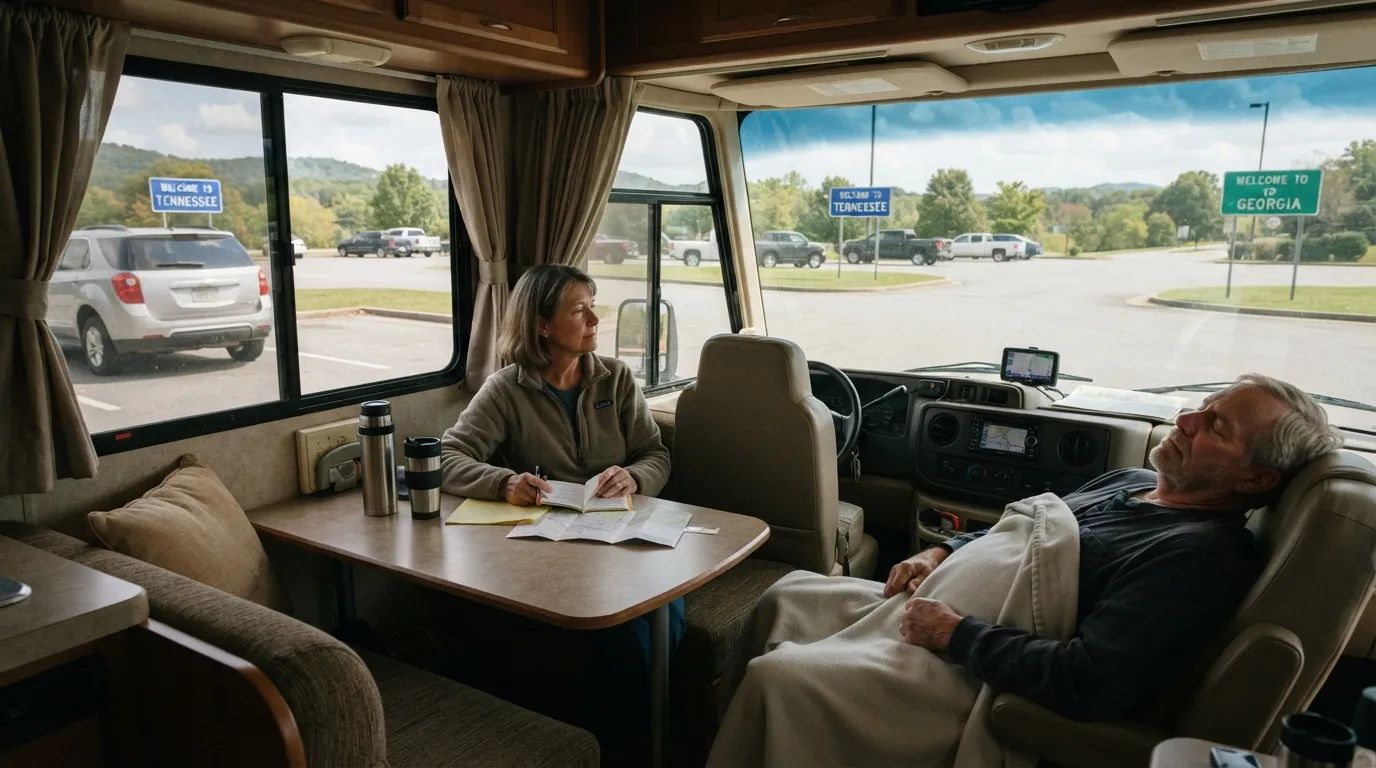
Can you sleep in the lot? The answer changes at the state line.
Tennessee posts a two-hour limit at welcome centers and rest areas and says overnight parking isn’t allowed. Georgia law permits the normal, customary and temporary use of welcome centers for resting and sleeping.
Quick Compare
- Tennessee: two-hour limit, no overnight parking.
- Georgia: law permits normal, customary and temporary resting and sleeping at welcome centers.
- Delaware: 8 hours at the I-95 Welcome Center’s truck and RV lot.
- Pennsylvania: 2-hour limit at PennDOT-run welcome centers.
No state allows camping at rest areas. Guides even disagree on the rest: one says Georgia allows overnight parking at rest areas but not at welcome centers.
That’s why the person at the desk is worth asking. Another guide notes enforcement can be lenient for a clearly fatigued driver, but don’t bank on it.
The next item sits behind a paywall of sorts, and most people never hear about it at a welcome center.
#2 – The Senior Pass Question
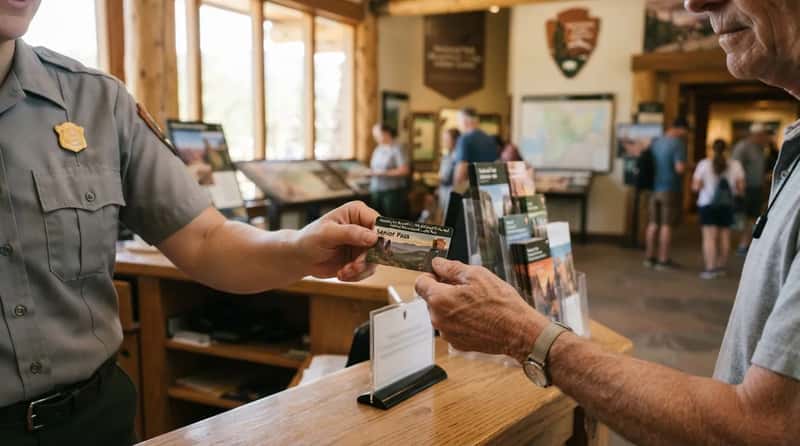
If you’re 62 or older, the most valuable tip on this list is sold somewhere else entirely.
US citizens and permanent residents 62 and older can buy the America the Beautiful Senior Pass for $20 annually or $80 for life. Applicants must provide documentation of age and residency or citizenship.
Four annual passes can be traded in for a lifetime pass, effectively spreading the $80 over four years. That upgrade path is little known.
Here’s the catch: you buy it in person at a federal recreation site, and online orders carry a $10 processing fee. A state welcome center is where you ask, not necessarily where you buy.
It only covers federal sites, not state parks, and it generally doesn’t reduce concessioner fees. A smart question for the desk: which federal sites sit along my route?
But the item that finally tops this list is one staff pour for you in a little cup.
#1 – The Free Cup of Juice
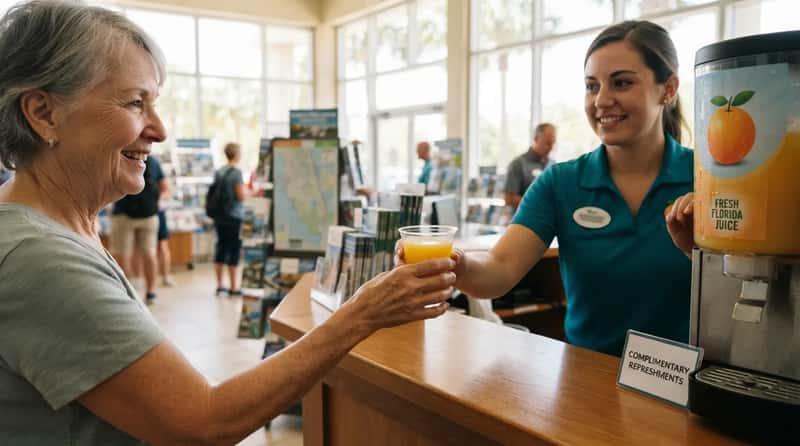
One state has handed road trippers a free drink since 1949, and its future is tied to a budget line.
Free cups of juice have been a staple of Florida welcome centers since 1949, according to Visit Florida. Three centers still pour it.
The free juice actually disappeared in 2019, then returned after an outcry. The Department of Citrus didn’t renew the contract that year amid a budget decrease, and a new contract was approved in June 2020.
In May 2026 the Citrus Commission approved a $250,000 contract with Visit Florida to keep it going. The stated goal is to raise awareness of the Florida citrus industry and its products.
At a Glance
- I-10 west of Pensacola.
- I-75 at Jennings.
- I-95 north of Yulee.
- Reviewers mention free orange or grapefruit juice.
So it’s a marketing sample, not charity, and it depends on budget decisions.
Nothing about it is age-specific, but after hours at the wheel, a cold cup in an air-conditioned lobby is a small reset. It’s also a reminder that every perk on this list runs on a budget.
The Bottom Line

Most of what welcome centers hand out is ordinary: maps, guides, coupons, free bookings and Wi-Fi. The surprises hide in the details.
Wi-Fi can depend on business hours, and nap rules change at every state line, even among the guides that explain them. The Senior Pass is sold at federal sites, not the welcome desk, and Florida’s juice was once cut entirely.
So don’t just grab a brochure and run. Ask specific questions, confirm the rules where you stop, and treat that desk like the local knowledge it is.
Which one of these 13 would you actually use on your next drive?