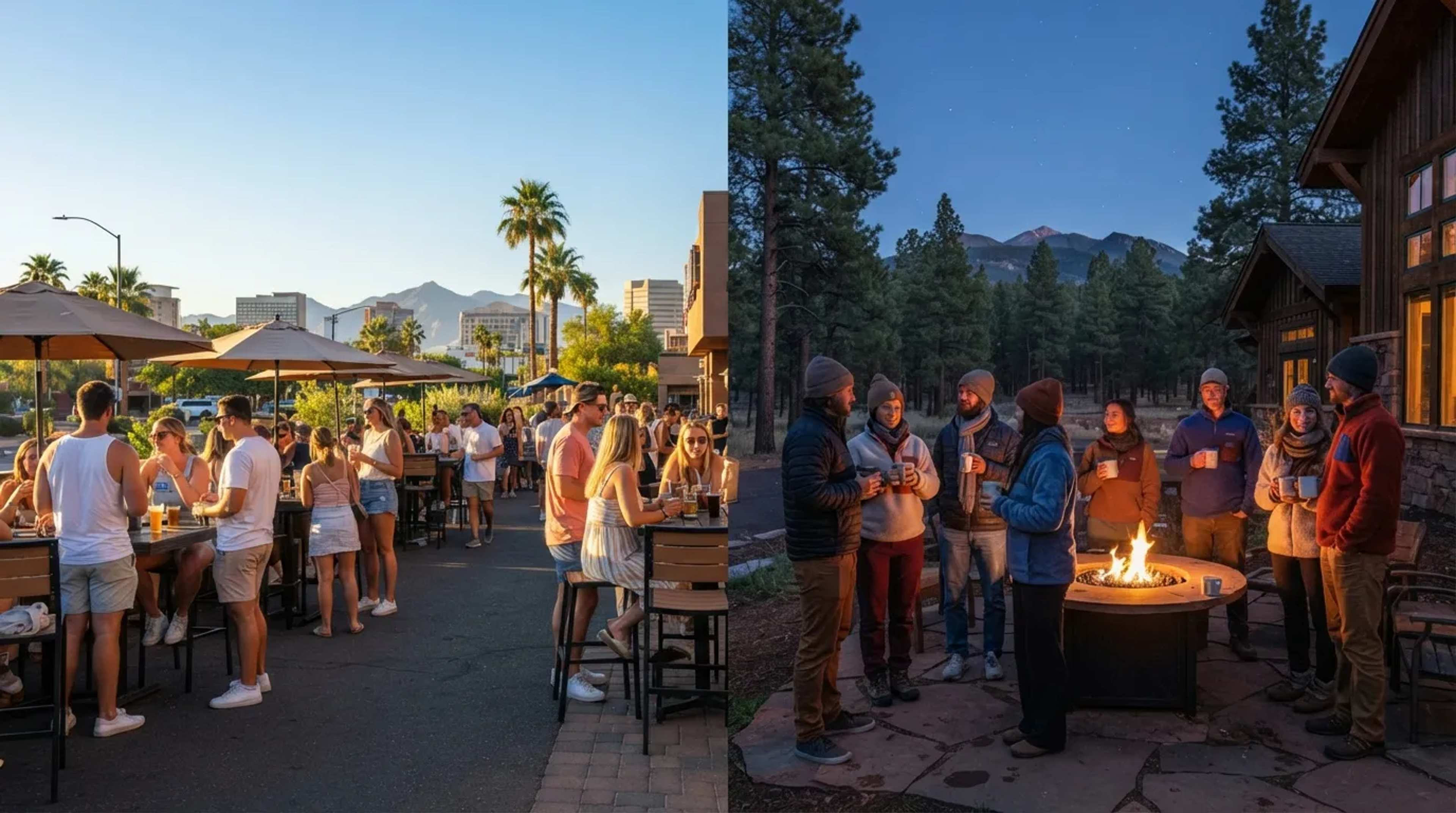
Most people hear “Arizona in October” and picture one outfit: shorts, sunglasses, done. That plan works great until you’re standing at a Flagstaff trailhead at sunrise in flip-flops, watching your breath turn to fog. One state can hold a shirt-sleeve afternoon and a freezing morning inside the same 24 hours.
And temperature is only the first surprise. A rim that closes its food and water, a clock that doesn’t match the one next door, and a sunburn that shows up on a “cool” day are all waiting on this list. The one that rewrites the whole suitcase comes last.
#13 – Phoenix Still Feels Like Summer at Midday

Let’s start with the part that matches the postcard. Phoenix averages a daytime high of about 88°F in October, and other climate sources put it closer to 90°F. In plenty of northern states, that would be a July afternoon.
Visitors who arrive with sweaters packed often end up buying a tank top in the airport gift shop. Sun-baked patios, parking lots and rental-car seats don’t care what the calendar says. Cotton and linen beat anything heavy here, and an hour on an unshaded patio is usually enough to convince anyone from a cooler state.
- Pack breathable tops and light bottoms for city days.
- Keep one long-sleeve layer in the day bag anyway.
That bag will matter more than you think, because the noon weather doesn’t last.
#12 – Sunset Drops the Temperature Like Someone Flipped a Switch

Sunset in Arizona is a temperature event, not just a view. Phoenix nights fall to about 63°F, and some datasets show lows near 57°F. That’s a swing of 25 to 30 degrees from the afternoon peak.
Dry air is the reason. With so little moisture to hold the day’s heat, warmth escapes quickly once the sun disappears. Rooftop bars and outdoor concerts get chilly faster than first-timers expect, and a thin jacket often turns out to be the item they almost left at home.
And the sun doesn’t clock out just because the leaves are changing.
#11 – The UV Index Doesn’t Take a Fall Break
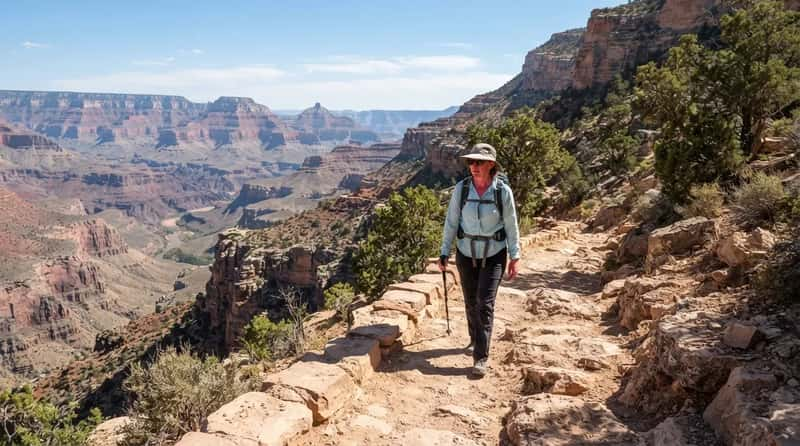
Sunburn season never really ends here. Phoenix still reaches a maximum UV index of 6 in October, which counts as high. The Grand Canyon tops out at a moderate 5.
Cooler air is what fools people. A 70-degree day at the rim feels mild, so the sunscreen stays buried in the suitcase. Then come hours on an open trail with no shade, and a red nose and neck follow a day that never felt hot.
Next up is a myth about rain that sends a lot of suitcases the wrong way.
#10 – The Monsoon Is Over, So Why Does a Rain Shell Still Earn Its Spot?
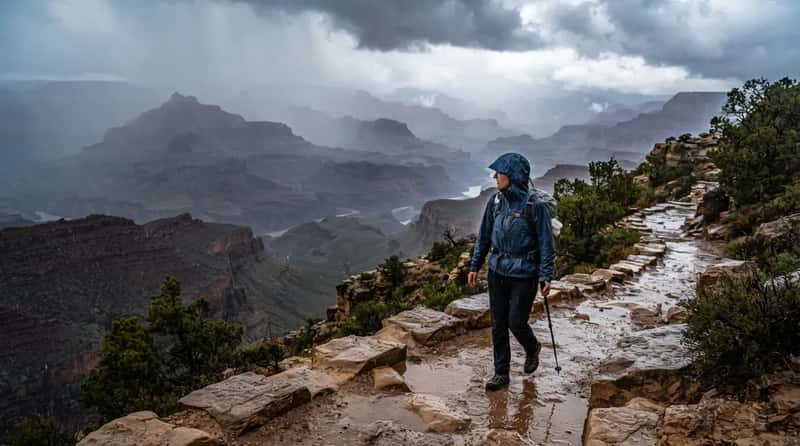
Most travelers assume Arizona is bone dry year-round. For October, that’s mostly right. The monsoon generally wraps up by then, and Phoenix averages only about 3 rainy days and 17 mm of rain for the month.
Head north and the picture changes, with brief showers becoming more common. A big umbrella is overkill, but a packable shell can save a hike.
Quick Compare
- Phoenix: about 3 rainy days and 17 mm for the month.
- Grand Canyon: about 0.97 inches, usually in brief showers.
- Flagstaff: about 1.47 inches, the wettest of the three.
The simple rule: skip the rain gear in Phoenix, and bring it north.
#9 – Daylight Runs Shorter Than the Summer Photos Suggest
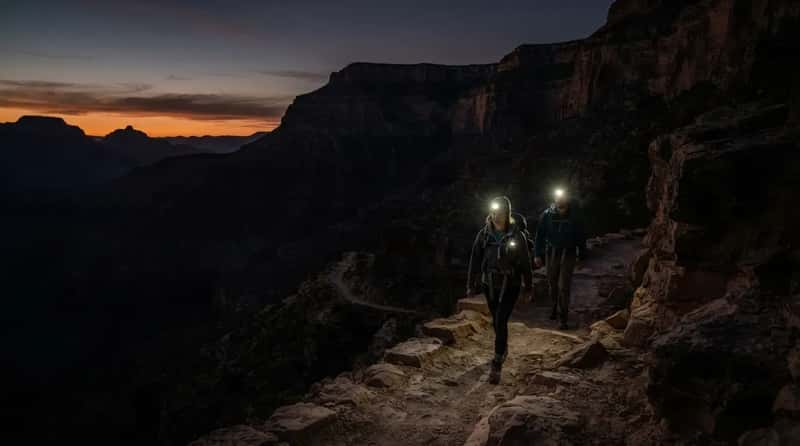
Summer trip reports make Arizona look like it has endless light. October tells a different story. Daylight lasts only about 11 hours in Phoenix, and the Grand Canyon is much the same.
That changes the whole plan. A trail that felt easy at 5 p.m. in June can turn into a headlamp job in October. Hikers who start late often finish in the dark, with a temperature drop waiting at the bottom. In canyon country, cliffs block the last light even earlier.
Now for the elevation surprise that trips up first-time visitors the most.
#8 – Flagstaff Sits Nearly 7,000 Feet Up, and You Feel Every Foot
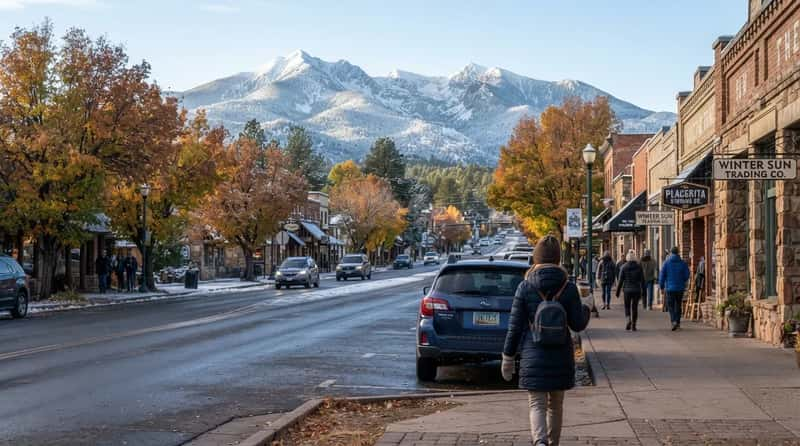
Many people picture Arizona as one giant desert. Flagstaff blows that up. At an elevation of 6,910 feet, it has four distinct seasons and much cooler temperatures than the desert cities to the south.
It typically runs 20 to 30 degrees cooler than Phoenix. A single road trip north can feel like jumping from late summer to early winter. Step out of the car after a drive of a little over two hours, and the change hits you before you’ve closed the door.
- Pack a warm mid-layer for any northern stop.
- Bring a hat or light gloves for early starts.
And Flagstaff’s mornings deserve a section of their own.
#7 – Flagstaff Mornings Can Hit Freezing in October
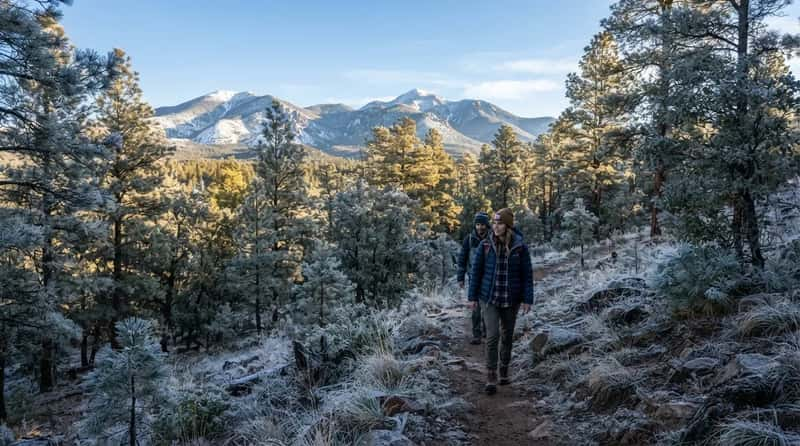
Freezing temperatures are normal here in October, which shocks a lot of visitors. One local weather guide lists an October average of 63°F for highs and 32°F for lows. AccuWeather’s averages are 57° for highs and 35° for lows. The sources differ, but the pattern is the same: cold starts and mild afternoons.
That’s a huge gap between sunrise and lunch. You can start a hike in a puffy jacket and finish it in a T-shirt. Early snow is also possible around Flagstaff in fall, so the chill isn’t just a rumor.
But the Grand Canyon has an even stranger temperature trick.
#6 – The Grand Canyon Packs Two Climates Into One Hike
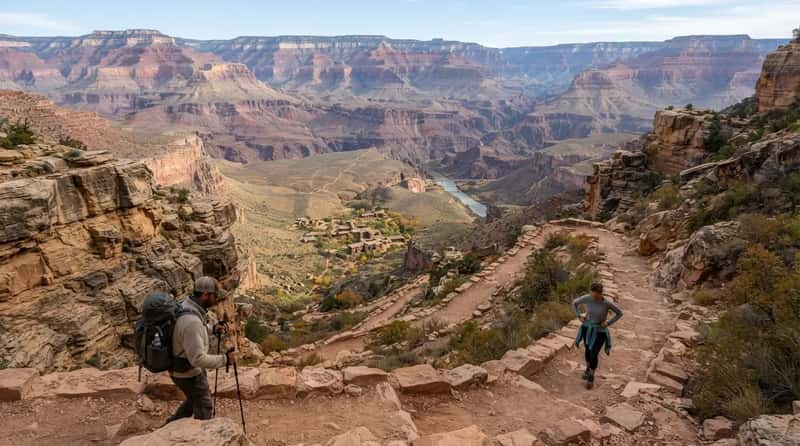
Most visitors only think about the rim. But the canyon is built in layers of weather. The South Rim ranges from about 36°F to 65°F in October, which feels like a crisp fall day.
Drop to the bottom and the story flips. At Phantom Ranch, the range is usually 55°F to 82°F, roughly 17 to 19 degrees warmer than the rim. The climb back out is the part people underestimate, because the layers you shed on the way down now have to ride in your pack.
At a Glance
- South Rim in October: about 36°F to 65°F.
- Phantom Ranch in October: about 55°F to 82°F.
- The takeaway: wear removable layers going down, and expect to carry them back up.
Not far south, Sedona has its own October twist.
#5 – Sedona’s Fall Color Isn’t Where the Red Rocks Are
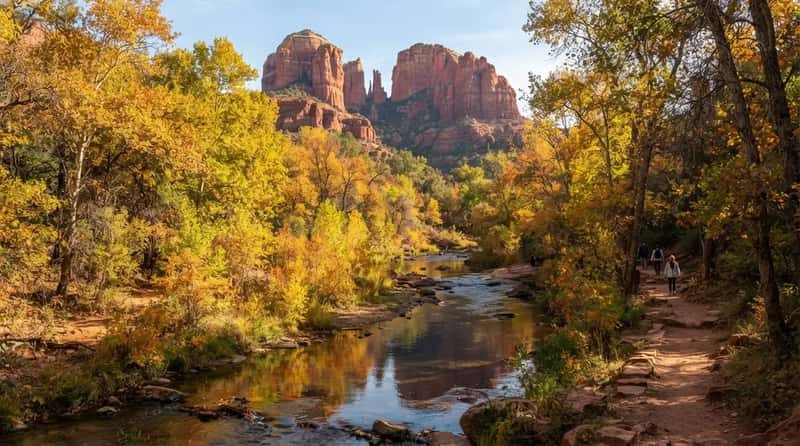
Here’s what a lot of Instagram posts skip. Sedona’s fall color follows the water, along Oak Creek, and not the red rock itself. The cliffs stay red all year. The gold comes from trees in the creek bed.
It’s also warm. Sedona’s October highs hover near 79°F, so a hike can start cool and turn hot by midday. The town sits around 4,350 feet, so its color arrives after the higher aspens near Flagstaff. The most-photographed spots are also the most crowded, and they’re not always the prettiest.
Which brings us to why chasing the leaves can change your outfit completely.
#4 – Arizona’s Fall Color Moves Like a Slow Wave Downhill
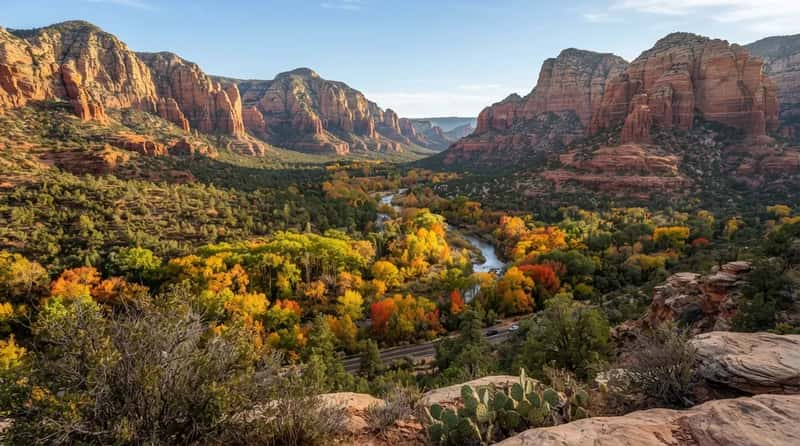
Arizona doesn’t have one autumn. It has several running at once. In Flagstaff and along the Mogollon Rim, peak color typically arrives in mid-October. North of the Grand Canyon, color begins in late September and fades by mid-October.
Then it drifts downhill. Sedona and Oak Creek Canyon usually peak from mid-October into early November. Visit late in the month and Flagstaff may already be bare while Oak Creek is glowing. The right outfit depends on which elevation you’re chasing.
Then there’s the canyon rim that catches people off guard by closing.
#3 – The North Rim Quietly Shuts Down in Mid-October
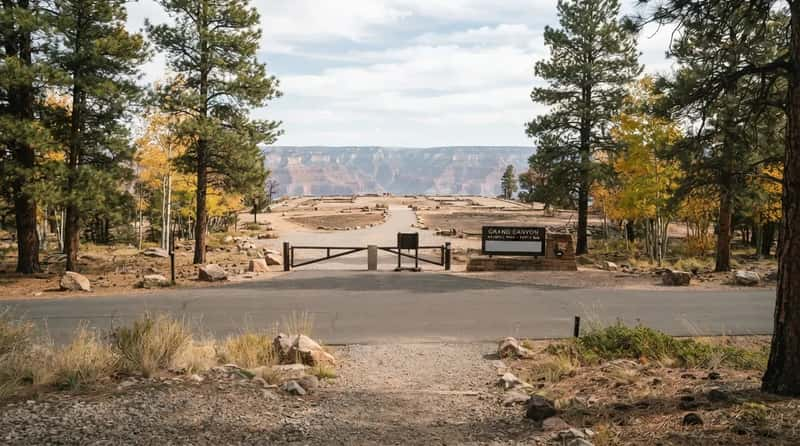
Plenty of travelers book a Grand Canyon trip without realizing there are two rims. The North Rim is open for the season from May 15 through October 15. The South Rim, by contrast, stays open year-round.
Fast Facts
- North Rim season: May 15 through October 15.
- South Rim: open year-round.
- No food or water at the North Rim: October 16 through November 30.
- Nearest lodging, food and fuel: Jacob Lake, 45 miles away.
After the mid-October cutoff, things change fast, and the recent history makes it harder. The July 2025 Dragon Bravo Fire destroyed the historic Grand Canyon Lodge and the North Rim Visitor Center.
The next surprise has nothing to do with weather, and it can cost you a tour.
#2 – Arizona’s Clocks Don’t Match Its Own Neighbors
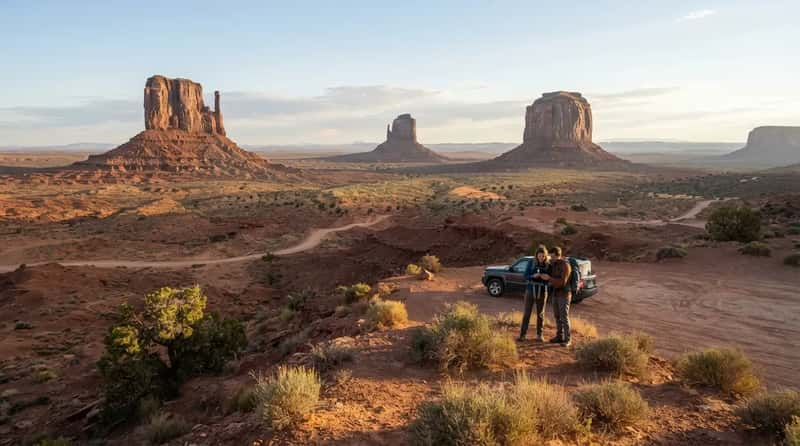
Here’s a quiet trip-wrecker. Most of Arizona skips Daylight Saving Time. But the Navajo Nation, which covers a huge part of the northeast, does observe it.
In October, that means the Navajo Nation runs an hour ahead of the rest of the state. Travelers heading to places like Monument Valley can show up an hour early or an hour late if they trust their phone blindly. The gap closes in early November, when Daylight Saving Time ends and the clocks line up again.
- Confirm which time your tour operator is using.
- Build a buffer into any same-day booking.
One last number ties the whole suitcase together.
#1 – One Day Can Swing More Than 50 Degrees
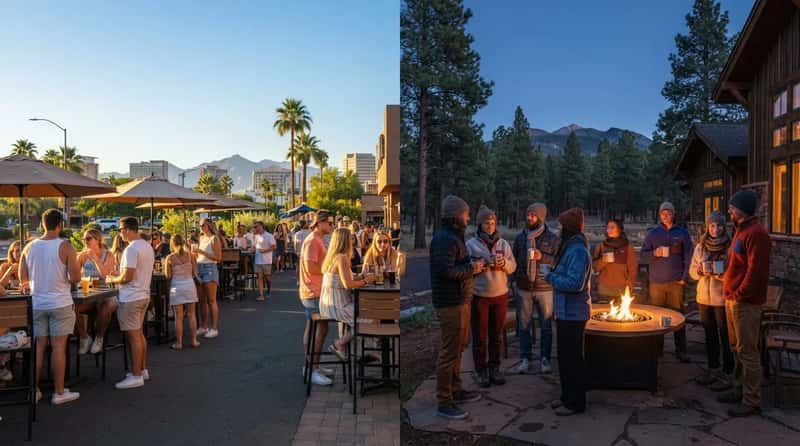
Here’s the number that rewrites a suitcase. Compare a typical Phoenix afternoon with a Flagstaff night: Phoenix averages about 88°F, while Flagstaff’s average low is around 32°F. That’s a 56-degree gap, and you can drive from one to the other in a few hours.
That’s why experienced Arizona travelers don’t pack for a place. They pack for a range. Light clothes, a thin insulating layer, a shell, sunscreen and a hat cover almost everything the state throws at you in October. The people who regret their bags are usually the ones who packed for only one version of Arizona.
Arizona in October isn’t one climate. It’s three or four stacked on top of each other, with Phoenix still near 88°F, Flagstaff waking up to frost, and the Grand Canyon splitting into two different worlds between rim and river. Add shorter daylight, steady UV and a clock mismatch on Navajo land, and the “just shorts” plan falls apart.
The best Arizona suitcase is never the biggest one. It’s the one built for the coldest morning and the warmest afternoon, and it still fits in the trunk.