Watch a true road warrior move through an airport and it looks like luck: no panic, no scramble, no sprint at the gate. It isn’t luck, and it isn’t money, because the habits behind it are quiet, specific, and easy to copy.
We checked current TSA, airline, and government guidance for 2026 to separate real travel wisdom from recycled myths. A few of these habits contradict what you were taught, and the last one explains all the others.
#14 – They Don’t Treat “Two Hours Early” as Gospel
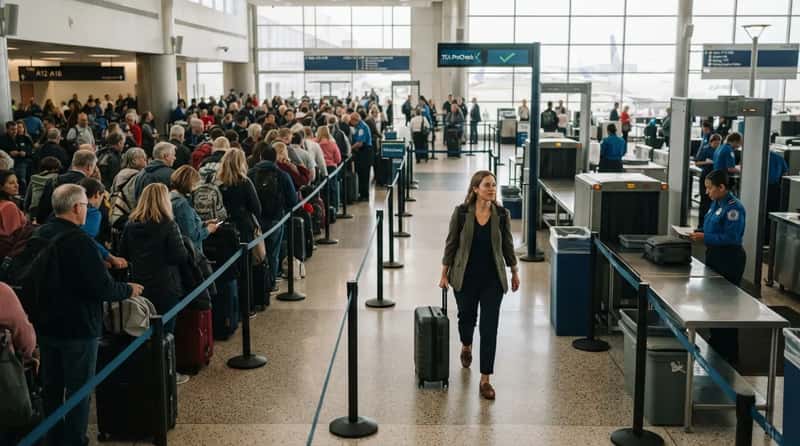
The famous two-hour rule is a baseline, not a law, and frequent flyers know it.
TSA usually advises arriving two hours early for domestic flights and three hours before international flights. NerdWallet notes that someone with PreCheck, only a carry-on, and a small home airport may find less time perfectly workable.
One 2026 guide says 75 to 90 minutes is realistic even at a mid-sized hub if you have PreCheck or a fast-track pass. The same guide warns that many missed domestic flights happen because travelers underestimate how quickly queues build, especially on early-morning and late-afternoon peaks.
Quick Compare
- International flights: TSA usually advises arriving three hours early.
- Domestic flights: TSA usually advises arriving two hours early.
- PreCheck, carry-on only, small airport: NerdWallet says less time may be workable.
- PreCheck or fast-track at a mid-sized hub: one 2026 guide calls 75 to 90 minutes realistic.
The people who cut it fine all lean on one free tool, and it’s probably already on your phone.
#13 – They Check Live Wait Times Before Leaving Home

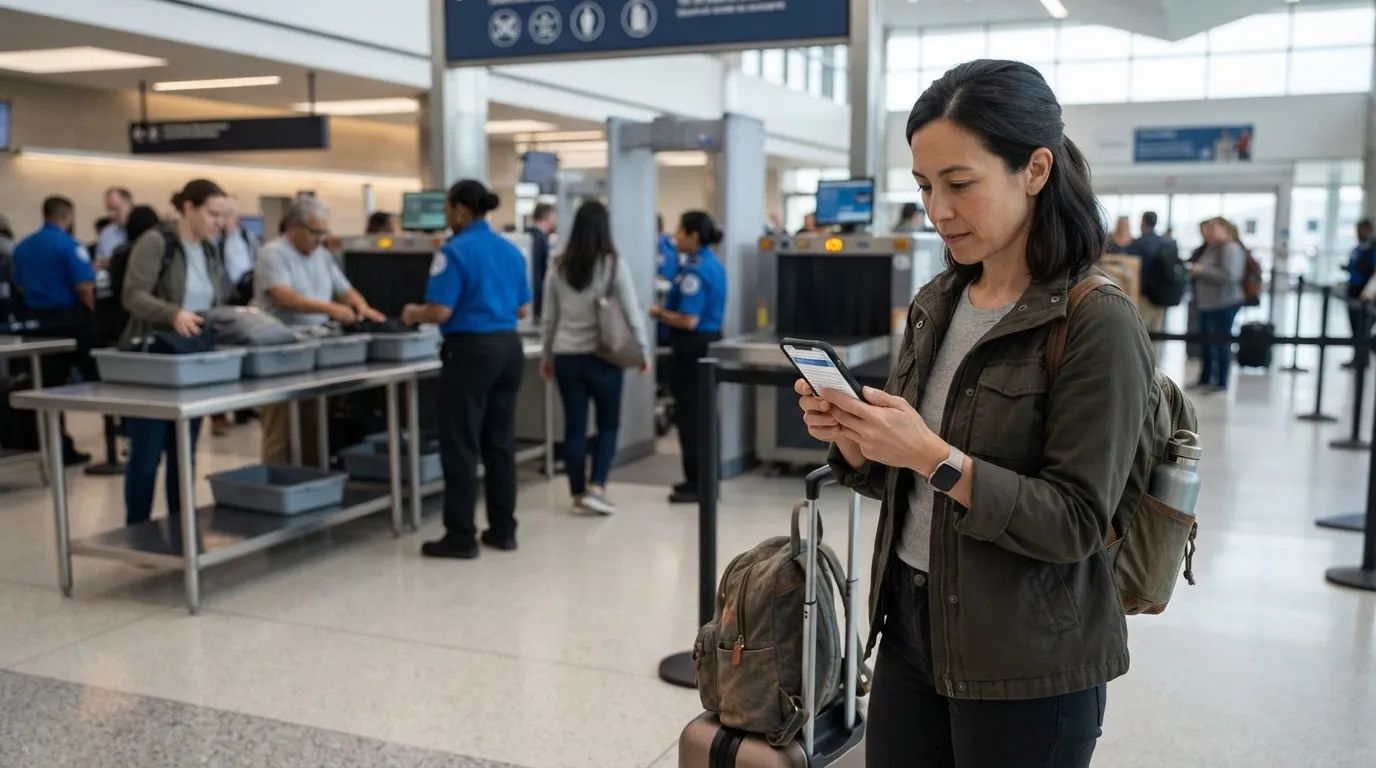
Seasoned travelers almost never guess how long security will take.
TSA’s MyTSA app is the tool for checking wait times at the airport near you. Peak periods like Thanksgiving, Christmas, and spring break can easily add an extra hour at security.
Airports also differ sharply from one another. One 2026 analysis ranked Philadelphia, JFK, Newark, and Orlando as the slowest standard lines, all averaging 15+ minutes.
But wait times are only half the story, because what you wear can change how fast you move once you’re in line.
#12 – They Still Dress for the Checkpoint
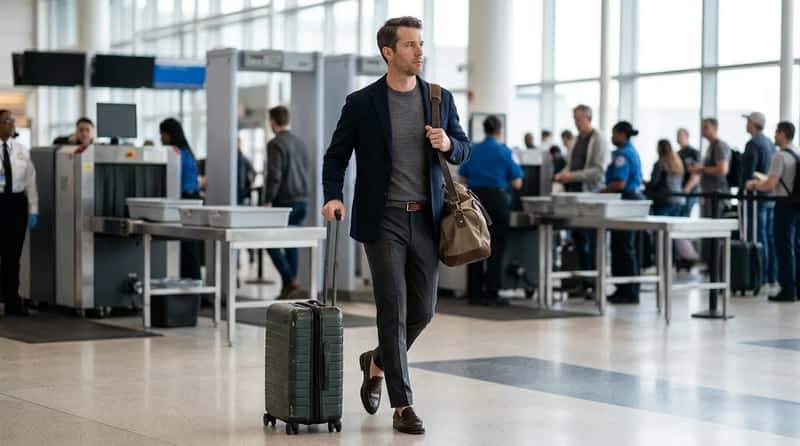
Your shoes are probably not the problem anymore, but frequent travelers dress as if they could be.
DHS ended the routine shoes-off policy on July 8, 2025, though officers can still ask individually. The shoe rule had stood for nearly 20 years.
An officer may still ask you to remove shoes for additional screening. PreCheck lets you keep your shoes, belt, and laptop on.
So the smart move is to skip laced boots and heavy metal accessories, just in case. That is our take, not an official rule.
The next habit has cost plenty of travelers their favorite sunscreen at the belt.
#11 – They Know a “Liquid” Is Anything You Can Spread
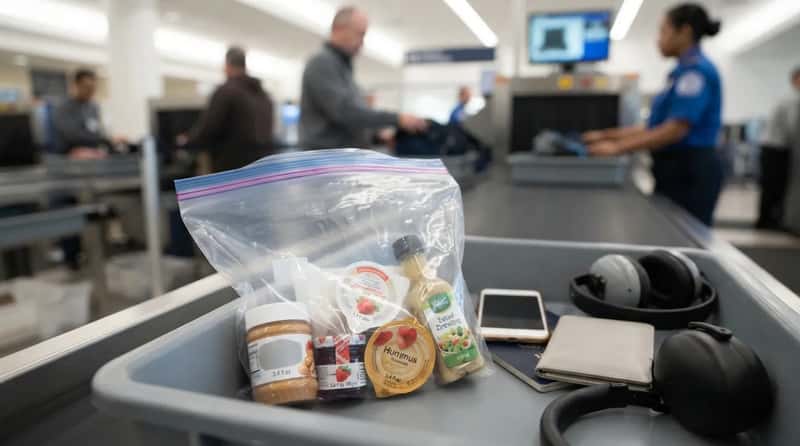
The quart bag is where a lot of checkpoint regrets begin.
Each container must hold no more than 3.4 ounces, and all of them must fit inside one quart-size bag per traveler. That’s one bag per person, not one per carry-on.
TSA treats anything that can be poured, pumped, squeezed, or spread as a liquid. That includes peanut butter, hummus, jam, dips, and yogurt.
Peanut butter is the classic liquid that doesn’t look like one. Experienced travelers sort their bag the night before, not at the belt.
But some airports quietly play by different rules, and frequent flyers know how to spot them.
#10 – They Read the Signs Before They Unpack
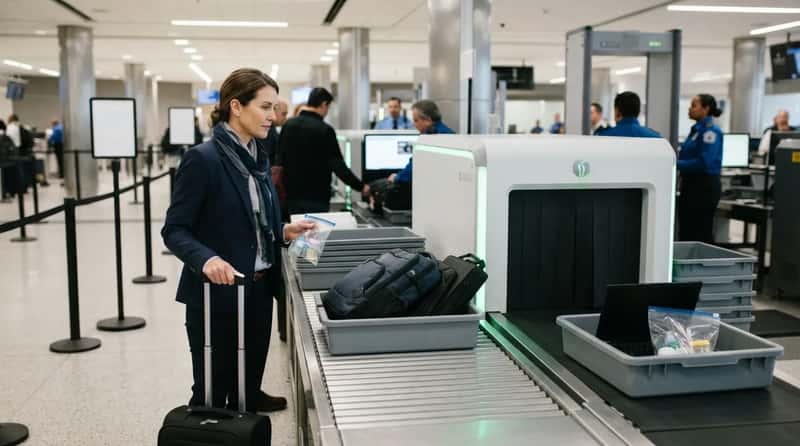
The lane you pick can change whether your liquids bag comes out at all.
At airports with newer 3D CT scanners, you may be able to leave travel-size liquids and laptops inside your bag. That does not change the 3.4-ounce rule.
Not every checkpoint has CT scanners, and even at JFK or LAX some lanes still use traditional X-ray machines. At smaller regional airports, expect old-school 3-1-1 enforcement across the board.
The safest approach is to assume 3-1-1 applies unless signage explicitly says otherwise. Frequent travelers watch the person ahead of them and follow the officer’s instructions, not their memory of the last airport.
At a Glance
- CT scanner lane: travel-size liquids and laptops may stay in your bag.
- Traditional X-ray lane: plan on the standard routine and the quart bag.
- Smaller regional airports: expect old-school 3-1-1 enforcement.
- Every lane: the 3.4-ounce container limit still applies.
The next habit isn’t about liquids at all. It’s about a limit that changed this year with very little fanfare.
#9 – They Count Their Power Banks
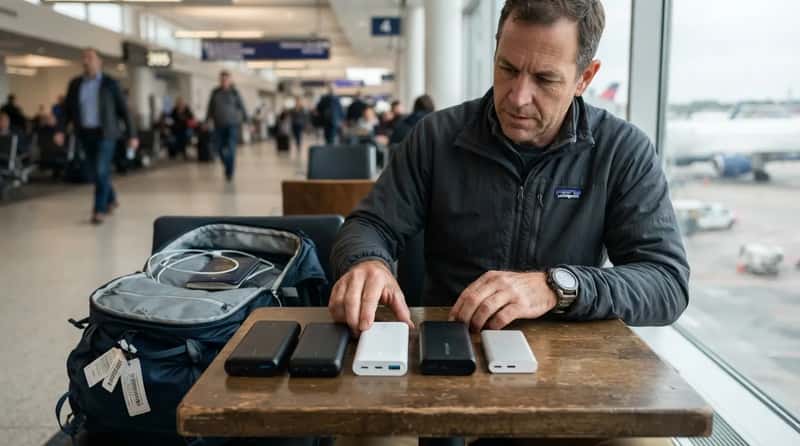
Finally, a rule change that hit your backpack instead of your shoes.
American and Delta capped passengers at two power banks on May 1, 2026, and Southwest went to one on April 20, 2026. The 3-1-1 liquid rule did not change in either year.
That means the headlines obsessed over the wrong thing. The restriction that actually changed is probably sitting in your bag right now.
Those same power banks explain the next habit, and it divides experts more than you’d expect.
#8 – They Think Twice About the Free Charging Kiosk
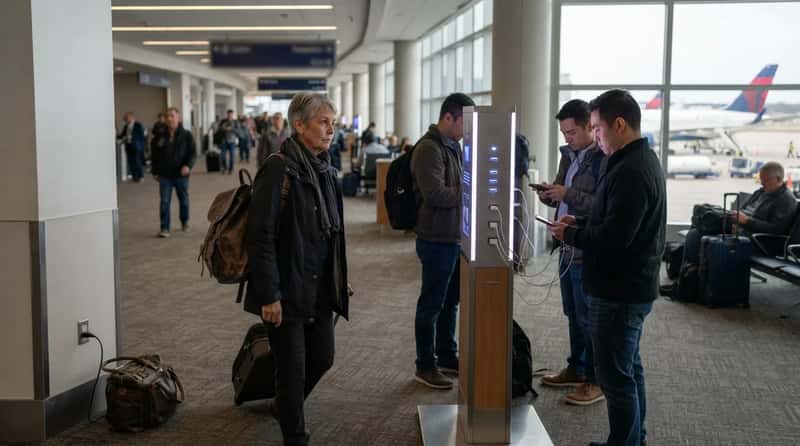
Experts disagree on how dangerous that public USB port really is.
FBI Denver warned in 2023 that bad actors can use public USB ports to introduce malware, and advised carrying your own charger and using an outlet. The FCC also says criminals use public Wi-Fi networks to target travelers.
Here’s the twist: FBI Denver told CBS News that no specific incident prompted its warning. The FCC said it hadn’t found real-world attacks, and Malwarebytes says it hasn’t found any since.
Apple and Google also added protections years ago, so users must approve any request to control the phone over USB. Frequent flyers skip the kiosk anyway, because an outlet and their own cable cost nothing.
Next up is a habit that saves money, and it might start an argument at your gate.
#7 – They Pack Their Own Snacks
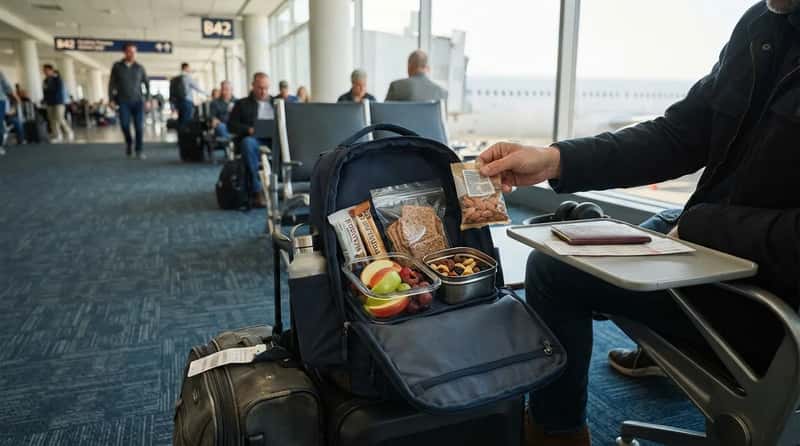
The food line is where schedules quietly fall apart.
Booking.com says buying snacks at the airport can cost double and take time. If you want to wait in line for coffee or food, it says to plan more time in the terminal.
Most solid items are fine in a carry-on, while liquids follow 3-1-1. So pack crackers and fruit, not yogurt.
Not everyone agrees. One traveler who tracked his last 800 flights says some airports are pleasant spots for people-watching or a pre-flight drink.
But the habit coming up next happens before you even leave the house, and it decides how relaxed your gate time feels.
#6 – They Check In Before They Leave Home

The best time to check in is while you’re still in your pajamas.
TSA spokeswoman Lisa Farbstein has said it is advisable to check in ahead of time on the airline’s website or app. That leaves more time to get through security and relax at the gate.
Delta requires customers to be at the gate and ready to board 15 minutes before departure. Skyscanner says the boarding gate typically closes about 15 minutes before departure.
And the next habit involves a pass many travelers have paid for without getting the full payoff.
#5 – They Did the PreCheck vs. Global Entry Math
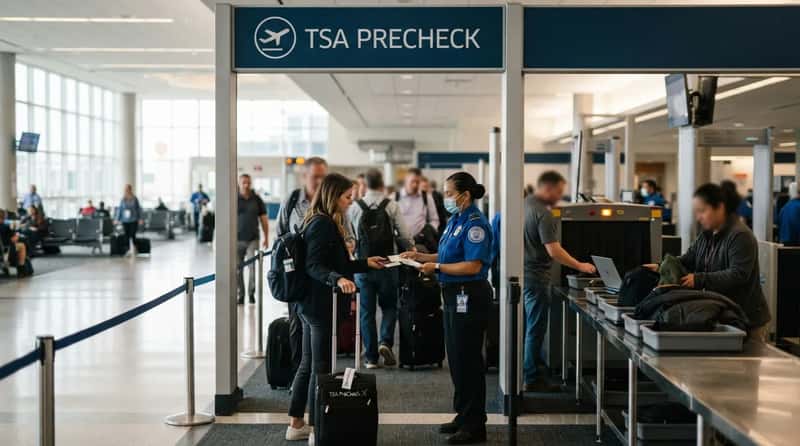
Most people assume PreCheck is a magic skip-the-line pass, but the numbers are more complicated.
TSA says about 99% of PreCheck passengers wait less than 10 minutes. One 2026 analysis found PreCheck cut average waits from 7.8 minutes to 4.9 minutes.
Worth Knowing
- TSA PreCheck: $78 at enrollment.
- Global Entry: $120, and it includes PreCheck.
- Global Entry extra: expedited customs when you return to the U.S.
With enrollment surpassing 20 million, some airports see longer PreCheck lines at peak times, and waits of 10 to 15 minutes are more common. Membership counts vary by source, and another 2026 guide cites more than 18 million.
Even so, a 10-minute PreCheck wait still beats a 30-minute standard line. The extra Global Entry fee is what buys the faster trip through customs.
But PreCheck only works if one small number is in the right place, and plenty of people never check.
#4 – They Save Their Known Traveler Number Everywhere
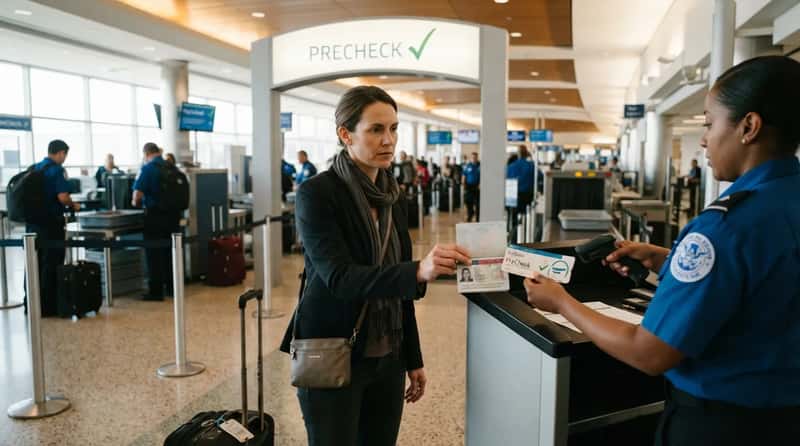
Having PreCheck and actually using it are two different things.
You enter your Known Traveler Number in airline reservations and travel profiles to get PreCheck on your boarding pass. If it isn’t attached to a reservation, the PreCheck indicator won’t appear and you won’t have access to the dedicated lane.
Most airlines let you save the number permanently so it applies to future bookings. Small discrepancies in middle names or suffixes can stop the indicator from appearing.
Most applicants receive their number in 3 to 5 days, though some applications can take up to 60. If you’re traveling tomorrow, don’t count on PreCheck for that trip.
The next item has an actual dollar figure attached, and plenty of travelers still didn’t see it coming.
#3 – They Sorted Their ID Long Before the Airport
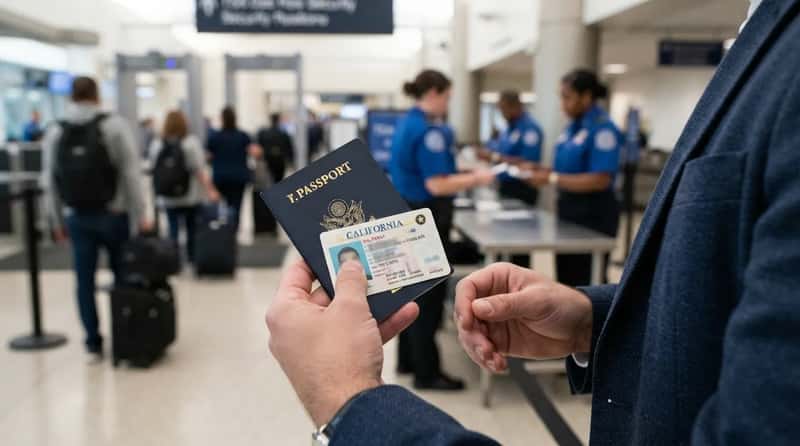
The quickest way to lose time at security is to show up with the wrong piece of plastic.
Since May 7, 2025, adults need a REAL ID-compliant license or another approved ID, such as a passport, to fly within the U.S. A compliant license has a star symbol in the top corner.
As of February 1, 2026, travelers without one face a $45 non-refundable ConfirmID fee. The fee covers 10 days, and verification can take up to 30 minutes with no guarantee of success.
Frequent flyers don’t gamble on that, and this is one place where experienced travelers and TSA agree. Check the license before the ride, not at the counter.
Fast Facts
- REAL ID enforcement began: May 7, 2025.
- What to look for: a star symbol in the top corner of the license.
- No compliant ID: a $45 non-refundable ConfirmID fee since February 1, 2026.
- Coverage and delay: the fee covers 10 days, and verification can take up to 30 minutes.
Next comes a habit that can shrink your airport timeline, and it has a catch most travelers ignore.
#2 – They Travel Carry-On Only, and Know the Clock
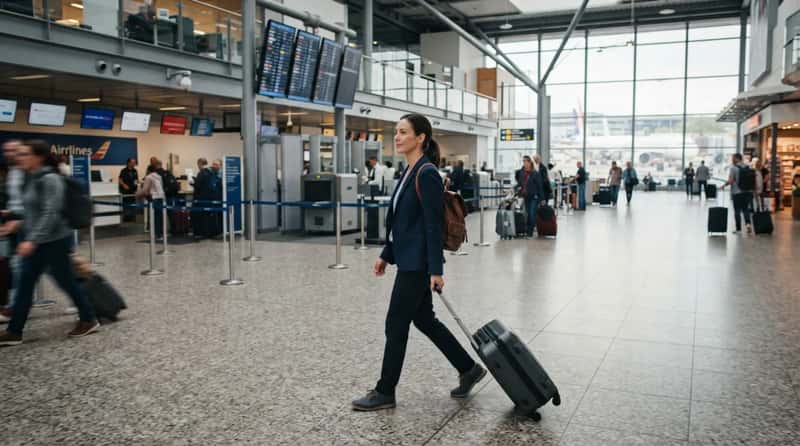
Skipping the bag drop changes the airline’s own deadlines.
On Delta’s domestic flights, bags generally must be checked 45 minutes before departure, while passengers without bags must be checked in at least 30 minutes before. But one guide warns that checked-bag travelers should never arrive after the bag-drop cutoff.
AAA quotes a traveler who flies carry-on only through a fast-moving airport. She arrives about 90 minutes before both domestic and international flights.
AAA adds that most passengers are wise to plan around TSA’s recommended times. So even the experts admit this habit works best for people who know their airport.
But the final habit explains every other one on this list, and it may be the one you’re most likely to skip.
#1 – They Re-Check the Rules Before Every Trip
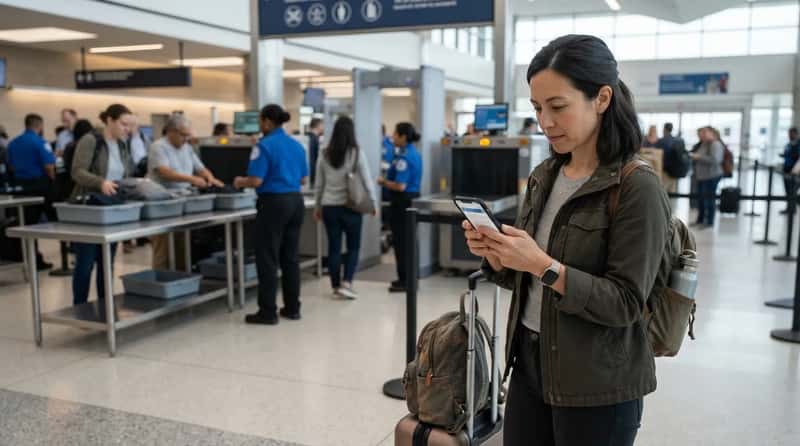
Finally, the habit that ties the rest together: frequent travelers assume the rules have moved since last time.
They have. In July 2025, after nearly 20 years, TSA ended the shoe rule, and REAL ID enforcement, the ConfirmID fee, and airline power-bank limits followed.
Meanwhile, rumors keep circulating. In July 2025, then-DHS Secretary Kristi Noem said liquid sizes “may be the next big announcement.”
One August 2026 guide says the 3.4-ounce limit still stands and no federal replacement has been published. It also cites The Washington Post saying only 255 of 432 U.S. airports had the newer CT scanners, with full deployment not projected until 2043.
So they check TSA’s and their airline’s current pages before each trip, and they treat everything else as a rumor until one of those pages confirms it.
The Bottom Line
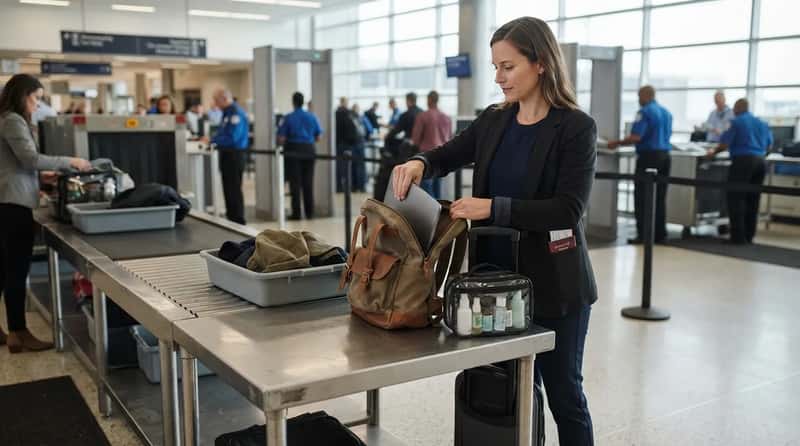
The pattern isn’t speed or luck. It’s preparation: knowing cutoffs, checking IDs, and sorting bags before they reach the belt.
Some of the most repeated advice turned out to be outdated, like the shoe rule. Some turned out to be overblown, like the liquid-rule rumors and USB kiosk fears.
Some were more practical than people realize, from power-bank caps to a Known Traveler Number that never reached the boarding pass.
Which of these 14 habits do you still skip, and which one do you think is overrated?