Most people think frequent flyers have some secret badge that gets them special treatment at the airport. They don’t. What they actually have is a set of small, almost boring habits that quietly separate them from everyone stuck in the security line arguing about a water bottle.
Watch closely at any gate and you’ll spot them in seconds – the ones who never look stressed, never scramble for boarding passes, and never seem surprised by anything the airport throws at them. Here’s what they actually do differently, starting with a habit most people are still doing wrong out of pure muscle memory.
#14 – They Stopped Taking Their Shoes Off, and It’s Not Rebellion
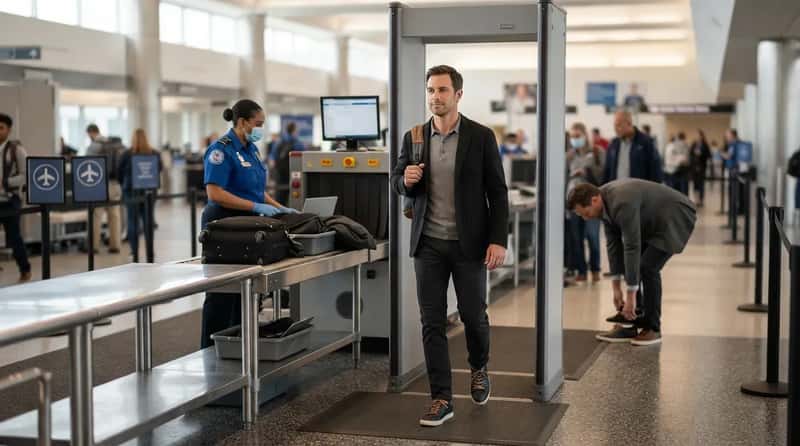
Savvy travelers stopped untying their laces at security months ago, and they weren’t breaking any rules. TSA eliminated mandatory shoe removal in standard screening lanes on July 8, 2025, quietly ending one of the most annoying rituals in modern travel. People who follow airport news closely picked up on this instantly; everyone else is still bending down out of pure habit.
What most people don’t realize is that this change didn’t replace security – it just erased one extra step. TSA PreCheck passengers already cleared checkpoints in under 10 minutes 99% of the time, while standard lanes typically ran 30 minutes or less. Insiders knew the shoe rule was never really slowing PreCheck members down in the first place, which is exactly why they stopped caring about it long before it made headlines.
Fast Facts
- Mandatory shoe removal in standard lanes ended July 8, 2025
- PreCheck lanes clear travelers in under 10 minutes about 99% of the time
- Standard lanes typically still run 30 minutes or less
- The change removed a step, not an actual security layer
#13 – They Skip the Credit Card Debate and Just Buy a Day Pass
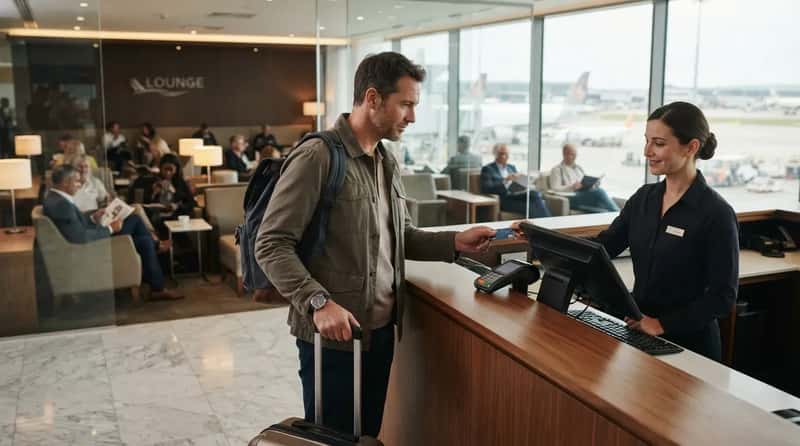
While everyone else agonizes over which $550-a-year card unlocks lounge access, experienced travelers just walk up and pay for one visit. Day passes usually run between $35 and $80 depending on the airport and lounge, which is often cheaper than an annual fee for someone who only flies a handful of times a year.
Turns out, the smartest move isn’t always the premium card everyone recommends online. For long layovers, early morning flights, or airports with thin food options, a single day pass earns its cost back fast with zero long-term commitment. Frequent flyers treat lounges like a tool they reach for when it makes sense, not a status symbol they feel obligated to justify.
#12 – They Jump to CLEAR the Second PreCheck Backs Up
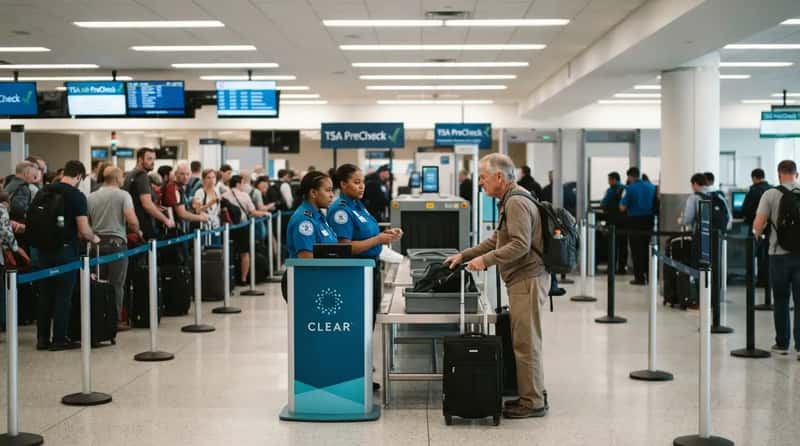
Here’s a truth most casual travelers never notice: CLEAR and PreCheck are not interchangeable, and knowing the difference saves real minutes. At major airports, average processing time for CLEAR users runs around 2 minutes, which can beat a crowded PreCheck lane during peak travel hours without much effort.
Most people assume PreCheck is automatically the fastest option, but that’s not always true anymore. CLEAR has posted faster processing times than TSA PreCheck in several major airport comparisons, especially during morning rushes. Experienced flyers glance at both lines before committing, instead of loyally marching toward the one they used last time.
#11 – They Got Global Entry Instead of Settling for PreCheck Alone
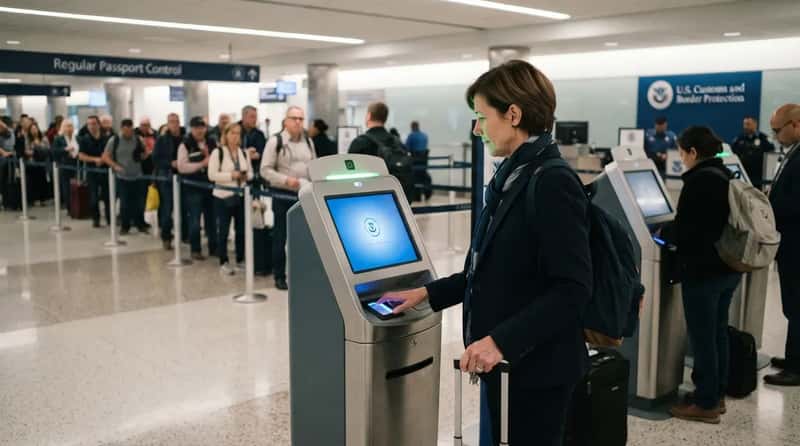
This is the move that separates casual flyers from people who actually travel internationally. Global Entry comes bundled with five years of TSA PreCheck, meaning you effectively get both programs for one price. It’s a detail most first-time applicants completely overlook when they’re comparing fees.
The payoff shows up the moment you land somewhere new. At JFK Terminal 4, Global Entry users have reportedly moved through immigration 89% faster than travelers stuck in the regular line. It’s no surprise the program has exploded – Global Entry passed two million members as of 2025, and most of them will tell you the application fee paid for itself on the very first trip.
At a Glance
- Global Entry includes five years of TSA PreCheck at no extra cost
- JFK Terminal 4 members have reportedly moved through immigration 89% faster
- Global Entry passed two million members as of 2025
#10 – They Know Which Lane Is Secretly Built for Families
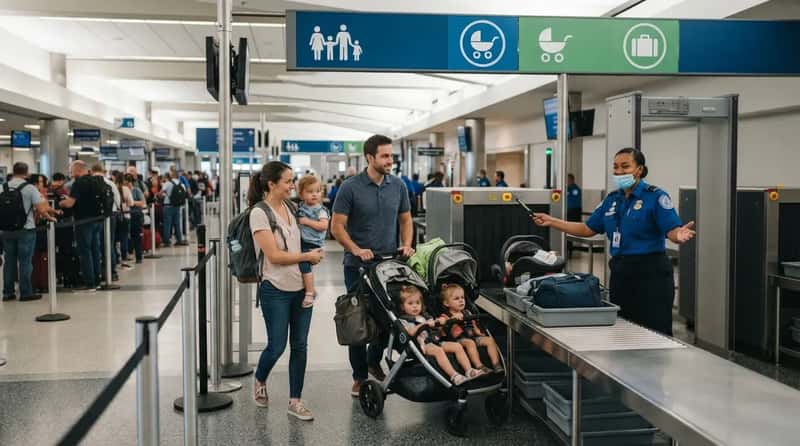
Most parents still assume TSA lines treat everyone the same. Insiders know that’s no longer entirely accurate. Select airports now offer dedicated family screening lanes under an initiative called “Families on the Fly,” designed to cut through the chaos of strollers, car seats, and toddlers at standard checkpoints.
Frequent flyers with kids scope this out before they even step inside the terminal. It’s a small detail, but it changes the entire pre-boarding experience for a family of four juggling gear and nerves. While plenty of parents still white-knuckle their way through standard security, the ones who know the game simply ask an agent about family lanes first.
#9 – They Trade Leftover Airline Miles for a Lounge Visit

Here’s something most travelers with a stash of unused miles never think to try. Airlines like United, Delta, and British Airways occasionally let members trade miles for a lounge pass, turning points that would otherwise sit untouched into an actual pre-flight upgrade.
Most people hoard miles for a “someday” flight redemption that never quite lines up with their schedule. Quietly, seasoned travelers know a lounge trade is often the better use of a small miles balance sitting around doing nothing. It’s not glamorous, but it’s the kind of overlooked win that regular travelers never think to check for before their flight.
#8 – They Refuse to Join the “Gate Lice” Crowd
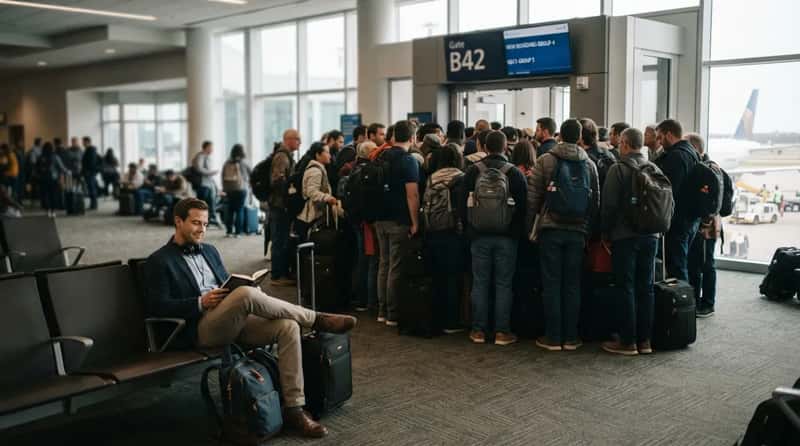
Anyone who’s flown recently has seen it: a wall of people crowding the boarding door before their group is even called. Frequent flyers call this “gate lice,” and they deliberately stay seated until their actual zone is announced on the screen.
Most people believe standing early gets them onto the plane faster. It doesn’t – the plane leaves at the same time either way, and overhead bin space is assigned by seat, not by who’s hovering closest to the podium. It’s a mildly controversial opinion among some road warriors, but the ones who know the game would rather sit comfortably than stand in a huddle for ten extra minutes.
#7 – They Never Check a Bag If They Can Help It
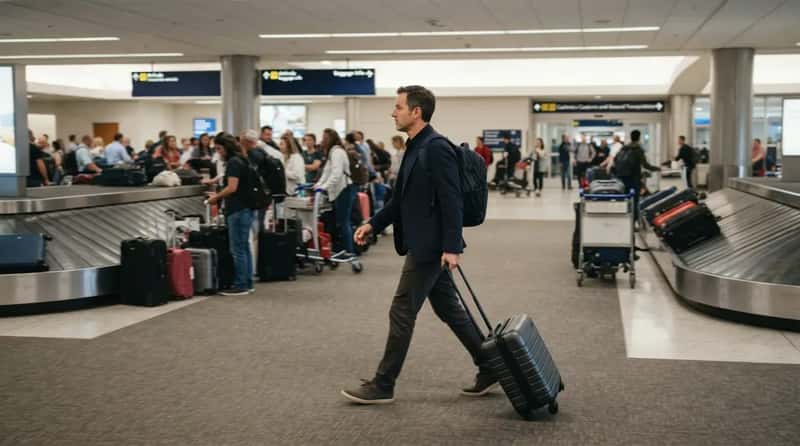
This one sounds obvious, but most casual travelers still don’t commit to it fully. Experienced flyers build entire wardrobes around carry-on-only travel, even for week-long trips, because checked bags mean waiting, fees, and the ever-present risk of a bag that simply never shows up.
Most people don’t realize how much time this actually saves at both ends of a trip. Skipping baggage claim alone can shave twenty or thirty minutes off arrival, and it removes an entire category of travel anxiety in one move. Seasoned travelers pack tighter, not heavier, and refuse to let a rolling suitcase dictate their schedule.
Worth Knowing
- Skipping baggage claim can save 20 to 30 minutes on arrival
- No checked bag means no checked-bag fees and no lost-luggage risk
- Carry-on-only flyers pack tighter, not heavier, to stay efficient
#6 – They Screenshot the Departure Board Right at Security
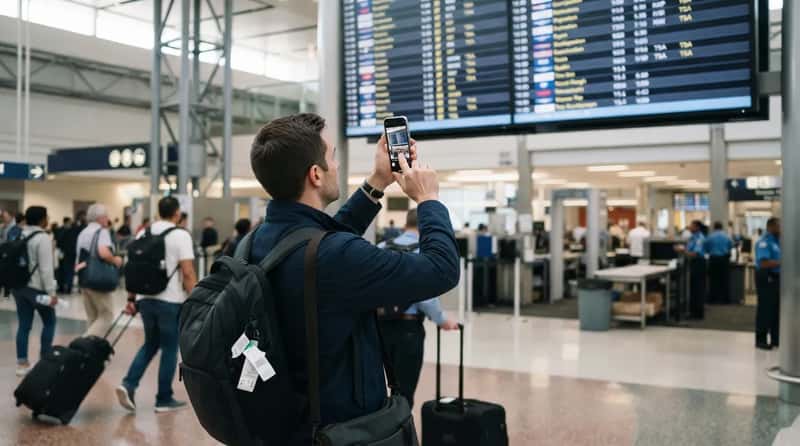
Most travelers rely on their phone’s airline app and assume it updates in real time. It usually does, but gate changes sometimes hit the physical board before they ever hit the app, and insiders know to check both before walking away.
This habit sounds small, but it prevents one of the most common airport panics: sprinting to a gate that changed twenty minutes earlier without warning. Frequent flyers build a quick board-check into their routine the same way they check a boarding pass. It takes five seconds and has quietly saved more people from missed flights than most travelers will ever admit out loud.
#5 – They Know a Delay Can Sometimes Buy a Free Lounge Seat
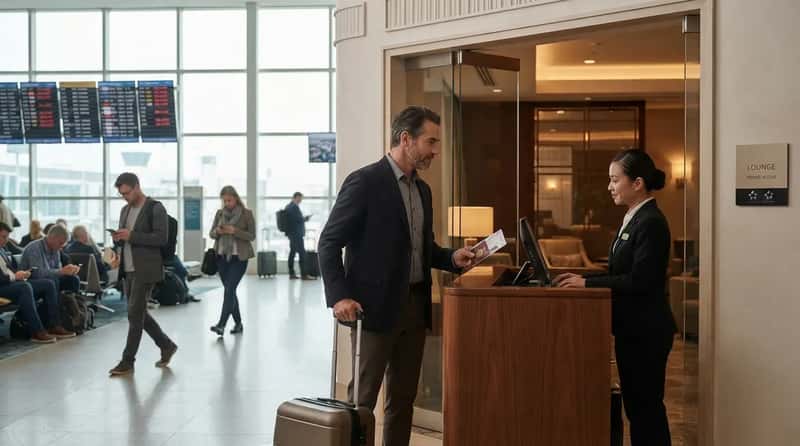
Most people treat a delayed or canceled flight as pure bad news. Experienced travelers know it’s occasionally an opening. Some lounges offer complimentary access to passengers hit by severe delays or cancellations, even without a membership or day pass in hand.
It’s not guaranteed, and airlines don’t advertise it anywhere. Asking politely at the service desk or lounge entrance can sometimes get a stranded traveler through the door, and the worst possible answer is simply no. Most travelers never think to ask; the ones who know the game always do, every single time.
#4 – They Never Pay Full Price for Food at the Gate
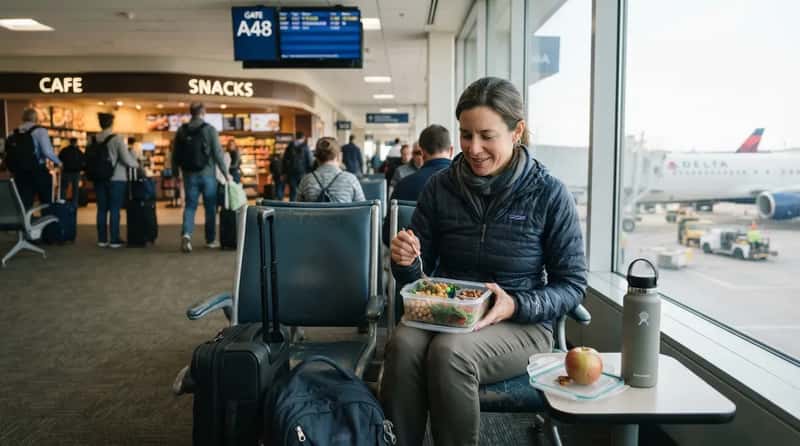
Airport food courts are built around one assumption: you’re trapped, so you’ll pay whatever they charge without blinking. Frequent flyers plan around this instead of falling for it, packing snacks or grabbing something cheaper before they ever cross security.
Most people don’t realize how steep the markup is on airport concessions compared to identical items just outside the terminal. It’s rarely a huge amount on any single item, but it adds up fast over a year of regular flying. Experienced travelers treat gate food as a last resort, not a default plan, and their wallets quietly notice the difference.
#3 – They Dress for Security Before They Dress for the Flight
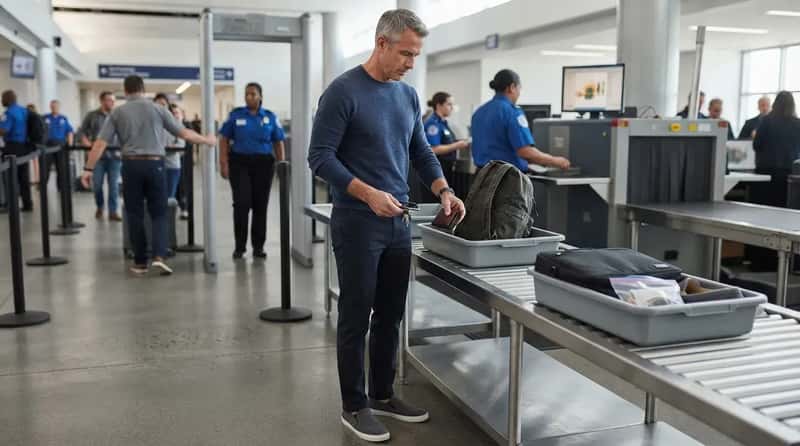
This sounds minor, but it’s one of the fastest tells of an experienced flyer. Belts, boots with metal shanks, and bulky jewelry all but guarantee a second look at the checkpoint, so seasoned travelers dress around security first and comfort second.
Most casual travelers learn this the hard way after getting pulled aside for a pat-down over a belt buckle. Slip-on shoes, minimal metal, and pockets emptied before reaching the bin are small choices that add up to a noticeably smoother checkpoint experience. It’s not about looking a certain way – it’s about never being the person holding up the entire line.
#2 – They Download the Airline App Before They Even Leave Home
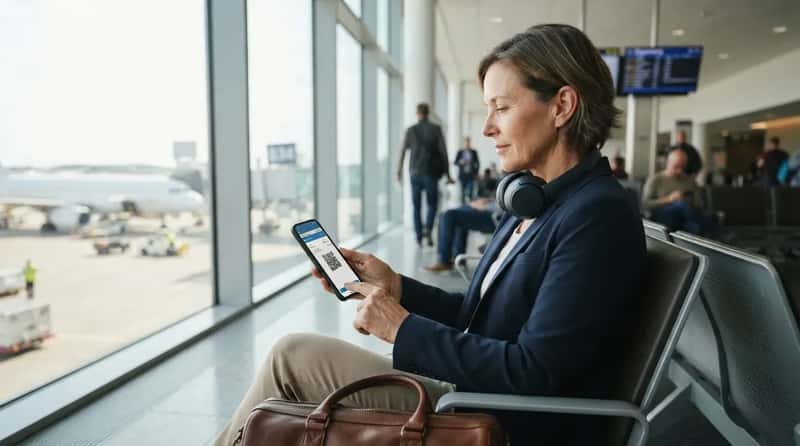
Most travelers wait until they’re at the gate to pull up their boarding pass, fumbling with email confirmations and old screenshots. Frequent flyers have the app open, notifications on, and mobile pass loaded before they’ve even backed out of the driveway.
This isn’t just about convenience. Real-time gate and delay alerts often reach the app minutes before an overhead announcement does, giving prepared travelers a head start on rebooking or repositioning. It’s a two-minute setup that pays off every single time something changes, and something always changes eventually.
#1 – They Know Exactly Which Line Actually Moves Fastest
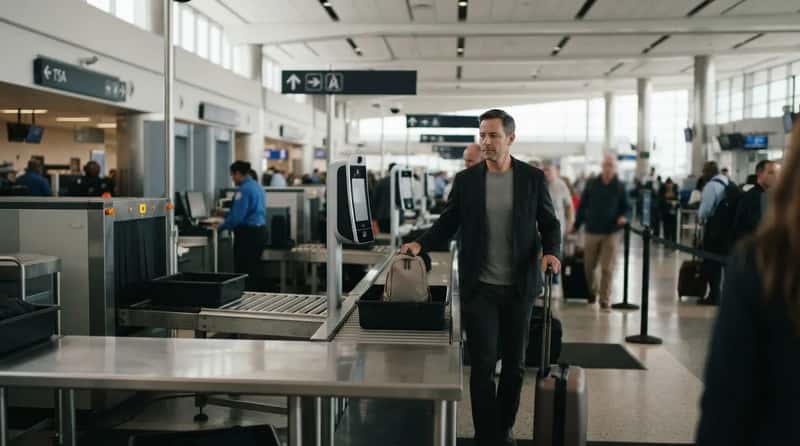
This is the move that ties every other one together, and it’s the single biggest tell of a traveler who’s done this a hundred times. Most people assume every expedited lane works the same way at every airport, but insiders know that’s simply not true. At specific airports like LAX and JFK, certain expedited security systems clearly outperform others based on terminal setup and observed patterns.
Instead of defaulting to whatever line looks shortest, experienced flyers actually track which program performs best at the specific terminal they’re flying from that day. As biometric systems expand across more airports, satisfaction keeps climbing thanks to faster, automated processing. It’s not loyalty to one brand – it’s knowing the data shifts airport by airport, and acting on it instead of guessing.
Quick Compare
- TSA PreCheck: dedicated lane, under 10 minutes about 99% of the time, but performance varies by airport
- CLEAR: identity-verification lane, around 2 minutes at major airports, often fastest during morning rushes
- Global Entry: built for international arrivals, bundles PreCheck, and has cut immigration wait times dramatically at busy hubs
None of these fourteen moves require insider connections or a six-figure travel budget. They’re small, deliberate habits – checking two lines instead of one, asking a question instead of assuming no, dressing for the checkpoint instead of the flight. Put together, they’re the difference between an airport trip that feels chaotic and one that feels almost boring in the best way.
The travelers who’ve figured this out aren’t lucky. They just stopped guessing and started paying attention to details everyone else scrolls right past. Which of these did you already know – and which one are you stealing for your next trip?