
Most travelers over 60 glance at their hotel bill, nod, and hand back the pen. The hotel industry is quietly counting on exactly that habit.
Front desk staff have far more power to erase charges than they’ll ever admit out loud. Guests who stay calm and ask the right question, in the right tone, consistently walk away paying less.
These aren’t rare edge cases buried in fine print. They’re baked into nearly every hotel stay in America – and here’s exactly what disappears the moment you politely ask.
#14 – The Resort Fee Nobody Told You Was Optional

Resort fees are the industry’s worst-kept secret – and the one charge guests assume is completely non-negotiable. That assumption costs real money on every single trip.
The average resort fee in the U.S. runs about $42 a night, though Las Vegas, Miami, and New York properties often charge $50 to $55 or more. Over a week-long stay, that adds up to hundreds of dollars you never agreed to upfront.
Federal regulators have said it’s unfair to “coerce consumers into purchasing unwanted goods or services,” and hotels often have discretion to remove the fee on request. Call the front desk directly (not the central reservation line) and ask politely if the resort fee can be waived or reduced.
Fast Facts
- National average resort fee: about $42 a night
- Las Vegas Strip properties: commonly $50 to $57 a night at major casino resorts
- Chains known for skipping resort fees: Best Western, Choice Hotels, and Drury
- Booking with points at Hilton or Hyatt often waives the fee completely
But that’s nothing compared to what we found about #13…
#13 – The Parking Fee Charged to Guests Without a Car

Hotels use the same logic for parking as they do for resort fees: you could have used the spot, so you’re paying for it. Nobody bothers to ask if you even brought a car.
Parking and valet fees typically run $15 to $70 a night in large cities. The strange part is how many of the guests paying it never drove anywhere.
These charges are often negotiable if you’re polite and catch them early – loyalty status helps even more. Review your bill line by line at checkout, and say something the moment you spot it.
But that’s nothing compared to what we found about #12…
#12 – The Early Check-In Fee Nobody Mentioned at the Door

Arriving a few hours before official check-in feels harmless – until the bill proves otherwise. Some properties charge for early access even if the room was already sitting clean and ready.
Hotels often charge $25 to $75 for early or late access, even when housekeeping did nothing extra to earn it. It’s one of the easiest fees to miss, because nobody warns you before it happens.
Guests over 60 who simply mention they’ve been traveling since early morning often watch the fee disappear with one polite sentence. If nobody told you there’d be a charge, don’t assume there was one – ask for it to be removed.
But that’s nothing compared to what we found about #11…
#11 – The Late Checkout Charge Added Without a Warning

Flip the early check-in problem around and you get its twin: the late checkout charge, added without a single warning. Hotels frame it as flexibility that compensates them for slower room turnover.
Some properties charge $24 an hour, or a flat rate to stay until 4 p.m. – fees that stack up fast if you’ve got an evening flight.
Call reception the afternoon before if you only need an extra hour, and keep the request conversational rather than demanding. Most hotels also quietly offer a 30- to 60-minute grace period if you’re simply running a little late.
But that’s nothing compared to what we found about #10…
#10 – The In-Room Safe Fee You Never Activated
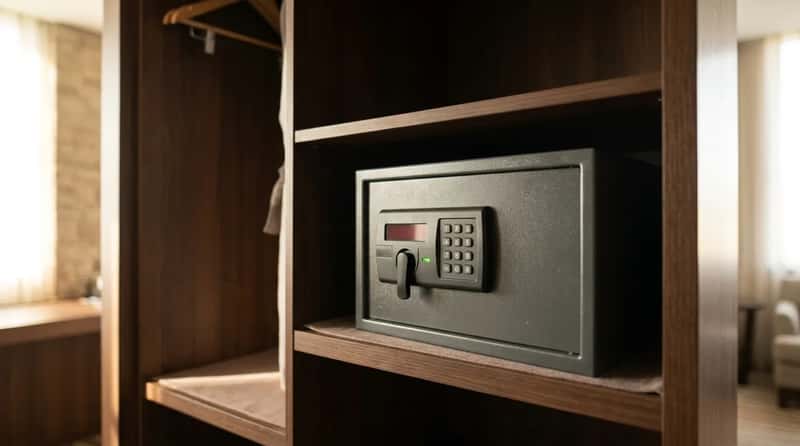
Even if you never touch the safe in your room, you might still be paying for it. Some properties tack on a daily “safe warranty fee” – typically $1 to $5 a night – just for the box existing in the room.
It’s often buried so deep in an itemized bill that most guests never notice. Over seven nights, that’s a quiet $35 charge for a metal box you never opened.
Review your bill line by line before checkout, never in a rush at the counter. If you spot a safe fee and never used it, point that out calmly and specifically to the front desk agent.
But that’s nothing compared to what we found about #9…
#9 – The Minibar Sensor Error That Charges You for Items You Didn’t Touch

Some minibars have sensors that trigger the moment an item shifts – even if you just moved a bottle to make room for your own water. Once triggered, the hotel may charge you for the item plus a “restocking fee,” sometimes appearing days later on your card.
This is one of the most disputed charges in the hotel industry, and it blindsides guests over 60 more than almost anything else on this list. You moved a bottle to reach your medicine, and somehow you owe $12.
Ask for an itemized list of exactly what was recorded as used before you accept the charge. Reviewing the bill in person at the front desk, rather than disputing it later by phone, makes the correction far easier.
But that’s nothing compared to what we found about #8…
#8 – The Auto-Added Housekeeping Gratuity

Before you leave cash on the pillow for housekeeping, check whether the hotel already billed you for it. Many guests end up tipping twice – once buried in the bill, once left in the room.
A hotel service fee is not a tip. It’s a mandatory 5% to 20% charge some boutique or luxury hotels add for “service,” quietly boosting revenue without touching the advertised room rate.
Ask the front desk ahead of time whether a housekeeping fee is included, and whether skipping daily cleaning removes it. If it showed up without disclosure, you have every right to question it.
But that’s nothing compared to what we found about #7…
#7 – The Senior Rate That Was Never Applied

Most travelers over 60 never realize they booked the standard rate when a cheaper one was sitting right there, unclaimed. If you discover a senior rate existed after checking in, it’s entirely reasonable to ask for an adjustment at checkout.
Guests 60+ or AARP members can save up to 10% with advance reservations at Choice Hotels. Wyndham Hotels & Resorts offers similar savings on standard rates for guests 60 and older at participating locations.
These discounts are real, but only if you actually ask for them. Hotel managers tend to see older guests as low-hassle, reliable business – and that reputation is leverage worth spending.
Quick Compare
- Choice Hotels: up to 10% off with advance booking for guests 60+ or AARP members
- Wyndham: discount on standard rates for guests 60 and older at participating hotels
- Hilton: up to 10% off for AARP members at participating properties
- Best Western: 10% or more off for AARP or senior guests 55+
But that’s nothing compared to what we found about #6…
#6 – The Phone Call Charges Still Lurking on Modern Bills
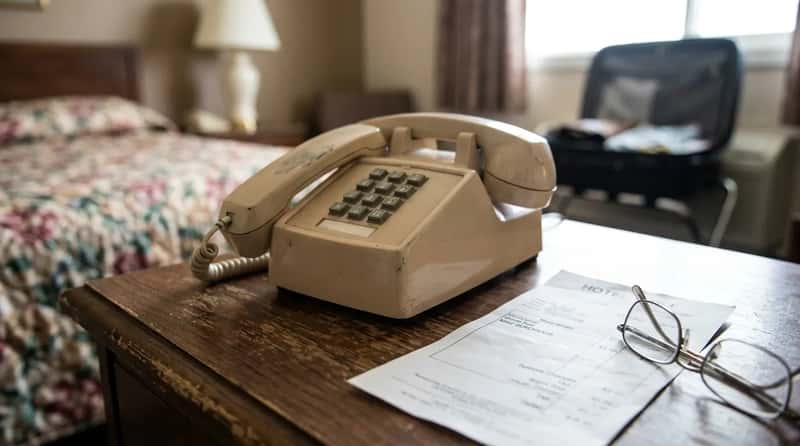
You haven’t used the room phone in years, and neither has almost anyone else – yet the charge still shows up. Skip the hassle entirely by sticking to your own cell phone.
What shocks most guests is that even local or front-desk calls can generate charges at older or independent properties. The fee often hides behind a vague label like “communication surcharge” with no itemization.
Ask for an itemized breakdown before accepting the charge. If the phone sat untouched the entire stay, say so directly – front desk staff rarely push back on a calm, factual challenge.
But that’s nothing compared to what we found about #5…
#5 – The Gym or Pool Access Fee You Never Used

If you never touched the gym or the pool, travelers consistently report success getting those charges removed. Hotels tend to comply when you push back politely, not aggressively.
Hotels claim these fees cover WiFi, pool access, the fitness center, local calls, and sometimes parking or a daily newspaper. In reality, most travelers expect these basics to already be included in the room rate.
Raise it when they ask how your stay was: “I’m being charged for a noon yoga class, but I was always off-property at that time.” Specific, calm, and factual beats vague complaints every time.
But that’s nothing compared to what we found about #4…
#4 – The Newspaper or Bottled Water “Complimentary” Charge
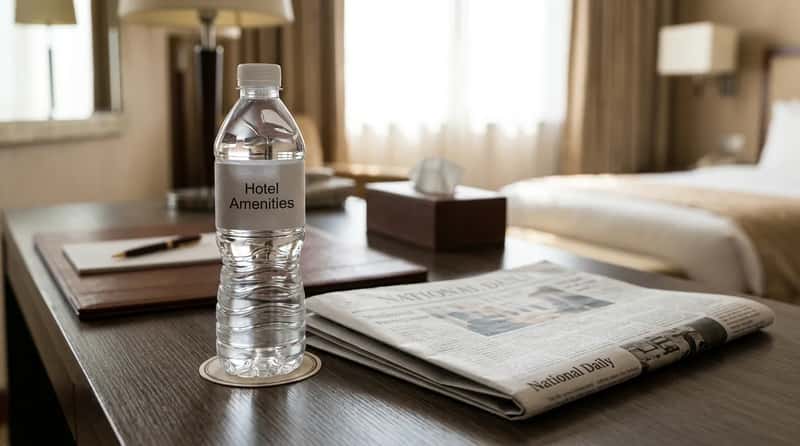
This one is the quiet thief of every hotel bill. That “complimentary” bottle of water sitting on your desk could cost you upwards of $5 the moment you open it.
A daily newspaper delivered to your door can carry a $3 to $5 charge – five nights without noticing, and that’s a hidden $25. Most guests assume “delivered to the room” means free. It often doesn’t.
Check for a price list before indulging, or call down to the front desk to confirm. If nobody told you there was a cost, asking for that line to be removed at checkout is reasonable – and it frequently works.
But that’s nothing compared to what we found about #3…
#3 – The Luggage Storage Fee Most Hotels Don’t Actually Enforce

If your flight isn’t until later, ask the front desk to hold your bags – most full-service hotels do this for free. Some properties, especially in high-traffic tourist spots, quietly add a per-bag fee anyway.
Luggage storage is a standard hospitality courtesy at the vast majority of hotels. Charging for it is uncommon enough that most desk agents will waive it without hesitation when questioned.
You don’t need a membership, a loyalty card, or a manager – just a direct, friendly question. Guests over 60 who ask calmly are almost never turned away.
But that’s nothing compared to what we found about #2…
#2 – The “Incidentals” Hold That Exceeds the Room Rate

Hotels place a hold of $50 to $200 per night on your card for “incidentals.” On a debit card, that money vanishes from your account for days after checkout – use a credit card instead.
This isn’t technically a charge, but it functions like one, locking up hundreds of dollars right when you need it. For guests on a fixed income, that’s not a minor inconvenience.
At check-in, ask directly what the hold amount is, when it releases, and whether it can be reduced given your history as a low-risk guest. Write down the names of any staff members you speak with and which fees they agree to waive.
Worth Knowing
- Credit card holds are usually released within a few days of checkout
- Debit card holds can tie up funds noticeably longer, sometimes over a week
- Hold amounts often scale with the nightly room rate, not a flat number
- A history of clean, on-time stays can sometimes get the hold reduced
But that’s nothing compared to what we found about #1…
#1 – The Undisclosed Service Charge That Doesn’t Go to Any Staff Member

This is the charge that surprises even seasoned travelers. Some properties now add a flat “service charge” daily, separate from tips – and if it wasn’t clearly disclosed at booking, it’s worth challenging at checkout.
A hotel service fee is not a tip. It’s a mandatory 5% to 20% charge some boutique or luxury hotels add for “service” – and none of it is guaranteed to reach the person who carried your bags or cleaned your room.
Here’s what most travelers never realize: the person checking you in often has less authority than the person standing a few feet behind them. Resort fees, parking charges, and damage disputes are frequently decided above the front-desk level.
If the desk agent seems limited in what they can offer, politely asking for a manager isn’t rude – it’s just knowing where the real decision gets made. That one calm, polite, upward move is the most powerful tool on this entire list.
The Bottom Line

Hotels quietly count on guests – especially older ones – accepting the bill without a word. Resort fees, parking charges, minibar sensor errors, safe rental fees, auto-added gratuities, and missed senior discounts are all regularly removed for guests who simply ask.
None of these savings are locked behind platinum status or secret handshakes. They’re available to anyone who asks in the right way, at the right moment.
The single biggest mistake is rushing through checkout with a line forming behind you. Ask for a printed, itemized folio the night before, and review it in your room with zero pressure.
The next time a hotel hands you a bill, remember: every line on it was written by someone who works for the hotel, not for you. Reading it carefully, and asking one calm question, is the cheapest insurance you’ll ever buy.