Straddling the Poland–Belarus frontier, the Białowieża Forest is one of Europe’s last remaining primeval woodlands, and it is already under pressure from decades of drainage, drought and habitat fragmentation. Now a large military building program is moving toward its edge. ([1])The clash between border security and conservation raises a practical question for the forest’s wildlife and for the way Poland defends its eastern flank.
A forest already under strain
The forest has long benefited from its remote position on the fringe of Europe, which helped keep it intact for centuries. Tensions that began in 2021 changed that picture. After Belarus opened a new migration route, Poland responded with a barrier of about 186 kilometers, with construction completed in 2021 and 2022. ([2])Yale E360 reports that the wall cutting through Białowieża stands roughly 18 feet high. ([3])Researchers at the Polish Academy of Sciences are now documenting the damage that structure is causing to the forest ecosystem.
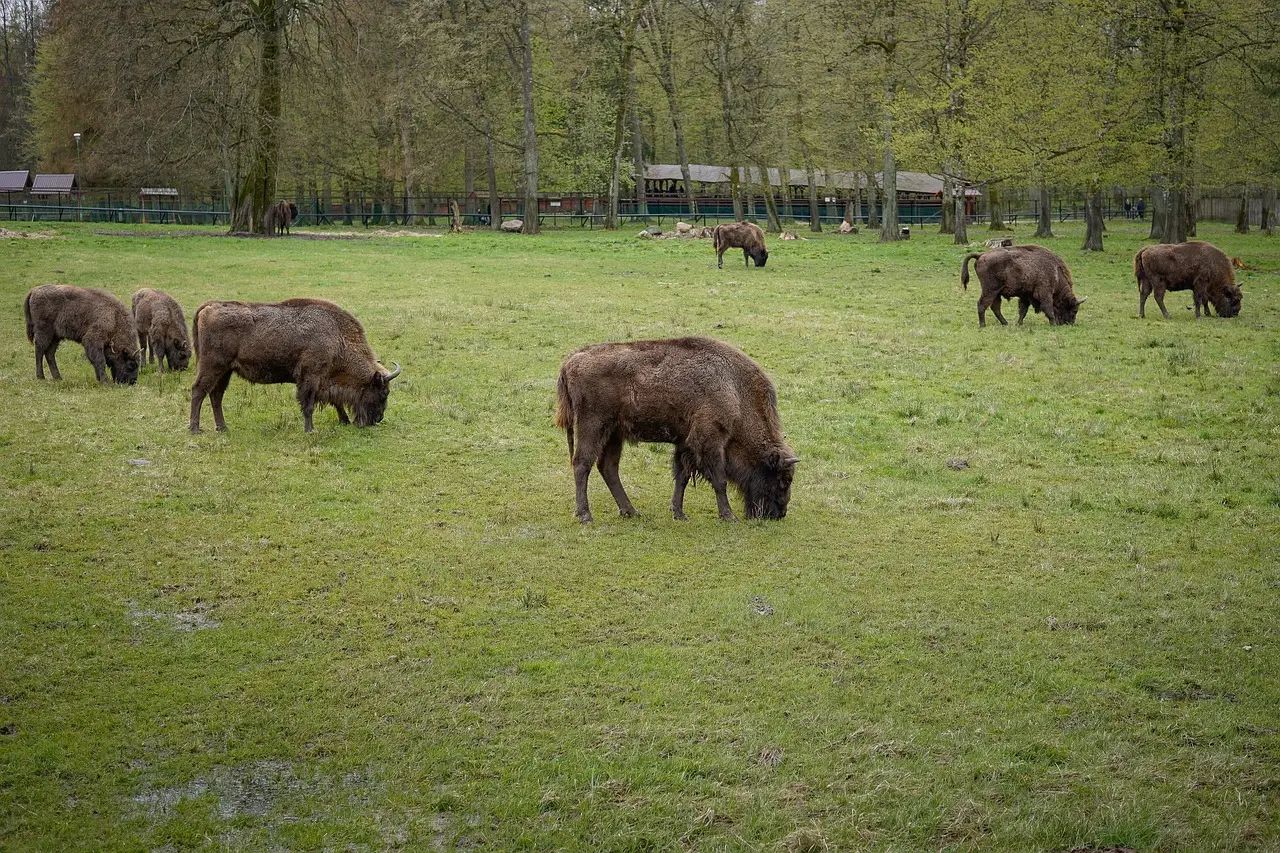
The forest also holds significant ecological value. It is home to lynx, wolves and European bison, and it is a UNESCO World Heritage site. Those features are what make the current debate so sensitive.
What the East Shield would add
Poland launched the East Shield in 2024 as a national security program aimed at deterring Russia and Belarus. The plan covers 700 kilometers and is scheduled for 2024 to 2028. Officials have described it as separate from the migration barrier, with the goal of limiting an aggressor’s mobility and protecting troops and civilians. ([4])Conservationists, however, warn that concrete bunkers, minefields and anti-tank ditches inside a UNESCO site could seriously harm local wildlife.
The World Heritage Centre has voiced serious concern about the program’s possible effect on the forest’s integrity, which it says has already been compromised by existing infrastructure. A draft decision from the committee calls for an environmental impact assessment, reviewed by IUCN, before any final decision is made. ([5])
A greener line of defense
Polish scientists proposed an alternative they call warwilding. The idea is to restore dense forests, rivers and bogs so they act as natural obstacles to heavy military vehicles. Michal Żmihorski, a conservation biologist with the Polish Academy of Sciences, has argued that wetlands and wet forests make strong barriers against invading troops. ([3])He has also warned that a bare strip of roads, walls and watchtowers would offer little real protection.
The response from the military surprised the researchers. Marek Pietrzak, a spokesperson for the Polish Armed Forces, said the East Shield and environmental protection can coexist, and he noted that natural terrain can slow advancing forces. Mongabay’s video report also shows river rewilding already completed in the Białowieża Clearing. ([6])
What comes next
The outcome will depend on several moving parts that are still in motion:
- Road building: Warwilding supporters say road projects could undermine the green barrier and harm the forest and its wildlife. ([7])
- Environmental review: Any approval for work inside the World Heritage site will need to address the assessment that UNESCO has requested.
- Timeline: The East Shield is planned for completion by 2028, which leaves limited time to settle design choices.
The debate in Białowieża is not simply a choice between safety and nature. It is a test of whether a border can be defended with the landscape itself. If the military follows through on its stated support for ecological recovery, the forest could serve both purposes. If it does not, one of Europe’s oldest woodlands may bear the cost of a wall that its own defenders once questioned.