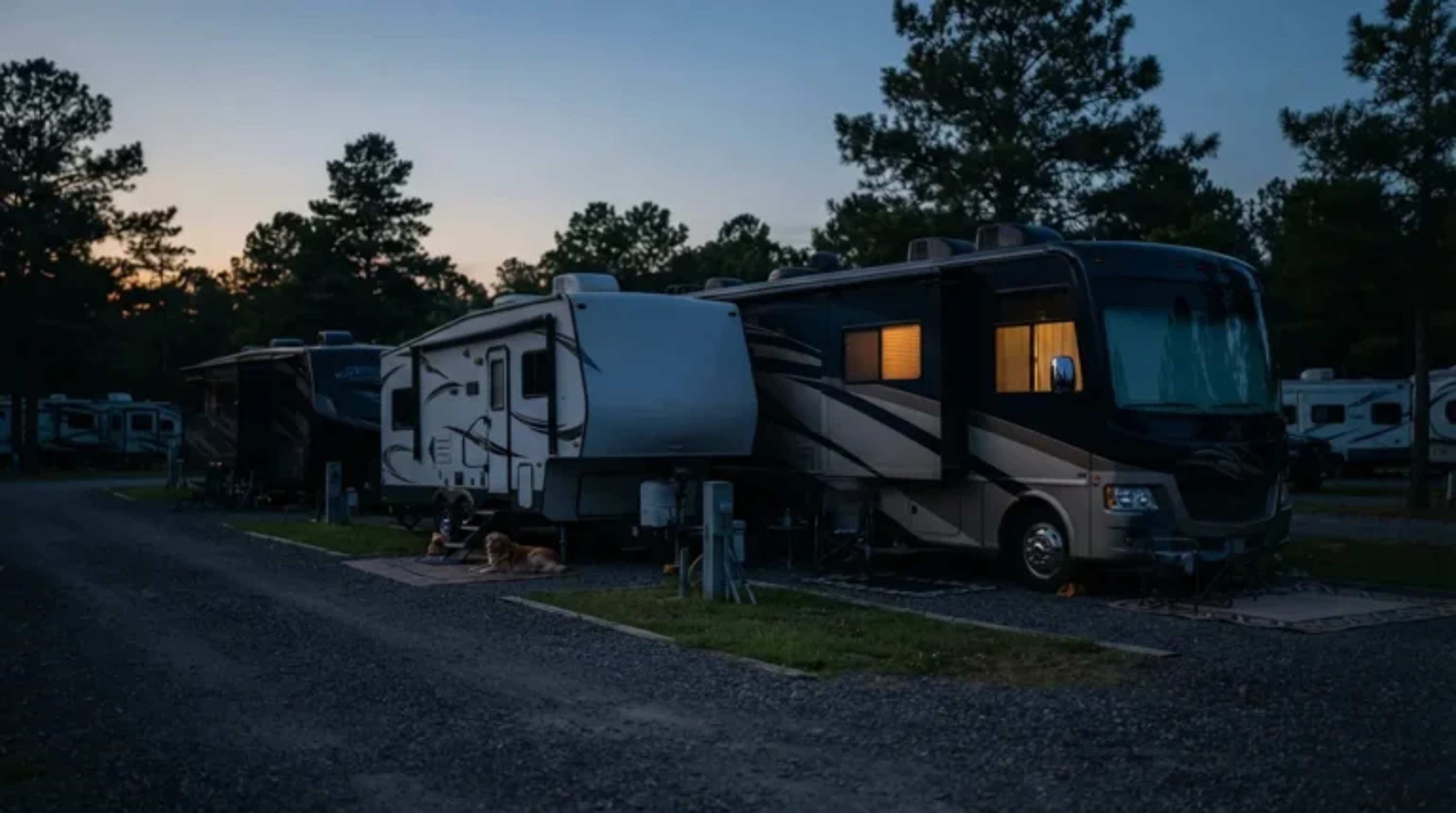
Most people picture an overnight Amtrak trip as a thin blanket, a reclining seat, and whatever kindness happens to come your way. That’s the myth. The reality is that once the dining car empties and the corridor lights dim, sleeping car attendants run a much quieter, more personal operation, especially for riders who move a little slower or sleep a little lighter than they used to.
None of this gets announced over the intercom, and almost none of it shows up in the glossy brochure photos. Here’s what longtime attendants, Amtrak’s own job postings, and decades of rider accounts actually reveal about what happens behind those roomette curtains after dark.
#14 – The Hallway Goes Silent by Company Order, Not by Accident
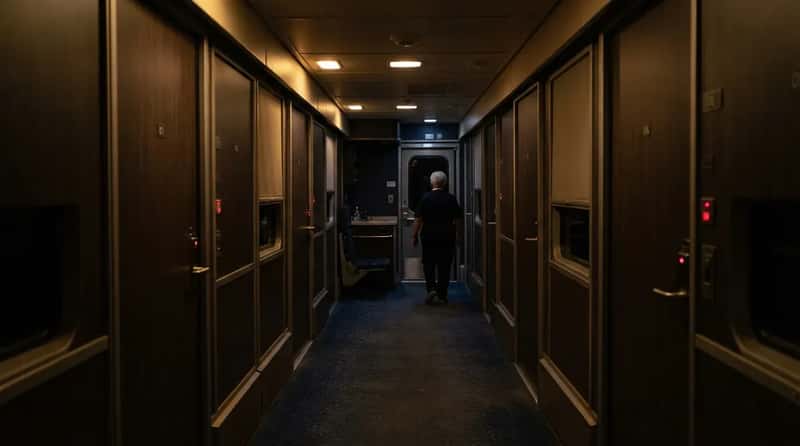
Most riders assume the quiet after 10 p.m. just happens naturally as people drift off. It doesn’t. The employee manual instructs staff to “maintain quiet in your car at all times,” and that single line carries more weight than almost any other duty on the list.
For passengers over 60 who wake easily or rely on a hearing aid, that enforced hush is the difference between a restful night and a miserable one. The quiet isn’t a courtesy attendants improvise – it’s written into their job description. It’s one of the smallest rules with the biggest nightly impact.
#13 – Your Bed Gets Made While You’re Still at Dinner
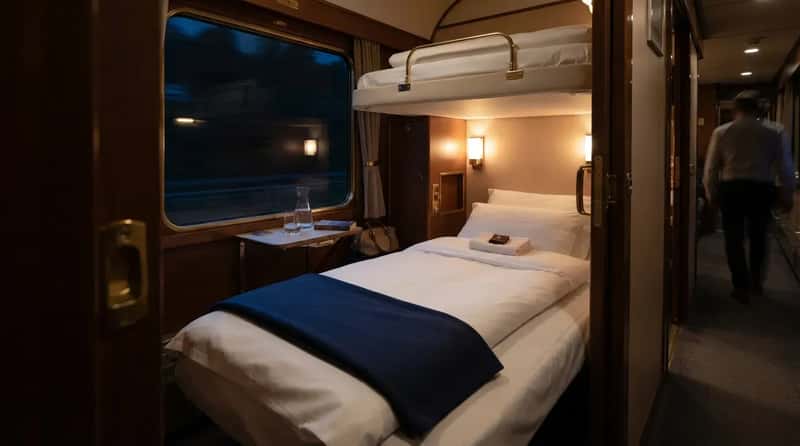
Younger travelers often wait until they’re yawning before asking for turndown service. Older regulars know better. A dedicated First Class attendant provides turndown service, assists with meals, and helps with luggage throughout the trip, which means the bed is frequently ready before dessert even arrives.
That timing matters more than it sounds. Climbing into a freshly made bunk without fumbling for straps and cushions in a dim, swaying room is a small comfort that adds up over a multi-day route. The attendant is essentially reading the schedule for you, not waiting to be asked.
Worth Knowing
- Turndown service often begins around 8 p.m., well before most passengers are ready for lights out.
- Roomette seats fold flat into two facing berths, with linens already stored onboard.
- Attendants typically ask whether you prefer the top or bottom bunk before setting up.
- A freshly made bed means no fumbling with straps or cushions in a dark, swaying room.
#12 – Coffee and Juice Are Already Waiting When You Wake Up
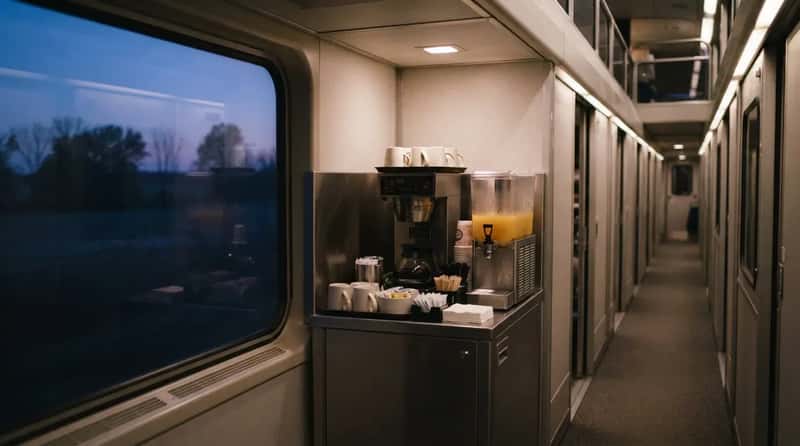
There’s no coffee cart rattling down the aisle at dawn on an Amtrak sleeper – the setup happens quietly before most passengers stir. Attendants typically convert accommodations from “day” mode to “night” mode rather than leaving that to passengers, and set out coffee and juice each morning.
For older riders who take medication with breakfast or simply move slower in the morning, having that station stocked and ready removes one more thing to think about. It’s a small ritual, but it’s one attendants repeat every single morning of every single trip, whether anyone thanks them for it or not.
#11 – A Personal Wake-Up Beats Any Phone Alarm
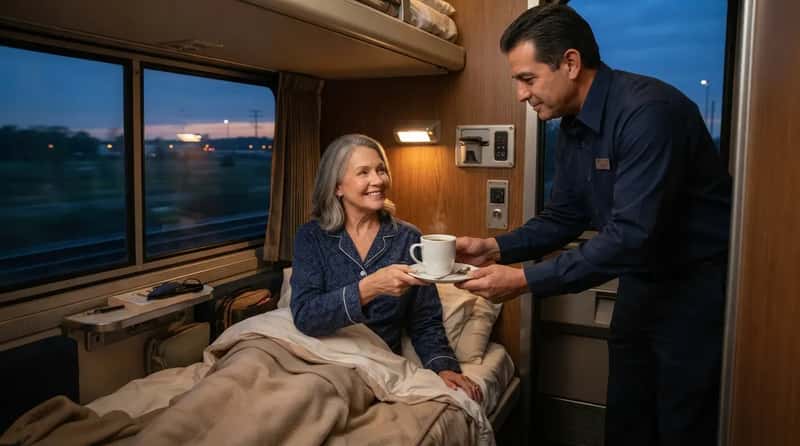
Phone alarms fail. Time zones confuse. Hearing aids come out overnight. That’s part of why attendants are expected to explain train procedures, replenish room supplies, and deliver wake-up beverages rather than leave passengers to manage everything themselves.
For a passenger over 60 with an early-morning stop, a knock and a hot cup delivered to the door does more than any app ever could. It turns a stressful pre-dawn scramble into something closer to room service. Regulars know to simply ask, rather than trust technology alone.
#10 – Extra Hands the Moment Boarding Gets Tricky
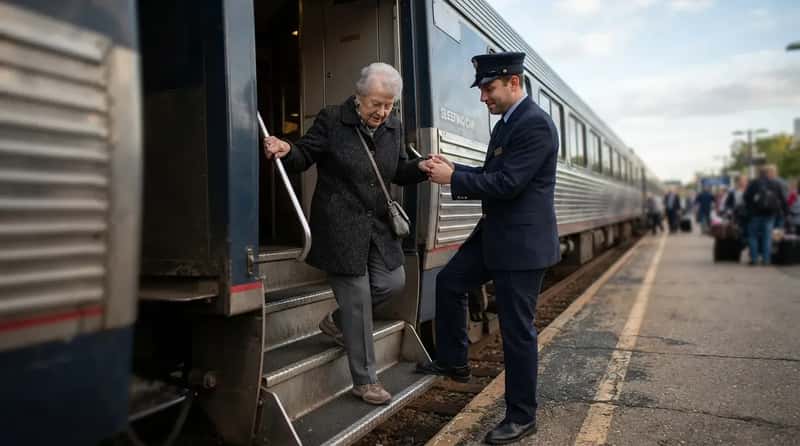
Steps onto a train car are steeper and narrower than most escalators or bus entries, and attendants are trained for exactly that gap. Sleeping car attendants must be willing to give special assistance to elderly and disabled passengers who are boarding and detraining.
That’s not a vague suggestion – it’s a listed job requirement, which means the help is consistent from route to route and attendant to attendant. Most passengers never realize this assistance is built into the position itself, not just personal kindness. It’s policy dressed up as politeness.
#9 – One Assigned Attendant for the Whole Journey
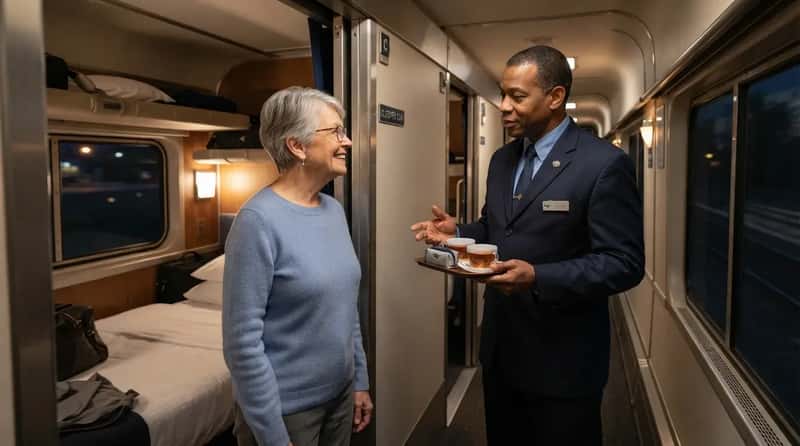
Unlike a hotel where staff rotates by shift, a sleeper car passenger typically deals with the same person from departure to arrival. In sleeping cars, there is always one attendant per full sleeper, whether it’s a Viewliner or a Superliner.
That consistency is quietly powerful for older travelers who don’t want to re-explain a mobility issue or a dietary need to a new face every few hours. By day two, that attendant usually already knows your habits without being told again. It’s continuity most passengers don’t expect from public transit.
#8 – The Overnight Shift Attendants Never Fully Clock Out Of
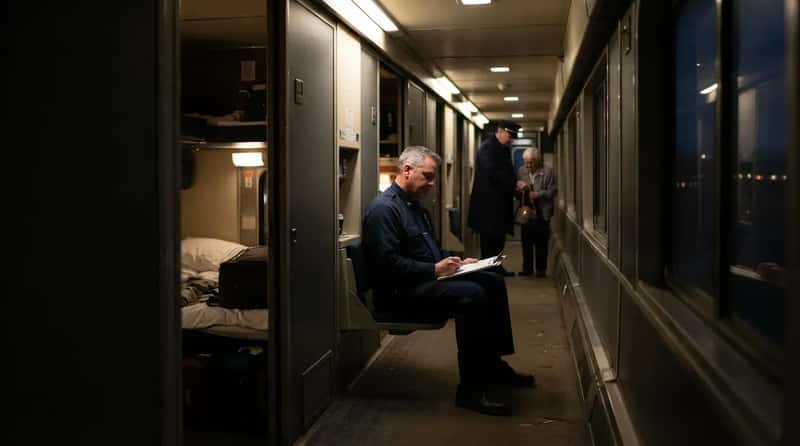
Attendants aren’t awake around the clock, but the myth that they simply disappear overnight isn’t accurate either. Car attendants are supposed to be off duty from about 10 p.m. to about 6 a.m., yet they prepare roomettes for passengers boarding overnight before going off duty, and conductors handle boarding and detraining for the car during those hours.
So even during their rest window, the room is prepped in advance and someone is still covering the car. Passengers rarely notice the handoff between attendant and conductor because it’s designed to be invisible. But that’s nothing compared to what happens when a rider physically can’t make it to the dining car.
#7 – Meals Delivered Straight to a Passenger Who Can’t Easily Walk the Aisle
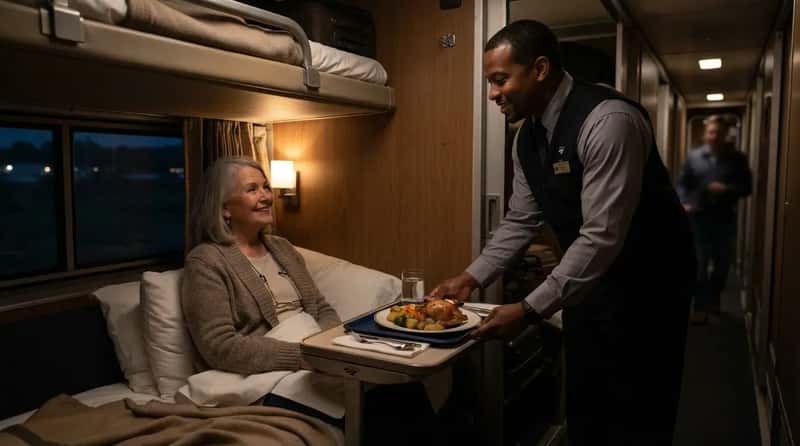
Communal dining is the Amtrak default, but it isn’t the only option, and longtime riders over 60 know it. If a passenger has limited mobility, the car attendant is more than happy to bring meals to the room for that passenger and anyone accompanying them.
It’s rarely advertised at booking, which is exactly why so few first-time riders ask for it. Frequent sleeper passengers say the trick is simply mentioning mobility needs early, rather than assuming the dining car is mandatory. Once it’s known, the meals arrive without a second request.
#6 – Priority Boarding and Lounge Access Before the Trip Even Starts

The comforts don’t wait for the train to leave the station. All customers in private rooms receive complimentary lounge access at major stations, priority boarding, and complimentary meals onboard.
For an older traveler juggling luggage and a cane through a crowded terminal, skipping the general boarding line is a real relief, not a minor perk. Most coach passengers never see this side of the station at all. It quietly sets the tone for a calmer trip before the doors even close.
Fast Facts
- Red Cap porters work major hubs like Penn Station, Union Station, and Chicago Union Station.
- A typical Red Cap tip runs $5 to $10 per party, or roughly $2 to $3 per bag.
- Sleeper passengers can settle into the lounge before boarding even opens to coach riders.
- All of it happens before the train leaves the platform, setting a calmer tone early.
#5 – The Attendant Sleeps Just Steps From Your Door
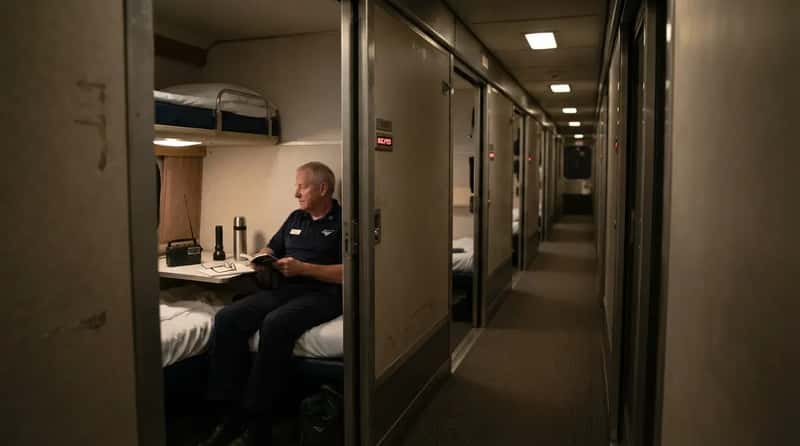
On Superliner sleepers, help is never far away, even during off-duty hours. Attendants are assigned roomette 1, and while they often sit there with supplies, they usually don’t sleep in it if the train has a transition dormitory.
Either way, the attendant’s base stays close to the passengers they’re responsible for, not tucked away in a separate crew car. That physical closeness is part of why urgent nighttime requests get answered faster than most riders expect. It’s proximity by design, not luck.
#4 – A Tipping Culture That Quietly Rewards Real Attention
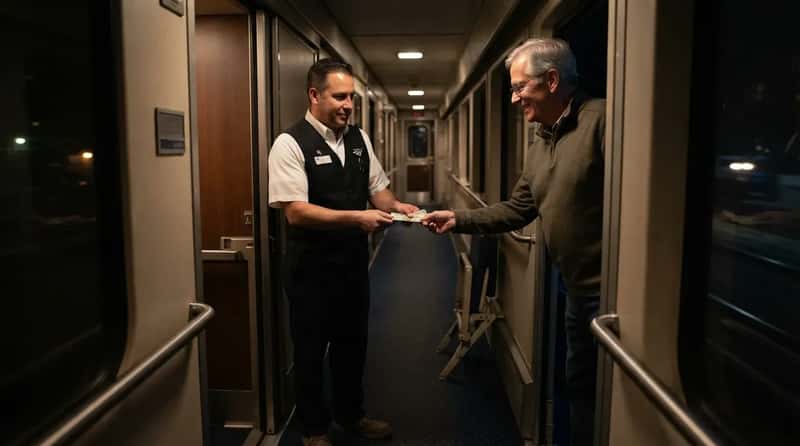
Tipping on Amtrak isn’t mandatory, but longtime riders treat it as a two-way relationship rather than a formality. One widely cited guide suggests tipping $5 per night per passenger in a sleeping car, with $2 more per person per meal brought to the room. Most passengers tip the car attendant as they leave the train at their final destination.
Regulars over 60 often say the amount matters less than the pattern: attendants who know a passenger tips fairly tend to check in more, not less. It’s less about buying favors and more about reinforcing a relationship built over multiple trips. Some riders even adjust their tip up or down based on effort, not just habit.
Quick Compare
- Modest tip: around $5 per passenger, per night – a common baseline for basic service.
- Standard tip: $10 to $20 per night, the range most travel guides recommend.
- Meals brought to the room: usually $2 to $5 extra per delivery.
- Lump sum at the end: some riders simply hand over $20 to $30 for the whole trip.
#3 – Supplies Restocked Before You Ever Notice They’re Low
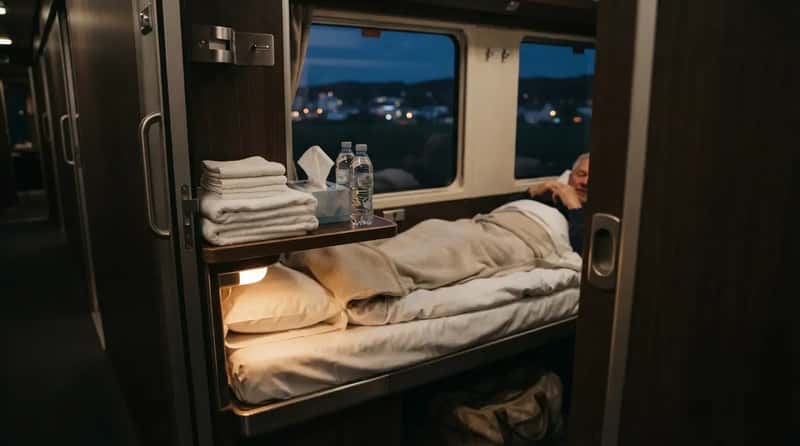
Running out of towels, tissues, or water at 2 a.m. is rare on a well-run sleeper car, and that’s not an accident. Attendants are expected to make up beds, carry baggage, explain train procedures, replenish room supplies, and deliver wake-up beverages throughout the route, often checking rooms while passengers are at dinner or in the lounge.
For older passengers who don’t want to track down staff in an unfamiliar corridor after dark, that proactive restocking removes an entire category of nighttime hassle. Most riders assume they’ll have to ask – regulars know the good attendants restock before they do.
#2 – A Steadying Hand Down a Swaying Hallway at Night
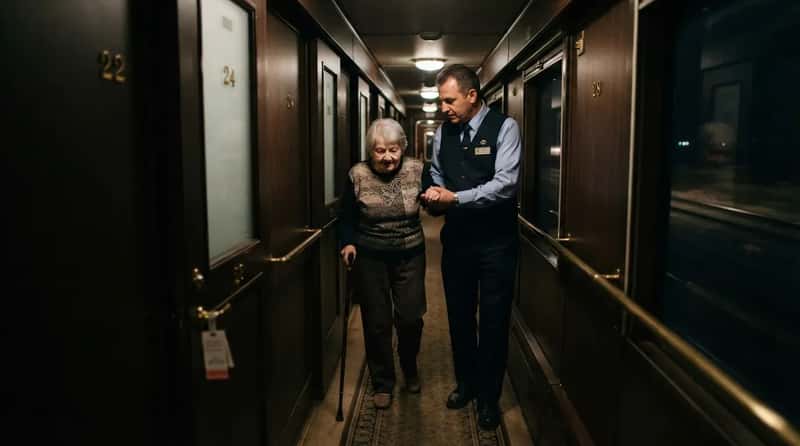
A moving train hallway at midnight is unsteady even for younger passengers, let alone someone managing a cane or stiff knees. Attendants are trained to notice this, and their duties include assisting passengers with boarding and detraining and generally ensuring the safe operation of the car, an instinct that carries over into late-night trips down the corridor as well.
It rarely gets requested out loud – most passengers over 60 simply appreciate that an attendant appears nearby without being flagged down. That quiet hovering is deliberate, not coincidental. But nothing on this list compares to what happens when something goes seriously wrong.
#1 – The Night an Attendant Became a Lifesaver, Not Just a Host
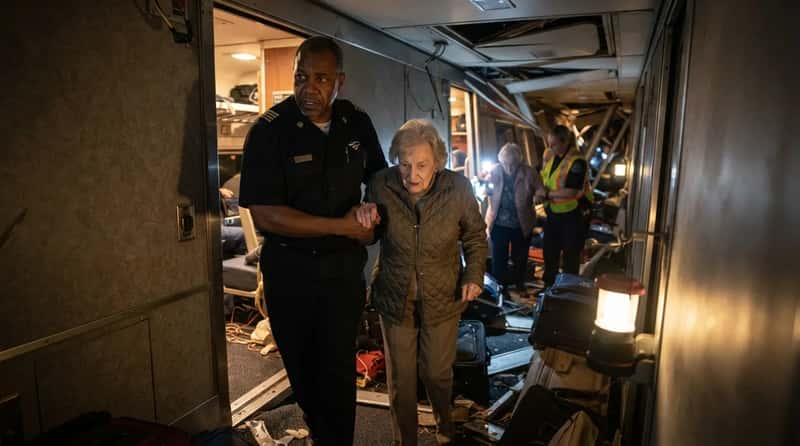
The most dramatic proof of what sleeping car attendants actually do for older passengers happened during a real emergency, not a routine trip. When the Auto Train derailed and cars buckled, 87-year-old Ginger Litz and her husband tumbled from their bunks while attendant James Pierce grabbed the curtains and found himself hanging like a mountain climber.
That night turned an ordinary overnight service role into something closer to a rescue effort, with crew members pulling elderly passengers to safety amid the wreckage. It’s an extreme case, but it reveals the same instinct behind every quieter comfort on this list – attendants are trained to watch out for older riders long before anything goes wrong, not just after. That single instinct is the thread connecting every item here.
It started with a bang. It got off the track and went bang.
Ginger Litz, Auto Train passenger
None of these comforts show up on a receipt, and Amtrak doesn’t advertise most of them upfront. They exist because sleeping car attendants are trained, tipped, and quietly trusted to notice what older passengers need before it becomes a problem – a knock instead of an alarm, a meal brought to the room, a hand steadying a swaying hallway at 1 a.m.
Taken together, it’s a version of overnight train travel most first-time riders never see, and one that longtime passengers over 60 have come to rely on without ever calling it a perk. Somewhere on tonight’s route, one of these small acts is already happening, unannounced, exactly as it was designed to.