

A baggage handler doesn’t need to see your face to guess your age. Three seconds with your suitcase on the belt is usually all it takes – the tags, the wear, the weight, the little handwritten notes taped to the handle all say more than most travelers realize.
Some of what handlers notice is genuinely charming. Some of it is a quiet, decades-old habit that’s been costing older travelers their luggage, their privacy, or their patience at the carousel for years – and one of them is the exact opposite of a mistake. Here’s what baggage handlers actually see when nobody’s paying attention.
#14 – The Handwritten Itinerary Taped to the Handle
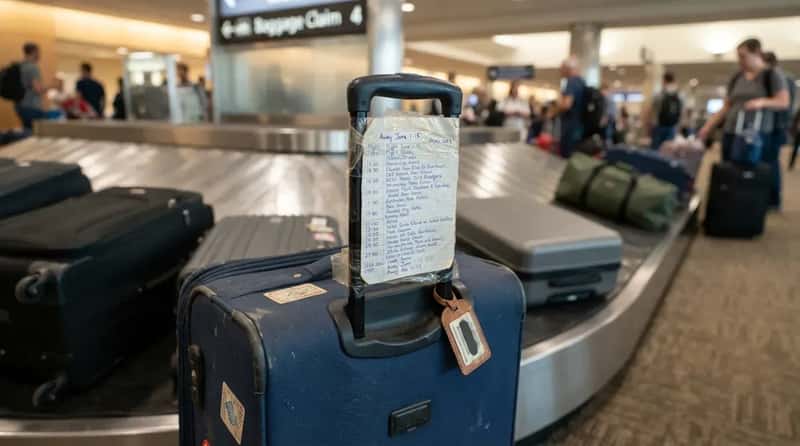
Handlers say older travelers are far more likely to tape a printed itinerary or a handwritten note to the suitcase handle, listing flight numbers, hotel names, and travel dates. It feels organized and thoughtful, the kind of habit passed down from a more trusting era of travel.
To a stranger standing at baggage claim, though, it’s a full schedule for the taking. Security experts specifically warn against listing dates like “away June 1-15” on visible luggage material, since it essentially advertises exactly when a home will sit empty. It’s a small habit with an outsized risk – and handlers say it’s almost always the older suitcases carrying it.
#13 – Old Airline Stickers Stacked Three Trips Deep
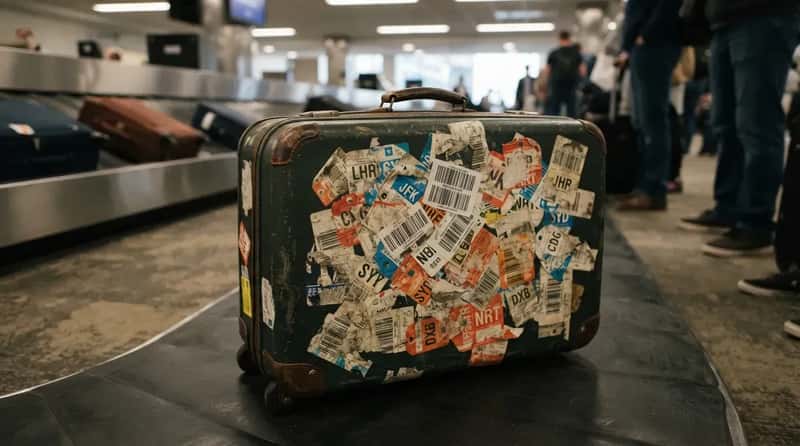
Handlers say bags belonging to travelers over 60 are the most likely to arrive with a graveyard of old barcode stickers still stuck to the shell. It’s not laziness – it’s sentimentality, or simply not knowing the stickers actually matter to the machines reading them.
But it causes real problems. Airline routing systems scan for a specific sticker to tell the belt where a bag should go, and one leftover sticker from a trip last month can get scanned instead of the current one – sending the bag nowhere near the right plane. Frequent flyers already know to strip every tag down to bare plastic before check-in; it’s a habit worth borrowing.
Fast Facts
- Sorting scanners are built to read whichever barcode catches the beam first, old or new
- Most airlines print a fresh tag at every single check-in, no exceptions
- One stray sticker can send a bag toward a completely different connection
- Peeling old tags down to bare plastic takes under a minute
#12 – The Suitcase Is Older Than the Grandkids
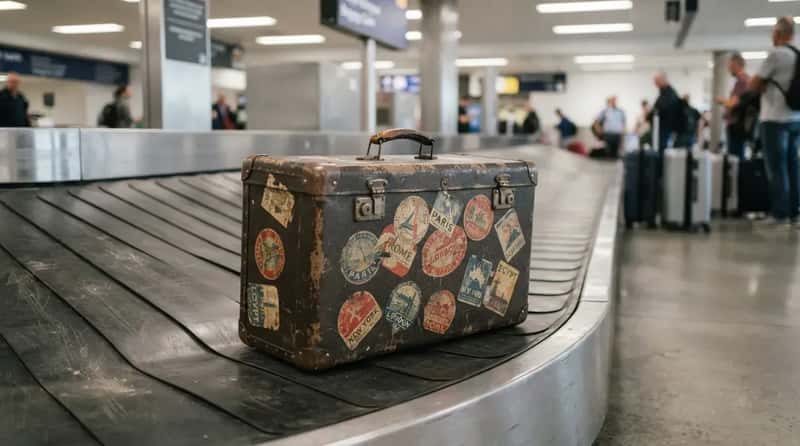
There’s a specific kind of hard-shell suitcase – boxy corners, one thin handle, sometimes no wheels at all – that handlers instantly clock as belonging to a traveler in their 60s, 70s, or beyond. It’s often the same suitcase that’s already been to a dozen countries and outlived two family cars.
Handlers privately admit these bags get rougher treatment, not out of disrespect, but because they don’t stack or roll the way modern luggage does. Industry advice leans hard toward newer four-wheeled hard cases, which are lighter and far easier to stack safely in a cargo hold. A beloved suitcase with 30 years of memories is lovely to look at, but it’s also the one most likely to get crushed at the bottom of the pile.
#11 – A Fragile Sticker That Does Almost Nothing
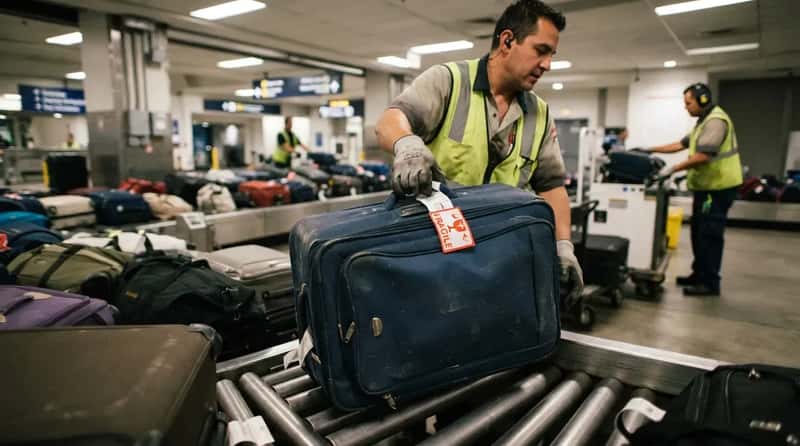
Many older travelers pack breakables – china, framed photos, glass souvenirs – and slap on a bright “Fragile” sticker expecting gentler handling. Handlers say that sticker is one of the most misleading pieces of paper in the entire airport.
The truth stings a little: in the rush of a normal shift, most workers barely register those tags at all. A grandmother’s china set wrapped in a sweater and marked “fragile” gets stacked exactly like everything else around it. Plenty of experienced travelers have caught on and now just carry anything precious onboard instead of trusting the sticker to do the work.
#10 – The Bag Weighs More Than It Should, and It Shows
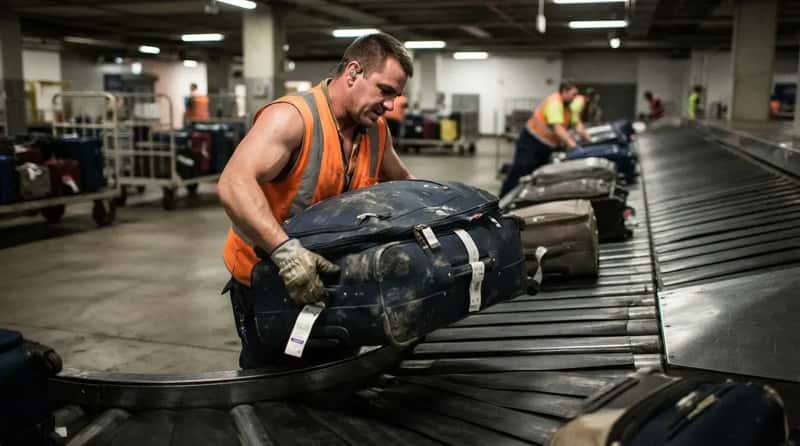
Handlers say suitcases belonging to older travelers are disproportionately overweight, often stuffed with gifts, medications, or “just in case” extras for grandchildren and family. It’s generous packing, but it comes at a real physical cost to whoever has to lift it onto the belt.
Weight isn’t just a fee issue – it determines exactly how a bag gets treated inside the cargo hold. Heavier bags, especially anything pushing past 50 pounds, typically get loaded at the very bottom of the stack to keep everything stable. That means the heaviest, most lovingly overstuffed suitcases absorb the most pressure for the entire flight.
Quick Compare
- Under 50 pounds: usually clears standard checked-bag limits without extra fees
- Over 50 pounds: overweight charges kick in, and the bag often lands at the bottom of the stack
- Lighter bags: loaded near the top, unloaded first, and among the earliest onto the carousel
- Heavier bags: absorb the most pressure for the entire flight, from tarmac to unloading
#9 – Duffel Bags Tucked Inside the “Real” Suitcase
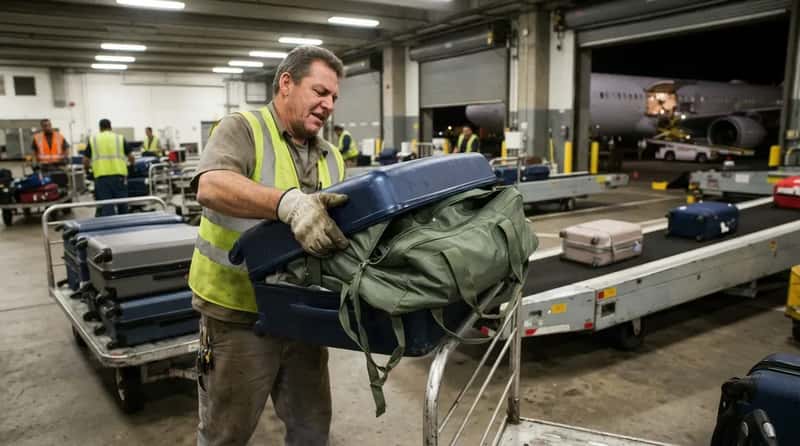
It’s common for travelers over 60 to pack a soft duffel bag as backup, often stuffed inside or strapped to the main suitcase for the return trip loaded with souvenirs. Handlers notice these instantly, and not fondly.
Soft-sided bags create real logistical headaches – they don’t keep their shape, the straps tangle, and they refuse to stack cleanly with hard-sided luggage. Handlers often set them aside and load them last, which means they’re frequently the last bags to appear at baggage claim. The backup duffel meant to make the trip home easier often becomes the exact reason a traveler waits the longest.
#8 – A Suitcase Stuffed So Full the Zipper Strains
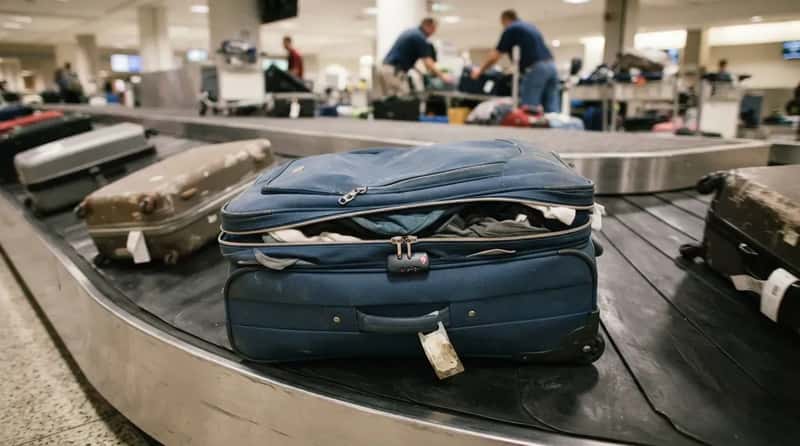
Handlers say they can spot an overpacked bag within seconds – the zipper bulges, the seams strain, and the whole thing looks like it’s holding its breath. Older travelers packing for extended visits or multi-generational trips are frequent offenders.
It’s not just cosmetic. When a bag is packed past its limit, the zipper is the first thing to fail, and if it splits mid-transfer, everything spills across belts, carts, and sometimes the tarmac itself. A basic TSA-approved lock is often the only thing standing between a stuffed suitcase and a very public mess.
#7 – Souvenirs and Gifts Packed Loose, Not Wrapped

Handlers say older travelers are the most likely to bring home loosely packed gifts – bottles, ceramics, food items – wrapped in nothing sturdier than a spare shirt. It’s a habit built on decades of “it’ll be fine,” and it usually isn’t.
A cargo hold is unforgiving. Liquids and breakables shift constantly during a flight, and once something leaks, staff have to pull that bag aside for a separate inspection. That means the bag doesn’t just arrive damaged – it can arrive late, held back while everyone else’s luggage moves on without it.
#6 – A Cane, Walker Attachment, or Medical Bag Strapped On
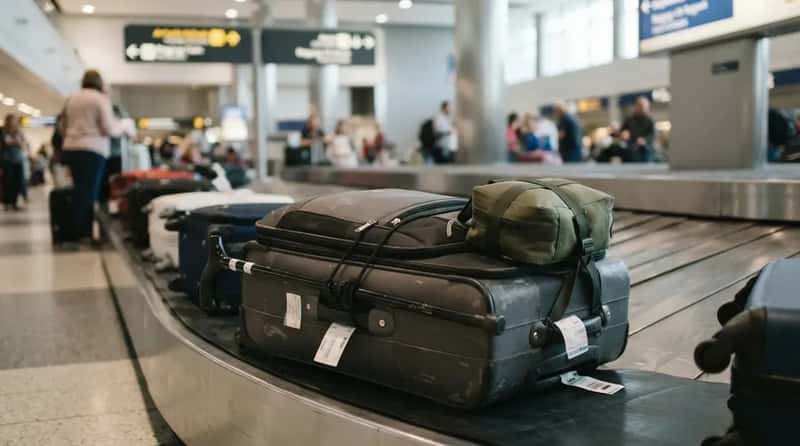
Mobility aids strapped to the outside of a suitcase are one of the clearest signals handlers use to spot an older traveler at a glance – a folded cane hooked through a handle, or a medical kit bungee-corded to the top.
Airline policy actually treats these travelers with more built-in support than most people realize. Staff are expected to help carry gate-checked or carry-on luggage whenever a passenger can’t manage it alone because of a disability. Handlers say the travelers who ask for that help outright, instead of quietly straining under a strapped-on bag, almost always end up with a smoother, faster trip through the airport.
Worth Knowing
- Airline staff are required to assist passengers who can’t manage their own bags due to a disability
- Canes, walkers, and folding wheelchairs generally travel free, outside normal checked-bag limits
- Pre-boarding is typically available for travelers who need extra time or help
- Asking for help at the counter often moves a bag through the system faster, not slower
#5 – The Suitcase Set That All Looks Identical
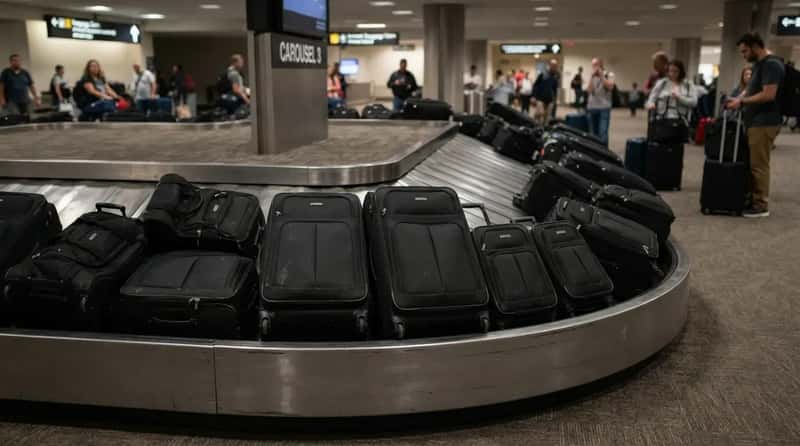
Matching luggage sets, often a wedding gift or a decades-old purchase, are a dead giveaway to handlers sorting a carousel full of near-identical black bags. Older travelers are far more likely to still be using a matched set bought years ago instead of mixed, mismatched pieces.
The problem is obvious once you think about it: black is already the most common suitcase color on earth, making up something close to 40 percent of checked luggage worldwide. A matching set of that same black bag means three or four look-alikes on a single flight, which is exactly why handlers say distinctive tags and ribbons matter more for this group, not less.
#4 – Personal Details Written in Plain Sight
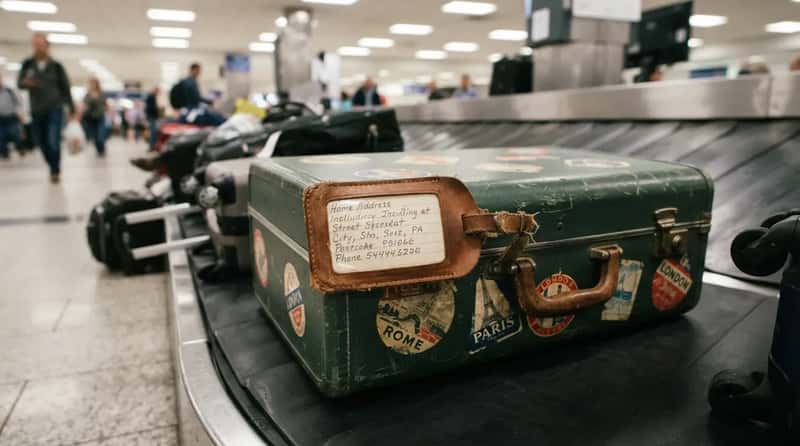
Handlers notice that older travelers’ luggage tags tend to carry far more personal information than younger travelers’ – a full home address, sometimes a phone number written twice for good measure. It comes from an era when that felt like common courtesy, not a risk.
Security-minded packers now argue the opposite is true. Broadcasting a home address while you’re thousands of miles away is basically a “nobody’s home” sign, and thieves have been known to scan airport luggage tags looking for exactly that kind of information. The fix is simple – name, cell number, email – but it’s a habit that’s slow to change among longtime travelers.
#3 – No Tracker Inside, Just Faith in the System
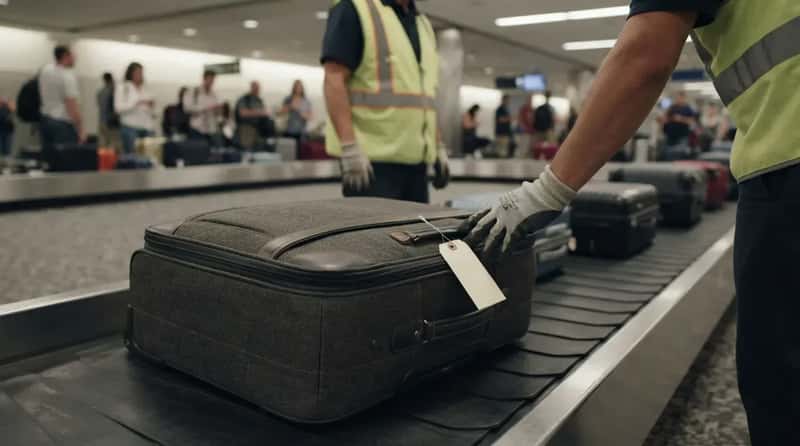
Handlers say younger travelers have overwhelmingly adopted Bluetooth trackers tucked inside their bags, while travelers over 60 are far less likely to use one, relying instead on the airline’s own tag and a bit of trust.
That trust isn’t unreasonable, but it’s incomplete. A tracker helps a traveler find their own bag in real time, while the paper tag is what actually helps airline staff scan it and route it correctly. Skipping the tracker doesn’t cause problems by itself, but it does mean a missing suitcase gets found on the airline’s timeline instead of the traveler’s.
#2 – A Suitcase That’s Been Checked In Way Too Early
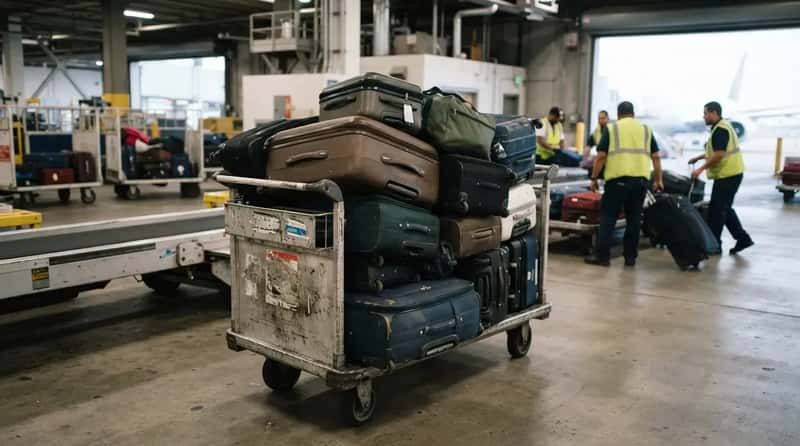
Handlers say older travelers are consistently the first ones at the check-in counter, often arriving well ahead of the recommended window out of habit and caution. It’s a considerate instinct, but it can quietly work against the traveler.
Bags checked in early tend to get buried at the bottom of the cart and take longer to reappear at the other end. The bags checked in last are typically stacked on top, loaded onto the plane first, unloaded last, and among the first onto the carousel. The traveler who shows up two hours early with plenty of buffer time is often, ironically, the one standing at baggage claim the longest.
#1 – The Ribbon, Tag, or Bright Strap That Actually Works
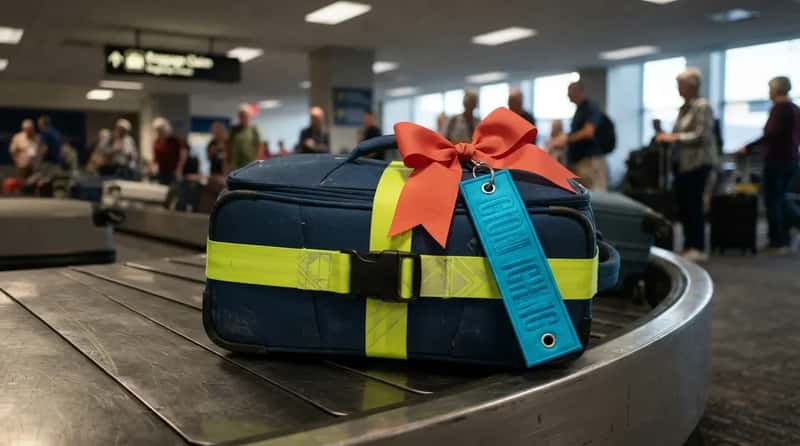
Here’s the twist: the one detail handlers say genuinely helps older travelers isn’t a warning at all – it’s a habit many of them already have without realizing how smart it is. Bright ribbons, oversized embroidered tags, and colorful straps tied around a bag are far more common among travelers over 60, and handlers say it noticeably speeds up identification.
It’s the exact trick frequent flyers swap with each other online – a heavy-duty embroidered name tag in neon blue on the top handle, a wide ribbon tied in a distinctive bow, an elasticized belt wrapped around the whole bag. The travelers who’ve been flying the longest apparently stumbled onto one of the smartest tricks in the airport decades before it ever became a trend.
Why It Stands Out
- Cuts identification time at a crowded, mostly-black carousel
- Almost eliminates the classic lookalike-bag mix-up
- Still works even if a paper tag rips off mid-transit
- Costs only a few dollars but pays off on every single trip
So the next time a suitcase rolls past covered in ribbons, old stickers, and a few too many personal details, know that a baggage handler already clocked all of it – the sweet habits and the risky ones, in the same three seconds. Some of what separates a smooth trip from a lost-bag nightmare has nothing to do with age and everything to do with a few small choices made back at check-in. Which of these fourteen details do you recognize on your own luggage?