
Most travelers over 60 assume the hardest part of planning a trip is picking the destination. It isn’t.
The real trouble starts during the booking itself – in the small decisions nobody thinks to double-check.
Seventy percent of Americans aged 50 and older are booking trips this year, the highest number since before the pandemic. Yet most of them are about to repeat the exact same mistakes their friends made last summer.
Here’s what travel experts and experienced renters actually say separates a smooth trip from one filled with avoidable headaches.
14. Booking During School Holidays Without Thinking It Through

Skipping school-break dates is one of the simplest wins available to travelers over 60 – and one of the most overlooked.
If you’re not traveling with kids, check the school holiday calendar before you book and avoid those windows. Vacation rentals in popular areas can triple in price during peak breaks, and the whole atmosphere shifts along with it.
Traveling in the off-season means lower nightly rates and fewer crowds – a genuine double win for anyone prioritizing peace and budget. Many retirees have full calendar flexibility, which is an underused superpower.
The irony is that over-60 travelers are the group best positioned to avoid busy seasons entirely – yet many default to the same peak-summer windows they used when the kids were young.
But avoiding busy dates is only step one. What you look at inside the listing itself is where most people stumble next.
13. Focusing on the Nightly Rate Instead of the Total Cost
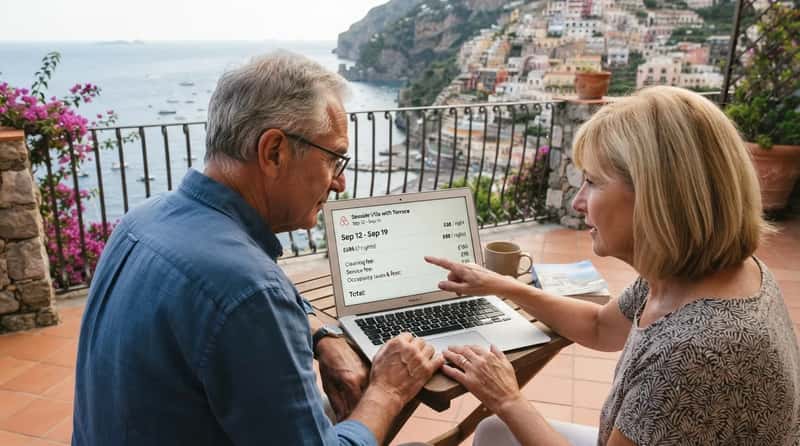
That eye-catching low nightly price often isn’t what you’ll actually pay – not even close.
A lower nightly rate can look like a better deal at first glance. But once cleaning fees, service charges, and local taxes get added, the “cheap” option frequently ends up pricier than a listing with a higher headline rate.
Always click through to the total cost before comparing rentals side by side. Platforms like Airbnb and Vrbo now let you display the total price including fees – turn that setting on before you browse.
Hidden fees can quietly sabotage a vacation before it even begins. The cleaning fee alone on some popular properties can exceed a full night’s rent.
And if the total price surprised you, the cancellation policy waiting inside that same booking might shock you even more.
12. Ignoring the Cancellation Policy Entirely

Most travelers skim the cancellation policy and assume it’s flexible. It usually isn’t.
Canceling a home rental often comes with a penalty, or requires notice at least 30 days before arrival. For travelers over 60, where health can change without warning, a rigid cancellation window is a real financial risk.
Quick Compare
- Flexible: Full refund until 24 hours before check-in.
- Moderate: Full refund up to 5 days before check-in.
- Limited: Full refund up to 14 days before check-in.
- Firm: Full refund only if canceled 30 days before check-in.
Airbnb permanently retired the Strict cancellation policy on October 1, 2025, migrating every listing that used it to Firm. That’s exactly why the label on your booking screen might not mean what it used to.
Non-refundable deposits and restrictive policies can put your entire travel investment at risk if plans need to change. Read the actual policy language – not just the label (“moderate,” “strict”) – before you click confirm.
Policies vary dramatically by host. Some allow full refunds up to seven days out; others lock in your payment the moment you book.
Knowing the cancellation policy matters – but it only protects you if you also have a backup plan, and most people over 60 are missing a critical piece of that puzzle.
11. Skipping Travel Insurance for a Health-Related Cancellation
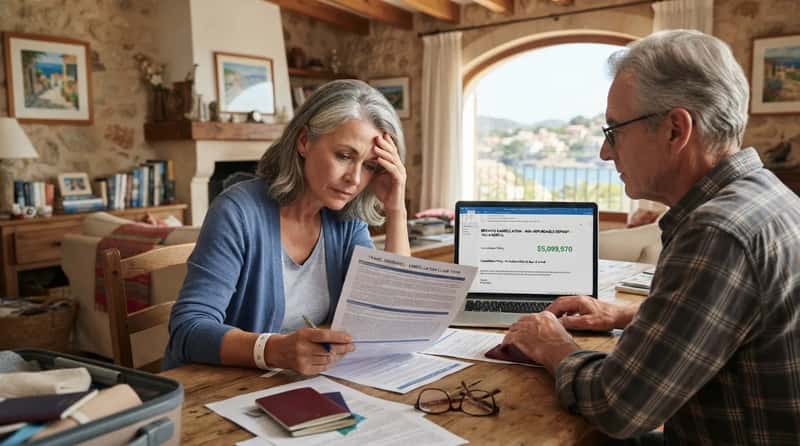
This is the mistake that costs the most money and causes the most regret – and it’s entirely preventable.
A comprehensive travel insurance plan has never been more important. Read the fine print carefully, and consider a cancel-for-any-reason policy for extra flexibility.
Travel insurance covers cancellations, medical emergencies, and lost luggage – but not all policies are equal. A standard plan may not cover a pre-existing condition, which is exactly what many travelers over 60 need protected.
Look specifically for a “pre-existing condition waiver,” and buy it within the required window after your first trip payment – usually 14 to 21 days.
Travel insurance handles what happens before the trip. But there’s a separate, equally serious mistake that happens on arrival day – and it’s about the property itself.
10. Not Checking for Stairs Before Booking
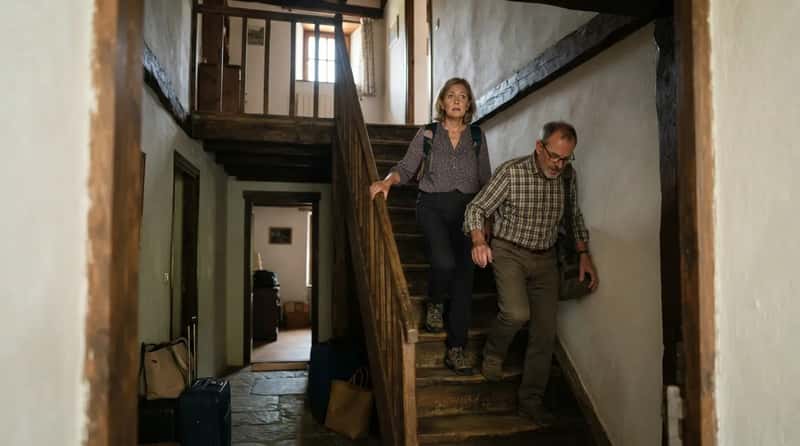
A stunning rental with “mountain views” and “rustic charm” may have a staircase that makes it unusable for a significant number of guests over 60.
A beautiful rental may hide steep stairs, multiple levels, outdoor steps, or a bedroom on the second floor. Confirm the layout before booking, because photos rarely show the full picture.
Listing photos are curated to highlight the best angles – not the steep entry steps or the split-level layout where the only bathroom is a half-flight up. Always ask the host directly about the floor plan if the listing doesn’t spell it out.
Most rentals aren’t designed like senior housing, so don’t assume accessibility is included. Assume the property has stairs and zero accessibility features until proven otherwise.
Stairs are the most common barrier – but the bathroom is where the real safety risk lives.
9. Assuming the Bathroom Is Safe Without Checking
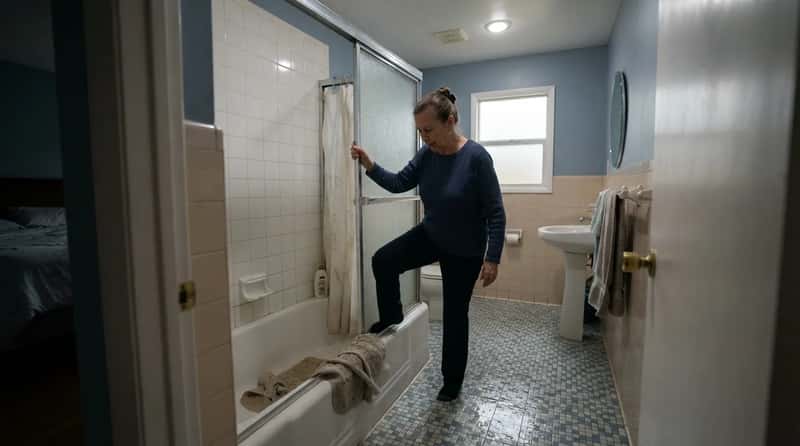
Bathroom falls are among the most common household accidents for adults over 60. A vacation rental bathroom is often far less equipped than the one at home.
Check the setup carefully: is there a walk-in shower or tub? Is the bathroom near the bedroom, and is there enough lighting and any grab bars? These aren’t luxury requests – they’re safety basics that many standard rentals simply don’t have.
Ask about grab bars, walk-in showers, or handicap-accessible bathrooms before finalizing any booking. Listings that don’t mention these features almost certainly don’t have them.
A tub-only bathroom with no grab bar and slippery tile is a genuine hazard. Don’t assume a host has thought about this, because most haven’t.
Once you’re confident the bathroom is safe, there’s another room that deserves the same scrutiny – one most travelers don’t think to examine until it’s too late.
8. Forgetting to Confirm the Kitchen and Refrigerator Setup
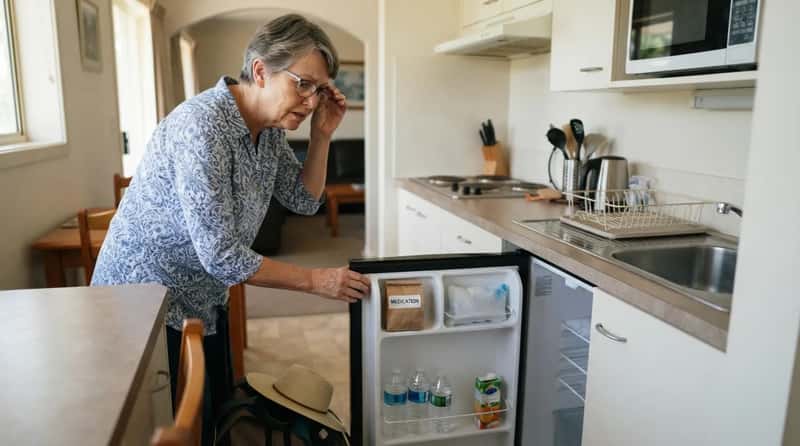
If you take daily medication that requires refrigeration, a full-size fridge isn’t a nice-to-have. It’s essential.
If you need a refrigerator for medication, a washer and dryer, or a full kitchen for dietary needs, confirm those details directly with the listing or host. Many “full kitchen” claims turn out to mean a microwave and a mini-bar fridge.
Worth Knowing
- Ask whether “full kitchen” means a full-size fridge and freezer, not just a mini-fridge.
- Confirm the stove type – some listings only offer a single hot plate or induction burner.
- Check for a dishwasher and basic cookware if you plan to cook most meals.
- Verify freezer space if you need ice packs for insulin or other refrigerated medication.
Dietary needs also shift with age. If you’re managing cholesterol, blood sugar, or sodium intake, eating out for every meal can undo your health goals for the whole trip.
Confirm whether the rental offers a proper in-room refrigerator, especially for medication storage. Don’t take the listing description at face value – ask the host directly and request a photo if needed.
And while you’re checking the inside of the property, don’t forget to check what’s directly outside it.
7. Overlooking Parking and Entry Access

Parking seems like a minor detail until you’re arriving after a long drive, exhausted, and realize the nearest spot is three blocks away up a hill.
Check carefully: is parking included, and is it close to the door? Is the driveway steep, or is street parking required? These details matter enormously when you’re managing luggage or the ordinary fatigue of a long travel day.
Urban rentals are especially guilty of burying the parking situation in the fine print. “Parking available nearby” can mean a paid garage a five-minute walk away – fine at 30, exhausting at 65 with a rolling suitcase.
Ask the host specifically how many steps separate the parking area from the front door. That one question has saved countless trips from a rough start.
Parking gets you in the door. But the neighborhood surrounding that door matters just as much – and most travelers only discover the problem after check-in.
6. Not Researching the Neighborhood for Walkability and Safety

A listing can look perfect while sitting in a neighborhood that’s genuinely difficult to navigate on foot – or uncomfortably loud at night.
Opt for locations with accessible transportation and minimal walking if mobility is a concern. Look for shuttle services, elevators, and ADA-compliant venues nearby, because the neighborhood infrastructure matters as much as the property itself.
Use Google Street View to virtually walk the block before you book. Check whether sidewalks are level and how far the nearest pharmacy or grocery store actually is – “walking distance to everything” rarely specifies whether that walk involves a hill.
Always research accessible transit before committing. In some destinations the rental is fine, but getting around locally requires a car you never planned on renting.
Even the best-located rental can ruin a trip if you haven’t thought through one specific question – and it has nothing to do with the property itself.
5. Ignoring the Local Climate and Seasonal Conditions

Travelers over 60 are often more sensitive to extreme heat or cold than they were decades earlier – and listings never warn you about this.
Fast Facts
- People aged 65 years or older are more prone to heat-related health problems.
- Older adults do not adjust as well as young people to sudden changes in temperature.
- They are more likely to take prescription medicines that affect the body’s ability to control its temperature or sweat.
- Virginia ZIP codes with higher percentages of residents age 65 and above are associated with a 23 percent increased risk in both heat-related emergency room visits and heat-related hospital admissions during heat events.
Climate research before booking is a genuine health consideration, not just a comfort preference. A Gulf Coast beach house in August can reach heat index levels that make outdoor activity genuinely dangerous.
Checking the local climate means looking beyond typical weather. Some destinations in the Caribbean and Mexico have seasonal seaweed problems, and online reviews are often the only place that mentions it.
Check recent guest reviews specifically for the time of year you plan to visit – not just the overall rating. A five-star summer rental can become a three-star experience in humidity-soaked August.
Now here’s a mistake that costs travelers real money – and it comes from being too trusting of a single platform.
4. Using Only One Platform Without Comparing

Booking the first rental that looks good on Airbnb – without checking Vrbo, Booking.com, or a direct host website – is a habit that quietly costs travelers money every trip.
The same property often appears on multiple platforms at different price points, because each platform charges hosts a different commission and passes that cost to guests. A listing that’s $220 a night on one site may be $185 on another, or even less booked directly.
You should book directly through the rental company when possible, not through a third party, to see the full costs upfront. Many hosts are happy to take a direct booking after an initial contact through a platform.
For travelers on fixed incomes, comparing two or three platforms before committing is one of the highest-return habits available – and it takes under ten minutes.
Comparing platforms helps with cost. But there’s one search filter that most travelers over 60 skip entirely – and it would solve half the problems on this list in a single click.
3. Not Using Accessibility Filters When Searching

Both Airbnb and Vrbo have built-in accessibility filters – and the vast majority of travelers over 60 never touch them.
Travelers who use Airbnb’s accessibility filters are far more likely to end up in a rental that actually fits their needs. Step-free entry, roll-in showers, and ground-floor bedrooms are all searchable – but only if you know to look for them.
Before booking, message the host with specific, direct questions rather than “Is your home accessible?” – a phrase that means something different to everyone. Ask about door widths, shower type, and the exact number of steps to the front door.
In most US vacation rental markets, truly accessible supply is thin, which means the properties that do have these features get booked early. Use the filters at the start of your search, not as a last resort.
Filtering for accessibility is a massive improvement. But there’s something even more fundamental that most travelers skip – and it shapes the entire trip more than any single amenity.
2. Booking a Property That Doesn’t Match Your Actual Energy Level
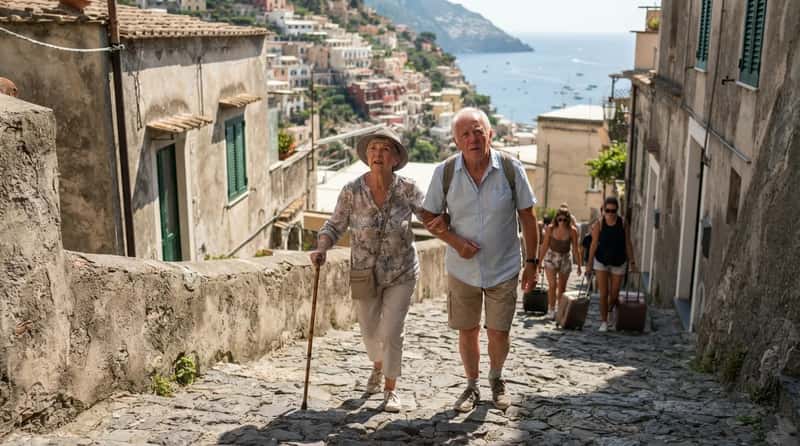
This is the mistake almost no one talks about – and it quietly ruins more trips for people over 60 than any hidden fee ever could.
The single most useful question before booking isn’t “where do I want to go?” It’s “what does a good day of travel actually feel like for me right now?”
A rental that requires a 20-minute walk to any restaurant, or sits atop a hilly village with no elevator, can be genuinely exhausting rather than relaxing. The trips that disappoint seniors most are built around rigid, packed itineraries that treat rest as wasted time.
Choose a rental that supports your real pace, not the pace you had at 45. Be honest about how much walking is realistic, then pick a property that makes that day easy – not heroic.
Every mistake above is serious. But there’s one that combines financial risk, health risk, and ruined-trip risk all at once – and it’s the one most people don’t discover until it’s far too late to fix.
1. Booking Without Verifying Medication Storage and Nearby Medical Access
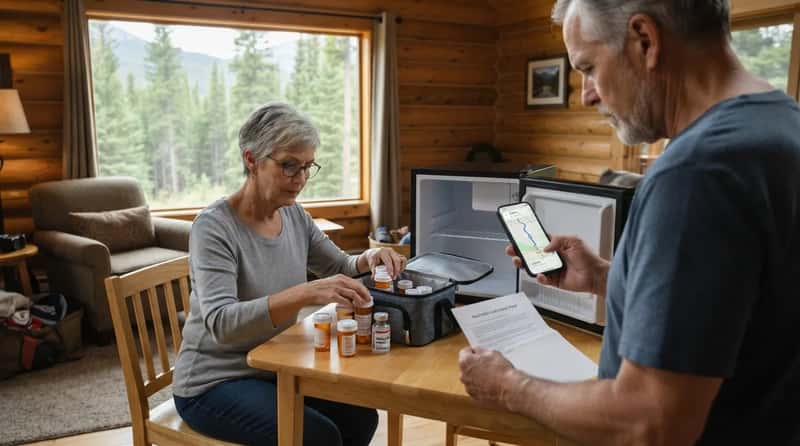
This is the mistake with the highest stakes – and the one experienced travelers over 60 uniformly wish someone had warned them about earlier.
Your health requirements don’t go on vacation just because you do. The rental you choose needs to support your medical routine, not just your relaxation goals.
If you take insulin, certain heart medications, or biologics that require refrigeration, a rental with only a mini-bar fridge isn’t just inconvenient – it’s medically dangerous. Beyond storage, check how far the nearest hospital or urgent care is from the property.
A remote cabin in a scenic location might be 45 minutes from the nearest ER – a fact that never appears in the listing description. Consider a checkup and travel insurance before you go, and identify the nearest pharmacy before you arrive, not after.
Many experienced senior travelers now carry a written list of medications, dosages, and their home physician’s number, kept separate from their luggage in case bags are lost. It’s a five-minute task that has rescued real trips from becoming real emergencies.
The Bottom Line

Most of these mistakes share one root cause: assuming a vacation rental will simply work the way a hotel room does, with accessibility built in and medical logistics handled somehow.
None of that is guaranteed. The travelers who have the best experiences ask more specific questions, use every available filter, read cancellation policies word for word, and choose properties matching their actual energy level – not their aspirational one.
The good news: every mistake on this list is avoidable with 30 extra minutes of research before you hit “confirm.” That’s a small price for a trip you’ve likely been planning for months.
Which of these caught you off guard? Drop your experience in the comments – your insight might save someone else’s vacation.