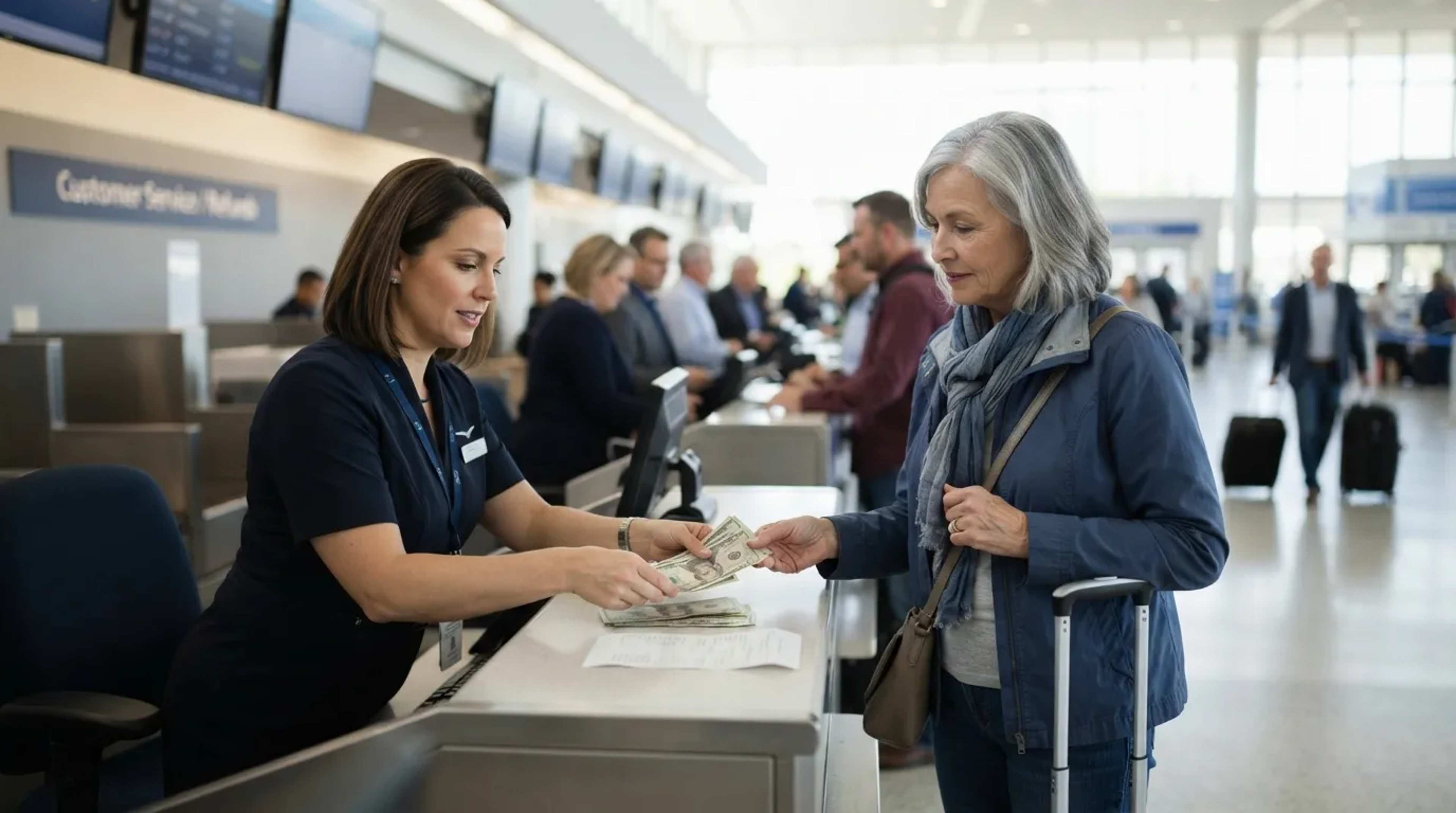
Turning 65 feels like it should unlock something at the airport: a faster line, a quiet upgrade, a friendly nod from the gate agent. It doesn’t. No airline hands out a senior perk on your birthday, and the old shoes-off exemption at security that started at 75 is gone too.
But the help that does exist is real, mostly free, and backed by federal rules. It almost always depends on you asking out loud. Some of what’s coming is a free ride across the terminal, some is a rule with a stopwatch attached, and one is a person whose whole job is to step in when everything else fails. The first one might change how you walk through your next airport.
#15 – The Free Ride From Curb to Gate Nobody Mentions
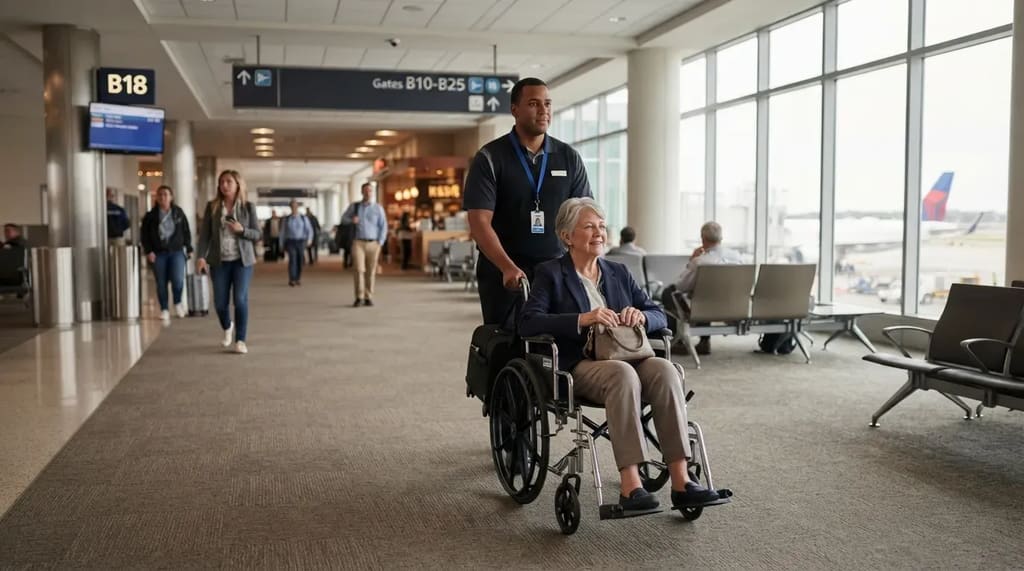
The longest walk of your trip may come with a free shortcut. US airlines are prohibited from charging for wheelchair assistance, terminal escorts or boarding support, and it must be free regardless of ticket class. You don’t have to use a wheelchair at home to ask for it.
You don’t need paperwork either. One travel agency’s FAQ says the Air Carrier Access Act requires no documentation to request wheelchair or mobility assistance at US airports. Yet plenty of people over 65 trudge the whole terminal because nobody at the counter ever says the words “wheelchair assistance.”
But that’s nothing compared to what the same service quietly covers at #14…
#14 – The Wheelchair That Follows You Through Your Connection
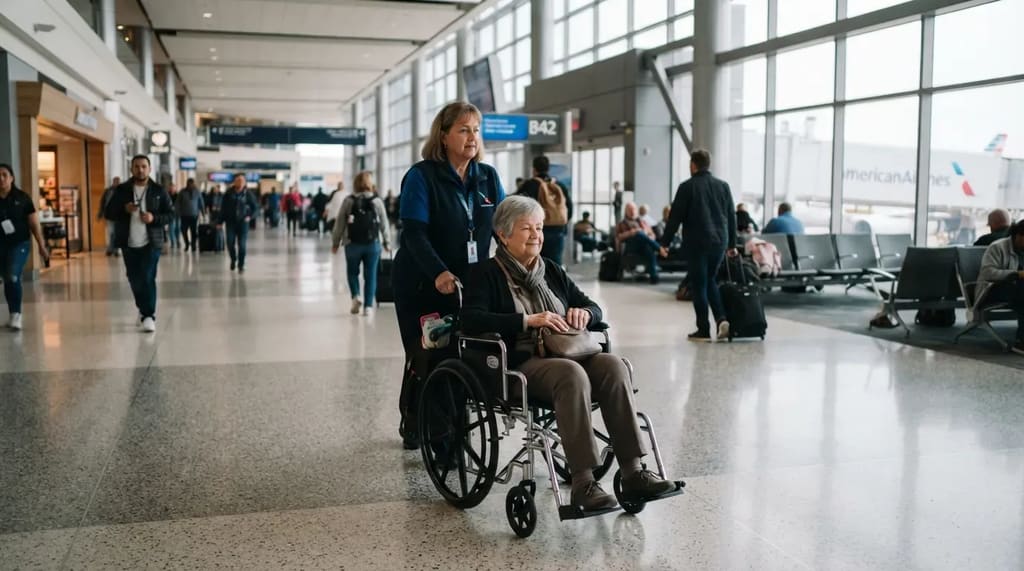
Most people picture a wheelchair for one short stretch of the airport. It can actually cover the whole trip. American Airlines lists help to and from your gate, navigating between gates on connecting flights, and transport to baggage claim.
That matters on a tight layover in a sprawling hub, where the next gate can feel like another zip code. American recommends requesting it in advance through its site or app, but you can also tell a team member on the day of travel. The connection leg is the part travelers most often forget to request.
At a Glance
- Help to and from your gate
- Assistance between gates on connecting flights
- Transport to baggage claim at the end
- Request ahead via the airline’s site or app, or ask a team member on the day
Next up is a boarding privilege that only works if you say one specific thing…
#13 – Early Boarding Exists, but Only If You Say the Words
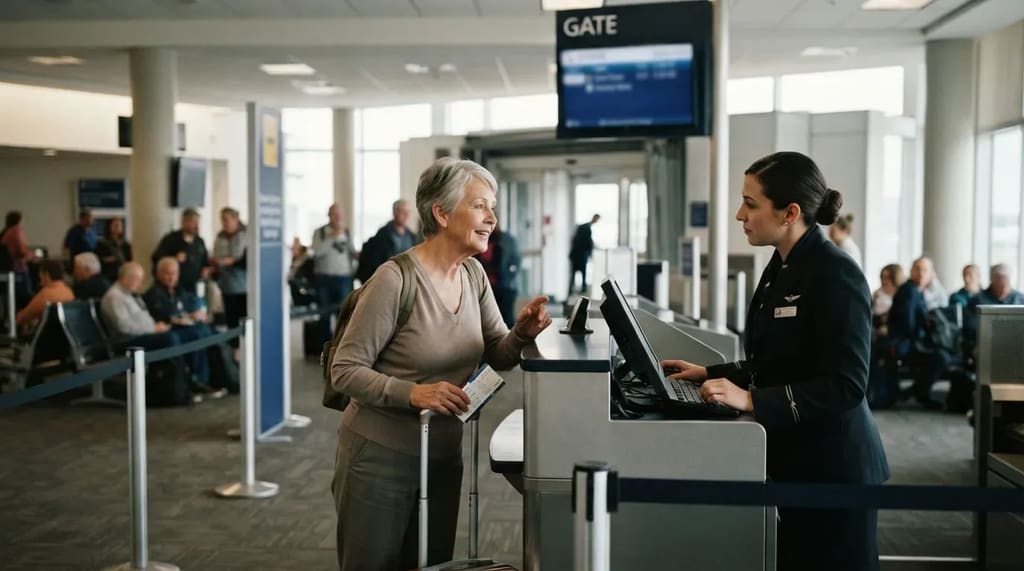
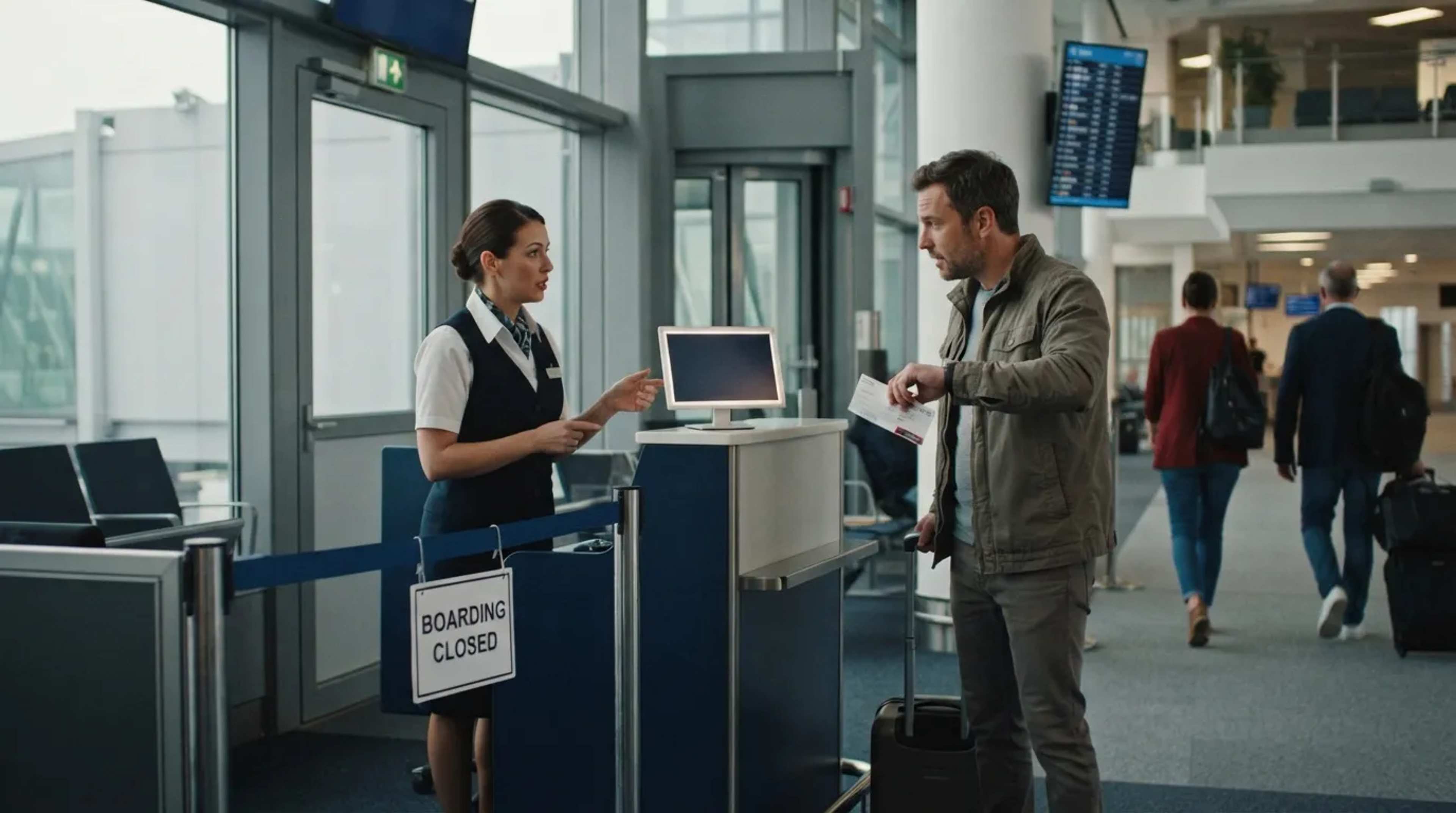
The gate agent isn’t going to scan the line and wave you forward. American Airlines tells senior travelers to request early boarding with the gate agent if they need extra time or assistance. No request, no preboard.
Here’s the part that stings: airlines like this arrangement too. Preboarding keeps the aisles less congested, which is good for everyone. Yet the system still waits for you to raise your hand first.
And the gate agent may not even know you’re the one who asked, as #12 explains…
#12 – The Request You Made Online Can Vanish at the Gate
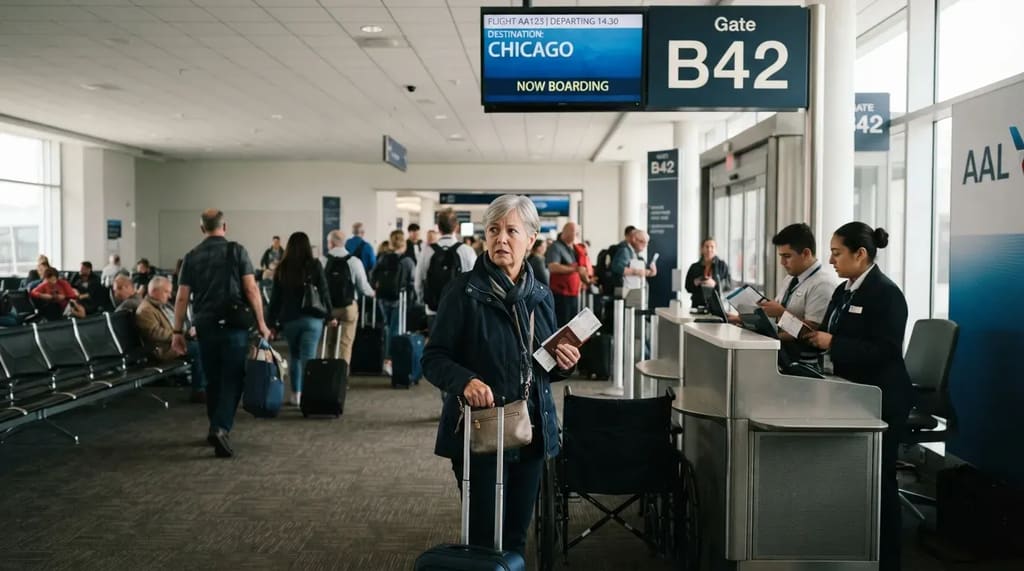
You booked the assistance. You ticked the box. Then nobody shows up. The DOT warns that even when an airline has noted your reservation, it won’t know you’re the passenger who requested help unless you self-identify.
Plenty of travelers get caught here because they assume the system works quietly in the background. The DOT advises telling airline personnel at the boarding gate about any help you need. A note in your reservation is not the same as a person who knows your face.
Here’s a trick for travelers who don’t want to walk alone, and it shows up at #11…
#11 – The Free Pass That Lets a Helper Walk You to the Gate
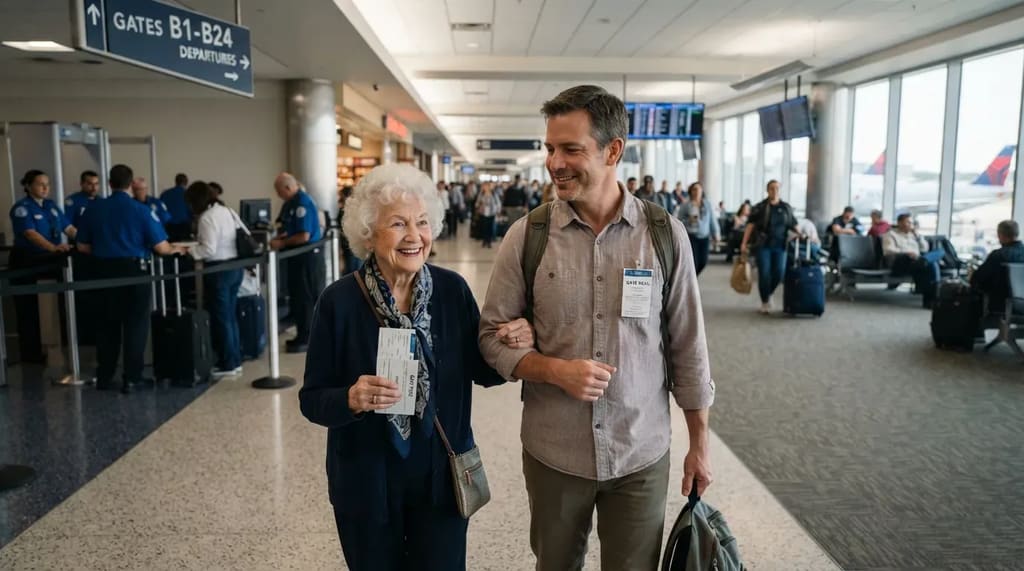
Normally only ticketed passengers get past security. There’s an exception. Travelers who want a family member or friend to accompany them through the airport can get a free gate pass for that person.
It isn’t limited to one airline. Alaska, American, Delta, JetBlue, Spirit, Southwest and United were all listed as offering these passes to non-passengers assisting minors, seniors, travelers with disabilities or military members. Rules vary by carrier, so ask how it works before you arrive.
Next, a seating request that rarely gets offered…
#10 – The Seat Requests Most Passengers Never Think to Make
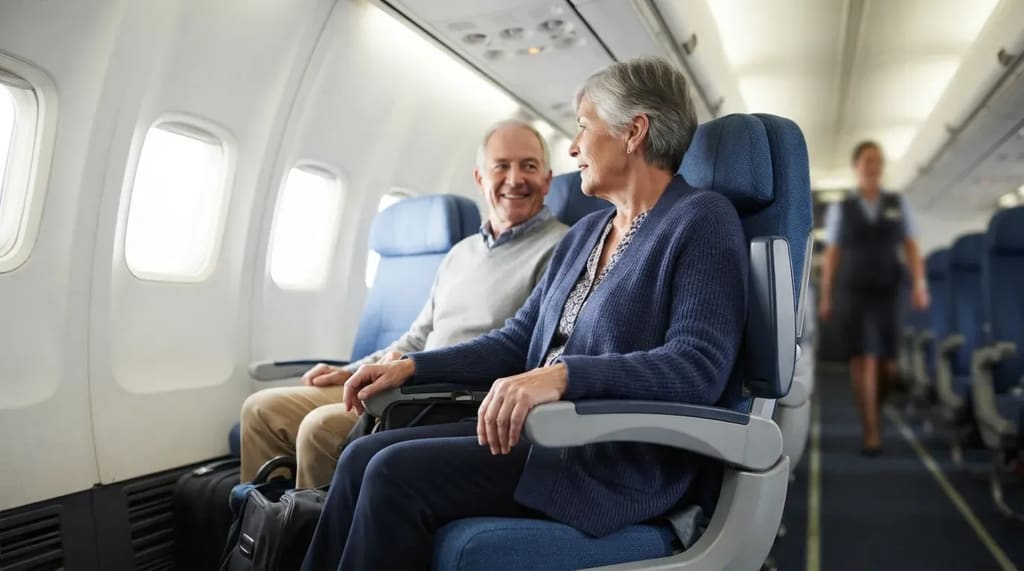
Seat maps hide more than legroom. Subject to availability, passengers may request aisle seats, movable armrests, seats with greater legroom, and adjoining seats for traveling companions who are providing assistance. A movable armrest can make an aisle transfer far easier.
The key words are “subject to availability.” Waiting until check-in is the surest way to lose these options. One senior-travel guide says calling may be your best bet for things like bulkhead seats or expedited boarding, so skipping the app can actually work better.
Worth Knowing
- Aisle seats can be requested, subject to availability
- Movable armrests make transfers easier
- Seats with greater legroom are on the request list
- A traveling companion who assists you can ask to sit next to you
- Calling may beat the app for bulkhead seats
Before you even reach the gate, there’s a security arrangement worth knowing about at #9…
#9 – A Card That Does the Explaining for You
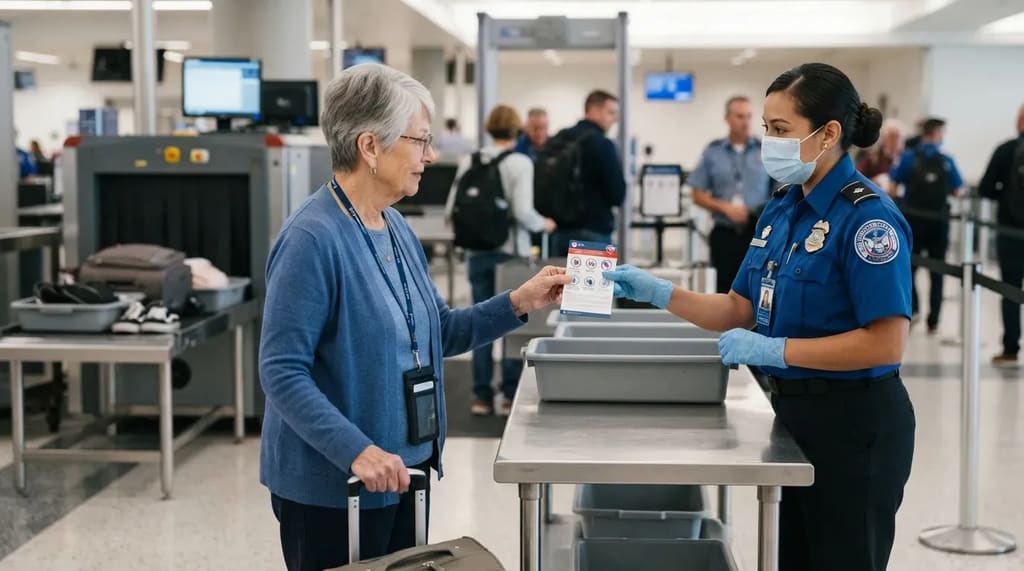
Security is stressful when you have to describe a medical condition to a stranger in a hurry. A TSA notification card helps. It specifies health conditions, disabilities or medical devices that may affect your screening.
You hand it over at the checkpoint, so the officer knows what to expect. The card also explains how to call TSA Cares at 855-787-2227 at least 72 hours before travel to request help. You don’t have to repeat your medical history out loud in a crowded line. TSA also says you can request to be seated during part of the screening.
And that’s not the only checkpoint surprise, as #8 shows…
#8 – Your Medications Don’t Have to Take the X-Ray
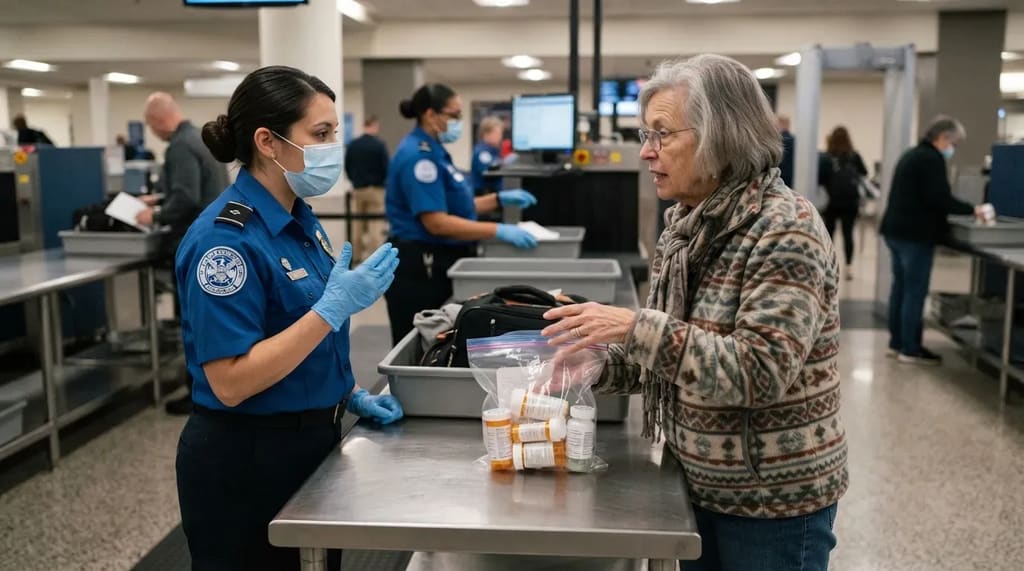
Many travelers worry about pills and liquid medications going through screening. TSA has a workaround. If you don’t want medication screened by X-ray or opened, tell the officer and they will take alternative steps to clear it.
Most people don’t realize they can ask. Walkers and canes get X-rayed or hand-inspected, and travelers who can’t stand or walk through the checkpoint can be screened another way. This is TSA procedure, not airline policy, but it shapes how your whole trip starts.
Now for a so-called senior perk that isn’t what you think, at #7…
#7 – The Famous “Senior Shoes-On Perk” Quietly Disappeared
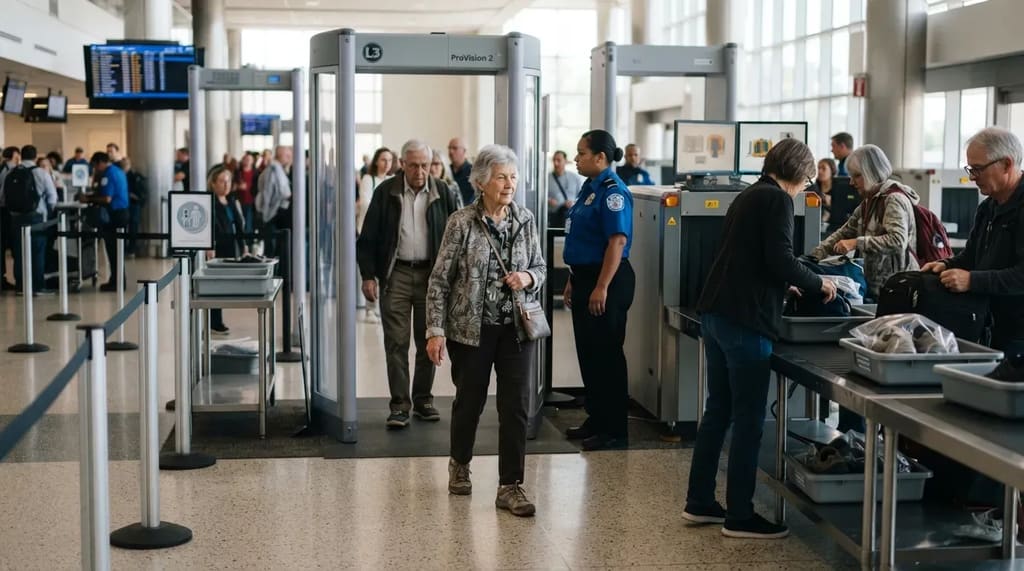
For years, age 75 was the magic number at security. Then that advantage went universal. Children 12 and under and passengers 75 and older were previously exempt from shoe removal, but on July 8, 2025, TSA announced that everyone can keep their shoes on in standard screening, nationwide.
So the one famous age-based perk at the checkpoint stopped being a perk at all. And nothing in TSA’s guidance sets up a special lane at 65. Screening steps can still vary by airport and technology, so follow the officer’s instructions on the day.
Now we get to the mobility gear, and the part of it airlines are required to do for free at #6…
#6 – Your Walker Flies Free, and It Doesn’t Count Against Your Bags
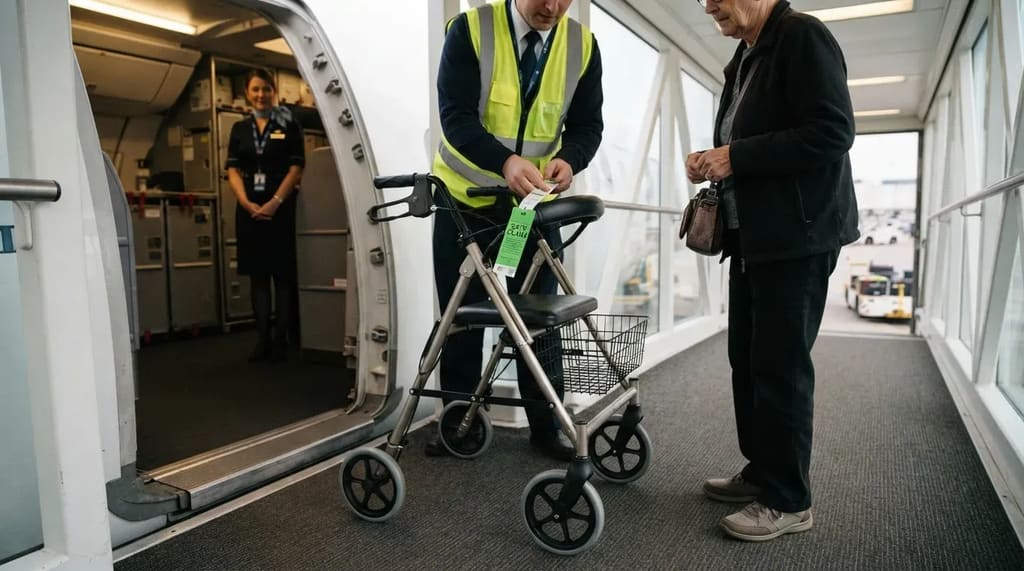
A cane or walker isn’t a luxury item with a fee attached. Airlines must carry personal wheelchairs and mobility devices free of charge. They will transport more than one wheelchair free if each is for the passenger’s personal use.
You can also check devices at the gate. All US airlines must let passengers with disabilities check wheelchairs, scooters, walkers or other medical devices at the gate for free. Most travelers fixate on bag fees and never realize none of them apply to their device.
Next, a device that millions use and that airlines treat very differently from luggage…
#5 – The CPAP Machine That Doesn’t Count as a Carry-On
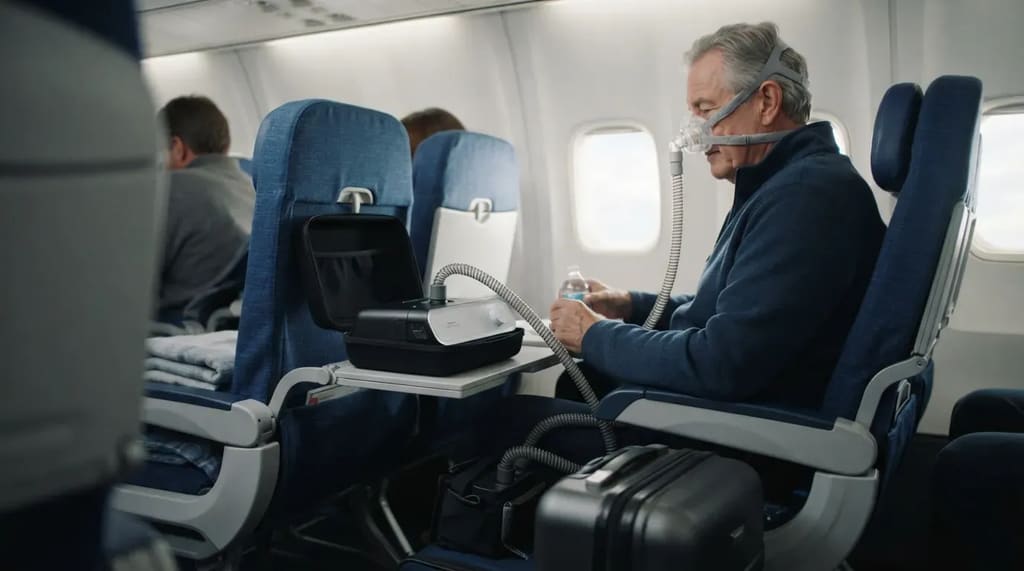
Bring a sleep apnea machine and you shouldn’t be forced to choose between it and your bag. CPAP machines are allowed on all commercial flights and do not count toward your carry-on limit. The FAA and TSA both treat them as medical equipment.
Airlines can still make mistakes at the gate. Under the Air Carrier Access Act, airlines with aircraft of 19 or more seats must allow FAA-approved CPAP machines on board. Lithium CPAP batteries must travel in carry-on only, never in checked baggage.
Oxygen is a different story, and the rules at #4 are stricter than most expect…
#4 – The Oxygen Rule That Demands a 150% Battery Plan
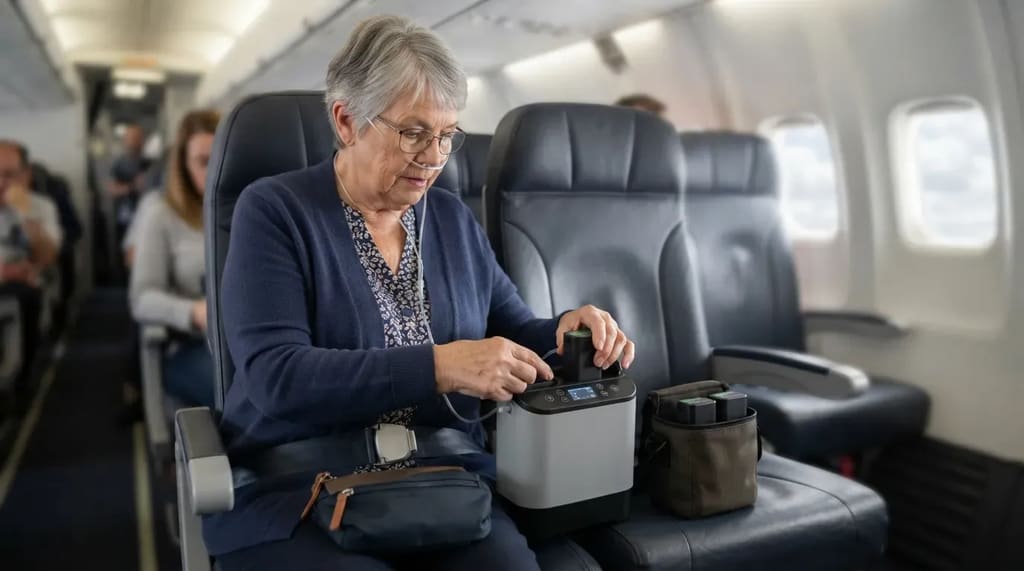
Oxygen users face the most paperwork. Passengers may carry portable oxygen concentrators, but they may not carry their own compressed or liquid oxygen in baggage or on their person. That’s a real surprise for anyone used to tanks.
Related Stories From Travelbinger


The battery rule is the hidden trap. FAA guidance calls for enough battery power for at least 150% of your expected travel time, including delays and layovers. Many airlines request 48 hours’ notice if you plan to use a concentrator onboard. Plan for the worst day, not the scheduled one.
On the next slide, we look at help that has nothing to do with walking at all…
#3 – The Private Safety Briefing Almost Nobody Asks For
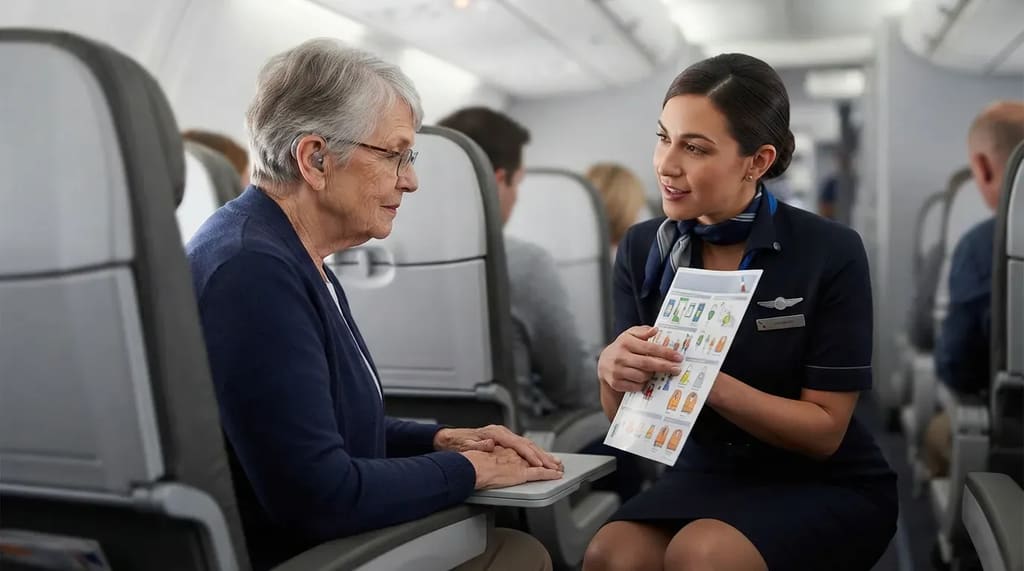
Not every older traveler needs mobility help. Some need clearer information. American Airlines asks senior travelers to tell a team member about vision or hearing limitations so they receive a safety briefing and important flight updates.
That matters on a plane where announcements are muffled and the engines are loud. For vision needs, American says to ask for a courtesy wheelchair, arm assistance or directions when booking or at the airport. Most people never realize the briefing is something you can ask to be given directly.
Now we turn to your rights when the help doesn’t show up, at #2…
#2 – The 30-Minute Rule That Protects You From Being Left Behind
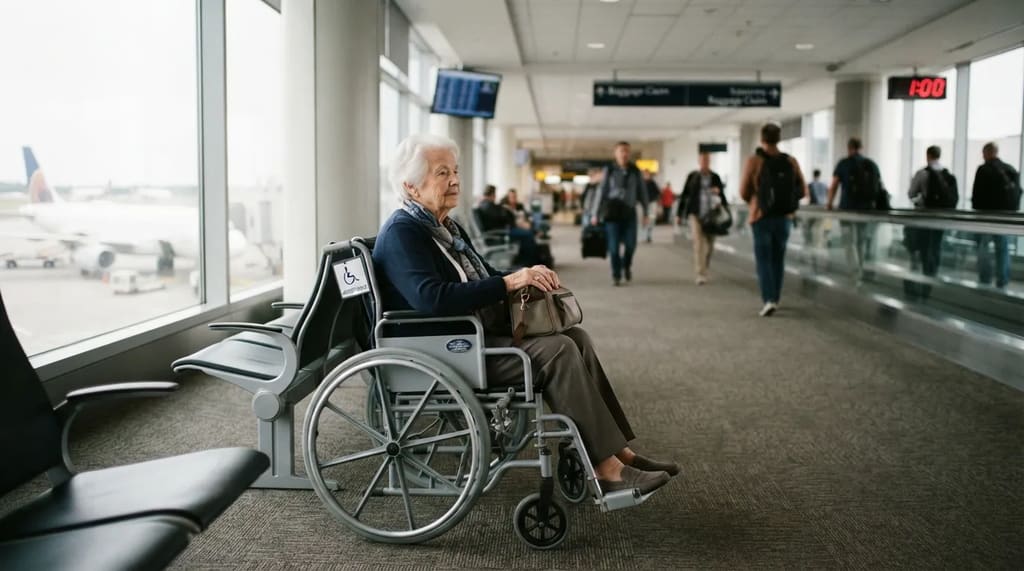
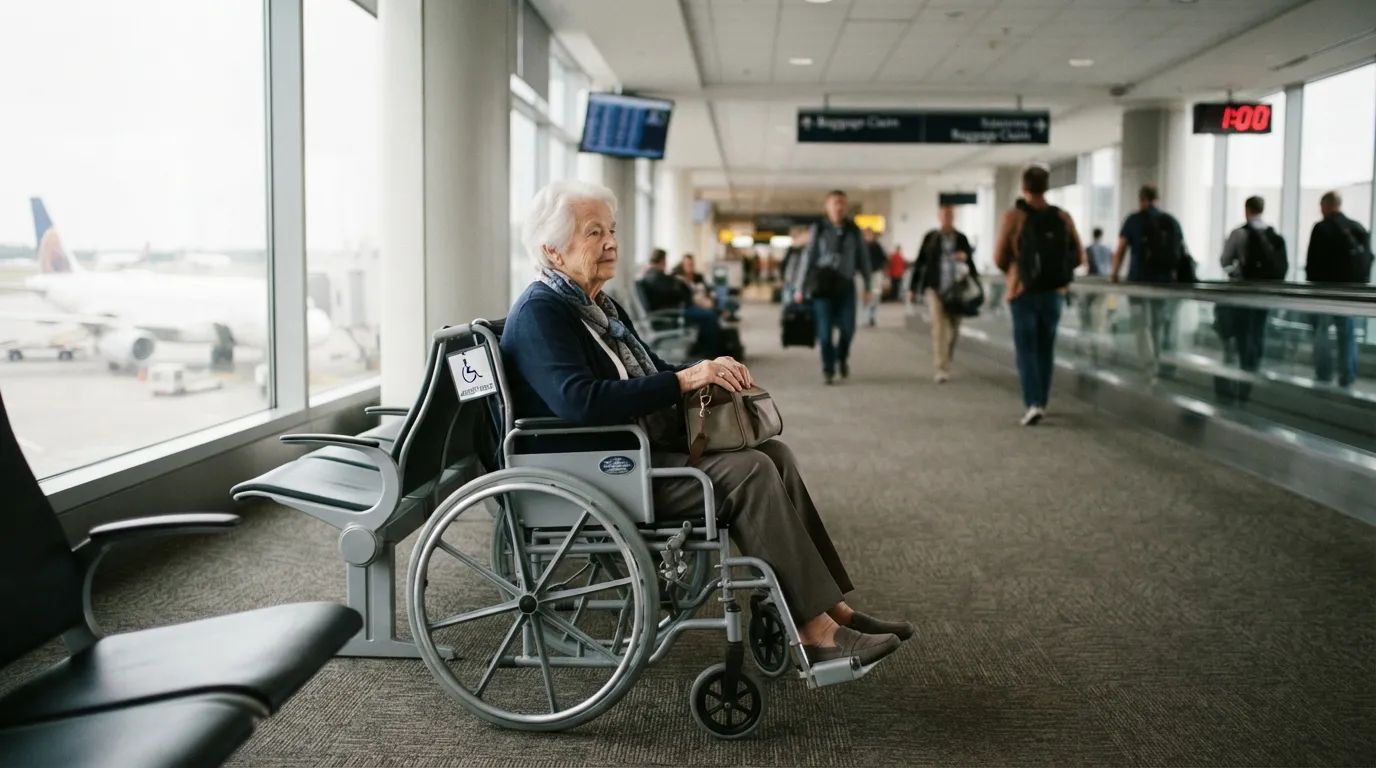
Waiting alone in a chair can feel endless. Federal rules put a clock on it. When an airline helps a passenger who isn’t independently mobile because of a disability, it must not leave that passenger unattended for more than 30 minutes.
Deplaning has its own standard. The DOT says “prompt” assistance off the aircraft means when the last passenger who didn’t request deplaning help gets off. So being last off the plane is, in fact, the rule. The ask is simply that someone is waiting at the door.
And the final slide covers the person airlines must have on call when everything goes wrong…
#1 – The Complaint Resolution Official Almost No One Asks For
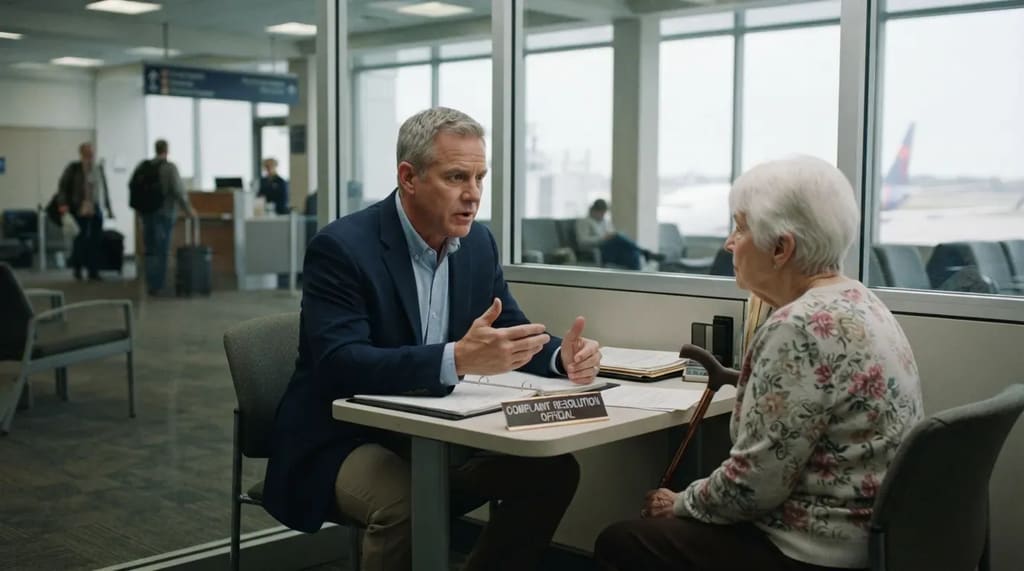
When help fails, the gate agent is not your last stop. A Complaint Resolution Official, or CRO, is the airline’s expert on disability accommodation issues. Airlines must also tell passengers in writing about the CRO if a wheelchair is damaged, according to the DOT’s final rule.
Pressure on airlines has grown. In October 2024, DOT issued a $50 million penalty against American Airlines for violations that included unsafe physical assistance and undignified treatment of wheelchair users. The December 2024 rule set a June 17, 2026 deadline for hands-on staff training. But DOT has paused enforcement of some provisions until April 30, 2027, including liability for mishandled wheelchairs, per a Federal Register notice.
Fast Facts
- The CRO is the airline’s expert on disability accommodation issues
- Airlines must tell you about the CRO in writing if a wheelchair is damaged
- October 2024: a $50 million DOT penalty against American Airlines
- June 17, 2026: the training deadline set by the December 2024 rule
- April 30, 2027: enforcement of some provisions is paused until then
So no airline will hand you a senior perk on your 65th birthday. What exists runs on need and on asking: free wheelchair help, preboarding, seat requests, gate passes, device exemptions, and a CRO who can step in when things go wrong. Some of these rules are still being phased in, so details can shift.
Staff almost never volunteer any of it. The help is already there, waiting on one sentence, said out loud, before the line forms.