Here is the catch behind this list: turning 65 doesn’t unlock a single one of these seats. Federal seating rules respond to a passenger’s need, not a birthday.
Some requests below are only favors that vanish on a full flight. Others have federal rules behind them, and asking in the wrong terms can cost you the seat you needed or split you from your spouse. The firmest request on the list has a cutoff that passes a full day before you reach the gate, but first comes the softest favor, a seat nearer the front.
#15 – Forward Row or Aisle Swap When Seats Open
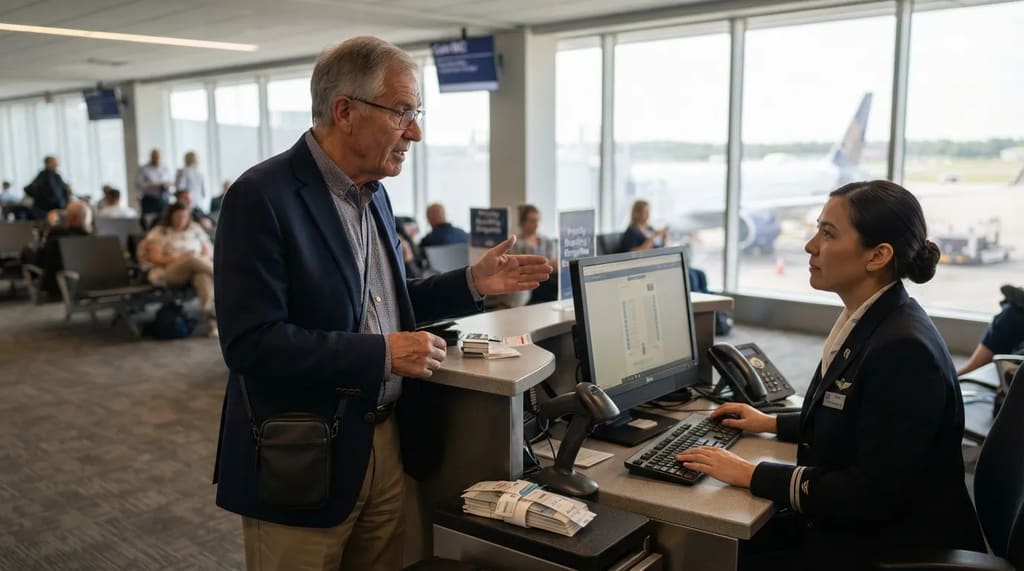
Of the 15 requests here, this one has the least behind it. A forward row, an aisle swap or an open seat beside you on a light flight is the agent’s call.
Your odds improve when you ask for one specific seat and give one specific reason. An aisle, because getting up from a middle seat is hard on a bad knee, gives the agent something to weigh.
It is worth asking, but not worth planning a trip around. On a full flight, the same agent can decline without breaking any rule.
Federal guidance is blunt about the next favor travelers hope for, a free empty seat beside them.
#14 – The Empty Seat Next to You
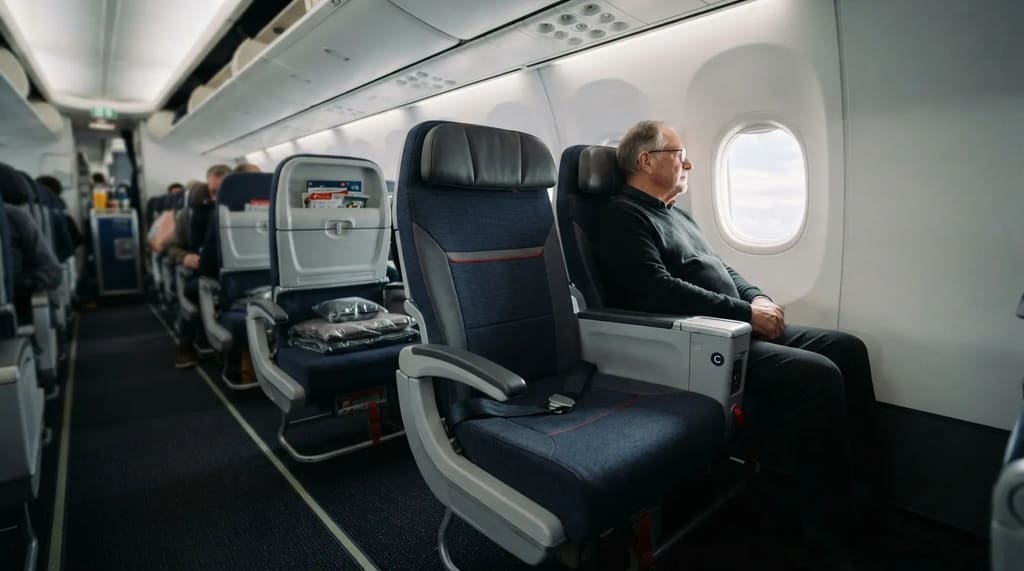
DOT’s public guidance on accessible seating says carriers are not required to furnish more than one seat per ticket. That holds even for a passenger with a disability who needs the extra space.
Some airlines have changed their policies so gate agents can offer a complimentary second seat when adjacent space is open. That makes it a courtesy that depends on the day’s flight, not a right you can point to.
Fast Facts
- The federal baseline is one seat per ticket.
- A free second seat is possible only where the airline allows it.
- It also requires open seats next to you that day.
- A full flight ends the option, whatever the policy says.
If you know you need the room, ask the airline before you travel. A gate request only works when the plane has empty seats.
#13 – Seats Together for You and Your Spouse
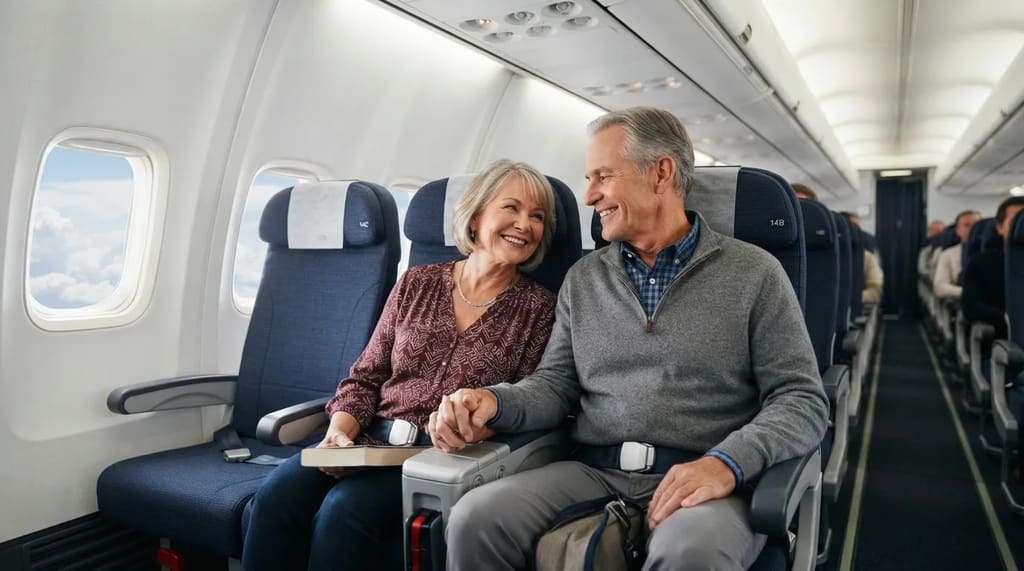
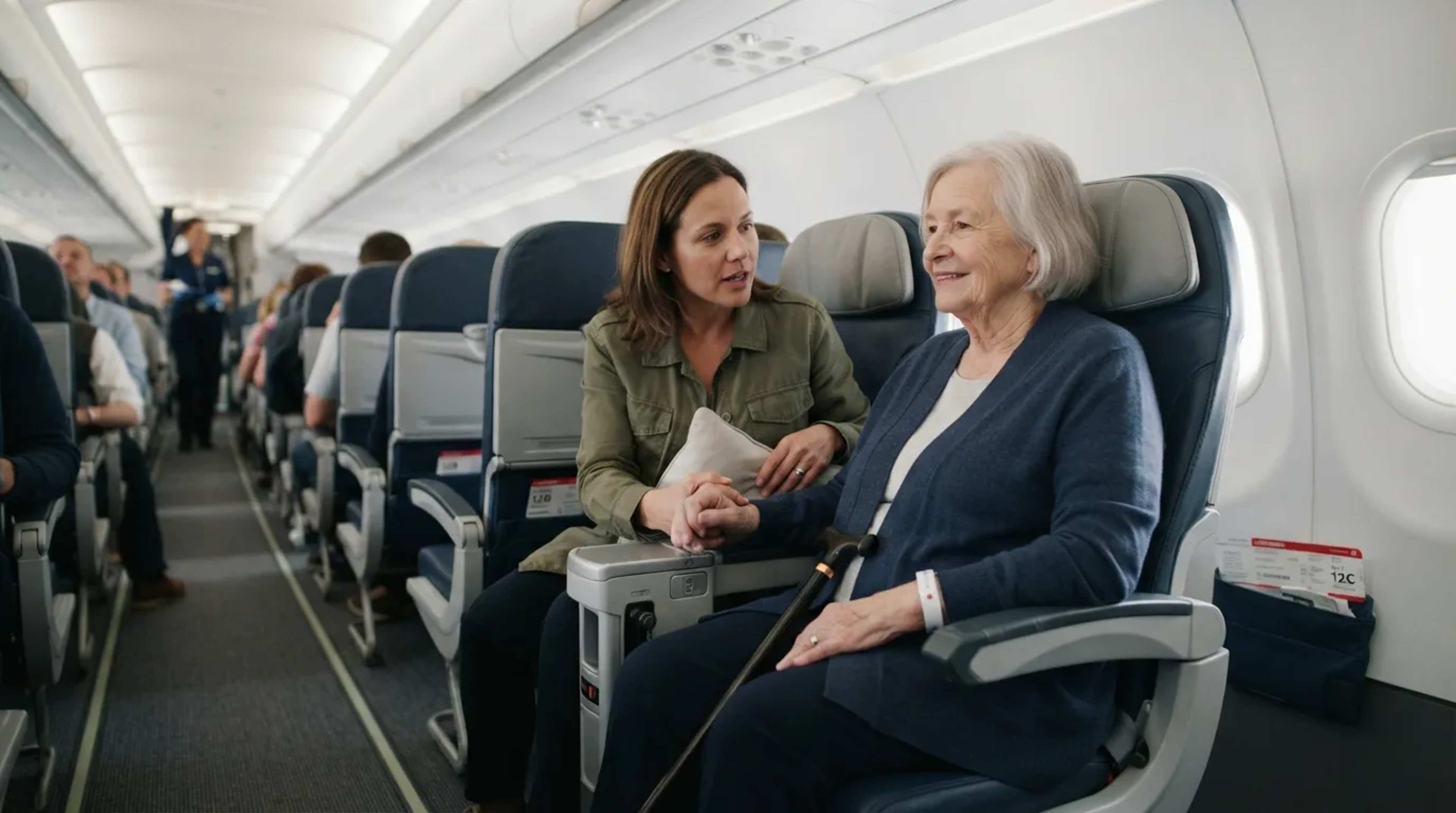
No federal rule guarantees that adults traveling together sit together. On a light flight, an agent may still seat a couple, or a parent and adult child, side by side as a courtesy.
The sturdier plan is to book everyone on one reservation and pick seats at purchase. Split reservations can break the airline’s seating system, and that goes for couples too.
If one of you has a disability that needs a particular seat, tell the airline when you book. Ask in the same conversation whether your companion can sit beside you.
#12 – Sitting Beside a Grandchild on One Booking
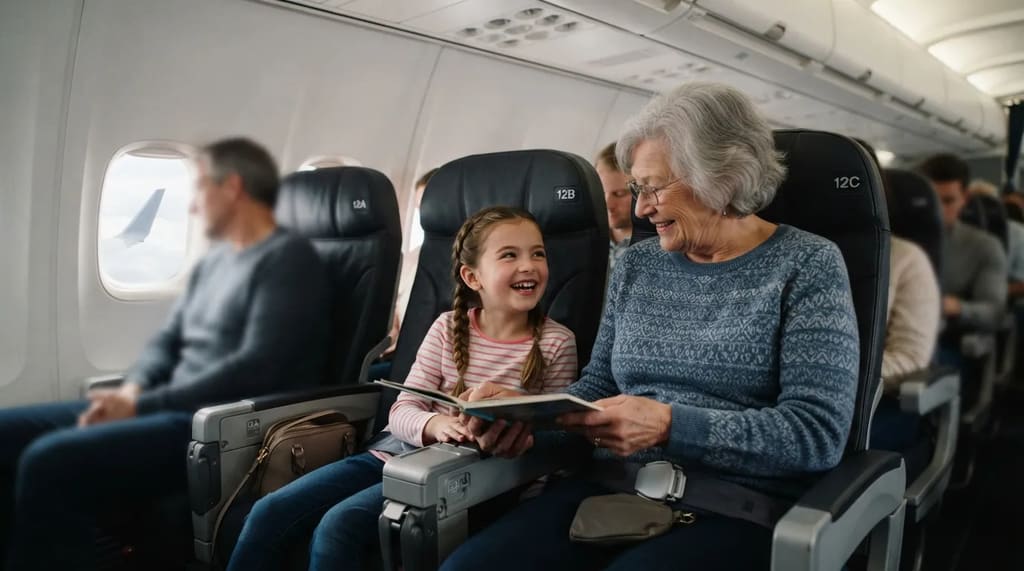
No federal law requires free family seating. A rule that would make adjacent seating mandatory has been proposed, but airlines still set their own policies for now.
What exists is a dashboard at flightrights.gov listing which airlines have voluntarily committed to fee-free adjacent seating. Each commitment covers a child 13 or under and one accompanying adult.1
The promise comes with conditions:
- You are all on the same reservation.
- Adjacent seats were available when you booked.
- You leave the assignment alone afterward, since changing it later, even to grab an aisle, can void the guarantee.
Lists like this change, so check the dashboard before you buy. If your airline is not on it, the gate is a poor place to find that out.
Not every seat is one to keep, and the exit row is the clearest example.
#11 – The Exit Row Seat You May Give Up
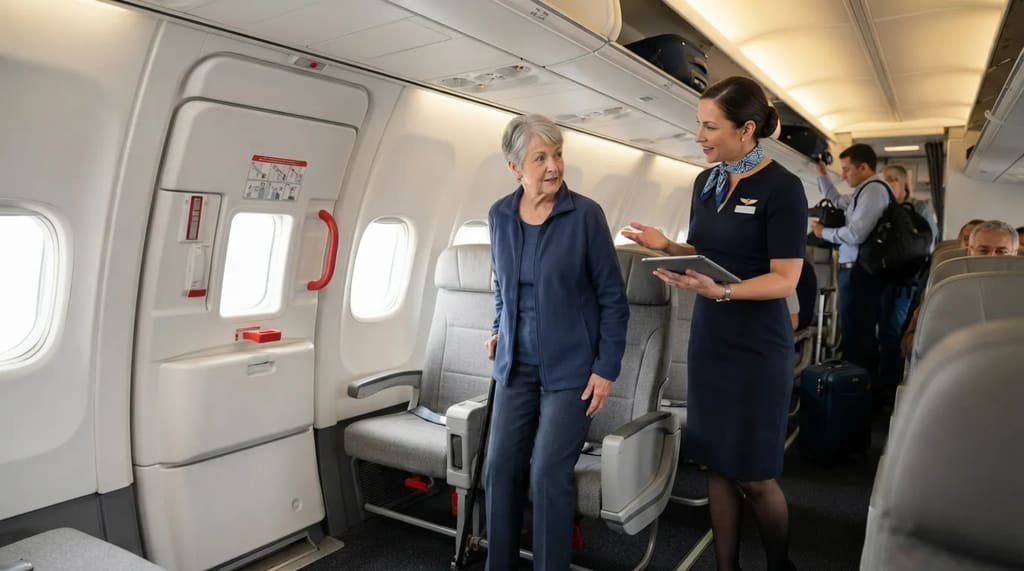
An exit row seat comes with a job. The person in it has to be able to open the exit and help others out in an emergency.
A passenger who tells an agent they need a mobility-related seating accommodation is describing someone who may not be able to do that. Expect to be moved.
That makes the exit row a poor match for the other requests on this list, because the bulkhead, the armrest seat and the service animal seat are all assigned for a different reason. If you paid extra for an exit row and a hip or knee slows you down in a hurry, settle it with the airline before travel day.
Whatever seat you end up in, reaching it can be slow, and boarding early with a companion is one way to ease that.
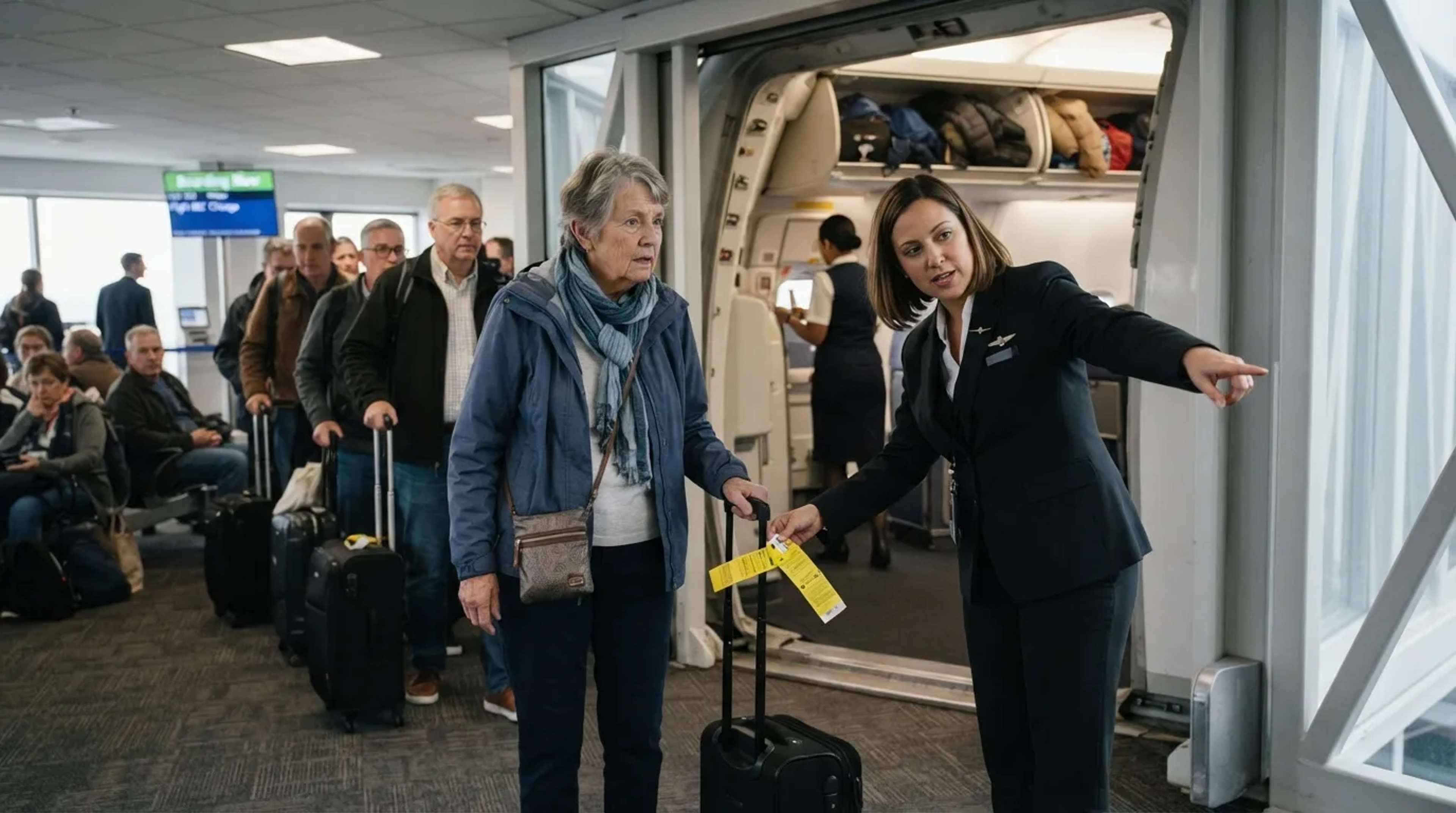
#10 – Preboarding With One Companion
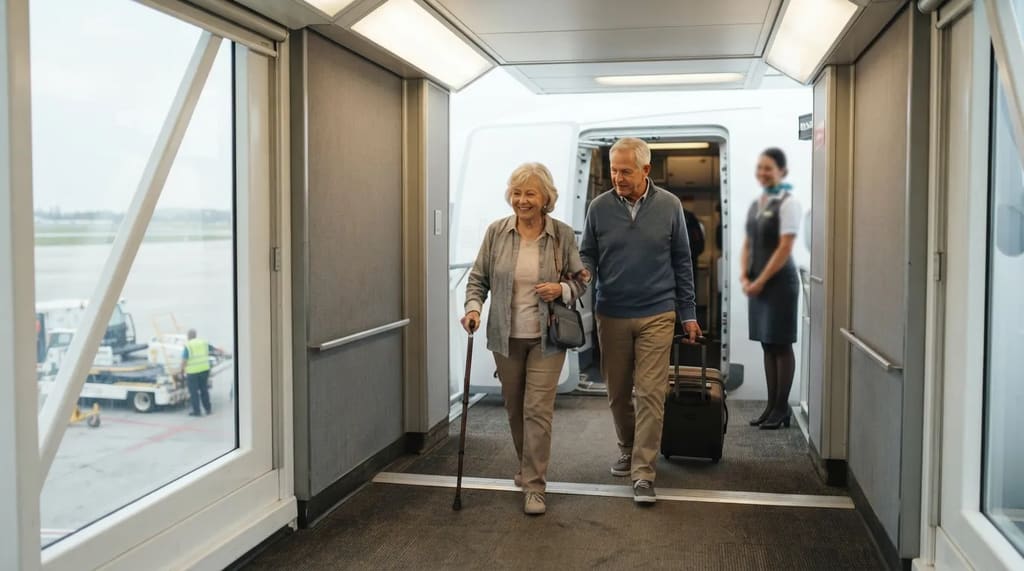
Some airlines let one companion preboard alongside the passenger who needs extra time. Southwest, for example, lets preboarding passengers board with one companion.
That matters for couples, since nobody wants to be split up on the jet bridge. Policies vary by airline, so check yours.
The companion rides on your need for extra time, so the request should come from the person who needs it. Put both in one sentence, saying you need extra time and who is traveling with you.
Quick Compare
- Companion preboarding: an airline-by-airline policy, so the rules differ.
- Gate preboarding for disabilities: a federal rule, but you must self-identify to the agent.
- What both share: ask before boarding starts.
#9 – Preboarding to Settle In or Stow Equipment
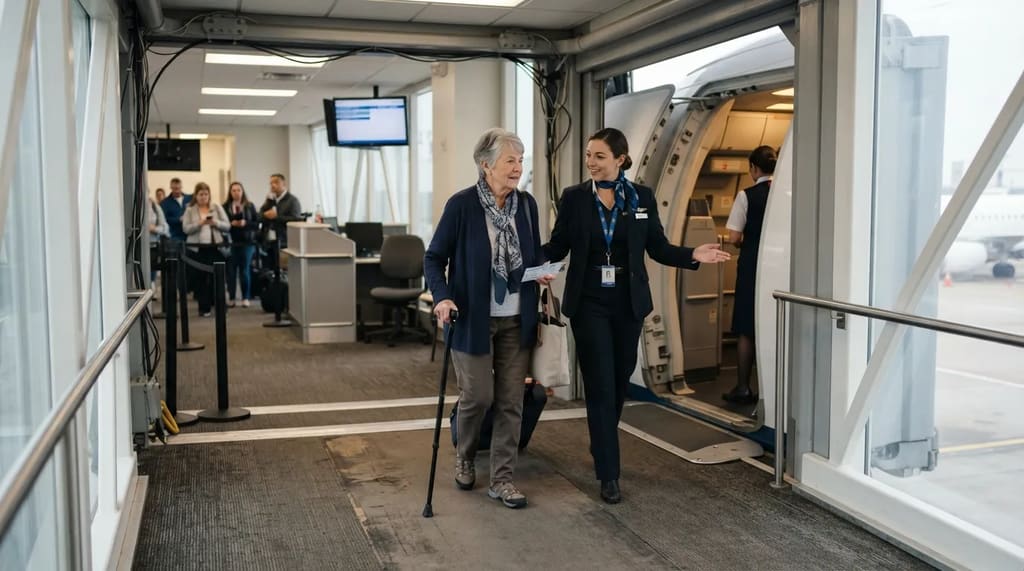
Airlines must let passengers with disabilities who self-identify at the gate as needing extra time or help preboard. That covers getting seated or stowing accessibility equipment, and you have to make the request to the gate agent.2
DOT’s enforcement office reads the rule to mean boarding before everyone else, including first class, elite-level passengers, military members and families with small children.3 That puts you at the very front of the line.
The usual failure is timing. Tell the agent before boarding starts, because once your zone is called, the preboarding window has closed.
Preboarding stays your choice, since an airline may not require you to accept a special service you didn’t request.
Boarding first helps most when the aisle seat has an armrest that lifts, and the rules require that feature on part of the cabin.
#8 – Aisle Seats With a Movable Armrest
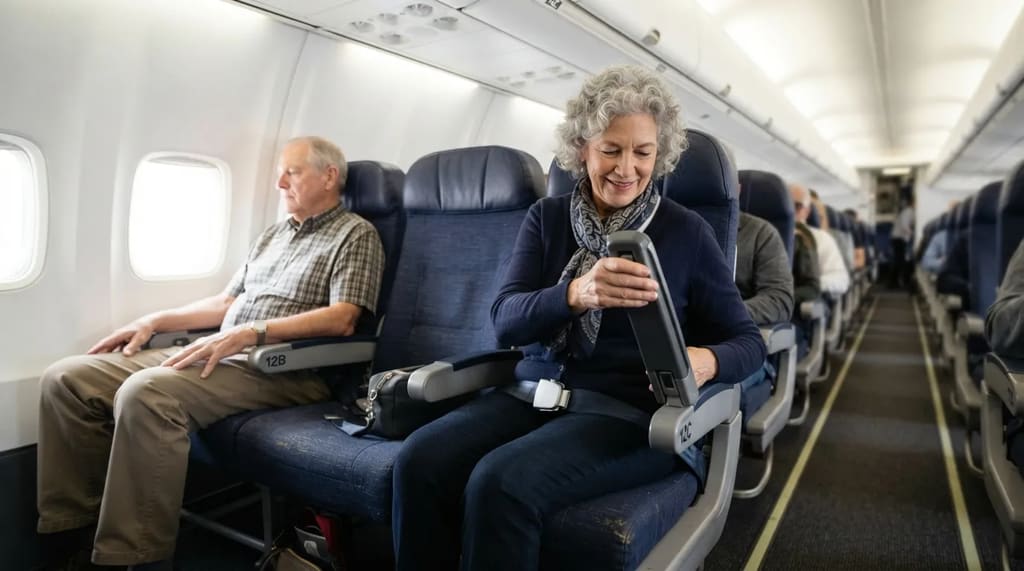
Aircraft with 30 or more seats must have movable aisle armrests on half of the aisle seats. Older aircraft that replace their aisle seats must also make half of them movable.
Only half of the aisle seats have the feature, so ask for it by name instead of just saying aisle. Then ask the agent to confirm it on the seat map.
Airlines can also reserve certain seats for these requests, and those seats may already have a passenger in them.
#7 – Priority Seats Someone Else Is Sitting In
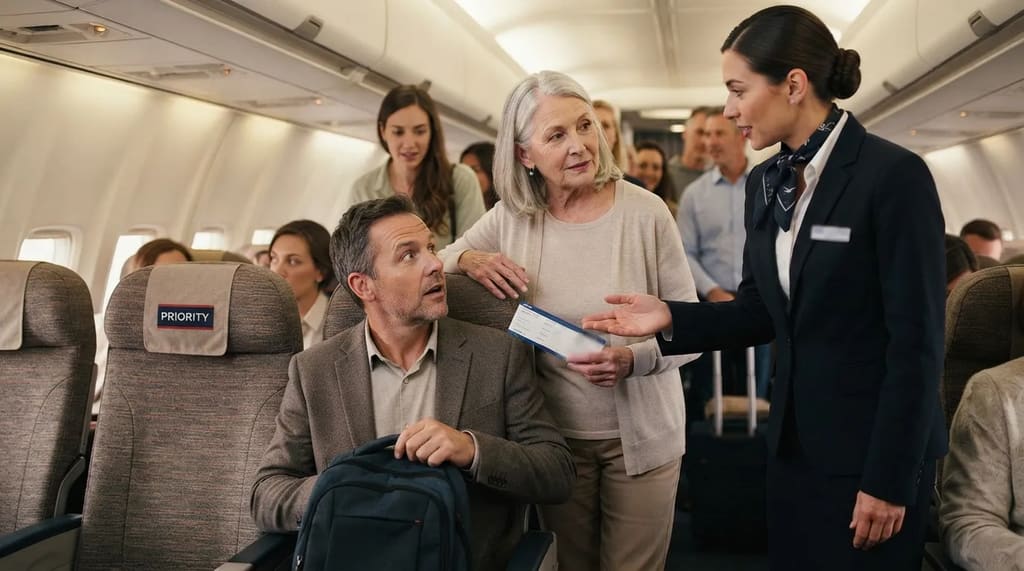
Airlines must provide seating accommodations using one of three methods: the block method, the priority method, or preboarding if the airline does not provide advance seat assignments.4 Which one your airline uses varies, so learn it when you make the reservation.
Under the priority method, designated seats may go to other passengers, who can be reassigned if necessary to provide an accommodation.5 The airline must also give notice that this can happen.
That can create friction at the gate, especially when the displaced passenger paid for the spot. If you hold a real need for one of those seats, don’t back off, since the airline told its passengers this could happen.
Travelers with a service animal face a different seat decision, one where the passenger picks the type.
#6 – The Seat You Choose With a Service Animal
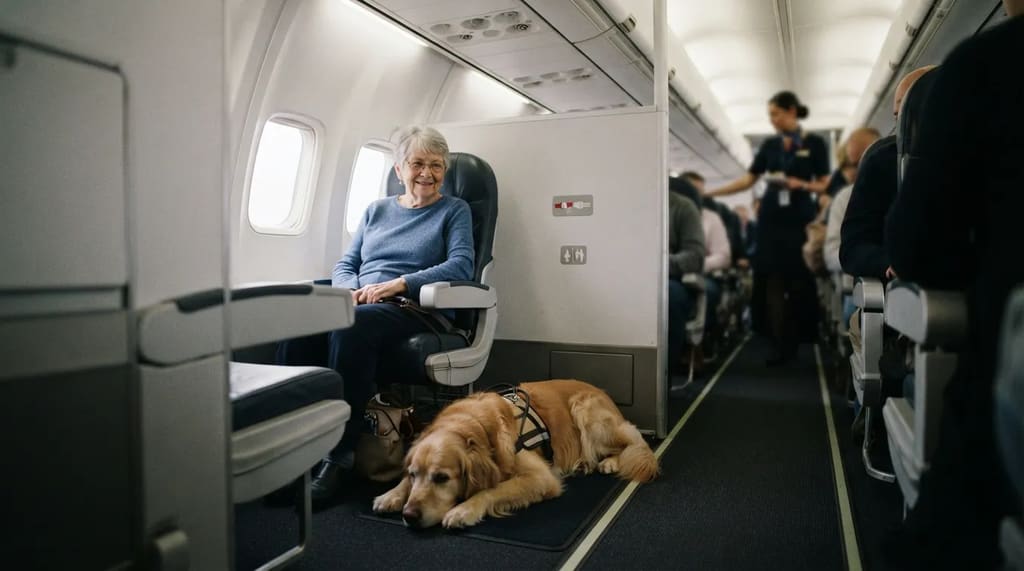
For a passenger with a disability traveling with a service animal, the airline must provide, as the passenger requests, either a bulkhead seat or a seat other than a bulkhead.5 6 DOT describes that as a choice between an aisle seat and a bulkhead seat.
The phrase “as the passenger requests” puts the decision with you and your animal, not with the agent. Whichever you choose, the animal cannot block the aisle.
Say which one you want when you book. A seat picked at the gate depends on what is left.
#5 – The Bulkhead Seat Owed for an Immobilized Leg
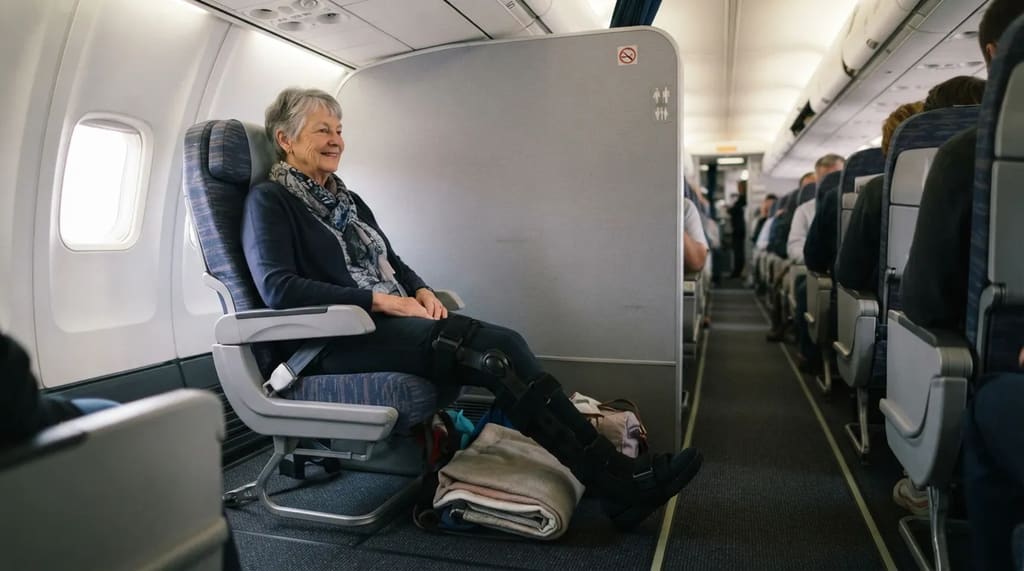
DOT says you are entitled to a bulkhead seat if you have a fused or immobilized leg.7 That is a rule-based request, which puts it well above the favors earlier in this list.
The entitlement stops at the class you bought, since airlines are not required to provide a seat in a different class of service. On an economy ticket, that means the economy bulkhead.
DOT’s seating guide even raises the question of whether a temporary condition, such as a broken leg, still earns an accommodation. Ask the airline instead of assuming the answer is no.
Other conditions can also call for a bulkhead seat, though the rule is less automatic there.
#4 – Other Conditions That Can Earn a Bulkhead Seat
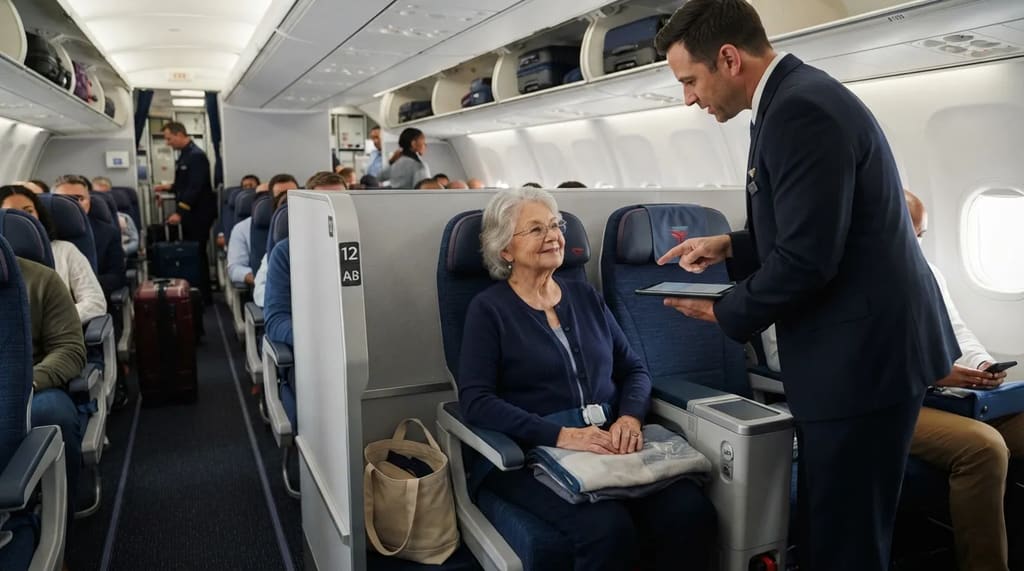
Airlines must provide other available bulkhead seats to passengers with other disabilities if they need one to readily access the air transportation service. The word “available” matters, because a bulkhead already assigned elsewhere may not be there for you.
The test is need, not preference. A bulkhead seat chosen only for legroom does not fit it, and an agent who says so is reading the rule correctly.
At a Glance
- Fused or immobilized leg: DOT says you are entitled to a bulkhead seat.
- Other disabilities: a bulkhead seat if you need it and one is available.
- Legroom alone: not a qualifying need.
- Class of service: the seat comes within the class you bought.
If a bulkhead really is what your condition calls for, ask when you book, before the seats are gone.
Even a seat the airline agreed to in advance can change when the plane does, and the guidance covers that too.
#3 – Your Seat After an Aircraft Change
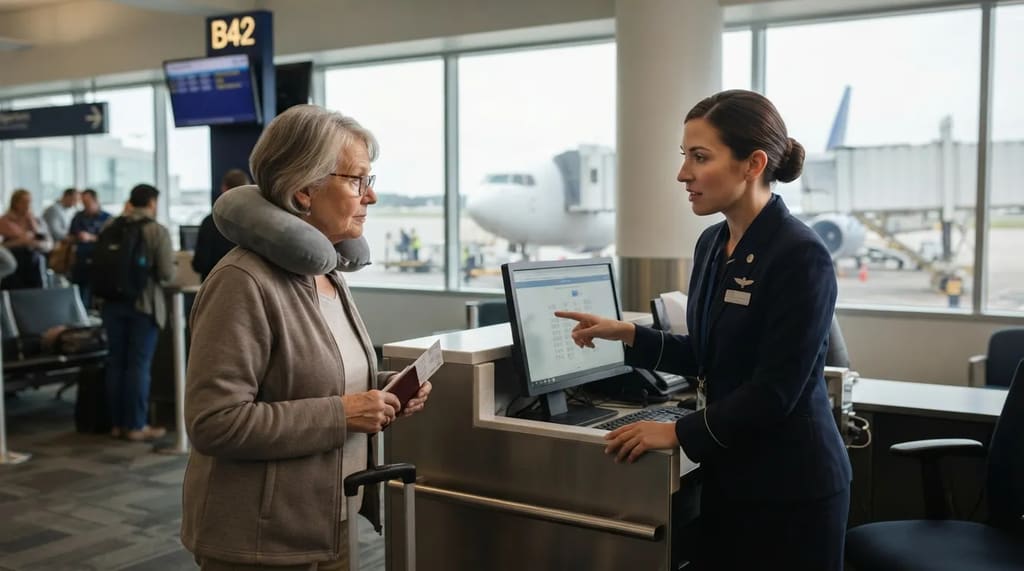
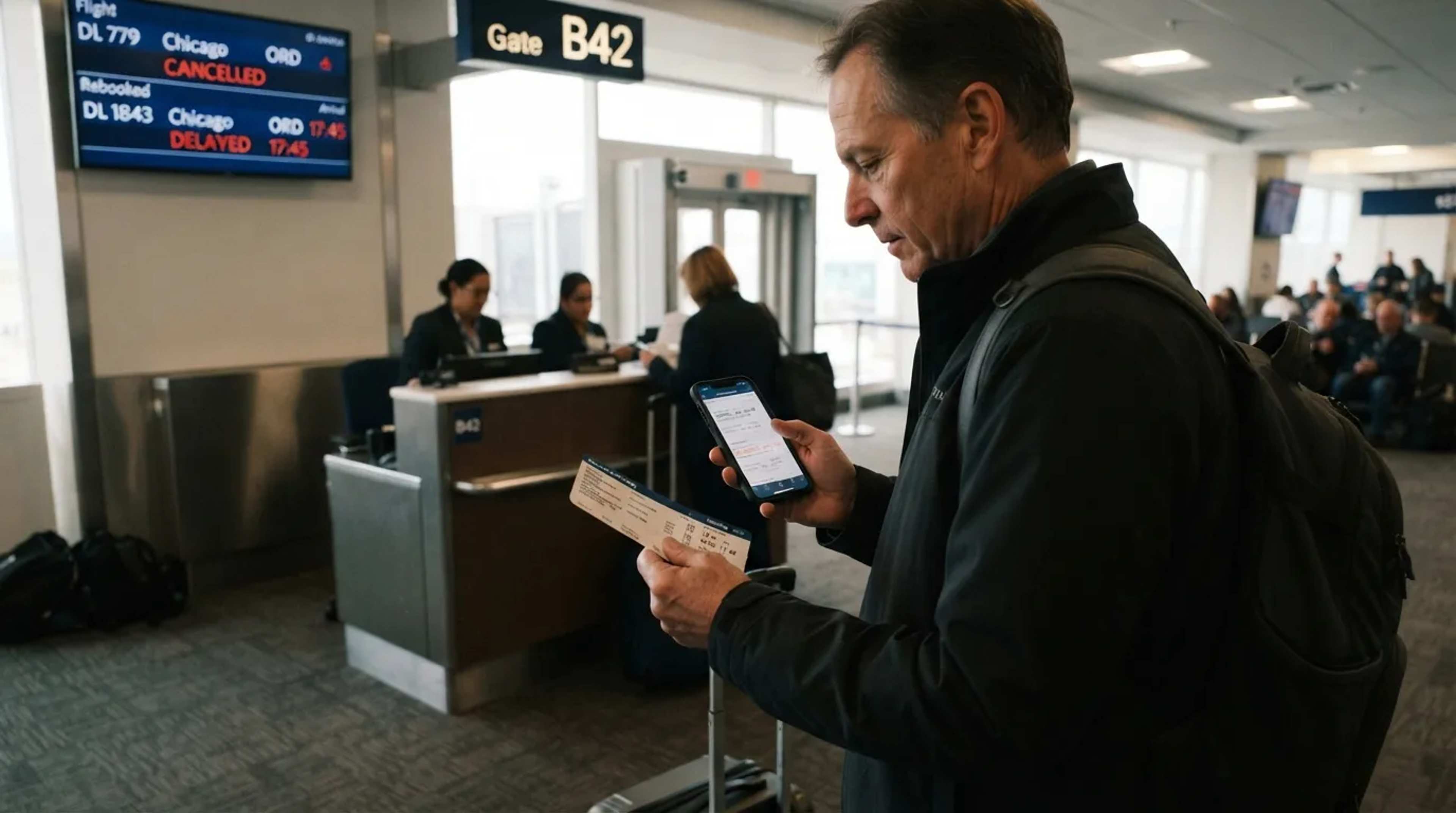
If you gave advance notice of the seating accommodation you need and received a seat assignment, and the aircraft changes, your request should be transferred to the new seating map. The airline may not guarantee the exact same seat, but the new one should provide the same level of accommodation.
That only works when a request is on file. A seat you picked online without telling the airline why gives the agent nothing to carry over.
If the new seat no longer fits your need, say so at once, in terms of the accommodation you requested.
If the agent still cannot help, the airline has a person whose job is exactly that.
#2 – The Airline’s Disability Specialist When the Answer Is No
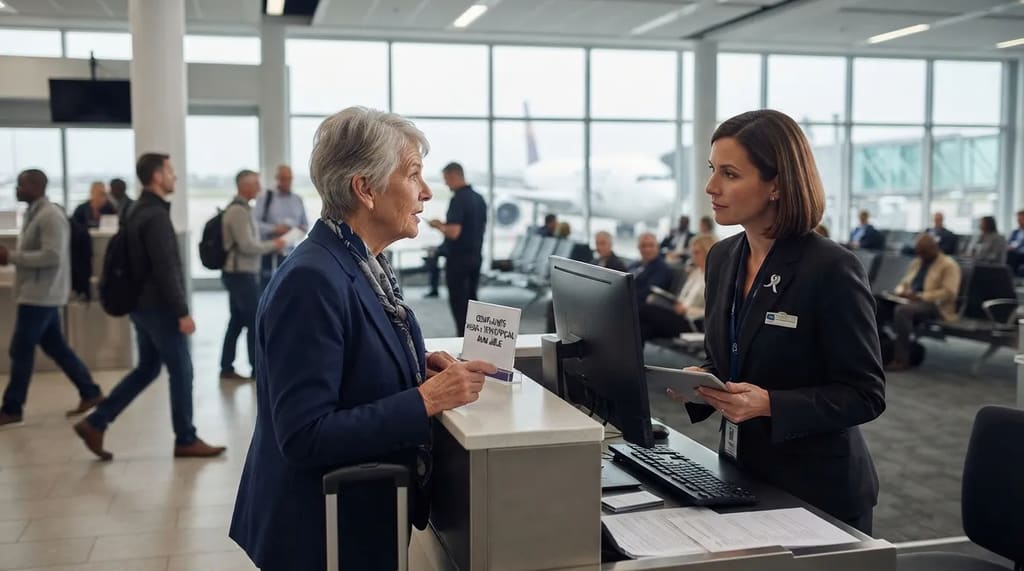
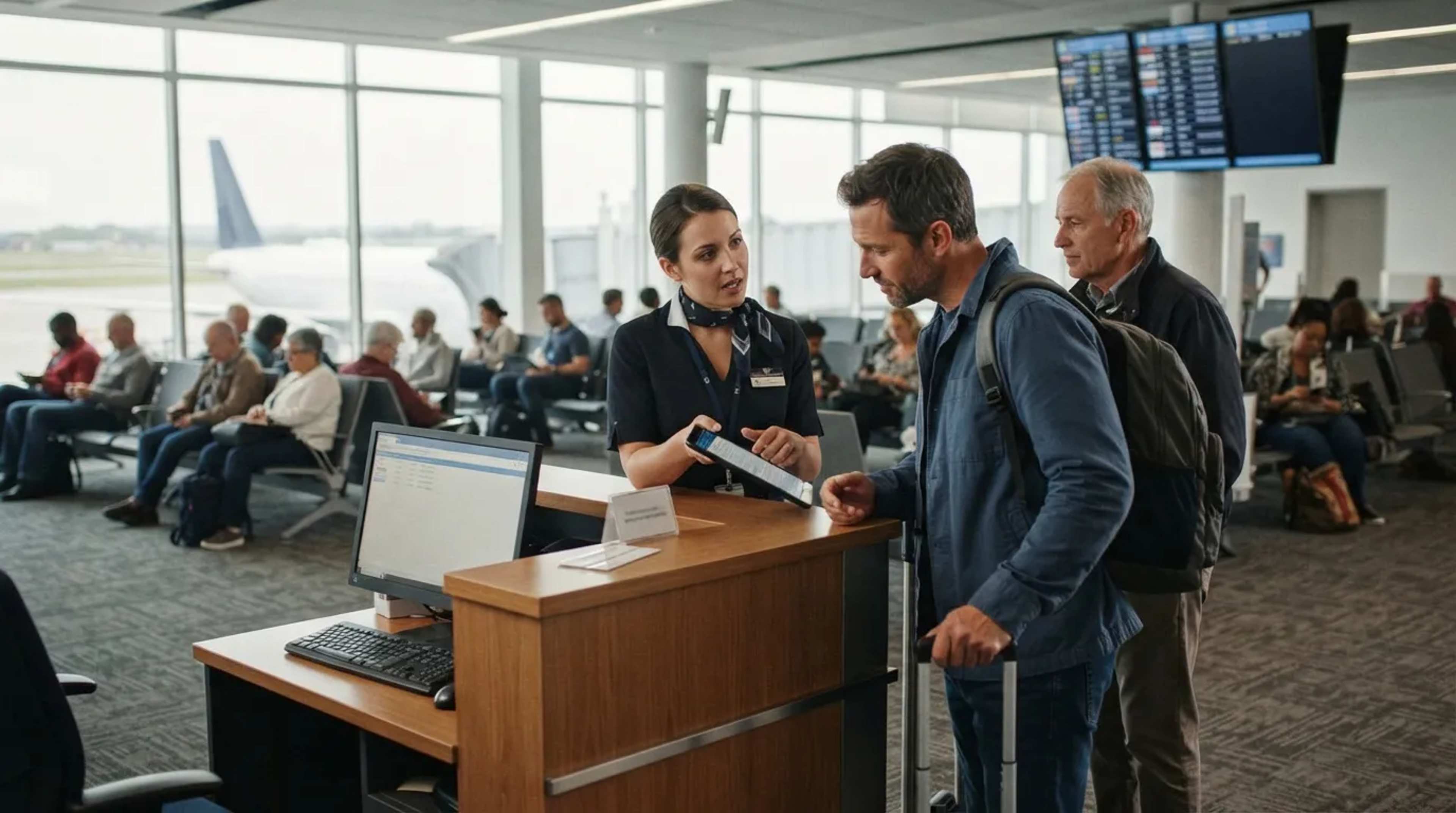
A CRO, short for complaints resolution official, is the airline’s expert on disability accommodation issues. Airlines are expected to have one reachable at airports, in person or by phone.
Asking for the CRO moves the conversation from one agent’s judgment on a busy day to the airline’s own accommodation rules. That suits requests with a rule behind them, such as the bulkhead, the service animal seat, preboarding and the transfer after a plane swap.
It does not suit the courtesies, because no specialist can make an agent hand you an empty seat on a full flight. State the request in the rule’s terms:
- That you have a disability-related need.
- The specific seat or boarding service you need.
- When you asked the airline and what it told you.
Every one of these fixes is easier when the request is already on file, and the rule sets a firm cutoff for getting it there.
#1 – The Seat Request Made Before You Reach the Airport

DOT’s seating guide tells travelers with a disability to contact the airline when making the reservation. It also says to book as early as possible and request the needed accommodation.
The regulation behind that advice draws a firm line. At any time up until 24 hours before departure, the carrier shall assign a seat meeting the requirements to an individual who requests it.5
After that, the accommodation still applies to passengers who identify themselves and meet the airline’s procedures, such as check-in time. That is why this is the request an agent is least able to refuse.
Worth Knowing
- The firm cutoff is 24 hours before departure.
- Ask at booking and as early as possible.
- After the cutoff, you must identify yourself and meet the airline’s procedures, such as check-in time.
- A request on file is what lets a seat carry over after a plane change.
By the time you reach the gate, the seat is already assigned, so the agent is carrying out an assignment instead of making a judgment call. The easiest yes you will ever get at an airport is the one you arranged days earlier.
- DOT Family Seating Dashboard: https://www.transportation.gov/airconsumer/airline-family-seating-dashboard
- 14 CFR 382.93 Preboarding: https://www.govinfo.gov/content/pkg/CFR-2025-title14-vol4/pdf/CFR-2025-title14-vol4-sec382-93.pdf
- DOT Preboarding Notice: https://www.transportation.gov/sites/dot.gov/files/docs/Preboarding%20Notice%20Final_0.pdf
- DOT Seating Accommodation Methods: https://www.transportation.gov/resources/individuals/aviation-consumer-protection/seating-accommodation-guide/methods
- 14 CFR 382.81 Seating: https://www.govinfo.gov/content/pkg/CFR-2014-title14-vol4/pdf/CFR-2014-title14-vol4-sec382-81.pdf
- Technical Assistance Manual Seating: https://www.federalregister.gov/documents/2012/07/05/2012-15233/nondiscrimination-on-the-basis-of-disability-in-air-travel-draft-technical-assistance-manual
- DOT Accessible Seating Pamphlet: https://www7.transportation.gov/sites/dot.gov/files/docs/Accessible_Seating_Accommodations_in_Air_Travel-Pamphlet.pdf