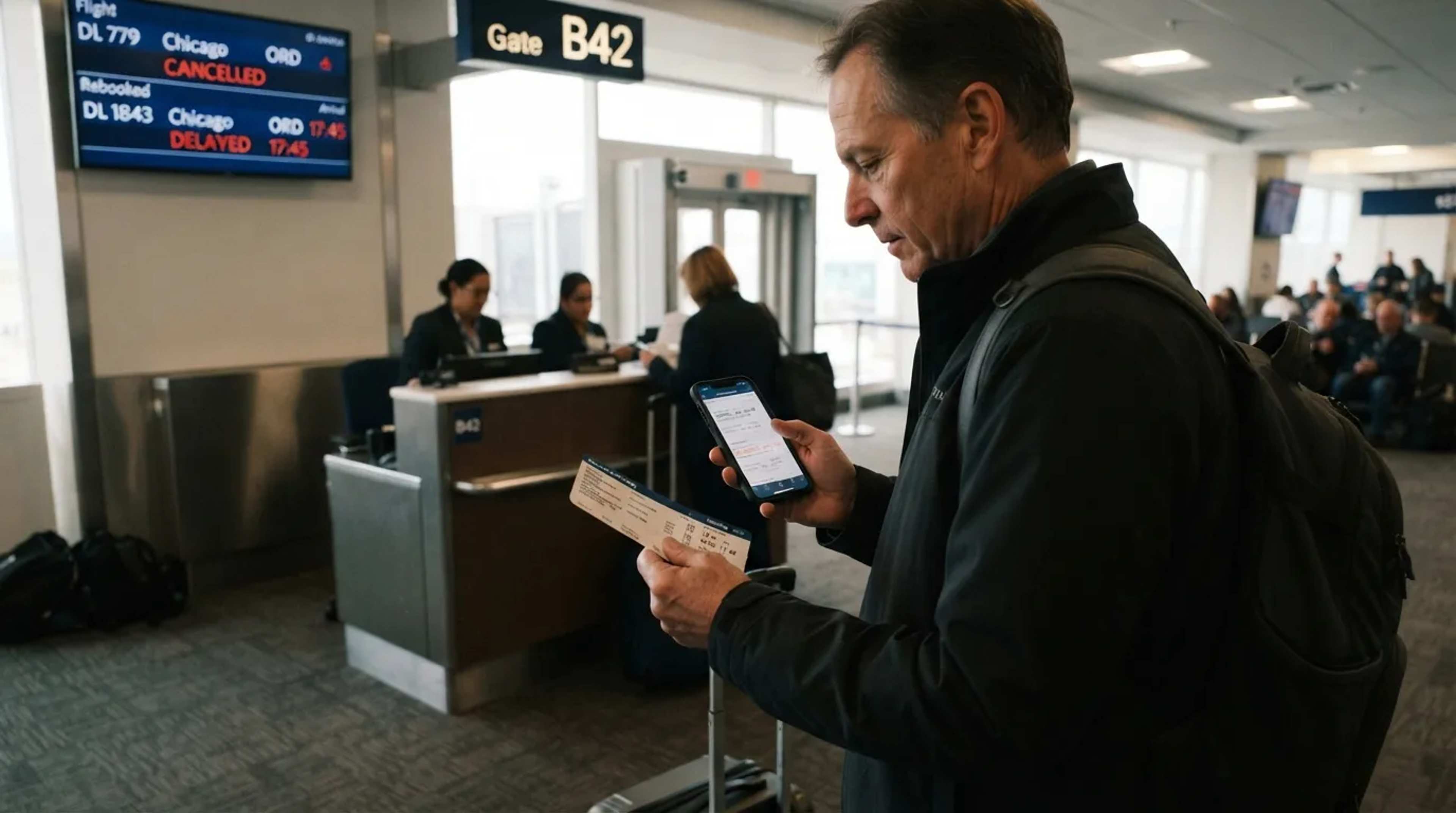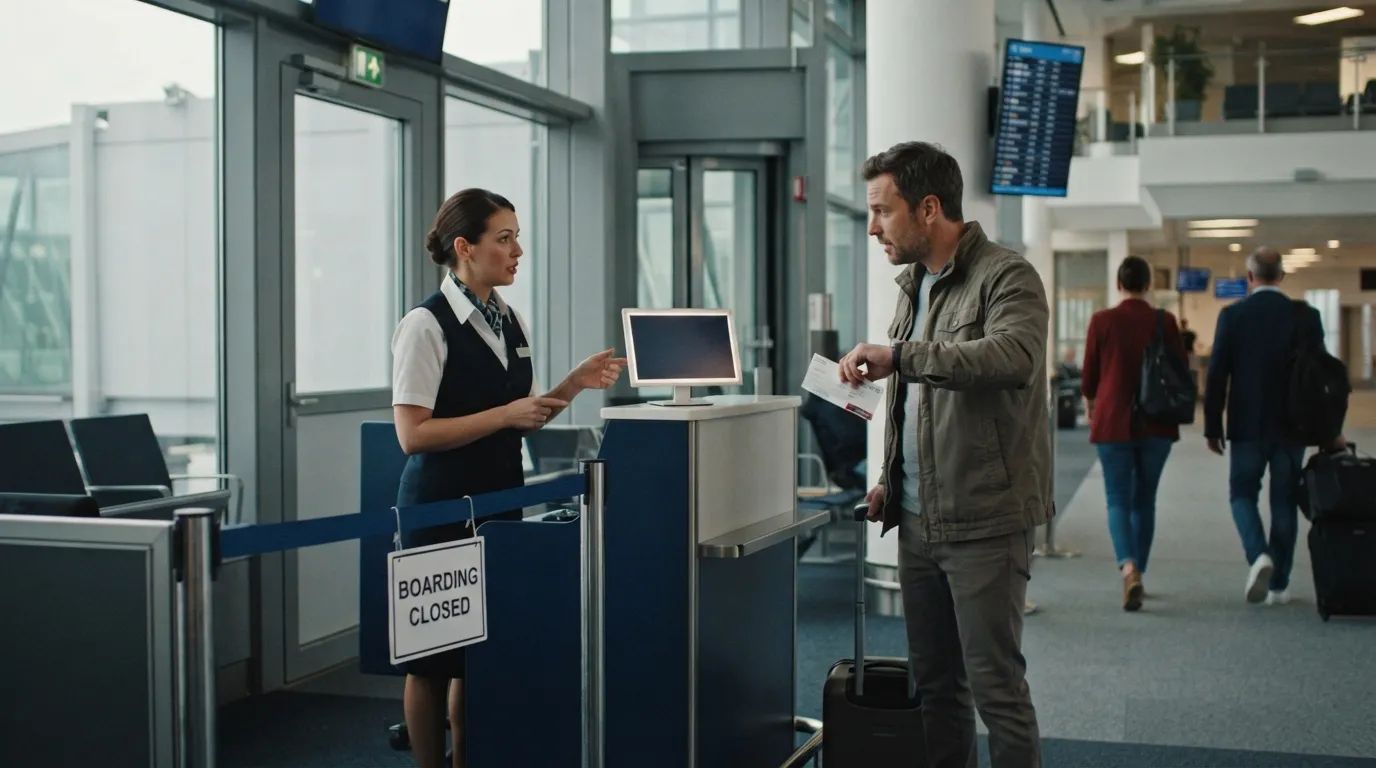
Two loud beeps. That is what a scanner American Airlines tested at gates in Albuquerque, Tucson and Washington’s Reagan National sounds when a traveler tries to board before their group is called.1
The beep is a small sign of a bigger truth: the gate is where airline rules get applied, by one or two busy employees, and the bill arrives on the spot. A bag that fails the sizer can cost about $99, and one behavior on this list can end in a federal penalty of up to $43,658 per violation.2 It starts with the crowd that forms around the door long before boarding does.
#14 – Crowding the Boarding Lane Before Your Group Is Called
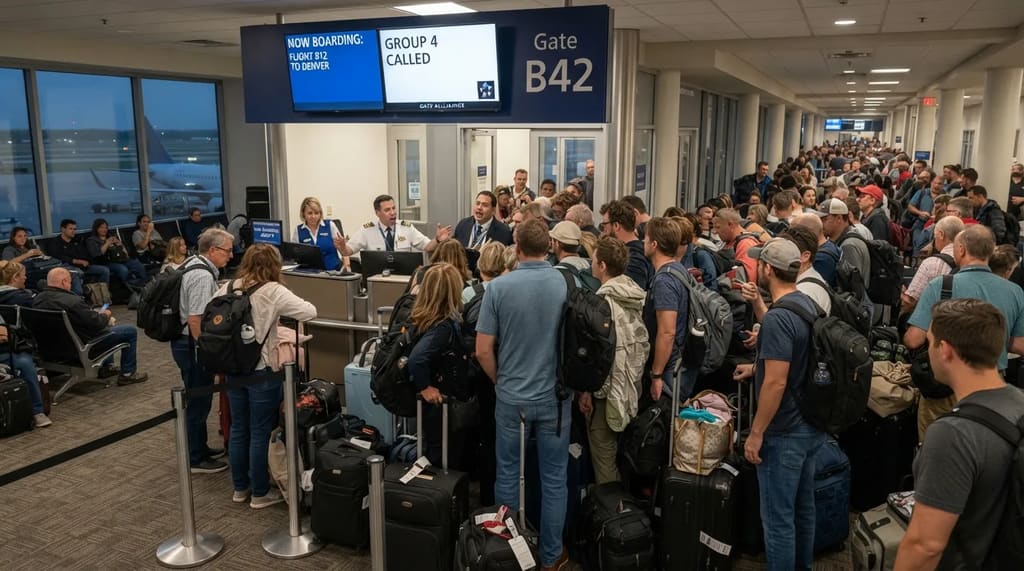
Flight crew and airline workers have a name for passengers who stand up and swarm the gate before boarding: “gate lice.” The crowd confuses people who are trying to board in their proper groups.
Agents end up managing the mob instead of moving the line, and that can stretch boarding and even delay departure. If you have an assigned seat, standing at the door earns you nothing, so stay in your chair.
Some travelers skip the hovering and try something quieter. It looks harmless, and that is exactly why it works on them.
#13 – Standing at the Tail of the Group Ahead
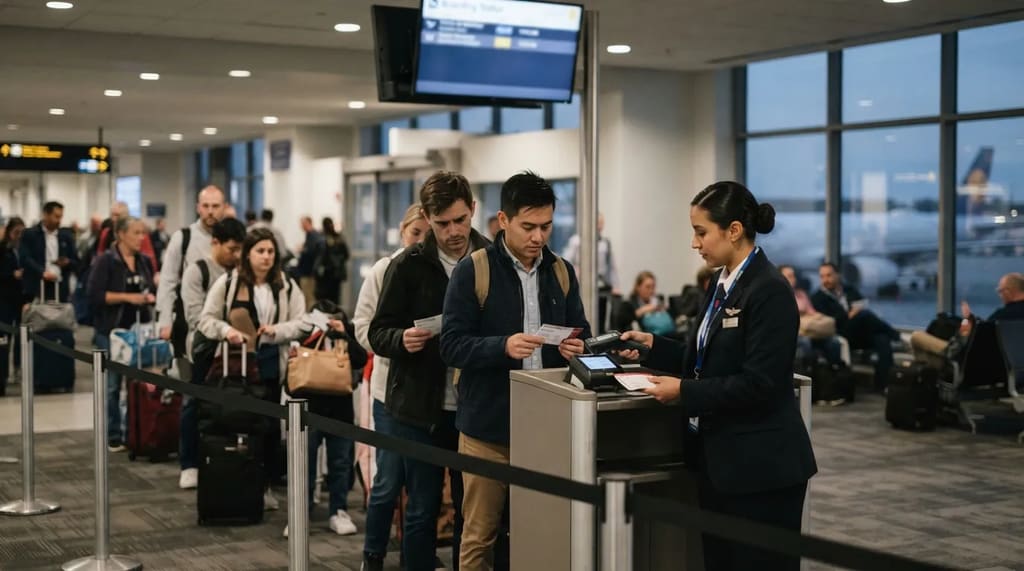
Travelers Fodor’s spoke with described slipping in at the end of the group ahead of theirs, knowing their own call was imminent. With a short line, an agent may never notice.
The risk is mechanical, though. A pass scanned before its group is called counts as early, whatever you meant by it.
I’d call this forgivable when your group is seconds away, and a poor bet when it is several groups off. At American’s gates, the scanner does not weigh intent.
#12 – Trying the Scanner Again After Two Beeps
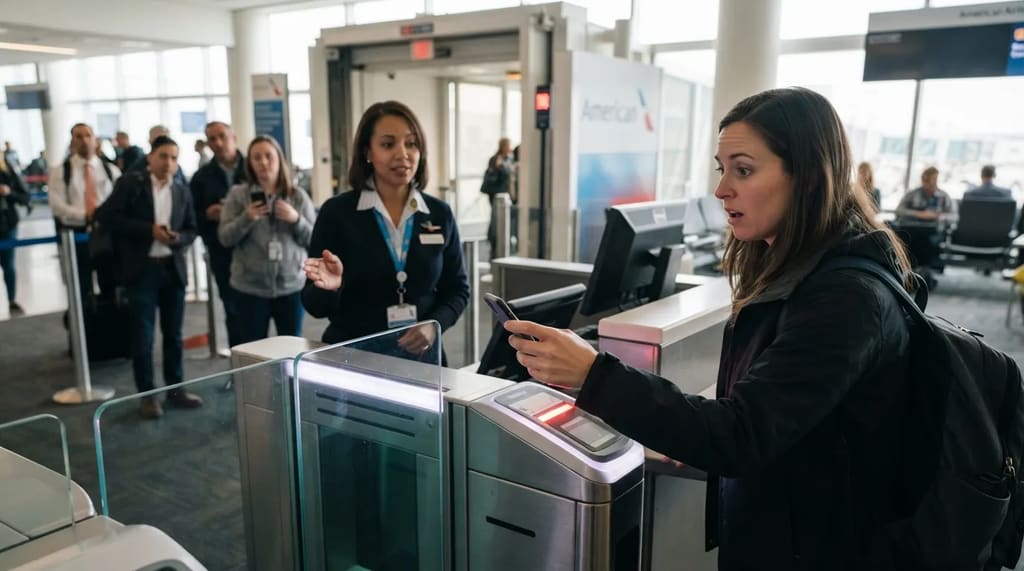
American’s system, first described in October 2024, sounds an alert when a passenger scans a pass before the assigned group is called. The agent then asks the passenger to step aside until it is their turn.1
Fast Facts
- Test gates: Albuquerque, Tucson and Washington’s Reagan National
- The signal: two beeps when a pass is scanned too early
- The result: the passenger steps aside until their group is called
- The tone: American says the agent politely explains why the pass can’t be accepted
Pushing back at that point wins nothing, because the computer has already made the decision.
The scanner polices boarding order. It can’t stop the passenger who wants the agent to fix something while the line is moving.
#11 – Asking for a Window Seat Mid-Boarding
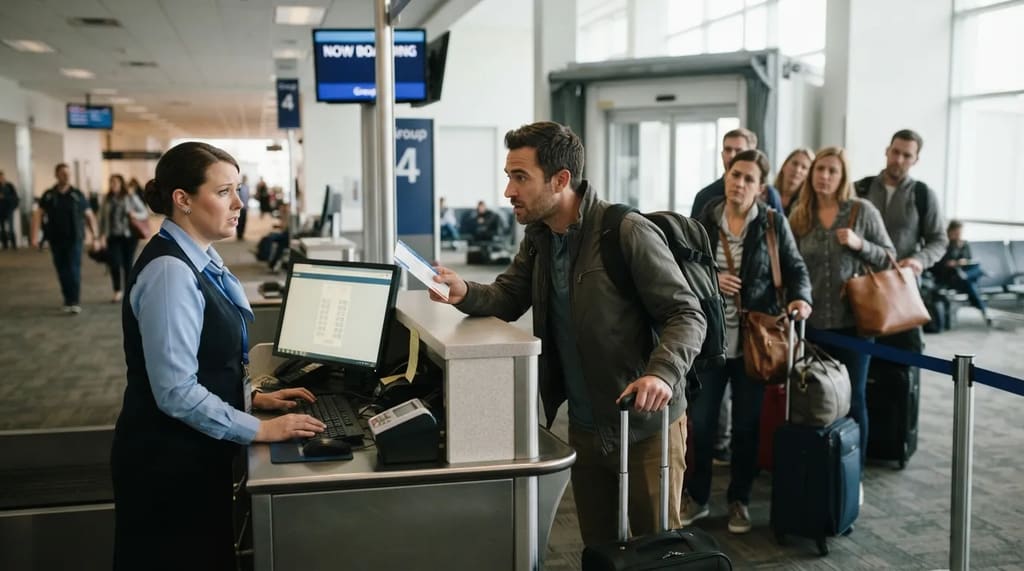
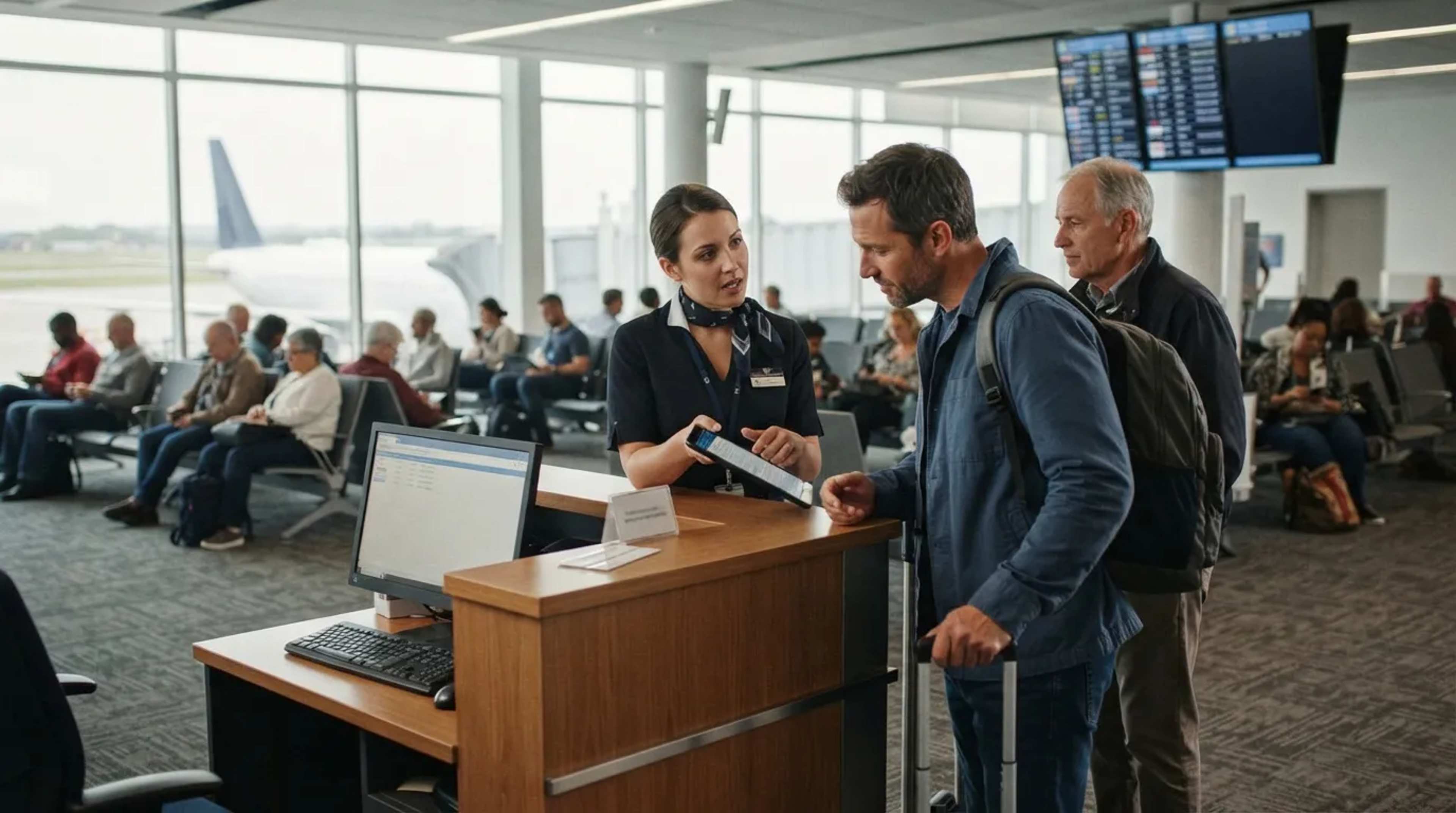
A seat-change request at the podium freezes everyone queued behind you. The agent is scanning passes and can’t also rework a seat map.
The seat you want may already belong to someone in a later group. The answer is often no, and you’ve spent the line’s patience to hear it.
Ask at the counter before boarding starts, or use the airline’s app. Once you’re on board, a polite request to the passenger in the seat you want costs the agent nothing.
#10 – Working the Podium While the Line Moves
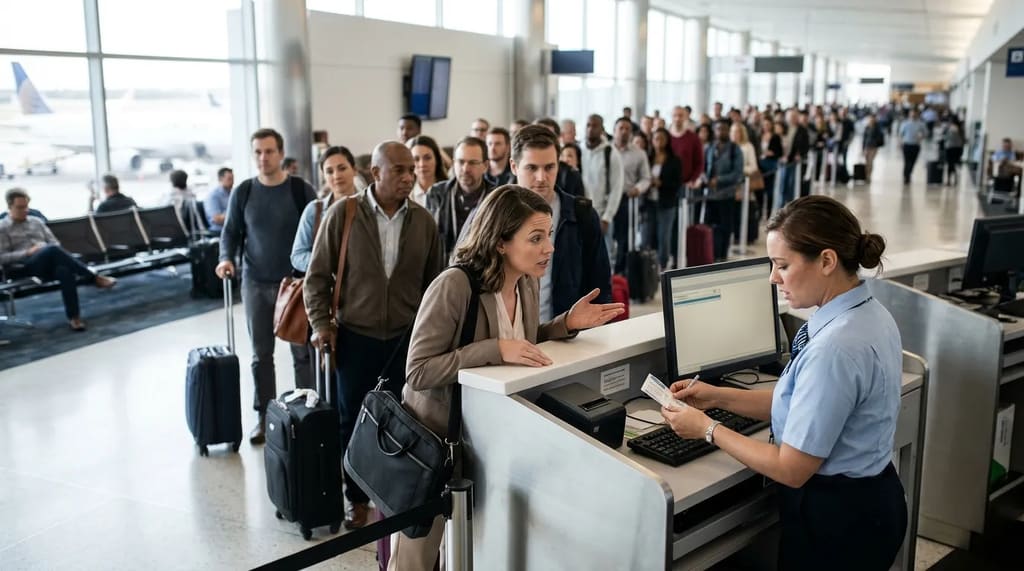
American switched from two agents to one for boarding narrowbody planes in 2021, according to the travel blog View from the Wing. That left less time for standby passengers, seat assignments and questions from nervous flyers, and the airline restricted standby at the gate.
A standby request or a long story about a missed connection, delivered mid-boarding, lands on the one person with the least time to hear it. I’d save anything that isn’t about this flight, right now, for after boarding ends.
The other thing that pulls travelers to the podium is a bin that fills up before they board. Agents have a routine for that.
#9 – Refusing a Free Gate Check on a Full Flight
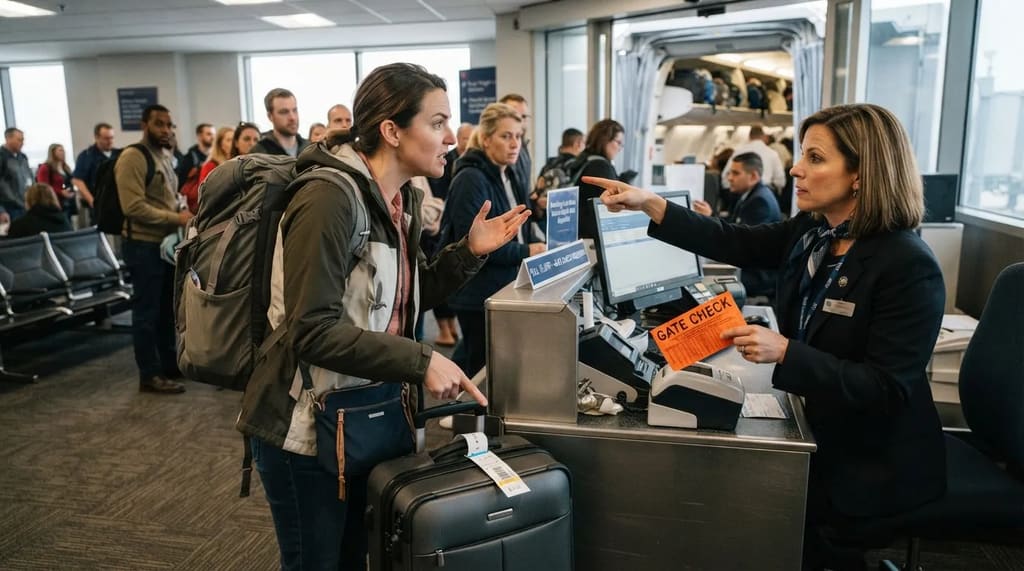
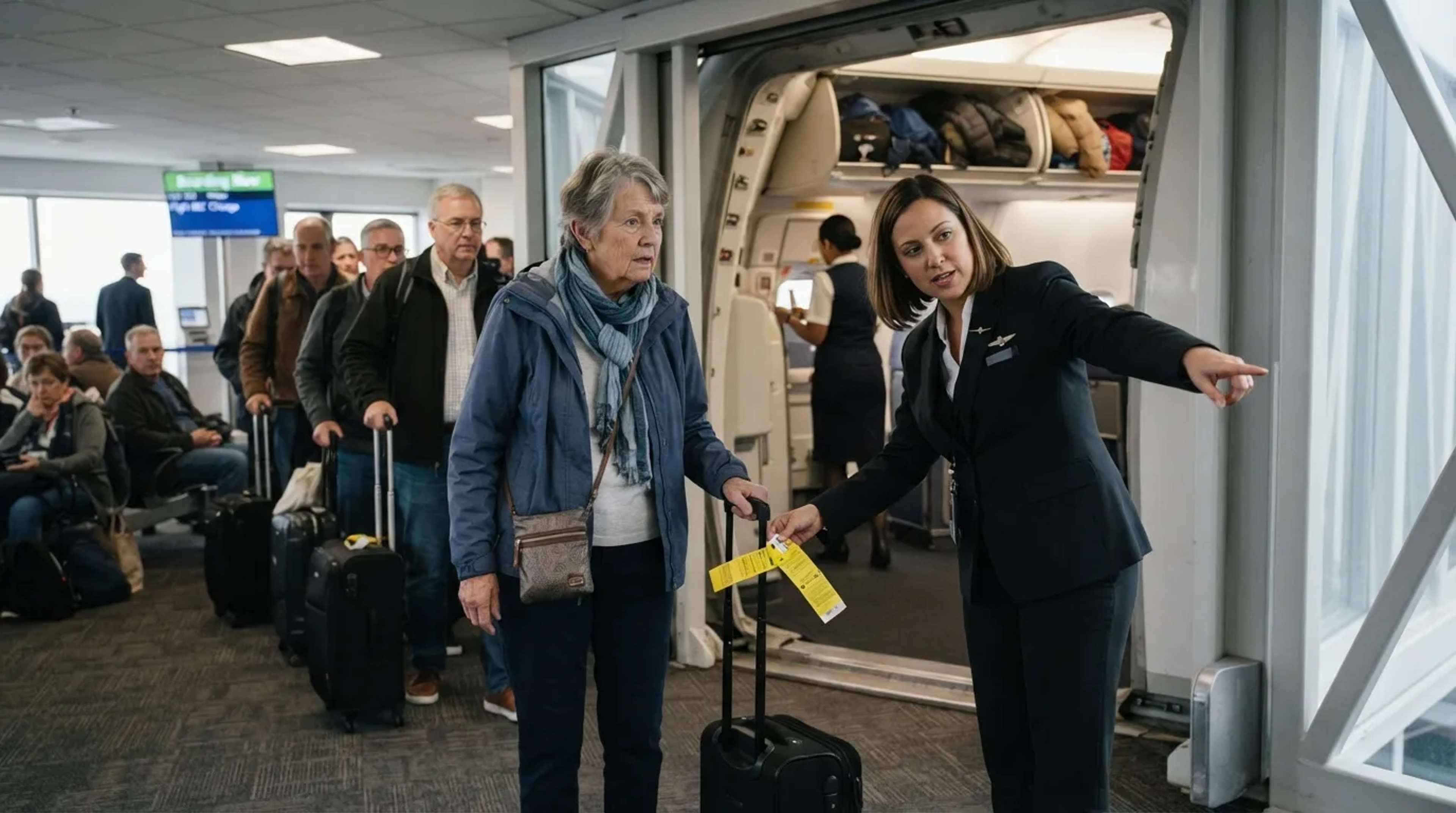
When overhead bins fill, the airline asks passengers to check bags at the gate. If your bag meets the carry-on limits and bin space is the only problem, airlines commonly check it for free.
On regional jets, full-size carry-ons are routinely gate-checked even if you paid for carry-on access. That is typically free because it is the airline’s call.
Refusing is the losing argument. The only price of declining a free service is a slower line behind you.
That offer is free only when the bag meets the rules. A fare that leaves out the carry-on is a different story.
#8 – A Basic Economy Carry-On at a United Gate
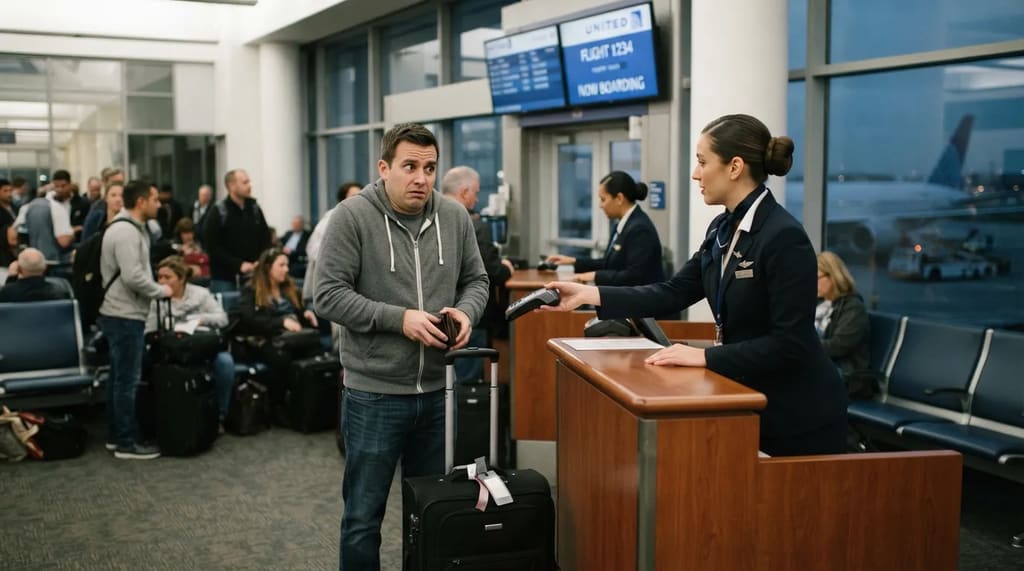
Among the three largest legacy carriers, United is the one that does not include a free carry-on with Basic Economy. It charges a $25 gate handling fee to those who bring one anyway.3
That fee comes on top of the usual checked-bag charge. If you’re weighing a Basic Economy ticket on United, add the bag to the price before you compare fares.
The cheap ticket stops being the cheap trip once the bag is handled at the gate. And budget carriers charge far more than $25 for a similar mistake.
#7 – Forcing a Bag Into the Sizer
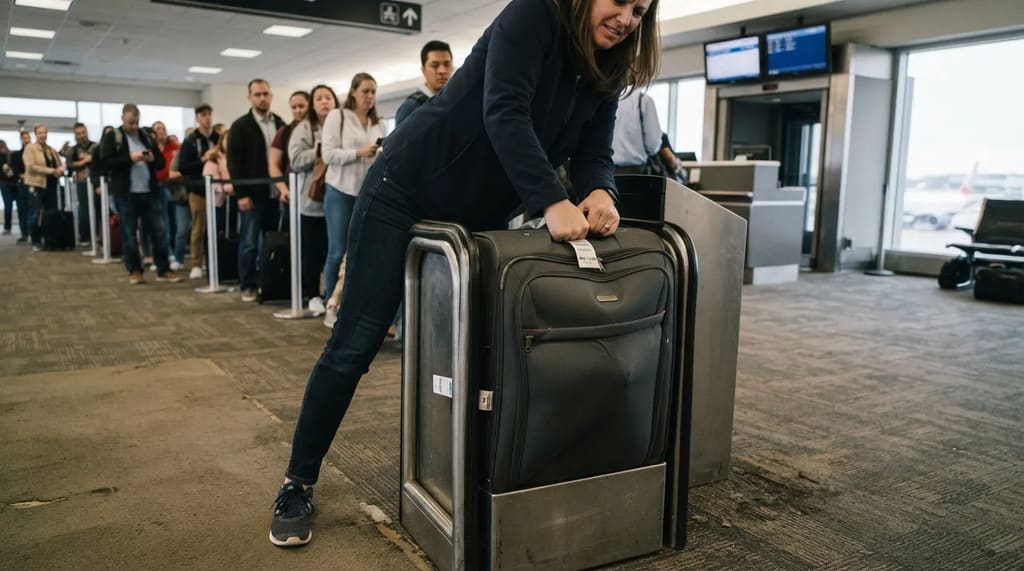
Frontier does not allow a carry-on to be compressed with force to fit the gate sizer. In one Frontier example priced by PIRG for a June 2026 trip, the carry-on fee was $69 when booking and $99 at the gate if the bag exceeded the allowed dimensions.4
Spirit’s gate rate for an oversized or undeclared carry-on is typically around $99, too. When a bag fails the sizer, the passenger does not board until the fee is paid.
Quick Compare
- United Basic Economy, carry-on brought to the gate: $25 handling fee, plus any checked-bag charge
- Frontier, June 2026 PIRG example: $69 when booking vs. $99 at the gate
- Spirit, oversized or undeclared carry-on: typically around $99 at the gate
Wheels and top handles are where bags usually lose the argument. A bag sold at one size can measure several centimeters larger once they are counted.
If you fly a budget carrier, measure the packed bag at home, wheels and handle included, against the airline’s posted limits. If it’s close, pay for the bag online, because the gate rate is the highest price on the menu.
#6 – Blaming the Agent for an Oversold Flight
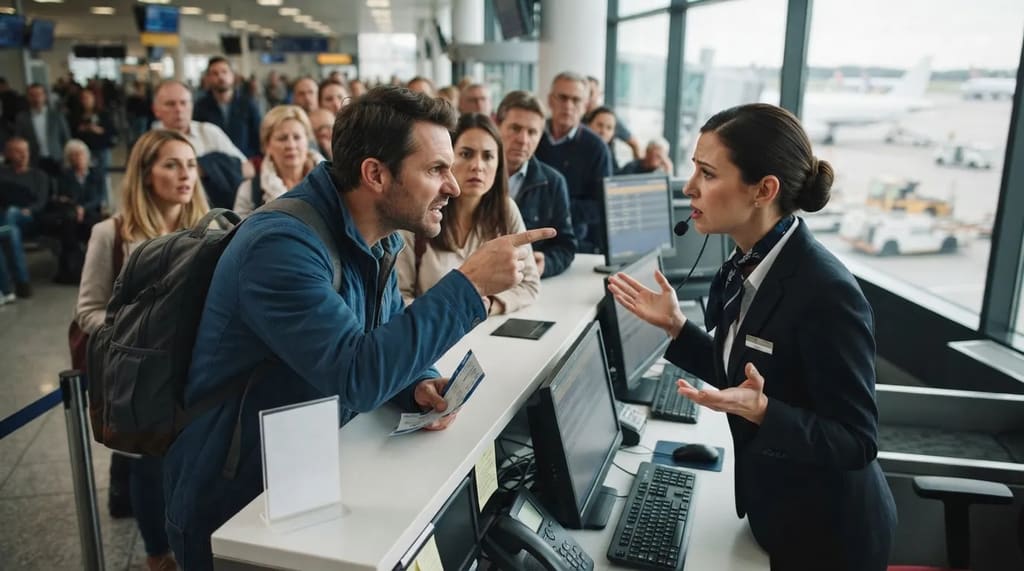
Overbooking is legal. When a flight is oversold, no one may be denied boarding against their will until the airline first asks for volunteers.
If volunteers run short, each carrier applies its own priority rules to decide who is left behind. The agent is applying a policy, not picking you.
A bumped passenger who arrived on time is owed compensation, and the rules put numbers on it.
At a Glance
Raising your voice adds nothing to a payment the rules already set.
The payment rules also assume you reached the gate by the airline’s deadline. Some passengers don’t.
#5 – Arriving After the Boarding Cutoff
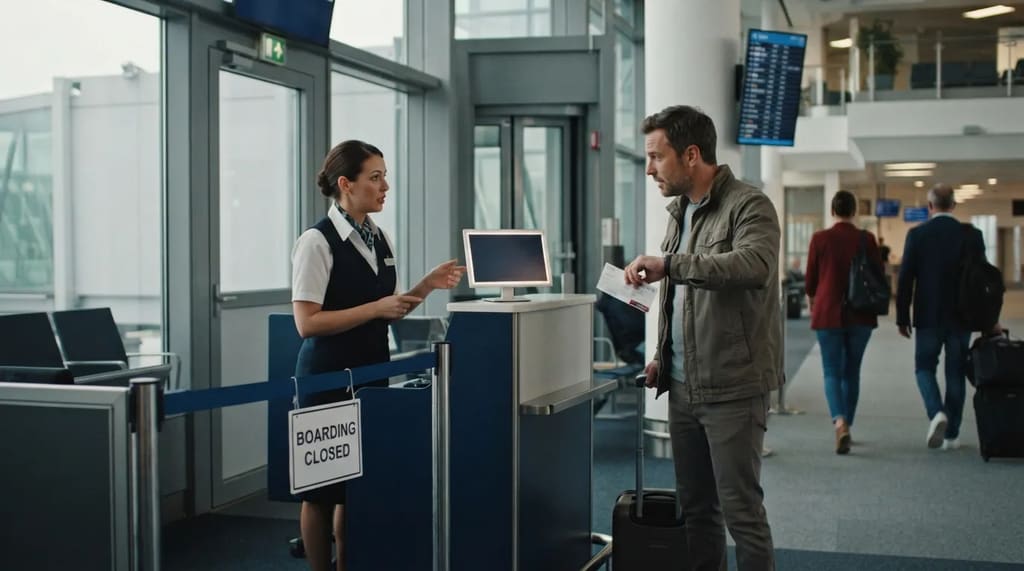
To qualify for bump compensation, you must have checked in on time and reached the gate within the airline’s boarding window. Miss the check-in deadline, and you may lose your reservation and your right to compensation if the flight is oversold.
Asking an agent to reopen a closed boarding door rarely works. Once boarding has closed, the airline is preparing to push back, and the plane usually won’t wait for one passenger.
Five spare minutes are best spent at the gate before the cutoff, not on an appeal after it. The bump protection described above exists only for passengers who showed up in time.
#4 – Demanding Bump Money After a Safety Refusal
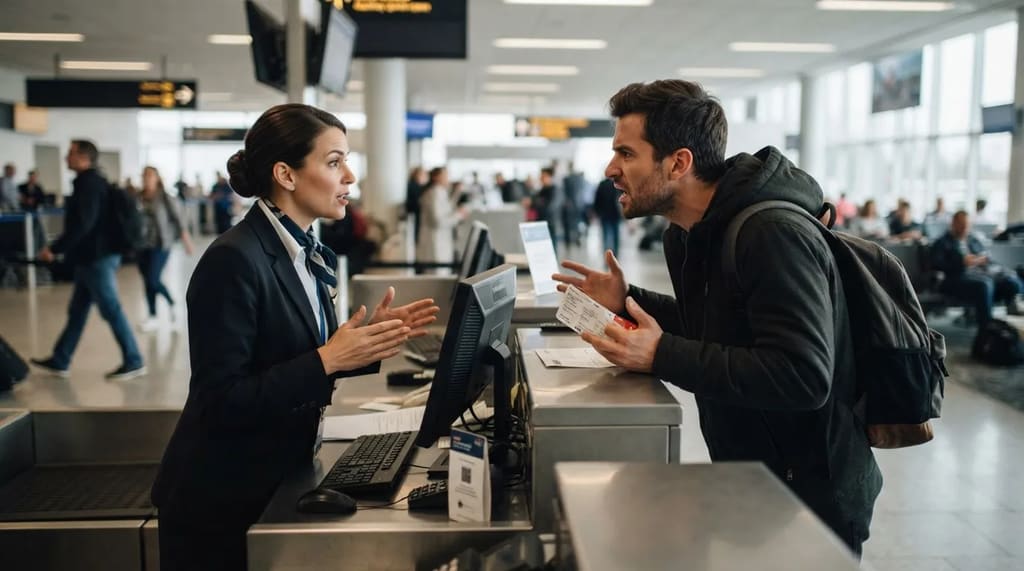
If a passenger is kept off a flight for a reason tied to the safe operation of the aircraft, the payment schedule for oversold flights does not apply. A traveler demanding bump money in that situation is asking for a payment the rule doesn’t cover.
Ask the gate agent directly why boarding was denied, because the answer decides whether the oversales rules apply at all. Arguing about the amount before you know the reason is wasted effort.
An agent’s answer here won’t change with volume. And a raised voice carries consequences of its own.
#3 – Shouting at the Agent About the Delay
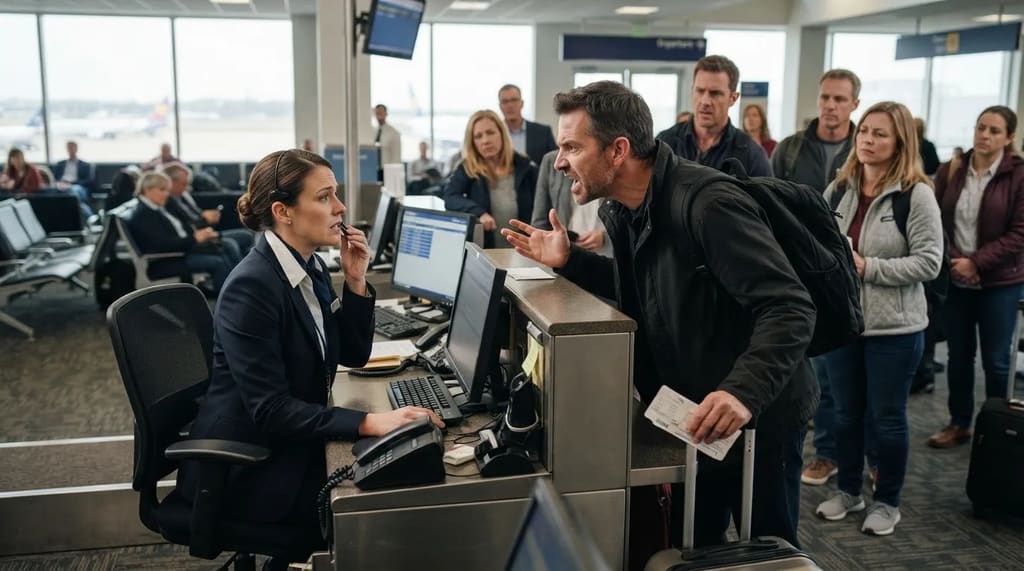
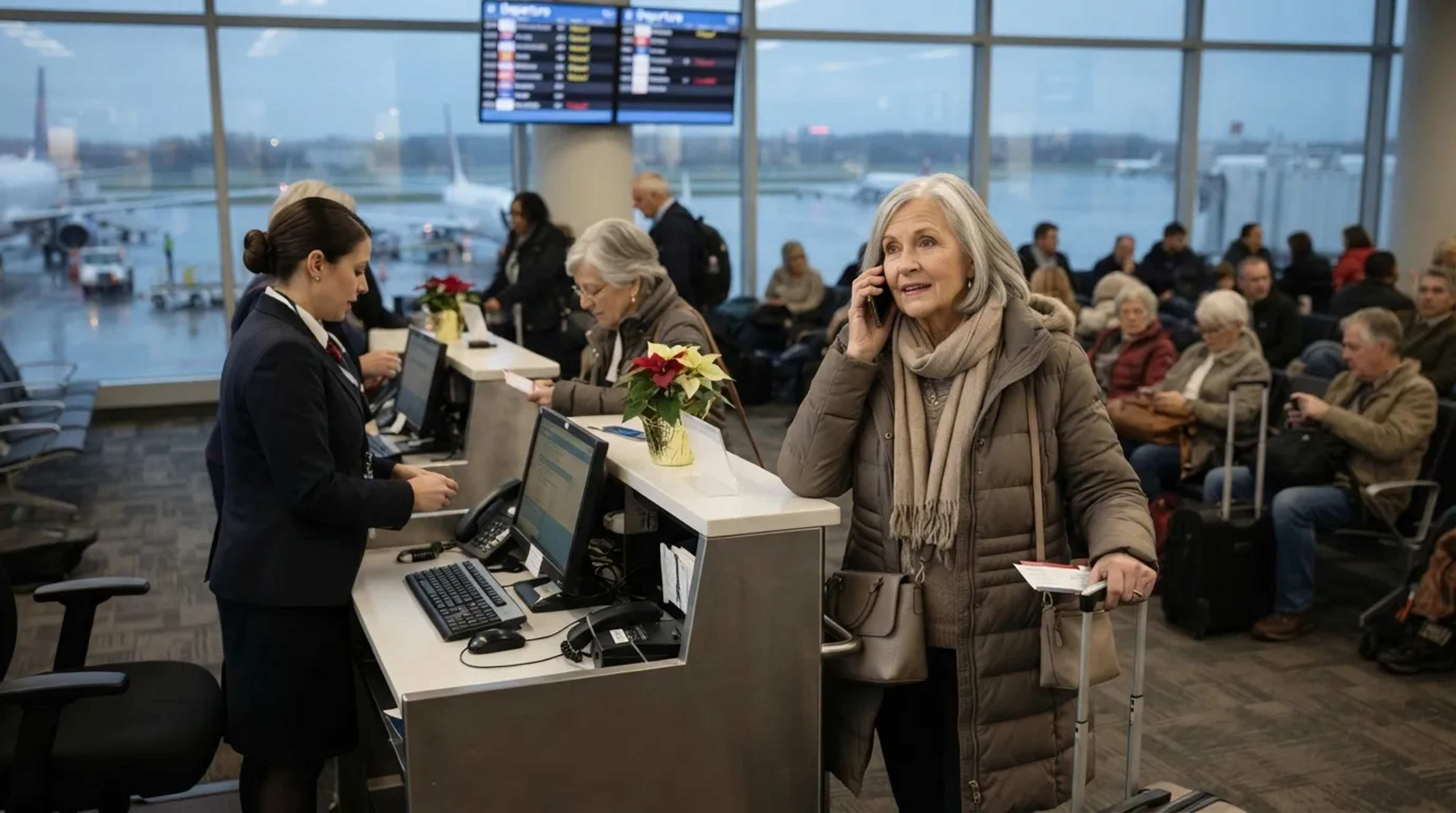
An agent can’t change the weather, a crew schedule or an oversold flight. Shouting at the person at the podium aims at the wrong target.
Airlines can also refuse to carry a passenger who is abusive. The TSA has warned that unruly behavior at the checkpoint or in flight can bring substantial penalties and possible criminal prosecution.
Related Stories From Travelbinger
A calm, specific request works better. Ask for the next available flight, and rebook in the airline’s app or by phone while you stand in line.
I’d treat the app as the first stop in a cancellation and the agent as the second. The next two behaviors are where the stakes stop being about money.
#2 – Ignoring a Crew Member’s Instruction During Boarding
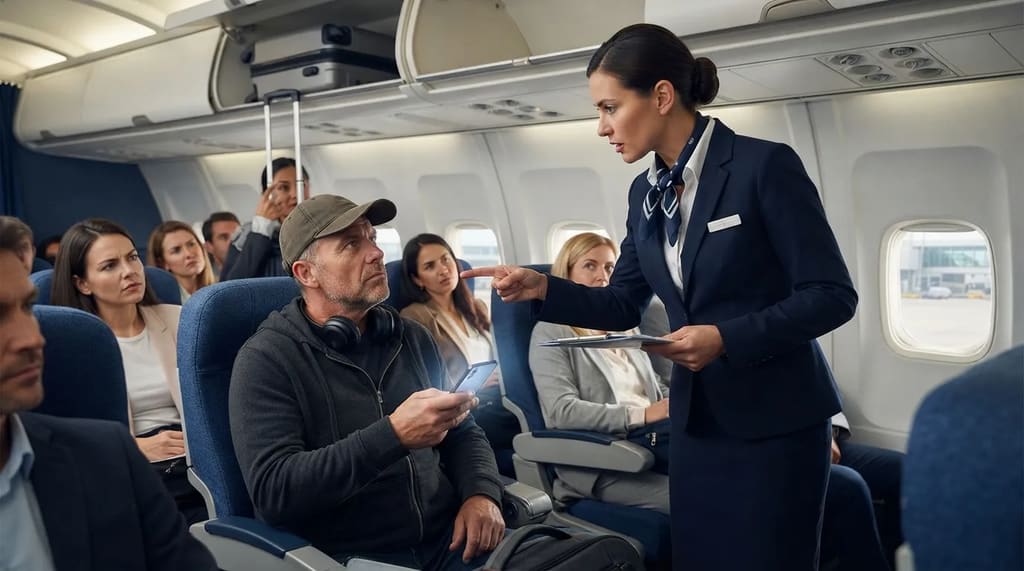
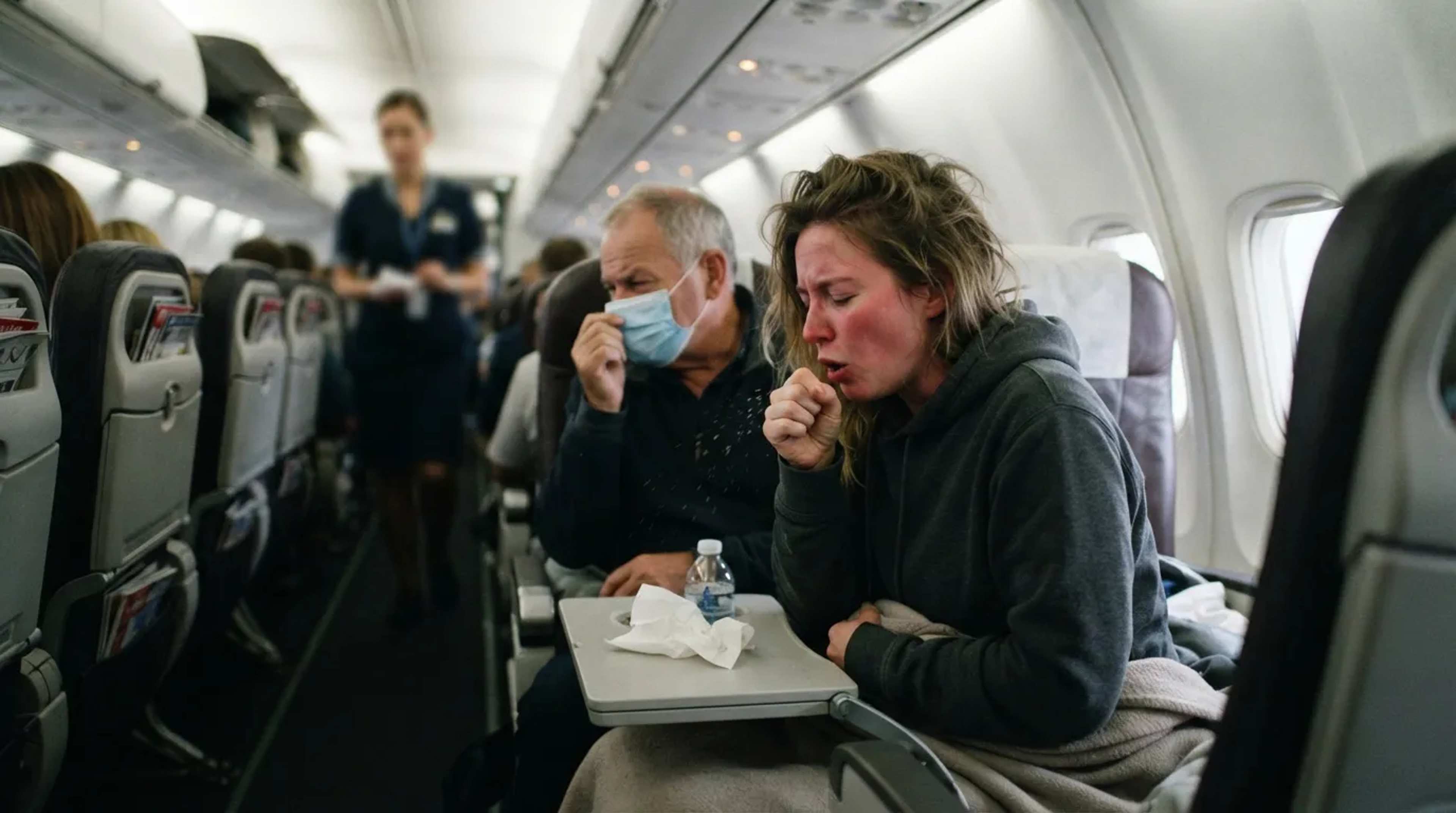
Interfering with the duties of a crewmember violates federal law. If a flight attendant has to stop safety preparations or service to manage a passenger, that counts as interfering with the operation of the aircraft.
A refusal to sit, stow or put a phone away can therefore become a legal matter, not just a rude one. The FAA’s 2025 numbers show the scale: 1,621 unruly passenger reports, 181 investigations and 131 enforcement actions, with fines totaling $2.3 million.
Comply first and complain afterward.
The largest penalties the agency has proposed involve a different level of conduct.
#1 – Carrying a Gate Argument Onto the Plane
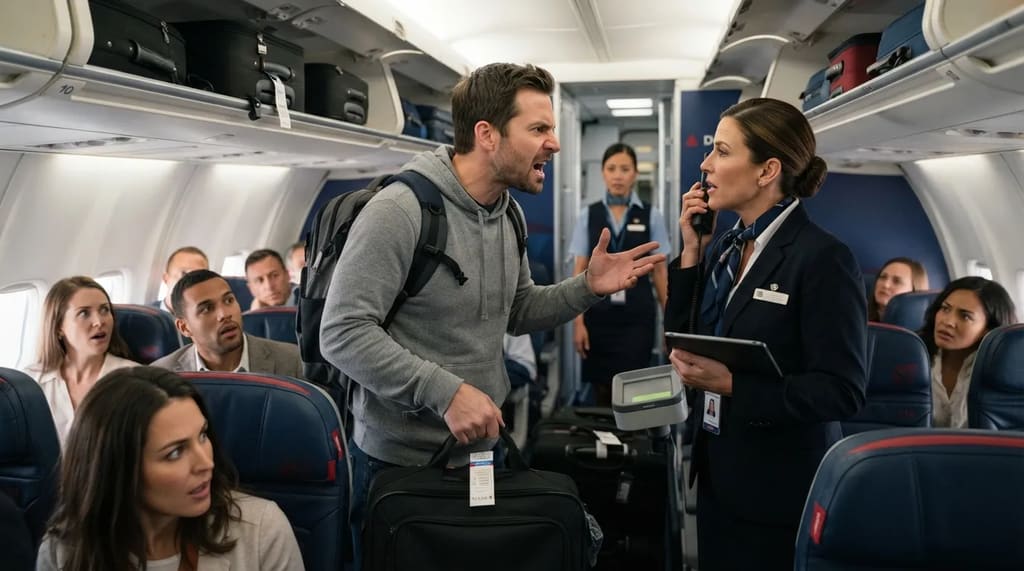
The FAA can propose up to $43,658 per violation, and one incident can result in multiple fines. The two biggest it has proposed are $81,950 against an American Airlines passenger and $77,272 against a Delta passenger.2 6
Both cases involved physical violence on board. Those figures are proposals, not payments already made.
Worth Knowing
Compare that with the $99 bag fee at the sizer, which is paid once and forgotten.
The agent at the podium has a scanner, a short list of rules and very little room to bend them. So settle what you can before you leave home: measure the bag, pick the seat, look up your airline’s check-in and boarding deadlines, and decide where you’ll rebook if plans fall apart.
The gate argument that costs nothing to drop at the podium is the one that costs the most once it follows you through the jet bridge door.
- Forbes American Early Boarding: https://www.forbes.com/sites/geoffwhitmore/2024/11/22/american-airlines-tightens-early-boarding-enforcement/
- FAA Unruly Passengers: https://www.faa.gov/unruly
- The Points Guy United Baggage: https://thepointsguy.com/airline/united-airlines-baggage-fees
- PIRG Bag Fee Comparison: https://pirg.org/edfund/resources/checking-bags-on-a-flight-how-much-does-my-airline-charge/
- DOT Bumping and Oversales: https://www.transportation.gov/individuals/aviation-consumer-protection/bumping-oversales
- Afar Largest FAA Fines: https://www.afar.com/magazine/unruly-passengers-face-heftiest-faa-fines-to-date