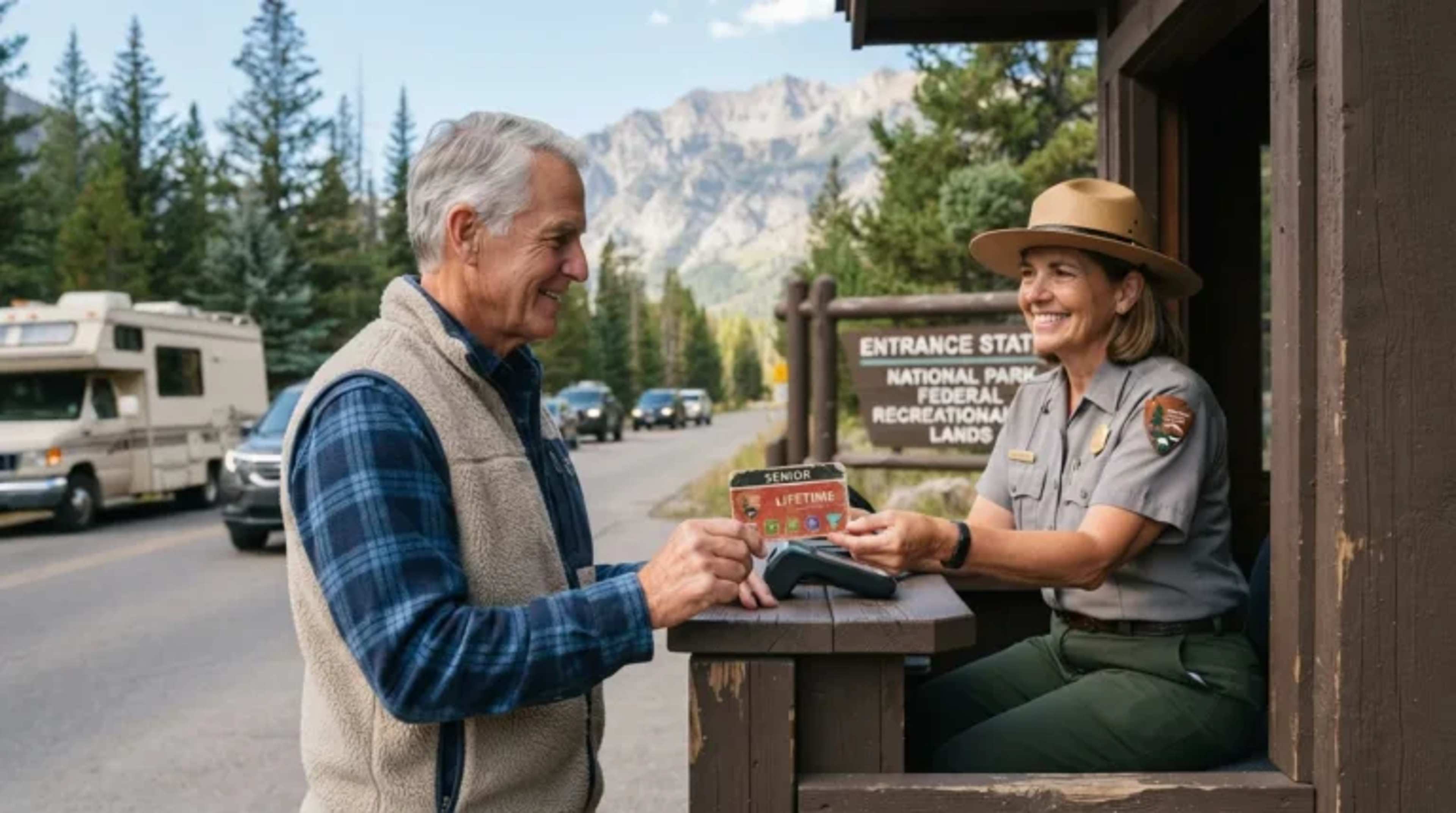
Most travelers assume hotel staff run through the exact same script for every guest who walks up to the desk. But the truth is far more interesting: the moment someone over 60 approaches, a quiet set of adjustments starts happening behind the counter, often before a single word gets exchanged.
None of it shows up on the folio, and almost none of it gets explained out loud. Here’s what front of house insiders actually admit happens the second they clock an older arrival.
#14 – The Room Swap That Happens Before You Even Ask
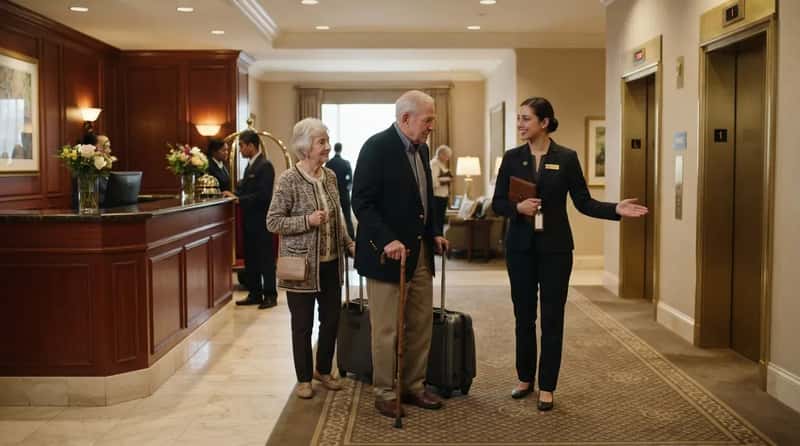
The instant a guest walks in using a cane, a walker, or simply moves a little slower than the crowd behind them, the front desk team is already rethinking the room assignment. It’s rarely announced, and it’s almost never something the guest requested out loud.
The goal is simple: fewer stairs, shorter hallway walks, and a room close enough to the elevator that a bad knee day doesn’t turn into a bad trip. Staff who spot an accessibility need at check-in will often quietly reroute a guest to a lower floor without a word about why. Most guests never realize the swap happened at all – they just notice the walk to their room felt easier than expected.
#13 – A Personal Walkthrough of Every Switch, Remote, and Safe
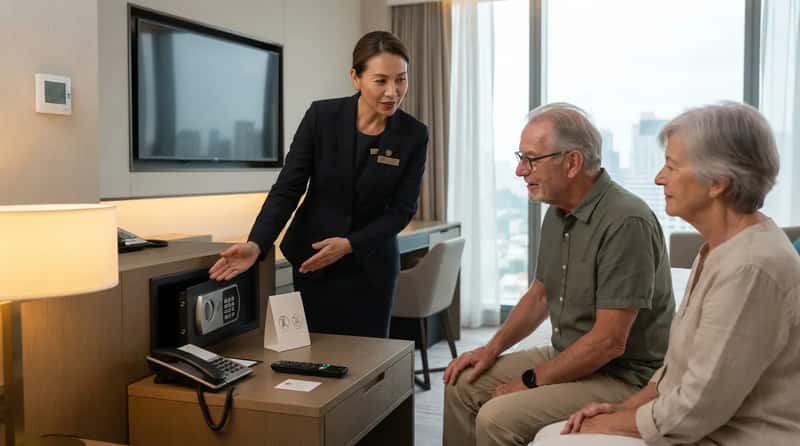
Modern hotel rooms are quietly hostile to anyone who didn’t grow up with a smartphone in hand. Digital room keys, app-controlled thermostats, QR-code menus, and TVs that need four remotes at once aren’t intuitive, and very few guests over 60 want to call the front desk and admit they can’t figure out the television. That embarrassment is exactly what a good staff member is trained to prevent.
Instead of waiting for the inevitable confused phone call, attentive staff walk the guest through the room in person during check-in, demonstrating the safe, the thermostat, and the shower controls. It’s not written anywhere in the job description, yet it’s become one of the most quietly requested habits in modern hospitality training.
#12 – A Handwritten Card That Replaces the Panic Call
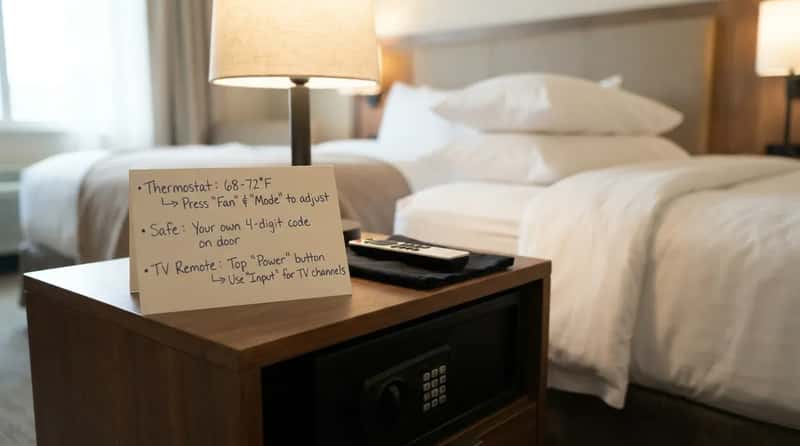
Beyond the verbal walkthrough, some staff leave something even more useful behind: a plain, handwritten cheat sheet sitting on the nightstand. It covers the thermostat, the safe code reset, and which remote actually turns the TV on.
It sounds almost too simple to matter, but the effect is real. That small act of patience prevents the low-grade anxiety that would otherwise trail a guest through their entire stay. A five-minute note can quietly erase an entire day of tech-related stress, and most guests never think to ask if one exists – they just assume it’s a nice surprise.
#11 – Bellhops Trained to Spot the Struggle Before You Say a Word

Curbside luggage help isn’t handed out at random. Staff are specifically trained to watch the entrance for signs that someone will need a hand before that person ever reaches the door.
This isn’t limited to obvious mobility aids, either – a slower pace, a heavier suitcase, or a moment of hesitation at the curb is often enough to trigger the offer, especially for elderly or disabled guests. Many older travelers say they never had to lift a bag from the moment they arrived, without ever asking for help at all.
#10 – A Note in Your File That Follows You Through the Whole Stay
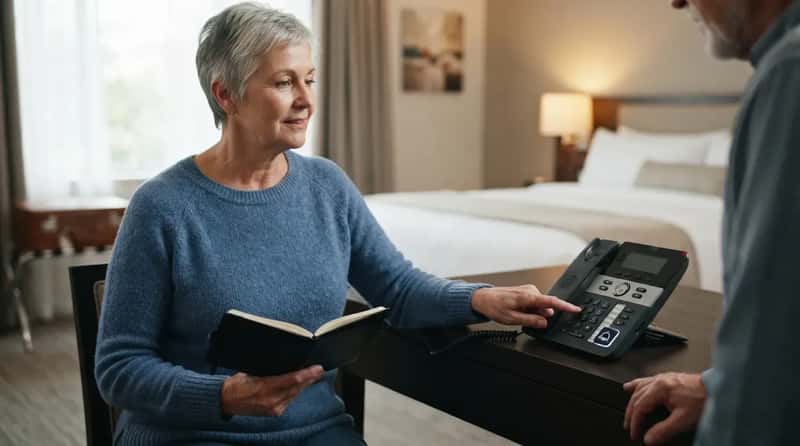
Front desk observations at check-in rarely disappear once the key card is handed over. Small, respectful details get quietly logged so the rest of the stay runs smoother without the guest repeating themselves at every turn.
Staff note whether a guest mentioned any health considerations and confirm the room phone dials the front desk in one button. That single detail – a phone that reaches help with one press instead of a confusing menu – has quietly become one of the most requested “invisible” upgrades for solo travelers over 60.
#9 – A Discount Nobody Mentions Unless You Ask For It
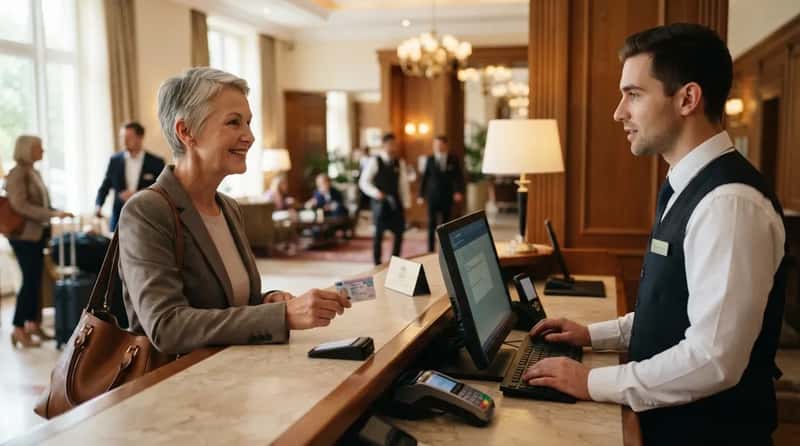
Most major hotel brands quietly carry a senior rate that never shows up on the homepage banner. It exists, but it’s rarely volunteered unless a staff member decides to bring it up – or a guest specifically asks.
Marriott sets the qualifying age for senior discounts at 62, offering reduced rates on up to two rooms as long as the person booking is eligible, while Wyndham brands like La Quinta, Ramada, Days Inn, and Super 8 give guests 60 and older around 10% off the standard rate. Hyatt and IHG set their cutoff at 62 as well, and staff will typically ask for ID to confirm eligibility rather than assume – which means the discount only appears if someone actually speaks up.
Quick Compare
- Marriott: senior rate kicks in at 62, applies to up to two rooms
- Hyatt & IHG: same 62-and-up cutoff for the discounted rate
- Wyndham brands (La Quinta, Ramada, Days Inn, Super 8): around 10% off starting at 60
- The common thread: none of these advertise the rate up front, and ID is often checked
#8 – A Pillow Menu Nobody Advertises
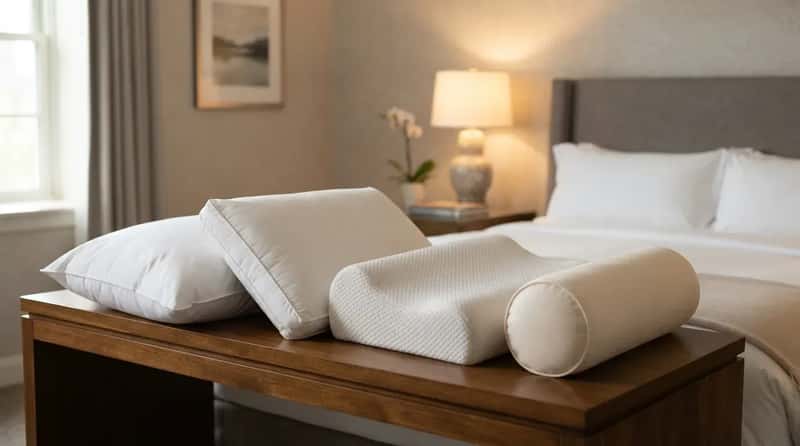
Comfort adjustments don’t always require a special request form. Some hotels keep an entire off-menu list of pillow options that staff only mention if they sense a guest might need it – extra firm, extra soft, or a specialty option for neck support.
Front desk agents who notice an older guest wincing while adjusting their neck will sometimes offer one without being asked. It’s a small comfort that costs the hotel nothing but rarely gets publicized, which is exactly why so few guests ever think to request it.
#7 – Accessible Rooms Spread Out So You Don’t Lose the View
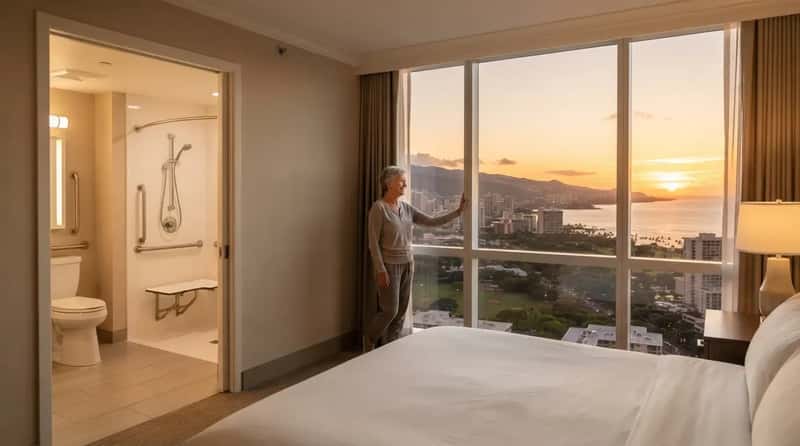
There’s a common assumption that accessible rooms all get shoved into one dark corner of the property. Increasingly, that’s the opposite of hotel policy – and for good reason.
Hotels are now encouraged to distribute accessible rooms across multiple floors so guests with disabilities have the same view and location choices as anyone else. That means a guest who needs grab bars or a roll-in shower isn’t automatically stuck facing a parking garage. The best properties treat accessibility and a good view as two separate conversations, not a trade-off guests are forced to accept.
Fast Facts
- Federal accessibility rules require at least 1 accessible room for every 25 rooms in smaller hotels, scaling up to 3% of total rooms in properties with 501-1,000 rooms
- Once a hotel passes 50 rooms, at least one accessible room must include a roll-in shower
- Accessible rooms must be dispersed among different room classes, bed sizes, and price tiers rather than grouped together
#6 – A Seat Waiting for You Instead of a Line
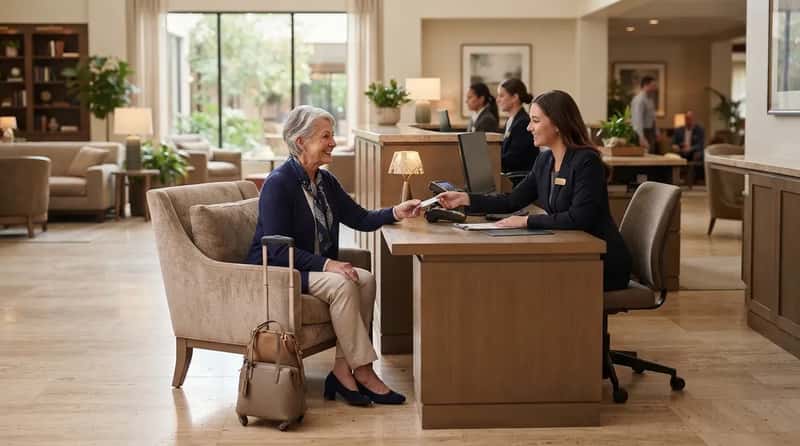
Standing in a lobby line after a long flight is uncomfortable for anyone, but it’s a genuine physical strain for guests with joint pain or balance issues. Some properties quietly restructure the check-in area to remove that pressure entirely.
Lower counter sections and nearby seating exist specifically so a guest doesn’t have to stand through the entire registration process. Staff who notice someone struggling to stand will often invite them to sit while the paperwork finishes behind the scenes. The wait feels shorter simply because nobody had to stand through it.
#5 – A Little Grace on the Checkout Clock
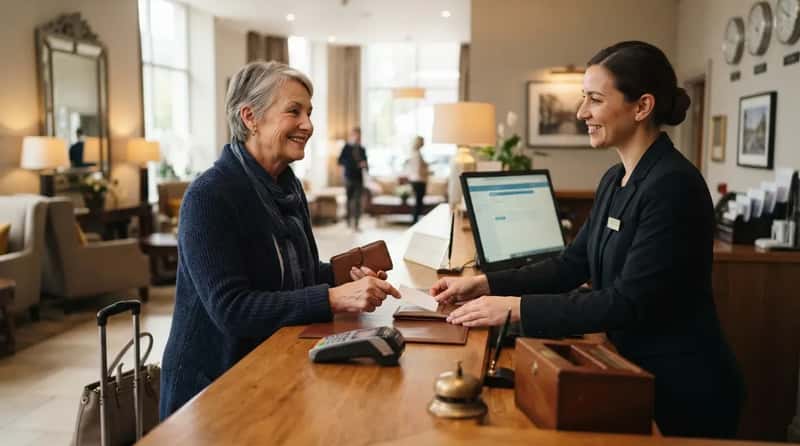
Checkout deadlines feel rigid until you’ve stayed somewhere a few nights and built a bit of goodwill with the team behind the desk. For longer stays, that goodwill quietly turns into flexibility.
Front desk staff may allow an extra hour or two at departure when housekeeping schedules permit, because the guest has already been reliable and low-hassle for days – and higher loyalty status accelerates this even further. The timing of the request matters more than most guests realize – asking at check-in works far better than asking the morning you’re already trying to leave.
#4 – The Upgrade That Only Happens When Someone Speaks Up For You
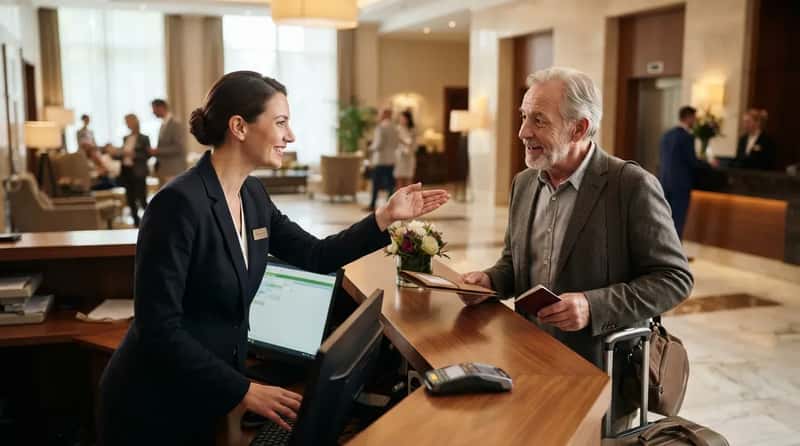
Room upgrades aren’t handed out on a rotation. They’re often sitting there available, waiting for one specific thing to happen first.
Complimentary upgrades are frequently available at check-in but only offered when a staff member actively advocates for the guest. That’s a detail worth sitting with – it means two guests with identical reservations can have completely different outcomes depending purely on whether the person behind the counter decided to go to bat for them. The upgrade was never about loyalty status alone; it was about whether someone in the building chose to fight for it.
#3 – Why That Do Not Disturb Sign Gets a Second Look
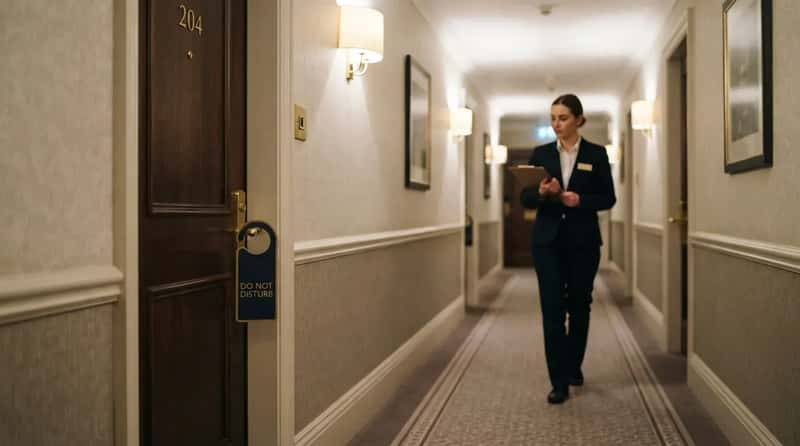
A sign hanging too long isn’t just a housekeeping inconvenience – for older solo travelers, it’s something staff are quietly trained to notice. Leaving it up for extended periods protects privacy, but it can also signal a prolonged absence or vulnerability.
Front of house teams who spot a sign lingering for an unusual stretch will often find a low-key reason to check in – a call to the room, a knock with a delivery, anything that confirms the guest is okay without making it feel like surveillance. Medication security is a real concern for senior travelers, and staff trained on this know exactly why a quiet check matters more than it seems. It’s one of the least talked-about safety habits in the entire industry.
Worth Knowing
- A “Do Not Disturb” sign left up far longer than usual is treated as a quiet wellness flag, not just a cleaning delay
- Staff often check in through a delivery, a phone call, or a knock rather than anything that feels like surveillance
- Medication timing is one of the unspoken reasons this habit exists for solo senior guests
- None of it gets logged as a “welfare check” – it’s simply treated as routine service
#2 – Educating Staff to Help Without Ever Making It Feel Like Help
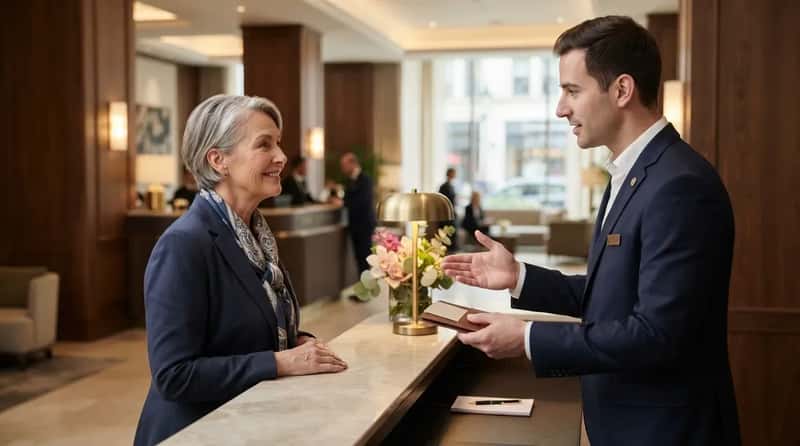
There’s a fine line between attentive service and something that feels condescending, and good hotels train specifically to stay on the right side of it. Staff are taught to support older guests in a way that avoids paternalistic behavior, which would otherwise make people feel singled out.
That single training note shapes almost everything else on this list – the room swap, the walkthrough, the handwritten card. None of it is supposed to announce itself as “senior assistance.” The entire point is that the comfort should feel like good service, never like a diagnosis, and the best teams practice that distinction constantly.
#1 – A Familiar Face Who Says Your Name Every Single Morning
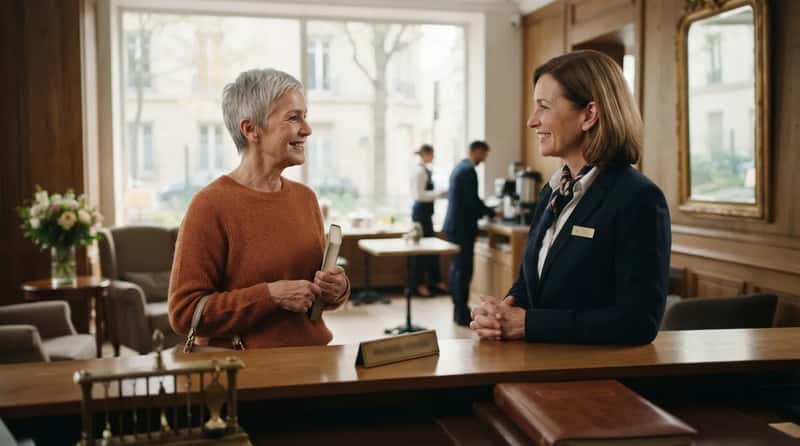
Of everything on this list, this is the one staff quietly consider the most important – and the easiest to overlook. One of the quietest moves a concierge makes for a solo older traveler is making sure at least one person, usually in the breakfast area or at the front desk, knows the guest by name and greets them personally each morning.
It sounds small on paper, but the effect is anything but. For a traveler over 60 who is far from home, maybe traveling alone for the first time in years, it can be one of the most meaningful parts of the entire stay. No upgrade, pillow menu, or discount code comes close to the effect of simply being remembered – and staff who’ve worked the desk long enough will tell you it’s the detail guests write thank-you notes about, not the free breakfast.
Why It Stands Out
- Costs the hotel nothing, yet guests remember it longer than a view upgrade or a free breakfast
- Especially meaningful for solo travelers who haven’t heard their own name spoken aloud all day
- Turns a transactional overnight stay into something that feels closer to a relationship
- Veteran staff say it’s the detail that shows up in thank-you notes, not survey scores
Hospitality is the art of making people feel at home when you know they’re not.
Georges Auguste Escoffier
None of these fourteen habits show up on a receipt, and almost none of them get explained out loud at check-in. They exist because someone behind the desk decided comfort shouldn’t have to be requested to be given.
The next time a stay feels easier than it should have, it probably wasn’t luck – it was a quiet decision made before you even reached the counter. Which one of these have you noticed on your own trips, or which one do you wish more hotels actually practiced? Drop it in the comments.