Most Nile cruises begin in Luxor, not Cairo. Viking’s new itinerary reverses that pattern by sailing the full length of the river, about 600 miles from the capital to Aswan. The 19-day “Grand Nile Journey” itinerary is open for booking, with departures beginning in 2028. ([1]) ([1])
A route that once covered the whole river
The journey revives an older way of seeing Egypt. Viking’s trip revives a longer Nile cruise route that dates back to the late 1800s, when paddle steamers carried travelers from Cairo on the 465-mile journey south to Luxor ([1]). From Luxor, the boats continued to Aswan, roughly another 130 miles. Thomas Cook & Son later introduced its “rapid steamers” on the same corridor, and for decades, full Cairo-to-Aswan sailings were a normal part of the Nile experience.
That history has largely faded from modern itineraries. Today, most Nile River sailings skip the first 465 miles of this historic route, with ships only traveling along the 130-mile stretch of the Nile between Luxor and Aswan ([1]). Travelers usually fly from Cairo to Luxor to board. The result is that the river’s northern stretch, with its earliest monuments, has become one of the least-seen parts of the Nile for cruise passengers.
Sites most visitors never reach
The new program begins in Cairo, where guests stay for four hotel nights before boarding. Those first days include the Great Pyramids of Giza, the Great Sphinx and the Grand Egyptian Museum.
Once the ship departs, the route slows down to visit places that rarely appear on standard cruise schedules. Stops include the Meidum Pyramid near Beni Suef, the cliffside Noble Tombs of Beni Hasan, the once-lost royal capital of Tell el-Amarna and the Abydos Temple, known for its depictions of ancient pilgrims ([1]). Farther south, the itinerary returns to the more familiar highlights, including the temples of Luxor and Karnak and the Valley of the Kings ([1]).
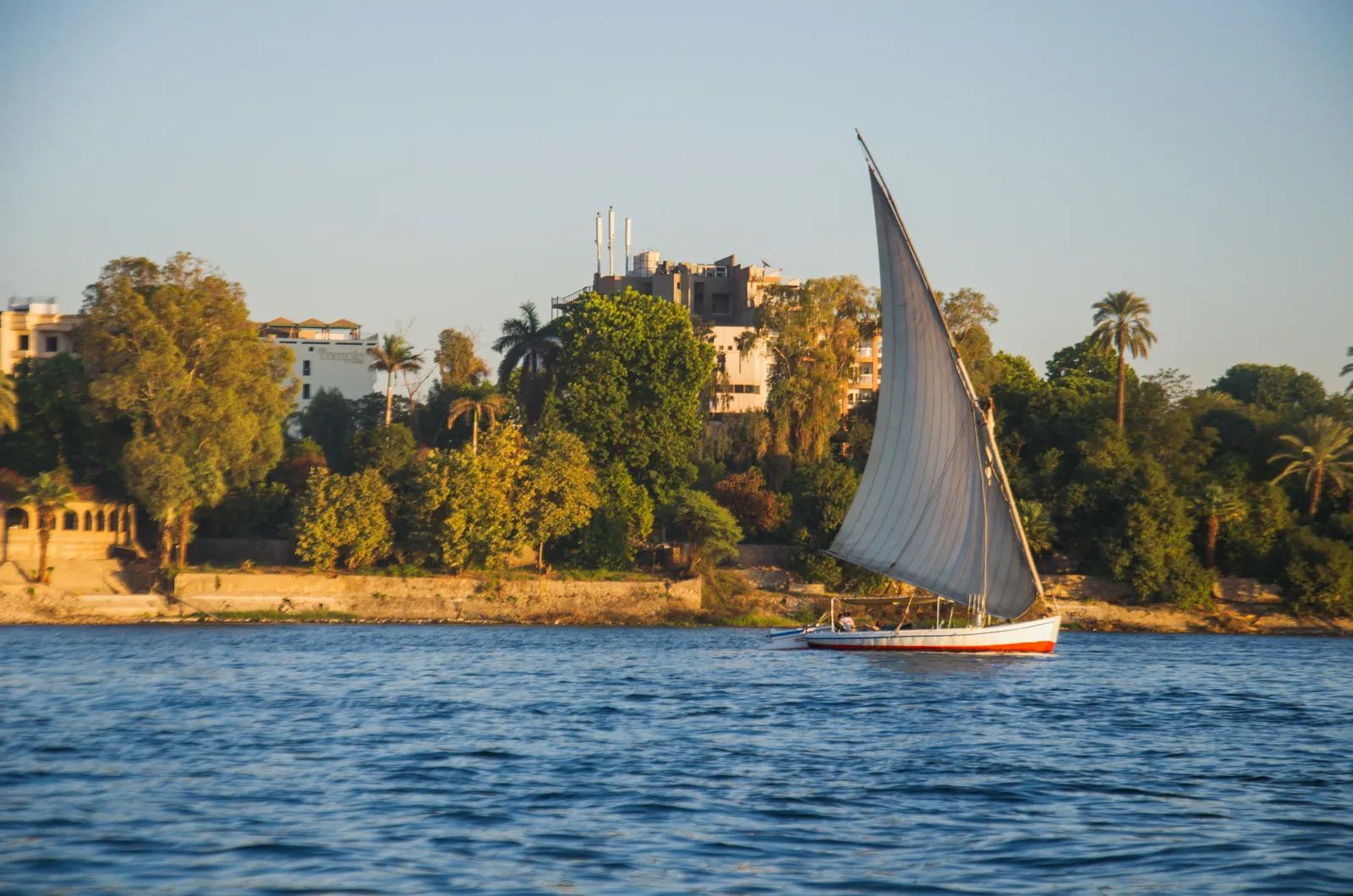
The southern section also adds a visit to the temples of Abu Simbel, along with the island temple complex of Philae in Aswan and a traditional felucca sail on the Nile. Viking counts 17 guided tours across the program.
Then and now: how the route has changed
The contrast between the historic route and the modern one is easiest to see side by side.
| Era | Typical route | How travelers got there |
|---|---|---|
| Late 1800s | Cairo to Aswan, about 595 miles | Paddle steamers on the full river |
| Recent decades | Luxor to Aswan, about 130 miles | Flights from Cairo to Luxor |
| Viking, from 2028 | Cairo to Aswan, about 600 miles | 14-night sailing on the Viking Ra |
Long sailings were not always rare. According to the original reporting, such longer Nile itineraries continued to be common until 1994, when the Egyptian government closed the Cairo-to-Luxor stretch to overnight passenger ships over security concerns. Low water levels and shifting sandbars also contributed to the change ([1]).
The ship and the travel options
The itinerary runs aboard the Viking Ra, a ship built for the Nile. The all-suite Viking Ra carries just 52 passengers and was refurbished in 2017. That size keeps the experience intimate, and it suits the smaller riverside stops that larger vessels cannot easily reach.
Travelers can extend the trip before or after the cruise. Options include Cairo (two nights; with services of a Viking Host); Morocco (five nights; fully guided) and Jordan, covering the Dead Sea, Petra and Amman (four nights; fully guided). Viking’s president and chief executive, Leah Talactac, framed the program around depth rather than speed. “Egypt has captivated travelers for generations, and we believe there is always more to discover,” said Leah Talactac, President and Chief Executive Officer of Viking.
A longer look at an old river
For most visitors, Egypt’s Nile has meant a short cruise between Luxor and Aswan. Viking’s Grand Nile Journey asks travelers to spend more time on the water and see the river’s northern sites that have been out of reach for most cruise guests for decades. Whether the longer itinerary finds an audience among travelers will become clearer once departures begin in 2028. For now, it marks a notable return to a route that once defined Nile travel.